112 books match the query 'Spirituality' and 8 start with r
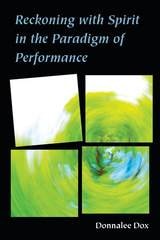
cover of Reckoning with Spirit in the Paradigm of Performance

Reckoning with Spirit in the Paradigm of Performance

Donnalee Dox

University of Michigan Press, 2016
Performance has become a paradigm for analyzing contemporary culture, a pattern that structures a particular view of human interaction and experience. Performance is also widely used to better understand how we express values and ideas, including religious beliefs. Reckoning with Spirit in the Paradigm of Performance asks how the sensibilities of religious experience, which many people call spirituality, shape people's performance. When we observe people performing words, dances, music, and rituals they consider sacred, what (if any) conclusions can we draw about their experiences from what we see, read, and hear? By analyzing performances of spirituality and what people experience as "spirit," this book adds a new dimension to the paradigm of performance.

Rather than reducing the spiritual dimension to either biology or culture, the book asks what such experiences might have to offer a reasoned analysis of vernacular culture. The specific performances presented are meditative dance and shamanic drumming, including descriptions of these practices and exegesis of practitioners' writings on the nature of spiritual experience and performance.

[more]
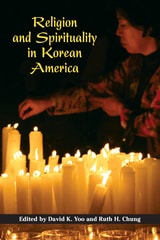
cover of Religion and Spirituality in Korean America

Religion and Spirituality in Korean America

Edited by David K. Yoo and Ruth H. Chung

University of Illinois Press, 2007

Religion and Spirituality in Korean America examines the ambivalent identities of predominantly Protestant Korean Americans in Judeo-Christian American culture. Focusing largely on the migration of Koreans to the United States since 1965, this interdisciplinary collection investigates campus faith groups and adoptees. The authors probe factors such as race, the concept of diaspora, and the ways the improvised creation of sacred spaces shape Korean American religious identity and experience. In calling attention to important trends in Korean American spirituality, the essays highlight a high rate of religious involvement in urban places and participation in a transnational religious community.

Contributors: Ruth H. Chung, Jae Ran Kim, Jung Ha Kim, Rebecca Kim, Sharon Kim, Okyun Kwon, Sang Hyun Lee, Anselm Kyongsuk Min, Sharon A. Suh, Sung Hyun Um, and David K. Yoo
[more]
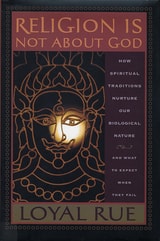
cover of Religion is Not about God: How Spiritual Traditions Nurture our Biological Nature and What to Expect When They Fail

Religion is Not about God

How Spiritual Traditions Nurture our Biological Nature and What to Expect When They Fail

Loyal Rue

Rutgers University Press, 2006

Thousands of religious traditions have appeared over the course of human history but only a relative few have survived. Some speak of a myriad of gods, others of only one, and some recognize no gods at all. Volumes have been written attempting to prove the existence or nonexistence of supernatural being(s). So, if religion is not about God, then what is it about?

In this provocative book, Loyal Rue contends that religion, very basically, is about us. Successful religions are narrative (myth) traditions that influence human nature so that we might think, feel, and act in ways that are good for us, both individually and collectively. Through the use of images, symbols, and rituals, religion promotes reproductive fitness and survival through the facilitation of harmonious social relations. Drawing on examples from the major traditions—Judaism, Christianity, Islam, Hinduism, and Buddhism—Rue shows how each religion, in its own way, has guided human behavior to advance the twin goals of personal fulfillment and social coherence.

            As all faiths are increasingly faced with a crisis of intellectual plausibility and moral relevance, this book presents a compelling and positive view of the centrality and meaning of religion.

[more]
cover of Religion is Not about God: How Spiritual Traditions Nurture our Biological Nature and What to Expect When They Fail

Religion is Not about God

How Spiritual Traditions Nurture our Biological Nature and What to Expect When They Fail

Loyal Rue

Rutgers University Press, 2006

2006 Choice Outstanding Academic Title

Thousands of religious traditions have appeared over the course of human history but only a relative few have survived. Some speak of a myriad of gods, others of only one, and some recognize no gods at all. Volumes have been written attempting to prove the existence or nonexistence of supernatural being(s). So, if religion is not about God, then what is it about?

In this provocative book, Loyal Rue contends that religion, very basically, is about us. Successful religions are narrative (myth) traditions that influence human nature so that we might think, feel, and act in ways that are good for us, both individually and collectively. Through the use of images, symbols, and rituals, religion promotes reproductive fitness and survival through the facilitation of harmonious social relations. Drawing on examples from the major traditions—Judaism, Christianity, Islam, Hinduism, and Buddhism—Rue shows how each religion, in its own way, has guided human behavior to advance the twin goals of personal fulfillment and social coherence.

As all faiths are increasingly faced with a crisis of intellectual plausibility and moral relevance, this book presents a compelling and positive view of the centrality and meaning of religion.

[more]
cover of Returning to Ceremony: Spirituality in Manitoba Métis Communities

Returning to Ceremony

Spirituality in Manitoba Métis Communities

Chantal Fiola

University of Manitoba Press, 2021
[more]
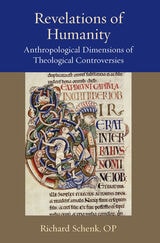
cover of Revelations of Humanity: Anthropological Dimensions of Theological Controversies

Revelations of Humanity

Anthropological Dimensions of Theological Controversies

Richard Schenk, OP

Catholic University of America Press, 2022
Revelations of Humanity brings together essays into the history and actuality of how our searches for God and for our own humanity are interwoven. They argue that the revelation of God is possible only when accompanied by a revelation of what it means to be a human being. Revelation implies that the truth is not fully evident in either case. This quest is aided in many of the essays by a recollection of the thought of Thomas Aquinas. As opposed to simple memory, recollection implies that memory has been lost or become clouded, here by the misrepresentation of Thomas’ view of humanity’s relation to God as harmonistic, at best semi-Pelagian, often even naturalistic. This difficult recovery is made possible by historical research that alone can escape the easy systematic alienation that supporters and critics of Thomas have often brought to their interpretation of his works. Thomas’s sense of a real but finite capacity of human beings for God, his grace and revelation, anticipates in more ways than is commonly known much of contemporary suspicion about human capacities, but in ways that are open to God. That programmatic insight into the historical Thomas, keenly aware of human entanglements, limits and hopes, offers on many contemporary issues a ressourcement of systematic thought. Revelations of Humanity revolves around three clusters of issues. The first asks about the reality and limits of the human capacity for truth: in metaphysical, moral and political matters and in relation to the disputed issues of analogous reason and faith. The second cluster is structured around the four involvements that the Second Vatican Council identified as the human face of genuine Christian existence: participation in the legitimate joys, hopes, sorrows and fears of the contemporary world. These are refracted in the broken light of the human proprium of risibility, the abiding uncertainty addressed by hope, the disputed question of a suffering God and the recollection of Christ’s anxiety in the face of death. The final cluster brings together anthropological dimensions of current ecumenical and interreligious disputes: the need to complement affirmation with admonition in ecumenical conversation, exemplified by the ambivalence towards sacrifice in a genuinely Catholic theology and the need to avoid the excesses of univocity, equivocity or an all too facile analogy in the determination of interreligious relationalities.
[more]
cover of Riches for the Mind and Spirit: John Marks Templeton's Treasury of Words to Help, Inspire, and Live By

Riches for the Mind and Spirit

John Marks Templeton's Treasury of Words to Help, Inspire, and Live By

John Marks Templeton

Templeton Press, 2006

This book contains a collection of John Templeton's favorite inspirational passages.


“From the Bible, from philosophers and poets, and from other writers, we begin to form a clear understanding of the spiritual and ethical laws of life. The world's literature teaches us valuable lessons that no amount of money can buy. Those lessonsare there for everyone. They are free and they are priceless.”—John Marks Templeton

 
[more]
cover of Ripples of the Universe: Spirituality in Sedona, Arizona

Ripples of the Universe

Spirituality in Sedona, Arizona

Susannah Crockford

University of Chicago Press, 2021

Ask a random American what springs to mind about Sedona, Arizona, and they will almost certainly mention New Age spirituality. Nestled among stunning sandstone formations, Sedona has built an identity completely intertwined with that of the permanent residents and throngs of visitors who insist it is home to powerful vortexes—sites of spiraling energy where meditation, clairvoyance, and channeling are enhanced. It is in this uniquely American town that Susannah Crockford took up residence for two years to make sense of spirituality, religion, race, and class.

Many people move to Sedona because, they claim, they are called there by its special energy. But they are also often escaping job loss, family breakdown, or foreclosure. Spirituality, Crockford shows, offers a way for people to distance themselves from and critique current political and economic norms in America. Yet they still find themselves monetizing their spiritual practice as a way to both “raise their vibration” and meet their basic needs. Through an analysis of spirituality in Sedona, Crockford gives shape to the failures and frustrations of middle- and working-class people living in contemporary America, describing how spirituality infuses their everyday lives. Exploring millenarianism, conversion, nature, food, and conspiracy theories, Ripples of the Universe combines captivating vignettes with astute analysis to produce a unique take on the myriad ways class and spirituality are linked in contemporary America.
 
[more]