Results by title
389 books match the query 'State' and 21 start with r
Re-Forming the State
The Politics of Privatization in Latin America and EuropeHector E. Schamis
University of Michigan Press, 2002
The experience of privatization shows that the public and the private are neither contradictory nor mutually exclusive spheres, and that power relations between them are not necessarily zero-sum. To stress the point, the author borrows from the literature on state formation, which has extensively examined the historical processes of key private groups. The evidence presented shows why and how, by restructuring coalitional and institutional arenas, the state uses marketization to generate political order and to distribute political power. Thus, the author specifies the conditions under which political change is conceived in terms of and channeled through economic policy; in other words, how the state is "re-formed" through privatization. Re-forming the State thus highlights how privatization is simultaneously a movement from public to private, but also a movement from non-state to state, as the reduction of state assets leads to institutional changes that increase state capacities for defining and enforcing property rights, extracting revenue, and centralizing administrative and political resources.
Hector E. Schamis is Assistant Professor of Government, Cornell University.
Readings in Arkansas Politics and Government
Kim U. Hoffman
University of Arkansas Press, 2020
Reclaiming the State
A Progressive Vision of Sovereignty for a Post-Neoliberal WorldWilliam Mitchell and Thomas Fazi
Pluto Press, 2017
Many of our assumptions—about ideology, democracy, trade, and globalization—are being thrown into doubt, deposed by populism, nationalism, and racism. In response to these challenging times, economist Bill Mitchell and political theorist Thomas Fazi propose a reconceptualization of the sovereign state as a vehicle for change. They offer a progressive view of sovereignty based not on the demonization of the other, but as a way to bring the economy back under democratic control. With nationalism gaining support across the United States with each passing week, Reclaiaming the State provides innovative ideas to mobilize and reenergize a tired, divided Left.

Reconsidering Gender, Violence, and the State
Lisa Arellano, Erica L. Ball and Amanda Frisken, special issue editors
Duke University Press, 2016
Contributors: Lisa Arellano, Erica L. Ball, Josh Cerretti, Jonathan Culleton, Amanda Frisken, Raphael Ginsberg, Deana Heath, Efeoghene Igor, Catherine Jacquet, Jessie Kindig, Benjamin N. Lawrance, Jen Manion, Xhercis Méndez, Luis Morán, Claudia Salamanca, Tomoko Seto, Carla Tsampiras, Jennifer Yeager
Reconstruction Politics in a Deep South State
Alabama, 1865–1874William Warren Rogers Jr.
University of Alabama Press, 2021
The battle for democracy in reconstruction-era Alabama.
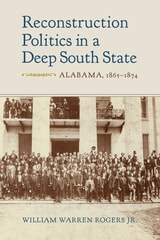
Following the end of the Civil War, white Southerners were forced to concede equal rights to those who had been enslaved, ushering in a new and ruthless brand of politics. Suddenly, the status and place of some four million former slaves dominated the national and regional political dialogue. In Alabama, the Republican Party established itself quickly and powerfully with the participation of a newly freed constituency, firmly aligned against the Democratic Party that had long dictated the governance of the state. Well-heeled planters, merchants, and bankers, joined by yeoman farmers, staged a counterrevolution by gravitating strongly to the Democratic Party and its unabashedly white supremacist measures. The ensuing power struggle in the birthplace of the Confederacy is at the heart of Reconstruction Politics in a Deep South State: Alabama, 1865–1874.
What emerges in William Warren Rogers Jr.’s comprehensive study of the era is a detailed examination of Reconstruction politics, particularly in Alabama. This book explores an explosive and unpredictable political environment that a few years earlier would have been inconceivable. A vivid picture emerges of courthouse rallies and bitter infighting in legislative circles. Rogers’s narrative ventures into darker places as well: to the Tennessee Valley and the Black Belt regions of Alabama, where Klan nightriders used violence against an enemy and ideology they could not abide.
The attempt to capture and account for the unforgiving political landscape created by the extraordinary circumstances of Reconstruction constitutes this study’s most central contribution. Rogers often quotes black and white citizens, Democrats and Republicans. Drawn from newspapers, correspondence, and various federal investigations, these firsthand voices are passionate, unvarnished, and filled with conviction. They offer a startling immediacy and illustrate the temper—or distemper—of the times. Readers are treated to a panoramic unveiling of Reconstruction Alabama politics that provides a sense of what was truly at stake: the values by which a region and the nation as a whole would chart its future for the century to come.

Red Scare
Right-Wing Hysteria, Fifties Fanaticism, and Their Legacy in TexasBy Don Carleton
University of Texas Press, 2014

Red State
An Insider's Story of How the GOP Came to Dominate Texas PoliticsBy Wayne Thorburn
University of Texas Press, 2014
In November 1960, the Democratic party dominated Texas. The newly elected vice president, Lyndon Johnson, was a Texan. Democrats held all thirty statewide elective positions. The state legislature had 181 Democrats and no Republicans or anyone else. Then fast forward fifty years to November 2010. Texas has not voted for a Democratic president since 1976. Every statewide elective office is held by Republicans. Representing Texas in Washington is a congressional delegation of twenty-five Republicans and nine Democrats. Republicans control the Texas Senate by a margin of nineteen to twelve and the Texas House of Representatives by 101 to 49.
Red State explores why this transformation of Texas politics took place and what these changes imply for the future. As both a political scientist and a Republican party insider, Wayne Thorburn is especially qualified to explain how a solidly one-party Democratic state has become a Republican stronghold. He analyzes a wealth of data to show how changes in the state’s demographics—including an influx of new residents, the shift from rural to urban, and the growth of the Mexican American population—have moved Texas through three stages of party competition, from two-tiered politics, to two-party competition between Democrats and Republicans, and then to the return to one-party dominance, this time by Republicans. His findings reveal that the shift from Democratic to Republican governance has been driven not by any change in Texans’ ideological perspective or public policy orientation—even when Texans were voting Democrat, conservatives outnumbered liberals or moderates—but by the Republican party’s increasing identification with conservatism since 1960.
Reforming Legislatures
American Voters and State Ballot Measures, 1792-2020Peverill Squire
University of Missouri Press, 2024
Legislatures are ubiquitous in the American political experience. First created in Virginia in 1619, they have existed continuously ever since. Indeed, they were established in even the most unlikely of places, notably in sparsely populated frontier settlements, and functioned as the focal point of every governing system devised.
Despite the ubiquity of state legislatures, we know remarkably little about how Americans have viewed them as organizations, in terms of their structures, rules, and procedures. But with the rise of modern public opinion surveys in the twentieth century, we now have extensive data on how Americans have gauged legislative performance throughout the many years. That said, the responses to the questions pollsters typically pose reflect partisanship, policy, and personality. Generally, respondents respond favorably to legislatures controlled by their own political party and those in power during good economic times. Incumbent lawmakers get ratings boosts from having personalities, “home styles” that mesh with those of their constituents. These relationships are important indicators of people’s thoughts regarding the current performance of their legislatures and legislators, but they tell us nothing about attitudes toward the institution and its organizational characteristics.
This study offers a unique perspective on what American voters have historically thought about legislatures as organizations and legislators as representatives. Rather than focusing on responses to surveys that ask respondents how they rate the current performance of lawmakers and legislatures, this study leverages the most significant difference between national and state politics: the existence of ballot propositions in the latter. At the national level Americans have never had any say over Congress’s structure, rules, or procedures. In contrast, at the state level they have had ample opportunities over the course of more than two centuries to shape their state legislatures. The data examined here look at how people have voted on more than 1,500 state ballot propositions targeting a wide array of legislative organizational and parliamentary features. By linking the votes on these measures with the public debates preceding them, this study documents not only how American viewed various aspects of their legislatures, but also whether their opinions held constant or shifted over time. The findings reported paint a more nuanced picture of Americans’ attitudes toward legislatures than the prevailing one derived from survey research. When presented with legislative reform measures on which concrete choices were offered and decisions on them had to be made, the analyses presented here reveal that, counter to the conventional wisdom that people loved their representatives but hated the legislature, voters usually took charitable positions toward the institution while harboring skeptical attitudes about lawmakers’ motives and behaviors.

Reimagining Courts
A Design for the Twenty-First CenturyVictor E Flango
Temple University Press, 2017
Reimagining Courts recommends a triage process based upon case characteristics, litigant goals, and resolution processes. Courts must fundamentally reorganize their business processes around the concept of the litigant as a customer. Each adjudication process that the authors propose requires a different case management process and different amounts of judicial, staff, and facility resources.
Reimagining Courts should spark much-needed debate. This book will be of significant interest to lawyers, judges, and professionals in the court system as well as to scholars in public administration and political science.
Reinventing Texas Government
By Michael Lauderdale
University of Texas Press, 1999
The Survey of Organizational Excellence is revolutionizing the operation of Texas state agencies and other governmental and private organizations. Developed and refined over the last twenty years by a team of researchers led by Michael Lauderdale, the survey is a proven tool for improving the effectiveness of state government services through surveys of employee attitudes toward their organizations.
In this book, Lauderdale gives a history of the survey and its use under four governors, including George W. Bush. He explains what the survey is, how to use it, and how to apply its results to organizational change and improvement. Step-by-step instructions for planning, implementing, and evaluating the survey are enhanced with real-life case studies from the 140,000 surveys that have been distributed and used by more than 75 different organizations. Lauderdale also sets the survey in a broader perspective by identifying some of the forces currently impelling change in organizations throughout our society and exploring where this push for change is taking us.
Reinventing the State
Economic Strategy and Institutional Change in PeruCarol Wise
University of Michigan Press, 2003
Religion and Political Tolerance in America
Advances in the State of the ArtPaul Djupe
Temple University Press, 2015
The essays in Religion and Political Tolerance in America seek to understand how these elements interrelate. The editor and contributors to this important volume present new and innovative research that wrestles with the fundamental question of the place of religion in democratic society. They address topics ranging from religious contributions to social identity to the political tolerance that religious elites (clergy) hold and advocate to others, and how religion shapes responses to intolerance.
The conclusion, by Ted Jelen, emphasizes that religion’s take on political tolerance is nuanced and that they are not incompatible; religion can sometimes enhance the tolerance of ordinary citizens.
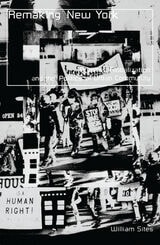
Remaking New York
Primitive Globalization And The Politics Of Urban CommunityWilliam Sites
University of Minnesota Press, 2003
Uses New York City to discuss the ways that policy has mismanaged the effects of globalization
Inequality increases, instability grows, communities fragment: this is the fate of a city in the wake of globalization—but is globalization really the cause? Proposing a new perspective on politics, globalization, and the city, this provocative book argues that such urban problems result in part from U.S. policies that can be changed.
William Sites develops the concept of primitive globalization, identifying a pattern of reactive politics—ad hoc measures to subsidize business, displace the urban poor, and dismantle the welfare state—that uproots social actors (corporations, citizens, urban residents) and facilitates a damaging, short-term-oriented type of international integration. In light of this theory, Sites examines the transformation of New York City since the 1970s, focusing on the logic of political action at national, local, and neighborhood levels. In the process, the story of late twentieth-century New York and its Lower East Side community emerges as something different: not a tale of globalist transformation or of local resurgence but a distinctly American case, one in which urban politics and the state, in their own right, exacerbate inequality and community fragmentation within the city.
Rendering unto Caesar
The Catholic Church and the State in Latin AmericaAnthony Gill
University of Chicago Press, 1997
Replace the State
How to Change the World When Elections and Protests FailSasha Davis
University of Minnesota Press, 2025
A practical call to action against oppression
Across the globe, millions of people have participated in protests and marches, donated to political groups, or lobbied their representatives with the aim of creating lasting social change, overturning repressive laws, or limiting environmental destruction. Yet very little seems to improve for those affected by rapacious governments. Replace the State brings new hope for social justice movements by looking to progressive campaigns that have found success by unconventional, and more direct, means.
Sasha Davis, an activist and scholar of radical environmental advocacy, focuses on the strategies of movements, many of them Indigenous, that have occupied contested sites and demonstrated their effectiveness at managing or governing them. Including case studies of resistance to development on Indigenous lands in Hawai‘i, nuclear testing in the Nevada desert, and the U.S. military occupation of Okinawa, he offers insight and direction for activists, students, academics, and others dedicated to protecting and improving the well-being of their communities and beyond.
It would be easy to succumb to pessimism and political apathy in the face of governing institutions that are increasingly unresponsive to calls for change and repressive in response to protest, even as they violate human rights, ignore existential climate catastrophes, and concentrate power into fewer and fewer hands. Instead, Davis finds inspiration for genuine political change through social movements that are successfully “replacing the state” and taking over the day-to-day governance of threatened places. From contesting environmental abuse to reasserting Indigenous sovereignty, these social movements demonstrate how people can collectively wrest control over their communities from oppressive governments and manage them with a more egalitarian ethics of care.
Retail e-book files for this title are screen-reader friendly with images accompanied by short alt text and/or extended descriptions.

Report on the State of UK-Based Research on Latin America and the Caribbean 2014
Edited by Antoni Kapcia and Linda A. Newson
University of London Press, 2015

Reporting the Oregon Story
How Activists and Visionaries Transformed a StateFloyd J. McKay
Oregon State University Press, 2016
As a political reporter for The Oregon Statesman in Salem, and then as news analyst for KGW-TV in Portland, McKay was known for asking tough questions and pulling no punches. His reporting and commentaries ranged from analysis of the “Tom and Bob” rivalry, to the Vietnam War’s impact on Senators Wayne Morse and Mark Hatfield and the emergence of a new generation of Portland activists in the 1970s.
McKay and his colleagues were on the beaches as Oregon crafted its landmark Beach Bill, ensuring the protection of beaches for public use. They watched as activists turned back efforts to build a highway on the sand at Pacific City. Pitched battles over Oregon’s Bottle Bill, and the panic-inducing excitement of “Vortex”—the nation’s only state-sponsored rock festival—characterized the period. Covering the period from 1964-1986, McKay remembers the action, the players and the consequences, in this compelling and personal account.
As major actors fade from the scene and new leaders emerge, McKay casts a backwards glance at enduring Oregon legends. Half a century later, amid today’s cynicism and disillusionment with media, politics, and politicians, Reporting the Oregon Story serves as a timely reminder that charged politics and bitter rivalries can also come hand-in-hand with lasting social progress.
Reporting the Oregon Story will be relished by those who lived the history, and it will serve as a worthy introduction to Oregonians young and old who want a first-hand account of Oregon’s mid- twentieth-century political history and legislative legacy.
Reproduction, Globalization, and the State
New Theoretical and Ethnographic PerspectivesCarole H. Browner and Carolyn F. Sargent, eds.
Duke University Press, 2011
Contributors. Aditya Bharadwaj, Caroline H. Bledsoe, Carole H. Browner, Junjie Chen, Aimee R. Eden, Susan L. Erikson, Didier Fassin, Claudia Lee Williams Fonseca, Ellen Gruenbaum, Matthew Gutmann, Marcia C. Inhorn, Mark B. Padilla, Rayna Rapp, Lisa Ann Richey, Carolyn Sargent, Papa Sow, Cecilia Van Hollen, Linda Whiteford

Rethinking France
Les Lieux de mémoire, Volume 1: The StateEdited by Pierre Nora. David P. Jordan, General Editor
University of Chicago Press, 2001
The first volume in the Chicago translation, Rethinking France, brings together works addressing the omnipresent role of the state in French life. As in the other volumes, the lieux de mémoire serve as entries into the French past, whether they are actual sites, political traditions, rituals, or even national pastimes and textbooks. Volume I: The State offers a sophisticated and engaging view of the French and their past through widely diverse essays on, for example, the château of Versailles and the French history of absolutism; the Code civil and its ordering of French life; memoirs written by French statesmen; and Charlemagne and his place in French history. Nora's authors constitute a who's who of French academia, yet they wear their erudition lightly. Taken as a whole, this extraordinary series documents how the French have come to see themselves and why.
Contributors:
Alain Guéry
Maurice Agulhon
Bernard Guenée
Daniel Nordman
Robert Morrissey
Alain Boureau
Anne-Marie Lecoq
Hélène Himelfarb
Jean Carbonnier
Hervé Le Bras
Pierre Nora

Rethinking the Political
Gender, Resistance, and the StateEdited by Barbara Laslett, Johanna Brenner, and Yesim Arat
University of Chicago Press, 1995
Section One, "Gender, Citizenship, and Collectivity," includes Nancy Frazer and Linda Gordon's critique of dependency and citizenship; Iris Young on women as a social collective; Ruth Bloch on the feminization of public virtue in revolutionary America; Trisha Franzen on feminism and lesbian community, and Sonia Kruks on de Beauvoir and contemporary feminism.
"Collective Action and Women's Resistance," Section Two, features Louis Tilly's "Paths of Proletarianization"; Temma Kaplan's "Female Consciousness and Collective Action"; and five assessments of women's collective action worldwide: Samira Haj on Palestine, Arlene McLeod on Egypt, Gay Seidman on South Africa, Nancy Sternbach et al. on Latin America, and Anne Walthall on Japan.
Concluding with a section on gender and the state, Rethinking the Political also features Bronwyn Winter on the law and cultural relativism; Sherene Razack on sexual violence; Wendy Luttrell on educational institutions; Patricia Stamp on ethnic conflict in postcolonial Kenya; Elizabeth Schmidt on patriarchy and capitalism in Zimbabwe; and Muriel Nazzari on the "woman question" in post-revolutionary Cuba.
Rotten Boroughs, Political Thickets, and Legislative Donnybrooks
Redistricting in TexasEdited by Gary A. Keith
University of Texas Press, 2013
Every ten years, the Texas legislature redistricts itself and the state’s congressional districts in an attempt to ensure equality in representation. With a richly textured cultural fabric, Texas often experiences redistricting battles that are heated enough to gain national attention. Collecting a variety of voices, including legislators themselves, in addition to lawyers, community organizers, political historians, and political scientists, Rotten Boroughs, Political Thickets, and Legislative Donnybrooks delivers a multidimensional picture of how redistricting works in Texas today, and how the process evolved.
In addition to editor Gary Keith’s historical narrative, which emphasizes the aftermath of the Warren Court’s redistricting decisions, longtime litigators David Richards and J. D. Pauerstein describe the contentious lines drawn from the 1970s into the 2000s. Former state legislator and congressman Craig Washington provides an insider’s view, while redistricting attorney and grassroots organizer Jose Garza describes the repercussions for Mexican Americans in Texas. Balancing these essays with a quantitative perspective, political scientists Seth McKee and Mark McKenzie analyze the voting data for the 2000 decade to describe the outcomes of redistricting. The result is a timely tour that provides up-to-date context, particularly on the role of the Voting Rights Act in the twenty-first century. From local community engagement to the halls of the Capitol, this is the definitive portrait of redistricting and its repercussions for all Texans.