Results by title
308 books match the query 'Story' and 9 start with r

Rare and Commonplace Flowers
The Story of Elizabeth Bishop and Lota de Macedo SoaresOliveira, Carmen
Rutgers University Press, 2003
Rare and Commonplace Flowers—a Brazilian bestseller—tells the story of two women. Elizabeth Bishop, the Pulitzer Prize–winning American poet, sought artistic inspiration in Brazil. There she met and fell in love with Lota de Macedo Soares, a self-trained Brazilian architect. This dual biography—brilliantly researched, and written in a lively, novelistic style—follows their relationship from 1951 to 1967, the time when the two lived together in Brazil. The fact that these two women had an intimate relationship caused an uproar when it first came to public notice.
The relationship started out happily, yet ended tragically. In 1961, Soares became increasingly obsessed with building and administering Flamengo Park, Rio de Janeiro’s equivalent to New York City’s Central Park. Though she had been the driving force behind the park’s inception, the ultimate credit that was due her was stripped away because of petty politics and chicanery. As Soares’s career declined and Bishop’s flourished, their relationship crumbled.
Rare and Commonplace Flowers is a tale of two artists and two cultures, offering unique perspectives on both women and their work. Carmen L. Oliveira provides an unparalleled level of detail and insight, due to both her familiarity with Brazil as well as her access to the country’s artistic elite, many of whom had a direct connection with Bishop and Soares. Rare pictures of the two artists and their home bring this unique story to life.
Rebel Bulldog
The Story of One Family, Two States, and the Civil WarJason Lantzer
Indiana Historical Society Press, 2017
Reggae Routes
The Story of Jamaican MusicKevin Chang
Temple University Press, 1997
Jamaican music can be roughly divided into four eras, each with a distinctive beat - ska, rocksteady, reggae, and dancehall. Ska dates from about 1960 to mid-1966 and rocksteady from 1966 to 1968, while from 1969 to 1983 reggae was the popular beat. The reggae era had two phases, "early reggae" up to 1974 and "roots reggae" up to 1983. Since 1983 dancehall has been the prevalent the prevalent sound.
The authors describe each stage in the development of the music, identifying the most popular songs and artists, highlighting the significant social, political, and economic issues as they affected the music scene. While they write from a Jamaican perspective, the intended audience is "any person, local or foreign, interested in an intelligent discussion of reggae music and Jamaica." Featuring some four hundred illustrations that range from album covers to rare photos, Reggae Routes profiles the innumerable artists, producers, and recordings that secured an international audience for Jamaican music.
Artists discussed: Toots and the Maytals, the Wailers, Gaylads, Desmond Dekker, Delroy Wilson, Alton Ellis, Burning Spear, Itals, Wailing Souls, Skatalites, Heptones, and hundreds more.

Remembering Leningrad
The Story of a GenerationMary McAuley
University of Wisconsin Press, 2019
Remembering Leningrad captures the story of a beautiful city and lifelong friendships. We follow McAuley as she walks through the streets downtown and examines politics in the 1960s, describes the hazards of furnishing an apartment in the 1990s, and learns about the challenges her friends have faced during these turbulent years. By weaving history and anecdotes to create a picture of Russia’s cultural center, McAuley underscores the impact of time and place on the Russian intelligentsia who lived through the transition from Soviet to post-Soviet life. The result is a remarkable group portrait of a generation.

Riders for God
The Story of a Christian Motorcycle GangRich Remsberg
University of Illinois Press, 2000
Founded by a former biker and located in southern Indiana, the Unchained Gang is a group of former outlaw bikers, ex-convicts, and recovering addicts who are now born-again Christians. Although they have given up drugs, alcohol, tobacco, and violence they have kept their motorcycles--which they consider to be anointed--and use them as tools in their witness of the word of God as they understand it. The Unchained Gang is an outreach ministry, going into prisons and jails, biker rallies, and other places where people on the fringe are often ignored by other churches and the rest of society.
Combining powerful photographic images with gang members' first-person testimonies, Rich Remsberg shows the ironic juxtaposition of tattoos, leather vests, and the iconography of the biker world with the Christian practices of Bible study, speaking in tongues, and praying at an altar. He explores the lives of men and women who have redirected the extreme nature of their former ways.
Through their own powerful stories, they explain how the addictions and uncontrollable violence that once shaped their lives have given way to dramatic worship and zealous ministry.
An afterword by Colleen McDannell situates the Unchained Gang's
interpretation of Christian living in the larger constellation of pentecostal, born-again, fundamentalist, and mainstream churches.
Rim Country Exodus
A Story of Conquest, Renewal, and Race in the MakingDaniel J. Herman
University of Arizona Press, 2012
Winner Labriola Center American Indian National Book Award
For thousands of years, humans have lived on the sprawling escarpment in Arizona known as the Mogollon Rim, a stretch that separates the valleys of central Arizona from the mountains of the north. A vast portion of this dramatic landscape is the traditional home of the Dilzhe’e (Tonto Apache) and the Yavapai. Now Daniel Herman offers a compelling narrative of how—from 1864 to 1934—the Dilzhe’e and the Yavapai came to central Arizona, how they were conquered, how they were exiled, how they returned to their homeland, and how, through these events, they found renewal.
Herman examines the complex, contradictory, and very human relations between Indians, settlers, and Federal agents in late nineteenth- and early twentieth-century Arizona—a time that included Arizona’s brutal Indian wars. But while most tribal histories stay within the borders of the reservation, Herman also chronicles how Indians who left the reservation helped build a modern state with dams, hydroelectricity, roads, and bridges. With thoughtful detail and incisive analysis, Herman discusses the complex web of interactions between Apache, Yavapai, and Anglos that surround every aspect of the story.
Rim Country Exodus is part of a new movement in Western history emphasizing survival rather than disappearance. Just as important, this is one of the first in-depth studies of the West that examines race as it was lived. Race was formulated, Herman argues, not only through colonial and scientific discourses, but also through day-to-day interactions between Indians, agents, and settlers. Rim Country Exodus offers an important new perspective on the making of the West.
Root Beer Lady
The Story Of Dorothy MolterBob Cary
University of Minnesota Press, 2002
An ice-cold glass of root beer and a warm welcome greeted thousands of weary paddlers who stopped at the Isle of Pines to meet Dorothy Molter, the courageous, independent woman who became a North Woods legend. Bob Cary, Dorothy’s longtime friend, captures her life and spirit in Root Beer Lady.
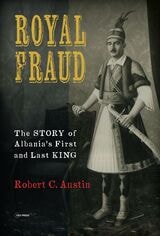
Royal Fraud
The Story of Albania’s First and Last KingRobert Austin
Central European University Press, 2024
Beginning its narrative in 1961, when Albanian King Zog I died in a Paris hospital after 22 years in exile, this book tells the colourful story of this Balkan country's first and only monarch. The road to becoming Europe's youngest president in 1925 and then king of Albania in 1928 was paved with feuds and assassinations, a political career-path common in the region. He craved the throne for several reasons; the Balkans were mostly run by kings, and Zog wanted to impress his mother and also give his six sisters an easy social rise.
Once king, his accomplishments were decidedly meagre. He spent most of his time keeping up appearances as a monarch despite the obvious fraud he had imposed on an illiterate and uninterested population. His one great success was that he had almost all his opponents assassinated, usually in broad daylight abroad.
Zog retained his power until his "friend" Mussolini ousted him in 1939. On the surface a Westernizer, this self-proclaimed ruler left Albania almost as he found it, with almost no roads or trains, thoroughly uneducated and utterly impoverished.
In his book, Robert Austin combines Zog’s adventurous life story with a studious analysis of Albania's political history from the fall of the Ottoman Empire to the threshold of Euro-Atlantic integration.

Ryan Adams
Losering, a Story of WhiskeytownBy David Menconi
University of Texas Press, 2012
Before he achieved his dream of being an internationally known rock personality, Ryan Adams had a band in Raleigh, North Carolina. Whiskeytown led the wave of insurgent-country bands that came of age with No Depression magazine in the mid-1990s, and for many people it defined the era. Adams was an irrepressible character, one of the signature personalities of his generation, and as a singer-songwriter he blew people away with a mature talent that belied his youth. David Menconi witnessed most of Whiskeytown’s rocket ride to fame as the music critic for the Raleigh News & Observer, and in Ryan Adams, he tells the inside story of the singer’s remarkable rise from hardscrabble origins to success with Whiskeytown, as well as Adams’s post-Whiskeytown self-reinvention as a solo act.
Menconi draws on early interviews with Adams, conversations with people close to him, and Adams’s extensive online postings to capture the creative ferment that produced some of Adams’s best music, including the albums Strangers Almanac and Heartbreaker. He reveals that, from the start, Ryan Adams had an absolutely determined sense of purpose and unshakable confidence in his own worth. At the same time, his inability to hold anything back, whether emotions or torrents of songs, often made Adams his own worst enemy, and Menconi recalls the excesses that almost, but never quite, derailed his career. Ryan Adams is a fascinating, multifaceted portrait of the artist as a young man, almost famous and still inventing himself, writing songs in a blaze of passion.