Results by title
270 books match the query 'Technology' and 15 start with r
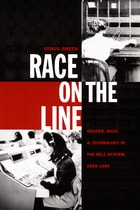
Race on the Line
Gender, Labor, and Technology in the Bell System, 1880–1980Venus Green
Duke University Press, 2001
More than a simple story of the impact of technology, Race on the Line combines oral history, personal experience, and archival research to weave a complicated history of how skill is constructed and how its meanings change within a rapidly expanding industry. Green discusses how women faced an environment where male union leaders displayed economic as well as gender biases and where racism served as a persistent system of division. Separated into chronological sections, the study moves from the early years when the Bell company gave both male and female workers opportunities to advance; to the era of the “white lady” image of the company, when African American women were excluded from the industry and feminist working-class consciousness among white women was consequently inhibited; to the computer era, a time when black women had waged a successful struggle to integrate the telephone operating system but faced technological displacement and unrewarding work.
An important study of working-class American women during the twentieth century, this book will appeal to a wide audience, particularly students and scholars with interest in women’s history, labor history, African American history, the history of technology, and business history.
Re-Creating Nature
Science, Technology, and Human Values in the Twenty-First CenturyJames T. Bradley
University of Alabama Press, 2019
Many of the ethical issues raised by new technologies have not been widely examined, discussed, or indeed settled. For example, robotics technology challenges the notion of personhood. Should a robot, capable of making what humans would call ethical decisions, be held responsible for those decisions and the resultant actions? Should society reward and punish robots in the same way that it does humans? Likewise, issues of safety, environmental concerns, and distributive justice arise with the increasing acceptance of genetically modified organisms (GMOs) in food production nanotechnology in engineering and medicine, and human gene therapy and enhancement. The problem of dual-use—when a technology can be used both to benefit and to harm—exists with virtually all new technologies but is central in the context of emerging 21st century technologies ranging from artificial intelligence and robotics to human gene-editing and brain-computer interfacing.
In Re-Creating Nature: Science, Technology, and Human Values in the Twenty-First Century, James T. Bradley addresses emerging biotechnologies with prodigious potential to benefit humankind but that are also fraught with ethical consequences. Some actually possess the power to directly alter the evolution of life on earth including human. Specifically, these topics include stem cells, synthetic biology, GMOs in agriculture, nanotechnology, bioterrorism, CRISPR gene-editing technology, three-parent babies, robotics and roboethics, artificial intelligence, and human brain research and neurotechnologies.
Offering clear explanations of these various technologies, a pragmatic presentation of the conundrums involved, and questions that illuminate hypothetical situations, Bradley guides discussions of these and other thorny issues resulting from the development of new biotechnologies. He also highlights the responsibilities of scientists to conduct research in an ethical manner and the responsibilities of nonscientists to become “science literate” in the twenty-first century.
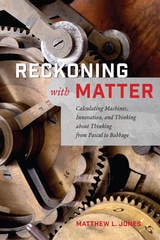
Reckoning with Matter
Calculating Machines, Innovation, and Thinking about Thinking from Pascal to BabbageMatthew L. Jones
University of Chicago Press, 2016
In Reckoning with Matter, Matthew L. Jones draws on the remarkably extensive and well-preserved records of the quest to explore the concrete processes involved in imagining, elaborating, testing, and building calculating machines. He explores the writings of philosophers, engineers, and craftspeople, showing how they thought about technical novelty, their distinctive areas of expertise, and ways they could coordinate their efforts. In doing so, Jones argues that the conceptions of creativity and making they exhibited are often more incisive—and more honest—than those that dominate our current legal, political, and aesthetic culture.
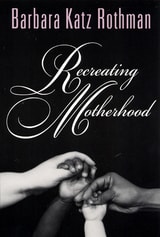
Recreating Motherhood
Rothman, Barbara Katz
Rutgers University Press, 2000
Selling “genetically gifted” human eggs on the free market for a hefty price. In vitro fertilization. Fetal rights. Prenatal diagnosis. Surrogacy. All are instances of biomedical and social “advancements” with which we have become familiar in recent years. Yet these issues are often regarded as distinct or only loosely related under the rubric of reproduction.
Barbara Katz Rothman demonstrates how they form a complex whole that demands of us in response a woman-centered, class-sensitive way of understanding motherhood. We need a social policy for dealing with mothers and motherhood that is consistent with feminist politics and feminist theory. Her book show how we as a society must first recognize that the real needs of mother, father, and children have been swept aside in an attempt to reduce the complex process of human reproduction to a clinical event that can be controlled by medical technology. Rothman suggests ways to accomplish social and legal change that would allow technological advances to affirm motherhood and the mother-child relationship without cost to women’s identity.
This new edition of Recreating Motherhood contains exciting updates. Rothman shows how this material is key in understanding the family, not just motherhood. And a new chapter, “Reflections on a Decade,” explores how new reproductive technologies combine with new marketing and new genetics to pose troubling social questions.

Reframing Consciousness
Art, mind and technologyEdited by Roy Ascott
Intellect Books, 2000
Loosely themed around four key elements of Mind, Body, Art and Values, the editor leads the investigation through the familiar territories of interactive media and artificial life, combining them with new and ancient ideas about creativity and authorship, the body and personal identity. This is the first book to recognise the paradigmatic changes which art, in alliance with science and technology is currently undergoing.
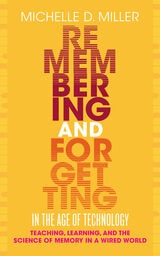
Remembering and Forgetting in the Age of Technology
Teaching, Learning, and the Science of Memory in a Wired WorldMichelle D Miller
West Virginia University Press, 2022
Human minds are made of memories, and today those memories have competition. Biological memory capacities are being supplanted, or at least supplemented, by digital ones, as we rely on recording—phone cameras, digital video, speech-to-text—to capture information we’ll need in the future and then rely on those stored recordings to know what happened in the past. Search engines have taken over not only traditional reference materials but also the knowledge base that used to be encoded in our own brains. Google remembers, so we don’t have to. And when we don’t have to, we no longer can. Or can we?
Remembering and Forgetting in the Age of Technology offers concise, nontechnical explanations of major principles of memory and attention—concepts that all teachers should know and that can inform how technology is used in their classes. Teachers will come away with a new appreciation of the importance of memory for learning, useful ideas for handling and discussing technology with their students, and an understanding of how memory is changing in our technology-saturated world.

Renaissance Drama 34
Media, Technology, and PerformanceW. B. Worthen
Northwestern University Press, 2006
This issue of Renaissance Drama, devoted to the topic of "Media, Technology, and Performance" is co-edited by W.B. Worthen, Wendy Wall, and Jeffrey Masten. The various articles displayed here address the interface between drama and its various modes of production over the past four centuries. This volume explores the relationship of drama to other forms of early modern spectacle (pageantry, masques), to the specificities of typography and the economics of the book industry, to the intersection of drama with film and DVD production, and to the way that stage technologies and theatrical economies of the 16th, 17th and 20th centuries define plays and playing. Rather than thinking of the early modern text as something simply reconstituted in its different incarnations, these essays make clear that different media force a rethinking of the terms that we use to envision, conceptualize, and even to see the work of drama.
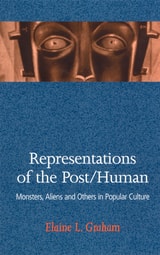
Representations of the Post/Human
Monsters, Aliens, and Others in Popular CultureGraham, Elaine L.
Rutgers University Press, 2002
Microchips. Genetic modification of plants. Cloning. Advances in technology promise to shape our lives more profoundly than ever before. Exciting new discoveries in reproductive, genetic, and information technologies all serve to call into question the immutability of the boundaries between humans, animals, and machines. The category of the “posthuman” reflects the implications of such new technologies on contemporary culture, especially in their capacity to reconfigure the human body and to challenge our most fundamental understandings of human nature.
Elaine L. Graham explores these issues as they are expressed within popular culture and the creative arts. From the myth of Prometheus and the Gothic horror of Frankenstein’s monster to contemporary postmodern science fiction, a gallery of fantastic creatures haunts Western myth, religion, and literature. They serve to connect contemporary debates with enduring concerns about the potential—and the limits—of human creativity.
This book breaks new ground in drawing together a wide range of literature on new technologies and their ethical implications. In her explorations of the monstrous and the cyborg, Graham covers the Jewish legend of the golem, the Human Genome Project, Star Trek: Next Generation, Star Trek: Voyager, Fritz Lang’s Metropolis, Donna Haraway’s cyborg writing, andmany other related topics. This book will interest students in cultural studies, literature, ethics, religion, information technology, and the life sciences.
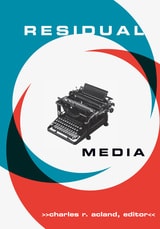
Residual Media
Charles R. Acland
University of Minnesota Press, 2006
Residual Media grapples with these questions and more in a wide-ranging and eclectic collection of essays. Beginning with how cultural change bumps along unevenly, dragging the familiar into novel contexts, the contributors examine how leftover artifacts can be rediscovered occupying space in storage sheds, traveling the globe, converting to alternative uses, and accumulating in landfills. By exploring reconfigured, renewed, recycled, neglected, abandoned, and trashed media, the essays here combine theoretical challenges to media history with ideas, technology, and uses that have been left behind.
From player pianos to vinyl records, and from the typewriter to the telephone, Residual Media is an innovative approach to the aging of culture and reveals that, ultimately, new cultural phenomena rely on encounters with the old.
Contributors: Jennifer Adams, DePauw U; Jody Berland, York U; Sue Currell, U of Sussex; Maria DiCenzo, Wilfrid Laurier U; Kate Egan, U of Wales; Lisa Gitelman, Catholic U; Alison Griffiths, CUNY; James Hamilton, U of Georgia; James Hay, U of Illinois—Champaign-Urbana; Michelle Henning, U of the West of England; Lisa Parks, UC Santa Barbara; Hillegonda C. Rietveld, South Bank U; Leila Ryan, McMaster U; John Davis, Alfred U; Collette Snowden, U of South Australia; Jonathan Sterne, McGill U; JoAnne Stober, National Archives, Canada; Will Straw, McGill U; Haidee Wasson, Concordia U.
Charles R. Acland is Professor and holds the Concordia University Research Chair in communications studies at Concordia University, Montreal.
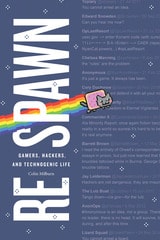
Respawn
Gamers, Hackers, and Technogenic LifeColin Milburn
Duke University Press, 2018
Revolutionary Stagecraft
Theater, Technology, and Politics in Modern ChinaTarryn Li-Min Chun
University of Michigan Press, 2024
2026 NYU Joe Callaway Prize Winner
- 2025 Association for Theatre in Higher Education Outstanding Book Award in Innovative Achievement Winner
- 2024 Theatre Library Association George Freedley Memorial Award Co-Winner
- American Society for Theatre Research Barnard Hewitt Award for Outstanding Research in Theatre History Finalist
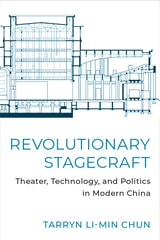
Revolutionary Stagecraft draws on a rich corpus of literary, historical, and technical materials to reveal a deep entanglement among technological modernization, political agendas, and the performing arts in modern China. This unique approach to Chinese theater history combines a close look at plays themselves, performance practices, technical theater details, and behind-the-scenes debates over “how to” make theater amid the political upheavals of China’s 20th century. The book begins at a pivotal moment in the 1920s—when Chinese theater artists began to import, use, and write about modern stage equipment—and ends in the 1980s when China's scientific and technological boom began. By examining iconic plays and performances from the perspective of the stage technologies involved, Tarryn Li-Min Chun provides a fresh perspective on their composition and staging. The chapters include stories on the challenges of creating imitation neon, rigging up a makeshift revolving stage, and representing a nuclear bomb detonating onstage.
In thinking about theater through technicity, the author mines well-studied materials such as dramatic texts and performance reviews for hidden technical details and brings to light a number of previously untapped sources such as technical journals and manuals; set design renderings, lighting plots, and prop schematics; and stage technology how-to guides for amateur thespians. This approach focuses on material stage technologies, situating these objects equally in relation to their technical potential, their human use, and the social, political, economic, and cultural forces that influence them. In each of its case studies, Revolutionary Stagecraft reveals the complex and at times surprising ways in which Chinese theater artists and technicians of the 20th century envisioned and enacted their own revolutions through the materiality of the theater apparatus.
Rewriting the Mechanic
Text, Technology, and the Body in the Eighteenth CenturyEmily M. West
Bucknell University Press, 2027
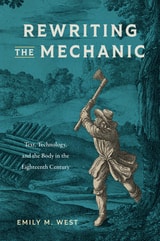
In the eighteenth century, “technology” didn’t name a particular device or a process. It referred instead to written accounts of the mechanical arts, a now-obsolete category encompassing the wide range of work done by hand, from baking bread to building ships. Rewriting the Mechanic examines how these written descriptions, circulating across genres in eighteenth-century Britain, transformed certain mechanical arts by imagining them as newly innovative, authoritative, and able to make speculative possibilities real—as what we now call technological. Reversing the familiar story in which literature simply reflects technological change, West draws on the work of Robert Hooke, Aphra Behn, Daniel Defoe, Maria Edgeworth, and Jane Austen to demonstrate the influence of literary techniques on ideas about masculinity, power, and the body, and how these texts helped to bring the very idea of technological modernity into being.
Published by Bucknell University Press. Distributed worldwide by Rutgers University Press.
Rhetoric, Technology, and the Virtues
Jared S. Colton
Utah State University Press, 2018
Rhetoric, Technology, and the Virtues argues that virtue ethics supports postmodern criticisms of rational autonomy and universalism while also enabling a discussion of the actual ethical behaviors that digital users form through their particular communicative ends and various rhetorical purposes. Authors Jared Colton and Steve Holmes extend Aristotle’s hexis framework through contemporary virtue ethicists and political theorists whose writing works from a tacit virtue ethics framework. They examine these key theorists through a range of case studies of digital habits of human users, including closed captioning, trolling, sampling, remixing, gamifying for environmental causes, and using social media, alongside a consideration of the ethical habits of nonhuman actors.
Tackling a needed topic with clarity and defined organization, Rhetoric, Technology, and the Virtues carefully synthesizes various strands of ethical thinking, convincingly argues that virtue ethics is a viable framework for digital rhetoric, and provides a practical way to assess the changing hexeis encountered across the network of ethical situations in the digital world.
Rhetorical Speculations
The Future of Rhetoric, Writing, and TechnologyScott Sundvall
Utah State University Press, 2019
Rhetoric and writing studies often engages technological shifts reactively, after the production and reception of rhetoric and writing has changed. This collection allows rhetoric and writing scholars to explore modes of critical speculation into the transformative effect of emerging technologies, particularly as a means to speculate on future shifts in the intellectual, pedagogical, and institutional frameworks of the field. In doing so, the project repositions rhetoric and writing scholars as proprietors of our technological future to come rather than as secondary receivers, critics, and adjusters of the technological present.
Major and emerging voices in the field offer a range of styles that include pragmatic, technical, and philosophical approaches to the issue of speculative rhetoric, exploring what new media/writing studies could be—theoretically, pedagogically, and institutionally—as future technologies begin to impinge on the work of writing. Rhetorical Speculations is at the cutting edge of the subject of futures thinking and will have broad appeal to scholars of rhetoric, literacy, futures studies, and material and popular culture.
Contributors:
Bahareh Brittany Alaei, Sarah J. Arroyo, Kristine L. Blair, Geoffrey V. Carter, Sid Dobrin, Kristie S. Fleckenstein, Steve Holmes, Kyle Jensen, Halcyon Lawrence, Alexander Monea, Sean Morey, Alex Reid, Jeff Rice, Gregory L. Ulmer, Anna Worm
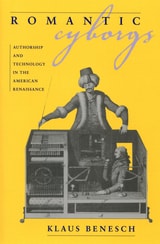
Romantic Cyborgs
Authorship and Technology in the American RenaissanceKlaus Benesch
University of Massachusetts Press, 0