Results by title
20 books match the query 'Fisheries'
All the Boats on the Ocean
How Government Subsidies Led to Global OverfishingCarmel Finley
University of Chicago Press, 2017
In this transnational, interdisciplinary history, Carmel Finley answers these questions and more as she explores how government subsidies propelled the expansion of fishing from a coastal, in-shore activity into a global industry. While nation states struggling for ocean supremacy have long used fishing as an imperial strategy, the Cold War brought a new emphasis: fishing became a means for nations to make distinct territorial claims. A network of trade policies and tariffs allowed cod from Iceland and tuna canned in Japan into the American market, destabilizing fisheries in New England and Southern California. With the subsequent establishment of tuna canneries in American Samoa and Puerto Rico, Japanese and American tuna boats moved from the Pacific into the Atlantic and Indian Oceans after bluefin. At the same time, government subsidies in nations such as Spain and the Soviet Union fueled fishery expansion on an industrial scale, with the Soviet fleet utterly depleting the stock of rosefish (or Pacific ocean perch) and other groundfish from British Columbia to California. This massive global explosion in fishing power led nations to expand their territorial limits in the 1970s, forever changing the seas.
Looking across politics, economics, and biology, All the Boats on the Ocean casts a wide net to reveal how the subsidy-driven expansion of fisheries in the Pacific during the Cold War led to the growth of fisheries science and the creation of international fisheries management. Nevertheless, the seas are far from calm: in a world where this technologically advanced industry has enabled nations to colonize the oceans, fish literally have no place left to hide, and the future of the seas and their fish stocks is uncertain.
All the Fish in the Sea
Maximum Sustainable Yield and the Failure of Fisheries ManagementCarmel Finley
University of Chicago Press, 2011
Carmel Finley reveals that the fallibility of MSY lies at its very inception—as a tool of government rather than science. The foundational doctrine of MSY emerged at a time when the US government was using science to promote and transfer Western knowledge and technology, and to ensure that American ships and planes would have free passage through the world’s seas and skies. Finley charts the history of US fisheries science using MSY as her focus, and in particular its application to halibut, tuna, and salmon fisheries. Fish populations the world over are threatened, and All the Fish in the Sea helps to sound warnings of the effect of any management policies divested from science itself.
Archaeology of North Pacific Fisheries
Edited by Madonna L. Moss and Aubrey Cannon
University of Alaska Press, 2011
For thousands of years, fisheries were crucial to the sustenance of the First Peoples of the Pacific Coast. Yet human impact has left us with a woefully incomplete understanding of their histories prior to the industrial era. Covering Alaska, British Columbia, and Puget Sound, The Archaeology of North Pacific Fisheries illustrates how the archaeological record reveals new information about ancient ways of life and the histories of key species. Individual chapters cover salmon, as well as a number of lesser-known species abundant in archaeological sites, including pacific cod, herring, rockfish, eulachon, and hake. In turn, this ecological history informs suggestions for sustainable fishing in today’s rapidly changing environment.
Breaking the Banks
Representations and Realities in New England Fisheries, 1866-1966Matthew McKenzie
University of Massachusetts Press, 2018
Books, films, and the media have long portrayed the Yankee fisherman's hard-scrabble existence, as he faced brutal weather on the open seas and unnecessary governmental restrictions. As McKenzie contends, this simplistic view has long betrayed commercial fisheries' sophisticated legislative campaigns in Washington, DC, as they sought federal subsidies and relief and, eventually, fewer constricting regulations. This clash between fisheries' representation and their reality still grips fishing communities today as they struggle to navigate age-old trends of fleet consolidation, stock decline, and intense competition.
Building Back Better in India
Development, NGOs, and Artisanal Fishers after the 2004 TsunamiRaja Swamy
University of Alabama Press, 2021
Disaster, development, and the struggle for coastal livelihoods in post-tsunami India.
Building Back Better in India: Development, NGOs, and Artisanal Fishers after the 2004 Tsunami addresses the ways in which natural disasters impact the strategies and priorities of neoliberalizing states in the contemporary era. In the light of growing scholarly and public concern over “disaster capitalism” and the tendency of states and powerful international financial institutions to view disasters as “opportunities” to “build back better,” Raja Swamy offers an ethnographically rich account of post-disaster reconstruction, its contested aims, and the mixed outcomes of state policy, humanitarian aid, and local resistance. Using the 2004 Indian Ocean tsunami as a case study, Swamy investigates the planning and implementation of a reconstruction process that sought to radically transform the geography of a coastal district in the Indian state of Tamil Nadu.
Drawing on an ethnographic study conducted in Tamil Nadu’s Nagapattinam District, Swamy shows how and why the state-led, multilaterally financed, and NGO-mediated reconstruction prioritized the displacement of coastal fisher populations. Exploring the substantive differences shaping NGO action, specifically in response to core political questions affecting the well-being of their ostensible beneficiaries, this account also centers the political agency of disaster survivors and their allies among NGOs in contesting the meanings of recovery while navigating the process of reconstruction.
If humanitarian aid brought together NGOs and fishers as givers and recipients of aid, it also revealed in its workings competing and sometimes contradictory assumptions, goals, interests, and strategies driving the fraught historical relationship between artisanal fishers and the state. Importantly, this research foregrounds the ambiguous role of NGOs involved in the distribution of aid, as well as the agency and strategic actions of the primary recipients of aid—the fishers of Nagapattinam—as they struggled with a reconstruction process that made receipt of the humanitarian gift of housing conditional on the formal abandonment of all claims to the coast. Building Back Better in India thus bridges scholarly concerns with disasters, humanitarianism, and economic development with those focused on power, agency, and resistance.
Clearing the Coastline
The Nineteenth-Century Ecological & Cultural Transformations of Cape CodMatthew McKenzie
University Press of New England, 2011
Fish For All
An Oral History of Multiple Claims and Divided Sentiment on Lake MichiganMichael J. Chiarappa
Michigan State University Press, 2003
The contentious claims of groups seeking to use Lake Michigan’s fisheries resources were at the center of modern America’s emerging environmental politics in the middle of the twentieth century. Inheriting the environmental abuse, political oversights, and cultural inclinations of an earlier era, Lake Michigan’s later twentieth century fisheries stakeholders found themselves relentlessly divided by a series of disputes arising from the promotion of sport fishing over commercial fishing, policy-making positions of state government, the ecological changes wrought by nonindigenous species, and the reclamation of treaty-rights fishing by Native Americans.
Going beyond the chronicling of past events, Fish for All contextualizes the shared experiences that shape each group’s collective memory and presents their historical narratives as discourse that legitimizes their current claims to the resource. Fish for All highlights the historically charged consciousness of fishing communities and points to the evolving communication that will take place between them, fisheries historians, fisheries anthropologists, scientists, and policymakers.
Fishers At Work, Workers At Sea
Puerto Rican Journey Thru Labor & RefugeDavid Griffith and Manuel Valdés Pizzini
Temple University Press, 2002
Fishers at Work, Workers at Sea describes Puerto Rican fishing families as they negotiate homeland and diaspora. It considers how wage work affects their livelihoods and identities at home and how these independent producers move in and out of global commodity markets. Drawing on some 100 life histories and years of fieldwork, David Griffith and Manuel Valdés Pizzini have developed a complex, often moving portrait of the men and women who fiercely struggle to hang onto the coastal landscapes and cultural heritage tied to the Caribbean Sea.
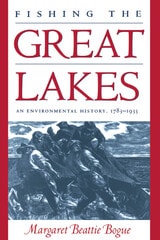
Fishing the Great Lakes
An Environmental History, 1783–1933Margaret Beattie Bogue
University of Wisconsin Press, 2000
Fishing the Great Lakes is a sweeping history of the destruction of the once-abundant fisheries of the great "inland seas" that lie between the United States and Canada. Though lake trout, whitefish, freshwater herring, and sturgeon were still teeming as late as 1850, Margaret Bogue documents here how overfishing, pollution, political squabbling, poor public policies, and commercial exploitation combined to damage the fish populations even before the voracious sea lamprey invaded the lakes and decimated the lake trout population in the 1940s.
From the earliest records of fishing by native peoples, through the era of European exploration and settlement, to the growth and collapse of the commercial fishing industry, Fishing the Great Lakes traces the changing relationships between the fish resources and the people of the Great Lakes region. Bogue focuses in particular on the period from 1783, when Great Britain and the United States first politically severed the geographic unity of the Great Lakes, through 1933, when the commercial fishing industry had passed from its heyday in the late nineteenth century into very serious decline. She shows how fishermen, entrepreneurial fish dealers, the monopolistic A. Booth and Company (which distributed and marketed much of the Great Lakes catch), and policy makers at all levels of government played their parts in the debacle. So, too, did underfunded scientists and early conservationists unable to spark the interest of an indifferent public. Concern with the quality of lake habitat and the abundance of fish increasingly took a backseat to the interests of agriculture, lumbering, mining, commerce, manufacturing, and urban development in the Great Lakes region. Offering more than a regional history, Bogue also places the problems of Great Lakes fishing in the context of past and current worldwide fishery concerns.

Good Boat Speaks For Itself
Isle Royale Fisherman and Their BoatsTimothy Cochrane
University of Minnesota Press, 2002
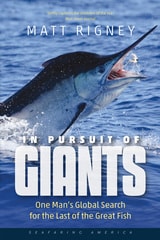
In Pursuit of Giants
One Man's Global Search for the Last of the Great FishMatt Rigney
University Press of New England, 2017
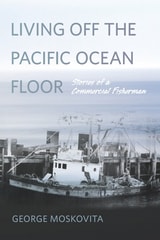
Living Off the Pacific Ocean Floor
Stories of a Commercial FishermanGeorge Moskovita
Oregon State University Press, 2015
In a career that spanned over 60 years, George Moskovita met with many maritime adventures, recounted for the reader in a clear, direct, and unsentimental style. He saw the fishery he had helped build devastated by foreign factory processing ships. He bought, repaired, traded, and sank more boats than most fishermen would work on in a lifetime. Along the way, he managed to raise four daughters with his wife, June. The name of one of his last boats, the Four Daughters, reflects the central importance of family life to a man who was often at sea. Moskovita’s memoir provides a unique glimpse of Pacific maritime life in the 20th century, small-town coastal life after World War II, and the early days of fishery development in Oregon.
With an introduction and textual notes by Carmel Finley, an historian of science, and Mary Hunsicker, an aquatic and fisheries scientist, this book will be invaluable to fishery students and professionals interested in the biology, ecology, and history of oceans and commercial fishing. It will also have broad appeal to readers of Oregon history and maritime adventure, and anyone else who has ever stood at the western edge of the continent and wondered what life was like at sea.
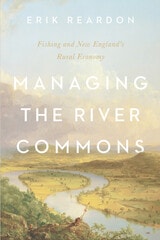
Managing the River Commons
Fishing and New England's Rural EconomyErik Reardon
University of Massachusetts Press, 2021
Historian Erik Reardon argues that to protect these fish, New England's farmer-fishermen pushed for conservation measures to limit commercial fishing and industrial uses of the river. Beginning in the colonial period and continuing to the mid-nineteenth century, they advocated for fishing regulations to promote sustainable returns, compelled local millers to open their dams during seasonal fish runs, and defeated corporate proposals to erect large-scale dams. As environmentalists work to restore rivers in New England and beyond in the present day, Managing the River Commons offers important lessons about historical conservation efforts that can help guide current campaigns to remove dams and allow anadromous fish to reclaim these waters.
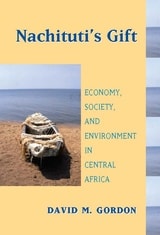
Nachituti's Gift
Economy, Society, and Environment in Central AfricaDavid M. Gordon
University of Wisconsin Press, 2006
Nachituti’s Gift challenges conventional theories of economic development with a compelling comparative case study of inland fisheries in Zambia and Congo from pre- to postcolonial times. Neoclassical development models conjure a simple, abstract progression from wealth held in people to money or commodities; instead, Gordon argues, primary social networks and oral charters like “Nachituti’s Gift” remained decisive long after the rise of intensive trade and market activities. Interweaving oral traditions, songs, and interviews as well as extensive archival research, Gordon’s lively tale is at once a subtle analysis of economic and social transformations, an insightful exercise in environmental history, and a revealing study of comparative politics.
“A powerful portrayal of the complexity, fluidity, and subtlety of Lake Mweru fishers’ production strategies . . . . Natchituti’s Gift adds nuance and evidence to some of the most important and sophisticated conversations going on in African studies today.”—Kirk Arden Hoppe, International Journal of African Historical Studies
“A lively and intelligent book, which offers a solid contribution to ongoing debates about the interplay of the politics of environment, history and economy.”—Joost Fontein, Africa
“Well researched and referenced . . . . [Natchituti’s Gift] will be of interest to those in a wide variety of disciplines including anthropology, African Studies, history, geography, and environmental studies.”—Heidi G. Frontani, H-SAfrica
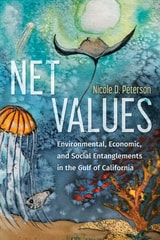
Net Values
Environmental, Economic, and Social Entanglements in the Gulf of CaliforniaNicole D. Peterson
University of Arizona Press, 2025
In Loreto, Baja California Sur, Mexico, artisanal fishing families and staff of Loreto Bay National Park face an array of choices as tourism, environmental concerns, and economic precarity challenge livelihoods and natural resource availability. In Net Values, Nicole D. Peterson offers a critical examination of how the idea of “choice” is understood, and what it means for policies, planning, and programs to ignore the social, political, economic, and cultural contexts surrounding these choices.
Anchored by more than twenty years of research, Peterson provides insight into the fishing community of Loreto and reveals an important role in decision-making that diverges from previous studies. She argues that decisions about fishing, natural resource management, and other aspects of life are influenced by context, values, and expectations in ways that go beyond the typical psychological or cognitive theories of choice. Instead, Net Values highlights the ways that choices are constrained and enabled by values and expectations of cultures, histories, relationships, and experiences, both personal and shared. Peterson answers questions such as “why do the fishermen fish?” or “what is the marine park staff doing?” These decisions and choices are related to the larger implication addressed by this book: that in order to make effective policies around natural resource management and other issues, we must understand how those potential policies interact with the decision processes already underway.
Divided into five chapters, Net Values is rich in ethnographic detail, drawing from real people to inform the narratives, chapters, and theoretical elaboration. Peterson’s interactions with fishers such as Don Javier and his family and friends support the ideas offered around choice, values, and strategies, connecting ideas to real experiences.
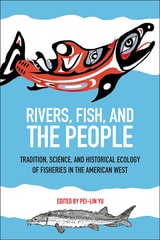
Rivers, Fish, and the People
Tradition, Science, and Historical Ecology of Fisheries in the American WestPei-Lin Yu
University of Utah Press, 2015
America’s western rivers are under assault from development, pollution, invasive species, and climate change. Returning these eco- systems to the time of European contact is often the stated goal for restoration efforts, yet neither the influence of indigenous societ- ies on rivers at the time of contact nor the deeper evolutionary relationships are yet understood by the scientific world. This volume presents a unique synthesis of scientific discoveries and traditional knowledge about the ecology of iconic river species in the American West.
Building from a foundation in fisheries biology and life history data about key species, the book reveals ancient human relationships with those species and describes time-tested Native resource management techniques, drawing from the archaeological record and original ethnographic sources. It evaluates current research trends, summarizes the conceptual foundations for the cultural and evolutionary significance of sustainable use of fish, and seeks pathways for future research. Geographic areas described include the Columbia Plateau, Idaho’s Snake River Plain, the Sacramento River Delta, and the mid-Fraser River of British Columbia. Previously unpublished information is included with the express permission and approval of tribal communities. This approach broadens and deepens the available body of data and establishes a basis for future collaboration between scientists and Native stakeholders toward mutual goals of river ecosystem health.
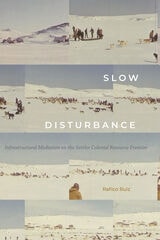
Slow Disturbance
Infrastructural Mediation on the Settler Colonial Resource FrontierRafico Ruiz
Duke University Press, 2021

So Great Was the Slaughter
Market Hunters, Sportsmen, and Wildlife Conservation in ArkansasBuckley T. Foster
University of Alabama Press, 2025
Winner of the 2026 J.G. Ragsdale Book Award
So Great Was the Slaughter reveals the untold story of Arkansas conservation pioneers who saved the state’s game and fish populations. As Arkansas entered the twentieth century, the national demand for meat combined with the ability to ship millions of animals to hungry cities like New Orleans, Memphis, and Chicago had driven many species, including bison and passenger pigeons, to extinction in Arkansas. Many others, including deer, bear, turkey, quail, and fish, were in danger of disappearing.
In response, an unlikely coalition of Arkansas sportsmen, hunters, and conservationists created a vision for conservation legislation, game laws, and the establishment of fish hatcheries and wildlife refuges. With support from influential outsiders like E. A. McIlhenny and the United States Biological Survey, they waged a long battle against entrenched political and commercial interests.
Buckley Foster’s meticulous research reveals how these pioneers fought to save the state’s wildlife resources from destruction and laid the foundations for sustainable, modern wildlife management in Arkansas. So Great Was the Slaughter will fascinate hunters, conservationists, historians, and those interested in the history of wildlife conservation and conflicts between market hunters and sportsmen in the United States and the American South.
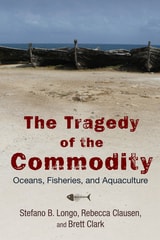
The Tragedy of the Commodity
Oceans, Fisheries, and AquacultureLongo, Stefano B
Rutgers University Press, 2015
Although humans have long depended on oceans and aquatic ecosystems for sustenance and trade, only recently has human influence on these resources dramatically increased, transforming and undermining oceanic environments throughout the world. Marine ecosystems are in a crisis that is global in scope, rapid in pace, and colossal in scale. In The Tragedy of the Commodity, sociologists Stefano B. Longo, Rebecca Clausen, and Brett Clark explore the role human influence plays in this crisis, highlighting the social and economic forces that are at the heart of this looming ecological problem.
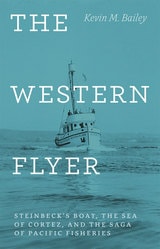
The Western Flyer
Steinbeck's Boat, the Sea of Cortez, and the Saga of Pacific FisheriesKevin M. Bailey
University of Chicago Press, 2015
In this book, Kevin M. Bailey resurrects this forgotten witness to the changing tides of Pacific fisheries. He draws on the Steinbeck archives, interviews with family members of crew, and more than three decades of working in Pacific Northwest fisheries to trace the depletion of marine life through the voyages of a single ship. After Steinbeck and his friend Ed Ricketts—a pioneer in the study of the West Coast’s diverse sea life and the inspiration behind “Doc” in Cannery Row—chartered the boat for their now-famous 1940 expedition, the Western Flyer returned to its life as a sardine seiner in California. But when the sardine fishery in Monterey collapsed, the boat moved on: fishing for Pacific ocean perch off Washington, king crab in the Bering Sea off Alaska, and finally wild Pacific salmon—all industries that would also face collapse.
As the Western Flyer herself faces an uncertain future—a businessman has bought her, intending to bring the boat to Salinas, California, and turn it into a restaurant feature just blocks from Steinbeck’s grave—debates about the status of the California sardine, and of West Coast fisheries generally, have resurfaced. A compelling and timely tale of a boat and the people it carried, of fisheries exploited, and of fortunes won and lost, The Western Flyer is environmental history at its best: a journey through time and across the sea, charting the ebb and flow of the cobalt waters of the Pacific coast.