Results by title
493 books match the query 'Theory' and 17 start with r
Race, Liberalism, and Economics
David Colander, Robert E. Prasch, and Falguni A. Sheth, Editors
University of Michigan Press, 2009
The contributors show how the evolution of racist ideas has been a subtle process that is woven into larger movements in the development of scientific thought; economic thinking is embedded in a larger social milieu. Previous discussions of policies toward race have been constrained by that social milieu, and, since World War II, have largely focused on ending legislated and state-sanctioned discrimination. In the past decade, the broader policy debate has moved on to questions about the existence and relative importance of intangible sources of inequality, including market structure, information asymmetries, cumulative processes, and cultural and/or social capital. This book is a product of, and a contribution to, this modern discussion. It is uniquely transdisciplinary, with contributions by and discussions among economists, philosophers, anthropologists, and literature scholars.
The volume first examines the early history of work on race by economists and social scientists more generally. It continues by surveying American economists on race and featuring contributions that embody more modern approaches to race within economics. Finally it explores several important policy issues that follow from the discussion.
". . . adds new insights that contribute significantly to the debate on racial economic inequality in the U.S. The differing opinions of the contributors provide the broad perspective needed to examine this extremely complex issue."
--James Peoples, University of Wisconsin-Milwaukee
"There is an immense economic literature on racial discrimination, employing a variety of models and decomposition methods. This volume makes a unique contribution by focusing on the philosophical assumptions at the root of this analysis and by presenting many sides of the very vigorous debate surrounding these controversial issues."
--Thomas Maloney, University of Utah
"By focusing upon the progress of analytical technique, historians of economic thought have grossly neglected the symbiotic relation of economics to public policy and ideology. This collection of essays offers a most welcome breach of disciplinary apartheid. Seizing upon recent research in the almost forgotten writings about race of Classical economists and their contemporaries, it relates nineteenth-century ideas to current debates about economic discrimination and other manifestations of racism. As the writing is both learned and lively, the book should appeal both to the generally educated reader and to teachers of courses in multiculturalism."
--Melvin Reder, Isidore Brown and Gladys J. Brown Professor Emeritus of Urban and Labor Economics, University of Chicago
Radicalization in Theory and Practice
Understanding Religious Violence in Western EuropeThierry Balzacq and Elyamine Settoul, Editors
University of Michigan Press, 2022
Radicalization is a major challenge of contemporary global security. It conjures up images of violent ideologies, “homegrown” terrorists and jihad in both the academic sphere and among security and defense experts. While the first instances of religious radicalization were initially limited to second-generation Muslim immigrants, significant changes are currently impacting this phenomenon. Technology is said to amplify the dissemination of radicalism, though there remains uncertainty as to the exact weight of technology on radical behaviors. Moreover, far from being restricted to young men of Muslim heritage suffering from a feeling of social relegation, radicalism concerns a significant number of converted Muslims, women and more heterogeneous profiles (social, academic and geographic), as well as individuals that give the appearance of being fully integrated in the host society. These new and striking dynamics require innovative conceptual lenses.
Radicalization in Theory and Practice identifies the mechanisms that explicitly link radical religious beliefs and radical actions. It describes its nature, singles out the mechanisms that enable radicalism to produce its effects, and develops a conceptual architecture to help scholars and policy-makers to address and evaluate radicalism—or what often passes as such. A variety of empirical chapters fed by first-hand data probe the relevance of theoretical perspectives that shape radicalization studies. By giving a prominent role to first-hand empirical investigations, the authors create a new framework of analysis from the ground up. This book enhances the quality of theorizing in this area, consolidates the quality of methodological enquiries, and articulates security studies insights with broader theoretical debates in different fields including sociology, social psychology, economics, and religious studies.

Radio Frequency and Microwave Power Amplifiers
Theory, design and applicationsAndrei Grebennikov
The Institution of Engineering and Technology, 2019

Rascuache Lawyer
Toward a Theory of Ordinary LitigationAlfredo Mirandé
University of Arizona Press, 2011
Every chapter presents an actual case from Mirandé’s experience (only the names and places have been changed). His clients have been charged with everything from carrying a concealed weapon, indecent exposure, and trespassing to attempted murder, domestic violence, and child abuse. Among them are recent Mexican immigrants, drug addicts, gang members, and the homeless. All of them are destitute, and many are victims of racial profiling. Some “pay” Mirandé with bartered services such as painting, home repairs, or mechanical work on his car. And Mirandé doesn’t always win their cases. But, as he recounts, he certainly works tirelessly to pursue all legal remedies.
Each case is presented as a letter to a fascinating (fictional) “Super Chicana” named Fermina Gabriel, who we are told is an accomplished lawyer, author, and singer. This narrative device allows the author to present his cases as if he were recounting them to a friend, drawing in the reader as a friend as well.
Bookending the individual cases, Mirandé’s introductions and conclusions offer a compelling vision of progressive legal practice grounded in rascuache lawyering.

Reading World Literature
Theory, History, PracticeEdited by Sarah Lawall
University of Texas Press, 1994
As teachers and readers expand the canon of world literature to include writers whose voices traditionally have been silenced by the dominant culture, fundamental questions arise. What do we mean by "world"? What constitutes "literature"? Who should decide?
Reading World Literature is a cumulative study of the concept and evolving practices of "world literature." Sarah Lawall opens the book with a substantial introduction to the overall topic. Twelve original essays by distinguished specialists run the gamut from close readings of specific texts to problems of translation theory and reader response. The sequence of essays develops from re-examinations of traditional canonical pieces through explorations of less familiar works to discussions of reading itself as a "literacy" dependent on worldview.
Reading World Literature will open challenging new vistas for a wide audience in the humanities, from traditionalists to avant-garde specialists in literary theory, cultural studies, and area studies.
Readings in Public Choice Economics
Jac C. Heckelman, Editor
University of Michigan Press, 2004
Public choice analysis applies the methodology of economics to issues in political science and the policy process. The readings in this anthology cover topics in both institutional political economy and social choice theory and are comprehensible to nonspecialists and advanced undergraduates with a background in basic economic theory. Readings are taken from academic journals and book chapters and are reproduced in their entirety. They are selected to ensure they contain a minimal amount of notation and are free of advanced econometrics.
The anthology contains two to three readings each to explore the areas of rent seeking, collective action, bureaucracy, elections and the economy, choosing decision rules, majority rule, alternative voting procedures, and the calculus of voting. Each part contains a brief introduction to the general theme, and questions are presented as a guide to each reading. Additional suggested readings are provided to develop these concepts further.
Jac C. Heckelman is Associate Professor of Economics, Wake Forest University.
Realignment in American Politics
Toward a TheoryEdited by Bruce A. Campbell and Richard J. Trilling
University of Texas Press, 1980
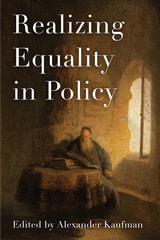
Realizing Equality in Policy
Edited by Alexander Kaufman
University of Michigan Press, 2025
With contributions from scholars of both luck and relational egalitarianism, the essays reexamine a number of basic assumptions regarding social and economic policy from an egalitarian perspective. They explore gender-based discrimination, international justice, and the possibility for engagement between socialist and left-liberal thought. Rather than focusing on the subtle distinctions that divide egalitarian views, this volume shows that both views have the potential to offer important insights about how differences might be overcome and gaps might be closed. In offering new directions for solving wealth inequality through policy, Realizing Equality in Policy contributes to ongoing conversations in political theory, economic theory, and moral philosophy.
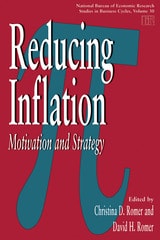
Reducing Inflation
Motivation and StrategyEdited by Christina D. Romer and David H. Romer
University of Chicago Press, 1997
Section I discusses the consequences of inflation. These papers analyze inflation's impact on the tax system, labor market flexibility, equilibrium unemployment, and the public's sense of well-being. Section II considers the obstacles facing central bankers in achieving low inflation. These papers study the precision of estimates of equilibrium unemployment, the sources of the high inflation of the 1970s, and the use of non-traditional indicators in policy formation. The papers in section III consider how institutions can be designed to promote successful monetary policy, and the importance of institutions to the performance of policy in the United States, Germany, and other countries.
This timely volume should be read by anyone who studies or conducts monetary policy.
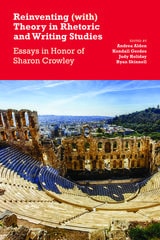
Reinventing (with) Theory in Rhetoric and Writing Studies
Essays in Honor of Sharon CrowleyAndrea Alden
Utah State University Press, 2019
For Crowley, theory is a basic building block of rhetoric “produced by and within specific times and locations as a means of opening other ways of believing or acting.” Doing theory, in this sense, is the practice of surveying the common sense of the community (doxa) and discovering the available means of persuasion (invention). The ultimate goal of doing theory is not to prescribe certain actions but to ascertain what options exist for rhetors to see the world differently, to discover new possibilities for thought and action, and thereby to effect change in the world.
The scholarship collected in Reinventing (with) Theory in Rhetoric and Writing Studies takes Crowley’s notion of theory as an invitation to develop new avenues for believing and acting. By reinventing the understanding of theory and its role in the field, this collection makes an important contribution to scholarship in rhetorical studies and writing studies. It will be valuable to scholars, teachers, and students interested in diverse theoretical directions in rhetoric and writing studies as well as in race, gender, and disability theories, religious rhetorics, digital rhetoric, and the history of rhetoric.
Publication supported in part by the Texas Tech University Humanities Center.
Contributors: Jason Barrett-Fox, Geoffrey Clegg, Kirsti Cole, Joshua Daniel-Wariya, Diane Davis, Rebecca Disrud, Bre Garrett, Catherine C. Gouge, Debra Hawhee, Matthew Heard, Joshua C. Hilst, David G. Holmes, Bruce Horner, William B. Lalicker, Jennifer Lin LeMesurier, James C. McDonald, Timothy Oleksiak, Dawn Penich-Thacker, J. Blake Scott, Victor J. Vitanza, Susan Wyche
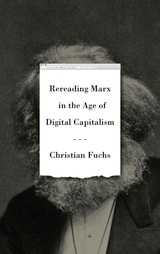
Rereading Marx in the Age of Digital Capitalism
Christian Fuchs
Pluto Press, 2019
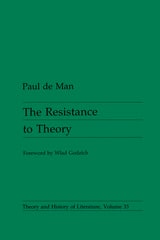
Resistance To Theory
Paul De Man
University of Minnesota Press, 1986
Explores reasons why the theoretical enterprise is blind to, or “resists,” the radical nature of reading, in six essays that offer a new level of critical and cultural understanding in reference to the works of Jauss, Riffaterre, Benjamin, and Bakhtin.
In a brilliant collection of essays, de Man explores his views, that, the resistance to theory is inherent in the theoretical enterprise itself, and the real debate is with its own methodological assumptions and possibilities.
“Indispensable. . . . There is resistance to ‘theory’ and also confusion about its status with reference to both philosophy and criticism.” -Frank Kermode, Columbia University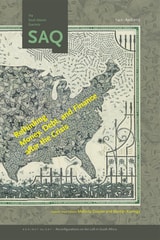
Rethinking Money, Debt, and Finance after the Crisis
Melinda Cooper and Martijn Konings, special issue editors
Duke University Press, 0
Melinda Cooper is an Australian Research Council Future Fellow in the Department of Sociology and Social Policy at the University of Sydney. She is the author of Clinical Labor: Tissue Donors and Research Subjects in the Global Bioeconomy, also published by Duke University Press. Martijn Konings is Senior Lecturer and Australian Research Council DECRA Fellow in the Department of Political Economy at the University of Sydney. He is the author of The Development of American Finance.
Contributors: Lisa Adkins, Fiona Allon, Dick Bryan, Melinda Cooper, Marieke de Goede, Chris Jefferis, Martijn Konings, Randy Martin, Michael Rafferty
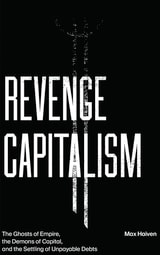
Revenge Capitalism
The Ghosts of Empire, the Demons of Capital, and the Settling of Unpayable DebtsMax Haiven
Pluto Press, 2020
In Revenge Capitalism, Max Haiven argues that this economic vengeance helps us explain the culture and politics of revenge we see in society more broadly. Moving from the history of colonialism and its continuing effects today, he examines the opioid crisis in the US, the growth of 'surplus populations' worldwide and unpacks the central paradigm of unpayable debts - both as reparations owed, and as a methodology of oppression.
Revenge Capitalism offers no easy answers, but is a powerful call to the radical imagination.
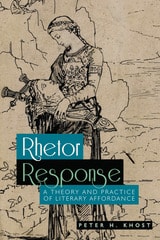
Rhetor Response
A Theory and Practice of Literary AffordancePeter H. Khost
Utah State University Press, 2018
Bridging the disciplinary divide between writing and literature, Rhetor Response introduces the concept and pedagogical applications of “literary affordances”—the ways in which readers “use” and integrate literature into their own writing or lives. Unconcerned with authorial intent, interpretive meaning, or critical reception, “affordance” signifies a shift in focus from what literary texts mean and do to what one can do with them.
This book presents both opportunities and challenges to writing studies, a field whose burgeoning disciplinary independence ironically relies on a sizable underclass of specialists in literature rather than writing. Incorporating elements of rhetorical theory, literary criticism, pedagogical methodology, political critique, and psychological and philosophical memoir, Peter H. Khost complicates and revives the relevance of literature—from belles lettres to fanfiction—by turning from interpretation to affordance in order to identify readers’ applications of literary textual features to unrelated lived situations.
Rhetor Response theorizes and exemplifies literary affordance as a constructive step toward professional reconciliation, as well as an entry into greater textual power and pleasure for students and readers. It is a one-of-a-kind resource for college writing program administrators, faculty and scholars in English and writing studies, and graduate and advanced undergraduate students across both disciplines.
Risky Behavior among Youths
An Economic AnalysisEdited by Jonathan Gruber
University of Chicago Press, 2001
This important volume provides both a key data source for public policy makers and a clear affirmation of the usefulness of economic analysis to our understanding of risky behavior.
Ruling Oneself Out
A Theory of Collective AbdicationsIvan Ermakoff
Duke University Press, 2008
Ermakoff distinguishes several mechanisms of alignment in troubled and uncertain times and assesses their significance through a fine-grained examination of actors’ beliefs, shifts in perceptions, and subjective states. To this end, he draws on the analytical and methodological resources of perspectives that usually stand apart: primary historical research, formal decision theory, the phenomenology of group processes, quantitative analyses, and the hermeneutics of testimonies. In elaborating this dialogue across disciplinary boundaries, Ruling Oneself Out restores the complexity and indeterminate character of pivotal collective decisions and demonstrates that an in-depth historical exploration can lay bare processes of crucial importance for understanding the formation of political preferences, the paradox of self-deception, and the makeup of historical events as highly consequential.