Results by title
18 books match the query 'Joy'

Anselm's Pursuit of Joy
A Commentary on the ProslogionGavin R. Ortlund
Catholic University of America Press, 2020
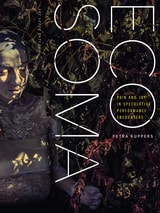
Eco Soma
Pain and Joy in Speculative Performance EncountersPetra Kuppers
University of Minnesota Press, 2022
Modeling a disability culture perspective on performance practice toward socially just futures
In Eco Soma, Petra Kuppers asks readers to be alert to their own embodied responses to art practice and to pay attention to themselves as active participants in a shared sociocultural world. Reading contemporary performance encounters and artful engagements, this book models a disability culture sensitivity to living in a shared world, oriented toward more socially just futures.
Eco soma methods mix and merge realities on the edges of lived experience and site-specific performance. Kuppers invites us to become moths, sprout gills, listen to our heart’s drum, and take starships into crip time. And fantasy is central to these engagements: feeling/sensing monsters, catastrophes, golden lines, heartbeats, injured sharks, dotted salamanders, kissing mammoths, and more. Kuppers illuminates ecopoetic disability culture perspectives, contending that disabled people and their co-conspirators make art to live in a changing world, in contact with feminist, queer, trans, racialized, and Indigenous art projects. By offering new ways to think, frame, and feel “environments,” Kuppers focuses on art-based methods of envisioning change and argues that disability can offer imaginative ways toward living well and with agency in change, unrest, and challenge.
Traditional somatics teach us how to fine-tune our introspective senses and to open up the world of our own bodies, while eco soma methods extend that attention toward the creative possibilities of the reach between self, others, and the land. Eco Soma proposes an art/life method of sensory tuning to the inside and the outside simultaneously, a method that allows for a wider opening toward ethical cohabitation with human and more-than-human others.
Genealogies of Joy
The Pleasure of Latinx LiteratureEdited by Leigh Johnson and Erin Murrah-Mandril; Foreword by Melina Vizcaíno-Alemán
University of Arizona Press, 2027
What does it mean to center joy in a world that insists on Latinx suffering? Genealogies of Joy: The Pleasure of Latinx Literature argues that joy is not a luxury or distraction but a radical, sustaining force woven through Latinx literature and culture. From humor and food to protest, friendship, sexuality, and aging, the essays gathered here reveal joy as an embodied, communal practice—one that refuses racialized shame and imagines liberatory futures.
Organized into three sections—Memory, Method, and Maps—the volume traces a genealogy of joy across time and space. Contributors explore how writers such as Gloria Anzaldúa, Julia de Burgos, Erika Sánchez, Javier Zamora, Myriam Gurba, Aidan Thomas, and Sandra Cisneros transform grief into resilience, invert dominant narratives, and reclaim pleasure as political praxis. Whether through irreverent laughter, queer desire, culinary memory, or vulnerable resistance, Latinx authors insist that pleasure and politics are bound together.
Engaging affect theory, Black joy scholarship, borderlands studies, and archival studies, this collection asserts that Latinx joy resists the quantification and commodification of late-stage capitalism. At once rigorous and celebratory, Genealogies of Joy invites readers to recognize joy as a human right and a vital source of connection, creativity, and collective flourishing.
Contributors
Soffía Blystra
Norma Cantú
Margaret Cantú-Sánchez
Karina Diaz
Stephanie Fetta
Elena Foulis
Eva Maria Geicht
Leigh Johnson
Mark J. Mascia
Regina Marie Mills
Erin Murrah-Mandril
Jeannine Ortega
Nancy Ríos
Rey M. Rodríguez
Rosarito Rodríguez-González
Alexandra Rodríguez Sabogal
Karen Roybal
Bianca S. Rubalcava
Suzanne Uzzilia
Natalia Villanueva-Nieves
Melina Vizcaíno-Alemán
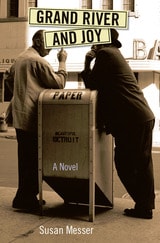
Grand River and Joy
Susan Messer
University of Michigan Press, 2010
Halloween morning 1966, Harry Levine arrives at his wholesale shoe warehouse to find an ethnic slur soaped on the front window. As he scavenges around the sprawling warehouse basement, looking for the supplies he needs to clean the window, he makes more unsettling discoveries: a stash of Black Power literature; marijuana; a new phone line running off his own; and a makeshift living room, arranged by Alvin, the teenaged tenant who lives with his father, Curtis, above the warehouse. Accustomed to sloughing off fears about Detroit's troubled inner-city neighborhood, Harry dismisses the soaped window as a Halloween prank and gradually dismantles “Alvin's lounge” in a silent conversation with the teenaged tenant. Still, these events and discoveries draw him more deeply into the frustrations and fissures permeating his city in the months leading up to the Detroit riots.
Grand River and Joy, named after a landmark intersection in Detroit, follows Harry through the intersections of his life and the history of his city. It's a work of fiction set in a world that is anything but fictional, a novel about the intersections between races, classes and religions exploding in the long, hot summers of Detroit in the 1960s. Grand River and Joy is a powerful and moving exploration of one of the most difficult chapters of Michigan history.
Susan Messer's fiction and nonfiction have appeared in numerous publications, including Glimmer Train Stories, North American Review, and Colorado Review. She received an Illinois Arts Council Fellowship in prose, an Illinois Arts Council literary award for creative nonfiction, and a prize in the Jewish Cultural Writing Competition of the Dora Teitelboim Center for Yiddish Culture.
Cover photograph copyright © Bill Rauhauser and Rauhauser Photographic Trust

Joy (Or Something Darker, but Like It)
poetry & parentingNathaniel Perry
University of Michigan Press, 2024
Each of the twelve essays considers a different poet—Edward Thomas, Henry W. Longfellow, George Scarbrough, Elizabeth Bishop, Geoffrey Hill, Primus St. John, Robert Hayden, Elizabeth Coatsworth, Gwendolyn Brooks, Robert Frost, E.A. Robinson, and Belle Randall—and, alongside them, different concerns of parenting and living. Organized in chronological order, they track the growth of Nathaniel Perry’s own children who pop up from time to time in a believable way. Essays consider the idea of devotion and belief, the idea of imperfection, the small details we can focus on as parents, and the conceptions of the world we pass along to our children. Together these essays not only represent the author's personal canon of poets who have been important to him in his life and work, but also present a diverse slice of American poetry, in voice, form, identity, origin, and time period.
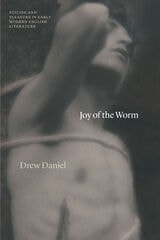
Joy of the Worm
Suicide and Pleasure in Early Modern English LiteratureDrew Daniel
University of Chicago Press, 2022
In this study, Drew Daniel identifies a surprisingly common aesthetic attitude that he calls “joy of the worm,” after Cleopatra’s embrace of the deadly asp in Shakespeare’s play—a pattern where voluntary death is imagined as an occasion for humor, mirth, ecstatic pleasure, even joy and celebration.
Daniel draws both a historical and a conceptual distinction between “self-killing” and “suicide.” Standard intellectual histories of suicide in the early modern period have understandably emphasized attitudes of abhorrence, scorn, and severity toward voluntary death. Daniel reads an archive of literary scenes and passages, dating from 1534 to 1713, that complicate this picture. In their own distinct responses to the surrounding attitude of censure, writers including Shakespeare, Donne, Milton, and Addison imagine death not as sin or sickness, but instead as a heroic gift, sexual release, elemental return, amorous fusion, or political self-rescue. “Joy of the worm” emerges here as an aesthetic mode that shades into schadenfreude, sadistic cruelty, and deliberate “trolling,” but can also underwrite powerful feelings of belonging, devotion, and love.
Joy to the World
The Performance of Collective PleasureGary Alan Fine
University of Chicago Press, 2026
A celebration and exploration of the idea of pleasure and the unique role it serves in bringing individuals and communities together.
There are innumerable ways to take pleasure in life: a bite of cake in the late afternoon, a walk in the warm springtime air after a long winter, a listen to the opening chords of your favorite song. But each of these pleasures is transformed by the presence of others. In Joy to the World, sociologist Gary Alan Fine takes up one of the major themes of his lifetime of work: pleasure. Fine gives us the conceptual basis for a sociology of pleasure: a joyous view of the world that, at times, inspires us, through expectations of interaction, shared cultures, and routine practices that make life worth living in community.
Fine focuses on the impact of group relations as the platform for satisfaction, emphasizing the power of communities of practice. While pleasures may be enjoyed alone, the pleasure that occurs in social spaces performs a unique function in our personal and social lives; they help us understand ourselves as individuals who are part of a group. What is pleasurably transgressive in one context might seem inappropriate, cruel, or just plain nonsensical in another, and these shades of difference serve to solidify the bonds of the group.
Joy to the World urges us to understand what draws us together as well as to appreciate what drives us apart. Our joys, as well as our challenges, help us to be a part of a caring, conscientious, committed community.
Kindness and Joy
Expressing the Gentle LoveHarold G Koenig
Templeton Press, 2006
This book includes guidance as well as information and inspiration. There are practical recommendations on how to perform acts of kindness in personal lives and at work, toward friends, colleagues, and family members—even with one's enemies. Suggestions are also offered on ways to encourage others to be kind so they, too, can experience the joy that results.
Narratives of Joy and Failure in Antiracist Assessment
Exploring Collaborative Writing AssessmentsAsao B. Inoue
University Press of Colorado, 2024
Noble Purpose
Joy Of Living A Meaningful LifeWilliam Bill Damon
Templeton Press, 2003
This book describes the personal and spiritual benefits of living life in a way that matters, with an awareness that one's life can reflect a sense of higher purpose no matter what the circumstances. The book draws upon religious, philosophical, and literary writings to show how humans in many cultures and historical epochs have pursued noble purposes by answering God's call as each hears it.
Noble purpose can be pursued both in heroic acts and in everyday behavior. The book shows how ordinary people—teachers, business professionals, parents, citizens—can ennoble what they do by being mindful of its deepest meaning. It also points out that humility is a necessary virtue for those who pursue a noble purpose. Great heroes are bold, courageous, and sometimes audacious in their determination to succeed; but they are also humble in their awareness of their own limitations. Moreover, a person must never violate basic moral laws while pursuing a noble purpose—the means must be as moral as the ends.
Purpose brings coherence and satisfaction to people's lives, producing joy in good times and resilience in hard times. It also presents a paradox: hard work in service of noble purpose that transcends personal gain is a surer path to happiness than the self-indulgent pursuit of happiness for its own sake. The closer we come to God's purpose for us, the more satisfied our lives become.
From the inspiration and examples conveyed in this book, we learn that all individuals have the capacity to discover their own God-given abilities, to learn the world's need for the services they can provide, and to experience joy in serving society and God in their special ways. As theologian Frederick Buechner writes, "The place God calls you to is the place where your deep gladness and the world's deep hunger meet."

Phyla of Joy
Karen An-hwei Lee
Tupelo Press, 2012
There’s an undeniable audacity in a poet using the word “joy” in our beleaguered world. In her new book, Karen An-hwei Lee combines scientific precision and an appetite for far-flung vocabularies with a fascination for the sources of rapturous emotion.
In poems that roam from the intimacy of prayer to the art of brewing tea, from bamboo-related famine to quasars, the globe’s minor seas, and the nuptial flight of ants, Phyla of Joy reaches toward ecstasy.
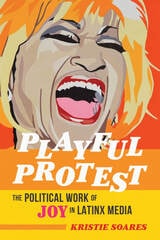
Playful Protest
The Political Work of Joy in Latinx MediaKristie Soares
University of Illinois Press, 2023
Joy is a politicized form of pleasure that goes beyond gratification to challenge norms of gender, sexuality, race, and class. Kristie Soares focuses on the diasporic media of Puerto Rico and Cuba to examine how music, public activist demonstrations, social media, sitcoms, and other areas of culture resist the dominant stories told about Latinx joy. As she shows, Latinx creators compose versions of joy central to social and political struggle and at odds with colonialist and imperialist narratives that equate joy with political docility and a lack of intelligence. Soares builds her analysis around chapters that delve into gozando in salsa music, precise joy among the New Young Lords Party, choteo in the comedy ¿Qué Pasa U.S.A.?, azúcar in the life and death of Celia Cruz, dale as Pitbull’s signature affect, and Alexandria Ocasio-Cortez’s use of silliness to take seriously political violence.
Daring and original, Playful Protest examines how Latinx creators resist the idea that joy only exists outside politics and activist struggle.

Quartet of Joy
PoemsMuhammed Afifi Matar
University of Arkansas Press, 1997

Sum Total Of Human Happiness
James V. Schall
St. Augustine's Press, 2006
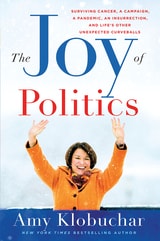
The Joy of Politics
Surviving Cancer, a Campaign, a Pandemic, an Insurrection, and Life’s Other Unexpected CurveballsAmy Klobuchar
University of Minnesota Press, 2023
An intimate and revelatory memoir on personal challenges, political turmoil, and the state of American democracy―now in paperback with a new preface
During the past few years, as our country has faced unprecedented challenges, Senator Amy Klobuchar has been in the room where it happens―on the Senate floor for critical votes during the pandemic, at the debate podium during one of the most crucial presidential primaries in U.S. history, and in the Capitol on January 6, 2021, when insurrectionists stormed the building, interrupting the certification of the Electoral College. It was well past midnight when Klobuchar stood beside then–Vice President Pence to officially certify President Biden's victory.
In her candid, honest, and at times bitingly funny memoir, the pragmatic senator shares insider stories from these historic moments, while also inviting readers into her personal life. An underdog in the 2020 Democratic presidential primary campaign, she built surprising early momentum, only to suspend her candidacy in order to support Joe Biden. Within weeks of returning to work in the Senate, the sudden onslaught of Covid-19 hit her family directly: her husband was hospitalized for a week and spent a month in isolation. Klobuchar shares her experience facing a cancer diagnosis while her beloved father succumbs to Alzheimer's. She recounts the dramatic narrative of January 6 and how close we came to losing our democracy. And, with her signature humor, she reveals what it's like to work with some of her more . . . well, interesting . . . colleagues.
At the crux of these stories is a narrative of resilience—of personal resilience and the resilience of a nation—and, improbably, joy.
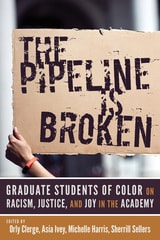
The Pipeline Is Broken
Graduate Students of Color on Racism, Justice, and Joy in the AcademyOrly Clerge
Utah State University Press, 2026
The Pipeline Is Broken explores the reality of racial exclusion and bias in graduate student education, arguing that the insidious effects of structural and institutional racism substantially chip away at the very pipeline of future BIPOC academics—already limited for other racialized reasons.
A series of letters written by graduate students of color, this collection offers a multifaceted account of the challenges, oppositions, microaggressions, and outright discrimination that these students face in higher education settings. Graduate students describe navigating hostile mentoring relationships and unwelcoming campus cultures and peers and laboring for poverty wages to earn their degrees. Yet these letters celebrate joy, community, and agency, offering a more complete and affirming view of graduate student life. Through these brave personal stories, The Pipeline Is Broken asks readers to interrogate what it means to navigate higher education as a person of color and to understand that the reality of faculty of color’s numerical-minority status is a complicated phenomenon whose genesis rests not at the moment of job interview. Rather, these letters show, this status is an intricate manifestation of a process that begins in elementary schools, is reinforced in high schools and colleges, and is part and parcel of the minefield that is graduate education in America.
Essential reading for anyone who cares about racial equity in education, mentorship, leadership development, or student well-being, The Pipeline Is Broken is a guide, a mirror, and a call to action all in one, challenging graduate programs, faculty, and administrators to examine their complicity in maintaining inequitable systems and offering suggestions for building cultures of care.
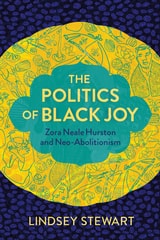
The Politics of Black Joy
Zora Neale Hurston and Neo-AbolitionismLindsey Stewart
Northwestern University Press, 2021
Stewart develops Hurston’s contributions to political theory and philosophy of race by introducing the politics of joy as a refusal of neo-abolitionism, a political tradition that reduces southern Black life to tragedy or social death. To develop the politics of joy, Stewart draws upon Zora Neale Hurston’s essays, Beyoncé’s Lemonade, and figures across several disciplines including Frederick Douglass, W. E. B. Du Bois, Toni Morrison, Angela Davis, Saidiya Hartman, Imani Perry, Eddie Glaude, and Audra Simpson. The politics of joy offers insights that are crucial for forming needed new paths in our current moment. For those interested in examining popular conceptions of Black political agency at the intersection of geography, gender, class, and Black spirituality, The Politics of Black Joy is essential reading.
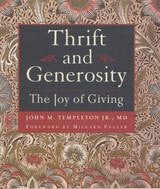
Thrift & Generosity
Joy Of GivingJohn M. Templeton
Templeton Press, 2004
In these difficult economic times, thrift may seem like a necessity, rather than a route to joy. But in this handbook, the reader learns about the virtue of thrift, and how, in combination with gratitude and generosity, it can lead to deep, lasting contentment.