Results by title
25 books match the query 'Peace-building'
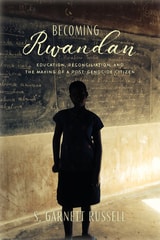
Becoming Rwandan
Education, Reconciliation, and the Making of a Post-Genocide CitizenS. Garnett Russell
Rutgers University Press, 2020
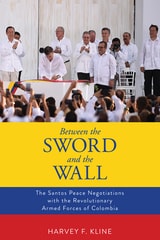
Between the Sword and the Wall
The Santos Peace Negotiations with the Revolutionary Armed Forces of ColombiaHarvey F. Kline
University of Alabama Press, 2020
Chronicles the peace process negotiations between Colombian president Juan Manuel Santos and the Marxist Revolutionary Armed Forces of Colombia
In Between the Sword and the Wall: The Santos Peace Negotiations with the Revolutionary Armed Forces of Colombia, Harvey Kline, a noted expert on contemporary Colombian politics, brings to a close his multivolume chronicle of the incessant violence that has devastated Colombia’s population, politics, and military for decades. This, his newest work on the subject, recounts and analyzes the negotiations between Colombian president Juan Manuel Santos and the Marxist Revolutionary Armed Forces of Colombia (FARC), which ended with a peace agreement in 2016.
The FARC insurgency began in 1964, and every Colombian president after 1980 unsuccessfully tried to negotiate a peace agreement with the group. Kline analyzes how the Santos administration was ultimately able to negotiate peace with the FARC. The agreement failed to receive the approval of the Colombian people in an October 2016 plebiscite, but a renegotiated version was later approved by the congress in the same year. Afterward, more than 7,000 rebels turned over their weapons to the UN mission in Colombia. The former combatants were then to be judged by a special court empowered to punish but not imprison those who had violated human rights. Throughout the book, Kline emphasizes the dual nature of the Santos negotiations, first with the FARC and second with the democratic opposition to the agreement led by former president Álvaro Uribe Vélez.
Kline provides readers with a well-researched analysis based on a variety of resources, including media articles and primary documents from the government, international organizations, and the FARC. He also conducted extensive interviews with twenty-eight government officials and Colombian experts from all ideological persuasions.
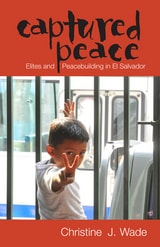
Captured Peace
Elites and Peacebuilding in El SalvadorChristine J. Wade
Ohio University Press, 2015
El Salvador is widely considered one of the most successful United Nations peacebuilding efforts, but record homicide rates, political polarization, socioeconomic exclusion, and corruption have diminished the quality of peace for many of its citizens. In Captured Peace: Elites and Peacebuilding in El Salvador, Christine J. Wade adapts the concept of elite capture to expand on the idea of “captured peace,” explaining how local elites commandeered political, social, and economic affairs before war’s end and then used the peace accords to deepen their control in these spheres.
While much scholarship has focused on the role of gangs in Salvadoran unrest, Wade draws on an exhaustive range of sources to demonstrate how day-to-day violence is inextricable from the economic and political dimensions. In this in-depth analysis of postwar politics in El Salvador, she highlights the local actors’ primary role in peacebuilding and demonstrates the political advantage an incumbent party—in this case, the Nationalist Republican Alliance (ARENA—has throughout the peace process and the consequences of this to the quality of peace that results.
Civil War, Civil Peace
Helen Yanacopulos
Ohio University Press, 2006
When a cease-fire is arranged, aid workers, military personnel, diplomats, and others pour in from the United States, Europe, and international agencies. Outside help is essential after a war, but too often, well-intentioned interveners do more harm than good. A half of civil wars have resumed after failed peace agreements.
Each war is different, and there can be no intervention handbook or best practices guide. Aimed at practitioners and policy makers, and essential reading for students of war, humanitarian intervention, peace building, and development, Civil War, Civil Peace provides a comprehensive examination of how interventions can be improved through a better understanding of the roots of war and of the grievances and interests that fueled the war.
Claiming Impartiality
Peacebuilding Organizations as Actors in Multiple Fields of Global GovernanceAndrea Warnecke
University of Michigan Press, 2026
Drawing on and expanding a Bourdieusian field perspective, the book examines international organizations as actors in multiple fields of global governance. Using the case studies of Bosnia and Herzegovina and Timor-Leste, it traces the emergence and transformation of peacebuilding practices by leading international and bilateral organizations during the first two decades of the field’s existence. The organizational lens highlights the tensions that exist between the objectives of simultaneously acting as a peacebuilding organization and as a peacekeeping, humanitarian, or development organization whose practices are to varying degrees committed to observing the twin principles of impartiality and neutrality. By thinking through these sometimes contradictory roles, the book offers new insights into how these organizations sideline questions of political agency in favor of expanding their influence into related fields of global governance. Claiming Impartiality discusses the future of peacebuilding and explores avenues for addressing political challenges to peace itself.
Justice After War
<i>Jus Post Bellum</i> in the 21st CenturyDavid Chiwon Kwon
Catholic University of America Press, 2023
Learning to Live with the Past
Krishna Kumar
Seagull Books, 2023
How does education shape political rivalry and hostility? The Partition of the Indian subcontinent in 1947—the violence that followed it, and its living legacy of rival nationalisms—has made a deep and pervasive impact on education in both India and Pakistan. In Learning to Live with the Past, educationist Krishna Kumar dwells on the complex terrain every history teacher has to navigate: how to make the past come alive without running the risk of creating a desire to lose this “pastness.”
Substantiating this question with a wealth of experiences gained from his extensive research on history textbooks, as well as his interactions with students and teachers in both countries, Kumar explores the integral function the discipline of history plays in the project of nation-building. To help children learn to live with the past, Kumar amplifies the need for spaces that create possibilities for inquiries into a “longer” common heritage shared by South Asia without necessarily denying a national narrative or encouraging an urge to undo the past.
Lessons from the Northern Ireland Peace Process
Edited by Timothy J. White; Foreword by Martin Mansergh
University of Wisconsin Press, 2013
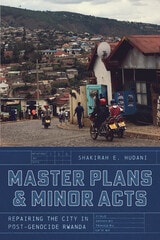
Master Plans and Minor Acts
Repairing the City in Post-Genocide RwandaShakirah E. Hudani
University of Chicago Press, 2024
Master Plans and Minor Acts examines a “material politics of repair” in post-genocide Rwanda, where in a country saturated with deep historical memory, spatial master planning aims to drastically redesign urban spaces. How is the post-conflict city reconstituted through the work of such planning, and with what effects for material repair and social conciliation?
Through extended ethnographic and qualitative research in Rwanda in the decades after the genocide of 1994, this book questions how repair after conflict is realized amidst large-scale urban transformation. Bridging African studies, urban studies, and human geography in its scope, this work ties Rwanda’s transformation to contexts of urban change in other post-conflict spaces, bringing to the fore critical questions about the ethics of planning in such complex geographies.

Nation-Building
A Key Concept For Peaceful Conflict Transformation?Jochen Hippler
Pluto Press, 2005
Currently the international debate on nation-building is heavily dominated by US actors and authors, especially by writers connected to the Bush administration or its policies. This book presents academic and political alternatives, presenting a critical view from 'Old Europe'.
The book combines academic research and analysis with policy orientation, with contributors from both fields. It clarifies the terminology distinguishing developmental, peace-related, imperial and analytical approaches to nation-building. Highlighting its connections to globalisation, democracy, ethnic and religious minorities, the contributors consider case studies such as Somalia, the Balkans, Afghanistan, Iraq, and Nigeria.
Dr. Jochen Hippler, Political Scientist at the University of Duisburg-Essen and its Institute for Development and Peace (INEF), specialises in regional conflicts and interventionism in the Third World, political identities, and the Middle East. He is the former Director of the Transnational Institute in Amsterdam and the author of numerous books and articles including Pax Americana (Pluto Press 1994), The Democratisation of Disempowerment (Pluto Press 1995) and The Next Threat (Pluto Press 1995).
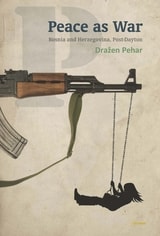
Peace as War
Bosnia-Herzegovina Post-DaytonDrazen Pehar
Central European University Press, 2019
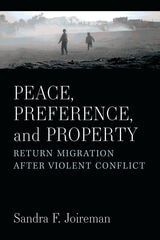
Peace, Preference, and Property
Return Migration after Violent ConflictSandra F. Joireman
University of Michigan Press, 2022
Growing numbers of people are displaced by war and violent conflict. In Ukraine, Afghanistan, Ethiopia, Myanmar, Syria, and elsewhere violence pushes civilian populations from their homes and sometimes from their countries, making them refugees. In previous decades, millions of refugees and displaced people returned to their place of origin after conflict or were resettled in countries in the Global North. Now displacements last longer, the number of people returning home is lower, and opportunities for resettlement are shrinking. More and more people spend decades in refugee camps or displaced within their own countries, raising their children away from their home communities and cultures. In this context, international policies encourage return to place of origin.
Using case studies and first-person accounts from interviews and fieldwork in post-conflict settings such as Uganda, Liberia, and Kosovo, Sandra F. Joireman highlights the divergence between these policies and the preferences of conflict-displaced people. Rather than looking from the top down, at the rights that people have in international and domestic law, the perspective of this text is from the ground up—examining individual and household choices after conflict. Some refugees want to go home, some do not want to return, some want to return to their countries of origin but live in a different place, and others are repatriated against their will when they have no other options. Peace, Preference, and Property suggests alternative policies that would provide greater choice for displaced people in terms of property restitution and solutions to displacement.
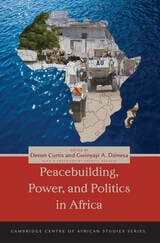
Peacebuilding, Power, and Politics in Africa
Devon Curtis
Ohio University Press, 2012
Peacebuilding, Power, and Politics in Africa is a critical reflection on peacebuilding efforts in Africa. The authors expose the tensions and contradictions in different clusters of peacebuilding activities, including peace negotiations; statebuilding; security sector governance; and disarmament, demobilization, and reintegration. Essays also address the institutional framework for peacebuilding in Africa and the ideological underpinnings of key institutions, including the African Union, NEPAD, the African Development Bank, the Pan-African Ministers Conference for Public and Civil Service, the UN Peacebuilding Commission, the World Bank, and the International Criminal Court. The volume includes on-the-ground case study chapters on Sudan, the Great Lakes Region of Africa, Sierra Leone and Liberia, the Niger Delta, Southern Africa, and Somalia, analyzing how peacebuilding operates in particular African contexts.
The authors adopt a variety of approaches, but they share a conviction that peacebuilding in Africa is not a script that is authored solely in Western capitals and in the corridors of the United Nations. Rather, the writers in this volume focus on the interaction between local and global ideas and practices in the reconstitution of authority and livelihoods after conflict. The book systematically showcases the tensions that occur within and between the many actors involved in the peacebuilding industry, as well as their intended beneficiaries. It looks at the multiple ways in which peacebuilding ideas and initiatives are reinforced, questioned, reappropriated, and redesigned by different African actors.
A joint project between the Centre for Conflict Resolution in Cape Town, South Africa, and the Centre of African Studies at the University of Cambridge.
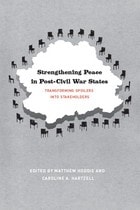
Strengthening Peace in Post-Civil War States
Transforming Spoilers into StakeholdersEdited by Matthew Hoddie and Caroline A. Hartzell
University of Chicago Press, 2010
Among the more frequent and most devastating of conflicts, civil wars—from Yugoslavia to Congo—frequently reignite and even spill over into the international sphere. Given the inherent fragility of civil war peace agreements, innovative approaches must be taken to ensure the successful resolution of these conflicts. Strengthening Peace in Post–Civil War States provides both analytical frameworks and a series of critical case studies demonstrating the effectiveness of a range of strategies for keeping the peace.
Coeditors Matthew Hoddie and Caroline A. Hartzell here contend that lasting peace relies on aligning the self-interest of individuals and communities with the society-wide goal of ending war; if citizens and groups have a stake in peace, they will seek to maintain and defend it. The rest of the contributors explore two complementary approaches toward achieving this goal: restructuring domestic institutions and soft intervention. Some essays examine the first tactic, which involves reforming governments that failed to prevent war, while others discuss the second, an umbrella term for a number of non-military strategies for outside actors to assist in keeping the peace.
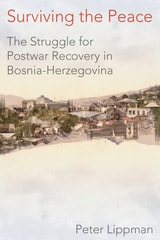
Surviving the Peace
The Struggle for Postwar Recovery in Bosnia-HerzegovinaPeter Lippman
Vanderbilt University Press, 2019
Essential reading for students of the former Yugoslavia and anyone interested in postwar or post-genocide studies, Surviving the Peace is an instant classic of long-form reporting, an impossible accomplishment without a lifetime of dedication to a place and people.
Peter Lippman's website is http://survivingthepeace.org/.
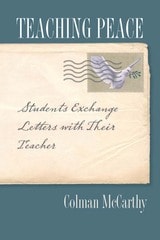
Teaching Peace
Students Exchange Letters with Their TeacherColman McCarthy
Vanderbilt University Press, 2015
The discussions range from peace and war to a host of other issues of social justice, such as the death penalty, human rights, poverty, the living wage, animal rights, and vegetarianism. The wide-ranging letters suggest how teacher and students co-create a world of more love and less hate.
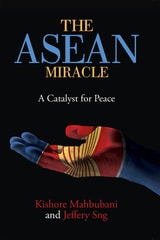
The ASEAN Miracle
A Catalyst for PeaceKishore Mahbubani and Jeffery Sng
National University of Singapore Press, 2017
In 1967, leaders from Indonesia, Malaysia, the Philippines, Singapore, and Thailand struck a landmark agreement, forming ASEAN. They had realized that political and economic cooperation would bring greater stability and prosperity to the region. Fifty years and five additional countries later, the alliance has remained one of the world’s most successful collaborations. Kishore Mahbubani and Jeffery Sng explain how this partnership has benefited the ten member countries and why it should serve as a model for other regions of the world, challenging our assumptions about international cooperation. As the world turns to Asia and the United States and China jostle for dominance, the ASEAN region will have an undeniably powerful role in shaping our global systems. Mahbubani and Sng offer an important primer for understanding this immensely successful—and woefully underappreciated—regional organization.
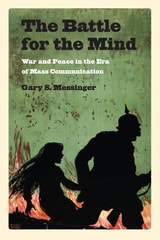
The Battle for the Mind
War and Peace in the Era of Mass CommunicationGary S. Messinger
University of Massachusetts Press, 2011
Most people typically think of armed conflict in physical terms, involving guns and bombs, ships and planes, tanks and missiles. But today, because of mass communication, war and the effort to prevent it are increasingly dependent on non-physical factors—the capacity to persuade combatants and citizens to engage in violence or avoid it, and the packaging of the information on which decision making is based. This book explores the many ways that mass communication has revolutionized international relations, whether the aim is to make war effectively or to prevent it.
Gary Messinger shows that over the last 150 years a succession of breakthroughs in the realm of media has reshaped the making of war and peace. Along with mass newspapers, magazines, books, motion pictures, radio, television, computer software, and telecommunication satellites comes an array of strategies for exploiting these media to control popular beliefs and emotions. Images of war now arrive in many forms and reach billions of people simultaneously. Political and military leaders must react to crowd impulses that sweep around the globe. Nation-states and nongovernmental groups, including terrorists, use mass communication to spread their portrayals of reality.
Drawing on a wide range of media products, from books and articles to films and television programs, as well as his own research in the field of propaganda studies, Messinger offers a fresh and comprehensive overview. He skillfully charts the path that has led us to our current situation and suggests where we might go next.
The Distinction of Peace
A Social Analysis of PeacebuildingCatherine Goetze
University of Michigan Press, 2017
Goetze describes how the peacebuilding field came into being, how it defines who belongs to it and who does not, and what kind of group culture it has generated. Using an innovative methodology, she investigates the motivations of individuals who become peacebuilders, their professional trajectories and networks, and the “good peacebuilder” as an ideal. For many, working in peacebuilding in various ways—as an aid worker on the ground, as a lawyer at the United Nations, or as an academic in a think tank—has become not merely a livelihood, but also a form of participation in world politics. As a field, peacebuilding has developed techniques for incorporating and training new members, yet its internal politics also create the conditions of exclusion that often result in practical failures of the peacebuilding enterprise.
By providing a critical account of the social mechanisms that make up the peacebuilding field, Goetze offers deep insights into the workings of Western domination and global inequalities.
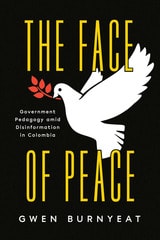
The Face of Peace
Government Pedagogy amid Disinformation in ColombiaGwen Burnyeat
University of Chicago Press, 2022
Colombia’s 2016 peace agreement with the FARC guerrillas sought to end fifty years of war and won President Juan Manuel Santos the Nobel Peace Prize. Yet Colombian society rejected it in a polarizing referendum, amid an emotive disinformation campaign. Gwen Burnyeat joined the Office of the High Commissioner for Peace, the government institution responsible for peace negotiations, to observe and participate in an innovative “peace pedagogy” strategy to explain the agreement to Colombian society. Burnyeat’s multi-scale ethnography reveals the challenges government officials experienced communicating with skeptical audiences and translating the peace process for public opinion. She argues that the fatal flaw in the peace process lay in government-society relations, enmeshed in culturally liberal logics and shaped by the politics of international donors. The Face of Peace offers the Colombian case as a mirror to the global crisis of liberalism, shattering the fantasy of rationality that haunts liberal responses to “post-truth” politics.
The Political Economy of Regional Peacemaking
Edited by Steven E. Lobell and Norrin M. Ripsman
University of Michigan Press, 2016
The chapters that follow are grouped in three sections, corresponding to the three stages of peacemaking: reduction or management of regional conflict; peacemaking or progress toward a peace treaty; and maintenance of bilateral peace and the regionalization of the peace settlement. In each chapter, the contributors consider the five key questions from a variety of methodological, historical, cultural, and empirical perspectives, drawing data from the Pacific, the Middle East, Europe, Asia, and Latin America. The conclusion expands on several themes found in the chapters and proposes an agenda for future research.
The Politics of Change in Palestine
State-Building and Non-Violent ResistanceMichael Broning
Pluto Press, 2011
This book contradicts the dominant myth that incompetent, corrupt, and uncompromising Palestinian decision-makers are responsible for the lasting stalemate in the Middle-East Peace Process. It highlights recent political developments in Palestine that fundamentally redefine important parameters of the Israeli-Palestinian conflict.
Contrary to public perception, new political trends in the Palestinian Territories bolster prospects for the realisation of Palestinian national aspirations. Michael Bröning identifies key indicators which fundamentally question dominant Israeli narratives and pose an unprecedented strategic challenge to the Israeli leadership. These include the re-invention of Hamas, the reform of the Fatah movement, Palestinian Prime Minister Salam Fayyad’s state-building efforts and the surge of non-violent resistance against Israel.
This persuasive book forces us to reconsider the perceived wisdom that the Palestinians are powerless to influence events as they struggle for peace.
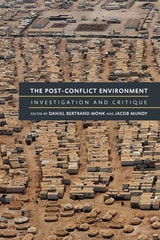
The Post-Conflict Environment
Investigation and CritiqueDaniel Bertrand Monk and Jacob Mundy, editors
University of Michigan Press, 2014
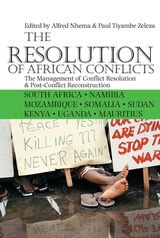
The Resolution of African Conflicts
The Management of Conflict Resolution and Post-Conflict ReconstructionAlfred Nhema
Ohio University Press, 2007
“These two volumes clearly demonstrate the efforts by a wide range of African scholars to explain the roots, routes, regimes and resolution of African conflicts and how to re-build post-conflict societies. They offer sober and serious analyses, eschewing the sensationalism of the western media and the sophistry of some of the scholars in the global North for whom African conflicts are at worst a distraction and at best a confirmation of their pet racist and petty universalist theories.”
—From the introduction by Paul Tiyambe Zeleza
This book offers analyses of a range of African conflicts and demonstrates that peace is too important to be left to outsiders.
Understanding the Somalia Conflagration
Identity, Political Islam and PeacebuildingAfyare Abdi Elmi
Pluto Press, 2010
Somalia has been devastated by a US-backed Ethiopian invasion and years of civil war, and it has long been without a central government. Against this background of violence, Somali academic Afyare Abdi Elmi, attempts to explain the multiple dimensions of the conflict and find a peace-building consensus.
Somalia is a failed state and a Muslim state. This combination means the West assumes that it will become a breeding ground for extremism. The country regularly hits the headlines as a piracy hotspot. This combination of internal division and outside interference makes for an intensely hostile landscape. Elmi shows that only by addressing the problem of the statelessness in the country can the long process of peace begin. He highlights clan identities, Islam and other countries in the region as the key elements in any peace-building effort.
This unique account from an author who truly understands Somalia should be required reading for students and academics of international relations and peace / conflict studies.