Results by title
644 books match the query 'Wars & Conflicts' and 22 start with r
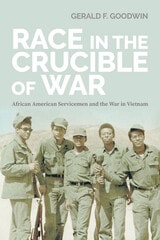
Race in the Crucible of War
African American Servicemen and the War in VietnamGerald F. Goodwin
University of Massachusetts Press, 2023
When African American servicemen went to fight in the Vietnam War, discrimination and prejudice followed them. Even in a faraway country, their military experiences were shaped by the racial environment of the home front. War is often viewed as a crucible that can transform society, but American race relations proved remarkably durable.
In Race in the Crucible of War, Gerald F. Goodwin examines how Black servicemen experienced and interpreted racial issues during their time in Vietnam. Drawing on more than fifty new oral interviews and significant archival research, as well as newspapers, periodicals, memoirs, and documentaries, Goodwin reveals that for many African Americans the front line and the home front were two sides of the same coin. Serving during the same period as the civil rights movement and the race riots in Chicago, Detroit, and dozens of other American cities, these men increasingly connected the racism that they encountered in the barracks and on the battlefields with the tensions and violence that were simmering back home.
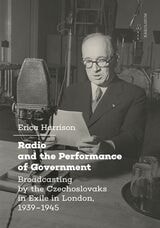
Radio and the Performance of Government
Broadcasting by the Czechoslovaks in Exile in London, 1939–1945Erica Harrison
Karolinum Press, 2023
Between 1939 and 1945, Czechoslovakia disappeared from the maps, existing only as an imagined ‘free republic’ on the radio waves. Following the German invasion and annexation of Bohemia and Moravia and the declaration of independence by Slovakia on 15 March 1939, the Czechoslovak Republic was gone. From their position in exile in wartime London, former Czechoslovak President Edvard Beneš and the government that formed around him depended on radio to communicate with the public they strove to represent. The broadcasts made by government figures in London enabled a performance of authority to impress their hosts, allies, occupying enemies, and claimed constituents.
This book examines this government program for the first time, making use of previously unstudied archival sources to examine how the exiles understood their mission and how their propaganda work was shaped by both British and Soviet influences. This study assesses the strengths, weaknesses, and limitations of the government’s radio propaganda as they navigated the complexities of exile, with chapters examining how they used the radio to establish their authority, how they understood the past and future of the Czechoslovak nation, and how they struggled to include Slovakia and Subcarpathian Ruthenia within it.
Raritan on War
An AnthologyJackson Lears
Rutgers University Press, 2025
Raritan on War collects some of the finest writing on that troubling subject published in Raritan Quarterly between 2003 and 2022. The editors, Jackson Lears and Karen Parker Lears, have selected work that typifies Raritan's wide-ranging sensibility, focusing on a topic that is aesthetically rich, intellectually challenging, and morally disturbing. Ultimately, Raritan on War reveals the power of art and reflection to sustain humane ways of being in the world, even amid constant global violence.
Contributors: C. Felix Amerasinghe; Andrew J. Bacevich; Victoria De Grazia; Tamas Dobozy; David Ferry; M. Fortuna; Cai Guo-Qiang; Emma Dodge Hanson; Jochen Hellbeck; Karl Kirchwey; Ray Klimek; Peter LaBier; Patrick Lawrence; d. mark levitt; Michael Miller; Lyle Jeremy Rubin; Elizabeth D. Samet; Sherod Santos; Robert Westbrook
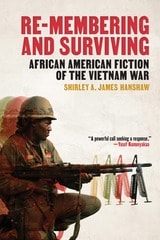
Re-Membering and Surviving
African American Fiction of the Vietnam WarShirley A. James Hanshaw
Michigan State University Press, 2020
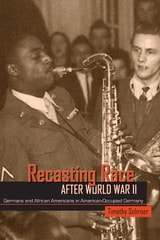
Recasting Race after World War II
Germans and African Americans in American-Occupied GermanyTimothy L. Schroer
University Press of Colorado, 2007
The segregation of U.S. Army forces fed a growing debate in America about whether a Jim Crow army could truly be a democratizing force in postwar Germany. Schroer follows the evolution of that debate and examines the ways in which postwar conditions necessitated reexamination of race relations. He reveals how anxiety about interracial relationships between African American men and German women united white American soldiers and the German populace. He also traces the importation and influence of African American jazz music in Germany, illuminating the subtle ways in which occupied Germany represented a crucible in which to recast the meaning of race in a post-Holocaust world.
Recasting Race after World War II will appeal to historians and scholars of American, African American, and German studies.
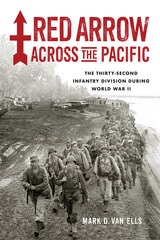
Red Arrow across the Pacific
The Thirty-Second Infantry Division during World War IIMark D. Van Ells
Wisconsin Historical Society Press, 2024
Red Arrow across the Pacific reveals the long-overdue story of the renowned Thirty-Second "Red Arrow" Infantry Division. Discover how this National Guard unit—which originated in Wisconsin and Michigan but soon evolved to include soldiers from California to New England—became one of the first US military units deployed overseas in World War II, eventually logging more combat hours than any other US Army division.
Far more than a traditional battle narrative, Red Arrow across the Pacific offers a cultural history of the Red Arrow's wartime experience, from its mobilization in 1940, to its deployment across New Guinea, Australia, and the Philippines, to its postwar occupation of Japan. Drawing from letters, memoirs, and interviews, author Mark D. Van Ells lets the soldiers speak for themselves, describing in their own words the terror of combat, their impressions of foreign lands, the struggle to maintain their own humanity, and the many ways the war profoundly changed them.
Nuanced and remarkably thorough, this book explores the dramatic evolution of the Thirty-Second Infantry Division and reveals how the story of the Red Arrow reflects the experience of the US military during World War II.
“Exceptionally well researched and engagingly written. This book is a must read for any student of military history.”
—Capt. Florian L. Waitl, Command Historian, Wisconsin Army National Guard
“A superb divisional history. . . . Highly recommended for a general audience, as well as readers interested in the Second World War.”
—Mary Louise Roberts, Lucie Aubrac Distinguished Professor Emerita of History, University of Wisconsin–Madison, and author of Sheer Misery: Soldiers in Battle in WWII
Reencounters
On the Korean War and Diasporic Memory CritiqueCrystal Mun-hye Baik
Temple University Press, 2020
In Reencounters,Crystal Mun-hye Baik examines what it means to live with and remember an ongoing war when its manifestations—hypervisible and deeply sensed—become everyday formations delinked from militarization. Contemplating beyond notions of inherited trauma and post memory, Baik offers the concept of reencounters to better track the Korean War’s illegible entanglements through an interdisciplinary archive of diasporic memory works that includes oral history projects, performances, and video installations rarely examined by Asian American studies scholars.
Baik shows how Korean refugee migrations are repackaged into celebrated immigration narratives, how transnational adoptees are reclaimed by the South Korean state as welcomed “returnees,” and how militarized colonial outposts such as Jeju Island are recalibrated into desirable tourist destinations. Baik argues that as the works by Korean and Korean/American artists depict this Cold War historiography, they also offer opportunities to remember otherwise the continuing war.
Ultimately, Reencounters wrestles with questions of the nature of war, racial and sexual violence, and neoliberal surveillance in the twenty-first century.
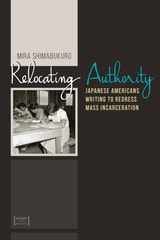
Relocating Authority
Japanese Americans Writing to Redress Mass IncarcerationMira Shimabukuro
University Press of Colorado, 2015
Relocating Authority examines the ways Japanese Americans have continually used writing to respond to the circumstances of their community’s mass imprisonment during World War II. Using both Nikkei cultural frameworks and community-specific history for methodological inspiration and guidance, Mira Shimabukuro shows how writing was used privately and publicly to individually survive and collectively resist the conditions of incarceration.
Examining a wide range of diverse texts and literacy practices such as diary entries, note-taking, manifestos, and multiple drafts of single documents, Relocating Authority draws upon community archives, visual histories, and Asian American history and theory to reveal the ways writing has served as a critical tool for incarcerees and their descendants. Incarcerees not only used writing to redress the “internment” in the moment but also created pieces of text that enabled and inspired further redress long after the camps had closed.
Relocating Authority highlights literacy’s enduring potential to participate in social change and assist an imprisoned people in relocating authority away from their captors and back to their community and themselves. It will be of great interest to students and scholars of ethnic and Asian American rhetorics, American studies, and anyone interested in the relationship between literacy and social justice.
Remembering Is Not Enough
The Unfinished Korean War in Contemporary American LiteratureA. J. Yumi Lee
Temple University Press, 2027
Remembering Is Not Enough traces the emergence of a critical consciousness of the Korean War in American literature and culture over the past seventy-five years. A. J. Yumi Lee provides close readings of key texts from the post-Cold War era that remember and represent the “forgotten” Korean War, including Sook Nyul Choi’s Year of Impossible Goodbyes, Toni Morrison’s Home, Marie Myung-ok Lee’s The Evening Hero, and Paul Yoon’s Snow Hunters. She argues that rather than simply revisiting a known and settled history, contemporary Korean War literature is actively processing an unresolved conflict that is both past and not past.
Lee shows how literary works have challenged common understandings of the war as an American victory for freedom, from soldiering narratives that address the violence of U.S. imperialism to Korean diasporic novels that depict the surfacing of memory across generations. These examples ask readers to process, analyze, and critique as they remember, and Lee emphasizes that how and why we remember matters as much as what is being recalled.
Reflecting on the Korean War in new and often unexpected ways, Remembering Is Not Enough prompts us to reorient our memories, our storytelling, and our actions toward a more just and peaceful future.
Remembering Suffering and Resistance
Memory Politics and the Serbian Orthodox ChurchKarin Roginer Hofmeister
Central European University Press, 2024
Assessing issues related to the Orthodox Church from an academic, secular point of view is a sensitive matter. However, by tracing and interpreting the engagement of the Serbian Church with the memory of Serbian heroic victimhood in World War II through a kind of “methodological agnosticism,” this volume has managed to tackle the subtle topic in a very delicate and value-neutral way. Arguing that the search for a collective memory is particularly urgent in the face of societal uncertainty and that religious institutions often use their memory potential to reaffirm their public relevance, the book examines the motivations, forms, strategies, and outcomes of a wide range of mnemonic activities the Serbian Orthodox Church engaged in following the upheavals caused by the collapse of Yugoslav socialism, the violent dissolution of the country, and the fall of the Milošević regime. These activities, taking place within the memory fields framed by the post-socialist, post-conflict, and post-secular horizons, took liturgical and non-liturgical forms, often involving a hybrid fusion of the two. As a result of this mnemonic endeavor, the author argues, the Church was successful in reasserting its power and legitimacy in the public sphere of post-2000 Serbia.
Remembering the Forgotten War
The Enduring Legacies of the U.S.-Mexican WarMichael Scott Van Wagenen
University of Massachusetts Press, 2012
On February 2, 1848, representatives of the United States and Mexico signed the Treaty of Guadalupe Hidalgo, officially ending hostilities between the two countries and ceding over one-half million square miles of land to the northern victors. In Mexico, this defeat has gradually moved from the periphery of dishonor to the forefront of national consciousness. In the United States, the war has taken an opposite trajectory, falling from its once-celebrated prominence into the shadowy margins of forgetfulness and denial.
Why is the U.S.–Mexican War so clearly etched in the minds of Mexicans and so easily overlooked by Americans? This book investigates that issue through a transnational, comparative analysis of how the tools of collective memory—books, popular culture, historic sites, heritage groups, commemorations, and museums—have shaped the war's multifaceted meaning in the 160 years since it ended. Michael Van Wagenen explores how regional, ethnic, and religious differences influence Americans and Mexicans in their choices of what to remember and what to forget. He further documents what happens when competing memories clash in a quest for dominance and control.
In the end, Remembering the Forgotten War addresses the deeper question of how remembrance of the U.S.–Mexican War has influenced the complex relationship between these former enemies now turned friends. It thus provides a new lens through which to view today's cross-border rivalries, resentments, and diplomatic pitfalls.

Reporting the Wars
Joseph J. Mathews
University of Minnesota Press, 1957
Reporting the Wars was first published in 1957. Minnesota Archive Editions uses digital technology to make long-unavailable books once again accessible, and are published unaltered from the original University of Minnesota Press editions.
News of the wars has always intrigued the public, from the time of the Napoleonic wars up to the present. In this period of the last century and a half, however, the character both of the public and of the news has changed. Mr. Mathews traces the history of war news coverage from John Bell, who, in 1794, was probably the first war correspondent, to Ernie Pyle of World War II fame. The account is colorful, since war correspondents are notably adventurous individuals, and it is significant for a basic understanding of history, since the reporting of war news has represented a constant struggle against the forces of censorship and propaganda. The book is illustrated with newspaper cartoons.
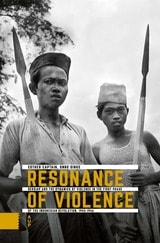
Resonance of Violence
Bersiap and the Dynamics of Violence in the First Phase of the Indonesian Revolution, 1945-1946Esther Captain
Amsterdam University Press, 2026
The authors expressly situate this terrifying period within the wider context of mutual Indonesian violence and the use of violence by the Japanese, British and Dutch against Indonesian citizens. Java, Sumatra, and other islands are discussed in the book, as well as the complex issue of the number of victims. Finally, they discuss the development of the term "bersiap" over the past 75 years, which grew into a key concept in the Netherlands to describe the earliest phase of the Indonesian War of Independence.
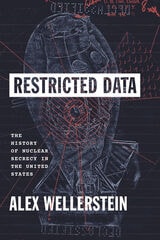
Restricted Data
The History of Nuclear Secrecy in the United StatesAlex Wellerstein
University of Chicago Press, 2021
The American atomic bomb was born in secrecy. From the moment scientists first conceived of its possibility to the bombings of Hiroshima and Nagasaki and beyond, there were efforts to control the spread of nuclear information and the newly discovered scientific facts that made such powerful weapons possible. The totalizing scientific secrecy that the atomic bomb appeared to demand was new, unusual, and very nearly unprecedented. It was foreign to American science and American democracy—and potentially incompatible with both. From the beginning, this secrecy was controversial, and it was always contested. The atomic bomb was not merely the application of science to war, but the result of decades of investment in scientific education, infrastructure, and global collaboration. If secrecy became the norm, how would science survive?
Drawing on troves of declassified files, including records released by the government for the first time through the author’s efforts, Restricted Data traces the complex evolution of the US nuclear secrecy regime from the first whisper of the atomic bomb through the mounting tensions of the Cold War and into the early twenty-first century. A compelling history of powerful ideas at war, it tells a story that feels distinctly American: rich, sprawling, and built on the conflict between high-minded idealism and ugly, fearful power.
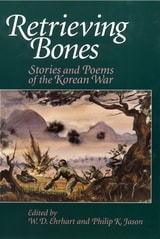
Retrieving Bones
Stories and Poems of the Korean WarEhrhart, W. D.
Rutgers University Press, 1999
The Korean War was a major event in American history. It marked an abrupt end to the euphoria Americans felt in the wake of victory in World War II and turned out to be the harbinger of disaster in Vietnam a decade later.
Though three years of brutal fighting resulted in millions of casualties, the final truce line of 1953 corresponded almost exactly to the positions the opponents held when the fighting began. Back home, the returning veterans met with little interest in or appreciation of what they had endured. Consequently, literary responses to the Korean War did not find an eager readership. Few people, it seemed, wanted to read about what they perceived as a backwater war that possessed neither grand scale nor apparent nobility, a war that ended not with a bang, but a whimper.
Yet an important literature has come out of the Korean War. As we mark the fiftieth anniversary of the war, these writings are well worth our attention. Many of the twelve stories and fifty poems assembled in Retrieving Bones have long been out of print and are almost impossible to find in any other source. The editors have enhanced this collection by providing maps, a chronology of the Korean War, and annotated lists of novels, works of nonfiction, and films. In a detailed introduction, Ehrhart and Jason discuss the milestones of the Korean War and place each fiction writer and poet represented into historical and literary contexts.
Among the writers and poets are
· James Lee Burke
· Eugene Burdick
· William Chamberlain
· Rolando Hinojosa
· Reg Saner
· Vern Sneider
· Stanford Whitmore
· Keith Wilson
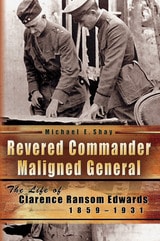
Revered Commander, Maligned General
The Life of Clarence Ransom Edwards, 1859-1931Michael E. Shay
University of Missouri Press, 2011
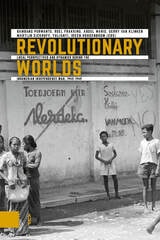
Revolutionary Worlds
Local Perspectives and Dynamics during the Indonesian Independence War, 1945-1949Bambang Purwanto
Amsterdam University Press, 2023
Bringing together two national historiographical traditions which have long remained largely separate, Revolutionary Worlds is the result of a collaboration between the Indonesian research project Proklamasi Kemerdekaan, Revolusi dan Perang di Indonesia ('Proclamation of Independence, Revolution and War in Indonesia', Universitas Gadjah Mada, Yogyakarta) and the Dutch research group of the Regional Studies project, under the umbrella of the research programme Independence, Decolonization, Violence and War in Indonesia, 1945-1950.
The authors of this book – Taufik Ahmad, Galuh Ambar Sasi, Maarten van der Bent, Martijn Eickhoff, Farabi Fakih, Roel Frakking, Apriani Harahap, Anne-Lot Hoek, Sarkawi B. Husain, Julianto Ibrahim, Gerry van Klinken, Erniwati, Mawardi Umar, Anne van der Veer, Abdul Wahid, Tri Wahyuning M. Irsyam, and Muhammad Yuanda Zara – work with various universities and research institutes in Indonesia and the Netherlands.
Revolutions and Counter-Revolutions
1917 and Its Aftermath from a Global PerspectiveEdited by Stefan Rinke and Michael Wildt
Campus Verlag, 2017
Riveting and Rationing in Dixie
Alabama Women and the Second World WarMary Martha Thomas
University of Alabama Press, 1987
Covers the experience of both black and white Alabama women as defense workers, volunteers, and homemakers. The most important change for women during the war years was their employment in jobs normally held by men, which posed an implicit challenge to traditional notions about femininity and female limitations.
Thomas describes the women employed in the defense industries—how they were recruited and trained, where they worked and under what conditions, and what changes employers made in the workplace to accommodate women, She also discusses the experience of the women who served as volunteers in the Ground Observer Corps, the Citizens’ Service Corps, the Red Cross, and other volunteer agencies. In addition, the author considers how homemakers coped during a time of rationing, housing shortages, lack of schools, and inadequate medical facilities.
Robinson Crusoe, USN
The Adventures of George R. Tweed Rm1c on Japanese-Held GuamGeorge R. Tweed
Westholme Publishing, 2010
An Inspiring Story of Survival and Friendship
At the same time as the attack on Pearl Harbor, Japan captured American Guam. Given the choice of surrendering or being taken prisoner, George R. Tweed escaped into the countryside. Aided by Chamorro natives who risked their lives to keep him safe, Tweed survived for two and a half years until he was eventually rescued by the U.S. Navy. In Robinson Crusoe, USN, first published in 1945, Tweed recounts his remarkable experiences and the debt of gratitude he held for those who help keep him alive.
Rommel
The End of a LegendRalf Georg Reuth
Haus Publishing, 2019
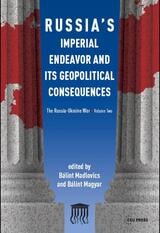
Russia's Imperial Endeavor and Its Geopolitical Consequences
The Russia-Ukraine War, Volume TwoBálint Madlovics
Central European University Press, 2024
Aside from the near-complete devastation of a sovereign state and reversal of the global balance of power, the Russian invasion of Ukraine in 2022 is leading to a radical transformation in the Eastern European and Eurasian regions – including Russia itself.
The 13 chapters in this volume examine the main geopolitical consequences of the resurgent imperialist aspirations of the Russian Federation. They examine the ideological tools of history falsification as an integral part of hybrid warfare. Turning to the economy, the book discusses how the war and economic sanctions imposed on Russia are redrawing the geopolitical map and how economic relations would change following a regime transformation. The book discusses the reactions of members of the international community to the invasion, whether threatened or neutral parties or allies. The collection therefore offers a comprehensive picture of the main consequences of the resurgent imperialist aspirations of the Russian Federation. Equipped with the conceptual tools of the analysis with a focus on the patronal features of the political-economic system, the book considers the aftermath of the war. This collection complements the book entitled Ukraine. Patronal Democracy and the Russian Invasion.