Results by title
95 books match the query 'Whites' and 10 start with r
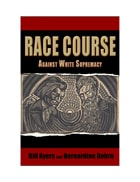
Race Course Against White Supremacy
Against White SupremacyBill Ayers
Northwestern University Press, 2009
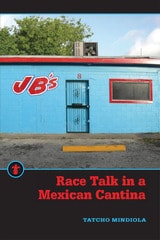
Race Talk in a Mexican Cantina
Tatcho Mindiola
Michigan State University Press, 2021
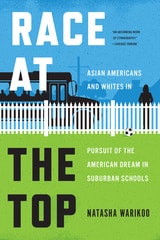
Race at the Top
Asian Americans and Whites in Pursuit of the American Dream in Suburban SchoolsNatasha Warikoo
University of Chicago Press, 2022
The American suburb conjures an image of picturesque privilege: manicured lawns, quiet streets, and—most important to parents—high-quality schools. These elite enclaves are also historically white, allowing many white Americans to safeguard their privileges by using public schools to help their children enter top colleges. That’s changing, however, as Asian American professionals increasingly move into wealthy suburban areas to give their kids that same leg up for their college applications and future careers.
As Natasha Warikoo shows in Race at the Top, white and Asian parents alike will do anything to help their children get to the top of the achievement pile. She takes us into the affluent suburban East Coast school she calls “Woodcrest High,” with a student body about one-half white and one-third Asian American. As increasing numbers of Woodcrest’s Asian American students earn star-pupil status, many whites feel displaced from the top of the academic hierarchy, and their frustrations grow. To maintain their children’s edge, some white parents complain to the school that schoolwork has become too rigorous. They also emphasize excellence in extracurriculars like sports and theater, which maintains their children’s advantage.
Warikoo reveals how, even when they are bested, white families in Woodcrest work to change the rules in their favor so they can remain the winners of the meritocracy game. Along the way, Warikoo explores urgent issues of racial and economic inequality that play out in affluent suburban American high schools. Caught in a race for power and privilege at the very top of society, what families in towns like Woodcrest fail to see is that everyone in their race is getting a medal—the children who actually lose are those living beyond their town’s boundaries.
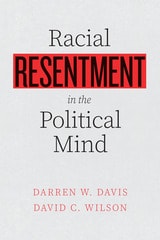
Racial Resentment in the Political Mind
Darren W. Davis and David C. Wilson
University of Chicago Press, 2022
In Racial Resentment in the Political Mind, Darren W. Davis and David C. Wilson challenge the commonly held notion that all racial negativity, disagreements, and objections to policies that seek to help racial minorities stem from racial prejudice. They argue that racial resentment arises from just-world beliefs and appraisals of deservingness that help explain the persistence of racial inequality in America in ways more consequential than racism or racial prejudice alone.
The culprits, as many White people see it, are undeserving people of color, who are perceived to benefit unfairly from, and take advantage of, resources that come at Whites’ expense—a worldview in which any attempt at modest change is seen as a challenge to the status quo and privilege. Yet, as Davis and Wilson reveal, many Whites have become racially resentful due to their perceptions that African Americans skirt the “rules of the game” and violate traditional values by taking advantage of unearned resources. Resulting attempts at racial progress lead Whites to respond in ways that retain their social advantage—opposing ameliorative policies, minority candidates, and other advancement on racial progress. Because racial resentment is rooted in beliefs about justice, fairness, and deservingness, ordinary citizens, who may not harbor racist motivations, may wind up in the same political position as racists, but for different reasons.
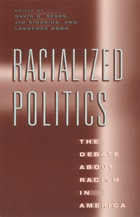
Racialized Politics
The Debate about Racism in AmericaEdited by David O. Sears, James Sidanius, and Lawrence Bobo
University of Chicago Press, 1999
In Racialized Politics, political scientists, sociologists, and psychologists explore the current debate surrounding the sources of racism in America. Published here for the first time, the essays represent three major approaches to the topic. The social psychological approach maintains that prejudice socialized early in life feeds racial stereotypes, while the social structural viewpoint argues that behavior is shaped by whites' fear of losing their privileged status. The third perspective looks to non-racially inspired ideology, including attitudes about the size and role of government, as the reason for opposition to policies such as affirmative action. Timely and important, this collection provides a state-of-the-field assessment of the current issues and findings on the role of racism in mass politics and public opinion.
Contributors are Lawrence Bobo, Gretchen C. Crosby, Michael C. Dawson, Christopher Federico, P. J. Henry, John J. Hetts, Jennifer L. Hochschild, William G. Howell, Michael Hughes, Donald R. Kinder, Rick Kosterman, Tali Mendelberg, Thomas F. Pettigrew, Howard Schuman, David O. Sears, James Sidanius, Pam Singh, Paul M. Sniderman, Marylee C. Taylor, and Steven A. Tuch.
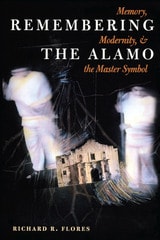
Remembering the Alamo
Memory, Modernity, and the Master SymbolBy Richard R. Flores
University of Texas Press, 2002
"Remember the Alamo!" reverberates through Texas history and culture, but what exactly are we remembering? Over nearly two centuries, the Mexican victory over an outnumbered band of Alamo defenders has been transformed into an American victory for the love of liberty. Why did the historical battle of 1836 undergo this metamorphosis in memory and mythology to become such a potent master symbol in Texan and American culture?
In this probing book, Richard Flores seeks to answer that question by examining how the Alamo's transformation into an American cultural icon helped to shape social, economic, and political relations between Anglo and Mexican Texans from the late nineteenth to the mid-twentieth centuries. In the first part of the book, he looks at how the attempts of heritage society members and political leaders to define the Alamo as a place have reflected struggles within Texas society over the place and status of Anglos and Mexicans. In the second part, he explores how Alamo movies and the transformation of Davy Crockett into an Alamo hero/martyr have advanced deeply racialized, ambiguous, and even invented understandings of the past.
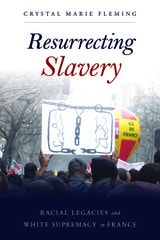
Resurrecting Slavery
Racial Legacies and White Supremacy in FranceCrystal Marie Fleming
Temple University Press, 2017
How can politicians and ordinary citizens face the racial past in a country that frames itself as colorblind? In her timely and provocative book, Resurrecting Slavery, Crystal Fleming shows how people make sense of slavery in a nation where talking about race, colonialism, and slavery remains taboo. Noting how struggles over the meaning of racial history are informed by contemporary politics of race, she asks: What kinds of group identities are at stake today for activists and French people with ties to overseas territories where slavery took place?
Fleming investigates the connections and disconnections that are made between racism, slavery, and colonialism in France. She provides historical context and examines how politicians and commemorative activists interpret the racial past and present. Resurrecting Slavery also includes in-depth interviews with French Caribbean migrants outside the commemorative movement to address the everyday racial politics of remembrance.
Bringing a critical race perspective to the study of French racism, Fleming’s groundbreaking study provides a more nuanced understanding of race in France along with new ways of thinking about the global dimensions of slavery, anti-blackness, and white supremacy.
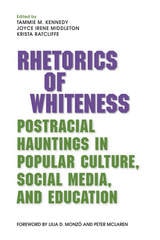
Rhetorics of Whiteness
Postracial Hauntings in Popular Culture, Social Media, and EducationEdited by Tammie M. Kennedy, Joyce Irene Middleton, Krista Ratcliffe, with a foreword by Lilia D. Monzó and Peter McLaren
Southern Illinois University Press, 2017
With the election of our first black president, many Americans began to argue that we had finally ended racism, claiming that we now live in a postracial era. Yet near-daily news reports regularly invoke white as a demographic category and recount instances of racialized violence as well as an increased sensitivity to expressions of racial unrest. Clearly, American society isn’t as color-blind as people would like to believe. In Rhetorics of Whiteness: Postracial Hauntings in Popular Culture, Social Media, and Education, contributors reveal how identifications with racialized whiteness continue to manifest themselves in American culture.
The sixteen essays that comprise this collection not only render visible how racialized whiteness infiltrates new twenty-first-century discourses and material spaces but also offer critical tactics for disrupting this normative whiteness. Specifically, contributors examine popular culture (novels, films, TV), social media (YouTube, eHarmony, Facebook), education (state law, the textbook industry, dual credit programs), pedagogy (tactics for teaching via narratives, emotional literacy, and mindfulness) as well as cultural theories (concepts of racialized space, anti-dialogicism, and color blindness). Offering new approaches to understanding racialized whiteness, this volume emphasizes the importance of a rhetorical lens for employing whiteness studies’ theories and methods to identify, analyze, interpret, and interrupt representations of whiteness.
Although whiteness studies has been waning as an active research field for the past decade, the contributors to Rhetorics of Whiteness assert that it hasn’t lost its relevancy because racialized whiteness and issues of systemic racism persist in American society and culture today. Few whiteness studies texts have been published in rhetoric and composition in the past decade, so this collection should quickly become mandatory reading. By focusing on common, yet often overlooked, contemporary examples of how racialized whiteness haunts U.S. society, Rhetorics of Whiteness serves as a valuable text for scholars in the field as well as anyone else interested in the topic.
Ripe
EssaysNegesti Kaudo
The Ohio State University Press, 2022
A LitHub Most Anticipated Book of 2022
“Emotional range without consequence,” Negesti Kaudo writes in her debut collection, Ripe, is a privilege of whiteness. In these essays, she fights back, exhorting readers to follow her through fury, grief, love, and hope as she confronts what it means to own her Blackness and her body in contemporary America. A scathing and nuanced cultural critic, she disentangles intersections of race, class, pop culture, size, sexuality, and more in spaces where she always seems to be either too Black or not Black enough. From attending private school as a poor Black student to the evolution of her hair routine to being fat and sexual when society says she should be neither, Kaudo overlooks nothing as she names the ways that white America simultaneously denigrates and steals Black culture. Most of all, she writes against the idea that a Black woman’s anger makes her an “angry Black woman,” claiming full emotional range as her birthright and as a tool against injustice on her quest to find herself no matter how uncomfortable the journey.
Rule Of Racialization
Class, Identity, GovernanceSteve Martinot
Temple University Press, 2002