Results by title
28164 books match the query 'History' and 1206 start with r
Reimagining Environmental History
Ecological Memory in the Wake of Landscape ChangeChristian Knoeller
University of Nevada Press, 2017
Reading across centuries and genres, Knoeller gives us a vibrant new appraisal of Midwestern/North American interior literary traditions and makes clear how vital environmental writing is to this region. To date, no one has written such an eloquent and comprehensive cross-genre analysis of Midwestern environmental literature.
Reimagining Liberation
How Black Women Transformed Citizenship in the French EmpireAnnette K. Joseph-Gabriel
University of Illinois Press, 2019
Reimagining National Belonging
Post-Civil War El Salvador in a Global ContextRobin Maria DeLugan
University of Arizona Press, 2012
Examining events that unfolded between 1992 and 2011, DeLugan both illustrates the idiosyncrasies of state and society in El Salvador and opens a larger portal into conditions of constructing a state in the present day around the globe—particularly the process of democratization in an age of neoliberalism. She demonstrates how academics, culture experts, popular media, and the United Nations and other international agencies have all helped shape ideas about national belonging in El Salvador. She also reveals the efforts that have been made to include populations that might have been overlooked, including indigenous people and faraway citizens not living inside the country’s borders. And she describes how history and memory projects have begun to recall the nation’s violent past with the goal of creating a more just and equitable nation.
This illuminating case study fills a gap in the scholarship about culture and society in contemporary El Salvador, while offering an “ethnography of the state” that situates El Salvador in a global context.
Reimagining Popular Notions of American Intellectualism
Literacy, Education, and ClassKelly Susan Bradbury
Southern Illinois University Press, 2016
Bradbury begins by tracing the origins and evolution of the narrow views of intellectualism that are common in the United States today. Then, applying a more inclusive and egalitarian definition of intellectualism, she examines the literacy and learning practices of three nonelite sites of adult public education in the United States: the nineteenth-century lyceum, a twentieth-century labor college, and a twenty-first-century GED writing workshop. Bradbury argues that together these three case studies teach us much about literacy, learning, and intellectualism in the United States over time and place. She concludes the book with a reflection on her own efforts to aid students in recognizing and resisting the rhetoric of anti-intellectualism that surrounds them and that influences their attitudes and actions.
Drawing on case studies as well as Bradbury’s own experiences with students, Reimagining Popular Notions of American Intellectualism demonstrates that Americans have engaged and do engage in the process and exercise of intellectual inquiry, contrary to what many people believe. Addressing a topic often overlooked by rhetoric, composition, and literacy studies scholars, it offers methods for helping students reimagine what it means to be intellectual in the twenty-first century.
Reimagining Social Medicine from the South
Abigail H. Neely
Duke University Press, 2021
Reimagining the American Pacific
From South Pacific to Bamboo Ridge and BeyondRob Wilson
Duke University Press, 2000
Wilson begins by tracing the arrival of American commerce and culture in the Pacific through missionary and imperial forces in the nineteenth century and the parallel development of Asia/Pacific as an idea. Using an impressive range of texts—from works by Herman Melville, James Michener, Maori and Western Samoan novelists, and Bamboo Ridge poets to Baywatch, films and musicals such as South Pacific and Blue Hawaii, and native Hawaiian shark god poetry—Wilson illustrates what it means for a space to be “regionalized.” Claiming that such places become more open to transnational flows of information, labor, finance, media, and global commodities, he explains how they then become isolated, their borders simultaneously crossed and fixed. In the case of Hawai’i, Wilson argues that culturally innovative, risky forms of symbol making and a broader—more global—vision of local plight are needed to counterbalance the racism and increasing imbalance of cultural capital and goods in the emerging postplantation and tourist-centered economy.
Reimagining the American Pacific leaves the reader with a new understanding of the complex interactions of global and local economies and cultures in a region that, since the 1970s, has been a leading trading partner of the United States. It is an engaging and provocative contribution to the fields of Asian and American studies, as well as those of cultural studies and theory, literary criticism, and popular culture.
Reimagining the Educated Citizen
Creole Pedagogies in the Transatlantic World, 1685-1896Petra Munro Hendry
University of Michigan Press, 2023
Winner of the 2023 American Educational Research Association (AERA) Division B: Curriculum Studies Outstanding Book Award
Reimagining the Educated Citizen contends that the constructs of public education and citizenship in the struggle to constitute a U.S. national identity are inseparable from the simultaneous emergence of transatlantic constructs of an educated citizen along transnational and transracial lines. The nineteenth century is commonly understood as the age of nationalism and nation formation in which the Anglo-Protestant Common School movement takes center stage in the production of the American democratic citizen. Ironically, the argument for public, Common Schools privileged whiteness instead of equality. This book suggests that an alternative vision of the relationship between education and citizenship emerged from a larger transatlantic history. Given shape by the movement of people, ideas, commodities, and practices across the Caribbean, Africa, Europe, the Gulf of Mexico and the Mississippi Valley, this radical egalitarian vision emerged at the crossroads of the Atlantic-colonial and antebellum Louisiana.

Reimagining the Nation-State
The Contested Terrains of Nation-BuildingJim MacLaughlin
Pluto Press, 2001
Mac Laughlin offers a theoretical and empirical analysis of nation building, taking as a case study the historical connections between Ireland and Great Britain in the clash between 'big nation' historic British nationalism on the one hand, and minority Irish nationalism on the other. Locating the origins of the historic nation in the seventeenth and eighteenth centuries, Mac Laughlin emphasises the difficulties, and specifities, of minority nationalisms in the nineteenth century. In so doing he calls for a place-centred approach which recognises the symbolic and socio-economic significance of territory to the different scales of nation-building. Exploring the evolution of Irish Nationalism, Reimaging the Nation State also shows how minority nations can challenge the hegemony of dominant states and threaten the territorial integrity of historic nations.

Reincarnation in Philo of Alexandria
Sami Yli-Karjanmaa
SBL Press, 2015
The best current research on Philo's allegorical exegesis of Scripture
The strong element of Greek philosophy in Philo's thought has been recognized since antiquity, but his relation to the Pythagorean-Platonic tenet of reincarnation has been a neglected, even avoided, topic in research. This book confirms the view common in the seventeenth to nineteenth centuries that Philo accepted the doctrine of reincarnation even though he preferred not to speak openly about it. The book shows how allegorization enabled Philo to give a reincarnational interpretation to very different scriptural passages.
Features:
- Highlights the importance of reading Philonic parallel passages together for fuller understanding of Philo s message
- Discusses the difference between protological and universal allegory in Philo's exegesis of the first chapters of Genesis
- Introduces new concepts to Philonic research such as the corporealization of the mind (the result of transgression and a driving force for reincarnation) and monadization (the human soul's transformation into pure mind upon salvation)
Reinsuring Health
Why More Middle-Class People Are Uninsured and What Government Can DoKatherine Swartz
Russell Sage Foundation, 2006
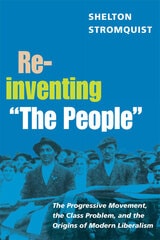
Reinventing "The People"
The Progressive Movement, the Class Problem, and the Origins of Modern LiberalismShelton Stromquist
University of Illinois Press, 2006
A comprehensive study of the Progressive movement, Reinventing "The People"contends that the persistence of class conflict in America challenged the very defining feature of Progressivism: its promise of social harmony through democratic renewal.
Shelton Stromquist profiles the movement's work in diverse arenas of social reform, politics, labor regulation and so-called race improvement. While these reformers emphasized different programs, they crafted a common language of social reconciliation in which an imagined civic community--"the People"--would transcend parochial class and political loyalties. But efforts to invent a society without enduring class lines marginalized new immigrants and African Americans by declaring them unprepared for civic responsibilities. In so doing, Progressives laid the foundation for twentieth-century liberals' inability to see their world in class terms and to conceive of social remedies that might alter the structures of class power.
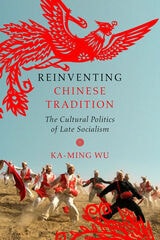
Reinventing Chinese Tradition
The Cultural Politics of Late SocialismKa-ming Wu
University of Illinois Press, 2015
Ka-ming Wu's ethnographic account of contemporary Yan'an documents how people have reworked the revival of three rural practices--paper-cutting, folk storytelling, and spirit cults--within (and beyond) the socialist legacy. Moving beyond dominant views of Yan'an folk culture as a tool of revolution or object of market reform, Wu reveals how cultural traditions become battlegrounds where conflicts among the state, market forces, and intellectuals in search of an authentic China play out. At the same time, she shows these emerging new dynamics in the light of the ways rural residents make sense of rapid social change.
Alive with details, Reinventing Chinese Tradition is an in-depth, eye-opening study of an evolving culture and society within contemporary China.
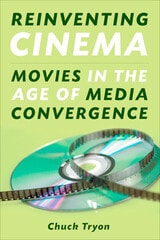
Reinventing Cinema
Movies in the Age of Media ConvergenceTryon, Chuck
Rutgers University Press, 2009
Reinventing Cinema examines film culture at the turn of this century, at the precise moment when digital media are altering our historical relationship with the movies. Spanning multiple disciplines, Chuck Tryon addresses the interaction between production, distribution, and reception of films, television, and other new and emerging media.Through close readings of trade publications, DVD extras, public lectures by new media leaders, movie blogs, and YouTube videos, Tryon navigates the shift to digital cinema and examines how it is altering film and popular culture.
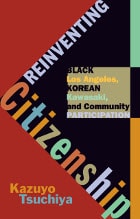
Reinventing Citizenship
Black Los Angeles, Korean Kawasaki, and Community ParticipationKazuyo Tsuchiya
University of Minnesota Press, 2014
In the 1960s and 1970s, the United States and Japan went through massive welfare expansions that sparked debates about citizenship. At the heart of these disputes stood African Americans and Koreans. Reinventing Citizenship offers a comparative study of African American welfare activism in Los Angeles and Koreans’ campaigns for welfare rights in Kawasaki. In working-class and poor neighborhoods in both locations, African Americans and Koreans sought not only to be recognized as citizens but also to become legitimate constituting members of communities.
Local activists in Los Angeles and Kawasaki ardently challenged the welfare institutions. By creating opposition movements and voicing alternative visions of citizenship, African American leaders, Tsuchiya argues, turned Lyndon B. Johnson’s War on Poverty into a battle for equality. Koreans countered the city’s and the nation’s exclusionary policies and asserted their welfare rights. Tsuchiya’s work exemplifies transnational antiracist networking, showing how black religious leaders traveled to Japan to meet Christian Korean activists and to provide counsel for their own struggles.
Reinventing Citizenship reveals how race and citizenship transform as they cross countries and continents. By documenting the interconnected histories of African Americans and Koreans in Japan, Tsuchiya enables us to rethink present ideas of community and belonging.
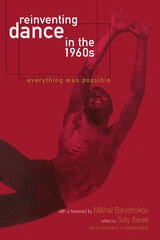
Reinventing Dance in the 1960s
Everything Was PossibleEdited by Sally Banes
University of Wisconsin Press, 2003
The 1960s was a pivotal decade in dance, an era of intense experimentation and rich invention. In this volume an impressive range of dance critics and scholars examine the pioneering choreographers and companies of the era, such as Anna Halprin’s West Coast experiments, the innovative Judson Dance Theater, avant-garde dance subcultures in New York, the work of Meredith Monk and Kenneth King, and parallel movements in Britain. The contributors include Janice Ross, Leslie Satin, Noël Carroll, Gus Solomons jr., Deborah Jowitt, Stephanie Jordan, Joan Acocella, and Sally Banes.
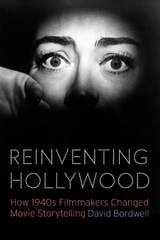
Reinventing Hollywood
How 1940s Filmmakers Changed Movie StorytellingDavid Bordwell
University of Chicago Press, 2017
If this sounds like today’s cinema, that’s because it is. In Reinventing Hollywood, David Bordwell examines the full range and depth of trends that crystallized into traditions. He shows how the Christopher Nolans and Quentin Tarantinos of today owe an immense debt to the dynamic, occasionally delirious narrative experiments of the Forties. Through in-depth analyses of films both famous and virtually unknown, from Our Town and All About Eve to Swell Guy and The Guilt of Janet Ames, Bordwell assesses the era’s unique achievements and its legacy for future filmmakers. Reinventing Hollywood is a groundbreaking study of how Hollywood storytelling became a more complex art and essential reading for lovers of popular cinema.
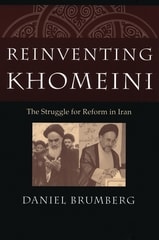
Reinventing Khomeini
The Struggle for Reform in IranDaniel Brumberg
University of Chicago Press, 2001
A complex figure, Khomeini was a fervent champion of Islam, but while he sought a Shi'ite vision of clerical rule under one Supreme Leader, he also strove to mesh that vision with an implicitly Western view of mass participatory politics. The intense magnetism and charisma of the ayatollah obscured this paradox. But reformers in Iran today, while rejecting his autocratic vision, are reviving the constitutional notions of government that he considered, and even casting themselves as the bearers of his legacy. In Reinventing Khomeini, Brumberg proves that the ayatollah is as much the author of modern Iran as he is the symbol of its fundamentalist past.
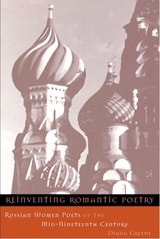
Reinventing Romantic Poetry
Russian Women Poets of the Mid-Nineteenth CenturyDiana Greene
University of Wisconsin Press, 2003
Reinventing Romantic Poetry offers a new look at the Russian literary scene in the nineteenth century. While celebrated poets such as Aleksandr Pushkin worked within a male-centered Romantic aesthetic—the poet as a bard or sexual conqueror; nature as a mother or mistress; the poet’s muse as an idealized woman—Russian women attempting to write Romantic poetry found they had to reinvent poetic conventions of the day to express themselves as women and as poets. Comparing the poetry of fourteen men and fourteen women from this period, Diana Greene revives and redefines the women’s writings and offers a thoughtful examination of the sexual politics of reception and literary reputation.
The fourteen women considered wrote poetry in every genre, from visions to verse tales, from love lyrics to metaphysical poetry, as well as prose works and plays. Greene delves into the reasons why their writing was dismissed, focusing in particular on the work of Evdokiia Rostopchina, Nadezhda Khvoshchinskaia, and Karolina Pavlova. Greene also considers class as a factor in literary reputation, comparing canonical male poets with the work of other men whose work, like the women’s, was deemed inferior at the time. The book also features an appendix of significant poems by Russian women discussed in the text. Some, found in archival notebooks, are published here for the first time, and others are reprinted for the first time since the mid-nineteenth century.

Reinventing the Library for Online Education
Frederick Stielow
American Library Association, 2013
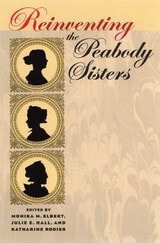
Reinventing the Peabody Sisters
Monika M. Elbert
University of Iowa Press, 2006
Reinventing the Peabody Sisters seeks to redefine this dynamic trio’s relationship to the literary and political movements of the mid nineteenth century. Previous scholarship has romanticized, vilified, or altogether erased their influences and literary productions or viewed these individuals solely in light of their relationships to other nineteenth-century luminaries, particularly men—Ralph Waldo Emerson, Nathaniel Hawthorne, Horace Mann. This collection underscores that each woman was a creative force in her own right.
Despite their differences and sibling conflicts, all three sisters thrived in the rarefied—if economically modest—atmosphere of a childhood household that glorified intellectual and artistic pursuits. This background allowed each woman to negotiate the nineteenth-century literary marketplace and in the process redefine its scope. Elizabeth, Mary, and Sophia remained linked throughout their lives, encouraging, complementing, and sometimes challenging each other's endeavors while also contributing to each other’s literary work.
The essays in this collection examine the sisters’ confrontations with and involvement in the intellectual movements and social conflicts of the nineteenth century, including Transcendentalism, the Civil War, the role of women, international issues, slavery, Native American rights, and parenting. Among the most revealing writings that the sisters left behind, however, are those which explore the interlaced relationship that continued throughout their remarkable lives.
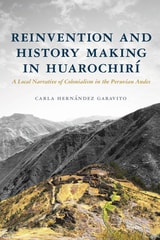
Reinvention and History Making in Huarochirí
A Local Narrative of Colonialism in the Peruvian AndesCarla Hernández Garavito
University of Arizona Press, 2026
Using archaeological and historical datasets and spatial modeling, this book centers on local memory and experience throughout colonized landscapes as the thread that connects the long history of Indigenous engagement with expanding colonial empires and the emergent Peruvian nation. The author builds on Andean epistemological frameworks to argue that in the face of drastic sociopolitical changes, the people of Huarochirí turned to their own history. They created analogies and shared spaces between local and Inka landscapes and materiality and incorporated written representations and ideas of settled lives to validate their claims.
This exciting new work moves the field of Andean archaeology into conversations with decolonial and decolonizing methodologies and shows how Indigenous communities captured and made sense of their long history, reframing colonialism as a local experience.
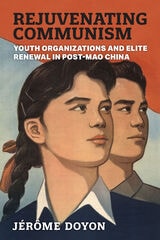
Rejuvenating Communism
Youth Organizations and Elite Renewal in Post-Mao ChinaJérôme Doyon
University of Michigan Press, 2023
Rejuvenating the Humanities
Ray B. Browne
University of Wisconsin Press, 1992
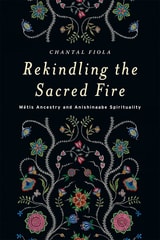
Rekindling the Sacred Fire
Métis Ancestry and Anishinaabe SpiritualityChantal Fiola
University of Manitoba Press, 2015

Relatos y relaciones de Hispanoamérica colonial
Compilado y editado por Otto Olivera
University of Texas Press, 2004
This anthology of foundational sixteenth-century Spanish-language texts presents the European side of the discovery and colonization of the New World. Otto Olivera has chosen representative selections from the works of eighteen authors, including Garcilaso de la Vega, Bartolomé de Las Casas, Bernal Díaz del Castillo, Hernán Cortés, and Alvar Núñez Cabeza de Vaca. Their writings present an impressive panorama of the first years of a real New World that could compete with any portrayed in European novels of chivalry or travel. To put these texts in historical context, Olivera has written an introduction that links the literature of colonization in its first century to the classical and medieval myths that helped shape Spaniards' thinking about the New World. He also provides a brief history of the discovery and conquest and a discussion of the social organization of the Spanish colonies.
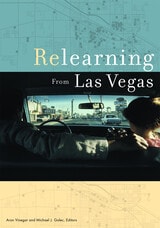
Relearning from Las Vegas
Aron Vinegar
University of Minnesota Press, 2009
Evaluates for the first time one of the foundational works in architecture criticism
Immediately on its publication in 1972, Learning from Las Vegas, by Robert Venturi, Denise Scott Brown, and Steven Izenour, was hailed as a transformative work in the history and theory of architecture, liberating those in architecture who were trying to find a way out of the straitjacket of architectural orthodoxies. Resonating far beyond the professional and institutional boundaries of the field, the book contributed to a thorough rethinking of modernism and was subsequently taken up as an early manifestation and progenitor of postmodernism.
Going beyond analyzing the original text, the essays provide insights into the issues surrounding architecture, culture, and philosophy that have been influenced by Learning from Las Vegas. For the contributors, as for scholars in an array of fields, the pioneering book is as relevant to architectural debates today as it was when it was first published.Contributors: Ritu Bhatt, Karsten Harries, Jean-Claude Lebensztejn, John McMorrough, Katherine Smith, Dell Upton, Nigel Whitely.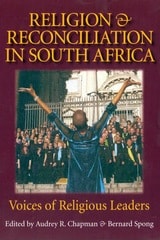
Religion & Reconciliation in South Africa
Voices of Religious LeadersBernard Spong
Templeton Press, 2003
Postapartheid South Africa's efforts to come to terms with its past, particularly its Truth and Reconciliation Commission's emphasis on forgiveness and reconciliation, is of special interest to many in the world community. The Truth and Reconciliation Commission (TRC), led by Archbishop Desmond Tutu, was mandated to go beyond truth-finding and to "promote national unity and reconciliation in a spirit of understanding which transcends the conflict and divisions of the past." In contrast with other truth commissions, the TRC was led by clerics rather than lawyers and judge, and the TRC's approach to reconciliation was shaped by and imbued with religious content. The TRC submitted its final report to the Mandela administration in October 1998.
Over the next two years, the Rev. Bernard Spong, former communications director of the South African Council of Churches, conducted a series of in-depth interviews about the TRC with thirty-three key religious figures. In this volume, they discuss and evaluate the following issues:
•How should we understand the concept of national or political reconciliation and its requirements?•What are the differences and similarities between religious and political approaches to reconciliation?
•Does national or political reconciliation require forgiveness between former victims and perpetrators?
•What is the appropriate role of religious representatives in a truth commission process? And is it recommended that other countries emulate the South African model?
•How do religious leaders assess the contributions and limitations of the TRC?
•What kind of initiatives are contemporary religious communities taking to promote reconciliation among their members and in the wider society?
The conversations presented in this volume, and the essays interpreting them, seek to illuminate issues and questions raised by the TRC model, including how to conceptualize reconciliation and the differences between political and religious approaches.
Religion After the Gods
Edwin H. Wilson and the American Humanist AssociationJohn S. Haller Jr.
University of Illinois Press, 2026
Sometimes called America’s fourth religion, religious humanism emerged in the Midwest as a product of Enlightenment rationality, the Social Gospel, and the philosophy of pragmatism. John S. Haller Jr. examines religious humanism’s first fifty years alongside Edwin H. Wilson’s pivotal role in the American Humanist Association (AHA).
Started by a group of Unitarian faculty and students, religious humanism applied the rituals of the theocentric universe of Judeo-Christianity to the non-theistic, anthropocentric universe of agnostics, altruists, humanitarians, and meliorists. Their beliefs found expression in the AHA, founded in 1941 with Wilson as the secretary and editor of its magazine. Wilson’s actions in these and other roles weighed heavily on the organization’s reputation, influence, successes, and failures. At the same time, his multifaceted work reflected the relationship between power and the possibilities inherent in the pluralistic and democratic heritage he pursued.
Rigorous and astute, Religion After the Gods reveals how the tensions between individual aspirations and bureaucratic constraints culminated in hopeful humanist practices.
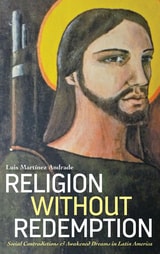
Religion Without Redemption
Social Contradictions and Awakened Dreams in Latin AmericaLuis Martinez Andrade
Pluto Press, 2015
Martínez Andrade focuses on the central role of religion in the region and how it influences people’s interaction with changes in modern economics. Capitalism in Latin America, Martínez Andrade argues, has taken on religious characteristics, with places of worship—shopping malls and department stores—as well as its own prophets. This form of cultural religion is often contradictory in surprising ways: not only does it legitimate oppression, it can also be a powerful source of rebellion, unveiling a subversive side to the status quo. Religion Without Redemption advances the ideas of liberation theory, and challenges the provincialism to which many Latin American thinkers are usually consigned.
Religion and Culture
Christopher Dawson
Catholic University of America Press, 2013
Religion and Jewish Identity in the Soviet Union, 1941–1964
Mordechai Altshuler
Brandeis University Press, 2012
Religion and Peace
Global Perspectives and PossibilitiesNukhet A. Sandal
Ohio University Press, 2022

Religion and Politics in East Africa
The Period since IndependenceHölger Bernt Hansen
Ohio University Press, 1994
Religious activities have been of continuing importance in the rise of protest against postcolonial governments in Eastern Africa. Governments have attempted to “manage“ religious affairs in both Muslim and Christian areas. Religious denominations have acted as advocates of human rights and in opposition to one-party-state regimes. Islamic fundamentalism changed with the ending of the Cold War.
The book is divided into four parts: The Challenge of Islam; Christianity, Sectarianism, and Politics in Uganda; Christians and Muslim in Kenyan Politics; and Cross-cultural Complications. An introductory essay by Michael Twaddle provides and overview of the changing character of politico-religious conflict in Eastern Africa. Holger Bernt Hansen summarizes the presentation with a discussion of dilemmas and challenges in the study of religion and politics.
Religion and Poverty
Pan-African PerspectivesPeter J. Paris, ed.
Duke University Press, 2009
Contributors from Africa and North America explore poverty’s roots and effects, the ways that experiences and understandings of deprivation are shaped by religion, and the capacity and limitations of religion as a means of alleviating poverty. As part of a collaborative project, the contributors visited Ghana, Kenya, and South Africa, as well as Jamaica and the United States. In each location, they met with clergy, scholars, government representatives, and NGO workers, and they examined how religious groups and community organizations address poverty. Their essays complement one another. Some focus on poverty, some on religion, others on their intersection, and still others on social change. A Jamaican scholar of gender studies decries the feminization of poverty, while a Nigerian ethicist and lawyer argues that the protection of human rights must factor into efforts to overcome poverty. A church historian from Togo examines the idea of poverty as a moral virtue and its repercussions in Africa, and a Tanzanian theologian and priest analyzes ujamaa, an African philosophy of community and social change. Taken together, the volume’s essays create a discourse of mutual understanding across linguistic, religious, ethnic, and national boundaries.
Contributors. Elizabeth Amoah, Kossi A. Ayedze, Barbara Bailey, Katie G. Cannon, Noel Erskine, Dwight N. Hopkins, Simeon O. Ilesanmi, Laurenti Magesa, Madipoane Masenya, Takatso A. Mofokeng, Esther M. Mombo, Nyambura J. Njoroge, Jacob Olupona, Peter J. Paris, Anthony B. Pinn, Linda E. Thomas, Lewin L. Williams
Religion and Race
Southern Presbyterians, 1946 to 1983Joel L. Alvis Jr
University of Alabama Press, 1994
Joel Alvis focuses on the relationships and tensions in the Presbyterian Church, U.S., whose ecclesiastical boundaries never expanded significantly beyond its original territory in the Confederacy and border South. By the time of the civil rights movement, the church was actively involved in ecumenical activities despite its regional isolation, and that involvement created unease in some quarters of the denomination. This concise institutional history traces how the church shaped and was shaped by its regional culture and explores the denomination's own cultural struggle to determine what role race issues would play in the definition of being Presbyterian.
Religion and Radical Politics
An Alternative Christian Tradition in the United StatesRobert Craig
Temple University Press, 1995
Religion and Sexuality
The Shakers, the Mormons, and the Oneida CommunityLawrence Foster
University of Illinois Press, 2009
Winner of the Best Book Award, Mormon History Association

Religion and Spanish Film
Luis Buñuel, the Franco Era, and Contemporary DirectorsElizabeth Scarlett
University of Michigan Press, 2014
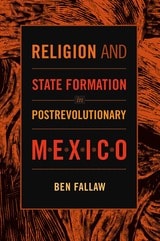
Religion and State Formation in Postrevolutionary Mexico
Ben Fallaw
Duke University Press, 2012
Ben Fallaw argues that previous scholarship has not appreciated the pervasive influence of Catholics and Catholicism on postrevolutionary state formation. By delving into the history of four understudied Mexican states, he is able to show that religion swayed regional politics not just in states such as Guanajuato, in Mexico's central-west "Rosary Belt," but even in those considered much less observant, including Campeche, Guerrero, and Hidalgo. Religion and State Formation in Postrevolutionary Mexico reshapes our understanding of agrarian reform, federal schooling, revolutionary anticlericalism, elections, the Segunda (a second Cristero War in the 1930s), and indigenism, the Revolution's valorization of the Mesoamerican past as the font of national identity.
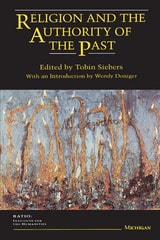
Religion and the Authority of the Past
Tobin Siebers, Editor
University of Michigan Press, 1993
Religion and the Authority of the Past looks at how the past has influenced religious authority, and demonstrates that authority has been, and continues to be, prevalent in all religions and cultures. This book shows, in a fascinating variety of ways, how religious doctrine, interpretation, behavior, and expression are affected by those in power.
The contributors—distinguished scholars from the fields of history, religion, classics, art, and Asian studies—find authority not only in places where one might expect it—in Islamic doctrine, Hindu religious texts, and the dogma of the Roman Catholic church, for example—but also in unimagined and intriguing locations: in the first U.S. archaeological expedition to the ancient Near East; in representations of heroic action in the Homeric epics and early Chinese classics; in the transmission of religious stereotypes from the Old World to the New; in the poetry of Paul Celan and Dan Pagis; and in a sculptor's attempts to create art for houses of worship, where architects, bishops, priests, and the laity assert a variety of forms of religious authority of their own.
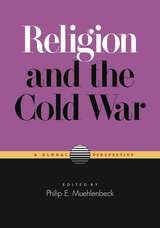
Religion and the Cold War
A Global PerspectivePhilip E. Muehlenbeck
Vanderbilt University Press, 2012
Students and scholars will find in this volume a level of comprehensiveness rarely achieved in Cold War studies. Each chapter reveals that the power and influence of ideas are just as important as military might in the struggles between superpowersand that few ideas, then as now, carry as much force as religious ideology. As Muehlenbeck and his contributors demonstrate, no area of the world, and no religious tenet, was safe from the manipulations of a powerful set of players focused solely on their own sphere of influence.
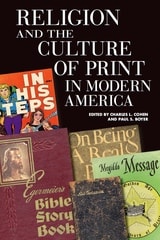
Religion and the Culture of Print in Modern America
Edited by Charles L. Cohen and Paul S. Boyer
University of Wisconsin Press, 2008
Religion and the Making of Nigeria
Olufemi Vaughan
Duke University Press, 2016
Religion and the Politics of Time
Noah Shusterman
Catholic University of America Press, 2010
Religion in Ancient Etruria
Jean-René Jannot, Translated by Jane K. Whitehead
University of Wisconsin Press, 2005
Provocative insights and thoughtful discussions contribute to an understanding of the prophetic nature of Etruscan culture. Jannot investigates the elaborate systems of defining space and time that so distinctly characterize this ancient society. Religion in Ancient Etruria offers a unique perspective that illuminates the origins of some of our own "modern" religious beliefs.
This updated edition includes more than 100 illustrations that demonstrate early temples, statues, mirrors, tablets, and sculptures.
1998 French edition, Picard
Religion in Ancient Mesopotamia
Jean Bottéro
University of Chicago Press, 2001
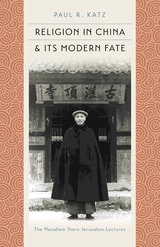
Religion in China and Its Modern Fate
Paul R. Katz
Brandeis University Press, 2014
Religion in Ohio
Profiles of Faith CommunitiesTarunjit Singh Butalia
Ohio University Press, 2004
Religion in Ohio tells the story of Ohio’s religious and spiritual heritage going back to the state’s ancient and historic native populations, and including the westward migration of settlers to this region, the development of a wide variety of faith traditions in the years preceding the mid-twentieth century, and the arrival of newer immigrants in the last fifty years, each group bringing with it cherished traditions.
Documenting religious pluralism in Ohio and the impact faith communities have had on the state, Religion in Ohio encompasses the historical experiences of many groups. Each chapter is the story of one of those communities written by a member of that faith or denomination.
Operating under the auspices of the Ohio Bicentennial Commission and the Interfaith Association of Central Ohio, the editors of Religion in Ohio have created a unique collection of the experiences of faith groups during the two hundred years of Ohio’s statehood and the years leading up to it. The largely untold stories of religious experience in Ohio are gathered here in one volume so they may be appreciated in all their breadth and diversity.
The Religious Experience Advisory Council of the Ohio Bicentennial Commission is one among twenty-two advisory councils established by the commission to commemorate Ohio’s bicentennial celebration. The council consists of more than twenty volunteers representing various faith traditions that have chosen Ohio to be their home.
Tarunjit Singh Butalia and Dianne P. Small present the profiles of faith communities in a highly readable and accessible format. Religion in Ohio will be a lasting legacy of the Ohio Bicentennial and a valuable tool for understanding and appreciating the breadth of the religious pluralism in the state for years to come.
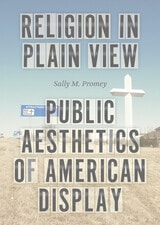
Religion in Plain View
Public Aesthetics of American DisplaySally M. Promey
University of Chicago Press, 2024
In Religion in Plain View, Sally M. Promey analyzes religion’s visible saturation of American public space and the histories that shaped this exhibitionary aesthetics. In street art, vehicle décor, signs, monuments, architecture, zoning policy, and more, Promey exposes American display’s merger of evangelicalism, capitalism, and imperialism. From this convergence, display materializes a distinctly American drive to advertise, claim territory, invalidate competitors, and fabricate a tractable national heritage. Charting this aesthetics’ strategic work as a Protestant technology of White nation formation, Religion in Plain View offers a dynamic critique of the ways public display perpetuates deeply ingrained assumptions about the proper shape of life and land in the United States.
Religion in the Modern American West
Ferenc Morton Szasz
University of Arizona Press, 2000
When Americans migrated west, they carried with them not only their hopes for better lives but their religious traditions as well. Yet the importance of religion in the forging of a western identity has seldom been examined.
In this first historical overview of religion in the modern American West, Ferenc Szasz shows the important role that organized religion played in the shaping of the region from the late-nineteenth to late-twentieth century. He traces the major faiths over that time span, analyzes the distinctive response of western religious institutions to national events, and shows how western cities became homes to a variety of organized faiths that cast only faint shadows back east.
While many historians have minimized the importance of religion for the region, Szasz maintains that it lies at the very heart of the western experience. From the 1890s to the 1920s, churches and synagogues created institutions such as schools and hospitals that shaped their local communities; during the Great Depression, the Latter-day Saints introduced their innovative social welfare system; and in later years, Pentecostal groups carried their traditions to the Pacific coast and Southern Baptists (among others) set out in earnest to evangelize the Far West. Beginning in the 1960s, the arrival of Asian faiths, the revitalization of evangelical Protestantism, the ferment of post-Vatican II Catholicism, the rediscovery of Native American spirituality, and the emergence of New Age sects combined to make western cities such as Los Angeles and San Francisco among the most religiously pluralistic in the world.
Examining the careers of key figures in western religion, from Rabbi William Friedman to Reverend Robert H. Schuller, Szasz balances specific and general trends to weave the story of religion into a wider social and cultural context. Religion in the Modern American West calls attention to an often-overlooked facet of regional history and broadens our understanding of the American experience.