Results by title
18316 books match the query 'United states' and 838 start with r
Reporting of Social Science in the National Media
Carol Weiss
Russell Sage Foundation, 1988

Reporting the Chinese Revolution
The Letters of Rayna ProhmeGregor Benton and Arthur J. Knodel
Pluto Press, 2007
The book consists of letters Prohme wrote to her closest friend and her husband in the period immediately before, during and after the Wuhan interlude. Her reporting brought her into contact with many major political figures including Madam Sun Yat-sen (a prominent figure in the opposition to Chiang Kai-shek) and Mikhail Borodin (a chief Soviet advisor in China).
This book provides an unusual and often moving insight into a fascinating period in modern Chinese history.

Represent and Destroy
Rationalizing Violence in the New Racial CapitalismJodi Melamed
University of Minnesota Press, 2011
In the global convulsions in the aftermath of World War II, one dominant world racial order broke apart and a new one emerged. This is the story Jodi Melamed tells in Represent and Destroy, portraying the postwar racial break as a transition from white supremacist modernity to a formally antiracist liberal capitalist modernity in which racial violence works normatively by policing representations of difference.
Following the institutionalization of literature as a privileged domain for Americans to get to know difference—to describe, teach, and situate themselves with respect to race—Melamed focuses on literary studies as a cultural technology for transmitting liberal racial orders. She examines official antiracism in the United States and finds that these were key to ratifying the country’s global ascendancy. She shows how racial liberalism, liberal multiculturalism, and neoliberal multiculturalism made racism appear to be disappearing, even as they incorporated the assumptions of global capitalism into accepted notions of racial equality.
Yet Represent and Destroy also recovers an anticapitalist “race radical” tradition that provides a materialist opposition to official antiracisms in the postwar United States—a literature that sounds out the violence of liberal racial orders, relinks racial inequality to material conditions, and compels desire for something better than U.S. multiculturalism.
Representation Rights and the Burger Years
Nancy Maveety
University of Michigan Press, 1991
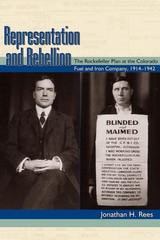
Representation and Rebellion
The Rockefeller Plan at the Colorado Fuel and Iron Company, 1914-1942Jonathan H. Rees
University Press of Colorado, 2010
Representations
Doing Asian American RhetoricLuMing Mao and Morris Young
Utah State University Press, 2008
Mao, Young, and their contributors propose that Asian American discourse should be seen as a spacious form, one that deliberately and selectively incorporates Asian “foreign-ness” into the English of Asian Americans. These authors offer the concept of a dynamic “togetherness-in-difference” as a way to theorize the contact and mutual influence. Chapters here explore a rich diversity of histories, theories, literary texts, and rhetorical practices. Collectively, they move the scholarly discussion toward a more nuanced, better balanced, critically informed representation of the forms of Asian American rhetorics and the cultural work that they do.
Representing Modernist Texts
Editing as InterpretationGeorge Bornstein, Editor
University of Michigan Press, 1991
In Representing Modernist Texts, thirteen internationally known scholars provide major explorations of the topic in the work of particular writers. The issues they raise include the construction of a writer’s canon and the effect of newly available “uncanonical” manuscript materials on existing works and orderings; the replacement of the older idea of a fixed, stable text by a more contemporary notion of the text as process; and the interrogation by advanced textual theory of many of the same notions of “author,” “intention,” and “stability of the text” questioned by advanced literary theory.
Representing Talent
Hollywood Agents and the Making of MoviesViolaine Roussel
University of Chicago Press, 2017
The book takes readers behind the scenes to observe the day-to-day activities of agents, revealing their influence on artistic careers and the prospects of Hollywood’s forthcoming projects. Agents are crucial to understanding how creative and economic power are intertwined in Hollywood today. They play a key role in the process by which artistic worth and economic value are evaluated and attributed to people and projects. Roussel’s fieldwork examines what “having relationships” really means for agents, and how they perform the relationship work that’s at the heart of their professional existence and success. Representing Talent helps us to understand the players behind the definition of entertainment itself, as well as behind its current transformations.
Reproducing Rape
Domination through Talk in the CourtroomGregory M. Matoesian
University of Chicago Press, 1993
Matoesian examines the language of the courtroom, focusing on how defense lawyers interpret and classify rape in a way that makes the victim's experience appear as a normal sexual encounter. He analyzes the language that defense attorneys use in cross-examination to argue that courtroom talk can shape the victim's testimony to fit male standards of legitimate sexual practice. On this view, cross-examination is an adversarial war of words through which lawyers manipulate reality and perpetuate the patriarchal domination of women.
Reproducing Rape will interest students and professionals in law, criminology, sociology, feminist theory, linguistics, and anthropology.
Reproductive Justice
The Politics of Health Care for Native American WomenGurr, Barbara
Rutgers University Press, 2015
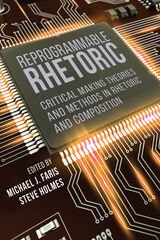
Reprogrammable Rhetoric
Critical Making Theories and Methods in Rhetoric and CompositionMichael J. Faris
Utah State University Press, 2022
This collection offers nuanced theoretical perspectives on material and cultural rhetorics alongside practical tutorials for students, researchers, and teachers to explore critical making across traditional areas such as wearable sensors, Arduinos, Twitter bots, multimodal pedagogy, Raspberry Pis, and paper circuitry, as well as underexplored areas like play, gaming, text mining, bots, and electronic monuments.
Designed to be taught in upper division undergraduate and graduate classrooms, these tutorials will benefit non-expert and expert critical makers alike. All contributed codes and scripts are also available on Utah State University Press’s companion website to encourage downloading, cloning, and repurposing.
Contributors: Aaron Beveridge, Kendall Gerdes, Kellie Gray, Matthew Halm, Steven Hammer, Cana Uluak Itchuaqiyaq, John Jones, M.Bawar Khan, Bree McGregor, Sean Morey, Ryan Omizo, Andrew Pilsch, David Rieder, David Sheridan, Wendi Sierra, Nicholas Van Horn
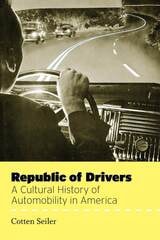
Republic of Drivers
A Cultural History of Automobility in AmericaCotten Seiler
University of Chicago Press, 2008
Cotten Seiler combs through a vast number of historical, social scientific, philosophical, and literary sources to illustrate the importance of driving to modern American conceptions of the self and the social and political order. He finds that as the figure of the driver blurred into the figure of the citizen, automobility became a powerful resource for women, African Americans, and others seeking entry into the public sphere. And yet, he argues, the individualistic but anonymous act of driving has also monopolized our thinking about freedom and democracy, discouraging the crafting of a more sustainable way of life. As our fantasies of the open road turn into fears of a looming energy crisis, Seiler shows us just how we ended up a republic of drivers—and where we might be headed.
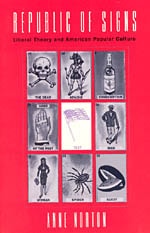
Republic of Signs
Liberal Theory and American Popular CultureAnne Norton
University of Chicago Press, 1993
The author ranges over a wide expanse of popular activities (e.g. wrestling, roller derby, lotteries, shopping sprees, and dining out), as well as conventional political topics (e.g., the Constitution, presidency, news media, and centrality of law). Yet the argument is pointed and probling, never shallow or superficial. Fred and Wilma Flintstone are as vital to the republic as Franklin and Eleanor Roosevelt.
"In discussions that range from the Constitution and the presidency to money and shopping, voting, lotteries, and survey research, Norton discerns and imaginatively invents possibilities that exceed recognized actualities and already approved opportunities."—Richard E. Flathman, American Political Science Review
"[S]timulating and stylish exploration of political theory, language, culture, and shopping at the mall . . . popular culture at its best, informed by history and theory, serious in purpose, yet witty and modest in tone."—Bernard Mergen, American Studies International
Republic of the Dispossessed
The Exceptional Old-European Consensus in AmericaRowland Berthoff
University of Missouri Press, 1997
Do Americans, in all their cultural diversity, share any fundamental consensus? Does such a consensus, or anything else, make America exceptional in the modern world?
Since 1960 most historians have answered no--except perhaps for the current nostalgia for the Eisenhower years (the "Ozzie and Harriet" years of popular recollection) of middle-class American prosperity.
In Republic of the Dispossessed social historian Rowland Berthoff maintains not only that there was--and still is--a middle-class consensus and that America is exceptional in it but that it goes back some five hundred years. The consensus stems from all those European peasants and artisans who, from 1600 to 1950, fled dispossession in the Old World. They brought with them basic social values that acted as a template for middle-class American values. To consider modern American society as exceptional--that is, as distinctive and different from any contemporary European pattern of thought--is therefore, in Berthoff's theory, not at all the "illogical absurdity" that current conventional wisdom makes it.
The Berthoff thesis, as he develops it in these ten essays from throughout the course of his career, is well worth a second look by those within and beyond the field of social history. It suggests that the ideal--both peasant and classical republican-- of maintaining a balance between personal liberty and communal equality has long inspired American reaction to the drastic modern changes of industrialization, urbanization, and immigration.
Observing that most Americans still see themselves as independent, basically equal, middle-class citizens, Berthoff explains the current apprehension among Americans that at the end of the twentieth century they are once again being dispossessed-- thus, the current emphasis on "traditional values." Because that problem is the same that worried their European ancestors as much as five hundred years ago, Berthoff argues, the time has come to face the question head-on.
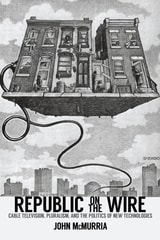
Republic on the Wire
Cable Television, Pluralism, and the Politics of New Technologies, 1948-1984McMurria, John
Rutgers University Press, 2017
Republicanism, Religion, and the Soul of America
Ellis Sandoz
University of Missouri Press, 2006
Requirements for Certification of Teachers, Counselors, Librarians, Administrators for Elementary and Secondary Schools, Eightieth Edition, 2015-2016
Elizabeth A. Kaye
University of Chicago Press, 2015
Requirements for Certification of Teachers, Counselors, Librarians, Administrators for Elementary and Secondary Schools, Eighty-Fifth Edition, 2020-2021
Edited by Colleen M. Frankhart
University of Chicago Press, 2021
Requirements for Certification of Teachers, Counselors, Librarians, Administrators for Elementary and Secondary Schools, Eighty-Fourth Edition, 2019-2020
Edited by Colleen M. Frankhart
University of Chicago Press, 2020
Requirements for Certification of Teachers, Counselors, Librarians, Administrators for Elementary and Secondary Schools, Eighty-Sixth Edition, 2021-2022
Edited by Alain Park
University of Chicago Press, 2021
This annual volume offers the most complete and current listings of the requirements for certification of a wide range of educational professionals at the elementary and secondary levels. Requirements for Certification is a valuable resource, making much-needed knowledge available in one straightforward volume.
Requirements for Certification of Teachers, Counselors, Librarians, Administrators for Elementary and Secondary Schools, Eighty-Third Edition, 2018–2019
Edited by Colleen M. Frankhart
University of Chicago Press, 2018
Requirements for Certification of Teachers, Counselors, Librarians, Administrators for Elementary and Secondary Schools, Eighty-first Edition, 2016-2017
Elizabeth A. Kaye
University of Chicago Press, 2016
Requirements for Certification of Teachers, Counselors, Librarians, Administrators for Elementary and Secondary Schools, Eighty-second Edition, 2017-2018
Edited by Colleen Frankhart
University of Chicago Press, 2017
Requirements for Certification of Teachers, Counselors, Librarians, Administrators for Elementary and Secondary Schools, Seventy-eighth Edition, 2013-2014
Edited by Elizabeth A. Kaye
University of Chicago Press, 2013
Requirements for Certification of Teachers, Counselors, Librarians, Administrators for Elementary and Secondary Schools, Seventy-fifth edition, 2010-2011
Edited by Elizabeth A. Kaye and Jeffrey J. Makos
University of Chicago Press, 2010
This annual volume offers the most complete and current listings of the requirements for certification of a wide range of educational professionals at the elementary and secondary levels. Requirements for Certification is a valuable resource, making much-needed knowledge available in one straightforward volume.
Requirements for Certification of Teachers, Counselors, Librarians, Administrators for Elementary and Secondary Schools, Seventy-seventh Edition, 2012-2013
Edited by Elizabeth A. Kaye
University of Chicago Press, 2012
This annual volume offers the most complete and current listings of the requirements for certification of a wide range of educational professionals at the elementary and secondary levels. Requirements for Certification is a valuable resource, making much-needed knowledge available in one straightforward volume.
Requirements for Certification of Teachers, Counselors, Librarians, Administrators for Elementary and Secondary Schools, Seventy-sixth Edition, 2011-2012
Edited by Elizabeth A. Kaye
University of Chicago Press, 2011
This annual volume offers the most complete and current listings of the requirements for certification of a wide range of educational professionals at the elementary and secondary levels. Requirements for Certification is a valuable resource, making much-needed knowledge available in one straightforward volume.

Rereading the Revolution
The Turn-of-the-Century American Revolutionary War NovelAnita Lawson
University of Wisconsin Press, 2000
Approximately fifty historical novels dealing with the American Revolution were published in the United States from 1896 to 1906. Benjamin S. Lawson critically examines the narrative strategies employed in these works and the ways in which fiction is made to serve the purpose of vivifying national history.
Writing within the conventions of the historical romance, these authors created plots that reflect the enveloping concerns of the War for Independence, such as the young American woman who often must choose between suitors on opposite sides in the wider conflict.
Lawson concludes that these works reassured readers of the worth of an Anglo-American heritage. They were escapist fantasies to the degree that they failed to confront contemporary realities of crisis and change: the New Immigration, urbanization and industrialization, labor strife, the plight of the poor, and agitation on behalf of women and ethnic minorities.
Rescue and Romance
Popular Novels Before World War IDiana Reep
University of Wisconsin Press, 1982
This study of the rescue motif in popular American novels before World War I focuses on the rescue convention as part of the romantic plot of the novels. The rescue as a structured convention that controls the movement of the romantic plot appears in all types of domestic novels, gothics, dime novels, historical romances, and westerns.
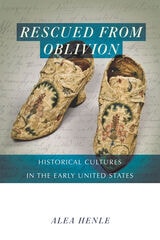
Rescued from Oblivion
Historical Cultures in the Early United StatesAlea Henle
University of Massachusetts Press, 2020
With in-depth research and an expansive scope, Rescued from Oblivion offers a vital account of the formation of historical culture and consciousness in the early United States, re-centering in the record groups long marginalized from the national memory. As Alea Henle demonstrates, these societies laid the groundwork for professional practices that are still embraced today: collection policies, distinctions between preservation of textual and nontextual artifacts, publication programs, historical rituals and commemorations, reconciliation of scholarly and popular approaches, and more. At the same time, officers of these early societies faced challenges to their historical authority from communities interested in preserving a broader range of materials and documenting more inclusive histories, including fellow members, popular historians, white women, and peoples of color.
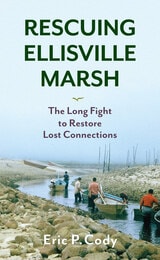
Rescuing Ellisville Marsh
The Long Fight to Restore Lost ConnectionsEric P. Cody
University of Massachusetts Press, 2023
For hundreds of years, farmers and fishing communities maintained the inlet to Ellisville Marsh, a picturesque piece of coastline ten miles south of Plymouth, Massachusetts. Recognized as one of the most environmentally sensitive and ecologically valuable places in the state, the salt marsh and estuary are home to a diverse array of wildlife and a range of habitats, including low-tide mudflats, a saltwater pond, intertidal zone, and fields of tall marsh grass.
After agricultural and fishing activities faded away in the late twentieth century, it soon became apparent that protecting the marsh and its surroundings from development would not be enough to restore the natural equilibrium that had been lost when the inlet became blocked. Having witnessed government inaction over the years, Eric P. Cody and four other locals founded the Friends of Ellisville Marsh in 2007 to address erosion, revive tidal flows, and revitalize fisheries and wildlife in the face of climate change. Rescuing Ellisville Marsh presents the powerful case study of backyard activism, telling the story of a community that bonded with a natural place and decided to fight for it.
Research Directions of Black Psychologists
Wade Boykin
Russell Sage Foundation, 1979
Researching American Culture
A Guide for Student AnthropologistsConrad Phillip Kottak, Editor
University of Michigan Press, 1982
Conducting original fieldwork is a science and an art. Anthropology students can easily get an A in Aborigines without ever understanding their own tribal behavior. American culture, like all others, has its share of ritual and myths, ranging from singles bars to sports events. This volume guides undergraduate students to correct scientific methods and successful personal approaches in their work.
Researching American Culture covers the universe of ethnography: the researcher’s role, interviewing, questionnaire construction, ethics, coping with the limitations of time and space. Guides for researchers, original research papers by undergraduates, and essays by professional anthropologists are all included. By applying anthropological techniques to today’’s behavior, students learn to be objective about their own culture and skeptical about practices rarely questioned.
Reshaping Women's History
Voices of Nontraditional Women HistoriansJulie A. Gallagher, Barbara Winslow
University of Illinois Press, 2018
Resilience
Rebekkah Smith Aldrich
American Library Association, 2018
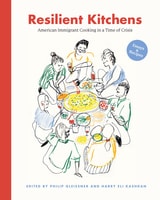
Resilient Kitchens
American Immigrant Cooking in a Time of Crisis, Essays and RecipesPhilip Gleissner
Rutgers University Press, 0
Winner of the James Beard Award for Best Book in Food Issues and Advocacy
Immigrants have left their mark on the great melting pot of American cuisine, and they have continued working hard to keep America’s kitchens running, even during times of crisis like the COVID-19 pandemic. For some immigrant cooks, the pandemic brought home the lack of protection for essential workers in the American food system. For others, cooking was a way of reconnecting with homelands they could not visit during periods of lockdown.
Resilient Kitchens: American Immigrant Cooking in a Time of Crisis is a stimulating collection of essays about the lives of immigrants in the United States before and during the COVID-19 pandemic, told through the lens of food. It includes a vibrant mix of perspectives from professional food writers, restaurateurs, scholars, and activists, whose stories range from emotional reflections on hardship, loss, and resilience to journalistic investigations of racism in the American food system. Each contribution is accompanied by a recipe of special importance to the author, giving readers a taste of cuisines from around the world. Every essay is accompanied by gorgeous food photography, the authors’ snapshots of pandemic life, and hand-drawn illustrations by Filipino American artist Angelo Dolojan.
Resistance and Abolition in the Borderlands
Confronting Trump's Reign of TerrorEdited by Arturo J. Aldama and Jessica Ordaz; Foreword by Leo R. Chavez; Afterword by Karma R. Chávez
University of Arizona Press, 2024
This volume provides a well-argued look at the Trump era. Insightful contributions delve into the impact of Donald Trump’s rhetoric and policies on migrants detained and returned, immigrant children separated from their parents and placed in detention centers, and migrant women subjected to sexual and reproductive abuses, among other timely topics. The chapter authors document a long list in what the book calls “Trump’s Reign of Terror.”
Organized thematically, the book has four sections: The first gathers histories about the Trump years’ roots in a longer history of anti-migration; the second includes essays on artistic and activist responses on the border during the Trump years; the third critiques the normalization of Trump’s rhetoric and actions in popular media and culture; and the fourth envisions the future.
Resistance and Abolition in the Borderlands is an essential reader for those wishing to understand the extent of the damage caused by the Trump era and its impact on Latinx people.
Contributors
Arturo J. Aldama
Rebecca Avalos
Cynthia Bejarano
Tria Blu Wakpa
Renata Carvalho Barreto
Karma R. Chávez
Leo R. Chavez
Jennifer Cullison
Jasmin Lilian Diab
Allison Glover
Jamila Hammami
Alexandria Herrera
Diana J. Lopez
Sergio A. Macías
Cinthya Martinez
Alexis N. Meza
Roberto A. Mónico
José Enrique Navarro
Jessica Ordaz
Eliseo Ortiz
Kiara Padilla
Leslie Quintanilla
J-M Rivera
Heidy Sarabia
Tina Shull
Nishant Upadhyay
Maria Vargas
Antonio Vásquez
Resistance and Obedience to God
David Ferris
QuakerPress, 2001
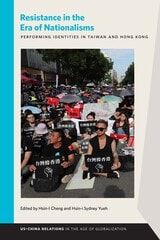
Resistance in the Era of Nationalisms
Performing Identities in Taiwan and Hong KongHsin-I Cheng
Michigan State University Press, 2023
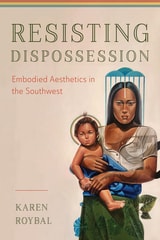
Resisting Dispossession
Embodied Aesthetics in the SouthwestKaren R. Roybal
University of Arizona Press, 2027
Illuminating the impacts of ongoing dispossession across the modern American Southwest
Resisting Dispossession examines how Native/Indigenous, Chicana/o/x, and Black communities in the American Southwest have confronted displacement and dispossession from the nineteenth century to the present. Moving beyond abstract theory, Karen R. Roybal centers cultural expression and embodied knowledge, revealing how colonialism, preservation, urban renewal, and gentrification continue to shape relationships to land, place, and belonging.
Drawing on Indigenous, Chicana feminist, and Black epistemologies, Roybal explores a diverse cultural archive of photographs, literature, musical compositions, oral histories, and storytelling practices. Through analyses of figures such as Kali Fajardo-Anstine, Raven Chacon, and Louis Carlos Bernal, alongside the stories of Chicana land grant heirs in New Mexico and southern Colorado, she demonstrates how artistic and cultural expression becomes a powerful tool for resisting erasure and reclaiming presence. Contesting representations of the Southwest made popular by figures like Ansel Adams and Georgia O’Keeffe, these works preserve alternative histories, challenge dominant narratives, and illuminate the ongoing impacts of dispossession across the region.
Interdisciplinary in scope, this work offers a fresh perspective on the intersections of aesthetics, embodiment, and power in the West and Southwest.
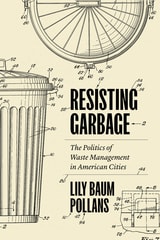
Resisting Garbage
The Politics of Waste Management in American CitiesLily Baum Pollans
University of Texas Press, 2021
Resisting Garbage presents a new approach to understanding practices of waste removal and recycling in American cities, one that is grounded in the close observation of case studies while being broadly applicable to many American cities today.
Most current waste practices in the United States, Lily Baum Pollans argues, prioritize sanitation and efficiency while allowing limited post-consumer recycling as a way to quell consumers’ environmental anxiety. After setting out the contours of this “weak recycling waste regime,” Pollans zooms in on the very different waste management stories of Seattle and Boston over the last forty years. While Boston’s local politics resulted in a waste-export program with minimal recycling, Seattle created new frameworks for thinking about consumption, disposal, and the roles that local governments and ordinary people can play as partners in a project of resource stewardship. By exploring how these two approaches have played out at the national level, Resisting Garbage provides new avenues for evaluating municipal action and fostering practices that will create environmentally meaningful change.
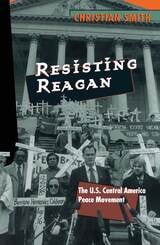
Resisting Reagan
The U.S. Central America Peace MovementChristian Smith
University of Chicago Press, 1996
Focusing on the movement's three most important national campaigns—Witness for Peace, Sanctuary, and the Pledge of Resistance—this book demonstrates the centrality of morality as a political motivator, highlights the importance of political opportunities in movement outcomes, and examines the social structuring of insurgent consciousness. Based on extensive surveys, interviews, and research, Resisting Reagan makes significant contributions to our understanding of the formation of individual activist identities, of national movement dynamics, and of religious resources for political activism.

Resisting Regionalism
Gender And Naturalism In American Fiction, 1885-1915Donna Campbell
Ohio University Press, 1997
When James Lane Allen defined the “Feminine Principle” and the “Masculine Principle” in American fiction for the Atlantic Monthly in 1897, he in effect described local color fiction and naturalism, two branches of realism often regarded as bearing little relationship to each other. In this award-winning study of both movements, Resisting Regionalism explores the effect the cultural dominance of women’s local color fiction in the 1890’s had on young male naturalist writers, who rebelled against the local colorists and their “teacup tragedies.”
An immensely popular genre, local color fiction reached its peak in the 1880s in such literary journals as Harper’s Monthly, Scribner’s, the Atlantic Monthly, and the Century. These short stories exhibited local “characters,” depicted marginal groups and vanishing folkways, and addressed issues of absence, loss, limitation, and the past. Despite such prickly themes, according to Donna Campbell, local color fiction “fulfilled some specific needs of the public – for nostalgia, for a retreat into mildly exotic locales, for a semblance of order preserved in ritual.”
By the turn of the century, however, local color fiction was fading from the scene, supplanted by writers of adventure fiction and historical romances, with whom local colorists increasingly merged, and opposed by the naturalists. In examining this historic shift, Resisting Regionalism shows that far from being distanced from local color fiction, nationalism emerged in part as a dissenting response to its popularity and to the era’s concerns about the dominance of feminine influence in American literature. The new generation of authors, including Crane, Norris, London, Frederic, Wharton, resisted the cultural myths and narrative strategies common to local colorists Sarah Orne Jewett, Rose Terry Cooke, Mary E. Wilkins Freeman, and Constance Fenimore Woolson. Yet, as Campbell underscores in her analysis of Stephan Crane’s The Monster, the naturalists could, and did, integrate local color conventions with the grotesque and horrifying to powerful effect.
In clear, accessible prose, Resisting Regionalism provides fresh readings of naturalistic works in the context of the dispute between local color and naturalism. In the process, this book shows the debt naturalism owes to local color fiction and illuminates a neglected but significant literary era.
Resisting State Violence
Radicalism, Gender, and Race in U.S. CultureJoy James
University of Minnesota Press, 1996
An incendiary critique of contemporary American society that also offers concrete solutions for the dilemmas facing progressive politics.
As the political climate of the United States moves rightward, effective and visionary voices from the left become both rarer and more essential. In Resisting State Violence, African American scholar-activist Joy James provides such a voice. Taking the convergence of race, gender, and class as fundamental trajectories, James offers a stimulating and iconoclastic account of a world in which the United States functions as the political-police center.
At its core, Resisting State Violence is about the many ways the current structure of American government and society is inimical to human rights. James examines the prevalence of racist violence in U.S. policies, making provocative connections between seemingly disparate themes and events, and always, insistently, linking global and U.S. domestic politics. She creates a picture of a nation that consistently uses dehumanization to normalize and rationalize violence in foreign policy, all the while creating a domestic climate that pathologizes blackness and sexuality, portraying those most vulnerable to violence as its carriers. In the systematic and ubiquitous nature of state violence, however, James sees a possibility of hope in the building of coalitions across race, class, gender, and national divides. She argues that the very commonality that makes the system seem so overpowering can serve as the basis for resistance-that the elements that hold together a web of oppression and misuse of power also mark its vulnerabilities, especially when confronted with an equally systematic resistance. James offers concrete solutions for the dilemmas facing progressive politics and the individuals who work to achieve social justice. Resisting State Violence is a clear-sighted and uncompromising guidebook for those who want to understand the forces that hinder social change, and to effectively move beyond them.
Resolana
Emerging Chicano Dialogues on Community and GlobalizationMiguel Montiel
University of Arizona Press, 2009
Coming from diverse backgrounds in social work, sociology, public administration, literature, history, and education, three modern resolaneros take the twin concepts of resolana and el oro del barrio on a breathtaking journey from their rural roots to their application in an urban setting and on to a holistic view of globalization. The authors offer a humane perspective on transborder cultures and all communities struggling to maintain their cultural and linguistic identities. They share an optimistic view of how ordinary people everywhere can take back control of their own destinies. This book is about uncovering subjugated knowledge—el oro del barrio—through resolana, a dynamic process of thought and action.
Resolana will inspire dialogue and creativity from those interested in sociology, political science, social work, and Chicano studies, as well as public-policy makers and the general public.

Resolving Racial Conflict
The Community Relations Service and Civil Rights, 1964-1989Bertram Levine
University of Missouri Press, 2005
Resort City In The Sunbelt, Second Edition
Las Vegas, 1930-2000Eugene P. Moehring
University of Nevada Press, 2000
Resource Allocation in Higher Education
William F. Massy, Editor
University of Michigan Press, 1996
Resowing the Seeds of War
Presidential Peace Rhetoric since 1945Stephen J. Heidt
Michigan State University Press, 2021
Respect and Loathing in American Democracy
Polarization, Moralization, and the Undermining of EqualityJeff Spinner-Halev and Elizabeth Theiss-Morse
University of Chicago Press, 2024
A deep examination of why respect is in short supply in politics today and why it matters.
Respect is in trouble in the United States. Many Americans believe respecting others is a necessary virtue, yet many struggle to respect opposing partisans. Surprisingly, it is liberal citizens, who hold respect as central to their view of democratic equality, who often have difficulty granting respect to others. Drawing on evidence from national surveys, focus groups, survey experiments, and the views of political theorists, Jeff Spinner-Halev and Elizabeth Theiss-Morse explain why this is and why respect is vital to—and yet so lacking in—contemporary US politics.
Respect and Loathing in American Democracy argues that liberals and conservatives are less divided than many believe, but alienate one another because they moralize different issues. Liberals moralize social justice, conservatives champion national solidarity, and this worldview divide keeps them at odds.
Respect is both far-reaching and vital, yet it is much harder to grant than many recognize, partly because of the unseen tension between respect, social justice, and national solidarity. Respect and Loathing in American Democracy proposes a path forward that, while challenging, is far from impossible for citizens to traverse.