Results by title
49 books match the query 'Wilderness'

A Professor in the Wilderness
Peter Damian Before the Gregorian ReforJohn Howe
Catholic University of America Press, 2027
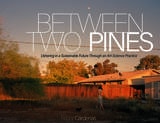
Between Two Pines
Ushering in a Sustainable Future Through an Art-Science PracticeEdgar Cardenas
Michigan Publishing Services, 2019
“I am truly thankful that Dr. Edgar Cardenas’s thoughtful research is now available in this beautiful book. I have recommended his work to more people, both in my personal and professional spheres of my life, than I can count, and I’m glad to have this provocative and elegant publication to put into people’s hands. Cardenas shows us how each of us really can make a difference.”
“Between Two Pines anticipates and leads the discussion of scholarship around questions of land and landscape. This work brilliantly and ethically refocuses our vision, from distanced scrutiny to connection and proximity, rooted in daily care-taking and ecological efforts. Thoughtfully imaged, the photographs offer an aesthetic that is based in balanced, enduring reflection, rather than on the grand view. These beautiful images reveal discoveries that bridge the arts, ecology, and sociology, and will serve to reconnect every reader with the world in their backyard and beyond.”
“Drawing from a long photographic tradition of examining the relationship between humans and their environment, Edgar Cardenas has found a voice that is as compassionate as it is poignant. Yet he is not content for his photographs to be mere observations, recording the relationship. Between Two Pines is a call to action – a platform by which we might imagine together, with all of the tools in our tool kit, a sustainable future.”
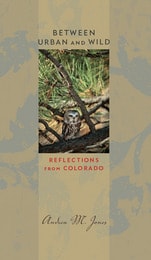
Between Urban and Wild
Reflections from ColoradoAndrea M. Jones
University of Iowa Press, 2013
Although not intended as a manual for landowners, Between Urban and Wild nonetheless offers useful and engaging perspectives on the realities of settling and living in a partially wild environment. Throughout her ongoing journey of being home, Jones’s close observations of the land and its native inhabitants are paired with the suggestion that even small landholders can act to protect the health of their properties. Her brief meditations capture and honor the subtleties of the natural world while illuminating the importance of working to safeguard it.
Probing the contradictions of a lifestyle that burdens the health of the land that she loves, Jones’s writing is permeated by her gentle, earnest conviction that living at the urban-wild interface requires us to set aside self-interest, consider compromise, and adjust our expectations and habits—to accommodate our surroundings rather than force them to accommodate us.
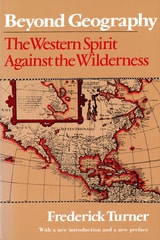
Beyond Geography
The Western Spirit Against the WildernessFrederick Turner
Rutgers University Press, 1992
First published in 1980, Beyond Geography continues to influence and impress its readers. This new edition, prepared for the Columbus quincentennial, includes a new introduction by T. H. Watkins and a new preface by the author. As the public debates Columbus's legacy, it is important for us to learn of the spiritual background of European domination of the Americas, for the Europeans who conquered the Americas substituted history for myth as a way of understanding life.
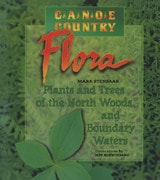
Canoe Country Flora
Plants and Trees of the North Woods and Boundary WatersMark Stensaas
University of Minnesota Press, 2004
The vast North Woods, a land magnificently arrayed in the deep greens of pine, spruce, and fir and the brilliant blues of crystal clear lakes, spans the area from Minnesota to Maine and from Michigan to Hudson Bay. With a little help fromCanoe Country Flora, keen explorers will discover a world full of life and wonder in the plants that thrive in this beautiful lake country.
Canoe Country Flora, a friendly field guide, introduces you to ninety-six of the most common trees, shrubs, wildflowers, fungi, ferns, lichens, and other plants you’re likely to encounter during your travels north. Detailed line drawings and brief plant profiles help you recognize what you’re seeing, while “Sparky” Stensaas’s intriguing tales draw you into a deeper study of the plants’s natural and cultural histories.
Each plant is made identifiable and memorable by fascinating facts, handy checklists, diagrams and charts, and interesting activities that help adults and children learn by discovery.
Use this book as a companion to Canoe Country Wildlife or alone as your guide to a unique North Woods adventure.
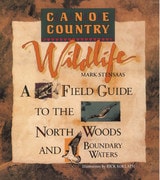
Canoe Country Wildlife
A Field Guide to the North Woods and Boundary WatersMark Stensaas
University of Minnesota Press, 2004
Warblers, wolves, and whirligig beetles—the creatures of the canoe countrywilderness come alive in Canoe Country Wildlife. In this read-aloud treasure, “Sparky” Stensaas, naturalist and storyteller, intrigues you with his tales of encounters with the forest inhabitants—from tiny toads to majestic moose.
Canoe Country Wildlife, a friendly field guide, introduces you to the wildlife you are most likely to see as you travel in the North Woods. It describes these creatures and their habits accurately so you’ll know where and when to look for them. Detailed line drawings illustrate each animal clearly so you’ll recognize what you’re seeing.
The book is filled with fascinating little-known facts: Did you know that wood frogs can freeze solid, only to live again? That loons can fly a hundred miles an hour? That chipmunks can carry seventy sunflower seeds in their cheeks?
Canoe Country Wildlife includes handy checklists to help you keep track of the critters you encounter, a calendar for you to record the natural events you witness, and activities—one for each animal—that will help both adults and children learn by discovery.
Carry Canoe Country Wildlife in your pack. Your trip will be more enjoyable and your memories will last forever. It’s a great gift for anyone who loves the outdoors.
Christianity, Wilderness, and Wildlife
Susan Bratton
University of Scranton Press, 2009
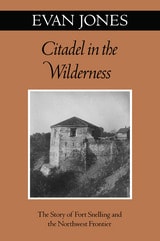
Citadel In The Wilderness
The Story of Fort Snelling and the Northwest FrontierEvan Jones
University of Minnesota Press, 2001
The lively history of this frontier fort.
History/Regional
The lively history of this frontier fort, now back in print!In 1824 Colonel Josiah Snelling erected a stone fortress at the point where the Minnesota and Mississippi rivers merged, on territory secured by Lieutenant Zebulon Pike in a treaty with the Sioux chief Little Crow. Evan Jones describes the intriguing history of Fort Snelling, the Gibraltar of the West, its effect on the Native Americans of the region, and its role in the westward movement.“A story of bitter and complex rivalries. . . . With massive towers and walls capping a limestone cliff, [Fort Snelling] defied attack. But it influenced movements and events hundreds of miles away. The Sioux opposed the Chippewa, the North West Company contended with the Hudson’s Bay outfit, and Astor’s American Fur Company fought them both. . . . This book unfolds a forty-year struggle in the wilderness.” --New York Times Book Review“The author offers here a rollicking tale of high adventure and low shenanigans in and around Fort Snelling. As much the story of the Indians of the region as of the hardy Americans (famous and infamous) who walked inside this fort’s impressive walls, Citadel relays its message of courage and chicanery with a minimum of ‘undying prose’ but a maximum of straightforward and incisive storytelling.” --Library JournalEvan Jones (1915–1996) was born in Le Sueur, Minnesota. A writer of American history and cookbooks, he is the author of The Minnesota (also published in paperback by University of Minnesota Press), Trappers and Mountain Men, Epicurean Delight: The Life and Times of James Beard, and The L. L. Bean Book of New New England Cookery.ISBN 0-8166-3879-9 Paper £10.95 $14.95 256 Pages 23 black-and-white photos 5 3/8 x 8 1/2 MayFesler-Lampert Minnesota Heritage SeriesTranslation Inquiries: Penguin Putnam, Inc.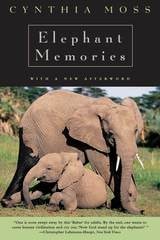
Elephant Memories
Thirteen Years in the Life of an Elephant FamilyCynthia J. Moss
University of Chicago Press, 2000
Cynthia Moss studied the elephants in Kenya's Amboseli National Park for decades, and her long-term research revealed much of what we now know about these complex and intelligent animals. In Elephant Memories she turns that knowledge in an accessible, engaging, even moving story of individual elephants and their complicated relationships. With Moss as our guide, we get to know a number of elephants who are in a family group that is led by matriarchs Teresia, Slit Ear, Torn Ear, Tania, and Tuskless. and we develop new understanding of what elephants do when allowed to live in the wild. An afterword offers a view of the the families from a few years later and addresses current conservation issues.
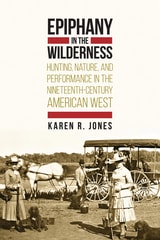
Epiphany in the Wilderness
Hunting, Nature, and Performance in the Nineteenth-Century American WestKaren R. Jones
University Press of Colorado, 2016
Whether fulfilling subsistence needs or featured in stories of grand adventure, hunting loomed large in the material and the imagined landscape of the nineteenth-century West. Epiphany in the Wilderness explores the social, political, economic, and environmental dynamics of hunting on the frontier in three “acts,” using performance as a trail guide and focusing on the production of a “cultural ecology of the chase” in literature, art, photography, and taxidermy.
Using the metaphor of the theater, Jones argues that the West was a crucial stage that framed the performance of the American character as an independent, resourceful, resilient, and rugged individual. The leading actor was the all-conquering masculine hunter hero, the sharpshooting man of the wilderness who tamed and claimed the West with each provident step. Women were also a significant part of the story, treading the game trails as plucky adventurers and resilient homesteaders and acting out their exploits in autobiographical accounts and stage shows.
Epiphany in the Wilderness informs various academic debates surrounding the frontier period, including the construction of nature as a site of personal challenge, gun culture, gender adaptations and the crafting of the masculine wilderness hero figure, wildlife management and consumption, memorializing and trophy-taking, and the juxtaposition of a closing frontier with an emerging conservation movement.
The University Press of Colorado gratefully acknowledges the generous support of the Charles Redd Center for Western Studies at Brigham Young University toward the publication of this book.
Errand into the Wilderness of Mirrors
Religion and the History of the CIAMichael Graziano
University of Chicago Press, 2021
Michael Graziano’s intriguing book fuses two landmark titles in American history: Perry Miller’s Errand into the Wilderness (1956), about the religious worldview of the early Massachusetts colonists, and David Martin’s Wilderness of Mirrors (1980), about the dangers and delusions inherent to the Central Intelligence Agency. Fittingly, Errand into the Wilderness of Mirrors investigates the dangers and delusions that ensued from the religious worldview of the early molders of the Central Intelligence Agency. Graziano argues that the religious approach to intelligence by key OSS and CIA figures like “Wild” Bill Donovan and Edward Lansdale was an essential, and overlooked, factor in establishing the agency’s concerns, methods, and understandings of the world. In a practical sense, this was because the Roman Catholic Church already had global networks of people and safe places that American agents could use to their advantage. But more tellingly, Graziano shows, American intelligence officers were overly inclined to view powerful religions and religious figures through the frameworks of Catholicism. As Graziano makes clear, these misconceptions often led to tragedy and disaster on an international scale. By braiding the development of the modern intelligence agency with the story of postwar American religion, Errand into the Wilderness of Mirrors delivers a provocative new look at a secret driver of one of the major engines of American power.
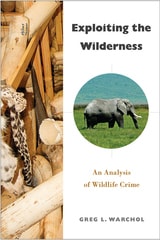
Exploiting the Wilderness
An Analysis of Wildlife CrimeGreg L. Warchol
Temple University Press, 2017
Illegally harvested ivory and endangered plants, mammals, reptiles, birds, and even insects are easily found for sale throughout East and Southern Africa. And this is just one part of the multi-billion-dollar illegal global trade in wildlife.
Wildlife is an important and even vital asset for both intrinsic and economic reasons. Yet it is illegally exploited on a massive scale to the point where some species now risk extinction. Exploiting the Wilderness provides a concise overview of this shameful business, describing some of the main species being exploited and examining select wildlife whose survival is imperiled due to heavy pressure from poachers to meet consumer demand.
Greg Warchol draws on his firsthand experience and research in Africa to examine the structure and operation of the illegal trade in wildlife. He identifies the participants as well as their motivations and operations, and explains the behavior of poachers, traffickers, and consumers of illegally obtained goods. He concludes with a description of legislative and law enforcement efforts to control and prevent wildlife exploitation along with a number of contemporary conservation initiatives designed to improve the ability of rangers to protect wildlife.
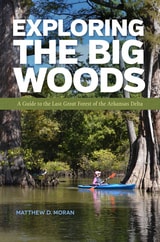
Exploring the Big Woods
A Guide to the Last Great Forest of the Arkansas DeltaMatthew D. Moran
University of Arkansas Press, 2016
Exploring the Big Woods: A Guide to the Last Great Forest of Eastern Arkansas is both a natural history and a guide to one of the last remnants of Mississippi bottomland forest, an ecosystem that once stretched from southern Illinois to the Gulf Coast.
Crossed by the White River and its tributaries, which periodically flood and release nutrients, the Big Woods is one of the few places in the Mississippi River Valley where this life-giving flood cycle persists. As a result, it is home to an unusual abundance of animals and plants.
Immense cypresses, hickories, sweetgums, oaks, and sycamores; millions of migrating waterfowl; incredible scenery; and the complex relationship between humans and nature are all to be discovered here.
Exploring the Big Woods will introduce readers to the natural features, plants, animals, and hiking and canoeing trails going deep into the forests and swamps of this rare and beautiful natural resource.
Forty Years In The Wilderness
Impressions Of Nevada, 1940-1980James W. Hulse
University of Nevada Press, 1986
A view of Nevada history by native Nevadan and historian Hulse that suggests prosperity be based on diverse businesses rather than on a gaming-financed economy.
George Meléndez Wright
The Fight for Wildlife and Wilderness in the National ParksJerry Emory
University of Chicago Press, 2023
When twenty-three-year-old George Meléndez Wright arrived in Yosemite National Park in 1927 to work as a ranger naturalist—the first Hispanic person to occupy any professional position in the National Park Service (NPS)—he had already visited every national park in the western United States, including McKinley (now Denali) in Alaska. Two years later, he would organize the first science-based wildlife survey of the western parks, forever changing how the NPS would manage wildlife and natural resources. At a time when national parks routinely fed bears garbage as part of “shows” and killed “bad” predators like wolves, mountain lions, and coyotes, Wright’s new ideas for conservation set the stage for the modern scientific management of parks and other public lands.
Tragically, Wright died in a 1936 car accident while working to establish parks and wildlife refuges on the US-Mexico border. To this day, he remains a celebrated figure among conservationists, wildlife experts, and park managers. In this book, Jerry Emory, a conservationist and writer connected to Wright’s family, draws on hundreds of letters, field notes, archival research, interviews, and more to offer both a biography of Wright and a historical account of a crucial period in the evolution of US parks and the wilderness movement. With a foreword by former NPS director Jonathan B. Jarvis, George Meléndez Wright is a celebration of Wright’s unique upbringing, dynamism, and enduring vision that places him at last in the pantheon of the great American conservationists.
Granite, Fire, and Fog
The Natural and Cultural History of AcadiaTom Wessels
University Press of New England, 2017
In the House of Wilderness
A NovelCharles Dodd White
Ohio University Press, 2018
Rain is a young woman under the influence of a charismatic drifter named Wolf and his other “wife,” Winter. Through months of wandering homeless through the cities, small towns, and landscape of Appalachia, the trio have grown into a kind of desperate family, a family driven by exploitation and abuse. A family that Rain must escape.
When she meets Stratton Bryant, a widower living alone in an old east Tennessee farmhouse, Rain is given the chance to see a bigger world and find herself a place within it. But Wolf will not let her part easily. When he demands loyalty and obedience, the only way out is through an episode of violence that will leave everyone involved permanently damaged.
A harrowing story of choice and sacrifice, Charles Dodd White’s In the House of Wilderness is a novel about the modern South and how we fight through hardship and grief to find a way home.
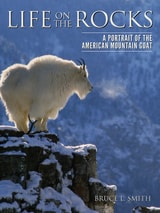
Life on the Rocks
A Portrait of the American Mountain GoatBruce L. Smith
University Press of Colorado, 2014
Color photographs and accounts of Smith's personal experiences living in Montana's Selway-Bitterroot Wilderness Area accompany descriptions of the American mountain goat's natural history. Smith explores their treacherous habitat, which spans the perilous cliffs and crags of the Rocky, Cascade, and Coast mountain ranges. The physical and behavioral adaptations of these alpine athletes enable them to survive a host of dangers, including six-month-long winters, scarce food sources, thunderous avalanches, social strife, and predators like wolves, bears, lions, wolverines, and eagles. Smith also details the challenges these animals face as their territory is threatened by expanding motorized access, industrial activities, and a warming climate.
Life on the Rocks showcases the elegance and charm of this little-known creature, thriving in some of North America's harshest wilderness. Smith's volume will appeal to wildlife enthusiasts, wildland travelers, and conservationists interested in the future of the American mountain goat.
Lob Trees In The Wilderness
The Human and Natural History of the Boundary WatersClifford Ahlgren
University of Minnesota Press, 2001
Marketing the Wilderness
Outdoor Recreation, Indigenous Activism, and the Battle over Public LandsJoseph Whitson
University of Minnesota Press, 2025
How outdoor industry marketing promotes an image of “the wilderness” as an unpeopled haven
Marketing the Wilderness analyzes the relationship between the outdoor recreation industry, public lands in the United States, and Indigenous sovereignty and representation in recreational spaces. Combining social media analysis, digital ethnography, and historical research, Joseph Whitson offers nuanced insights into more than a century of the outdoor recreation industry’s marketing strategies, unraveling its complicity in settler colonialism.
Complicating the narrative of outdoor recreation as a universal good, Whitson introduces the concept of “wildernessing” to describe the physical, legal, and rhetorical production of pristine, empty lands that undergirds the outdoor recreation industry, a process that further disenfranchises Indigenous people from whom these lands were stolen. He demonstrates how companies such as Patagonia and REI align with the mining and drilling industries in their need to remove Indigenous peoples and histories from valuable lands. And he describes the ways Indigenous and decolonial activists are subverting and resisting corporate marketing strategies to introduce new narratives of place.
Through the lens of environmental justice activism, Marketing the Wilderness reconsiders the ethics of recreational land use, advocating for engagement with issues of cultural representation and appropriation informed by Indigenous perspectives. As he discusses contemporary public land advocacy around places such as Bears Ears National Monument, Whitson focuses on the deeply fraught relationship between the outdoor recreation industry and Indigenous communities. Emphasizing the power of the corporate system and its treatment of land as a commodity under capitalism, he shows how these tensions shape the American idea of “wilderness” and what it means to fight for its preservation.
Retail e-book files for this title are screen-reader friendly with images accompanied by short alt text and/or extended descriptions.

Money Trees
The Douglas Fir and American Forestry, 1900-1944Emily K. Brock
Oregon State University Press, 2015
Money Trees is an interdisciplinary history of the crucial decades that shaped the modern American conception of the value of the forest. It begins with early 20th century environmental changes in the Douglas Fir forests of the Pacific Northwest, which led to increasing divisiveness and controversy among foresters. Brock balances this regional story with a national view of the intellectual and political currents that governed forest management, marshaling archival evidence from industry, government, and scientific sources.
An important contribution to environmental scholarship, Money Trees offers a nuanced vision of forestry’s history and its past relationship to both wilderness activism and scientific ecology. With fresh perspectives on well-known environmental figures such as Bob Marshall and Gifford Pinchot, it will add to the conversation among scholars in environmental history, history of science, and the history of the American West. It will be welcomed as a key resource across the spectrum of environmental studies, and by anyone interested in natural resources, land management, the role of science in environmentalism, and the modern wilderness movement.
New Way Of The Wilderness
The Classic Guide to Survival in the WildCalvin Rutstrum
University of Minnesota Press, 2000
The complete resource on backcountry camping from a legendary wilderness expert.
In this classic guide, first published in the late 1950s, Rutstrum covers the key elements of a successful camping trip: the proper way to build a raft, chop down a tree, construct a campsite, cook over a campfire, find a way through the woods, and much more. Drawing upon his vast experience in all kinds of weather, Rutstrum provides essential knowledge for every camper, in a lightweight volume perfect for the backpack.
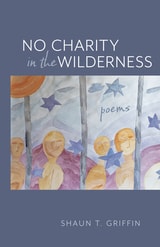
No Charity in the Wilderness
PoemsShaun T. Griffin
University of Nevada Press, 2024
Griffin has spent many decades in the high desert trying to find the way forward—when what he knows has been challenged and still there is breath on the horizon. One day an ancient Chinese poet comes to visit: "Snow deepens/ to quiet what I once believed, and Wang Wei stoops from the spine:/ this is how you become silence." Even if you doubt the old poet's counsel, like Griffin, you want to journey with him into the wilderness.
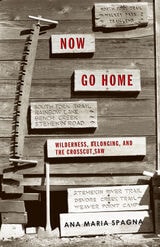
Now Go Home
Wilderness, Belonging, and the Crosscut SawAna Maria Spagna
Oregon State University Press, 2004
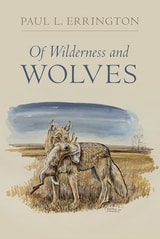
Of Wilderness and Wolves
Paul L. Errington
University of Iowa Press, 2015
Tracing his own relationship with wolves from his rural South Dakota upbringing through his formative years as a professional trapper to his landmark work as an internationally renowned wildlife biologist, Errington delves into our irrational fear of wolves. He forthrightly criticizes what he views as humanity’s prejudice against an animal that continues to serve as the very emblem of the wilderness we claim to love, but that too often falls prey to our greed and ignorance. A friend of Aldo Leopold, Errington was an important figure in the conservation efforts in the first half of the twentieth century. During his lifetime, wolves were considered vicious, wantonly destructive predators; by the mid-1900s, they had been almost completely eliminated from the lower forty-eight states. Their reintroduction to their historical range today remains controversial.
Lyrical yet unsentimental, Of Wilderness and Wolves provides a strong and still-timely dose of ecological realism for the abusive mismanagement of our natural resources. It is a testament to our shortsightedness and to Errington’s vision that this book, its publication so long delayed, still speaks directly to our environmental crises.
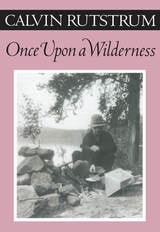
Once Upon A Wilderness
Calvin Rutstrum
University of Minnesota Press, 2002
The complete outdoorsman looks back on fifty years of wilderness adventures to find answers to today’s questions.
Though he began his life as a Twin Cities resident, Calvin Rutstrum came to see noise, material wealth, and perpetual frenzy as the narcotics of the city dweller. Like Henry David Thoreau, he set out to live a simpler, more meaningful life. In his pursuit, Rutstrum came to appreciate the natural world and the skills necessary to survive in it. Part memoir, part guidebook, and part environmental treatise, Once upon a Wilderness is a treasury of wilderness wisdom.
Rutstrum reminisces about lessons that his time in the wilderness has taught him. He writes about a range of backcountry issues, including environmental preservation, cultural sensitivity toward Native Americans, the urban versus the rural, and the artistic value of practical skills. Through his thoughtful consideration of the pleasure and value of wilderness, Rutstrum offers a clarion call for a saner, more socially responsible and environmentally sensitive way of living.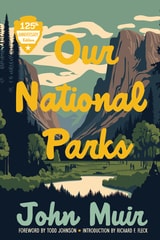
Our National Parks
John Muir
University of Wisconsin Press, 2026
Our National Parks is a guidebook supreme, an exciting introduction to Yosemite and several other magnificent parks by the man who, more than any other person, helped create them. After this fast-paced trip with Muir, past visitors to the parks will want to revisit them with new insights, and those who have never wandered these trails will not rest until they have done so.
The book was originally published in 1901, its ten essays having previously appeared as articles in the Atlantic Monthly. Muir wrote them with a single purpose—to entice people, by his descriptions, to come to the parks, to see and enjoy them. If enough people did so, reasoned Muir, they would surely love the wilderness as he did, and the parks would be preserved.
Muir carried out his public relations mission with remarkable success. Every page of this book carries his unbridled and irresistible enthusiasm. Our National Parks is part reminiscence, part philosophy, and mostly enticing description. It is all vintage Muir.
Although the book treats Yellowstone, Sequoia, General Grant, and other national parks of the Western U.S., Muir devotes the bulk of the work to his first love—Yosemite, settled into the heart of the Sierra Nevada. The concluding essay is an impassioned plea to save American forests.
All visitors to the great western national parks—and all who will one day visit them—will be captivated by Muir’s descriptions. The grandeur of this wilderness is reflected in the very spirit of John Muir. Both shine through every page of this remarkable book. Richard F. Fleck’s introduction and Todd Johnson’s foreword for the 125th anniversary edition place Muir’s life and legacy in the environmental movement of the United States in context and reveal how our need for nature and our responsibility to public lands remain as important as ever.
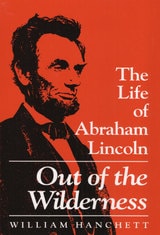
Out of the Wilderness
THE LIFE OF ABRAHAM LINCOLNWilliam Hanchett
University of Illinois Press, 1994
follows Abraham Lincoln from his birth and chronicles his thirst for education,
his achievements as a lawyer and congressman, his presidency, and his
assassination.
Hanchett gives readers a deeper understanding of how Lincoln's self-directed
study and clear thinking offset his lack of a formal education, enabling
him to become a respected and successful attorney. He also shows how Lincoln's
uncanny leadership helped him to end slavery and still keep the divided
North sufficiently united to win the Civil War. By focusing on a variety
of roles and settings, Hanchett invites readers to get to know Lincoln
as a president, as well as a lover, husband, father, and friend.
"Excellent! Hanchett is a fine writer, and his biography of Lincoln
is succinct and thought-provoking."
-- Frank J. Williams, president, Abraham Lincoln Association
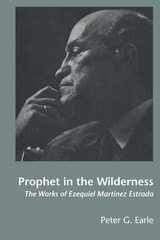
Prophet in the Wilderness
The Works of Ezequiel Martínez EstradaBy Peter G. Earle
University of Texas Press, 1971
A universal test of great writers is the quality of their response to the human dilemma. Prophet in the Wilderness traces the development of that response in the works of the Argentine writer Ezequiel Martínez Estrada, from the first ambitious poems to its definitive expression in the essays and short stories.
His theme is progressive disillusionment, in history and in personal experience, both of which are interpreted in his work as accumulations of error. Modern civilization, he believes, has created many more problems than it has solved. Like Schopenhauer, Freud, and Spengler, the three thinkers who influenced him most, Martínez Estrada found in real events and circumstances all the symbols of disenchantment. Many today have begun to share this disenchantment, for since the publication of X-Ray of the Pampa in 1933 the real world has become more and more like his symbolic world.
Prophet in the Wilderness examines Martínez Estrada's foremost concern: the world as a complex reality to be discovered behind the image of one's own most intimate community. For him, the community assumed many forms: Buenos Aires, the enigmatic metropolis; the cathedral in his story "The Deluge"; the innumerable family of Marta Riquelme; Argentina itself in his masterpiece, X-Ray of the Pampa.
Martínez Estrada is the great solitary of Hispanic American literature, independent of all fashions and trends. With Borges, he had become by 1950 one of the two most discussed writers in Argentina.
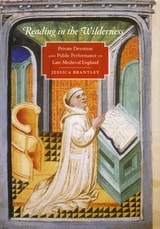
Reading in the Wilderness
Private Devotion and Public Performance in Late Medieval EnglandJessica Brantley
University of Chicago Press, 2007
Drawing on the work of W. J. T. Mitchell, Michael Camille, and others working at the image-text crossroads, Reading in the Wilderness addresses the manuscript’s texts and illustrations to examine connections between reading and performance within the solitary monk’s cell and also outside. Brantley reimagines the medieval codex as a site where the meanings of images and words are performed, both publicly and privately, in the act of reading.
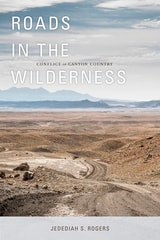
Roads in the Wilderness
Conflict in Canyon CountryJedediah S. Rogers
University of Utah Press, 2013
Winner of the Wallace Stegner Prize in American Environmental or Western History
The canyon country of southern Utah and northern Arizona—a celebrated desert of rock and sand punctuated by gorges and mesas—is a region hotly contested among vying and disparate interests, from industrial developers to wilderness preservation advocates. Roads are central to the conflicts raging in an area perceived as one of the last large roadless places in the continental United States. The canyon country in fact contains an extensive network of dirt trails and roads, many originally constructed under the authority of a one-sentence statute in an 1866 mining law, later known as R.S. 2477. While well-groomed and paved roads came to signify the industrialization of the modern age, twentiethcentury conservationists have regarded roads as intrusive human imprints on the nation’s wild lands. Roads connect rural communities, spur economic growth, and in some cases blend harmoniously into the landscape, but they also fracture and divide, disturb wildlife and habitat, facilitate industrial development, and spoil wilderness.

Singing in the Wilderness
Music and Ecology in the Twentieth CenturyWilfrid Mellers
University of Illinois Press, 2001
Beginning with two turn-of-the-century operas--Frederick Delius's A Village Romeo and Juliet and Claude Debussy's Pelléas et Mélisande -- that present humankind as lost in a tangled wood that is at once internal and external, Mellers develops the theme of wilderness in sociological, psychological, ecological, and even geological terms. He discusses Leoš Janá ek's Cunning Little Vixen ("the ultimate ecological opera") as a parable of redemption and explores the delicate yet dangerous equilibrium between civilization and the dark forest in works by Charles Koechlin and Darius Milhaud. Elements of wilderness and the city combine to infuse the music of Heitor Villa-Lobos and Carlos Chávez with a blend of primitivism and sophistication, while a creative tension between desert landscape and industrial mechanization inspires the works of Carl Ruggles, Harry Partch, Steve Reich, and Australia's Peter Sculthorpe. The volume culminates in a discussion of two American urban folk musicians, Duke Ellington and George Gershwin.
By suggesting how the "musicking" of ecological issues articulates twinned perspectives on music and our place in the world, Mellers raises intriguing questions about the links among tradition, talent, learning, and instinct. Brimming over with fresh ideas and unexpected cross-pollinations, Singing in the Wilderness is a stimulating addition to the oeuvre of a distinguished and inventive scholar.
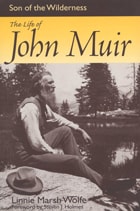
Son of the Wilderness
The Life of John MuirLinnie Marsh Wolfe
University of Wisconsin Press, 2003
Working closely with Muir’s family and with his papers, Wolfe was able to create a full portrait of her subject, not only as America’s firebrand conservationist and founder of the national park system, but also as husband, father, and friend. All readers who have admired Muir’s ruggedly individualistic lifestyle, and those who wish a greater appreciation for the history of environmental preservation in America, will be enthralled and enlightened by this splendid biography.
The story follows Muir from his ancestral home in Scotland, through his early years in the harsh Wisconsin wilderness, to his history-making pilgrimage to California.
This book, originally published in 1945 and based in large part on Wolfe’s personal interviews with people who knew and worked with Muir, is one that could never be written again. It is, and will remain, the standard Muir biography.
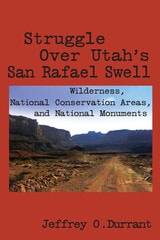
Struggle Over Utah's San Rafael Swell
Wilderness, National Conservation Areas, and National MonumentsJeffrey O. Durrant
University of Arizona Press, 2007
In detailing political and environmental squabbles over the San Rafael Swell, Durrant illuminates issues that confront land managers, bureaucrats, and elected officials throughout the country. He describes struggles between county commissioners and environmental activists, conflicts over water rights, proposals that repeatedly fail to gain government approval, and political posturings. Caught in the crossfire, and often overwhelmed, the Bureau of Land Management has seen its long-time mission—once centered on grazing and mining rights—transmogrify into a new and, to some, unsettling responsibility for recreation and preservation.
The sandstone crags and twisting valleys of the San Rafael Swell present a formidable landscape, but as this book clearly shows, the political landscape may be even more daunting, strewn with bureaucratic boulders and embedded with fixed positions on the functions and values of public land.
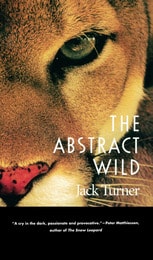
The Abstract Wild
Jack Turner
University of Arizona Press, 1996
How wild is wilderness and how wild are our experiences in it, asks Jack Turner in the pages of The Abstract Wild. His answer: not very wild. National parks and even so-called wilderness areas fall far short of offering the primal, mystic connection possible in wild places. And this is so, Turner avows, because any managed land, never mind what it's called, ceases to be wild. Moreover, what little wildness we have left is fast being destroyed by the very systems designed to preserve it.
Natural resource managers, conservation biologists, environmental economists, park rangers, zoo directors, and environmental activists: Turner's new book takes aim at these and all others who labor in the name of preservation. He argues for a new conservation ethic that focuses less on preserving things and more on preserving process and "leaving things be." He takes off after zoos and wilderness tourism with a vengeance, and he cautions us to resist language that calls a tree "a resource" and wilderness "a management unit."
Eloquent and fast-paced, The Abstract Wild takes a long view to ask whether ecosystem management isn't "a bit of a sham" and the control of grizzlies and wolves "at best a travesty." Next, the author might bring his readers up-close for a look at pelicans, mountain lions, or Shamu the whale. From whatever angle, Turner stirs into his arguments the words of dozens of other American writers including Thoreau, Hemingway, Faulkner, and environmentalist Doug Peacock.
We hunger for a kind of experience deep enough to change our selves, our form of life, writes Turner. Readers who take his words to heart will find, if not their selves, their perspectives on the natural world recast in ways that are hard to ignore and harder to forget.
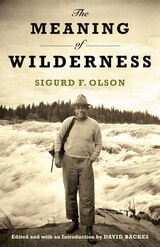
The Meaning of Wilderness
Sigurd F. Olson
University of Minnesota Press, 2015
Sigurd F. Olson (1899-1982) was one of the greatest environmentalists of the twentieth century. A conservation activist and popular writer, Olson introduced a generation of readers to the importance of wilderness. He served as president of the Wilderness Society and the National Parks Association and as a consultant to the federal government on wilderness preservation and ecological problems. He earned many honors, including the highest possible from the Sierra Club, National Wildlife Federation, and Izaak Walton League.
Olson is perhaps best known, though, for his many books that express the wonder, awe, and peace he found in the wilderness, including the nature classics The Singing Wilderness, Listening Point, and Reflections from the North Country. While these books have greatly influenced subsequent environmentalist movements and writers such as Annie Dillard and Barry Lopez, a major portion of Olson’s wilderness writing-much of it originating as speeches-has been relatively inaccessible, scattered in a number of magazines and obscure books over a period of more than fifty years, or never published at all.
The Meaning of Wilderness gathers together the most important of Sigurd Olson’s articles and speeches, making them available for the first time. The book also contains an introduction and chapter-by-chapter commentary by Olson’s authorized biographer, David Backes, that help the reader discover the various facets of Olson’s wilderness philosophy and their development over time. A lively look at the evolution of one of environmentalism’s greatest figures, The Meaning of Wilderness will be essential reading for Olson fans, historians, and outdoors people around the country.
The Ocean Is a Wilderness
Atlantic Piracy and the Limits of State Authority, 1688-1856Guy Chet
University of Massachusetts Press, 2014
Chet shows how the traditional focus on the growth of the modern state overlooked the extent to which old attitudes and cultural practices continued to hold sway. Even as the British government extended its naval, legal, and bureaucratic reach, in many parts of the Atlantic world illegal trade was not only tolerated but encouraged. In part this was because Britain's constabulary command of the region remained more tenuous than some have suggested, and in part because maritime insurance and wartime tax policies ensured that piracy and smuggling remained profitable. When Atlantic piracy eventually waned in the early nineteenth century, it had more to do with a reduction in its profitability at port than with forceful confrontation at sea.
Challenging traditional accounts that chronicle forces of civilization taming a wild Atlantic frontier, this book is a valuable addition to a body of borderlands scholarship reevaluating the relationship between the emerging modern state and its imperial frontiers.
The Wilderness and Other Poems
Louis Coxe
University of Minnesota Press, 1958
The Wildest Place on Earth
Italian Gardens and the Invention of WildernessJohn Hanson Mitchell
University Press of New England, 2015
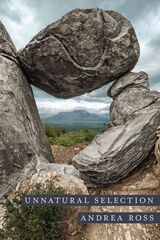
Unnatural Selection
A Memoir of Adoption and WildernessAndrea Ross
CavanKerry Press, 2021
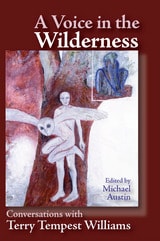
Voice in the Wilderness
Conversations with Terry Tempest Williamsedited by Michael Austin
Utah State University Press, 2006
In her writings, Terry Tempest Williams repeatedly invites us as readers into engagement and conversation with both her and her subject matter, whether it is nature or society, environment or art. From her evocation, in Desert Quartet: An Erotic Landscape, of an eroticism of place that defines erotic as "in relation," to the spiritual connectivity and familial bonds she explores in Refuge: An Unnatural History of Family and Place and the political engagement she urges in The Open Space of Democracy, much of her work is about relationship, connection, and community. Like much good writing, her books invite readers into thoughtful dialogue with the text. Frequently in demand for workshops, lectures, and other speaking venues and well known as an environmental activist, Williams has a public persona and voice almost indistinguishable from her written ones.
Thus, the interviews she has often granted--in print, on the radio, on the Web--seamlessly elaborate the ideas and extend the explorations of her written texts. They also tell us much about the genesis, context, and intent of her books. With her distinctive, impassioned voice and familiar felicity of language, she talks about wilderness and wildlife, place and eroticism, art and literature, democracy and politics, family and heritage, Mormonism and religion, writing and creativity, and other subjects that engage her agile mind. The set of interviews gathered and introduced by Michael Austin in A Voice in the Wilderness represent the span of Terry Tempest Williams's career as a naturalist, author, and activist.
Voices in the Wilderness
Public Discourse and the Paradox of Puritan RhetoricPatricia Roberts-Miller
University of Alabama Press, 1999
Both Jürgen Habermas and Wayne Booth—two of the most influential theorists in the domain of public discourse and good citizenry—argue for an inclusive public deliberation that involves people who are willing to listen to one another, to identify points of agreement and disagreement, and to make good faith attempts to validate any disputed claims. The Puritan voice crying in the wilderness, Roberts-Miller shows, does none of these things. To this individual of conscience engaged in a ceaseless battle of right and wrong against greedy philistines, all inclusion, mediation, and reciprocity are seen as evil, corrupting, and unnecessary. Hence, the voice in the wilderness does not in any real sense participate in public deliberation, only in public pronouncement.
Arguing that our culture’s continuing affection for the ethos of the voice crying in the wilderness is one of our more troubling inheritances from the early American ambivalence to public discourse—including the Puritan denigration of rhetoric—Roberts-Miller contends that the monologic discourse of the Puritans in fact contains within it arguments for dialogism. Thus, the history of rhetoric can provide much richer fields for reimagining discourse than heretofore credited. Roberts-Miller concludes by extending her findings into their practical applications for argumentation in the public sphere and in the composition classroom.
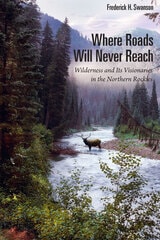
Where Roads Will Never Reach
Wilderness and Its Visionaries in the Northern RockiesFrederick H. Swanson
University of Utah Press, 2015
The Rocky Mountains of Idaho and Montana are home to some of the most important remaining American wilderness areas, preserved because of citizens who stood against massive development schemes that would have diminished important wildlife habitat and the abiding sense of remoteness found in such places. Where Roads Will Never Reach tells the stories of hunters, anglers, outfitters, scientists, and other concerned citizens who devoted themselves to protecting remnant wild lands and ecosystems in the Northern Rockies. Environmental historian Frederick Swanson argues that their heartfelt, dedicated work helped boost the American wilderness movement to its current prominence.
Based on newly available archival sources and interviews with many of the participants, this groundbreaking study explores for the first time the grassroots campaigns that yielded some of the largest designated wilderness areas in America.
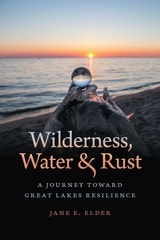
Wilderness, Water, and Rust
A Journey toward Great Lakes ResilienceJane Elder
Michigan State University Press, 2024
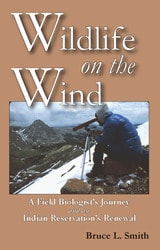
Wildlife on the Wind
A Field Biologist's Journey and an Indian Reservation's RenewalBruce L Smith
Utah State University Press, 2010
In the heart of Wyoming sprawls the ancient homeland of the Eastern Shoshone Indians, who were forced by the U.S. government to share a reservation in the Wind River basin and flanking mountain ranges with their historical enemy, the Northern Arapahos. Both tribes lost their sovereign, wide-ranging ways of life and economic dependence on decimated buffalo. Tribal members subsisted on increasingly depleted numbers of other big game—deer, elk, moose, pronghorn, and bighorn sheep. In 1978, the tribal councils petitioned the U.S. Fish and Wildlife Service to help them recover their wildlife heritage. Bruce Smith became the first wildlife biologist to work on the reservation. Wildlife on the Wind recounts how he helped Native Americans change the course of conservation for some of America's most charismatic wildlife.
Wildness
Relations of People and PlaceEdited by Gavin Van Horn and John Hausdoerffer
University of Chicago Press, 2017
This book charts a different path. Exploring how people can become attuned to the wild community of life and also contribute to the well-being of the wild places in which we live, work, and play, Wildness brings together esteemed authors from a variety of landscapes, cultures, and backgrounds to share their stories about the interdependence of everyday human lifeways and wildness. As they show, far from being an all or nothing proposition, wildness exists in variations and degrees that range from cultivated soils to multigenerational forests to sunflowers pushing through cracks in a city alley. Spanning diverse geographies, these essays celebrate the continuum of wildness, revealing the many ways in which human communities can nurture, adapt to, and thrive alongside their wild nonhuman kin.
From the contoured lands of Wisconsin’s Driftless region to remote Alaska, from the amazing adaptations of animals and plants living in the concrete jungle to indigenous lands and harvest ceremonies, from backyards to reclaimed urban industrial sites, from microcosms to bioregions and atmospheres, manifestations of wildness are everywhere. With this book, we gain insight into what wildness is and could be, as well as how it might be recovered in our lives—and with it, how we might unearth a more profound, wilder understanding of what it means to be human.
Wildness: Relations of People and Place is published in association with the Center for Humans and Nature, an organization that brings together some of the brightest minds to explore and promote human responsibilities to each other and the whole community of life. Visit the Center for Humans and Nature's Wildness website for upcoming events and a series of related short films.
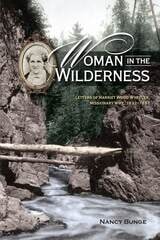
Woman in the Wilderness
Letters of Harriet Wood Wheeler, Missonary Wife, 1832-1892Nancy Bunge
Michigan State University Press, 2010
Harriet's letters reveal her experiences with actors and institutions that played pivotal roles in the history of American women: the nascent literate female work force at the mills in Lowell, Massachusetts; the Ipswich Female Seminary, which was one of the first schools for women teachers; women's associations, especially in churches; and the close and enduring ties that characterized women's relationships in the late nineteenth century.
Harriet's letters also provide an intimate view of the relationships between American Indians and Euro-Americans in the Great Lakes region, where she settled with her Christian missionary husband.
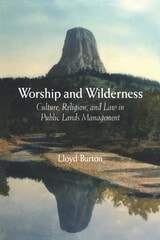
Worship and Wilderness
Culture, Religion, and Law in Public Lands ManagementLloyd Burton
University of Wisconsin Press, 2002
Questions about land use, conservation, and preservation—already so perplexing and contentious—take on a new complexity and greater urgency when the land in question is understood as sacred. This is a view increasingly held, as adherents of mainstream religions come to recognize what indigenous peoples knew centuries ago—that the sacred inheres in nature itself. What such a trend means and how it involves the forces of culture, religion, and constitutional law (especially First Amendment clauses concerning the free exercise of religion) are considered with a remarkable breadth and depth of understanding in this important new work.
Drawing on case studies of national parks and monuments, national forests, and other public lands and resources, Lloyd Burton gives a clear and comprehensive account of how the intertwining influences of culture, religion, and law have affected the management of public lands and resources in the recent past and how they may do so in the future. In a unique and unprecedented way, his book weaves together teachings on nature and the sacred among indigenous and immigrant culture groups in the United States; the relevant constitutional history of religion and government action; and analysis of contemporary conflicts over culture, religion, and public lands management. As such, Worship and Wilderness is essential reading not only for public land managers and environmental policy makers but also for anyone interested in the growing significance of religious interests in the use of resources that constitute our national commons and our common natural heritage.
Yellowstone Wildlife
Ecology and Natural History of the Greater Yellowstone EcosystemPaul A. Johnsgard, Photographs by Thomas D. Mangelsen
University Press of Colorado, 2013
From charismatic megafauna like elk, bison, wolves, bighorn sheep, and grizzly bears, to smaller mammals like bats, pikas, beavers, and otters, to some of the 279 species of birds, Johnsgard describes the behavior of animals throughout the seasons, with sections on what summer and autumn mean to the wildlife of the park, especially with the intrusion of millions of tourists each year. Enhanced by Mangelsen’s wildlife photography, Yellowstone Wildlife reveals the beauty and complexity of these species’ intertwined lives and that of Yellowstone’s greater ecosystem.