Results by title
22279 books match the query 'Social Science' and 1072 start with r

Rethinking Expertise
Harry Collins and Robert Evans
University of Chicago Press, 2007
What does it mean to be an expert? In Rethinking Expertise, Harry Collins and Robert Evans offer a radical new perspective on the role of expertise in the practice of science and the public evaluation of technology.
Collins and Evans present a Periodic Table of Expertises based on the idea of tacit knowledge—knowledge that we have but cannot explain. They then look at how some expertises are used to judge others, how laypeople judge between experts, and how credentials are used to evaluate them. Throughout, Collins and Evans ask an important question: how can the public make use of science and technology before there is consensus in the scientific community? This book has wide implications for public policy and for those who seek to understand science and benefit from it.
“Starts to lay the groundwork for solving a critical problem—how to restore the force of technical scientific information in public controversies, without importing disguised political agendas.”—Nature
“A rich and detailed ‘periodic table’ of expertise . . . full of case studies, anecdotes and intriguing experiments.”—Times Higher Education Supplement (UK)
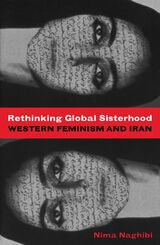
Rethinking Global Sisterhood
Western Feminism and IranNima Naghibi
University of Minnesota Press, 2007
Western women’s involvement in Persia dates from the mid-nineteenth century, when female adventurers and missionaries first encountered their veiled Muslim “sisters.” Twentieth-century Western and state-sponsored Iranian feminists continued to use the image of the veiled woman as the embodiment of backwardness. Yet, following the 1979 revolution, indigenous Iranian feminists became more vocal in their resistance to this characterization.
In Rethinking Global Sisterhood, Nima Naghibi makes powerful connections among feminism, imperialism, and the discourses of global sisterhood. Naghibi investigates topics including the state-sponsored Women’s Organization of Iran and the involvement of feminists such as Betty Friedan and Gloria Steinem in the Iranian feminism movement before and during the 1979 revolution. With a potent analysis of cinema, she examines the veiled woman in the films of Tahmineh Milani, Ziba Mir-Hosseini and Kim Longinotto, and Mahnaz Afzali.
At a time when Western relations with the Muslim world are in crisis, Rethinking Global Sisterhood provides much-needed insights and explores the limitations and possibilities of cross-cultural feminist social and political interventions.
Nima Naghibi is assistant professor of English at Ryerson University in Toronto.
Rethinking Heritage for Sustainable Development
International Frameworks, Local ImpactsSophia Labadi
University College London, 2022
In 2015, the UN adopted Sustainable Development Goals (SDGs), which have since influenced international and intergovernmental organizations and governments and dictated priorities for international aid spending. Culture, including heritage, is often presented as fundamental to addressing the SDGs. Yet in practice heritage is marginalized when SDGs are being discussed and implemented.
This volume presents a substantial and original assessment of whether and how heritage has contributed to three key dimensions of sustainable development (poverty reduction, gender equality, and environmental sustainability) within the context of its marginalization from the SDGs and from previous international development agendas. The book adopts a novel, inclusive, large-scale, and systematic approach, providing the first comprehensive history of the international approaches to culture (including heritage) in development from 1970 to the present day. It critically assesses the international projects implemented in sub-Saharan Africa that aimed to demonstrate the contribution of heritage for development in time for the negotiation of the SDGs, reflecting on the shortcomings of selected projects and providing recommendations for rethinking heritage for development.

Rethinking Japanese History
Amino Yoshihiko; Translated and with an Introduction by Alan S. Christy; Preface and Afterword by Hitomi Tonomura
University of Michigan Press, 2012

Rethinking Objectivity
Allan Megill
Duke University Press, 1994
In diverse essays the authors provide fascinating studies of objectivity in such areas as anthropological research, corporate and governmental bureaucracies, legal discourse, photography, and the study and practice of the natural sciences. Taken together, Megill argues, this volume calls for developing a notion of "objectivities." The absolute sense of objectivity--that is, objectivity as a "God's eye view"—must be supplemented, and in part supplanted, by disciplinary, procedural, and dialectical senses of objectivity. This book will be of great interest to a broad range of scholars as it presents current thinking on a topic of fundamental concern across the disciplines in the humanities and social sciences.
Contributors. Barry Barnes, Dagmar Barnouw, Lorraine Code, Lorraine Daston, Johannes Fabian, Kenneth J. Gergen, Mary E. Hawkesworth, Barbara Herrnstein Smith, Evelyn Fox Keller, George Levine, Allan Megill, Peter Miller, Andy Pickering, Theodore M. Porter

Rethinking Pastoralism In Africa
Gender, Culture, and the Myth of the Patriarchal PastoralistDorothy L. Hodgson
Ohio University Press, 2001
The dominant trend in pastoralist studies has long assumed that pastoralism and pastoral gender relations are inherently patriarchal. The contributors to this collection, in contrast, use diverse analytic approaches to demonstrate that pastoralist gender relations are dynamic, relational, historical, and produced through complex local-translocal interactions. Combining theoretically sophisticated analysis with detailed case studies, this collection will appeal to those doing research and teaching in African studies, gender studies, anthropology, and history. Among the topics discussed are pastoralism, patriarchy, and history among Maasai in Tanganyika; women’s roles in peacemaking in Somali society; the fertility of houses and herds; gender, aging, and postchildbearing experience in a Tuareg community; and milk selling among Fulani women in Northern Burkina Faso.

Rethinking Protestantism in Latin America
David Stoll
Temple University Press, 1993
Rethinking Puerto Rican Precolonial History
Reniel Rodríguez Ramos
University of Alabama Press, 2010
The history of Puerto Rico has usually been envisioned as a sequence of colonizations-various indigenous peoples from Archaic through Taíno were successively invaded, assimilated, or eliminated, followed by the Spanish entrada, which was then modified by African traditions and, since 1898, by the United States. The truth is more complex, but in many ways Puerto Rico remains one of the last colonies in the world. This volume focuses on the successive indigenous cultures of Puerto Rico prior to 1493.
Rethinking Rental Housing
John Gilderbloom
Temple University Press, 1987
In recent years, almost daily media attention has been focused on the plight of the homeless in cities across the United States. Drawing upon experiences in the U.S. and Europe, John Gilderbloom and Richard Appelbaum challenge conventional assumptions concerning the operation of housing markets and provide policy alternatives directed at the needs of low- and moderate-income families. Rethinking Rental Housing is a ground-breaking analysis that shows the value of applying a broad sociological approach to urban problems, one that takes into account the basic economic, social, and political dimensions of the urban housing crisis.
Gilderbloom and Appelbaum predict that this crisis will worsen in the 1990s and argue that a "supply and demand" approach will not work in this case because housing markets are not competitive. They propose that the most effective approach to affordable housing is to provide non-market alternatives fashioned after European housing programs, particularly the Swedish model.
An important feature of this book is the discussion of tenant movements that have tried to implement community values in opposition to values of development and landlord capital. One of the very few publications on rental housing, it is unique in applying a sociological framework to the study of this topic.

Rethinking Sex, Volume 17
Annemarie Jagose, Ann Cvetkovich, and Heather K. Love, special issue editors
Duke University Press, 0
In her contribution to this special issue, Rubin reflects on her earlier essay and examines developments in “pro-sex” feminism since the publication of “Thinking Sex.” Other noted scholars assess the significance of Rubin’s work for histories of sexuality and for new areas in queer studies, such as transgender studies, disability studies, and transnational studies. In honoring Rubin’s scholarship, the contributors address the history of sexual theory and politics and the forms that they might take in the twenty-first century.

Rethinking Sexual Harrassment
Clare Brant
Pluto Press, 1994
'Serious and scholarly ... deserves a wide audience' Journal of the Institute of Health Education
'Excellent ... However familiar the subject may seem - or precisely because we all think we know what term 'sexual harassment' means - these discussions open up a series of vital questions, both theoretical and practical. Rethinking Sexual Harassment is a valuable contribution to a debate that continues all around us' Parallax
Sexual harassment continues to stimulate controversy and attract partisan responses. This is an exciting and original exploration of how it came to be defined, what institutional forces and contexts shape our understanding of it. This multidisciplinary study brings together essays from feminist scholars in the fields of law, literature, the social sciences, history and cultural studies.
The contributors' central argument is an awareness of the social and discursive contexts required to challenge sexual harassment effectively. Offering insight into current limitations and making practical suggestions for ways forward, this wide-ranging collection addresses general readers and professionals alike.
Contributors include Suzanne Gibson; Helen Watson; Gargi Bhattacharyya; Ruth Jamieson; Celia Kitzinger; Suzanne Raitt; Ros Hunt; Diane Purkiss; Padma Anagol-McGinn and Jane Beckett
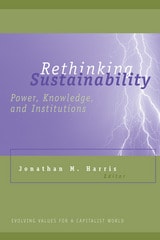
Rethinking Sustainability
Power, Knowledge, and InstitutionsJonathan Harris, Editor
University of Michigan Press, 2003
Any theory of sustainable development must take into account economic, social, and environmental dimensions. Until recently, the question "What is development?" was often answered predominantly from the economist's perspective, with high priority being assigned to expansion of economic output. Social, political, institutional, and ethical aspects have often been neglected. But now that sustainable development has become a broadly accepted concept, it is impossible to maintain a narrowly economistic view of development. For this reason, the varied perspectives offered by the contributors to this volume are crucial to understanding the process of development as it relates to environmental sustainability and human well-being.
The selection of articles is meant to be stimulating and provocative rather than comp-rehensive. They are roughly divided between those dealing with broad theoretical issues concerning the economic, political, and social aspects of development (Part I) and those presenting more applied analysis (Part II). The common thread is a concern for examining which factors contribute to making development socially just and environmentally sound.
Rethinking Sustainability will be of interest to economists and social scientists, development professionals, and instructors seeking to offer their students a broad perspective on development issues.
Jonathan Harris is Senior Research Associate, Global Development and Environment Institute at Tufts University, as well as Adjunct Associate Professor of International Economics at Tufts University Fletcher School of Law.
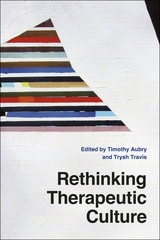
Rethinking Therapeutic Culture
Edited by Timothy Aubry and Trysh Travis
University of Chicago Press, 2015
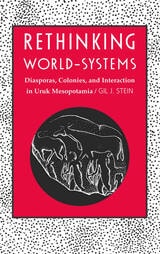
Rethinking World-Systems
Diasporas, Colonies, and Interaction in Uruk MesopotamiaGil J. Stein
University of Arizona Press, 1999
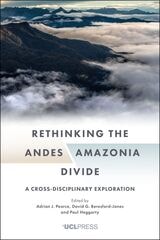
Rethinking the Andes-Amazonia Divide
A Cross-Disciplinary ExplorationEdited by Adrian J. Pearce, David G. Beresford-Jones, and Paul Heggarty
University College London, 2020
Rethinking the Andes-Amazonia Divide brings together archaeologists, linguists, geneticists, anthropologists, ethnohistorians, and historians to explore both correlations and contrasts in how the various disciplines see the relationship between the Andes and Amazonia, from deepest prehistory up to the European colonial period. This collaboration has emerged from an innovative program of conferences and symposia conceived to generate discussion and cooperation across the divides between disciplines.
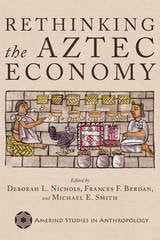
Rethinking the Aztec Economy
Edited by Deborah L. Nichols, Frances F. Berdan, and Michael E. Smith
University of Arizona Press, 2017
With its rich archaeological and historical record, the Aztec empire provides an intriguing opportunity to understand the dynamics and structure of early states and empires. Rethinking the Aztec Economy brings together leading scholars from multiple disciplines to thoroughly synthesize and examine the nature of goods and their movements across rural and urban landscapes in Mesoamerica. In so doing, they provide a new way of understanding society and economy in the Aztec empire.
The volume is divided into three parts. Part 1 synthesizes our current understanding of the Aztec economy and singles out the topics of urbanism and provincial merchant activity for more detailed analysis. Part 2 brings new data and a new conceptual approach that applies insights from behavioral economics to Nahua and Aztec rituals and social objects. Contributors also discuss how high-value luxury goods, such as feather art, provide insights about both economic and sacred concepts of value in Aztec society. Part 3 reexamines the economy at the Aztec periphery. The volume concludes with a synthesis on the scale, integration, and nature of change in the Aztec imperial economy.
Rethinking the Aztec Economy illustrates how superficially different kinds of social contexts were in fact integrated into a single society through the processes of a single economy. Using the world of goods as a crucial entry point, this volume advances scholarly understanding of life in the Aztec world.
Contributors:
Frances F. Berdan
Laura Filloy Nadal
Janine Gasco
Colin Hirth
Kenneth G. Hirth
Sarah Imfeld
María Olvido Moreno Guzmán
Deborah L. Nichols
Alan R. Sandstrom
Pamela Effrein Sandstrom
Michael E. Smith
Barbara L. Stark
Emily Umberger
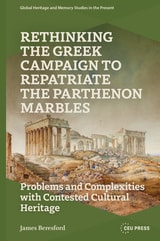
Rethinking the Greek Campaign to Repatriate the Parthenon Marbles
Problems and Complexities with Contested Cultural HeritageJames Beresford
Central European University Press, 2026

Rethinking the Political
Gender, Resistance, and the StateEdited by Barbara Laslett, Johanna Brenner, and Yesim Arat
University of Chicago Press, 1995
Section One, "Gender, Citizenship, and Collectivity," includes Nancy Frazer and Linda Gordon's critique of dependency and citizenship; Iris Young on women as a social collective; Ruth Bloch on the feminization of public virtue in revolutionary America; Trisha Franzen on feminism and lesbian community, and Sonia Kruks on de Beauvoir and contemporary feminism.
"Collective Action and Women's Resistance," Section Two, features Louis Tilly's "Paths of Proletarianization"; Temma Kaplan's "Female Consciousness and Collective Action"; and five assessments of women's collective action worldwide: Samira Haj on Palestine, Arlene McLeod on Egypt, Gay Seidman on South Africa, Nancy Sternbach et al. on Latin America, and Anne Walthall on Japan.
Concluding with a section on gender and the state, Rethinking the Political also features Bronwyn Winter on the law and cultural relativism; Sherene Razack on sexual violence; Wendy Luttrell on educational institutions; Patricia Stamp on ethnic conflict in postcolonial Kenya; Elizabeth Schmidt on patriarchy and capitalism in Zimbabwe; and Muriel Nazzari on the "woman question" in post-revolutionary Cuba.
Rethinking the Youth Question
Education, Labour, and Cultural StudiesPhil Cohen
Duke University Press, 1999
With a preface that contextualizes Cohen’s essays for an American audience, Rethinking the Youth Question reflects his tenure as a community organizer and activist in inner-city London and includes ethnographic, theoretical, and historical studies of Britain’s urban youth. Cohen offers an enlightening analysis of British educational policy, develops historical and structural accounts of generational and gendered divisions of labor, and discusses such topics as racism and the rise of the New Right. Also exploring broader questions such as the theoretical and sociological significance of youth as a category, this book is a model of useful methodology and engaged cultural reflection.
With empirical research that combines biographical, autobiographical, critical, cultural, and social elements, Rethinking the Youth Question is sure to impact debates surrounding the pedagogical value of cultural studies and the nature and future of this field in both the United States and Britain. This collection will be informative reading for students and scholars of cultural studies, sociologists, and others interested in the category of youth.

Reticulations
Jean-Luc Nancy and the Networks of the PoliticalPhilip Armstrong
University of Minnesota Press, 2009
Revealing how networks reopen our understanding of political discourse today
Significantly advancing our notion of what constitutes a network, Philip Armstrong proposes a rethinking of political public space that specifically separates networks from the current popular discussion of globalization and information technology.
Analyzing a wide range of Jean-Luc Nancy’s works, Reticulations shows how his project of articulating the political in terms of singularities, pluralities, and multiplicities can deepen our understanding of networks and how they influence community and politics. Even more striking is the way Armstrong associates this general complex in Nancy’s writing with his concern for what Nancy calls the retreat of the political. Armstrong highlights what Nancy’s perspective on networks reveals about movement politics as seen in the 1999 protests in Seattle against the World Trade Organization, the impact of technology on citizenship, and finally how this perspective critiques the model of networked communism constructed by Hardt and Negri. Contesting the exclusive link between technology and networks, Reticulations ultimately demonstrates how network society creates an entirely new politics, one surprisingly rooted in community.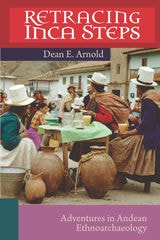
Retracing Inca Steps
Adventures in Andean EthnoarchaeologyDean E. Arnold
University of Utah Press, 2021
This first-person narrative reveals the challenges of living and working in another culture and the many obstacles one can encounter while doing field research. Arnold shares how his feelings of frustration and perceived failure led him to refocus his project, a shift that ultimately led to an entirely new perspective on pottery production in the Andes. Masterfully weaving details about Peru’s geography, ecology, history, prehistory, and culture into his story, he chronicles his change from small-town Midwesterner to a person of much broader vision, newly aware of his North American views and values.
Retracing Inca Steps is an excellent read for the lay person wishing to learn about the environment, prehistory, history, and culture of Peru as well as for students wanting to know more about the joys and rigors of fieldwork.

Retroactivism in the Lesbian Archives
Composing Pasts and FuturesJean Bessette
Southern Illinois University Press, 2018
Grassroots historiography has been essential in shaping American sexual identities in the twentieth century. Retroactivism in the Lesbian Archives examines how lesbian collectives have employed “retroactivist” rhetorics to propel change in present identification and politics. By appropriating and composing versions of the past, these collectives question, challenge, deconstruct, and reinvent historical discourse itself to negotiate and contest lesbian identity.
Bessette considers a diverse array of primary sources, including grassroots newsletters, place-based archives, experimental documentary films, and digital video collections, to investigate how retroactivists have revised and replaced dominant accounts of lesbian deviance. Her analysis reveals inventive rhetorical strategies leveraged by these rhetors to belie the alienating, dispersing effects of discourses that painted women with same-sex desire as diseased and criminal. Focusing on the Daughters of Bilitis, the Lesbian Herstory Archives, and the June L. Mazer Archives, and on historiographic filmmakers such as Barbara Hammer and Cheryl Dunye, Bessette argues that these retroactivists composed versions of a queer past that challenged then-present oppressions, joined together provisional communities, and disrupted static definitions and associations of lesbian identity.
Retroactivism in the Lesbian Archives issues a challenge to feminist and queer scholars to acknowledge how historiographic rhetoric functions in defining and contesting identities and the historical forces that shape them.

Retrofitting Blade Runner
Issues in Ridley Scott's Blade Runner and Phillip K. Dick's Do Androids Dream of Electric Sheep?Judith B. Kerman
University of Wisconsin Press, 1997
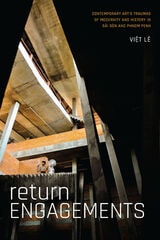
Return Engagements
Contemporary Art's Traumas of Modernity and History in Sài Gòn and Phnom PenhViet Lê
Duke University Press, 2021

Return Of Guatemala'S Refugees
Clark Taylor
Temple University Press, 1998
Twelve years later, utilizing terms of refugee agreements reached in 1982, villagers from Santa Maria who had fled to Mexico returned to their homes and lands to re-create their community with those who had stayed in Guatemala. Return of Guatemala's Refugees tells the story of that process. In this moving and provocative book, Clark Taylor describes the experiences of the survivors -- both those who stayed behind in conditions of savage repression and those who fled to Mexico where they learned to organize and defend their rights. Their struggle to rebuild is set in the wider drama of efforts by grassroots groups to pressure the government, economic elites, and army to fulfill peace accords signed in December of 1996.
Focusing on the village of Santa Maria Tzeja, Taylor defines the challenges that faced returning refugees and their community. How did the opposing subcultures of fear (generated among those who stayed in Guatemala) and of education and human rights (experienced by those who took refuge in Mexico) coexist? Would the flood of international money sent to settle the refugees and fulfill the peace accords serve to promote participatory development or new forms of social control? How did survivors expand the space for democracy firmly grounded in human rights? How did they get beyond the grief and trauma that remained from the terror of the early eighties? Finally, the ultimate challenge, how did they work within conditions of extreme poverty to create a grassroots democracy in a militarized society?
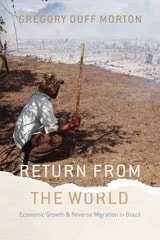
Return from the World
Economic Growth and Reverse Migration in BrazilGregory Duff Morton
University of Chicago Press, 2024
In Return from the World, anthropologist Gregory Duff Morton traces the migrations of Brazilian workers who leave a thriving labor market and return to their home villages to become peasant farmers. Morton seeks to understand what it means to turn one’s back deliberately on the promise of economic growth.
Giving up their positions in factories, at construction sites, and as domestic workers, these migrants travel thousands of miles back to villages without running water or dependable power. There, many take up subsistence farming. Some become activists with the MST, Brazil’s militant movement of landless peasants. Bringing their stories vividly to life, Morton dives into the dreams and disputes at play in finding freedom in the shared rejection of growth.

Return to Casablanca
Jews, Muslims, and an Israeli AnthropologistAndré Levy
University of Chicago Press, 2015
Levy visits a host of sites and historical figures to assemble a compelling history of social change, while seamlessly interweaving his study with personal accounts of his returns to his homeland. Central to this story is the massive migration of Jews out of Morocco. Levy traces the institutional and social changes such migrations cause for those who choose to stay, introducing the concept of “contraction” to depict the way Jews deal with the ramifications of their demographic dwindling. Turning his attention outward from Morocco, he goes on to explore the greater complexities of the Jewish diaspora and the essential paradox at the heart of his adventure—leaving Israel to return home.

Return to Centro Histórico
A Mexican Jew Looks for His RootsStavans, Ilan
Rutgers University Press, 2012
After a stirring e-mail exchange with his father, awardwinning essayist and cultural commentator Ilan Stavans decided to do something bizarre: revisit his hometown, Mexico City, accompanied by a tourist guide. But rather than seeking his roots in the neighborhood where he grew up, he headed to the Centro Histórico, the downtown area at the heart of the world’s largest metropolis. It was there that conversos, the hidden Jews escaping the might of the Holy Office of the Inquisition, were burned at the stake. And, centuries later, it was the same section where Jewish immigrants, both Yiddish-speaking Ashkenazim and Sephardim from the Ottoman Empire, made their homes as peddlers. In a sense, Centro Histórico is to Mexico what the Lower East Side is to the United States: a platform for reinventing one’s self in the New World.
With the same linguistic verve and insight that has made him one of the most distinguished voices in American literature today, Ilan Stavans invites readers along for a personal journey that is not only his own, but that of an entire culture. In Return to Centro Histórico he makes it possible to understand the intimate role that Jews have played in the development of Hispanic civilization.
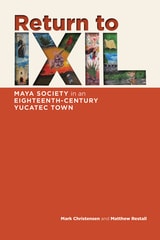
Return to Ixil
Maya Society in an Eighteenth-Century Yucatec TownMark Z. Christensen
University Press of Colorado, 2019
Supplemented with additional archival research, the wills provide new and detailed descriptions of various aspects of life in eighteenth-century Ixil. In each chapter, authors Mark Christensen and Matthew Restall examine a different dimension of Ixil’s colonial history, including the role of notaries, Maya participation in a coastal militia, economy and modes of production, religious life and records, and the structures and patterns of familial relationships. These details offer insight into the complex network of societies in colonial Yucatan, colonial Mesoamerica, and colonial Latin America.
Including an appendix presenting the original Maya texts as well as translations by Christensen and Restall, Return to Ixil not only analyzes the largest body of substantive wills in any Mayan language known today but also provides a rare closeup view of the inner workings of a colonial Maya town and the communal and familial affairs that made up a large part of the Maya colonial experience. It will be of great interest to Mayanists as well as to students and scholars of history, anthropology, ethnohistory, linguistics, and social history.
The publication of this book is supported in part byBrigham Young University and Penn State University.
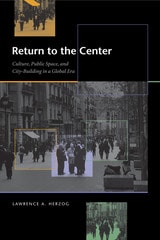
Return to the Center
Culture, Public Space, and City Building in a Global EraBy Lawrence A. Herzog
University of Texas Press, 2006
The redesign and revitalization of traditional urban centers is the cutting edge of contemporary urban planning, as evidenced by the intense public and professional attention to the rebuilding of city cores from Berlin to New York City's "Ground Zero." Spanish and Latin American cities have never received the recognition they deserve in the urban revitalization debate, yet they offer a very relevant model for this "return to the center." These cultures have consistently embraced the notion of a city whose identity is grounded in its organic public spaces: plazas, promenades, commercial streets, and parks that invite pedestrian traffic and support a rich civic life. This groundbreaking book explores Spanish, Mexican, and Mexican-American border cities to learn what these urban areas can teach us about effectively using central public spaces to foster civic interaction, neighborhood identity, and a sense of place.
Herzog weaves the book around case studies of Madrid and Barcelona, Spain; Mexico City and Querétaro, Mexico; and the Tijuana-San Diego border metropolis. He examines how each of these urban areas was formed and grew through time, with attention to the design lessons of key public spaces. The book offers original and incisive discussions that challenge current urban thinking about politics and public space, globalization, and the future of privatized communities, from gated suburbs to cyberspace. Herzog argues that well-designed, human-scaled city centers are still vitally necessary for maintaining community and civic life. Applicable to urban renewal projects around the globe, Herzog's book will be important reading for planners, architects, designers, and all citizens interested in creating more livable cities.
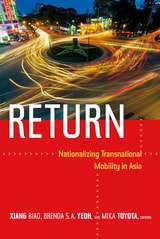
Return
Nationalizing Transnational Mobility in AsiaXiang Biao, Brenda S. A. Yeoh and Mika Toyota, eds.
Duke University Press, 2013
Contributors. Sylvia Cowan, Johan Lindquist, Melody Chia-wen Lu, Koji Sasaki, Shin Hyunjoon, Mariko Asano Tamanoi, Mika Toyota, Carol Upadhya, Wang Cangbai, Xiang Biao, Brenda S. A. Yeoh

Returning Home
Diné Creative Works from the Intermountain Indian SchoolFarina King, Michael P. Taylor, and James R. Swensen With Contributions by Robert Dodson, Rena Dunn, Terence Wride, and Students of the Intermountain Indian School
University of Arizona Press, 2021
This book works to recover the lived experiences of Native American boarding school students through creative works, student interviews, and scholarly collaboration. It shows the complex agency and ability of Indigenous youth to maintain their Diné culture within the colonial spaces that were designed to alienate them from their communities and customs. Returning Home provides a view into the students’ experiences and their connections to Diné community and land. Despite the initial Intermountain Indian School agenda to send Diné students away and permanently relocate them elsewhere, Diné student artists and writers returned home through their creative works by evoking senses of Diné Bikéyah and the kinship that defined home for them.
Returning Home uses archival materials housed at Utah State University, as well as material donated by surviving Intermountain Indian School students and teachers throughout Utah, Arizona, and New Mexico. Artwork, poems, and other creative materials show a longing for cultural connection and demonstrate cultural resilience. This work was shared with surviving Intermountain Indian School students and their communities in and around the Navajo Nation in the form of a traveling museum exhibit, and now it is available in this thoughtfully crafted volume. By bringing together the archived student arts and writings with the voices of living communities, Returning Home traces, recontextualizes, reconnects, and returns the embodiment and perpetuation of Intermountain Indian School students’ everyday acts of resurgence.
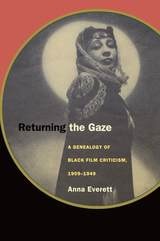
Returning the Gaze
A Genealogy of Black Film Criticism, 1909–1949Anna Everett
Duke University Press, 2001
Culling black newspapers, magazines, scholarly and political journals, and monographs, Everett has produced an unparalleled investigation of black critical writing on the early cinema during the era of racial segregation in America. Correcting the notion that black critical interest in the cinema began and ended with the well-documented press campaign against D. W. Griffith’s Birth of a Nation, she discovers that as early as 1909 black newspapers produced celebratory discourses about the cinema as a much-needed corrective to the predominance of theatrical blackface minstrelsy. She shows how, even before the Birth of a Nation controversy, the black press succeeded in drawing attention to both the callous commercial exploitation of lynching footage and the varied work of black film entrepreneurs. The book also reveals a feast of film commentaries that were produced during the “roaring twenties” and the jazz age by such writers as W.E.B. DuBois, Langston Hughes, and Zora Neale Hurston, as well as additional pieces that were written throughout the Depression and the pre– and post–war periods. Situating this wide-ranging and ideologically complex material in its myriad social, political, economic, and cultural contexts, Everett aims to resuscitate a historical tradition for contemporary black film literature and criticism.
Returning the Gaze will appeal to scholars and students of film, black and ethnic studies, American studies, cultural studies, literature, and journalism.
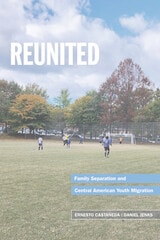
Reunited
Family Separation and Central American Youth MigrationErnesto Castañeda
Russell Sage Foundation, 2024
In interviews with Central American youth, their sponsors, and social services practitioners in and around Washington, D.C., Castañeda and Jenks find that Central American minors migrate on their own mainly for three reasons: gang violence, lack of educational and economic opportunity, and a longing for family reunification. The authors note that youth who feel comfortable leaving and have feelings of belonging upon arrival integrate quickly and easily while those who experience trauma in their home countries and on their way to the United States face more challenges.
Castañeda and Jenks recount these young migrants’ journey from Central America to the U.S. border, detailing the youths’ difficulties passing through Mexico, proving to U.S. Customs and Border Protection officials that they have a legitimate fear of returning or are victims of trafficking, and staying in shelters while their sponsorship, placement, and departure are arranged. The authors also describe the tensions the youth face when they reunite with family members they may view as strangers. Despite their biological, emotional, and financial bonds to these relatives, the youth must learn how to relate to new authority figures and decide whether or how to follow their rules.
The experience of migrating can have a lasting effect on the mental health of young migrants, Castañeda and Jenks note. Although the authors find that Central American youths’ mental health improves after migrating to the United States, the young migrants remain at risk of further problems. They are likely to have lived through traumatizing experiences that inhibit their integration. Difficulty integrating, in turn, creates new stressors that exacerbate PTSD, depression, and anxiety. Consequently, schools and social service organizations are critical, the authors argue, for enhancing youth migrants’ sense of belonging and their integration into their new communities. Bilingual programs, Spanish-speaking PTA groups, message boards, mentoring of immigrant children, and after-school programs for members of reunited families are all integral in supporting immigrant youth as they learn English, finish high school, apply to college, and find jobs.
Offering a complex exploration of youth migration and family reunification, Reunited provides a moving account of how young Central American migrants make the journey north and ultimately reintegrate with their families in the United States.
Reuse, Misuse, Abuse
The Ethics of Audiovisual Appropriation in the Digital EraJaimie Baron
Rutgers University Press, 2021

Revealed Identity
The Noh Plays of Komparu ZenchikuPaul S. Atkins
University of Michigan Press, 2006

Revealing Rebellion in Abiayala
The Insurgent Poetics of Contemporary Indigenous LiteratureHannah Burdette
University of Arizona Press, 2019
Revealing Rebellion in Abiayala explores the intersections between Indigenous literature and social movements over the past thirty years through the lens of insurgent poetics. Author Hannah Burdette is interested in how Indigenous literature and social movements are intertwined and why these phenomena arise almost simultaneously in disparate contexts across the Americas.
Literature constitutes a key weapon in political struggles as it provides a means to render subjugated knowledge visible and to envision alternatives to modernity and coloniality. The surge in Indigenous literature and social movements is arguably one of the most significant occurrences of the twenty-first century, and yet it remains understudied. Revealing Rebellion in Abiayala bridges that gap by using the concept of Abiayala as a powerful starting point for rethinking inter-American studies through the lens of Indigenous sovereignty.

Revels in Madness
Insanity in Medicine and LiteratureAllen Thiher
University of Michigan Press, 2004
---Louis Sass, author of Madness and Modernism
"The scope of this book is daunting, ranging from madness in the ancient Greco-Roman world, to Christianized concepts of medieval folly, through the writings of early modern authors such as Shakespeare, Cervantes, and Descartes, and on to German Romantic philosophy, fin de siècle French poetry, and Freud . . . Artaud, Duras, and Plath."
---Isis
"This provocative and closely argued work will reward many readers."
---Choice
In Revels in Madness, Allen Thiher surveys a remarkable range of writers as he shows how conceptions of madness in literature have reflected the cultural assumptions of their era. Thiher underscores the transition from classical to modern theories of madness-a transition that began at the end of the Enlightenment and culminates in recent women's writing that challenges the postmodern understanding of madness as a fall from language or as a dysfunction of culture.

Revenant Ecologies
Defying the Violence of Extinction and ConservationAudra Mitchell
University of Minnesota Press, 2024
Engaging a broad spectrum of ecological thought to articulate the ethical scale of global extinction
As global rates of plant and animal extinctions mount, anxieties about the future of the earth’s ecosystems are fueling ever more ambitious efforts at conservation, which draw on Western scientific principles to manage species and biodiversity. In Revenant Ecologies, Audra Mitchell argues that these responses not only ignore but also magnify powerful forms of structural violence like colonialism, racism, genocide, extractivism, ableism, and heteronormativity, ultimately contributing to the destruction of unique life forms and ecosystems.
Critiquing the Western discourse of global extinction and biodiversity through the lens of diverse Indigenous philosophies and other marginalized knowledge systems, Revenant Ecologies promotes new ways of articulating the ethical enormity of global extinction. Mitchell offers an ambitious framework—(bio)plurality—that focuses on nurturing unique, irreplaceable worlds, relations, and ecosystems, aiming to transform global ecological–political relations, including through processes of land return and critically confronting discourses on “human extinction.”
Highlighting the deep violence that underpins ideas of “extinction,” “conservation,” and “biodiversity,” Revenant Ecologies fuses political ecology, global ethics, and violence studies to offer concrete, practical alternatives. It also foregrounds the ways that multi-life-form worlds are actively defying the forms of violence that drive extinction—and that shape global efforts to manage it.
Retail e-book files for this title are screen-reader friendly with images accompanied by short alt text and/or extended descriptions.

Revenge of the She-Punks
A Feminist Music History from Poly Styrene to Pussy RiotBy Vivien Goldman
University of Texas Press, 2019
As an industry insider and pioneering post-punk musician, Vivien Goldman’s perspective on music journalism is unusually well-rounded. In Revenge of the She-Punks, she probes four themes—identity, money, love, and protest—to explore what makes punk such a liberating art form for women.
With her visceral style, Goldman blends interviews, history, and her personal experience as one of Britain’s first female music writers in a book that reads like a vivid documentary of a genre defined by dismantling boundaries. A discussion of the Patti Smith song “Free Money,” for example, opens with Goldman on a shopping spree with Smith. Tamar-Kali, whose name pays homage to a Hindu goddess, describes the influence of her Gullah ancestors on her music, while the late Poly Styrene's daughter reflects on why her Somali-Scots-Irish mother wrote the 1978 punk anthem “Identity,” with the refrain “Identity is the crisis you can't see.” Other strands feature artists from farther afield (including in Colombia and Indonesia) and genre-busting revolutionaries such as Grace Jones, who wasn't exclusively punk but clearly influenced the movement while absorbing its liberating audacity. From punk's Euro origins to its international reach, this is an exhilarating world tour.

Reverberations across Small-Scale British Theatre
Politics, Aesthetics and FormsEdited by Patrick Duggan and Victor Ukaegbu
Intellect Books, 2013

Reverberations of Racial Violence
Critical Reflections on the History of the BorderEdited by Sonia Hernández and John Morán González
University of Texas Press, 2021
Between 1910 and 1920, thousands of Mexican Americans and Mexican nationals were killed along the Texas border. The killers included strangers and neighbors, vigilantes and law enforcement officers—in particular, Texas Rangers. Despite a 1919 investigation of the state-sanctioned violence, no one in authority was ever held responsible.
Reverberations of Racial Violence gathers fourteen essays on this dark chapter in American history. Contributors explore the impact of civil rights advocates, such as José Tomás Canales, the sole Mexican-American representative in the Texas State Legislature between 1905 and 1921. The investigation he spearheaded emerges as a historical touchstone, one in which witnesses testified in detail to the extrajudicial killings carried out by state agents. Other chapters situate anti-Mexican racism in the context of the era's rampant and more fully documented violence against African Americans. Contributors also address the roles of women in responding to the violence, as well as the many ways in which the killings have continued to weigh on communities of color in Texas. Taken together, the essays provide an opportunity to move beyond the more standard Black-white paradigm in reflecting on the broad history of American nation-making, the nation’s rampant racial violence, and civil rights activism.

Reverend Addie Wyatt
Faith and the Fight for Labor, Gender, and Racial EqualityMarcia Walker-McWilliams
University of Illinois Press, 2016

Reveries of the Wild Woman
Primal ScenesHelene Cixous
Northwestern University Press, 2006
I dreamt of one day arriving in Algeria.
Born in Oran, Algeria, Hélène Cixous spent her childhood in France's former colony. Reveries of the Wild Woman is her visceral memoir of a preadolescence that shaped her with intense feelings of alienation, yet also contributed, in a paradoxically essential way, to her development as a writer and philosopher.
Born to a French father and an Austro-German mother, both Jews, Cixous experienced a childhood fraught with racial and gender crisis. In her moving story she recounts how small events--a new dog, the gift of a bicycle--reverberate decades later as symbols filled with social and psychological meaning. She and her family endure a double alienation, by Algerians for being French and by the French for being Jewish, and Cixous builds her story on the themes of isolation and exclusion she felt in particular under the Vichy government and during the Algerian Civil War. Yet she also concedes that memories of Algeria awaken in her a longing for her home country, and ponders how that stormy relationship has influenced her life and thought.
A meditation on postcolonial identity and gender, Reveries of the Wild Woman is also a poignant recollection of how a girl's childhood is, indeed, author to the woman.
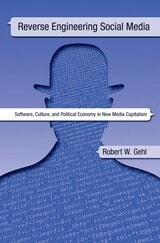
Reverse Engineering Social Media
Software, Culture, and Political Economy in New Media CapitalismRobert W Gehl
Temple University Press, 2014
Robert Gehl's timely critique, Reverse Engineering Social Media, rigorously analyzes the ideas of social media and software engineers, using these ideas to find contradictions and fissures beneath the surfaces of glossy sites such as Facebook, Google, and Twitter.
Gehl adeptly uses a mix of software studies, science and technology studies, and political economy to reveal the histories and contexts of these social media sites. Looking backward at divisions of labor and the process of user labor, he provides case studies that illustrate how binary "Like" consumer choices hide surveillance systems that rely on users to build content for site owners who make money selling user data, and that promote a culture of anxiety and immediacy over depth.
Reverse Engineering Social Media also presents ways out of this paradox, illustrating how activists, academics, and users change social media for the better by building alternatives to the dominant social media sites.
Reversed Gaze
An African Ethnography of American AnthropologyMwenda Ntarangwi
University of Illinois Press, 2010
Reversing the Gaze
What If the Other Were You?Geneviève Makaping
Rutgers University Press, 2023
Review of Child Development Research
Volume 1Lois Wladis Hoffman
Russell Sage Foundation, 1964
Review of Child Development Research
Volume 2Lois Wladis Hoffman
Russell Sage Foundation, 1967
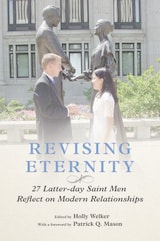
Revising Eternity
27 Latter-day Saint Men Reflect on Modern RelationshipsEdited by Holly Welker
University of Illinois Press, 2022
An insightful exploration of the gap between human realities and engrained ideals, Revising Eternity sheds light on how Latter-day Saint men view and experience marriage today.