Results by title
22279 books match the query 'Social Science' and 1072 start with r
Risk and Adaptation in a Cancer Cluster Town
Laura Hart
Rutgers University Press, 2023
In Risk and Adaptation in a Cancer Cluster Town, Laura Hart examines another understudied dimension of community inaction: the role of emotion and its relationship to community experiences of social belonging and inequality. Using a cancer cluster community in Northwest Ohio as a case study, Hart advances an approach to risk that grapples with the complexities of community belonging, disconnect, and disruption in the wake of suspected industrial pollution. Her research points to a fear driven not only by economic anxiety, but also by a fear of losing security within the community—a sort of pride that is not only about status, but connectedness. Hart reveals the importance of this social form of risk—the desire for belonging and the risk of not belonging—ultimately arguing that this is consequential to how people make judgements and respond to issues. Within this context where the imperative for self-protection is elusive, affected families experience psychosocial and practical conflicts as they adapt to cancer as a way of life. Considering a future where debates about risk and science will inevitably increase, Hart considers possibilities for the democratization of risk management and the need for transformative approaches to environmental justice.
Risk, Reproduction, and Narratives of Experience
Lauren Fordyce
Vanderbilt University Press, 2012
Risking Everything
A Freedom Summer ReaderMichael Edmonds
Wisconsin Historical Society Press, 2014
Risking Everything: A Freedom Summer Reader documents the 1964 Mississippi Freedom Summer Project, when SNCC and CORE workers and volunteers arrived in the Deep South to register voters and teach non-violence, and more than 60,000 black Mississippians risked everything to overturn a system that had brutally exploited them.
In the 44 original documents in this anthology, you’ll read their letters, eavesdrop on their meetings, shudder at their suffering, and admire their courage. You’ll witness the final hours of three workers murdered on the project’s first day, hear testimony by black residents who bravely stood up to police torture and Klan firebombs, and watch the liberal establishment betray them.
These vivid primary sources, collected by the Wisconsin Historical Society, provide both first-hand accounts of this astounding grassroots struggle as well as a broader understanding of the Civil Rights movement.
The selected documents are among the 25,000 pages about the Mississippi Freedom Summer Project in the archives of the Wisconsin Historical Society. The manuscripts were collected in the mid-1960s, at a time when few other institutions were interested in saving the stories of common people in McComb or Ruleville, Mississippi. Most have never been published before.
Risky Cities
The Physical and Fiscal Nature of Disaster CapitalismAlbert S. Fu
Rutgers University Press, 2022
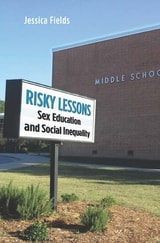
Risky Lessons
Sex Education and Social InequalityFields, Jessica
Rutgers University Press, 2008
Risky Lessons brings readers inside three North Carolina middle schools to show how students and teachers support and subvert the official curriculum through their questions, choices, viewpoints, and reactions. Most important, the book highlights how sex education's formal and informal lessons reflect and reinforce gender, race, and class inequalities.
Ultimately critical of both conservative and liberal approaches, Fields argues for curricula that promote social and sexual justice. Sex education's aim need not be limited to reducing the risk of adolescent pregnancies, disease, and sexual activity. Rather, its lessons should help young people to recognize and contend with sexual desires, power, and inequalities.
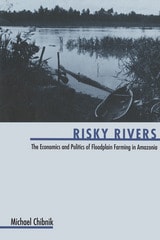
Risky Rivers
The Economics and Politics of Floodplain Farming in AmazoniaMichael Chibnik
University of Arizona Press, 1994
They have, however, suffered greatly from unpredictable crop prices and erratic state agricultural policies. Michael Chibnik here examines the household economies, cultural ecology, grassroots political organizations of ribere¤os living in three floodplain villages near Iquitos, Peru. He describes the villagers' remarkable history, their participation in misconceived development programs, and their longstanding conflicts with regional elites. Chibnik discusses the political ecology of the region in the context of arguments about appropriate development policies in tropical lowlands. Although ribere¤os practice intensive agriculture with low environmental impact, they have not been able to improve their economic circumstances in recent years. Chibnik's study is a significant and timely contribution to current debates about the possibility of sustainable, equitable development in Amazonia.
Risqué Business
Breastaurants in American CultureTy Matejowsky
University of Alabama Press, 2025
Risqué Business serves up the breastaurant industry, where food service, sex appeal, identity, and gender politics mix.
Risqué Business explores the rise and ongoing cultural reckoning of “breastaurants”: sports bar–style restaurants like Hooters and Twin Peaks, which have long relied on the sexualized presentation of female servers to attract a mostly straight, male clientele. Ty Matejowsky, professor of anthropology at the University of Central Florida, is uniquely positioned in America’s foundational, breastaurant-saturated landscape. From this vantage, he offers a well-balanced account that draws on pop culture, media analysis, and contemporary gender politics. He delivers a smart, layered analysis of how breastaurants commodify youth and femininity, uphold retrograde masculinity, and serve as symbolic battlegrounds in today's highly charged political environments including America's deeply polarized Red State/Blue State divide.
With case studies, cultural critique, and a critical lens on labor and sexuality, Matejowsky reveals how these restaurants are more than just risqué marketing gimmicks. They reflect deeper anxieties about gender, identity, and the uneasy fusion of sex and service in American consumer culture. Risqué Business is a high-spirited study of an industry that thrives at the intersection of appetite and identity.
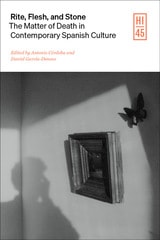
Rite, Flesh, and Stone
The Matter of Death in Contemporary Spanish CultureAntonio Córdoba
Vanderbilt University Press, 2021
Materials analyzed here—ranging from cinematic and literary fictions, to historical archives and anthropological and ethnographic sources—make explicit a dynamic scenario where actors embody a variety of positions toward death and dying, the political production of mortality, and the commemoration of the dead. Ultimately, the goal of this volume is to chart the complex network in which the disenchantment of death and its reenchantment coexist, and biopolitical control over secularized bodies overlaps with new avatars of the religious and non-theistic desires for memorialization and transcendence.
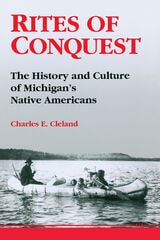
Rites of Conquest
The History and Culture of Michigan's Native AmericansCharles E. Cleland
University of Michigan Press, 1992
Beyond wars and warriors, Rites of Conquest is also about diplomacy and negotiation, mythology and magic, birth and death, and the joys and trials of daily life in the native villages of the Great Lakes region. Today, Michigan's Native American citizens struggle to solve problems that are a legacy of their past, while they attempt to maintain a distinctive place within modern society. In facing this challenge they often turn to the values and traditions that set them apart as the most enduring peoples of the Great Lakes region.
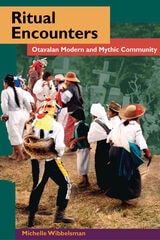
Ritual Encounters
Otavalan Modern and Mythic CommunityMichelle Wibbelsman
University of Illinois Press, 2008
This book examines ritual practices and public festivals in the Otavalo and Cotacachi areas of northern Andean Ecuador's Imbabura province. Otavaleños are a unique group in that they maintain their traditional identity but also cultivate a cosmopolitanism through frequent international travel. Ritual Encountersexplores the moral, mythic, and modern crossroads at which Otavaleños stand, and how, at this junction, they come to define themselves as millennial people.
Michelle Wibbelsman shows that Otavaleños are deeply engaged in transnational mobility and in the cultural transformations that have resulted from Otavalan participation in global markets, international consumer trends, and technological developments. Rituals have persisted among this ethnic community as important processes for symbolically capturing and critically assessing cultural changes in the face of modern influences. As religious expression, political commentary, transcendental communication, moral judgment, and transformative experience, Otavalan rituals constitute enduring practices that affirm ethnic identities, challenge dominant narratives, and take issue with power inequalities behind hegemony. Ritual Encounters thus offers an appreciation of the modern and mythic community as a single and emergent condition.
Ritual Humor in Highland Chiapas
By Victoria Reifler Bricker
University of Texas Press, 1973
Zinacantan, Chamula, and Chenalhó are neighboring Mayan communities situated in highland Chiapas, Mexico, near the city of San Cristóbal Las Casas. The inhabitants of the three communities speak dialects of the Tzotzil language. Five religious fiestas, celebrated by these communities in honor of their saints, provide the data for Victoria Bricker's comparative study of ritual humor.
In Chenalhó and Chamula performances of ritual humor are concentrated in the five-day period of a single fiesta, while in Zanacantan similar performances are distributed over threee fiestas. In these fiesta settings, performers in distinctive costumes make obscene and sacreligious remarks in the context of religious ritual. These performances are defined as ritual humor because they occur only in ritual settings.
Bricker's study constitutes a controlled cross-cultural comparison of ceremonial or ritual humor in its social and cultural setting. Much new information is provided in verbatim texts, recorded during actual fiesta performances. The study reveals that, although the three communities share a common pool of ritual symbols, they elaborate them differently in ritual humor. The study analyzes the symbolic expression of values, social organization, and interethnic relations.
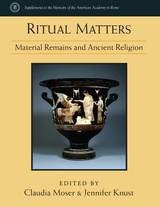
Ritual Matters
Material Remains and Ancient ReligionClaudia Moser and Jennifer Knust, editors
University of Michigan Press, 2017
Material remains of religious practices may reveal striking local continuity, but they also highlight points of change, as distinct moments of manufacture and use transformed both sites and objects. Yet not every religious practice leaves a trace: the embodied use of imperial statuary, the rationale for the design of particular sacred books or the ephemeral “magical” implements designed by local religious experts leave few traces, if any, and are therefore less amenable to material investigation. What does remain, however, challenges any neat association between representation and reality or literary claim and practical application.
This volume represents a significant contribution to the material approach of studying the ancient Mediterranean’s diverse religious practices. In addition to volume editors Claudia Moser and Jennifer Knust, contributors include Henri Duday, Gunnel Ekroth, David Frankfurter, Richard Gordon, Valérie Huet, William Van Andringa, and Zsuzsanna Várhelyi. Topics covered include funerary remains, sacrificial practices, “magic,” Roman altars, imperial reliefs and statuary, and the role of sacred books.
Ritual Medical Lore of Sephardic Women
Sweetening the Spirits, Healing the SickIsaac Jack Lévy and Rosemary Lévy Zumwalt
University of Illinois Press, 2002
Winner of the Ellii Kongas-Maranda Prize from the Women's Section of the American Folklore Society, 2003.
Ritual Medical Lore of Sephardic Women preserves the precious remnants of a rich culture on the verge of extinction while affirming women's pivotal role in the health of their communities. Centered around extensive interviews with elders of the Sephardic communities of the former Ottoman Empire, this volume illuminates a fascinating complex of preventive and curative rituals conducted by women at home--rituals that ensured the physical and spiritual well-being of the community and functioned as a vital counterpart to the public rites conducted by men in the synagogues.
Isaac Jack Lévy and Rosemary Lévy Zumwalt take us into the homes and families of Sephardim in Turkey, Israel, Greece, the former Yugoslavia, and the United States to unravel the ancient practices of domestic healing: the network of blessings and curses tailored to every occasion of daily life; the beliefs and customs surrounding mal ojo (evil eye), espanto (fright), and echizo (witchcraft); and cures involving everything from herbs, oil, and sugar to the powerful mumia (mummy) made from dried bones of corpses.
For the Sephardim, curing an illness required discovering its spiritual cause, which might be unintentional thought or speech, accident, or magical incantation. The healing rituals of domesticated medicine provided a way of making sense of illness and a way of shaping behavior to fit the narrow constraints of a tightly structured community. Tapping a rich and irreplaceable vein of oral testimony, Ritual Medical Lore of Sephardic Women offers fascinating insight into a culture where profound spirituality permeated every aspect of daily life.
Ritual Sacrifice in Ancient Peru
Edited by Elizabeth P. Benson and Anita G. Cook
University of Texas Press, 2001
Propitiating the supernatural forces that could grant bountiful crops or wipe out whole villages through natural disasters was a sacred duty in ancient Peruvian societies, as in many premodern cultures. Ritual sacrifices were considered necessary for this propitiation and for maintaining a proper reciprocal relationship between humans and the supernatural world.
The essays in this book examine the archaeological evidence for ancient Peruvian sacrificial offerings of human beings, animals, and objects, as well as the cultural contexts in which the offerings occurred, from around 2500 B.C. until Inca times just before the Spanish Conquest. Major contributions come from the recent archaeological fieldwork of Steve Bourget, Anita Cook, and Alana Cordy-Collins, as well as from John Verano's laboratory work on skeletal material from recent excavations. Mary Frame, who is a weaver as well as a scholar, offers rich new interpretations of Paracas burial garments, and Donald Proulx presents a fresh view of the nature of Nasca warfare. Elizabeth Benson's essay provides a summary of sacrificial practices.
Ritual Soundings
Women Performers and World ReligionsSarah Weiss
University of Illinois Press, 2019
In Ritual Soundings, Sarah Weiss reads deeply into and across the ethnographic details of multiple studies while offering a robust framework for studying music and world religion. Her meta-ethnography reveals surprising patterns of similarity between unrelated cultures. Deftly blending ethnomusicology, the study of gender in religion, and sacred music studies, she invites ethnomusicologists back into comparative work, offering them encouragement to think across disciplinary boundaries. As Weiss delves into a number of less-studied rituals, she offers a forceful narrative of how women assert agency within institutional religious structures while remaining faithful to the local cultural practices the rituals represent.
Ritual Violence in the Ancient Andes
Reconstructing Sacrifice on the North Coast of PeruEdited by Haagen D. Klaus and J. Marla Toyne
University of Texas Press, 2016
Traditions of sacrifice exist in almost every human culture and often embody a society’s most meaningful religious and symbolic acts. Ritual violence was particularly varied and enduring in the prehistoric South American Andes, where human lives, animals, and material objects were sacrificed in secular rites or as offerings to the divine. Spectacular discoveries of sacrificial sites containing the victims of violent rituals have drawn ever-increasing attention to ritual sacrifice within Andean archaeology. Responding to this interest, this volume provides the first regional overview of ritual killing on the pre-Hispanic north coast of Peru, where distinct forms and diverse trajectories of ritual violence developed during the final 1,800 years of prehistory.
Presenting original research that blends empirical approaches, iconographic interpretations, and contextual analyses, the contributors address four linked themes—the historical development and regional variation of north coast sacrifice from the early first millennium AD to the European conquest; a continuum of ritual violence that spans people, animals, and objects; the broader ritual world of sacrifice, including rites both before and after violent offering; and the use of diverse scientific tools, archaeological information, and theoretical interpretations to study sacrifice. This research proposes a wide range of new questions that will shape the research agenda in the coming decades, while fostering a nuanced, scientific, and humanized approach to the archaeology of ritual violence that is applicable to archaeological contexts around the world.
Ritual and Economy in a Pre-Columbian Chiefdom
The El Cajón Region of HondurasKenneth Hirth
University Press of Colorado, 2023
As part of the ritual economy, a large quantity of jade and marble artifacts were deposited as offerings in the ritual architecture of the El Cajón region’s central community of Salitrón Viejo. Over 2,800 of these high-value items were recovered from their original ritual contexts, making Salitrón Viejo one of the largest in situ collections of these materials ever recovered in the New World. These materials are well dated and tremendously varied and provide a cross-section of all jade-carving lapidary traditions in use across eastern Mesoamerica between AD 250 and 350.
With a complementary website providing extensive additional description, visualization, and analysis (https://journals.psu.edu/opa/issue/view/3127), Ritual and Economy in a Pre-Columbian Chiefdom is a new and original contribution that employs an “economy of ritual approach” to the study of chiefdom societies in the Americas. It is a foundational reference point for any scholar working in Mesoamerica and Central America, especially those engaged in Maya research, as well as archaeologists working with societies at this scale of complexity in Latin America and around the world.
Ritual and Pilgrimage in the Ancient Andes
The Islands of the Sun and the MoonBy Brian S. Bauer and Charles Stanish
University of Texas Press, 2001
The Islands of the Sun and the Moon in Bolivia's Lake Titicaca were two of the most sacred locations in the Inca empire. A pan-Andean belief held that they marked the origin place of the Sun and the Moon, and pilgrims from across the Inca realm made ritual journeys to the sacred shrines there. In this book, Brian Bauer and Charles Stanish explore the extent to which this use of the islands as a pilgrimage center during Inca times was founded on and developed from earlier religious traditions of the Lake Titicaca region.
Drawing on a systematic archaeological survey and test excavations in the islands, as well as data from historical texts and ethnography, the authors document a succession of complex polities in the islands from 2000 BC to the time of European contact in the 1530s AD. They uncover significant evidence of pre-Inca ritual use of the islands, which raises the compelling possibility that the religious significance of the islands is of great antiquity. The authors also use these data to address broader anthropological questions on the role of pilgrimage centers in the development of pre-modern states.
Ritual and Power in Stone
The Performance of Rulership in Mesoamerican Izapan Style ArtBy Julia Guernsey
University of Texas Press, 2006
The ancient Mesoamerican city of Izapa in Chiapas, Mexico, is renowned for its extensive collection of elaborate stone stelae and altars, which were carved during the Late Preclassic period (300 BC-AD 250). Many of these monuments depict kings garbed in the costume and persona of a bird, a well-known avian deity who had great significance for the Maya and other cultures in adjacent regions. This Izapan style of carving and kingly representation appears at numerous sites across the Pacific slope and piedmont of Mexico and Guatemala, making it possible to trace political and economic corridors of communication during the Late Preclassic period.
In this book, Julia Guernsey offers a masterful art historical analysis of the Izapan style monuments and their integral role in developing and communicating the institution of divine kingship. She looks specifically at how rulers expressed political authority by erecting monuments that recorded their performance of rituals in which they communicated with the supernatural realm in the persona of the avian deity. She also considers how rulers used the monuments to structure their built environment and create spaces for ritual and politically charged performances. Setting her discussion in a broader context, Guernsey also considers how the Izapan style monuments helped to motivate and structure some of the dramatic, pan-regional developments of the Late Preclassic period, including the forging of a codified language of divine kingship. This pioneering investigation, which links monumental art to the matrices of political, economic, and supernatural exchange, offers an important new understanding of a region, time period, and group of monuments that played a key role in the history of Mesoamerica and continue to intrigue scholars within the field of Mesoamerican studies.
Ritual and Remembrance in the Ecuadorian Andes
Rachel Corr
University of Arizona Press, 2010
In this book Rachel Corr provides a knowledgeable account of the Salasacan religion and rituals and their respective histories. Based on eighteen years of fieldwork in Salasaca, as well as extensive research in Church archives—including never-before-published documents—Corr’s book illuminates how Salasacan culture adapted to Catholic traditions and recentered, reinterpreted, and even reshaped them to serve similarly motivated Salasacan practices, demonstrating the link between formal and folk Catholicism and pre-Columbian beliefs and practices. Corr also explores the intense connection between the local Salasacan rituals and the mountain landscapes around them, from peak to valley.
Ritual and Remembrance in the Ecuadorian Andes is, in its portrayal of Salasacan religious culture, both thorough and all-encompassing. Sections of the book cover everything from the performance of death rituals to stories about Amazonia as Salasacans interacted with outsiders—conquistadors and camera-toting tourists alike. Corr also investigates the role of shamanism in modern Salasacan culture, including shamanic powers and mountain spirits, and the use of reshaped, Andeanized Catholicism to sustain collective memory. Through its unique insider’s perspective of Salasacan spirituality, Ritual and Remembrance in the Ecuadorian Andes is a valuable anthropological work that honestly represents this people’s great ability to adapt.
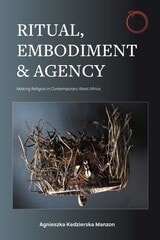
Ritual, Embodiment, and Agency
Making Religion in Contemporary West AfricaAgnieszka Kedzierska Manzon
HAU, 2026
Ritual, Embodiment, and Agency shows through rich ethnographic analysis how Mande people in West Africa resort to multiple ritual practices to address an “episteme of doubt.” In the context of armed conflicts and terrorist attacks, climate disruptions, financial crises, and illness, members of “hunter societies," experts who handle certain agentive artifacts, and adepts in a spiritual possession cult deal with a complex past and uncertain future through creative embodied engagement. Formed within and partially against a predominantly Islamic context and the spread of charismatic Christianities, such embodied ways of acting enable these religious specialists to become “virtuous subjects” to change their relations to the world and to themselves. This is an English translation of Corps rituels. La fabrique du religieux en pays mandingue (Mali, Guinée, Côte d'Ivoire).
Rituals Of Mediation
International Politics And Social MeaningFrancois Debrix
University of Minnesota Press, 2003
A timely consideration of the meaning of transnational cultural interactions today
In an era of increasing globalization, the cultural and the international have borders as permeable as most nations’s—and an understanding of one requires making sense of the other. Foregrounding the role of mediation—understood here as a site of representation, transformation, and pluralization—the authors engage two specific questions: How might we make theoretical and practical sense of transnational cultural interactions? And how are we to understand the ways in which the sites of mediation represent, transform, and remediate internationals? Accordingly, the authors consider international issues like security, development, political activism, and the war against terrorism through the lens of cultural practices such as traveling through airports, exhibiting art and photography, logging on to the Internet, and spinning news stories.
Contributors: Robin Brown, U of Leeds; David Campbell, U of Newcastle upon Tyne; Michael Dillon, U of Lancaster; Debbie Lisle, Queen’s U, Belfast; Moya Lloyd, Queen’s U, Belfast; Timothy W. Luke, Virginia Polytechnic Institute and State U; Patricia L. Price, Florida International U; Jayne Rodgers, U of Leeds; Marysia Zalewski, Queen’s U, Belfast.
Rituals and Ceremonies in Popular Culture
Edited by Ray B. Browne
University of Wisconsin Press, 1980
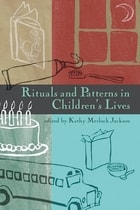
Rituals and Patterns in Children's Lives
Edited by Kathy Merlock Jackson
University of Wisconsin Press, 2005
Trick-or-treating. Flower girls. Bedtime stories. Bar and bat mitvah. In a nation of increasing ethnic, familial, and technological complexity, the patterns of children's lives both persist and evolve. This book considers how such events shape identity and transmit cultural norms, asking such questions as:
* How do immigrant families negotiate between old traditions and new?
* What does it mean when children engage in ritual insults and sick jokes?
* How does playing with dolls reflect and construct feelings of racial identity?
* Whatever happened to the practice of going to the Saturday matinee to see a Western?
* What does it mean for a child to be (in the words of one bride) "flower-girl material"? How does that role
cement a girl's bond to her family and initiate her into society?
* What is the function of masks and costumes, and why do children yearn for these accoutrements of disguise?
Rituals and Patterns in Children's Lives suggests the manifold ways in which America's children come to know their society and themselves.
Rituals and Sisterhoods
Single Women's Households in Mexico, 1560–1750Amos Megged
University Press of Colorado, 2019
Megged analyzes these women’s life stories recorded during the Spanish Inquisition, as well as wills and bequests, petitions, parish records, and private letters that describe—in their own words—how they exercised agency in male-dominated and religious spaces. Translations of select documents and accompanying analysis illustrate the conditions in which women dissolved their marriages, remained in long-lasting extramarital cohabitations, and formed female-led households and “sisterhoods” of their own. Megged provides evidence that single women in colonial Mexico played a far more active and central role in economic systems, social organizations, cults, and political activism than has been previously thought, creating spaces for themselves in which they could initiate and maintain autonomy and values distinct from those of elite society.
The institutionalization of female-headed households in mid-colonial Mexico had wide-ranging repercussions and effects on general societal values. Rituals and Sisterhoods details the particular relevance of these changes to the history of emotions, sexuality, gender concepts, perceptions of marriage, life choices, and views of honor and shame in colonial society. This book will be of significant interest to students and scholars of colonial Latin American history, the history of Early Modern Spain and Europe, and gender and women’s studies.
Rituals of Fertility and the Sacrifice of Desire
Nazarite Women's Performance in South AfricaCarol Ann Muller
University of Chicago Press, 1999
Against the backdrop of South Africa's turbulent history, Muller shows how Shembe's ideas of female ritual purity developed as a response to a regime and culture that pushed all things associated with women, cultural expression, and Africanness to the margins.
Carol Muller breaks new ground in the study of this changing region and along the way includes fascinating details of her own poignant journey, as a young, white South African woman, to the "other" side of a divided society.
Rituals of Respect
The Secret of Survival in the High Peruvian AndesBy Inge Bolin
University of Texas Press, 1998
"In the remoteness of their mountain retreat, the herders of Chillihuani, Peru, recognize that respect for others is the central and most significant element of all thought and action," observes Inge Bolin. "Without respect, no society, no civilization, can flourish for long. Without respect, humanity is doomed and so is the earth, sustainer of all life."
In this beautifully written ethnography, Bolin describes the rituals of respect that maintain harmonious relations among people, the natural world, and the realm of the gods in an isolated Andean community of llama and alpaca herders that reaches up to 16,500 feet. Bolin was the first foreigner to visit Chillihuani, and she was permitted to participate in private family rituals, as well as public ceremonies. In turn, she allows the villagers to explain the meaning of their rituals in their own words.
From these first-hand experiences, Bolin offers an intimate portrait of an annual ritual cycle that dates back to Inca and pre-Inca times, including the ancient Pukllay; weddings; the Fiesta de Santiago, with its horse races on the top of the world; and Peru's Independence Day, when the Rituals of Respect for elders and young people alike are carried out within male and female hierarchies reminiscent of Inca times.
Rituals of the Past
Prehispanic and Colonial Case Studies in Andean ArchaeologySilvana Rosenfeld
University Press of Colorado, 2017
Rituals of the Past explores the various approaches archaeologists use to identify ritual in the material record and discusses the influence ritual had on the formation, reproduction, and transformation of community life in past Andean societies. A diverse group of established and rising scholars from across the globe investigates how ritual influenced, permeated, and altered political authority, economic production, shamanic practice, landscape cognition, and religion in the Andes over a period of three thousand years.
Contributors deal with theoretical and methodological concerns including non-human and human agency; the development and maintenance of political and religious authority, ideology, cosmologies, and social memory; and relationships with ritual action. The authors use a diverse array of archaeological, ethnographic, and linguistic data and historical documents to demonstrate the role ritual played in prehispanic, colonial, and post-colonial Andean societies throughout the regions of Peru, Chile, Bolivia, and Argentina. By providing a diachronic and widely regional perspective, Rituals of the Past shows how ritual is vital to understanding many aspects of the formation, reproduction, and change of past lifeways in Andean societies.
Contributors: Sarah Abraham, Carlos Angiorama, Florencia Avila, Camila Capriata Estrada, David Chicoine, Daniel Contreras, Matthew Edwards, Francesca Fernandini, Matthew Helmer, Hugo Ikehara, Enrique Lopez-Hurtado, Jerry Moore, Axel Nielsen, Yoshio Onuki, John Rick, Mario Ruales, Koichiro Shibata, Hendrik Van Gijseghem, Rafael Vega-Centeno, Verity Whalen
Ritwik Ghatak
Occasional Essays for a 100th BirthdayEdited by Gayatri Chakravorty Spivak and Surya Parekh
Seagull Books, 2025
The cinema of Ritwik Ghatak (1925–76) continues to resonate across borders and generations. His films—largely shaped by the 1947 Partition of Bengal and the experience of displacement—probe the fractured human condition through bold formal experimentation, unforgettable soundscapes, and a profound sense of myth and memory. Though his body of work was modest in size, Ghatak’s influence has steadily expanded, securing his place as a major figure in world cinema. This distinctive volume, which marks the centenary of this visionary filmmaker, gathers essays by important scholars and thinkers from around the world.
Moving beyond conventional film criticism and area studies, the collection stages new, transnational encounters with Ghatak’s films—approaching them as world texts, as sonic and visual experiments, and as meditations on migration, collectivity, and social existence.

River Crossings
Contemporary Art Comes HomeJason Rosenfeld
The Artist Book Foundation, 2015
In a unique and groundbreaking 2015 presentation of important contemporary art rarely seen in the traditional environs of the Hudson River Valley, the Thomas Cole National Historic Site and Olana, Frederic Edwin Church's Persian-inspired mansion, showcased the work of contemporary American artists such as Chuck Close, Cindy Sherman, Maya Lin, Martin Puryear, and Gregory Crewdson, some of the 30 artists featured in the exhibition. Stephen Hannock, celebrated Luminist painter and one of the exhibition's co-curators, stated that "this is a terrific opportunity to open up contemporary art, as well as these historic properties, to audiences who will see firsthand these shared artistic concerns."
The works of art selected for the exhibition were shown at the two venues to encourage visitors to experience both of the distinguished properties and the grandeur of their surroundings, and to present a complete overview and understanding of these contemporary works in a location where many art historians believe American art was born. The accompanying publication, River Crossings: Contemporary Art Comes Home, provides readers with a lavish record of this extraordinary and innovative exhibition, and offers unique and highly informative perspectives on the continuity of the American artistic tradition in two of the nation's most historic sites.
In addition to an impressive plate section of more than 60 works with brief artist biographies and descriptive narratives for the individual works, this comprehensive presentation features noteworthy, exceptional contributions. Stephen Hannock's preface details the development of this remarkable exhibition, while co-curator Jason Rosenfeld reveals in his essay the exhibition's importance relative to historical perception as he considers Cole's and Church's support of conemporary art in their time. Cultural historian Maurice Berger considers the realities of race and gender from the nineteenth-century Hudson River Valley to the present, and Marvin Heiferman, curator and writer, examines photography in the exhibition and its connections to Church's work and his use of the medium. Award-winning architectural and landscape photographer Peter Aaron generously provided the stunning installation, exterior, and landscape photographs, a gorgeous complement to this outstanding catalogue.
River Dialogues
Hindu Faith and the Political Ecology of Dams on the Sacred GangaGeorgina Drew
University of Arizona Press, 2017
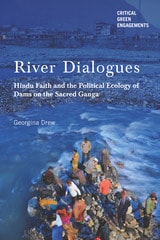
India’s sacred Ganga River is arguably one of the most iconic sites for worship, with a continuity of rituals for the living and the dead that span over two millennia. Along the river, from high in the Himalaya to the vast plains below, people gather daily to worship the Ganga through prayer and song. But large government-sponsored dams threaten to upend these practices.
In River Dialogues, Georgina Drew offers a detailed ethnographic engagement with the social movements contesting hydroelectric development on the Ganga. The book examines the complexity of the cultural politics that, on the one hand, succeeded in influencing an unprecedented reversal of government plans for three contested hydroelectric projects, and how, on the other hand, this decision sparked ripples of discontent after being paired with the declaration of a conservation zone where the projects were situated.
The book follows the work of women who were initially involved in efforts to stop the disputed projects. After looking to their discourses and actions, Drew argues for the use of a political ecology analysis that incorporates the everyday practice and everyday religious connections that animated the cultural politics of development. Drew offers a nuanced understanding of the struggles that communities enact to assert their ways of knowing and caring for resources that serves as an example for others critically engaging with the growing global advocacy of the “green economy” model for environmental stewardship.
River Life and the Upspring of Nature
Naveeda Khan
Duke University Press, 2023

River Life and the Upspring of Nature
Naveeda Khan
Duke University Press, 2023
River of Hope
Forging Identity and Nation in the Rio Grande BorderlandsOmar S. Valerio-Jiménez
Duke University Press, 2012
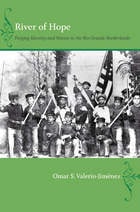
Diverse influences transformed the borderlands as Spain, Mexico, and the United States competed for control of the region. Indian slaves joined Spanish society; Mexicans allied with Indians to defend river communities; Anglo Americans and Mexicans intermarried and collaborated; and women sued to confront spousal abuse and to secure divorces. Drawn into multiple conflicts along the border, Mexican nationals and Mexican Texans (tejanos) took advantage of their transnational social relations and ambiguous citizenship to escape criminal prosecution, secure political refuge, and obtain economic opportunities. To confront the racialization of their cultural practices and their increasing criminalization, tejanos claimed citizenship rights within the United States and, in the process, created a new identity.
Published in cooperation with the William P. Clements Center for Southwest Studies, Southern Methodist University.
River of Tears
Country Music, Memory, and Modernity in BrazilAlexander Sebastian Dent
Duke University Press, 2009
Since 1998, Alexander Sebastian Dent has analyzed rural music in the state of São Paulo, interviewing and spending time with listeners, musicians, songwriters, journalists, record-company owners, and radio hosts. Dent not only describes the production and reception of this music, he also explains why the genre experienced such tremendous growth as Brazil transitioned from an era of dictatorship to a period of intense neoliberal reform. Dent argues that rural genres reflect a widespread anxiety that change has been too radical and has come too fast. In defining their music as rural, Brazil’s country musicians—whose work circulates largely in cities—are criticizing an increasingly inescapable urban life characterized by suppressed emotions and an inattentiveness to the past. Their performances evoke a river of tears flowing through a landscape of loss—of love, of life in the countryside, and of man’s connections to the natural world.
Riverine Citizenship
A Bosnian City in Love with the RiverAzra Hromadžic
Central European University Press, 2024
Water potential is a significant natural wealth of most parts of the Balkans, and it has given rise to a surge in hydropower investments unparalleled across Europe. As part of the process, a dam was planned to be built on the Una River, which runs through the Bosnian town of Bihać. This prospect alarmed the city’s residents, culminating in a protest in 2015. The book begins with this protest, and it explores how the threat of dam construction transformed the seemingly apolitical love of the river into a powerful political force around which thousands of people mobilized: riverine citizenship.
The book is based on interviews with participants, archival research, and over twenty years of ethnographic research. Azra Hromadžić focuses on the tension between ecological sustainability efforts in favor of renewable energy, on the one hand, and citizens’ historically shaped, deeply-felt, love for the river, on the other. She shows how the language and promises of green transition can mask the forces of capitalist accumulation that drive this change — whether in the form of building hydroelectric dams or promoting eco-tourism — and thus set in motion another cycle of environmental degradation, social dispossession, and economic exploitation.
Rivers of Change
Essays on Early Agriculture in Eastern North AmericaBruce D. Smith
University of Alabama Press, 2007
Organized into four sections, the twelve chapters of Rivers of Change are concerned with prehistoric Native American societies in eastern North America and their transition from a hunting and gathering way of life to a reliance on food production. Written at different times over a decade, the chapters vary both in length and topical focus. They are joined together, however, by a number of shared “rivers of change.”
Rivers on Fire and Corporate Liars
The Monitoring and Sanctioning of U.S. Water Pollution CrimesJoshua Ozymy
Rutgers University Press, 2026
For over four decades, the US federal government has undertaken efforts to police and prosecute environmental crimes to protect public health and the natural environment. Yet, we still know very little about how US federal agencies have monitored and sanctioned water pollution violations and if these actions actually deter crime. In Rivers on Fire and Corporate Liars, Joshua Ozymy and Melissa Jarrell Ozymy examined over one thousand federal water pollution investigations and prosecutions undertaken by the US EPA and Department of Justice from 1983 to 2023 to answer these questions. Their analysis provides the most comprehensive empirical examination to date of how the criminal enforcement of water pollution has evolved over time, patterns in prosecutions, and how criminals were sanctioned.
Rivers on the Move
Waterways in Human Life from the Ice Age to the AnthropoceneBathesheba Demuth, Mark H. Healey, Giacomo Parrinello, and Laurence C. Smith, editors
Duke University Press, 2027
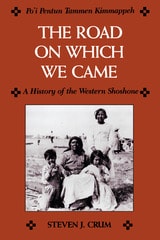
Road On Which We Came
A History of the Western ShoshoneSteven J. Crum
University of Utah Press, 1994
A hundred forty years ago, the Western Shoshone occupied a vast area of present-day Nevada—from Idaho in the north to Death Valley in the south. Today, the Newe hold a fraction of their former territory, still practicing native lifeways while accepting many aspect of American culture. Their story deserves telling.
The Road on Which We Came is the first comprehensive history of the Great Basin Shoshone. Written by historian Steven Crum, an enrolled tribal member, this book presents the Shoshone as an active force in their own history, effectively adapting to harsh physical environment, defending their territory in the nineteenth century, and working to modify or reject assimilationists policy in the present.
Noting that Native American history did not end with Wounded Knee, Crum gives substantial attention to twentieth-century events up to 1990 and emphasizes that in every period tribal actions can be characterized by a plurality of voices and opinions.
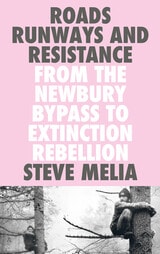
Roads, Runways and Resistance
From the Newbury Bypass to Extinction RebellionSteve Melia
Pluto Press, 2021
'As a movement for social change it is important that we understand our own history. This is a compelling read.'
From the anti-roads protests of the 1990s to HS2 and Extinction Rebellion, conflict and protest have shaped the politics of transport. In 1989, Margaret Thatcher's government announced 'the biggest road-building programme since the Romans.' This is the inside story of the thirty tumultuous years that have followed.
Roads, Runways and Resistance draws on over 50 interviews with government ministers, advisors and protestors - many of whom, including 'Swampy', speak here for the first time about the events they describe. It is a story of transport ministers undermined by their own Prime Ministers, protestors attacked or quietly supported by the police, and smartly-dressed protestors who found a way onto the roof of the Houses of Parliament.
Today, as a new wave of road building and airport expansion threatens to bust Britain's carbon budgets, climate change protestors find themselves on a collision course with the government. Melia asks, what difference did the protests of the past make? And what impacts might today's protest movements have on the transport of the future?
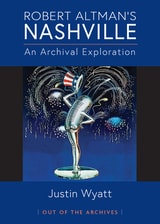
Robert Altman's Nashville
An Archival ExplorationJustin Wyatt
University of Michigan Press, 2026
This book explores Robert Altman’s classic film from a variety of critical perspectives inspired by the archival materials from the Altman archive in the Screen Arts Mavericks and Makers collection at the University of Michigan Special Collections Research Center. Each chapter is centered around materials on Nashville from the Altman archive: stills, contact sheets, advertising artwork (used and unused), Jean Pagliuso photo shoots, Joan Tewkesbury script drafts, contracts, reviews, internal accounting memos, and the Altman scrapbooks. (Each of his films has a scrapbook of reviews, interviews, and notes from fans.) Using these sources as a starting point, the book seeks to explain the relevance and importance of Nashville after more than half a century.
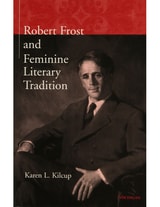
Robert Frost and Feminine Literary Tradition
Karen L. Kilcup
University of Michigan Press, 1998
Robert H. Gardiner and the Reunification of Worldwide Christianity in the Progressive Era
John F. Woolverton
University of Missouri Press, 2005
Robert Hayden
Essays on the PoetryLaurence Goldstein and Robert Chrisman, Editors
University of Michigan Press, 2013
This collection of essays by leading critics and poets charts Robert Hayden’s growing reputation as a major writer of some of the twentieth century’s most important poems on African-American themes, including the famed “Middle Passage” and “Frederick Douglass.” The essays illuminate the themes and techniques that established Hayden as a modernist writer with affinities to T. S. Eliot, Federico Garcia Lorca, and W. B. Yeats, as well as to traditions of African-American writings that include such figures as Countee Cullen and Langston Hughes.
Robert Hayden: Essays on the Poetryis the first and only book to collect significant essays on this distinguished poet. Covering sixty years of commentary, book reviews, essays, and Hayden’s own published materials, this volume is an invaluable contribution to our understanding of the poet’s vision of experience, artistry, and influence. The book includes forty different works that examine the life and poetry of Hayden, the first African-American to serve as Consultant in Poetry to the Library of Congress (the post now called Poet Laureate) and to receive the Grand Prix de la Poesie at the First World Festival of Negro Arts, Dakar, Senegal, in 1966.
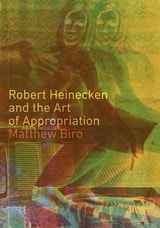
Robert Heinecken and the Art of Appropriation
Matthew Biro
University of Minnesota Press, 2022
The first comprehensive study of the artist Robert Heinecken and his critical views on the culture of mass media
This is the first book-length study dedicated to the artist Robert Heinecken, whose innovative photographic practices sought to interrogate how mass media imagery facilitated the construction of individual and collective identities. Appropriating, rephotographing, and layering pictures culled from newspapers, advertisements, pornography, and television, Heinecken recombined and transformed the ubiquitous images of mass culture to encourage viewers to critically reflect on their sense of self.
From the 1960s through the late 1990s, Heinecken’s controversial art continually challenged inherited ideas around consumerism, the facticity of reportage, and visual culture’s relationship to gender and identity politics. Embodying the evolution of contemporary art toward increasingly hybrid and conceptual approaches, his oeuvre includes examples of painting, sculpture, photomontage, performance, installation, time-based media, and artist’s books, all of which collectively exploit photography’s reproducibility to subvert society’s dominant ideologies and stereotypical modes of representation.
Author Matthew Biro presents an exhaustive look at Heinecken’s life and art, locating him within a lineage that encompasses the activities of the early twentieth-century avant-gardes and the postmodern strategies of the Pictures Generation artists. Assessing his career within the specific political and historical contexts from which he gleaned his material, and illustrated throughout with vibrant full-color reproductions of his art, this in-depth examination demonstrates Robert Heinecken’s significance as a key figure of twentieth-century art and an incisive commentator on modern life in America.
Robert Johnson, Mythmaking, and Contemporary American Culture
Patricia R. Schroeder
University of Illinois Press, 2004
Merging literary analysis with cultural criticism and biographical study, Patricia R. Schroeder explores Johnson's ongoing role as a cultural icon. Schroeder's detailed analysis engages key images and myths about the blues musician (such as the Faustian crossroads exchange of his soul for guitar virtuosity). Navigating the many competing interpretations that swirl around him, Schroeder reveals the cultural purposes served by the stories and the storytellers. The result is a fascinating examination of the relationships among Johnson's life, its subsequent portrayals, and the forces that drove the representations.
Offering penetrating insights into both Johnson and the society that perpetuates him, Robert Johnson, Mythmaking, and Contemporary American Culture is essential reading for blues fans and cultural critics interested in a foundational musical figure.

Roberto Michels’ First Lectures in Political Sociology
Roberto MichelsTranslated by Alfred de GraziaIntroduction by Alfred de Grazia
University of Minnesota Press, 1949
Roberto Michels' First Lectures in Political Sociology was first published in 1949. Minnesota Archive Editions uses digital technology to make long-unavailable books once again accessible, and are published unaltered from the original University of Minnesota Press editions.
A number of papers on key ideas in the social sciences are made available to Americans for the first time in this book. Representative of Western European culture, Roberto Michels, author of the famous Political Parties and many other works, asks and gives answers to a number of questions basic to the further study of political behavior, socialeconomic institutions, and public law.
There parade before the reader of this volume the really great European contributors to social science of the last century: Saint-Simon, Karl Marx, Gabriel Tarde, Gaetano Mosca, Vilfredo Pareto, Max Weber, Werner Sombart, Georges Sorel, and many other critics and scholars. At every step the sociologist, the economist, the psychologist, and the political scientist — for Michels was all of these—intermingle and reinforce each other.
German born, Roberto Michels studied at Paris, Munich, Leipzig, Halle, and Turin, and taught successively in some of Europe's greatest universities. In 1927 he lectured in America at the University of Chicago and elsewhere.
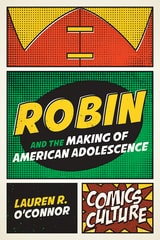
Robin and the Making of American Adolescence
Lauren R. O'Connor
Rutgers University Press, 2021
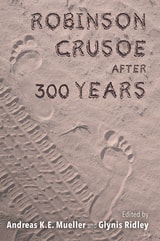
Robinson Crusoe after 300 Years
Andreas K. E. Mueller
Bucknell University Press, 2021