Results by title
1563 books match the query 'African American & Black Studies' and 105 start with r
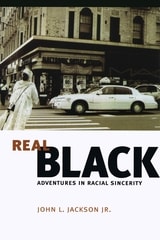
Real Black
Adventures in Racial SincerityJohn L. Jackson Jr.
University of Chicago Press, 2005
Jackson argues that authenticity caricatures identity as something imposed on people, imprisoning them within stereotypes: an African American high school student who excels in the classroom, for instance, might be dismissed as "acting white." On the other hand, sincerity, as Jackson defines it, imagines authenticity as an incomplete measuring stick, an analytical model that attempts to deny people agency in their search for identity.
Drawing on more than ten years of ethnographic research in and around New York City, Jackson offers a kaleidoscope of subjects and stories that directly and indirectly address how race is negotiated in today's world—including tales of book-vending numerologists, urban conspiracy theorists, corrupt police officers, mixed-race neo-Nazis, and gospel choirs forbidden to catch the Holy Ghost. Jackson records and retells their interconnected sagas, all the while attempting to reconcile these stories with his own crisis of identity and authority as an anthropologist terrified by fieldwork. Finding ethnographic significance where mere mortals see only bricks and mortar, his invented alter ego Anthroman takes to the streets, showing how race is defined and debated, imposed and confounded every single day.
Real Folks
Race and Genre in the Great DepressionSonnet H. Retman
Duke University Press, 2011
Real Role Models
Successful African Americans Beyond Pop CultureBy Joah Spearman and Louis Harrison, Jr.
University of Texas Press, 2010
All young people need good role models, and black youth especially need positive and real examples beyond the famous and wealthy people they see on SportsCenter highlights and MTV Cribs. While success as a celebrity athlete or entertainer may seem like an achievable dream, the reality is that young African Americans have a much greater chance of succeeding in the professions through education and hard work—and a mentor to show them the path. Real Role Models introduces high school and college-age African Americans to twenty-three black professionals who have achieved a high level of success in their chosen fields and who tell their stories to inspire young people to pursue a professional career and do the work necessary to achieve their dreams.
Some of the individuals profiled by Joah Spearman and Louis Harrison, Jr., include Leonard Pitts, Pulitzer Prize–winning columnist for the Miami Herald; Melody Barnes, Director of the White House Domestic Policy Council; Danyel Smith, editor-in-chief of Vibe; and Dr. Tim George, Chief of Pediatric Neuroscience at Dell Children's Medical Center of Central Texas. They and other interviewees describe their backgrounds, career paths, and desire to give back by helping others reach their goals. Representing a wide range of occupations, these real role models prove to African American youths that a whole world of successful, rewarding careers awaits them.
The Real Role Models
- Rufus Cormier, JD, Partner at the Baker Botts Law Firm, Houston, Texas
- Melody Barnes, Director of the White House Domestic Policy Council, Washington, D.C.
- Eric Motley, PhD, Managing Director of the Aspen Institute's Henry Crown Fellowship Program, Aspen, Colorado
- James McIntyre, Spokesman for the Federal Emergency Management Agency, Washington, D.C.
- Tracie Hall, Assistant Dean and Librarian at Dominican University, River Forest, Illinois
- Kimberlydawn Wisdom, MD, Surgeon General of the State of Michigan, Lansing, Michigan
- Timothy George, MD, Chief of Pediatric Neuroscience at Dell Children's Medical Center, Austin, Texas
- Victoria Holloway Barbosa, MD, Ethnic Dermatologist and Former Executive for L'Oreal, Chicago, Illinois
- Bill Douglas, White House Correspondent for McClatchy Newspapers, Washington, D.C.
- Leonard Pitts, Jr., Columnist for the Miami Herald, Miami, Florida
- Danyel Smith, Editor of Vibe Magazine, New York, New York
- Ed Stewart, Managing Director of External Communications for Delta Airlines, Atlanta, Georgia
- Lynn Tyson, Vice President of Investor Relations for Dell, Austin, Texas
- Willie Miles, Jr., Founder and CEO of Miles Wealth Management, Houston, Texas
- Horace Allen, Founder and CEO of TeamPact, Atlanta, Georgia
- Deavra Daughtry, President and CEO of Excellent Care Management, Houston, Texas
- Je'Caryous Johnson, Founder and CEO of I'm Ready Productions, Houston, Texas
- Steve Jones, Cofounder of a graphic design company, Oakland, California
- Isiah Warner, PhD, Chemistry Professor at Louisiana State University, Baton Rouge, Louisiana
- Gloria Ladson-Billings, PhD, Professor of Education at the University of Wisconsin, Madison, Wisconsin
- Bernard Muir, Athletic Director at Georgetown University, Washington, D.C.
- Craig Littlepage, Athletic Director at the University of Virginia, Charlottesville, Virginia
- Beverly Kearney, Women's Track Coach at the University of Texas at Austin, Austin, Texas
Real Sister
Stereotypes, Respectability, and Black Women in Reality TVWard, Jervette R
Rutgers University Press, 2015
The first book of scholarship devoted to the issue of how black women are depicted on reality television, Real Sister offers an even-handed consideration of the genre. The book’s ten contributors—black female scholars from a variety of disciplines—provide a wide range of perspectives, while considering everything from Basketball Wives to Say Yes to the Dress. As regular viewers of reality television, these scholars are able to note ways in which the genre presents positive images of black womanhood, even as they catalog a litany of stereotypes about race, class, and gender that it tends to reinforce.
Rather than simply dismissing reality television as “trash,” this collection takes the genre seriously, as an important touchstone in ongoing cultural debates about what constitutes “trashiness” and “respectability.” Written in an accessible style that will appeal to reality TV fans both inside and outside of academia, Real Sister thus seeks to inspire a more nuanced, thoughtful conversation about the genre’s representations and their effects on the black community.

Rebellion or Revolution?
Harold Cruse
University of Minnesota Press, 2009
A classic work of African American cultural, social, and political thought by a forerunner of the Black Power movement
One of the leading writers of African American intellectual life in the second half of the twentieth century, Harold Cruse first came to international attention in 1967 with the publication of his influential and inflammatory book, The Crisis of the Negro Intellectual. This fiercely opinionated and deeply informed critique of both integrationism and black nationalism established Cruse as a bold new voice on race and resistance in America.
First published in the wake of The Crisis of the Negro Intellectual’s success, Rebellion or Revolution? collects reviews and essays Cruse wrote between 1950 and 1966, examining the relevance of such figures as James Baldwin, Booker T. Washington, Albert Camus, and Josephine Baker, as well as such subjects as Marxism and the African American community, the economics of black nationalism, and the emerging Black Power movement. Rebellion or Revolution? contains a number of significant writings not available elsewhere.Now, with a new foreword by Cedric Johnson, this work finally emerges as both an essential document from a crucial moment in African American history and a road map to the origins and evolution of Cruse’s critical thought, asserting its importance in today’s debates on race in America.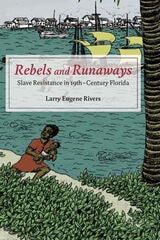
Rebels and Runaways
Slave Resistance in Nineteenth-Century FloridaLarry Eugene Rivers
University of Illinois Press, 2013
Against a smoldering backdrop of violence, this study analyzes the various degrees of slave resistance--from the perspectives of both slave and master--and how they differed in various regions of antebellum Florida. In particular, Rivers demonstrates how the Atlantic world view of some enslaved blacks successfully aided their escape to freedom, a path that did not always lead North but sometimes farther South to the Bahama Islands and Caribbean. Identifying more commonly known slave rebellions such as the Stono, Louisiana, Denmark (Telemaque) Vesey, Gabriel, and the Nat Turner insurrections, Rivers argues persuasively that the size, scope, and intensity of black resistance in the Second Seminole War makes it the largest sustained slave insurrection ever to occur in American history.
Meticulously researched, Rebels and Runaways offers a detailed account of resistance, protest, and violence as enslaved blacks fought for freedom.
Reckoning Day
Race, Place, and the Atom Bomb in Postwar AmericaJacqueline Foertsch
Vanderbilt University Press, 2013
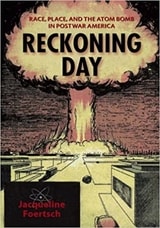
Foertsch also examines the location of African American characters in novels, science fiction, and survivalist nonfiction such as government-sponsored forecasts regarding post-nuclear survival. In these, black characters are often displaced or absented entirely: in doomsday narratives they are excluded from executive decision-making and the stories' often triumphant conclusions; in the nonfiction, they are rarely envisioned amongst the "typical American" survivors charged with rebuilding US society. Throughout Reckoning Day, issues of placement and positioning provide the conceptual framework: abandoned at "ground zero" (America's inner cities) during the height of the atomic threat, African Americans were figured in white-authored survival fiction as compliant servants aiding white victory over atomic adversity, while as historical figures they were often perceived as "elsewhere" (indifferent) to the atomic threat. In fact, African Americans' "position" on the bomb was rarely one of silence or indifference. Ranging from appreciation to disdain to vigorous opposition, atomic-era African Americans developed diverse and meaningful positions on the bomb and made essential contributions to a remarkably American dialogue.
Reckoning with Slavery
Gender, Kinship, and Capitalism in the Early Black AtlanticJennifer L. Morgan
Duke University Press, 2021
Reconceptualizations of the African Diaspora, Volume 2009
Erica Ball, Melina Pappademos, and Michelle Ann Stephens, eds.
Duke University Press, 0
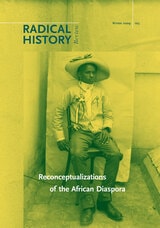
The contributors draw on perspectives from political science, history, cultural studies, art history, anthropology, feminist theory, sexuality and queer studies, and Caribbean and African American studies. The collection addresses transnational discourses of race, gender, and sexuality in African diaspora politics, African diaspora experiences on the African continent, the politics of African-descended peoples in Europe, and creative uses of the discourses of memory and diaspora to support political organizing and local struggles. Essays on Venezuelans, Bolivians, and Mexicans address the status of race in the study of African-descended populations and cultures in Latin America. The issue also includes two essays that showcase African diasporic art and curatorial practices in the United States, the Caribbean, and the United Kingdom.
Contributors: Erica Ball, Anthony Bogues, Lisa Brock, Sara Busdiecker, Prudence Cumberbatch,Jacqueline Francis, Anita González, Amoaba Gooden, Dayo Gore, Laura A. Harris, Christopher J. Lee, Kevin Mumford, Melina Pappademos, Cristóbal Valencia Ramírez, Rochelle Rowe, Theresa Runstedtler, Michelle Ann Stephens, Tyler Stovall, Deborah Thomas, Leon Wainwright, Cadence Wynter, Paul Tiyambe Zeleza
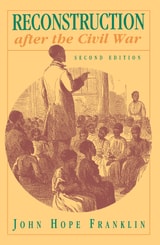
Reconstruction after the Civil War
Second EditionJohn Hope Franklin
University of Chicago Press, 1994
Now Franklin has updated his work to acknowledge the enormous body of research and scholarship that followed in the wake of the first edition. New are Franklin’s references to important, later texts that enrich the original narrative. In addition, the extensive bibliography has been thoroughly revised.
What has not changed, however, is the foundation Franklin has laid. Still compelling are his arguments concerning the brevity of the North’s military occupation of the South, the limited amount of power wielded by former slaves, the influence of moderate southerners, the flaws of the constitutions drawn up by the Radical state governments, and the reasons for the downfall of Reconstruction.
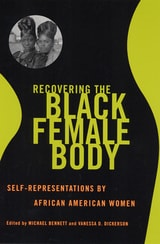
Recovering the Black Female Body
Self-Representation by African American WomenEdited by Michael Bennett and Vanessa D Dickerson
Rutgers University Press, 2000
Despite the recent flood of scholarly work investigating the interrelated issues of race, gender, and representation, little has been written about black women’s depictions of their own bodies. Both past and present-day American cultural discourse has attempted either to hypereroticize the black female body or make it a site of impropriety and crime.
The essays in this volume focus on how African American women, from the nineteenth century to the present, have represented their physical selves in opposition to the distorted vision of others. Contributors attempt to “recover” the black female body in two ways: they explore how dominant historical images have mediated black female identity, and they analyze how black women have resisted often demeaning popular cultural perceptions in favor of more diverse, subtle presentations of self.
The pieces in this book—all of them published here for the first time—address a wide range of topics, from antebellum American poetry to nineteenth-century African American actors, and twentieth-century pulp fiction.
Recovering the Black Female Body recognizes the pressing need to highlight through scholarship the vibrant energy of African American women’s attempts to wrest control of the physical and symbolic construction of their bodies away from the distortions of others.
Contributors are Margaret Bass, Dorri Rabung Beam, Michael Bennett, Jacqueline E. Brady, Daphne A. Brooks, Vanessa D. Dickerson, Meredith Goldsmith, Yvette Louis, Ajuan Maria Mance, Noliwe Rooks, Mark Winokur, and Doris Witt. This book also contains a foreword by Carla L. Peterson and an afterword by Deborah E. McDowell.
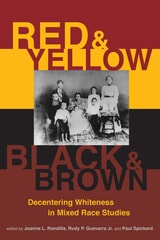
Red and Yellow, Black and Brown
Decentering Whiteness in Mixed Race StudiesRondilla, Joanne L
Rutgers University Press, 2017
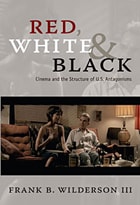
Red, White & Black
Cinema and the Structure of U.S. AntagonismsFrank B. Wilderson III
Duke University Press, 2010
Wilderson provides detailed readings of two films by Black directors, Antwone Fisher (Denzel Washington) and Bush Mama (Haile Gerima); one by an Indian director, Skins (Chris Eyre); and one by a White director, Monster’s Ball (Marc Foster). These films present Red and Black people beleaguered by problems such as homelessness and the repercussions of incarceration. They portray social turmoil in terms of conflict, as problems that can be solved (at least theoretically, if not in the given narratives). Wilderson maintains that at the narrative level, they fail to recognize that the turmoil is based not in conflict, but in fundamentally irreconcilable racial antagonisms. Yet, as he explains, those antagonisms are unintentionally disclosed in the films’ non-narrative strategies, in decisions regarding matters such as lighting, camera angles, and sound.
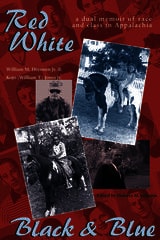
Red, White, Black, and Blue
A Dual Memoir of Race and Class in AppalachiaWilliam M. Drennen Jr., Kojo (William T.) Jones Jr.
Ohio University Press, 2004
Redefining the Political
Black Feminism and the Politics of Everyday LifeAlex J. Moffett-Bateau
Temple University Press, 2024
Moffett-Bateau uses radical Black feminist political theory and develops a framework called the political possible-self, which argues that belonging to a community and developing political imagination foment change. These women employ grassroots efforts to subvert oppressive power structures by protesting institutions within their communities, addressing the benign neglect of their housing development, organizing community art shows and meals, volunteering at local public schools, and holding meetings to increase the political confidence of public-housing tenants by educating them on navigating government bureaucracies.
Ultimately, Redefining the Political shows how political engagement at both the individual and community levels can be fruitful for nontraditional political contributions.
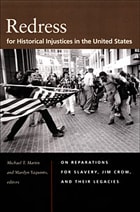
Redress for Historical Injustices in the United States
On Reparations for Slavery, Jim Crow, and Their LegaciesMichael T. Martin and Marilyn Yaquinto, eds.
Duke University Press, 2007
Written by activists and scholars of law, political science, African American studies, philosophy, economics, and history, the twenty-six essays include both previously published articles and pieces written specifically for this volume. Essays theorize the historical and legal bases of claims for redress; examine the history, strengths, and limitations of the reparations movement; and explore its relation to human rights and social justice movements in the United States and abroad. Other essays evaluate the movement’s primary strategies: legislation, litigation, and mobilization. While all of the contributors support the campaign for redress in one way or another, some of them engage with arguments against reparations.
Among the fifty-three primary documents included in the volume are federal, state, and municipal acts and resolutions; declarations and statements from organizations including the Black Panther Party and the NAACP; legal briefs and opinions; and findings and directives related to the provision of redress, from the Oklahoma Commission to Study the Tulsa Race Riot of 1921 to the mandate for the Greensboro Truth and Reconciliation Commission. Redress for Historical Injustices in the United States is a thorough assessment of the past, present, and future of the modern reparations movement.
Contributors. Richard F. America, Sam Anderson, Martha Biondi, Boris L. Bittker, James Bolner, Roy L. Brooks, Michael K. Brown, Robert S. Browne, Martin Carnoy, Chiquita Collins, J. Angelo Corlett, Elliott Currie, William A. Darity, Jr., Adrienne Davis, Michael C. Dawson, Troy Duster, Dania Frank, Robert Fullinwider, Charles P. Henry, Gerald C. Horne, Robert Johnson, Jr., Robin D. G. Kelley, Jeffrey R. Kerr-Ritchie, Theodore Kornweibel, Jr., David Lyons, Michael T. Martin, Douglas S. Massey , Muntu Matsimela , C. J. Munford, Yusuf Nuruddin, Charles J. Ogletree Jr., Melvin L. Oliver, David B. Oppenheimer, Rovana Popoff, Thomas M. Shapiro, Marjorie M. Shultz, Alan Singer, David Wellman, David R. Williams, Eric K. Yamamoto, Marilyn Yaquinto
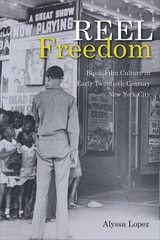
Reel Freedom
Black Film Culture in Early Twentieth-Century New York CityAlyssa Lopez
Temple University Press, 2025
Lopez investigates how ordinary people, labor activists, journalists, filmmakers, theater managers, and owners all shaped Black film culture. Black girls and women used moviegoing as a means of independence and control over their lives. Race filmmaker Oscar Micheaux fought with New York State’s censorship board to get his films screened with limited edits in local theaters. And Harlem’s Black projectionists battled for unionization and fair pay, while journalists linked cinema to Black New Yorkers’ lived experiences.
In Reel Freedom, Lopez chronicles the wide-ranging and remarkable pervasiveness of Black film culture in New York City, redefining a period and place most associated with the Harlem Renaissance. In doing so, she illustrates how Black New Yorkers leveraged cinema to make the city their own and to enjoy urban living to its fullest.
In the series Urban Life, Landscape, and Policy
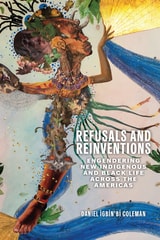
Refusals and Reinventions
Engendering New Indigenous and Black Life across the AmericasDaniel Ìgbín’bí Coleman
The Ohio State University Press, 2024

Regina Anderson Andrews, Harlem Renaissance Librarian
Ethelene Whitmire
University of Illinois Press, 2015
Andrews also played a key role in the Harlem Renaissance, supporting writers and intellectuals with dedicated workspace at her 135th Street Branch Library. After hours she cohosted a legendary salon that drew the likes of Langston Hughes and Zora Neale Hurston. Her work as an actress and playwright helped establish the Harlem Experimental Theater, where she wrote plays about lynching, passing, and the Underground Railroad.
Ethelene Whitmire's new biography offers the first full-length study of Andrews's activism and pioneering work with the NYPL. Whitmire's portrait of her sustained efforts to break down barriers reveals Andrews's legacy and places her within the NYPL's larger history.
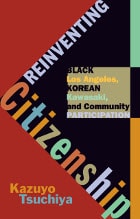
Reinventing Citizenship
Black Los Angeles, Korean Kawasaki, and Community ParticipationKazuyo Tsuchiya
University of Minnesota Press, 2014
In the 1960s and 1970s, the United States and Japan went through massive welfare expansions that sparked debates about citizenship. At the heart of these disputes stood African Americans and Koreans. Reinventing Citizenship offers a comparative study of African American welfare activism in Los Angeles and Koreans’ campaigns for welfare rights in Kawasaki. In working-class and poor neighborhoods in both locations, African Americans and Koreans sought not only to be recognized as citizens but also to become legitimate constituting members of communities.
Local activists in Los Angeles and Kawasaki ardently challenged the welfare institutions. By creating opposition movements and voicing alternative visions of citizenship, African American leaders, Tsuchiya argues, turned Lyndon B. Johnson’s War on Poverty into a battle for equality. Koreans countered the city’s and the nation’s exclusionary policies and asserted their welfare rights. Tsuchiya’s work exemplifies transnational antiracist networking, showing how black religious leaders traveled to Japan to meet Christian Korean activists and to provide counsel for their own struggles.
Reinventing Citizenship reveals how race and citizenship transform as they cross countries and continents. By documenting the interconnected histories of African Americans and Koreans in Japan, Tsuchiya enables us to rethink present ideas of community and belonging.
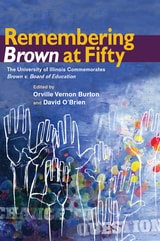
Remembering Brown at Fifty
The University of Illinois Commemorates Brown v. Board of EducationEdited by Orville Vernon Burton and David O'Brien
University of Illinois Press, 2009
Inspired by the University of Illinois's celebration of the Brown v. Board of Education decision's fiftieth anniversary, this collection addresses the significance of Brown in the contributors' lives or work in education and civil rights. Several authors describe their personal roles in the Brown case or similar cases, while others examine and illustrate events, performances, and exhibitions that were part of the anniversary commemoration. The book not only explores the repercussions of the Brown decision, but also stands as a historic document in its own right, preserving the reactions of many prominent intellectuals, artists, and activists fifty years after the decision.
Contributors are Kal Alston, Margaret L. Andersen, Kathryn H. Anthony, Nathaniel C. Banks, Bernice McNair Barnett, Christopher Benson, Ed Blankenheim, Julian Bond, Orville Vernon Burton, Jason Chambers, Constance Curry, Joseph A. De Laine Jr., Mary L. Dudziak, Joe R. Feagin, John Hope Franklin, Ophelia De Laine Gona, Lani Guinier, Darlene Clark Hine, Freeman A. Hrabowski III, John Jennings, Ralph Lemon, George Lipsitz, Jim Loewen, Laughlin McDonald, David O'Brien, James C. Onderdonk, Sekou Sundiata, Christopher Teal, Nicholas Watkins, Carrie Mae Weems, Juan Williams, and Joy Ann Williamson.
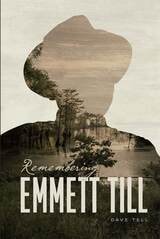
Remembering Emmett Till
Dave Tell
University of Chicago Press, 2019
In Remembering Emmett Till, Dave Tell gives us five accounts of the commemoration of this infamous crime. In a development no one could have foreseen, Till’s murder—one of the darkest moments in the region’s history—has become an economic driver for the Delta. Historical tourism has transformed seemingly innocuous places like bridges, boat landings, gas stations, and riverbeds into sites of racial politics, reminders of the still-unsettled question of how best to remember the victim of this heinous crime. Tell builds an insightful and persuasive case for how these memorials have altered the Delta’s physical and cultural landscape, drawing potent connections between the dawn of the civil rights era and our own moment of renewed fire for racial justice.
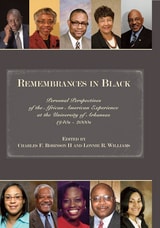
Remembrances in Black
Personal Perspectives of the African American Experience at the University of Arkansas, 1940s–2000sCharles F. Robinson II
University of Arkansas Press, 2015
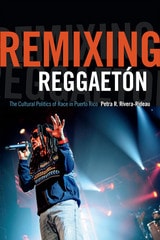
Remixing Reggaetón
The Cultural Politics of Race in Puerto RicoPetra R. Rivera-Rideau
Duke University Press, 2015
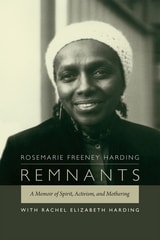
Remnants
A Memoir of Spirit, Activism, and MotheringRosemarie Freeney Harding with Rachel Elizabeth Harding
Duke University Press, 2015
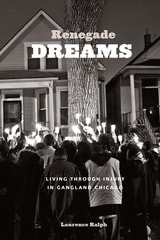
Renegade Dreams
Living through Injury in Gangland ChicagoLaurence Ralph
University of Chicago Press, 2014
Going deep into a West Side neighborhood most Chicagoans only know from news reports—a place where children have been shot just for crossing the wrong street—Ralph unearths the fragile humanity that fights to stay alive there, to thrive, against all odds. He talks to mothers, grandmothers, and pastors, to activists and gang leaders, to the maimed and the hopeful, to aspiring rappers, athletes, or those who simply want safe passage to school or a steady job. Gangland Chicago, he shows, is as complicated as ever. It’s not just a warzone but a community, a place where people’s dreams are projected against the backdrop of unemployment, dilapidated housing, incarceration, addiction, and disease, the many hallmarks of urban poverty that harden like so many scars in their lives. Recounting their stories, he wrestles with what it means to be an outsider in a place like this, whether or not his attempt to understand, to help, might not in fact inflict its own damage. Ultimately he shows that the many injuries these people carry—like dreams—are a crucial form of resilience, and that we should all think about the ghetto differently, not as an abandoned island of unmitigated violence and its helpless victims but as a neighborhood, full of homes, as a part of the larger society in which we all live, together, among one another.
Reparations and Reparatory Justice
Past, Present, and FutureEdited by Sundiata Keita Cha-Jua, Mary Frances Berry, and V. P. Franklin
University of Illinois Press, 2024
Sharing a focus on reparations as an issue of justice, the contributors provide a historical primer of the movement; introduce the philosophical, political, economic, legal and ethical issues surrounding reparations; explain why government, corporations, universities, and other institutions must take steps to rehabilitate, compensate, and commemorate African Americans; call for the restoration of Black people’s human and civil rights and material and psychological well-being; lay out specific ideas about how reparations can and should be paid; and advance cutting-edge interpretations of the complex long-lasting effects that enslavement, police and vigilante actions, economic discrimination, and other behaviors have had on people of African descent.
Groundbreaking and innovative, Reparations and Reparatory Justice offers a multifaceted resource to anyone wishing to explore a defining moral issue of our time.
Contributors: Dedrick Asante-Muhammad, Hilary McDonald Beckles, Mary Frances Berry, Sundiata Keita Cha-Jua, Chuck Collins, Ron Daniels, V. P. Franklin, Danny Glover, Adom Gretachew, Charles Henry, Kamm Howard, Earl Ofari Hutchinson, Jesse Jackson, Sr., Brian Jones, Sheila Jackson Lee, James B. Stewart, the Movement 4 Black Lives, the National African American Reparations Commission, the National Coalition of Blacks for Reparations in America, the New Afrikan Peoples Organization/Malcolm X Grassroots Movement
Representing
Hip Hop Culture and the Production of Black CinemaS. Craig Watkins
University of Chicago Press, 1998
"Watkins is at his most sophisticated and persuasive when he explains the surprising success of hyper-talented, entrepreneurial, and energetic black artists."—Archon Fung, Boston Book Review
Research Directions of Black Psychologists
Wade Boykin
Russell Sage Foundation, 1979
Researching Black Communities
A Methodological GuideJames S. Jackson, Cleopatra Howard Caldwell, Sherrill L. Sellers, editors
University of Michigan Press, 2014
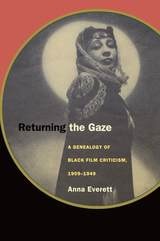
Returning the Gaze
A Genealogy of Black Film Criticism, 1909–1949Anna Everett
Duke University Press, 2001
Culling black newspapers, magazines, scholarly and political journals, and monographs, Everett has produced an unparalleled investigation of black critical writing on the early cinema during the era of racial segregation in America. Correcting the notion that black critical interest in the cinema began and ended with the well-documented press campaign against D. W. Griffith’s Birth of a Nation, she discovers that as early as 1909 black newspapers produced celebratory discourses about the cinema as a much-needed corrective to the predominance of theatrical blackface minstrelsy. She shows how, even before the Birth of a Nation controversy, the black press succeeded in drawing attention to both the callous commercial exploitation of lynching footage and the varied work of black film entrepreneurs. The book also reveals a feast of film commentaries that were produced during the “roaring twenties” and the jazz age by such writers as W.E.B. DuBois, Langston Hughes, and Zora Neale Hurston, as well as additional pieces that were written throughout the Depression and the pre– and post–war periods. Situating this wide-ranging and ideologically complex material in its myriad social, political, economic, and cultural contexts, Everett aims to resuscitate a historical tradition for contemporary black film literature and criticism.
Returning the Gaze will appeal to scholars and students of film, black and ethnic studies, American studies, cultural studies, literature, and journalism.
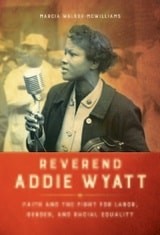
Reverend Addie Wyatt
Faith and the Fight for Labor, Gender, and Racial EqualityMarcia Walker-McWilliams
University of Illinois Press, 2016
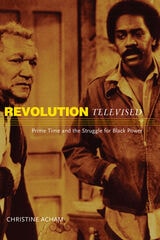
Revolution Televised
Prime Time and the Struggle for Black PowerChristine Acham
University of Minnesota Press, 2005
In Revolution Televised, Christine Acham offers a more complex reading of this period in African American television history, finding within these programs opposition to dominant white constructions of African American identity. She explores the intersection of popular television and race as witnessed from the documentary coverage of the civil rights and Black Power movements, the personal politics of Flip Wilson and Soul Train’s Don Cornelius, and the ways in which notorious X-rated comic Redd Foxx reinvented himself for prime time.
Reflecting on both the potential of television to effect social change as well as its limitations, Acham concludes with analyses of Richard Pryor’s politically charged and short-lived sketch comedy show and the success of outspoken comic Chris Rock. Revolution Televised deftly illustrates how black television artists operated within the constraints of the television industry to resist and ultimately shape the mass media’s portrayal of African American life.
Christine Acham is assistant professor in African American and African studies at the University of California, Davis.
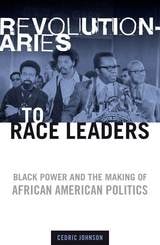
Revolutionaries to Race Leaders
Black Power and the Making of African American PoliticsCedric Johnson
University of Minnesota Press, 2007
The Black Power movement represented a key turning point in American politics. Disenchanted by the hollow progress of federal desegregation during the 1960s, many black citizens and leaders across the United States demanded meaningful self-determination. The popular movement they created was marked by a vigorous artistic renaissance, militant political action, and fierce ideological debate.
Exploring the major political and intellectual currents from the Black Power era to the present, Cedric Johnson reveals how black political life gradually conformed to liberal democratic capitalism and how the movement’s most radical aims—the rejection of white aesthetic standards, redefinition of black identity, solidarity with the Third World, and anticapitalist revolution—were gradually eclipsed by more moderate aspirations. Although Black Power activists transformed the face of American government, Johnson contends that the evolution of the movement as a form of ethnic politics restricted the struggle for social justice to the world of formal politics.
Johnson offers a compelling and theoretically sophisticated critique of the rhetoric and strategies that emerged in this period. Drawing on extensive archival research, he reinterprets the place of key intellectual figures, such as Harold Cruse and Amiri Baraka, and influential organizations, including the African Liberation Support Committee, the National Black Political Assembly, and the National Black Independent Political Party in postsegregation black politics, while at the same time identifying the contradictions of Black Power radicalism itself.
Documenting the historical retreat from radical, democratic struggle, Revolutionaries to Race Leaders ultimately calls for the renewal of popular struggle and class-conscious politics.
Cedric Johnson is assistant professor of political science at Hobart and William Smith Colleges.
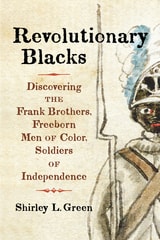
Revolutionary Blacks
Discovering the Frank Brothers, Freeborn Men of Color, Soldiers of IndependenceShirley L. Green
Westholme Publishing, 2026
In Revolutionary Blacks: Discovering the Frank Brothers, Freeborn Men of Color, Soldiers of Independence historian Shirley L. Green takes the reader on a journey based on her family’s history, rooted in its oral tradition. Putting together the pieces of this puzzle through archival research, interviews, and DNA evidence, the author authenticates and expands the family’s oral history. In addition to providing context and substance to the Black experience during the war years, the author underscores the significant distinction between free Blacks in military service and those who had been enslaved, and how they responded in different ways to the harsh realities of racism. An original and important contribution to American history, Revolutionary Blacks presents a complex account of Black life during the Revolutionary Era and demonstrates that free men of color shared with white soldiers the desire to improve their condition in life and to maintain their families safely in postcolonial North America.
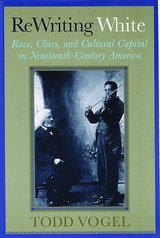
Rewriting White
Race, Class, and Cultural Capital in Nineteenth-Century AmericaTodd Vogel
Rutgers University Press, 2004
What did it mean for people of color in nineteenth-century America to speak or write "white"? More specifically, how many and what kinds of meaning could such "white" writing carry? In ReWriting White, Todd Vogel looks at how America has racialized language and aesthetic achievement. To make his point, he showcases the surprisingly complex interactions between four nineteenth-century writers of color and the "standard white English" they adapted for their own moral, political, and social ends. The African American, Native American, and Chinese American writers Vogel discusses delivered their messages in a manner that simultaneously demonstrated their command of the dominant discourse of their times-using styles and addressing forums considered above their station-and fashioned a subversive meaning in the very act of that demonstration.
The close readings and meticulous archival research in ReWriting White upend our conventional expectations, enrich our understanding of the dynamics of hegemony and cultural struggle, and contribute to the efforts of other cutting-edge contemporary scholars to chip away at the walls of racial segregation that have for too long defined and defaced the landscape of American literary and cultural studies.
Rhymin' and Stealin'
Musical Borrowing in Hip-HopJustin A. Williams
University of Michigan Press, 2014
Rhymin’ and Stealin’begins with a crucial premise: the fundamental element of hip-hop culture and aesthetics is the overt use of preexisting material to new ends. Whether it is taking an old dance move for a breakdancing battle, using spray paint to create street art, quoting from a famous speech, or sampling a rapper or 1970s funk song, hip-hop aesthetics involve borrowing from the past. By appropriating and reappropriating these elements, they become transformed into something new, something different, something hip-hop. Rhymin’ and Stealin’ is the first book-length study of musical borrowing in hip-hop music, which not only includes digital sampling but also demonstrates a wider web of references and quotations within the hip-hop world. Examples from Nas, Jay-Z, A Tribe Called Quest, Eminem, and many others show that the transformation of preexisting material is the fundamental element of hip-hop aesthetics. Although all music genres use and adapt preexisting material in different ways, hip-hop music celebrates and flaunts its “open source” culture through highly varied means. It is this interest in the web of references, borrowed material, and digitally sampled sounds that forms the basis of this book—sampling and other types of borrowing becomes a framework with which to analyze hip-hop music and wider cultural trends.
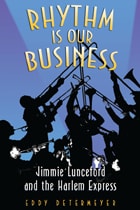
Rhythm Is Our Business
Jimmie Lunceford and the Harlem ExpressEddy Determeyer
University of Michigan Press, 2010
"The first detailed study of one of the swing era's most important bands and the first biography of its leader, Jimmie Lunceford. This is a most welcome and significant contribution to the literature of jazz, to our understanding of a vital period in jazz history, and to the music of an outstanding and unique ensemble that was emblematic of the swing era."
---Dan Morgenstern, Director, Institute of Jazz Studies, Rutgers University, and author of Living with Jazz
"We were more popular than Benny Goodman! We were the first black band that played the Paramount Theater, downtown New York. Not Duke Ellington, not Count Basie. Six weeks in a row, four or five shows daily, and it was packed every day, people lining up around the corner constantly! We could outdraw any band in the country."
---Gerald Wilson
"Jimmie Lunceford was a key swing-era figure, and no book covers his biography and music like this one does. Grounded in years of research and inspired by the writer's love of his subject, the book fills a critical gap in the jazz literature and will be essential reading for all swing aficionados."
---Jeffrey Magee, Associate Professor of Musicology, University of Illinois, Urbana-Champaign, and author of The Uncrowned King of Swing: Fletcher Henderson and Big Band Jazz
"It was Jimmie Lunceford and his orchestra that inspired me to become a musician. I was eleven years old at the time. When I heard that band play I said to myself, 'That's for me. I want to become a musician.' I still get inspired when I listen to some of their recordings. The Jimmie Lunceford Orchestra is one of the great jazz orchestras of all time."
---Horace Silver
"Jimmie Lunceford has the best of all bands. Duke is great, Basie is remarkable, but Lunceford tops them both."
---Glenn Miller
In the 1930s, swing music reigned, and the Jimmie Lunceford Orchestra was the hottest and hippest attraction on the black dance circuits. Known for its impeccable appearance and infectious rhythms, Lunceford's group was able to out-swing and outdraw any band. For ten consecutive years, they were the best-loved attraction at Harlem's famed Apollo Theater. The group's hit recordings sold in the hundreds of thousands, and Jimmie Lunceford's band rivaled Ellington's for popularity in the African American community.
Jimmie Lunceford was also an innovator, elevating big-band showmanship to an art and introducing such novel instruments as the electric guitar and bass. The band's arrangements, written by Sy Oliver, Edwin Wilcox, Gerald Wilson, Billy Moore, Jr., and Tadd Dameron, were daring and forward looking, influencing generations of big-band writers.
Rhythm Is Our Business traces the development of the Jimmie Lunceford Orchestra from its infant days as a high school band in Memphis to its record-breaking tours across the United States, Canada, and Europe. The book also unveils Lunceford's romantic yet ill-fated involvement with Yolande Du Bois, daughter of famous writer and opinion leader W.E.B. Du Bois. And by reconstructing Lunceford's last day, the book offers a glimpse into the mysteries surrounding the leader's untimely death. This is essential reading for anyone interested in the history and legacy of swing.
Eddy Determeyer has been a freelance music journalist for more than three decades. In 1984 Determeyer wrote a seven-part series on Jimmie Lunceford for the Dutch magazine Jazz Nu. Determeyer has written thousands of articles on music for a variety of Dutch publications and is the author of several books. He currently produces the Holiday for Hipsters radio show for Dutch station Concertzender.
Cover image: Lunceford brass section, ca. late 1936. Left to right: Paul Webster, Eddie Durham, Sy Oliver, Elmer Crumbley, Eddie Tompkins, Russell Bowles. (Bertil Lyttkens Collection)
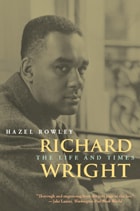
Richard Wright
The Life and TimesHazel Rowley
University of Chicago Press, 2008
Drawing on journals, letters, and eyewitness accounts, Richard Wright probes the author’s relationships with Langston Hughes and Ralph Ellison, his attraction to Communism, and his so-called exile in France. Skillfully interweaving quotes from Wright’s own writings, Rowley deftly portrays a passionate, courageous, and flawed man who would become one of our most enduring literary figures.
“Splendid. . . . Richard Wright is well written, prodigiously researched, and nicely paced, a compelling evocation of the man, his craft, and the different worlds through which he moved.”—Michael J. Ybarra, Wall Street Journal
“A welcome and illuminating work . . . [Rowley] does an outstanding job. . . . Rich and revealing.”—Megan Harlan, San Francisco Chronicle
“A magnificent biography, subtle and insightful. . . . Rowley writes with style and grace, and her research on Wright is prodigious.”—Howard Zinn, The Week
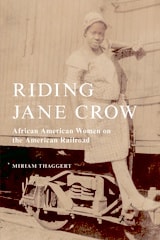
Riding Jane Crow
African American Women on the American RailroadMiriam Thaggert
University of Illinois Press, 2022
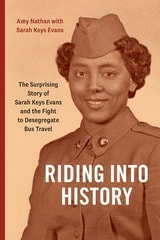
Riding into History
The Surprising Story of Sarah Keys Evans and the Fight to Desegregate Bus TravelAmy Nathan with Sarah Keys Evans
Duke University Press, 2026
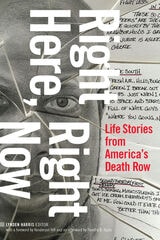
Right Here, Right Now
Life Stories from America's Death RowLynden Harris, editor
Duke University Press, 2021
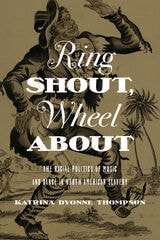
Ring Shout, Wheel About
The Racial Politics of Music and Dance in North American SlaveryKatrina D. Thompson
University of Illinois Press, 2014
In this ambitious project, historian Katrina Thompson examines the conceptualization and staging of race through the performance, sometimes coerced, of black dance from the slave ship to the minstrel stage. Drawing on a rich variety of sources, Thompson explicates how black musical performance was used by white Europeans and Americans to justify enslavement, perpetuate the existing racial hierarchy, and mask the brutality of the domestic slave trade. Whether on slave ships, at the auction block, or on plantations, whites often used coerced performances to oppress and demean the enslaved.
As Thompson shows, however, blacks' "backstage" use of musical performance often served quite a different purpose. Through creolization and other means, enslaved people preserved some native musical and dance traditions and invented or adopted new traditions that built community and even aided rebellion.
Thompson shows how these traditions evolved into nineteenth-century minstrelsy and, ultimately, raises the question of whether today's mass media performances and depictions of African Americans are so very far removed from their troublesome roots.
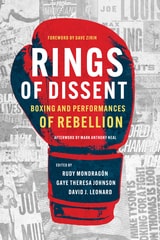
Rings of Dissent
Boxing and Performances of RebellionEdited by Rudy Mondragón, Gaye Theresa Johnson, and David J. Leonard
University of Illinois Press, 2025
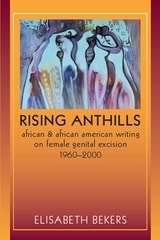
Rising Anthills
African and African American Writing on Female Genital Excision, 1960–2000Elisabeth Bekers
University of Wisconsin Press, 2010
Rising Anthills (the title refers to a Dogon myth) analyzes works in English, French, and Arabic by African and African American writers, both women and men, from different parts of the African continent and the diaspora. Attending closely to the nuances of language and the complexities of the issue, Bekers explores lesser-known writers side by side with such recognizable names as Ngugi wa Thiong’o, Flora Nwapa, Nawal El Saadawi, Ahmadou Kourouma, Calixthe Beyala, Alice Walker, and Gloria Naylor. Following their literary discussions of female genital excision, she discerns a gradual evolution—from the 1960s, when writers mindful of its communal significance carefully “wrote around” the physical operation, through the 1970s and 1980s, when they began to speak out against the practice and their societies’ gender politics, to the late 1990s, when they situated their denunciations of female genital excision in a much broader, international context of women’s oppression and the struggle for women’s rights.
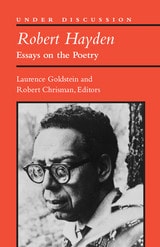
Robert Hayden
Essays on the PoetryLaurence Goldstein and Robert Chrisman, Editors
University of Michigan Press, 2013
This collection of essays by leading critics and poets charts Robert Hayden’s growing reputation as a major writer of some of the twentieth century’s most important poems on African-American themes, including the famed “Middle Passage” and “Frederick Douglass.” The essays illuminate the themes and techniques that established Hayden as a modernist writer with affinities to T. S. Eliot, Federico Garcia Lorca, and W. B. Yeats, as well as to traditions of African-American writings that include such figures as Countee Cullen and Langston Hughes.
Robert Hayden: Essays on the Poetryis the first and only book to collect significant essays on this distinguished poet. Covering sixty years of commentary, book reviews, essays, and Hayden’s own published materials, this volume is an invaluable contribution to our understanding of the poet’s vision of experience, artistry, and influence. The book includes forty different works that examine the life and poetry of Hayden, the first African-American to serve as Consultant in Poetry to the Library of Congress (the post now called Poet Laureate) and to receive the Grand Prix de la Poesie at the First World Festival of Negro Arts, Dakar, Senegal, in 1966.
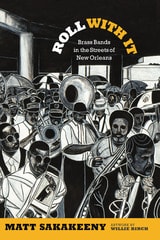
Roll With It
Brass Bands in the Streets of New OrleansMatt Sakakeeny
Duke University Press, 2013
Room 306
The National Story of the Lorraine MotelBen Kamin
Michigan State University Press, 2012
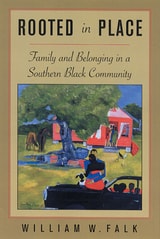
Rooted in Place
Family and Belongings in a Southern Black CommunityFalk, William W
Rutgers University Press, 2004
Throughout the twentieth century, millions of African Americans, many from impoverished, historically black counties, left the South to pursue what they thought would be a better life in the North. But not everyone moved away during what scholars have termed the Great Migration. What has life been like for those who stayed? Why would they remain in a place that many outsiders would see as grim, depressed, economically marginal, and where racial prejudice continues to place them at a disadvantage?
Through oral history William Falk tells the story of an extended family in the Georgia-South Carolina lowcountry. Family members talk about schooling, relatives, work, religion, race, and their love of the place where they have lived for generations. This “conversational ethnography” argues that an interconnection between race and place in the area helps explain African Americans’ loyalty to it. In Colonial County, blacks historically enjoyed a numerical majority as well as deep cultural roots and longstanding webs of social connections that, Falk finds, more than outweigh the racism they face and the economic disadvantages they suffer.
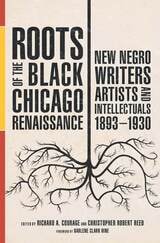
Roots of the Black Chicago Renaissance
New Negro Writers, Artists, and Intellectuals, 1893-1930Edited by Richard A. Courage and Christopher Robert Reed
University of Illinois Press, 2020
Richard A. Courage and Christopher Robert Reed have brought together essays that explore the intersections in the backgrounds, education, professional affiliations, and public lives and achievements of black writers, journalists, visual artists, dance instructors, and other creators working in the late nineteenth and early twentieth centuries. Organized chronologically, the chapters unearth transformative forces that supported the emergence of individuals and social networks dedicated to work in arts and letters. The result is an illuminating scholarly collaboration that remaps African American intellectual and cultural geography and reframes the concept of urban black renaissance.
Contributors: Richard A. Courage, Mary Jo Deegan, Brenda Ellis Fredericks, James C. Hall, Bonnie Claudia Harrison, Darlene Clark Hine, John McCluskey Jr., Amy M. Mooney, Christopher Robert Reed, Clovis E. Semmes, Margaret Rose Vendryes, and Richard Yarborough