Results by title
3576 books match the query 'American' and 141 start with r

Readings at the Edge of Literature
Myra Jehlen
University of Chicago Press, 2002
Throughout these essays Jehlen demonstrates the crucial role that the process of writing itself plays in unfolding these paradoxes, whether in the form of novels by Harriet Beecher Stowe and Virginia Woolf; the histories of Captain John Smith; or even a work of architecture, such as the Guggenheim museum in Bilbao.
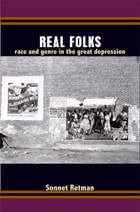
Real Folks
Race and Genre in the Great DepressionSonnet H. Retman
Duke University Press, 2011
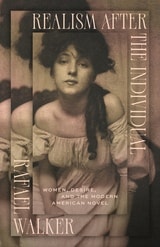
Realism after the Individual
Women, Desire, and the Modern American NovelRafael Walker
University of Chicago Press, 2026
Realism after the Individual offers a new theoretical paradigm for understanding realist novels published in the United States between 1900 and 1920, a period that has been described wrongheadedly as a “gulf” or a “valley” in American literary history. In this generation of writers, only three have remained in favor among critics: Kate Chopin, Edith Wharton, and Theodore Dreiser. Others have disappeared from view altogether—writers such as Robert Grant, Robert Herrick, and Booth Tarkington, all of whom were critically acclaimed bestsellers in their day.
As Rafael Walker shows, this generation of writers deserves new attention for the way they revised many core facets of the nineteenth-century novel in response to the historical shifts around it. This generation of novelists not only rejected liberal individualism but also formulated alternative paradigms for conceptualizing selfhood. The result was a slew of woman-centered realist novels that broke with literary precedent: The novels punish characters not for desiring too much but for failing to desire enough, they depict subjectivity not as private and interior but as outward-facing, and they view closure not as the novel’s aim but as a convention to flout. Realism after the Individual both revises prevailing views of American realism and lays the foundation for an alternative account of the development of literary modernism, one that illuminates the continuity between realism and the modernism that followed it.

Realism and Naturalism in Nineteenth-Century American Literature, Revised Edition
Donald Pizer
Southern Illinois University Press, 1984
The 1966 edition of this book has become a standard work. In this new, revised edition, Pizer has dropped three chapters and has refined and extended the work by adding six: “American Literary Naturalism: An Approach Through Form,” “American Literary Naturalism: The Example of Dreiser,” “The Problem of Philosophy in the Naturalistic Novel,” “Hamlin Garland’s 1891 Main-Travelled Roads: Local Color as Art,” “Jack London: The Problem of Form,” and “Dreiser’s ‘Nigger Jeff’: The Development of an Aesthetic.”
The book contains definitions of realism and naturalism based on representative novels of the period ranging from Howells’ Rise of Silas Lapham to Crane’s Red Badge of Courage; analyses of the literary criticism of the age, stressing that of Howells, Garland, and Norris; and close readings of specific works by major figures of the period.
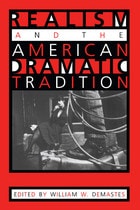
Realism and the American Dramatic Tradition
William W. Demastes
University of Alabama Press, 1996
This book reconsiders realism on the American stage by addressing the great variety and richness of the plays that form the American theatre canon.
Any review of 20th-century American theatre invariably leads to the term realism. Yet despite the strong tradition of theatrical realism on the American stage, the term is frequently misidentified, and the practices to which it refers are often attacked as monolithically tyrannical, restricting the potential of the American national theatre.This book reconsiders realism on the American stage by addressing the great variety and richness of the plays that form the American theatre canon. By reconsidering the form and revisiting many of the plays that contributed to the realist tradition, the authors provide the opportunity to apprise strengths often overlooked by previous critics. The volume traces the development of American dramatic realism from James A. Herne, the "American Ibsen," to currently active contemporaries such as Sam Shepard, David Mamet, and Marsha Norman. This frank assessment, in sixteen original essays, reopens a critical dialog too long closed.
Essays include:
American Dramatic Realisms, Viable Frames of Thought
The Struggle for the Real--Interpretive Conflict, Dramatic Method, and the Paradox of Realism
The Legacy of James A. Herne: American Realities and Realisms
Whose Realism? Rachel Crothers's Power Struggle in the American Theatre
The Provincetown Players' Experiments with Realism
Servant of Three Masters: Realism, Idealism, and "Hokum" in American High Comedy
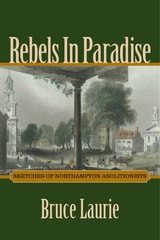
Rebels in Paradise
Sketches of Northampton AbolitionistsBruce Laurie
University of Massachusetts Press, 2014
Long ago dubbed the “Paradise of America,” Northampton, Massachusetts, is also known as the home of visionaries—from the Reverend Jonathan Edwards, father of the First Great Awakening, to George W. Benson, brother-in-law of William Lloyd Garrison and a founder of the utopian Northampton Association for Education and Industry. During the mid-nineteenth century the town became a center of political abolitionism and a hub in the Underground Railroad. In this book, Bruce Laurie profiles five rebellious figures who launched Northampton's abolitionist movement—Sylvester Judd Jr., John Payson Williston, David Ruggles, Henry Sherwood Gere, and Erastus Hopkins. Through their individual stories he traces the evolution of the antislavery movement in western Massachusetts and links it to broader developments in economics, civil life, and political affairs.
Northampton's abolitionists were a heterodox group, yet most were intrepid devotees of democracy and racial equality, idealists who enjoyed genuine friendships and political alliances with African Americans. Several even took the bold step of hiring African Americans in their businesses. They avoided the doctrinal rivalries that sometimes troubled the antislavery movement in other places, skillfully steering clear of the xenophobic nativism that infected Massachusetts politics in the mid–1850s and divided the Republican Party at large. Although a prohibitionist faction disrupted the Northampton abolitionist movement for a time, the leaders prevailed on the strength of their personal prestige and political experience, making the seat of Hampshire County what one of them called an abolitionist “stronghold.”
Recalculating
Charles Bernstein
University of Chicago Press, 2013
Reconstituting Authority
American Fiction in the Province of the Law, 1880-1920William E. Moddelmog
University of Iowa Press, 2000
The second half of the book turns from the rule of law to the issue of property, specifically the Lockean version of the self that tied identity to legal conceptions of property and economic value. In separate discussions of Charles Chesnutt, Edith Wharton, and Theodore Dreiser, Reconstituting Authority reveals authors as closely engaged with those changing perspectives on property and identity, in ways that challenged the racial, gendered, and economic consequences of America's possessive individualism.
Reconstituting the American Renaissance
Emerson, Whitman, and the Politics of RepresentationJay Grossman
Duke University Press, 2003
Reconstituting the American Renaissance describes how Emerson and Whitman came into the period of their greatest productivity with different conceptions of the functions and political efficacy of the word in the world. It challenges Emerson’s position as Whitman’s necessary precursor and offers a cultural history that emphasizes the two writers’ differences in social class, cultural experience, and political perspective. In their writings between 1830 and 1855, the book finds contrasting conceptions of the relations between the “representative man” and the constituencies to whom, and for whom, he speaks. Reconstituting the American Renaissance opens up the canonical relationship between Emerson and Whitman and multiplies the historical and discursive contexts for understanding their published and unpublished works.
Recovering Bodies
Illness, Disability, and Life WritingG. Thomas Couser
University of Wisconsin Press, 1997
Responding to the recent growth of illness and disability narratives in the United States—such works as Juliet Wittman’s Breast Cancer Journal, John Hockenberry’s Moving Violations, Paul Monette’s Borrowed Time: An AIDS Memoir, and Lou Ann Walker’s A Loss for Words: The Story of Deafness in a Family—Couser addresses questions of both poetics and politics. He examines why and under what circumstances individuals choose to write about illness or disability; what role plot plays in such narratives; how and whether closure is achieved; who assumes the prerogative of narration; which conditions are most often represented; and which literary conventions lend themselves to representing particular conditions. By tracing the development of new subgenres of personal narrative in our time, this book explores how explicit consideration of illness and disability has enriched the repertoire of life writing. In addition, Couser’s discussion of medical discourse joins the current debate about whether the biomedical model is entirely conducive to humane care for ill and disabled people.
With its sympathetic critique of the testimony of those most affected by these conditions, Recovering Bodies contributes to an understanding of the relations among bodily dysfunction, cultural conventions, and identity in contemporary America.
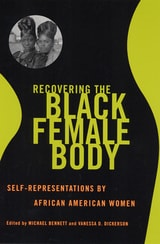
Recovering the Black Female Body
Self-Representation by African American WomenEdited by Michael Bennett and Vanessa D Dickerson
Rutgers University Press, 2000
Despite the recent flood of scholarly work investigating the interrelated issues of race, gender, and representation, little has been written about black women’s depictions of their own bodies. Both past and present-day American cultural discourse has attempted either to hypereroticize the black female body or make it a site of impropriety and crime.
The essays in this volume focus on how African American women, from the nineteenth century to the present, have represented their physical selves in opposition to the distorted vision of others. Contributors attempt to “recover” the black female body in two ways: they explore how dominant historical images have mediated black female identity, and they analyze how black women have resisted often demeaning popular cultural perceptions in favor of more diverse, subtle presentations of self.
The pieces in this book—all of them published here for the first time—address a wide range of topics, from antebellum American poetry to nineteenth-century African American actors, and twentieth-century pulp fiction.
Recovering the Black Female Body recognizes the pressing need to highlight through scholarship the vibrant energy of African American women’s attempts to wrest control of the physical and symbolic construction of their bodies away from the distortions of others.
Contributors are Margaret Bass, Dorri Rabung Beam, Michael Bennett, Jacqueline E. Brady, Daphne A. Brooks, Vanessa D. Dickerson, Meredith Goldsmith, Yvette Louis, Ajuan Maria Mance, Noliwe Rooks, Mark Winokur, and Doris Witt. This book also contains a foreword by Carla L. Peterson and an afterword by Deborah E. McDowell.

Red Business
Walt Whitman’s Notebooks and Fragments of the Civil War and the Reconstruction EraMatt Miller
University of Iowa Press, 2027
In Red Business, Walt Whitman readers can explore nearly all his notebooks and manuscript fragments from the Civil War and the Reconstruction Era. In addition to Whitman’s numerous accounts of Civil War soldiers, Red Business contains the infamous notebook in which Whitman records his feverish obsession with his young companion Peter Doyle, as well as several difficult to find, unpublished poems and essays.
Matt Miller and Zachary Turpin’s meticulous transcriptions of Whitman’s written materials allow readers to explore the often-neglected final chapter of Whitman’s life, as he battled ailments, prepared speeches, and received famous visitors, all the while continuing to write revealing new poems.
Red Clay Suite
Honoree Fanonne Jeffers
Southern Illinois University Press, 2007
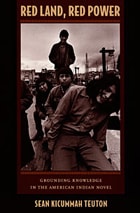
Red Land, Red Power
Grounding Knowledge in the American Indian NovelSean Kicummah Teuton
Duke University Press, 2008
While engaging a wide spectrum of Native American writing, Teuton focuses on three of the most canonized and, he contends, most misread novels of the era—N. Scott Momaday’s House Made of Dawn (1968), James Welch’s Winter in the Blood (1974), and Leslie Marmon Silko’s Ceremony (1977). Through his readings, he demonstrates the utility of tribal realism as an interpretive framework to explain social transformations in Indian Country during the Red Power era and today. Such transformations, Teuton maintains, were forged through a process of political awakening that grew from Indians’ rethought experience with tribal lands and oral traditions, the body and imprisonment, in literature and in life.
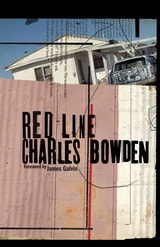
Red Line
By Charles Bowden, foreword by James Galvin
University of Texas Press, 2018
“At its best, Red Line can read like an original synthesis of Peter Matthiessen and William Burroughs . . . a brave and interesting book.”
—David Rieff, Los Angeles Times Book Review
“Charles Bowden’s Red Line is a look at America through the window of the southwest. His vision is as nasty, peculiar, brutal, as it is intriguing and, perhaps, accurate. Bowden offers consciousness rather than consolation, but in order to do anything about our nightmares we must take a cold look and Red Line casts the coldest eye in recent memory.”
—Jim Harrison
One of Charles Bowden’s earliest books, Red Line powerfully conveys a desert civilization careening over the edge—and decaying at its center. Bowden’s quest for the literal and figurative truth behind the assassination of a murderous border-town drug dealer becomes a meditation on the glories of the desert landscape, the squalors of the society that threatens it, and the contradictions inherent in trying to save it.
Red On Red
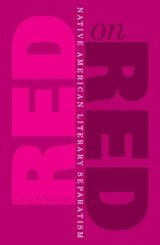
Native American Literary SeparatismCraig S. Womack
University of Minnesota Press, 1999
An entertaining and enlightening proposal for a new way to read Native American literature.
An entertaining and enlightening proposal for a new way to read Native American literature.
How can a square peg fit into a round hole? It can’t. How can a door be unlocked with a pencil? It can’t. How can Native literature be read applying conventional postmodern literary criticism? It can’t.That is Craig Womack’s argument in Red on Red. Indian communities have their own intellectual and cultural traditions that are well equipped to analyze Native literary production. These traditions should be the eyes through which the texts are viewed. To analyze a Native text with the methods currently dominant in the academy, according to the author, is like studying the stars with a magnifying glass.In an unconventional and piercingly humorous appeal, Womack creates a dialogue between essays on Native literature and fictional letters from Creek characters who comment on the essays. Through this conceit, Womack demonstrates an alternative approach to American Indian literature, with the letters serving as a “Creek chorus” that offers answers to the questions raised in his more traditional essays. Topics range from a comparison of contemporary oral versions of Creek stories and the translations of those stories dating back to the early twentieth century, to a queer reading of Cherokee author Lynn Riggs’s play The Cherokee Night.Womack argues that the meaning of works by Native peoples inevitably changes through evaluation by the dominant culture. Red on Red is a call for self-determination on the part of Native writers and a demonstration of an important new approach to studying Native works-one that engages not only the literature, but also the community from which the work grew.ISBN 0-8166-3022-4 Cloth £33.50 $47.95xxISBN 0-8166-3023-2 Paper £13.00 $18.95x288 Pages 5 7/8 x 9 November Translation inquiries: University of Minnesota Press
Red Rover
Susan Stewart
University of Chicago Press, 2008
Red Rover is both the name of a children’s game and a formless spirit, a god of release and permission, called upon in the course of that game. The “red rover” is also a thread of desire, and a clue to the forces of love and antipathy that shape our fate. In her most innovative work to date, award-winning poet and critic Susan Stewart remembers the antithetical forces—falling and rising, coming and going, circling and centering—revealed in such games and traces them out to many other cycles. Ranging among traditional, open, and newly-invented forms, and including a series of free translations of medieval dream visions and love poems, Red Rover begins as a historical meditation on our fall and grows into a song of praise for the green and turning world.
Red Strawberry Leaf
Selected Poems, 1994-2001John Peck
University of Chicago Press, 2005

Red, Black, and Jew
New Frontiers in Hebrew LiteratureBy Stephen Katz
University of Texas Press, 2009
Between 1890 and 1924, more than two million Jewish immigrants landed on America's shores. The story of their integration into American society, as they traversed the difficult path between assimilation and retention of a unique cultural identity, is recorded in many works by American Hebrew writers. Red, Black, and Jew illuminates a unique and often overlooked aspect of these literary achievements, charting the ways in which the Native American and African American creative cultures served as a model for works produced within the minority Jewish community.
Exploring the paradox of Hebrew literature in the United States, in which separateness, and engagement and acculturation, are equally strong impulses, Stephen Katz presents voluminous examples of a process that could ultimately be considered Americanization. Key components of this process, Katz argues, were poems and works of prose fiction written in a way that evoked Native American forms or African American folk songs and hymns. Such Hebrew writings presented America as a unified society that could assimilate all foreign cultures. At no other time in the history of Jews in diaspora have Hebrew writers considered the fate of other minorities to such a degree. Katz also explores the impact of the creation of the state of Israel on this process, a transformation that led to ambivalence in American Hebrew literature as writers were given a choice between two worlds.
Reexamining long-neglected writers across a wide spectrum, Red, Black, and Jew celebrates an important chapter in the history of Hebrew belles lettres.
Red, White, and Blues
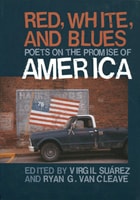
Poets on the Promise of AmericaVirgil & Ryan G. Suarez & Van Cleave
University of Iowa Press, 2004
Red, White, and Blues, a new anthology from the award-winning editors of Like Thunder: Poets Respond to Violence in America and Vespers: Contemporary American Poems of Religion and Spirituality, offers a chorus of contemporary American poets on the idea of liberty, democracy, patriotism, and the American Dream;a twenty-first-century "Song of Myself” for the entire country.
The poems in Red, White, and Blues reflect our collective memory—from icons of pop culture to national disasters and times of unrest. Yet they are not simply reflections of the headline news or political diatribes of the day; instead, they provide roadmaps of American history—roadmaps of where we’ve been, who we are, and where we’re going as a nation.
Poets as diverse as Martín Espada and Paisley Rekdal, J. P. Dancing Bear and Vivian Shipley seek to answer questions that resonate within the heart of our national identity—what does it mean to be an American? What is the American Dream? How does one define patriotism? Regardless of ethnicity, gender, or class, each poet’s answer to such questions proves that our experiences unite us more than they divide us.
Red, White, and Blues is an ambitious collection of the finest contemporary poetry on the subject of America and the indefatigable spirit of its citizens. Its poems don’t pull punches, nor do they celebrate without cause. They show spirit and excitement, outrage and joy, solemnity and ambiguity—all reflections of our wonderfully diverse nation.

Rediscovering the Maine Woods
Thoreau's Legacy in an Unsettled LandJohn J. Kucich
University of Massachusetts Press, 2019
Inspired partly by this expedition, the accessible and engaging essays here offer valuable new perspectives on conservation, the cultural ties that connect Native communities to the land, and the profound influence the geography of the Maine Woods had on Thoreau and writers and activists who followed in his wake. Together, these essays offer a rich and multifaceted look at this special place and the ways in which Thoreau's Maine experiences continue to shape understandings of the environment a century and a half later.
Contributors include the volume editor, Kathryn Dolan, James S. Finley, James Francis, Richard W. Judd, Dale Potts, Melissa Sexton, Chris Sockalexis, Stan Tag, Robert M. Thorson, and Laura Dassow Walls.

Reel to Reel
Alan Shapiro
University of Chicago Press, 2014

Refiguring Race and Risk
Counternarratives of Care in the US Security StateRoberta Wolfson
The Ohio State University Press, 2024
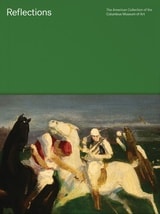
Reflections
The American Collection of the Columbus Museum of ArtNannette V. Maciejunes
Ohio University Press, 2019
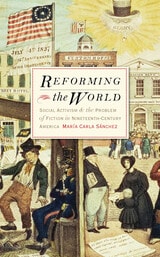
Reforming the World
Social Activism and the Problem of Fiction in Nineteenth-Century AmericaMaria Carla Sanchez
University of Iowa Press, 2009
In her informed and innovative work, Sánchez considers those authors both familiar (Lydia Maria Child, Harriet Jacobs, and Harriet Beecher Stowe) and those all but lost to history (Timothy Shay Arthur). Along the way, she refers to some of the most notable American writers in the period (Emerson, Thoreau, and Poe). Illuminating the intersection of reform and fiction, Reforming the World visits important questions about the very purpose of literature, telling the story of “a revolution that never quite took place," one that had no grandiose or even catchy name. But it did have numerous settings and participants: from the slums of New York, where prostitutes and the intemperate made their homes, to the offices of lawyers who charted the downward paths of broken men, to the tents for revival meetings, where land and souls alike were “burned over” by the grace of God.

Rehumanization Litany
Jarrett Moseley
University of Arkansas Press, 2027
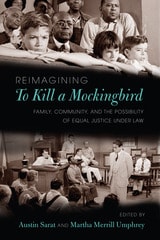
Reimagining "To Kill a Mockingbird"
Family, Community, and the Possibility of Equal Justice under LawAustin Sarat
University of Massachusetts Press, 2013
The readings in this volume peel back the film's visual representation of the many-layered social world of Maycomb, Alabama, offering sometimes counterintuitive insights through the prism of a number of provocative contemporary theoretical and interpretive questions. What, they ask, is the relationship between the subversion of social norms and the doing of justice or injustice? Through what narrative and visual devices are some social hierarchies destabilized while others remain hegemonic? How should we understand the sacrifices characters make in the name of justice, and comprehend their failures in achieving it?
Asking such questions casts light on the film's eccentricities and internal contradictions and suggests the possibility of new interpretations of a culturally iconic text. The book examines the context that gave meaning to the film's representation of race and how debates about family, community, and race are played out and reframed in law.
Contributors include Colin Dayan, Thomas L. Dumm, Susan Sage Heinzelman, Linda Ross Meyer, Naomi Mezey, Imani Perry, and Ravit Reichman.

Reimagining Realism
A New Anthology of Late Nineteenth- and Early Twentieth-Century American Short FictionCharles A. Johanningsmeier
Ohio University Press, 2022
This innovative collection reinvents the standard American short fiction anthology and offers readers an invigorated, inclusive, and nuanced understanding of American literary history and culture from the Civil War to the end of World War I.
Beginning with one of Louisa May Alcott’s Hospital Sketches, originally published in 1863, this anthology offers a refreshing perspective on American literature from the latter half of the nineteenth century through the first decades of the twentieth. Based on Alcott’s brief stint as a Civil War nurse, Hospital Sketches stands in contrast to the sentimentality of her better-known Little Women and illustrates a blending of romanticism and realism. Furthermore, its thematic focus on the tension between idealized notions of noble, patriotic duty and the horrific reality of war exemplifies a dominant American cultural mindset at the time.
Following this model of complicating accepted ideas about realism and of particular authors, Reimagining Realism brings together dozens of texts that engage with the immense changes and upheavals that characterized American culture over the next six decades: war, abolition, voting rights, westward expansion, immigration, racism and ethnocentrism, industrial production, labor reforms, transportation, urban growth, journalism, mass media, education, and economic disparity.
Reimagining Realism presents a collection of works much more diverse than what is typically found in other anthologies of short fiction from this era. Some selections are lesser-known works by familiar authors that enable readers to see dimensions of these authors that are rarely considered but deserve further study. The book also features authors from many previously underrepresented groups and includes some outstanding works by authors whose names are almost completely unknown to today’s readers—but which deserve greater attention.
The volume’s editors, in their intent to spur readers to further reimagine realism, to represent the spectrum of viewpoints prevalent during this era, and to spark critical thinking and productive discussion, have been careful not to apply any type of political litmus test to the included works. They have also refrained from categorizing works according to convention, so as not to predispose readers to restrictive interpretations, and have provided only brief, highly readable headnotes and annotations that will help readers better understand the texts.
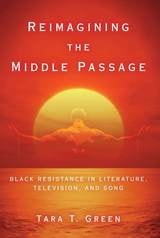
Reimagining the Middle Passage
Black Resistance in Literature, Television, and SongTara T. Green
The Ohio State University Press, 2018
Exploring the presence of water and its impact on African descendants,Reimagining the Middle Passageoffers fresh analyses of Alex Haley’sRootsand the television adaptations; the history of flooding in Black communities in literature such as Jesmyn Ward’sSalvage the Bonesand Paule Marshall’sPraisesong for the Widow, in blues songs, and in television shows such asTreme; and stories of resistance found in myths associated with Marie Laveau and flying Africans.
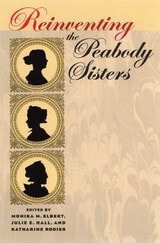
Reinventing the Peabody Sisters
Monika M. Elbert
University of Iowa Press, 2006
Reinventing the Peabody Sisters seeks to redefine this dynamic trio’s relationship to the literary and political movements of the mid nineteenth century. Previous scholarship has romanticized, vilified, or altogether erased their influences and literary productions or viewed these individuals solely in light of their relationships to other nineteenth-century luminaries, particularly men—Ralph Waldo Emerson, Nathaniel Hawthorne, Horace Mann. This collection underscores that each woman was a creative force in her own right.
Despite their differences and sibling conflicts, all three sisters thrived in the rarefied—if economically modest—atmosphere of a childhood household that glorified intellectual and artistic pursuits. This background allowed each woman to negotiate the nineteenth-century literary marketplace and in the process redefine its scope. Elizabeth, Mary, and Sophia remained linked throughout their lives, encouraging, complementing, and sometimes challenging each other's endeavors while also contributing to each other’s literary work.
The essays in this collection examine the sisters’ confrontations with and involvement in the intellectual movements and social conflicts of the nineteenth century, including Transcendentalism, the Civil War, the role of women, international issues, slavery, Native American rights, and parenting. Among the most revealing writings that the sisters left behind, however, are those which explore the interlaced relationship that continued throughout their remarkable lives.
Reinventing the South
Versions of a Literary RegionMark Royden Winchell
University of Missouri Press, 2006
Relatability
Sharing and Oversharing with the New York School PoetsBrian Glavey
University of Chicago Press, 2026
An engaging account of how the New York School poets used art to imagine their queerness as something that might be shared with other people.
How did Frank O’Hara and other New York School poets—a small coterie associated with experimental art and gay culture —become fixtures in today’s culture, quoted on prestige television shows, in teen romances, and at the wedding ceremonies of straight celebrities? How, in other words, did these poets become so relatable? Brian Glavey’s Relatability tells the story of an aesthetic as it traveled from a cluster of mostly queer poets in the middle of the twentieth century to become increasingly central to everyday life in the early twenty-first century.
That the New York School poets are more relatable now than they were during their own lifetime speaks in part to the growing acceptance of same-sex desire in American culture. But Glavey argues that this transformation also tells the story of a shift in the way that aesthetic experience is understood to work. Moving away from forms of modernist impersonality, O’Hara, John Ashbery, James Schuyler, and Joe Brainard made sociability central to the experience of art and literature. Attempting to share their experience of works of art, they were willing to risk the reader’s judgment that they had, perhaps, overshared. Glavey advances an idea of aesthetic judgment that takes seriously its missed connections as well as its successes. Relatability adds a fresh perspective to current conversations around attachment and affect in literary studies.

Reliquary
Abigail Wender
Four Way Books, 2021
In her debut collection, Reliquary, Abigail Wender addresses losing a brother to prison and, ultimately, opiate addiction. The text also considers womanhood, motherhood, and marriage in lyric poems that confront the complicated nature of grief, the effects of illness on family, and how love—even bliss—figure into grief’s equation. The collection suspends time, as the speaker weaves between flashbacks and the present, assembling fragments and vignettes of her childhood and marriage. In the book’s moments of solace and interiority, such as in the poem, “Hiking,” Wender contemplates how to hold on and to what. In this particular poem’s reflection on forgiveness, the speaker asks “Are there words for us, / high on an uppermost branch?,” and the collection responds with a resounding yes.
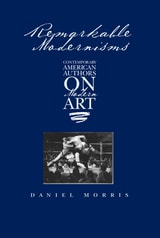
Remarkable Modernisms
Contemporary American Authors on Modern ArtDaniel Morris
University of Massachusetts Press, 2009
While challenging older, rigidly formalist approaches, these authors also diverge from the strictly contextual approaches favored by many contemporary academic critics. As poets and novelists, they remain sensitive to the value of compositional techniques when they address a visual artifact, and they reject the shibboleth of "content" versus "formalist" approaches to art. They reveal that this dichotomy fails to account for the "semantics of form"— the interwoven relationship between the "how" and the "what" of a work of art. Indebted to visual art as a basis for their own compositional discoveries in words, these authors' writings on art have the effect of turning pictures into a language that extends our frame of reference beyond the flat surface of the picture plane to each author's version of contemporary society as social text.

Renaissance Reflections
Selected EssaysArthur F. Kinney
University of Massachusetts Press, 2014
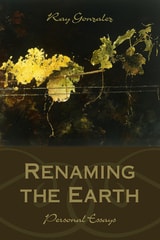
Renaming the Earth
Personal EssaysRay Gonzalez
University of Arizona Press, 2008
Nowhere does the process of redefinition hit Gonzalez quite as hard as in his native city of El Paso, Texas. There he finds the “segregated little town of my childhood” transformed into “a metropolis of fast Latino zip codes . . . a world where the cell phone, the quick beer, the rented apartment, and the low-paying job say you can be young and happy on the border.” Readers will wonder, along with the author, whether life along the “new border” is worth “the extermination of the old boundaries.”
But there is another side of the Southwest for this “son of the desert”—the world of dusty canyons, ponderosa pines, ocotillo, and mesquite. Here, he writes, “there is a shadow, and it is called ancient home—structures erased from their seed to grow elsewhere, vultured strings searching for a frame that stands atop history and renames the ground.”
Rooted in the desert sand and in the banks of the Rio Grande, the muddy river that forms the border between nations, these essays are by turns lyrical, mournful, warm to the ways of the land, and lukewarm to the ways of man.
Renditions
Reginald Gibbons
Four Way Books, 2021
In Renditions Reginald Gibbons conducts an ensemble of poetic voices, using the works of a varied, international selection of writers as departure points for his translations and transformations. The collection poses the idea that all writing is, at least abstractly, an act of translation, whether said act “translates” observation into word or moves ideas from one language to another. Through these acts of transformation, Gibbons infuses the English language with stylistic aspects of other languages and poetic traditions. The resulting poems are imbued with a sense of homage that allows us to respectfully reimagine the borders of language and revel in the fellowship of idea sharing. In this tragicomedy of the human experience and investigation of humanity’s effects, Gibbons identifies the “shared underthoughts that we can (all) sense:” desire, love, pain, and fervor.

Replica
Lisa Low
University of Wisconsin Press, 2026
Stand-up comedy, a celebrity non-apology, observations of racism, and the slipperiness of nostalgia underpin Replica. In poignant, witty poems, Lisa Low navigates the tensions of solidarity and hostility in white spaces as she sets out to write differently about race.
“The problem of being with a white man is also a problem of writing,” Low says in a prose poem that turns writing about identity on its head. She peers in from outside the poem, as if through an open ceiling. The poem itself becomes a site of investigation—a counterpoint to constricting narratives about Asian American identity—reimagined as a dollhouse, a stage with props, an image the speaker wears like a bodysuit. Replica asks what it means to represent yourself and your experiences in a world where you are indistinguishable from others.

Represent and Destroy
Rationalizing Violence in the New Racial CapitalismJodi Melamed
University of Minnesota Press, 2011
In the global convulsions in the aftermath of World War II, one dominant world racial order broke apart and a new one emerged. This is the story Jodi Melamed tells in Represent and Destroy, portraying the postwar racial break as a transition from white supremacist modernity to a formally antiracist liberal capitalist modernity in which racial violence works normatively by policing representations of difference.
Following the institutionalization of literature as a privileged domain for Americans to get to know difference—to describe, teach, and situate themselves with respect to race—Melamed focuses on literary studies as a cultural technology for transmitting liberal racial orders. She examines official antiracism in the United States and finds that these were key to ratifying the country’s global ascendancy. She shows how racial liberalism, liberal multiculturalism, and neoliberal multiculturalism made racism appear to be disappearing, even as they incorporated the assumptions of global capitalism into accepted notions of racial equality.
Yet Represent and Destroy also recovers an anticapitalist “race radical” tradition that provides a materialist opposition to official antiracisms in the postwar United States—a literature that sounds out the violence of liberal racial orders, relinks racial inequality to material conditions, and compels desire for something better than U.S. multiculturalism.
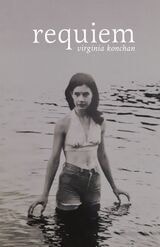
Requiem
Virginia Konchan
Carnegie Mellon University Press, 2025
Requiem is a collection anchored in personal and collective grief, remembrance, and commemoration, journeying through the loss of a mother in a series of elegies, fugues, and lamentations that draw from the Church’s canonical hours of prayer as collected in a breviary. Historical and religious mourning rites, and the grief work of John Donne, Gerard Manley Hopkins, Roland Barthes, Emily Dickinson, and Mozart, among others, establish a lyric dialogue around aesthetic representations of grief, invoking a doubleness between the griever and the grieved; a mutuality and interconnectedness that illuminate the role of witness in poetry, mortality, and transcendence. Requiem enacts our deepest longing: to honor and immortalize the beloved.

Res Publica
Alan Williamson
University of Chicago Press, 1998
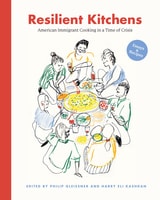
Resilient Kitchens
American Immigrant Cooking in a Time of Crisis, Essays and RecipesPhilip Gleissner
Rutgers University Press, 0
Winner of the James Beard Award for Best Book in Food Issues and Advocacy
Immigrants have left their mark on the great melting pot of American cuisine, and they have continued working hard to keep America’s kitchens running, even during times of crisis like the COVID-19 pandemic. For some immigrant cooks, the pandemic brought home the lack of protection for essential workers in the American food system. For others, cooking was a way of reconnecting with homelands they could not visit during periods of lockdown.
Resilient Kitchens: American Immigrant Cooking in a Time of Crisis is a stimulating collection of essays about the lives of immigrants in the United States before and during the COVID-19 pandemic, told through the lens of food. It includes a vibrant mix of perspectives from professional food writers, restaurateurs, scholars, and activists, whose stories range from emotional reflections on hardship, loss, and resilience to journalistic investigations of racism in the American food system. Each contribution is accompanied by a recipe of special importance to the author, giving readers a taste of cuisines from around the world. Every essay is accompanied by gorgeous food photography, the authors’ snapshots of pandemic life, and hand-drawn illustrations by Filipino American artist Angelo Dolojan.

Resisting Regionalism
Gender And Naturalism In American Fiction, 1885-1915Donna Campbell
Ohio University Press, 1997
When James Lane Allen defined the “Feminine Principle” and the “Masculine Principle” in American fiction for the Atlantic Monthly in 1897, he in effect described local color fiction and naturalism, two branches of realism often regarded as bearing little relationship to each other. In this award-winning study of both movements, Resisting Regionalism explores the effect the cultural dominance of women’s local color fiction in the 1890’s had on young male naturalist writers, who rebelled against the local colorists and their “teacup tragedies.”
An immensely popular genre, local color fiction reached its peak in the 1880s in such literary journals as Harper’s Monthly, Scribner’s, the Atlantic Monthly, and the Century. These short stories exhibited local “characters,” depicted marginal groups and vanishing folkways, and addressed issues of absence, loss, limitation, and the past. Despite such prickly themes, according to Donna Campbell, local color fiction “fulfilled some specific needs of the public – for nostalgia, for a retreat into mildly exotic locales, for a semblance of order preserved in ritual.”
By the turn of the century, however, local color fiction was fading from the scene, supplanted by writers of adventure fiction and historical romances, with whom local colorists increasingly merged, and opposed by the naturalists. In examining this historic shift, Resisting Regionalism shows that far from being distanced from local color fiction, nationalism emerged in part as a dissenting response to its popularity and to the era’s concerns about the dominance of feminine influence in American literature. The new generation of authors, including Crane, Norris, London, Frederic, Wharton, resisted the cultural myths and narrative strategies common to local colorists Sarah Orne Jewett, Rose Terry Cooke, Mary E. Wilkins Freeman, and Constance Fenimore Woolson. Yet, as Campbell underscores in her analysis of Stephan Crane’s The Monster, the naturalists could, and did, integrate local color conventions with the grotesque and horrifying to powerful effect.
In clear, accessible prose, Resisting Regionalism provides fresh readings of naturalistic works in the context of the dispute between local color and naturalism. In the process, this book shows the debt naturalism owes to local color fiction and illuminates a neglected but significant literary era.
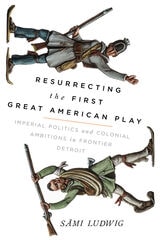
Resurrecting the First Great American Play
Imperial Politics and Colonial Ambitions in Frontier DetroitSämi Ludwig
University of Wisconsin Press, 2020
Sämi Ludwig contends that Ponteach's literary and artistic merits are worthy of further exploration. He investigates questions of authorship and analyzes the play's content, embracing its many contradictions as enriching windows into the era. In this way, he suggests using Ponteach as a tool to better understand British imperialism in North America and the emerging theatrical forms of the Young Republic.

Resurrection of the Animals
Anita Skeen
Michigan State University Press, 2002
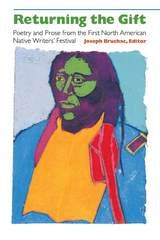
Returning the Gift
Poetry and Prose from the First North American Native Writers' FestivalEdited by Joseph Bruchac
University of Arizona Press, 1994
The anthology includes works from every corner of the continent, representing a wide range of tribal affiliations, languages, and cultures. By taking their peoples' literature back to them in the form of stories and songs, these writers see themselves as returning the gift of storytelling, culture, and continuance to the source from which it came. In addition to contributions by 92 writers are two introductory chapters: Joseph Bruchac comments on the current state of Native literature and the significance of the festival, and Geary Hobson traces the evolution of the event itself.
Reunion
Fleda Brown
University of Wisconsin Press, 2007
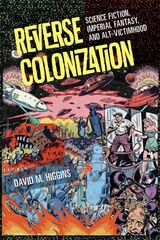
Reverse Colonization
Science Fiction, Imperial Fantasy, and Alt-victimhoodDavid M. Higgins
University of Iowa Press, 2021
Higgins shows that this reverse colonization stance depends upon a science fictional logic that achieved dominance within imperial fantasy during the 1960s and has continued to gain momentum ever since. By identifying with fantastic forms of victimhood, subjects who already enjoy social hegemony are able to justify economic inequality, expansions of police and military power, climatological devastation, new articulations of racism, and countless other forms of violence—all purportedly in the name of security, self-defense, and self-protection.
Revisionary Interventions into the Americanist Canon
Donald E. Pease
Duke University Press, 1994
Originally published as a special issue of boundary 2, the essays gathered here discuss writers as diverse as Kate Chopin, Frederick Douglass, Emerson, Melville, W. D. Howells, Henry James, W. E. B. DuBois, and Mark Twain, plus the historical figure John Brown. Two major sections devoted to the theory of romance and to cultural-historical analyses emphasize the political perspective of "New Americanist" literary and cultural study.
Contributors. William E. Cain, Wai-chee Dimock, Howard Horwitz, Gregory S. Jay, Steven Mailloux, John McWilliams, Susan Mizruchi, Donald E. Pease, Ivy Schweitzer, Priscilla Wald, Michael Warner, Robert Weimann
Revolution Downeast
The War for American Independence in MaineJames S. Leamon
University of Massachusetts Press, 1993
The history of the Revolution in Maine is the story of a people who did not really want a revolution—at least at first.
Since the middle of the seventeenth century, the powerful Massachusetts Bay Colony had exercised an increasing hegemony over the settlements downeast—a hegemony legalized in the Massachusetts royal charter of 1691. From then until 1820, when it became a state, Maine remained an integral part of Massachusetts. Geographically isolated from the Bay Colony by the province of New Hampshire, and dependent on Massachusetts for its very existence, Maine was indeed a colony, in every sense of the word.
The larger Massachusetts context has tended to obscure Maine as a legitimate object of study, nowhere more than in the period of the American Revolution. Even historians in Maine have slighted the period of the American Revolution. Where appropriate, town historians devote a chapter or so to the event, but only in the context of a particular community.
In his book, Leamon aims to meet that deficiency by drawing together town and general histories, specialized studies, and primary sources, both published and unpublished. He examines why and how Maine fought the Revolution and the changes that occurred in Maine during and after the war.