Results by title
977 books match the query 'American literature' and 62 start with r
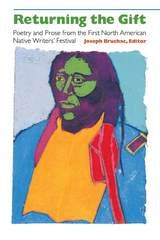
Returning the Gift
Poetry and Prose from the First North American Native Writers' FestivalEdited by Joseph Bruchac
University of Arizona Press, 1994
The anthology includes works from every corner of the continent, representing a wide range of tribal affiliations, languages, and cultures. By taking their peoples' literature back to them in the form of stories and songs, these writers see themselves as returning the gift of storytelling, culture, and continuance to the source from which it came. In addition to contributions by 92 writers are two introductory chapters: Joseph Bruchac comments on the current state of Native literature and the significance of the festival, and Geary Hobson traces the evolution of the event itself.
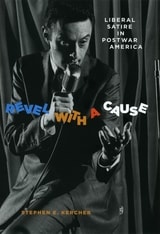
Revel with a Cause
Liberal Satire in Postwar AmericaStephen E. Kercher
University of Chicago Press, 2006
Revel with a Cause is their story. Stephen Kercher here provides the first comprehensive look at the satiric humor that flourished in the United States during the 1950s and early 1960s. Focusing on an impressive range of comedy—not just standup comedians of the day but also satirical publications like MAD magazine, improvisational theater groups such asSecond City, the motion picture Dr. Strangelove, and TV shows like That Was the Week That Was—Kercher reminds us that the postwar era saw varieties of comic expression that were more challenging and nonconformist than we commonly remember. His history of these comedic luminaries shows that for a sizeable audience of educated, middle-class Americans who shared such liberal views, the period’s satire was a crucial mode of cultural dissent. For such individuals, satire was a vehicle through which concerns over the suppression of civil liberties, Cold War foreign policies, blind social conformity, and our heated racial crisis could be productively addressed.
A vibrant and probing look at some of the most influential comedy of mid-twentieth-century America, Revel with a Cause belongs on the short list of essential books for anyone interested in the relationship between American politics and popular culture.
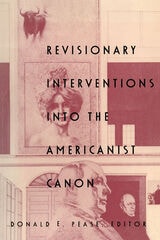
Revisionary Interventions into the Americanist Canon
Donald E. Pease
Duke University Press, 1994
Originally published as a special issue of boundary 2, the essays gathered here discuss writers as diverse as Kate Chopin, Frederick Douglass, Emerson, Melville, W. D. Howells, Henry James, W. E. B. DuBois, and Mark Twain, plus the historical figure John Brown. Two major sections devoted to the theory of romance and to cultural-historical analyses emphasize the political perspective of "New Americanist" literary and cultural study.
Contributors. William E. Cain, Wai-chee Dimock, Howard Horwitz, Gregory S. Jay, Steven Mailloux, John McWilliams, Susan Mizruchi, Donald E. Pease, Ivy Schweitzer, Priscilla Wald, Michael Warner, Robert Weimann
Revisiting Racialized Voice
African American Ethos in Language and LiteratureDavid G. Holmes
Southern Illinois University Press, 2004
Revisiting Racialized Voice:African American Ethos in Language and Literature argues that past misconceptions about black identity and voice, codified from the 1870s through the 1920s, inform contemporary assumptions about African American authorship and ethos. Tracing elements of racial consciousness in the works of Frederick Douglass, Charles Chesnutt, W. E. B. DuBois, Zora Neale Hurston, and others, David G. Holmes urges a revisiting of narratives from this period to strengthen and advance notions about racialized writing and to shape contemporary composition pedagogies.
Pointing to the intersection of African American identity, literature, and rhetoric, Revisiting Racialized Voice begins to construct rhetorically workable yet ideologically flexible definitions of black voice. Holmes maintains that political pressure to embrace“color blindness” endangers scholars’ ability to uncover links between racialized discourses of the past and those of the present, and he calls instead for a reassessment of the material realities and theoretical assumptions race represents and with which it has been associated.
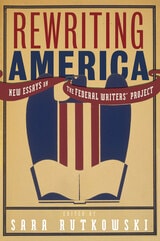
Rewriting America
New Essays on the Federal Writers' ProjectEdited by Sara Rutkowski
University of Massachusetts Press, 2022
Established in 1935, the Federal Writers’ Project (FWP) sent over 6,500 unemployed historians, teachers, writers, and librarians out to document America’s past and present in the midst of the Great Depression. The English poet W. H. Auden referred to this New Deal program as “one of the noblest and most absurd undertakings ever attempted by any state.”
Featuring original work by scholars from a range of disciplinary perspectives, this edited collection provides fresh insights into how this extraordinary program helped transform American culture. In addition to examining some of the major twentieth-century writers whose careers the FWP helped to launch—including Ralph Ellison, Richard Wright, and Margaret Walker—Rewriting America presents new perspectives on the role of African Americans, Mexican Americans, Asian Americans, and women on the project. Essays also address how the project’s goals continue to resonate with contemporary realities in the midst of major economic and cultural upheaval.
Along with the volume editor, contributors include Adam Arenson, Sue Rubenstein DeMasi, Racheal Harris, Jerrold Hirsch, Kathi King, Maiko Mine, Deborah Mutnick, Diane Noreen Rivera, Greg Robinson, Robert Singer, James Sun, and David A. Taylor.
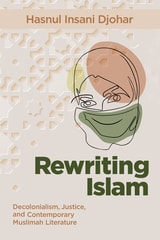
Rewriting Islam
Decolonialism, Justice, and Contemporary Muslimah LiteratureHasnul Insani Djohar
The Ohio State University Press, 2024
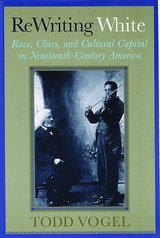
Rewriting White
Race, Class, and Cultural Capital in Nineteenth-Century AmericaTodd Vogel
Rutgers University Press, 2004
What did it mean for people of color in nineteenth-century America to speak or write "white"? More specifically, how many and what kinds of meaning could such "white" writing carry? In ReWriting White, Todd Vogel looks at how America has racialized language and aesthetic achievement. To make his point, he showcases the surprisingly complex interactions between four nineteenth-century writers of color and the "standard white English" they adapted for their own moral, political, and social ends. The African American, Native American, and Chinese American writers Vogel discusses delivered their messages in a manner that simultaneously demonstrated their command of the dominant discourse of their times-using styles and addressing forums considered above their station-and fashioned a subversive meaning in the very act of that demonstration.
The close readings and meticulous archival research in ReWriting White upend our conventional expectations, enrich our understanding of the dynamics of hegemony and cultural struggle, and contribute to the efforts of other cutting-edge contemporary scholars to chip away at the walls of racial segregation that have for too long defined and defaced the landscape of American literary and cultural studies.
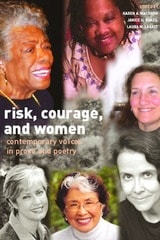
Risk, Courage, and Women
Contemporary Voices in Prose and PoetryKaren A. Waldron
University of North Texas Press, 2007
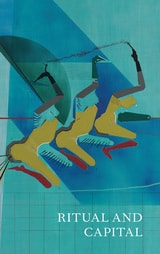
Ritual and Capital
Edited by Bard Graduate Center and Wendy's Subway
Bard Graduate Center, 2020
The publication of Ritual and Capital is the culmination of a series of public readings organized by Wendy’s Subway, a nonprofit organization in Brooklyn, as part of their Spring 2017 Reading Room residency at the Bard Graduate Center. Copublished by the Bard Graduate Center and Wendy’s Subway, Ritual and Capital is the first title in the BGCX series, a publication series designed to expand time-based programming after the events themselves have ended. Springing from the generative spontaneity of conversation, performance, and hands-on engagement as their starting points, these experimental publishing projects will provide space for continued reflection and research in a form that is inclusive of a variety of artists and makers.
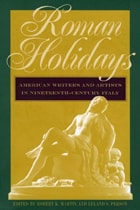
Roman Holidays
American Writers and Artists in Nineteenth-Century ItalyRobert K. Martin
University of Iowa Press, 2001
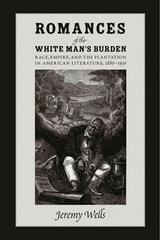
Romances of the White Man's Burden
Race, Empire, and the Plantation in American Literature, 1880-1936Jeremy Wells
Vanderbilt University Press, 2011
Romances of the White Man's Burden takes on works in American literature in which the proverbial "old plantation" is made to seem not a relic but a harbinger, a sign that the South had arrived at a multiracial modernity and harmony before the rest of the United States. Focusing on writers such as Joel Chandler Harris, Thomas Nelson Page, Henry W. Grady, Thomas Dixon, and William Faulkner, Jeremy Wells reveals their shared fixation on the figure of the white southern man as specially burdened by history. Each of these writers, in his own way, presented the plantation South as an emblem, not an aberration, of America.
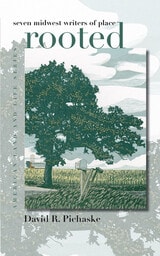
Rooted
Seven Midwest Writers of PlaceDavid R. Pichaske
University of Iowa Press, 2006