Results by title
1832 books match the query 'Essays' and 76 start with r
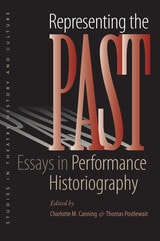
Representing the Past
Essays in Performance HistoriographyCharlotte M. Canning
University of Iowa Press, 2010
How do historians represent the past? How do theatre historians represent performance events? The fifteen challenging essays in Representing the Past: Essays in Performance Historiography focus on the fundamental epistemological conditions and procedures that serve as the foundational ideas that guide all historians in their endeavors. Unified by their investigations into how best to understand and then represent the past, this diverse group of scholars in the field of theatre history and performance studies offers insights into the abiding issues that all historians face in the task of representing human events and actions.
Five primary ideas provide the topics as well as the intellectual parameters for this book: archive, time, space, identity, and narrative. Taking these as the conceptual framework for historical research and analysis, the essayists cover an expansive range of case studies and problems in the historical study of performance from the Americas to Africa and from Europe to India and China. Considering not only how historians think about these concepts in their research and writing but more pointedly—and historiographically—how they think with them, the essayists demonstrate the power and centrality of each of these five ideas in historical scholarship from initial research to the writing of essays and books.
Performance history has a diversity of identities, locations, sources, and narratives. This compelling engagement with the concepts essential to historical understanding is a valuable contribution to the historiography of performance—for students, teachers, and the future of the discipline itself. Expanding upon its classic predecessor, Interpreting the Theatrical Past: Essays in the Historiography of Performance, this exciting new collection illustrates the contemporary richness of historical thinking and writing in the field of performance history.
Rescue Me
On Dogs and Their HumansMargret Grebowicz
University of Minnesota Press, 2022
What exactly is it we want from dogs today?
This is a little book about the oldest relationship we humans have cultivated with another large animal—in something like the original interspecies space, as old or older than any other practice that might be called human. But it’s also about the role of this relationship in the attrition of life—especially social life—in late capitalism. As we become more and more obsessed with imagining ourselves as benevolent rescuers of dogs, it is increasingly clear that it is dogs who are rescuing us. But from what? And toward what? Exploring adoption, work, food, and training, this book considers the social as fundamentally more-than-human and argues that the future belongs to dogs—and the humans they are pulling along.
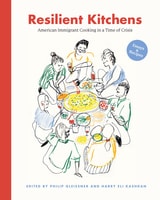
Resilient Kitchens
American Immigrant Cooking in a Time of Crisis, Essays and RecipesPhilip Gleissner
Rutgers University Press, 0
Winner of the James Beard Award for Best Book in Food Issues and Advocacy
Immigrants have left their mark on the great melting pot of American cuisine, and they have continued working hard to keep America’s kitchens running, even during times of crisis like the COVID-19 pandemic. For some immigrant cooks, the pandemic brought home the lack of protection for essential workers in the American food system. For others, cooking was a way of reconnecting with homelands they could not visit during periods of lockdown.
Resilient Kitchens: American Immigrant Cooking in a Time of Crisis is a stimulating collection of essays about the lives of immigrants in the United States before and during the COVID-19 pandemic, told through the lens of food. It includes a vibrant mix of perspectives from professional food writers, restaurateurs, scholars, and activists, whose stories range from emotional reflections on hardship, loss, and resilience to journalistic investigations of racism in the American food system. Each contribution is accompanied by a recipe of special importance to the author, giving readers a taste of cuisines from around the world. Every essay is accompanied by gorgeous food photography, the authors’ snapshots of pandemic life, and hand-drawn illustrations by Filipino American artist Angelo Dolojan.
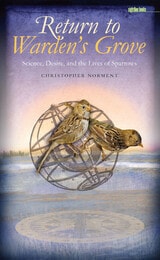
Return to Warden's Grove
Science, Desire, and the Lives of SparrowsChristopher Norment
University of Iowa Press, 2008
Based on three seasons of field research in the Canadian Arctic, Christopher Norment's exquisitely crafted meditation on science and nature, wildness and civilization, is marked by bottomless prose, reflection on timeless questions, and keen observations of the world and our place in it. In an era increasingly marked by cutting-edge research at the cellular and molecular level, what is the role for scientists of sympathetic observation? What can patient waiting tell us about ourselves and our place in the world?
His family at home in the American Midwest, Norment spends months on end living in isolation in the Northwest Territories, studying the ecology of the Harris's Sparrow. Although the fourteenth-century German mystic Meister Eckhardt wrote, "God is at home, we are in the far country," Norment argues that an intellectual, emotional, and spiritual "far country" can be found in the lives of animals and arctic wilderness. For Norment, "doing science" can lead to an enriched aesthetic and emotional connection to something beyond the self and a way to develop a sacred sense of place in a world that feels increasingly less welcoming, certain, and familiar.
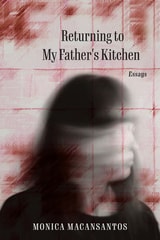
Returning to My Father's Kitchen
EssaysMonica Macansantos
Northwestern University Press, 2025
Feeling untethered after her beloved poet father passes away while she is living abroad, Monica Macansantos decides to return to the Philippines to regain her bearings. But with her father gone and her adult life rooted in the United States and New Zealand, can the land of her birth still serve as a place of healing?
In fifteen richly felt essays, Macansantos considers her family’s history in the Philippines, her own experiences as an exile, and the parent who was the heart of her family’s kitchen, whether standing at the stove to prepare dinner or sitting at the table to scribble in his notebook. Macansantos finds herself remaking her father’s chicken adobo, but also closely rereading his poems. As she reckons with his identity as an artist, she also comes into her own as a writer, and she invites us to consider whether it is possible to carry our homes with us wherever we go.
Revising State Theory
Essays in Politics and PostindustrialismFred Block
Temple University Press, 1987

Revising the Word and the World
Essays in Feminist Literary CriticismEdited by Vèvè A. Clark, Ruth-Ellen Boetcher Joeres, and Madelon Sprengnether
University of Chicago Press, 1993
Three powerful interviews with writers of different nationalities (Audre Lorde, Simone de Beauvoir, and Carmen Naranjo) introduce topics echoed in the essays that follow: the interplay between women's writing and feminist theory, the politics of writing, and the roles of race, class, and sexual orientation in artistic production. These issues are engaged on a theoretical level by three essays that represent today's most prominent areas of concern for feminist literary criticism. The theoretical perspectives advanced in this anthology provide models for reading the traditional expressions of women worldwide including oratory and performance as well as literature in the more conventional sense.
Contributors include Jane Flax on "Postmodernism and Gender Relations in Feminist Theory," Evelyn Brooks Higginbotham on "African-American Women's History and the Metalanguage of Race," Paula Bennett on "Female Sexual Imagery and Feminist Psychoanalytic Theory," Leslie Rabine on "Social Gender and Symbolic Gender in the Writings of Maxine Hong Kingston," Joyce Zonana on "Feminist Orientalism and the Structure of Jane Eyre," Jane Desmond on "Cultural Imperialism and Ruth St. Denis's 'Radha' of 1906," Terri Brint Joseph on "Poetry as a Strategy of Power: The Case of Riffian Berber Women," Chikwenye Ogunyemi on "The Contemporary Black Female Novel in English," and Sandra Zagarell on "Narrative of Community."
This collection is especially appropriate for scholars and students of feminist literary criticism, women's studies, English, and ethnic studies.
Essays were originally published in Signs: Journal of Women in Culture and Society.
Rhetoric and Religion in the Twenty-First Century
Pluralism in a Postsecular AgeEdited by Michael-John DePalma, Paul Lynch, and Jeff Ringer
Southern Illinois University Press, 2023
Expanding the scope of religious rhetoric
Over the past twenty-five years, the intersection of rhetoric and religion has become one of the most dynamic areas of inquiry in rhetoric and writing studies. One of few volumes to include multiple traditions in one conversation, Rhetoric and Religion in the Twenty-First Century engages with religious discourses and issues that continue to shape public life in the United States.
This collection of essays centralizes the study of religious persuasion and pluralism, considers religion’s place in U.S. society, and expands the study of rhetoric and religion in generative ways. The volume showcases a wide range of religious traditions and challenges the very concepts of rhetoric and religion. The book’s eight essays explore African American, Buddhist, Christian, Indigenous, Islamic, and Jewish rhetoric and discuss the intersection of religion with feminism, race, and queer rhetoric—along with offering reflections on how to approach religious traditions through research and teaching. In addition, the volume includes seven short interludes in which some of the field’s most accomplished scholars recount their experiences exploring religious rhetorics and invite readers to engage these exigent lines of inquiry.
By featuring these diverse religious perspectives, Rhetoric and Religion in the Twenty-First Century complicates the field’s emphasis on Western, Hellenistic, and Christian ideologies. The collection also offers teachers of writing and rhetoric a range of valuable approaches for preparing today’s students for public citizenship in our religiously diverse global context.
Rhetorical Knowledge in Legal Practice and Critical Legal Theory
Francis J. Mootz III
University of Alabama Press, 2006
A clear summary of contemporary rhetorical philosophy and its intersections with hermeneutics and critical theory
This book describes the significance of rhetorical knowledge for law through detailed discussions of some of the most difficult legal issues facing courts today, including affirmative action, gay rights, and assisted suicide.
Francis J. Mootz responds to both extremes, those who argue that law is merely a rhetorical mask for the exercise of power and those who demonstrate an ideological faith in law’s autonomy, and he breaks new ground by returning to modern classics in the fields of rhetoric and hermeneutics. Drawing from Chaim Perelman's "new rhetoric" and Hans-Georg Gadamer's "philosophical hermeneutics," Mootz argues that justice is a product of rhetorical knowledge. Drawing from Nietzsche, Mootz’s conception of rhetorical knowledge opens up the dynamic possibilities of critical legal theory.
Richer Entanglements
Essays and Notes on Poetry and PoemsGregory Orr
University of Michigan Press, 1993
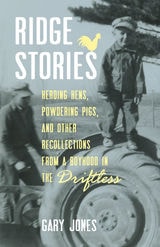
Ridge Stories
Herding Hens, Powdering Pigs, and Other Recollections from a Boyhood in the DriftlessGary Jones
Wisconsin Historical Society Press, 2019
Raised on a small dairy farm in the Driftless Area in the mid-twentieth century, Gary Jones gets real about his rural roots. In this collection of interrelated stories, Jones writes with plainspoken warmth and irreverence about farm, family, and folks on the ridge. Readers will meet Gramp Jones, whose oversized overalls saved him from losing a chunk of flesh to an irate sow; the young one-room-school teacher who helped the kids make sled jumps at recess; Charlotte, the lawn-mowing sheep who once ended up in the living room; Victor the pig-cutter, who learned his trade from folk tradition rather than vet school; and other colorful characters of the ridge. Often humorous and occasionally touching, Jones’s essays paint a vivid picture that will entertain city and country folk alike.
Ripe
EssaysNegesti Kaudo
The Ohio State University Press, 2022
A LitHub Most Anticipated Book of 2022
“Emotional range without consequence,” Negesti Kaudo writes in her debut collection, Ripe, is a privilege of whiteness. In these essays, she fights back, exhorting readers to follow her through fury, grief, love, and hope as she confronts what it means to own her Blackness and her body in contemporary America. A scathing and nuanced cultural critic, she disentangles intersections of race, class, pop culture, size, sexuality, and more in spaces where she always seems to be either too Black or not Black enough. From attending private school as a poor Black student to the evolution of her hair routine to being fat and sexual when society says she should be neither, Kaudo overlooks nothing as she names the ways that white America simultaneously denigrates and steals Black culture. Most of all, she writes against the idea that a Black woman’s anger makes her an “angry Black woman,” claiming full emotional range as her birthright and as a tool against injustice on her quest to find herself no matter how uncomfortable the journey.
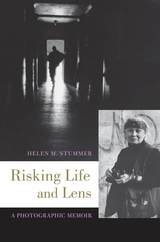
Risking Life and Lens
A Photographic MemoirHelen M. Stummer
Temple University Press, 2017
For more than forty years, Helen M. Stummer has captured images depicting the dignity, humanity, and suffering of people living in conditions of poverty. Her efforts taught her to understand firsthand the resilience of people living in insufferable conditions. In her inspiring memoir, Risking Life and Lens, Stummer recounts her experiences as a socially-concerned documentary photographer whose passion for her work overcame her fears.
Stummer’s images, from the mean streets of Manhattan and Newark, New Jersey, to the back woods of Maine and the mountains of Guatemala, expose the myths of poverty and serve as a metaphor for her challenges in her own life. The 159 photographs reproduced here recount Stummer’s journey as an artist and her personal quest for truth.
Risking Life and Lens shares Stummer’s work and educational efforts and it provides valuable insights about race, class, and social justice—issues that continue to divide the country and the world. Her work has created change in both her own life and the lives of those who view it.
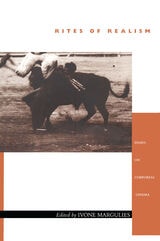
Rites of Realism
Essays on Corporeal CinemaIvone Margulies, ed.
Duke University Press, 2003
By providing close readings of classic and contemporary works, Rites of Realism signals the need to return to a focus on films as the main innovators of realist representation. The collection is inspired by André Bazin's theories on film's inherent heterogeneity and unique ability to register contingency (the singular, one-time event). This volume features two new translations: of Bazin's seminal essay "Death Every Afternoon" and Serge Daney's essay reinterpreting Bazin's defense of the long shot as a way to set the stage for a clash or risky confrontation between man and animal. These pieces evince key concerns—particularly the link between cinematic realism and contingency—that the other essays explore further.
Among the topics addressed are the provocative mimesis of Luis Buñuel's Land Without Bread; the adaptation of trial documents in Carl Dreyer's Passion of Joan of Arc; the use of the tableaux vivant by Wim Wenders and Peter Greenaway; and Pier Paolo Pasolini's strategies of analogy in his transposition of The Gospel According to St. Matthew from Palestine to southern Italy. Essays consider the work of filmmakers including Michelangelo Antonioni, Maya Deren, Mike Leigh, Cesare Zavattini, Zhang Yuan, and Abbas Kiarostami.
Contributors: Paul Arthur, André Bazin, Mark A. Cohen, Serge Daney, Mary Ann Doane, James F. Lastra, Ivone Margulies, Abé Mark Normes, Brigitte Peucker, Richard Porton, Philip Rosen, Catherine Russell, James Schamus, Noa Steimatsky, Xiaobing Tang

Rivals
Legendary Matchups That Made Sports HistoryDavid K. Wiggins
University of Arkansas Press, 2010
River Road
Essays on Manitoba and Prairie HistoryGerald Friesen
University of Manitoba Press, 1996
Rivers of Change
Essays on Early Agriculture in Eastern North AmericaBruce D. Smith
University of Alabama Press, 2007
Organized into four sections, the twelve chapters of Rivers of Change are concerned with prehistoric Native American societies in eastern North America and their transition from a hunting and gathering way of life to a reliance on food production. Written at different times over a decade, the chapters vary both in length and topical focus. They are joined together, however, by a number of shared “rivers of change.”
Roads Less Traveled and Other Perspectives on Nationally Competitive Scholarships
Suzanne McCray
University of Arkansas Press, 2017
For many, the applications present an unfamiliar territory, so students seek out informed advisors who can help them navigate the terrain. This volume of essays is a great way for anyone advising students through an application to become an expert. Roads Less Traveled and Other Perspectives on Nationally Competitive Scholarships provides critical information from scholarship foundations about the best ways to guide students—from considering a career path, to completing the application, to preparing for an interview. Experienced advisors also share helpful tips on practical topics like writing letters of endorsement or assisting those who want to study abroad, and they provide programmatic advice on how to broaden the pool of applicants, address those with financial needs, and make all who apply feel the process has value beyond winning. Roads Less Traveled and Other Perspectives on Nationally Competitive Scholarships is a must for anyone advising students on scholarships.
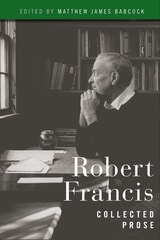
Robert Francis
Collected ProseEdited by Matthew James Babcock
University of Massachusetts Press, 2026
Rediscovering the quietly radical writing of a poet who chose simplicity, solitude, and contemplation over modern haste
American author Robert Francis, whom Robert Frost called “the best neglected poet,” lived in Amherst, Massachusetts from the 1920s to the 1980s. As an underappreciated but prolific poet, Francis authored eight poetry collections and received a number of prestigious prizes. Still, like many poets committed to their craft, he lived most of his quiet life at or well below the poverty level. To sustain himself financially, Francis turned to essay writing in popular magazines, such as the Christian Science Monitor and Forum. From 1938 to 1953, as America and the world experienced a period of intense modernization, he produced an invigorating, challenging, and enlightening quantity of prose whose quality should rank him alongside writers such as Emerson, Thoreau, Wendell Berry, and Annie Dillard.
Published in one volume for the first time, Robert Francis: Collected Prose invites readers to a retrospective retreat into the solitude and serenity of Francis’s cabin, Fort Juniper, where he ardently and artfully dueled the most psychologically, socially, and economically destructive aspects of industrialized America. These essays, together with selections from Francis’s previously unpublished nature treatise, Traveling in Concord, offer an avenue toward an enhanced understanding of many commonly overlooked aspects of the natural world, offering 21st-century readers a refreshing reorientation of worldviews, advocating life principles of simplicity over unnecessary technological complexity, and conservation over consumerism. Vibrant, jubilant, at times sardonic and brooding but always absorbing, Francis’s essays draw readers into the meditative mood of his woodland walks, apple harvests, and autumn landscapes to discover, as he writes, “the importance of the unimportant, the virtue of the small, the rewards of intense cultivation.”
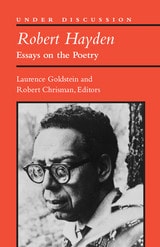
Robert Hayden
Essays on the PoetryLaurence Goldstein and Robert Chrisman, Editors
University of Michigan Press, 2013
This collection of essays by leading critics and poets charts Robert Hayden’s growing reputation as a major writer of some of the twentieth century’s most important poems on African-American themes, including the famed “Middle Passage” and “Frederick Douglass.” The essays illuminate the themes and techniques that established Hayden as a modernist writer with affinities to T. S. Eliot, Federico Garcia Lorca, and W. B. Yeats, as well as to traditions of African-American writings that include such figures as Countee Cullen and Langston Hughes.
Robert Hayden: Essays on the Poetryis the first and only book to collect significant essays on this distinguished poet. Covering sixty years of commentary, book reviews, essays, and Hayden’s own published materials, this volume is an invaluable contribution to our understanding of the poet’s vision of experience, artistry, and influence. The book includes forty different works that examine the life and poetry of Hayden, the first African-American to serve as Consultant in Poetry to the Library of Congress (the post now called Poet Laureate) and to receive the Grand Prix de la Poesie at the First World Festival of Negro Arts, Dakar, Senegal, in 1966.
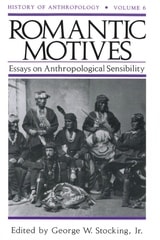
Romantic Motives
Essays on Anthropological SensibilityEdited by George W. Stocking, Jr.
University of Wisconsin Press, 1996
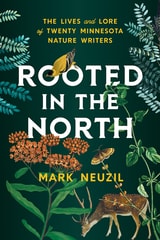
Rooted in the North
The Lives and Lore of Twenty Minnesota Nature WritersMark Neuzil
University of Minnesota Press, 2026
Discover unforgettable writers who taught Minnesota how to see its wild heart
In this engaging collection, environmental journalist Mark Neuzil revives the voices that showed generations how to appreciate Minnesota’s wild places. Comprising twenty vivid biographical essays, Rooted in the North traces the lives and lore of writers who shaped our understanding of this great state, from Minnesota’s northwoods to its tallgrass prairies to the storied landscape of the Boundary Waters Canoe Area Wilderness.
Readers will encounter towering figures of conservation such as Sigurd F. Olson, whose spiritual vision of wilderness helped define the modern environmental movement, alongside beloved chroniclers like Florence Page Jaques and Helen Hoover, whose intimate portraits of wildlife still resonate decades later. Neuzil also highlights writers Charles Eastman and Maude Kegg, who share insights into their Indigenous childhoods, and once-popular authors like Charles Hallock and George Leonard Herter, restoring them to their rightful place in the state’s literary heritage. Rooted in the North broadens our definition of “nature writer” to include novelists whose fiction grew from close observation of the land. Writers such as Martha Ostenso, Frederick Manfred, and Gary Paulsen appear here not just as storytellers but as keen interpreters of Minnesota’s natural world.
In what began as a popular series for the Minnesota Star Tribune, these essays explore the philosophy, science, adventure, faith, and everyday oddities that enlivened their subjects. The result is the only book of its kind—an illuminating portrait of the voices that helped us define and fall in love with Minnesota’s natural landscapes.
Retail e-book files for this title are screen-reader friendly with images accompanied by short alt text and/or extended descriptions.
Roshara Journal
Chronicling Four Seasons, Fifty Years, and 120 AcresJerry Apps
Wisconsin Historical Society Press, 2016
A photographic diary of a small Midwestern farm and the family who’ve made it their home
In Roshara Journal, father-and-son team Jerry and Steve Apps share the monthly happenings at their family’s farm in central Wisconsin. Featuring Steve’s stunning photos and fifty years of Jerry’s journal entries, Roshara Journal captures the changes—both from month to month and over the decades—on the landscape and farmstead.
The Apps family has owned Roshara since 1966. There they nurture a prairie restoration and pine plantation, maintain a large garden that feeds three generations, observe wildlife species by the dozens, and support a population of endangered butterflies. In documenting life on this piece of land, Jerry and Steve remind us how, despite the pace and challenges of modern life, the seasons continue to influence our lives in ways large and small. Jerry explains that his journal entries become much more than mere observations: "It seems that when I write about something—a bur oak tree, for example—that old tree becomes a part of me. . . . Writing takes me to a place that goes beyond observation and understanding, a place filled with feeling and meaning."
In the tradition of Bernd Heinrich in Maine, Barry Lopez in the Canadian Arctic, and Aldo Leopold just an hour down the road in Baraboo, Jerry and Steve Apps combine observation, experience, and reflection to tell a profound story about one place in the world.
Roughneck Grace
Farmer Yoga, Creeping Codgerism, Apple Golf, and Other Brief Essays from on and off the Back FortyMichael Perry
Wisconsin Historical Society Press, 2016
New York Times bestselling author, humorist, and newspaper columnist Michael Perry returns with a new collection of bite-sized essays from his Sunday Wisconsin State Journal column, “Roughneck Grace.” Perry’s perspectives on everything from cleaning the chicken coop to sharing a New York City elevator with supermodels will have you snorting with laughter on one page, blinking back tears on the next, and--no matter your zip code--nodding in recognition throughout.
Run, River, Run
A Naturalist's Journey Down One of the Great Rivers of the WestAnn Zwinger
University of Arizona Press, 1984
Running Dry
Essays on Energy, Water, and Environmental CrisisJones, Toby Craig
Rutgers University Press, 2015