Results by title
2706 books match the query 'European' and 107 start with r
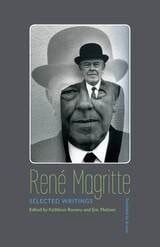
René Magritte
Selected WritingsRené Magritte
University of Minnesota Press, 2016
Available for the first time in an English translation, this selection of René Magritte’s writings gives non-Francophone readers the chance to encounter the many incarnations of the renowned Belgian painter—the artist, the man, the aspiring noirist, the fire-breathing theorist—in his own words. Through whimsical personal letters, biting apologia, appreciations of fellow artists, pugnacious interviews, farcical film scripts, prose poems, manifestos, and much more, a new Magritte emerges: part Surrealist, part literalist, part celebrity, part rascal.While this book is sure to appeal to admirers of Magritte’s art and those who are curious about his personal life, there is also much to delight readers interested in the history and theory of art, philosophy and politics, as well as lovers of creativity and the inner workings of a probing, inquisitive mind unrestricted by genre, medium, or fashion.
Replotting Marriage in Nineteenth-Century British Literature
Edited by Jill Galvan and Elsie Michie
The Ohio State University Press, 2018
In Replotting Marriage in Nineteenth-Century British Literature, Jill Galvan and Elsie Michie bring together top Victorian scholars to scrutinize nineteenth-century marriage in incisive ways. The volume puts marriage in conversation with many aspects of culture, from education and anthropology to Darwinism and crime. It aims to widen the repertoire of critical questions we ask about how fiction represents conjugal coupling, employing, among other approaches, transimperial reading, queer theory, disability studies, and philosophies of the formation of human society. By paying close attention to elements of genre and narrative, moreover, the collection analyzes the story of marriage as formally and structurally diverse, rather than as a familiar plot line.
These essays point to nineteenth-century marriage studies as a new field of inquiry. With contributions by Ian Duncan, Elisha Cohn, Kathy Psomiades, Kelly Hager, Lauren Goodlad, Marlene Tromp, Sukanya Banerjee, Holly Furneaux, Talia Schaffer, and Helena Michie, and an afterword by Mary Jean Corbett, Replotting Marriage in Nineteenth-Century British Literature demonstrates how both established and developing fields can be brought to bear on a long-examined institution—ultimately prompting a rethinking of the nineteenth century itself.
Republican Portugal
A Political History, 1910–1926Douglas L. Wheeler
University of Wisconsin Press, 1998
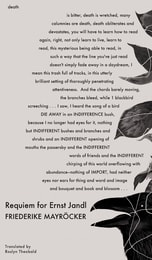
Requiem for Ernst Jandl
Friederieke Mayröcker
Seagull Books, 2018
Austrian poet and playwright Ernst Jandl died in 2000, leaving behind his partner, poet Friederike Mayröcker—and bringing to an end a half century of shared life, and shared literary work. Mayröcker immediately began attempting to come to terms with his death in the way that poets struggling with loss have done for millennia: by writing. Requiem for Ernst Jandl is the powerfully moving outcome. In this quiet but passionate lament that grows into a song of enthralling intensity, Mayröcker recalls memories and shared experiences, and—with the sudden, piercing perception of regrets that often accompany grief—reads Jandl’s works in a new light. Alarmed by a sudden, existential emptiness, she reflects on the future, and the possibility of going on with her life and work in the absence of the person who, as we see in this elegy, was a constant conversational and creative partner.
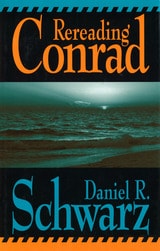
Rereading Conrad
Daniel R.Schwarz
University of Missouri Press, 2001
Leading Conradian scholar Daniel R. Schwarz assembles his work from over the past two decades into one crucial volume, providing a significant reexamination of a seminal figure who continues to be a major focus in the twenty-first century. Schwarz touches on virtually all of Joseph Conrad's work including his masterworks and the later, relatively neglected fiction.
In his introduction and in the persuasive and insightful essays that follow, Schwarz explores how the study of Conrad has changed and why Conrad is such a focus of interest in terms of gender, postcolonial, and cultural studies. He also demonstrates how Conrad helps define the modernist cultural tradition.
Exploring such essential works as Heart of Darkness, Lord Jim, Nostromo, and "The Secret Sharer," Schwarz addresses issues raised by recent theory, discussing the ways in which contemporary readers, including, of course, himself, have come to read Conrad differently. He does so without abandoning crucial Conradian themes such as the disjunction between interior and articulated motives and the discrepancies between dimly acknowledged needs, obsessions, and compulsions and actual behavior.
Schwarz also touches on the extent to which Conrad's conservative desires for a few simple moral and political ideas were often at odds with his profound skepticism. A powerful close reader of Conrad's complex texts, Schwarz stresses how from their opening paragraphs Conrad's works establish a grammar of psychological, political, and moral cause and effect.
Rereading Conrad sheds new light on an author who has spoken to readers for over a century. Schwarz's essays take account of recent developments in theory and cultural studies, including postcolonial, feminist, gay, and ecological perspectives, and show how reading Conrad has changed in the face of the theoretical explosion that has occurred over the past two decades. Because for over three decades Schwarz has been an important figure in defining how we read Conrad and in studying modernism, including how we respond to the relationship between modern literature and modern art, scholars, teachers, and students will take great pleasure in this new collection of his work.
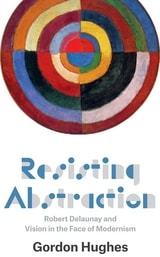
Resisting Abstraction
Robert Delaunay and Vision in the Face of ModernismGordon Hughes
University of Chicago Press, 2014
With Resisting Abstraction, the first English-language study of Delaunay in more than thirty years, Gordon Hughes mounts a powerful argument that Delaunay was not only one of the earliest artists to tackle abstraction, but the only artist to present his abstraction as a response to new scientific theories of vision. The colorful, optically driven canvases that Delaunay produced, Hughes shows, set him apart from the more ethereal abstraction of contemporaries like Kandinsky, Mondrian, Kazimir Malevich, and František Kupka. In fact, Delaunay emphatically rejected the spiritual motivations and idealism of that group, rooting his work instead in contemporary science and optics. Thus he set the stage not only for the modern artists who would follow, but for the critics who celebrated them as well.
Resisting Texts
Authority and Submission in Constructions of MeaningPeter L. Shillingsburg
University of Michigan Press, 1998
Shillingsburg argues that as humans we are and always will be interested in the past, in what was meant, in what was revealed inadvertently by a text--and that is all to the good. But we learn more and can compare notes better when we understand the principles that govern the ways we read. Resisting Texts approaches crucial questions about the practice of textual editing and literary criticism by posing questions in the form "If we take such and such to be the goal of our reading, then what will follow from that assumption?"
With humor and a lively imagination, Shillingsburg takes the reader on a fresh theoretical investigation of communication, understanding and misunderstanding, and textual satisfactions, drawing examples from Thackeray, Wordsworth, Melville, and others.
Resisting Texts will appeal to all who enjoy the varieties of critical approaches to the written word.
Peter L. Shillingsburg is Professor of English, University of North Texas.
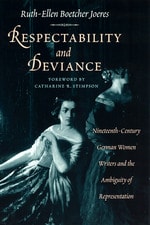
Respectability and Deviance
Nineteenth-Century German Women Writers and the Ambiguity of RepresentationRuth-Ellen Boetcher Joeres
University of Chicago Press, 1998
Studying a period of German literary history that has been largely ignored by modern readers, Ruth-Ellen Boetcher Joeres demonstrates that these writings offer intriguing opportunities to examine such critical topics as canon formation; the relationship between gender, class, and popular culture; and women, professionalism, and technology. The writers she explores range from Annette von Droste-Hülshoff, who managed to work her way into the German canon, to the popular serial novelist E. Marlitt, from liberal writers such as Louise Otto and Fanny Lewald, to the virtually unknown novelist and journalist Claire von Glümer. Through this investigation, Boetcher Joeres finds ambiguities, compromises, and subversions in these texts that offer an extensive and informative look at the exciting and transformative epoch that so much shaped our own.
Ressentiment
Reflections on Mimetic Desire and SocietyStefano Tomelleri
Michigan State University Press, 2015
Restoration Reshaping
Shifting Forms, Genres and Conventions in Late 17th and Early 18th Century English TheatreEdited by Anna Hrdinová and Filip Krajník
Karolinum Press, 2026
An Interdisciplinary study of British theater between 1660 and 1737.
Restoration Reshaping explores English theater between the reopening of the playhouses in 1660 and the Licensing Act of 1737, examining both the dramatic works and the social, political, and cultural contexts in which they were produced. Drawing on papers from two international symposia, the volume investigates a wide range of genres—from comedies of manners and heroic plays to musical dramas, pantomimes, and ballad operas—while highlighting innovations in stagecraft, adaptation, and performance practices. Contributors consider the theatre’s connections to politics, gender, and society, its transnational influences, and its ongoing relevance for modern theatre, offering a rich, multi-perspective resource for scholars, students, and theatre practitioners.
Restoration Women’s Drama
Four Plays, 1662–1677Margaret Cavendish, Katherine Philips, Frances Boothby, and Aphra Behn
Iter Press, 2026
Restoration Women’s Drama collects four Restoration plays by women: the highly acclaimed Katherine Philips, the successful professional Aphra Behn, the confidently original Margaret Cavendish, and the obscure pioneer Frances Boothby. This anthology includes Behn’s only tragedy as well as the first printed edition of Boothby’s Marcelia, the first play by a woman to be professionally staged in London, demonstrating the range of early modern drama produced by women in this period. An excellent introduction, it is poised to stimulate new discussions of women’s authorship, theatrical knowledge, and literary affinities. Each play has been edited afresh, and each has been modernized and annotated to facilitate reading, teaching, and performance possibilities.
Retelling the Siege of Jerusalem in Early Modern England
Vanita Neelakanta
University of Delaware Press, 2019
Published by University of Delaware Press. Distributed worldwide by Rutgers University Press.

Revels in Madness
Insanity in Medicine and LiteratureAllen Thiher
University of Michigan Press, 2004
---Louis Sass, author of Madness and Modernism
"The scope of this book is daunting, ranging from madness in the ancient Greco-Roman world, to Christianized concepts of medieval folly, through the writings of early modern authors such as Shakespeare, Cervantes, and Descartes, and on to German Romantic philosophy, fin de siècle French poetry, and Freud . . . Artaud, Duras, and Plath."
---Isis
"This provocative and closely argued work will reward many readers."
---Choice
In Revels in Madness, Allen Thiher surveys a remarkable range of writers as he shows how conceptions of madness in literature have reflected the cultural assumptions of their era. Thiher underscores the transition from classical to modern theories of madness-a transition that began at the end of the Enlightenment and culminates in recent women's writing that challenges the postmodern understanding of madness as a fall from language or as a dysfunction of culture.
Reveries of Community
French Epic in the Age of Henri IV, 1572–1616Katherine S. Maynard
Northwestern University Press, 2018
Traditionally united by une foi, une loi, un roi (one faith, one law, one king), France under Henri IV was cleaved into warring factions of Catholics and Huguenots. The country suffered episodes of bloodshed such as the St. Bartholomew’s Day Massacre, even as attempts were made to attenuate the violence through frequent edicts, including those of St. Germain (1570) and Nantes (1598). Maynard examines the rich and often dismissed body work written during these bloody decades: Pierre de Ronsard’s Franciade, Guillaume Salluste Du Bartas’s La Judit and La Sepmaine, Sébastian Garnier’s La Henriade, Agrippa d’Aubigné’s Les Tragiques, and others. She traces how French poets, taking classics such as Virgil’s Aeneid and Homer’s Iliad as their models, reimagined possibilities for French reconciliation and unity.
Revising the Clinic
Vision and Representation in Victorian Medical Narrative and the NovelMeegan Kennedy
The Ohio State University Press, 2010
Critics have examined how novelists borrow from other genres—newspapers, legal cases, autobiographies. Medical writing likewise enriches the novel’s uniquely flexible and wide-ranging presentation of Victorian culture. In turn, the novel shapes medical narrative even as clinical science idealizes methodological rigor. Revising the Clinic shows how the wealth of scientific material in mainstream Victorian periodicals creates a productive literary “commons” where novelists and physicians can encounter each others’ strategies for seeing and stating. Novelists adapt physicians’ techniques to nonmedical scenes, and physicians echo the sentimental or sensational novel to gain sympathy or rhetorical force when medical knowledge falters.
Kennedy traces the development of the Victorian novel and the case history from eighteenth-century curious observation and curious sights through nineteenth-century clinical observation, mechanical observation, and speculation, to Freud’s labyrinthine mapping and speculative insight. These make new sense, read within the literary tradition of the case history. The lens of Kennedy’s argument clarifies and illuminates the preoccupation with genre and visuality that is common to Victorian medicine and the novel.
Revisiting Richardson
Rebecca Anne Barr
Bucknell University Press, 2025
Published by Bucknell University Press. Distributed by Rutgers University Press.
Revivalist Fantasy
Alliterative Verse and Nationalist Literary HistoryRandy P. Schiff
The Ohio State University Press, 2011
Schiff revises readings of alliterative poetry as Francophobic, exploring the transnational imperialist elitism in the translation William of Palerne. He contributes to the discussion of gender in Sir Gawain and the Green Knight by linking the poem’s powerful female players with anxieties about women’s control of wealth and property in militarized regions of England. The book also explores the emphatically pre-national, borderlands sensibilities informing the Awntyrs off Arthure and Golagros and Gawane, and it examines the exploitation of collaborative composition in the material legacy of the Piers Plowman tradition.
Revivalist Fantasy concludes that Revivalist nationalism obscures crucial continuities between late-medieval and post-national worlds and that critics’ interests should be channeled into the forging of connections between past and present rather than suspended in the scholarly pursuit of origins. The book will be of interest to scholars of editorial history and translation studies and to those interested in manuscript studies.
Rewriting Crusoe
The Robinsonade across Languages, Cultures, and MediaJakub Lipski
Bucknell University Press, 2020
Published by Bucknell University Press. Distributed worldwide by Rutgers University Press.
Rhetoric and Resistance
The Literary Arts of Dissent in Nineteenth-Century BritainMaeve Adams
Ohio University Press, 2025
A fresh perspective on the enduring relationship between literature, democracy, and dissent
Rhetoric and Resistance explores the transformative role of nineteenth-century literature in shaping modern concepts and practices of democratic dissent. By examining the works of Romantic and Victorian novelists, poets, and journalists, Maeve Adams identifies origins of modern theories and practices of resistance in nineteenth-century literary forms. Offering a literary history of dissent, the book recovers the intertwined development of democracy and aesthetics, revealing how narrative form became a potent tool for challenging authority.
Tracing the lineage of dissent from the radical fiction and journalism of the 1800s to contemporary movements like #MeToo, Adams offers a genealogy that highlights how literary texts experimented with political power, granting new and consequential voices to working-class individuals, women, colonized peoples, and other marginalized groups.
Adams takes an interdisciplinary approach, weaving together close readings of works by Thomas De Quincey, Walter Scott, Elizabeth Gaskell, and H. G. Wells, as well as lesser-known journalists, with insights from modern moral and political philosophy. Drawing on theories of democratic ethics and justice from scholars such as Miranda Fricker, Sharon Krause, Martha Nussbaum, and Philip Pettit, the book bridges literary history and contemporary debates about political agency and expression.
Rhetoric, Science, and Magic in Seventeenth-century England
Ryan J. Stark
Catholic University of America Press, 2009
Rhythm
Form and DispossessionVincent Barletta
University of Chicago Press, 2020
Vincent Barletta explores rhythm through three historical moments, each addressing it as a phenomenon that transcends poetry, aesthetics, and even temporality. He reveals rhythm to be a power that holds us in place, dispossesses us, and shapes the foundations of our world. In these moments, Barletta encounters rhythm as a primordial and physical binding force that establishes order and form in the ancient world, as the anatomy of lived experience in early modern Europe, and as a subject of aesthetic and ethical questioning in the twentieth century.
A wide-ranging book covering a period spanning two millennia and texts from over ten languages, Rhythm will expand the conversation around this complex and powerful phenomenon.
Richard Wagner's Political Ecology
Kirsten S. Paige
University of Chicago Press, 2026
A study of the deep history of the Wagnerian environmental imagination.
Richard Wagner’s operas are bursting with environmental imagery, from tittering birds to flowing rivers to towering trees. In Richard Wagner’s Political Ecology, Kirsten S. Paige asks where Wagner’s environmental imagination came from, how it was received by audience members and reconceived by stage directors, and how it refracts his politics. By tracing the ecological dimensions of the composer’s essays and dramas, Paige reveals how Wagner’s environmental imagination was inextricable from broader political concerns of his time.
The book begins by examining the way Wagner’s political ecology shape-shifted across its rhetorical, musical, scenographic, and technological permutations. Although Wagner’s essays and dramas invite a range of interpretations, for Paige, they point to an all-encompassing image of opera-as-climate. The book then turns to the ways Wagnerian drama—and opera more generally—at once participates in the industrial-technological lineage of climate change and helps spectators grapple with the challenges of living in a warming world. In providing the first close examination of Wagner’s artistic thought, practice, and reception in relation to nineteenth-century climate theory and the early history of environmentalism, Richard Wagner’s Political Ecology considers what it might mean to reimagine opera around ethical mandates of sustainability.
Rich’s Farewell to Military Profession, 1581
Edited by Thomas Mabry Cranfill
University of Texas Press, 1953
In a long and extraordinary career as captain, courier, privateer, real-estate agent, author, and informer, Barnaby Rich's principal achievement was the present volume—a collection of Elizabethan short stories despite its military title.
Unquestionably best sellers in Rich's own time, these tales continue to delight scholars, critics, and even casual readers today. One twentieth-century critic pronounces the Farewell "a landmark in Elizabethan short-story writing" and cites Rich's "romantic charm, gaiety and lightness of touch, good vivid dialogue, directness and ease." According to Henry Seidel Canby, Rich's "humor is of the gayest. . . . There is a suggestion of Chaucer about him, and not a little of the poet's merry humor." Yet the "stories themselves are diverse."
Certainly their charm and humor fetched Rich's contemporaries, who read out of existence all but one copy of the first edition and all but five of the subsequent three editions. Eight dramatists—including Shakespeare, Middleton, Shirley, and Marmion—immortalized several of the stories, however, by turning them into plays.
The present edition affords an opportunity to read Rich's tales in the form in which Elizabethans knew them. The text reproduced is that of the unique copy of the first edition, which appeared in 1581. The editor's scholarly, illuminating introduction and commentary display much of the liveliness, charm, and humor for which his subject was praised and in addition tell a great deal about the life and literature of that most fascinating of periods, the Age of Elizabeth I. Scholars will be especially interested in Cranfill's revelations of how an Elizabethan story maker operated, in the complex, checkered bibliographical history of the Farewell, and above all in the considerable use Shakespeare seems to have made of Rich's tales.

Rimbaud and Jim Morrison
The Rebel as PoetWallace Fowlie
Duke University Press, 1994
In 1968 Jim Morrison, founder and lead singer of the rock band the Doors, wrote to Wallace Fowlie, a scholar of French literature and a professor at Duke University. Morrison thanked Fowlie for producing an English translation of the complete poems of Rimbaud. He needed the translation, he said, because, "I don’t read French that easily. . . . I am a rock singer and your book travels around with me." Fourteen years later, when Fowlie first heard the music of the Doors, he recognized the influence of Rimbaud in Morrison’s lyrics.
In Rimbaud and Jim Morrison Fowlie, a master of the form of the memoir, reconstructs the lives of the two youthful poets from a personal perspective. In their twinned stories he discovers an uncanny symmetry, a pattern far richer than the simple truth that both led lives full of adventure and both made poetry of their thirst for the liberation of the self. The result is an engaging account of the connections between an exceptional French symbolist who gave up writing poetry at the age of twenty, died young, and whose poems are still avidly read to this day, and an American rock musician whose brief career ignited an entire generation and has continued to fascinate millions around the world in the twenty years since his death in Paris. In this dual portrait, Fowlie gives us a glimpse of the affinities and resemblances between European literary traditions and American rock music and youth culture in the late twentieth century.
A personal meditation on two unusual, yet emblematic, cultural figures, this book also stands as a summary of a noted scholar’s lifelong reflections on creative artists.
Rimbaud
COMPLETE WORKS, SELECTED LETTERSJean Nicholas Arthur Rimbaud
University of Chicago Press, 1967
"This handsome edition, which makes France's most remarkable poet readily available in the U.S., may well be a literary landmark comparable to Baudelaire's introduction of Edgar Allan Poe in France a century earlier."—Anna Balakian, New York Times Book Review
Rimbaud
Complete Works, Selected Letters, a Bilingual EditionJean Nicholas Arthur Rimbaud
University of Chicago Press, 2005
The first translation of the poet's complete works when it was published in 1966, Rimbaud: Complete Works, Selected Letters introduced a new generation of Americans to the alienated genius—among them the Doors's lead singer Jim Morrison, who wrote to translator Wallace Fowlie to thank him for rendering the poems accessible to those who "don't read French that easily." Forty years later, the book remains the only side-by-side bilingual edition of Rimbaud's complete poetic works.
Thoroughly revising Fowlie's edition, Seth Whidden has made changes on virtually every page, correcting errors, reordering poems, adding previously omitted versions of poems and some letters, and updating the text to reflect current scholarship; left in place are Fowlie's literal and respectful translations of Rimbaud's complex and nontraditional verse. Whidden also provides a foreword that considers the heritage of Fowlie's edition and adds a bibliography that acknowledges relevant books that have appeared since the original publication. On its fortieth anniversary, Rimbaud remains the most authoritative—and now, completely up-to-date—edition of the young master's entire poetic ouvre.
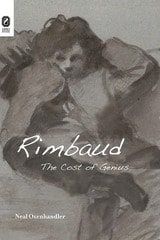
Rimbaud
The Cost of GeniusNeal Oxenhandler
The Ohio State University Press, 2009
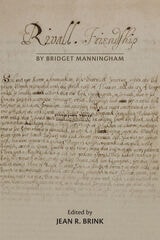
Rivall Friendship, by Bridget Manningham
Edited by Jean R. Brink
Arizona Center for Medieval and Renaissance Studies, 2021
The manuscript for Rivall Friendship was first acquired by the Newberry Library in 1937. At the time of the acquisition, the author of this seventeenth-century romance was anonymous. Scholar Jean R. Brink now suggests, based on dating of the manuscript and her analysis of its feminist themes, that the author was a woman. Specifically, Brink attributes the text to Bridget Manningham, who was the older sister of Thomas Manningham, a Jacobean and Caroline bishop, and the granddaughter of John Manningham, a diarist who recorded performances of Shakespeare’s plays.
Rivall Friendship is a post–English Civil War romance that examines proto-feminist issues, such as patriarchal dominance in the family and marriage. Manningham is scrupulous about maintaining verisimilitude, and unlike more fantastical romances of the period that feature monsters, giants, and magic, this text aspires to a level of probability in its historical and geographical details. The text of Rivall Friendship is accessible to most modern readers, particularly to students and scholars accustomed to working with seventeenth-century texts.
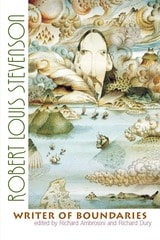
Robert Louis Stevenson
Writer of BoundariesEdited by Richard Ambrosini and Richard Dury
University of Wisconsin Press, 2006
Robert Louis Stevenson: Writer of Boundaries reinstates Stevenson at the center of critical debate and demonstrates the sophistication of his writings and the present relevance of his kaleidoscopic achievements. While most young readers know Robert Louis Stevenson (1850–1894) as the author of Treasure Island, few people outside of academia are aware of the breadth of his literary output. The contributors to Robert Louis Stevenson: Writer of Boundaries look, with varied critical approaches, at the whole range of his literary production and unite to confer scholarly legitimacy on this enormously influential writer who has been neglected by critics.
As the editors point out in their Introduction, Stevenson reinvented the “personal essay” and the “walking tour essay,” in texts of ironic stylistic brilliance that broke completely with Victorian moralism. His first full-length work of fiction, Treasure Island, provocatively combined a popular genre (subverting its imperialist ideology) with a self-conscious literary approach.
Stevenson, one of Scotland’s most prolific writers, was very effectively excluded from the canon by his twentieth-century successors and rejected by Anglo-American Modernist writers and critics for his play with popular genres and for his non-serious metaliterary brilliance. While Stevenson’s critical recognition has been slowly increasing, there have been far fewer published single-volume studies of his works than those of his contemporaries, Henry James and Joseph Conrad.
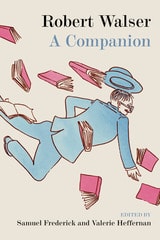
Robert Walser
A CompanionEdited by Samuel Frederick and Valerie Heffernan
Northwestern University Press, 2018
The Swiss writer Robert Walser (1878-1956) is now recognized as one of the most important European authors of the modernist period, having garnered high praise from such prominent voices as Susan Sontag, W. G. Sebald, and J. M. Coetzee. Robert Walser: A Companion is the first comprehensive guide to Walser’s work in English. The twelve essays in this collection examine Walser’s literary output, historical milieu, and idiosyncratic writing process, addressing aspects of his biography; discussing the various genres in which he wrote (the novel, short prose, drama, lyric poetry, and letters); and analyzing his best-known novels and short stories alongside lesser-known but no less fascinating poems, plays, and prose pieces.
An essential addition to the scholarship about this eccentric, prolific, and influential writer’s work, Robert Walser: A Companion will be of interest both to established scholars and to those coming to Walser for the first time.
Robinson Crusoe after 300 Years
Andreas K. E. Mueller
Bucknell University Press, 2021
Rogues and Early Modern English Culture
Craig Dionne and Steve Mentz, Editors
University of Michigan Press, 2004
-Jonathan Dollimore, York University
"Rogues and Early Modern English Culture is an up-to-date and suggestive collection on a subject that all scholars of the early modern period have encountered but few have studied in the range and depth represented here."
-Lawrence Manley, Yale University
"A model of cross-disciplinary exchange, Rogues and Early Modern English Culture foregrounds the figure of the rogue in a nexus of early modern cultural inscriptions that reveals the provocation a seemingly marginal figure offers to authorities and various forms of authoritative understanding, then and now. The new and recent work gathered here is an exciting contribution to early modern studies, for both scholars and students."
-Alexandra W. Halasz, Dartmouth College
Rogues and Early Modern English Culture is a definitive collection of critical essays on the literary and cultural impact of the early modern rogue. Under various names-rogues, vagrants, molls, doxies, vagabonds, cony-catchers, masterless men, caterpillars of the commonwealth-this group of marginal figures, poor men and women with no clear social place or identity, exploded onto the scene in sixteenth-century English history and culture. Early modern representations of the rogue or moll in pamphlets, plays, poems, ballads, historical records, and the infamous Tudor Poor Laws treated these characters as harbingers of emerging social, economic, and cultural changes.
Images of the early modern rogue reflected historical developments but also created cultural icons for mobility, change, and social adaptation. The underclass rogue in many ways inverts the familiar image of the self-fashioned gentleman, traditionally seen as the literary focus and exemplar of the age, but the two characters have more in common than courtiers or humanists would have admitted. Both relied on linguistic prowess and social dexterity to manage their careers, whether exploiting the politics of privilege at court or surviving by their wits on urban streets.
Deftly edited by Craig Dionne and Steve Mentz, this anthology features essays from prominent and emerging critics in the field of Renaissance studies and promises to attract considerable attention from a broad range of readers and scholars in literary studies and social history.
Rogues, Vagabonds, and Sturdy Beggars
A New Gallery of Tudor and Early Stuart Rogue Literature Exposing the Lives, Times, and Cozening Tricks of the Elizabethan UnderworldArthur F. Kinney
University of Massachusetts Press, 1990
In his introduction, Arthur F. Kinney discusses the significance of these works as protonovels and their influence on such writers as Shakespeare. He also explores the social, political, and economic conditions of a time that spawned a community of renegades who conned their way to fame, fortune, and, occasionally, the rope at Tyburn.
Rolling Transition and the Role of Intellectuals
The Case of HungaryAndrás Bozóki
Central European University Press, 2022
Utilizing a new and original framework for examining the role of intellectuals in countries transitioning to democracy, Bozóki analyses the rise and fall of dissident intellectuals in Hungary in the late 20th century. He shows how that framework is applicable to other countries too as he forensically examines their activities.
Bozóki argues that the Hungarian intellectuals did not become a ‘New Class’. By rolling transition, he means an incremental, non-violent, elite driven political transformation which is based on the rotation of agency, and it results in a new regime. This is led mainly by different groups of intellectuals who do not construct a vanguard movement but create an open network which might transform itself into different political parties. Their roles changed from dissidents to reformers, to movement organizers and negotiators through the periods of dissidence, open network building, roundtable negotiations, parliamentary activities, and new movement politics.
Through the prism of political sociology, the author focuses on the following questions: Who were the dissident intellectuals and what did they want? Under what conditions do intellectuals rebel and what are the patterns of their protest? This book will be of interest to students, researchers, and public intellectuals around the world aiming to promote human rights and democracy.
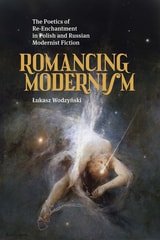
Romancing Modernism
The Poetics of Re-Enchantment in Polish and Russian Modernist FictionLukasz Wodzynski
University of Wisconsin Press, 2026
In the development of modernist fiction, perhaps no artistic product has had as vaunted a place as the novel, a genre theorized primarily with recourse to Western authors. Here, Łukasz Wodzyński challenges the primacy of the novel as the organizing principle of modernist prose in East-Central Europe, particularly in Poland and Russia. By carefully studying some of the most innovative texts in Polish and Russian from the early twentieth century, Wodzyński posits that the “novel” genre has hindered our understanding of long modernist narratives.
Instead, he proposes to read these pathbreaking works as a twentieth-century reclamation of the romance. Specifically, he argues that these latter-day romances channel early modernist apocalyptic and utopian ideals through popular genres like science fiction and adventure narratives—and thus imagine a human future freed from modern fixations on control, efficiency, and utility. The romance form, he suggests, was uniquely poised to address the deep civilizational anxieties underwriting modernist literary publications in East-Central Europe. Understanding these works and the ways in which they spoke to these anxieties thus informs not only the study of Polish and Russian literature but also the development of modernism itself.
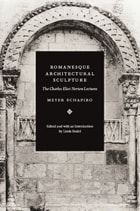
Romanesque Architectural Sculpture
The Charles Eliot Norton LecturesMeyer Schapiro
University of Chicago Press, 2006
Meyer Schapiro (1904-96), renowned for his critical essays on nineteenth- and twentieth-century painting, also played a decisive role as a young scholar in defining the style of art and architecture known as Romanesque. And, appropriately, when he was invited to deliver the prestigious Charles Eliot Norton Lectures at Harvard, he chose Romanesque architectural sculpture as his topic. These lectures, acclaimed for the verve and freshness with which Schapiro delivered them, languished unpublished for decades. But Linda Seidel, who knew Schapiro well and attended the 1967 lectures, has now expertly transcribed and edited them, presenting them for the first time to an audience beyond the halls of Harvard.
In editing the lectures, Seidel closely followed the recordings of the originals. Sentences are rendered as Schapiro spoke them, affording readers a unique opportunity to experience the legendary teacher as he rarely appears in print: forming his thoughts spontaneously, interrupting himself to develop related ideas, and responding to the audience’s interests by introducing humorous asides. Nonetheless, these lectures are carefully constructed, demonstrating Schapiro’s commitment to the originality and value of artistic production and affirming his lifelong belief in artists’ engagement with their cultures. Amply illustrated with many key works and augmented with Seidel’s indispensable introduction, this long-awaited volume will delight students and scholars of art history, as well as anyone interested in seeing a new side of a profoundly influential mind.
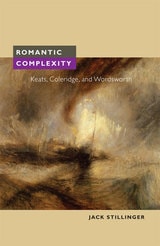
Romantic Complexity
Keats, Coleridge, and WordsworthJack Stillinger
University of Illinois Press, 2005
In Romantic Complexity, Jack Stillinger examines three of the most admired poets of English Romanticism--Keats, Coleridge, and Wordsworth--with a focus on the complexity that results from the multiple authorship, the multiple textual representation, and the multiple reading and interpretation of their best works.
Specific topics include the joint authorship of Wordsworth and Coleridge in the Lyrical Ballads, an experiment of 1798 that established the most essential characteristics of modern poetry; Coleridge's creation of eighteen or more different versions of The Ancient Mariner and how this textual multiplicity affects interpretation; the historical collaboration between Keats and his readers to produce fifty-nine separate but entirely legitimate readings of The Eve of St. Agnes; and a number of practical and theoretical matters bearing on the relationships among these writers and their influences on one another.
Stillinger shows his deep understanding of the poets' lives, works, and the history of their reception, in chapters rich with intriguing questions and answers sure to engage students and teachers of the world's greatest poetry.

Romantic Globalism
British Literature and Modern World Order, 1750–1830Evan Gottlieb
The Ohio State University Press, 2014
Although modern media tend to represent globalization as an essentially contemporary phenomenon, many scholars now agree that its fundamental dynamics—especially its characteristic annulment of spatial and temporal differences—have been present for several centuries. Moreover, the last decades of the eighteenth century and the first of the nineteenth century saw the convergence of a number of world-changing socio-political developments in the Western world. Romantic Globalism is significant because it is the first extended scholarly study that brings together these lines of inquiry. In so doing, Romantic Globalism not only charts a new course of study for British Romanticism but also suggests how the Romantics’ visions of globality might still be valuable to us today.
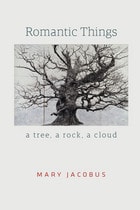
Romantic Things
A Tree, a Rock, a CloudMary Jacobus
University of Chicago Press, 2012
Romantic Vision, Ethical Context
Novalis and Artistic AutonomyGeza Molnar
University of Minnesota Press, 1987
Exploring the full range of Novalis's (the pen name of the German poet and philosopher Friedrich von Hardenberg) work, von Molnar shows how he dealt, in theory and practice, with a central issue in Romanticism-the emerging concept of the autonomous self and its relation.
Romanticism and Anthony Trollope
A Study in the Continuities of Nineteenth-Century Literary ThoughtL. J. Swingle
University of Michigan Press, 1990
Romanticism and Transcendence
Wordsworth, Coleridge, and the Religious ImaginationJ. Robert Barth, S.J.
University of Missouri Press, 2003
Romanticism and the Question of the Stranger
David Simpson
University of Chicago Press, 2012
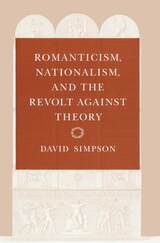
Romanticism, Nationalism, and the Revolt against Theory
David Simpson
University of Chicago Press, 1993
Simpson demonstrates the close association between "theory" and "method" and shows that by the mid-eighteenth century, "method" had acquired distinctly subversive associations in England. Attributed increasingly to the French and the Germans, "method" paradoxically evoked images both of inhuman rationality and unbridled sentimentality; in either incarnation, it was seen as a threat to what was claimed to be authentically British. Simpson develops these paradigms in relation to feminism, the gendering of Anglo-American culture, and the emergence of literature and literary criticism as antitheoretical discourses. He then looks at the Romantic poets' response to this confining ideology of the cultural role of literature. Finally, Simpson considers postmodern theory's claims for the radical energy of nonrational or antirationalist positions.
This is an essential book not only for students of the Romantic period and intellectual historians concerned with the idea of "method," but for anyone interested in the historical background of today's debates over the excesses and possibilities of "theory."
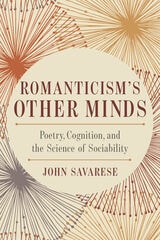
Romanticism’s Other Minds
Poetry, Cognition, and the Science of SociabilityJohn Savarese
The Ohio State University Press, 2020
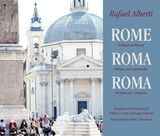
Rome
Pedestrians BewareRafael Alberti
Swan Isle Press, 2024
After his long exile in France and Argentina following the Spanish Civil War, Rafael Alberti’s final home in exile was Rome, where he wrote Roma: Peligro para caminantes (Rome: Pedestrians Beware). There, Romulus and Remus sneak down to the Tiber to suckle on feral cats, a jack of all trades pisses on the poet’s shoes, whistling as he walks away, and in the Campo de’ Fiori the poet compares sonnets with the wandering spirit of Giuseppe Gioachino Belli, all in the shadow of the glory of Rome’s imperial ruins.
Two suites of sonnets open and close the book, while in between, Alberti displays masterful poems in metered and free verse, rhyming couplets, and a numbered series of short poems. The blending of classical tradition with post-modern echoes the darkness and luminosity that exist within the poems, tinged with longing, nostalgia, love, as well as hope. In the end, the Eternal City is a refuge for Alberti:”I left for you all that I once held dear. / Oh Rome, my sorrow pleads, hold out your hands / and give me everything I left for you.”
This unique trilingual edition features exquisite and nuanced translations in English and Italian from the original Spanish by Anthony Geist and Giuseppe Leporace alongside visually evocative photographs of Rome by Adam Weintraub. Readers will want to take this poetic walk in Rome since what sometimes elicits caution, an aspect of danger, also becomes a destination for discovery.
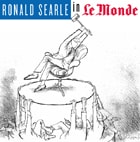
Ronald Searle in Le Monde
Ronald Searle
University of Chicago Press, 2002
Since 1995, Searle has plied his sardonic trade on the coveted op-ed pages of the French daily newspaper Le Monde. This book presents more than a hundred of the best of these cartoons, ranging across politics, the new Europe, the nature of the contemporary economy, social games, and various "angels," both benign and mischievous. Whether skewering the greed of the rich with images of men in suits padding each other's pockets with cash or conducting business under the table, or making a poignant comment about how much harder peace has to work than war to stay in the same place, Searle displays the same pungent, incisive, yet infinitely humane wit. The deceptive simplicity of his lines and shadings combine with meticulously observed details of dress, background, and facial expression to produce arresting images that convey his messages powerfully and beautifully.
By turns delightful, amusing, and disturbing, but always deeply thought provoking, Searle's work reaches well beyond the specific occasion that inspired a given cartoon to illuminate key aspects of public life in the West at the end of the millennium. This book contains twenty-five illustrations not found in the French edition, together with a new preface for English-speaking readers written by Searle himself.
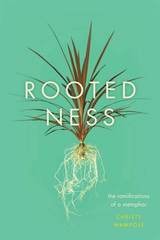
Rootedness
The Ramifications of a MetaphorChristy Wampole
University of Chicago Press, 2016
Wampole examines both the philosophical implications of this metaphor and its political evolution. From the root as home to the root as genealogical origin to the root as the past itself, rootedness has survived in part through its ability to subsume other compelling metaphors, such as the foundation, the source, and the seed. With a focus on this concept’s history in France and Germany, Wampole traces its influence in diverse areas such as the search for the mystical origins of words, land worship, and nationalist rhetoric, including the disturbing portrayal of the Jews as an unrooted, and thus unrighteous, people. Exploring the works of Martin Heidegger, Simone Weil, Jean-Paul Sartre, Paul Celan, and many more, Rootedness is a groundbreaking study of a figure of speech that has had wide-reaching—and at times dire—political and social consequences.
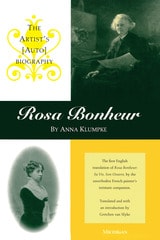
Rosa Bonheur
The Artist's (Auto)biographyAnna Klumpke
University of Michigan Press, 2001
Rosa Bonheur: The Artist's (Auto)Biography brings this extraordinary woman to life in a unique blend of biography and autobiography. Coupling her own memories with Bonheur's first-person account, Anna Klumpke, a young American artist who was Bonheur's lover and chosen portraitist, recounts how she came to meet and fall in love with Bonheur. Bonheur's account of her own life story, set nicely within Klumpke's narrative, sheds light on such topics as gender formation, institutional changes in the art world, governmental intervention in the arts, the social and legal regulation of dress codes, and the perceived transgressive nature of female sexual companionship in a repressive society, all with the distinctive flavor of Bonheur's artistic personality.
Gretchen van Slyke's translation provides a rare glimpse into the unconventional life of this famous French painter, and renders accessible for the first time in English this public statement of Bonheur's artistic credo. More importantly, whether judged by her century's standards (or perhaps even our own), it details a story of lesbian love that is bold, unconventional, and courageous.
"The remarkable life of Rosa Bonheur, one of the most highly decorated artists and certainly the best known female artist of her time in nineteenth-century France, is long overdue for further scrutiny." --Therese Dolan, Temple University
Gretchen van Slyke is Associate Professor of French, University of Vermont.

Rousseau, Judge of Jean-Jacques
DialoguesJean-Jacques Rousseau
Dartmouth College Press, 2012