1927 books match the query 'Technology & Engineering' and 87 start with r

cover of Reliability of Photovoltaic Power Systems

Reliability of Photovoltaic Power Systems

Saeed Peyghami

The Institution of Engineering and Technology, 2026
Solar photovoltaic (PV) technology has moved from a peripheral generation option to a structural element of the modern electricity system. This shift in scale changes the central analytical question. When PV occupies only a marginal share of electricity supply, the dominant concern is deployment. Once PV becomes deeply embedded in the power system, however, the more consequential question is whether the installed fleet can deliver energy dependably over long operating lifetimes and under diverse field conditions.
[more]
cover of Reliability of Power Electronic Converter Systems

Reliability of Power Electronic Converter Systems

Henry Shu-hung Chung

The Institution of Engineering and Technology, 2016
The main aims of power electronic converter systems (PECS) are to control, convert, and condition electrical power flow from one form to another through the use of solid state electronics. This book outlines current research into the scientific modeling, experimentation, and remedial measures for advancing the reliability, availability, system robustness, and maintainability of PECS at different levels of complexity.
[more]
cover of Reliability of Power Electronic Converter Systems

Reliability of Power Electronic Converter Systems

Henry Shu-Hung Chung

The Institution of Engineering and Technology, 2025

The reliability of power electronic systems is a major concern because these systems are exposed to harsh environments, high stresses, and variable loads caused by the increasing proliferation of renewable power generation.
[more]
cover of Reliability of Power Electronics Converters for Solar Photovoltaic Applications

Reliability of Power Electronics Converters for Solar Photovoltaic Applications

Ahteshamul Haque

The Institution of Engineering and Technology, 2021
The importance of power electronic converters for electricity grid equipment is increasing due to the growing distribution-level penetration of renewable energy sources. The performance of the converters mostly depends on interactions between sources, loads, and their state of operation. These devices must be operated with safety and stability under normal conditions, fault conditions, overloads, as well as different operation modes. Therefore, enhanced control strategies of power electronic converters are necessary to improve system stability.
[more]
cover of Remembrance of Things Present: The Invention of the Time Capsule

Remembrance of Things Present

The Invention of the Time Capsule

Nick Yablon

University of Chicago Press, 2019

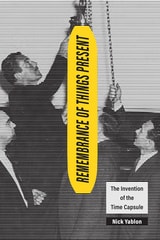
Time capsules offer unexpected insights into how people view their own time, place, and culture, as well as their duties to future generations. Remembrance of Things Present traces the birth of this device to the Gilded Age, when growing urban volatility prompted doubts about how the period would be remembered—or if it would be remembered at all. Yablon details how diverse Americans – from presidents and mayors to advocates for the rights of women, blacks, and workers – constructed prospective memories of their present. They did so by contributing not just written testimony to time capsules but also sources that historians and archivists considered illegitimate, such as photographs, phonograph records, films, and everyday artifacts.

By offering a direct line to posterity, time capsules stimulated various hopes for the future. Remembrance of Things Present delves into these treasure chests to unearth those forgotten futures.
[more]
cover of Renewable Energy from the Oceans: From wave, tidal and gradient systems to offshore wind and solar

Renewable Energy from the Oceans

From wave, tidal and gradient systems to offshore wind and solar

Domenico P. Coiro

The Institution of Engineering and Technology, 2019
There are many ways to harness the renewable and emissions-free energy available from the Earth's oceans. The technologies include wave energy, tidal and current energy, and energy from thermal and salinity gradients. In addition, offshore wind energy and marine (floating) solar arrays offer a possibility to exploit vast resources that are far larger than those available onshore. The potential capacities range from many hundreds of gigawatts to terawatts of generation. These technologies could contribute a significant part of the global electricity demand; they are particularly suitable for providing sustainable power to marine regions and island communities and nations.
[more]
cover of Reprogrammable Rhetoric: Critical Making Theories and Methods in Rhetoric and Composition

Reprogrammable Rhetoric

Critical Making Theories and Methods in Rhetoric and Composition

Michael J. Faris

Utah State University Press, 2022

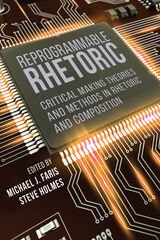
Reprogrammable Rhetoric offers new inroads for rhetoric and composition scholars’ past and present engagements with critical making. Moving beyond arguments of inclusion and justifications for scholarly legitimacy and past historicizations of the “material turn” in the field, this volume explores what these practices look like with both a theoretical and hands-on “how-to” approach. Chapters function not only as critical illustrations or arguments for the use of reprogrammable circuits but also as pedagogical instructions that enable readers to easily use or modify these compositions for their own ends.

This collection offers nuanced theoretical perspectives on material and cultural rhetorics alongside practical tutorials for students, researchers, and teachers to explore critical making across traditional areas such as wearable sensors, Arduinos, Twitter bots, multimodal pedagogy, Raspberry Pis, and paper circuitry, as well as underexplored areas like play, gaming, text mining, bots, and electronic monuments.

Designed to be taught in upper division undergraduate and graduate classrooms, these tutorials will benefit non-expert and expert critical makers alike. All contributed codes and scripts are also available on Utah State University Press’s companion website to encourage downloading, cloning, and repurposing.
 
 
Contributors: Aaron Beveridge, Kendall Gerdes, Kellie Gray, Matthew Halm, Steven Hammer, Cana Uluak Itchuaqiyaq, John Jones, M.Bawar Khan, Bree McGregor, Sean Morey, Ryan Omizo, Andrew Pilsch, David Rieder, David Sheridan, Wendi Sierra, Nicholas Van Horn
 
[more]
cover of Republic on the Wire: Cable Television, Pluralism, and the Politics of New Technologies, 1948-1984

Republic on the Wire

Cable Television, Pluralism, and the Politics of New Technologies, 1948-1984

McMurria, John

Rutgers University Press, 2017

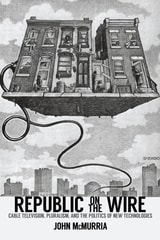
The history of cable television in America is far older than networks like MTV, ESPN, and HBO, which are so familiar to us today. Tracing the origins of cable TV back to the late 1940s, media scholar John McMurria also locates the roots of many current debates about premium television, cultural elitism, minority programming, content restriction, and corporate ownership. 
 
Republic on the Wire takes us back to the pivotal years in which media regulators and members of the viewing public presciently weighed the potential benefits and risks of a two-tiered television system, split between free broadcasts and pay cable service. Digging into rare archives, McMurria reconstructs the arguments of policymakers, whose often sincere advocacy for the public benefits of cable television were fueled by cultural elitism and the priority to maintain order during a period of urban Black rebellions. He also tells the story of the people of color, rural residents, women’s groups, veterans, seniors, and low-income viewers who challenged this reasoning and demanded an equal say over the future of television. 
 
By excavating this early cable history, and placing equality at the center of our understanding of media democracy, Republic on the Wire is a real eye-opener as it develops a new methodology for studying media policy in the past and present.  


[more]
cover of Requirements for Electrical Installations, IET Wiring Regulations, Eighteenth Edition, BS 7671:2018

Requirements for Electrical Installations, IET Wiring Regulations, Eighteenth Edition, BS 7671

2018

The Institution of Engineering and Technology

The Institution of Engineering and Technology, 2018

The IET Wiring Regulations are of interest to all those concerned with the design, installation and maintenance of electric wiring in buildings. This includes electricians, electrical contractors, consultants, local authorities, surveyors and architects. This book will also be of interest to professional engineers, as well as students at university and further education colleges.
[more]
cover of Requirements for Electrical Installations, IET Wiring Regulations, Eighteenth Edition, BS 7671:2018+A2:2022

Requirements for Electrical Installations, IET Wiring Regulations, Eighteenth Edition, BS 7671

2018+A2:2022

The Institution of Engineering and Technology

The Institution of Engineering and Technology, 2022

The IET Wiring Regulations is the national standard for electrical installations in domestic, commercial and industrial settings. It is the essential standard for all those concerned with the design, installation, certification and maintenance of electrical installations. Amendment 2:2022 is a major update to BS 7671:2018, The IET Wiring Regulations, Eighteenth Edition.
[more]
cover of Requirements for Electrical Installations, IET Wiring Regulations, Eighteenth Edition, BS 7671:2018+A4:2026

Requirements for Electrical Installations, IET Wiring Regulations, Eighteenth Edition, BS 7671

2018+A4:2026

The Institution of Engineering and Technology

The Institution of Engineering and Technology, 2026

The IET Wiring Regulations is the national standard for electrical installations in domestic, commercial and industrial settings. It is the essential standard for all those concerned with the design, installation, certification and maintenance of electrical installations. Amendment 4:2026 is a major update to BS 7671:2018, The IET Wiring Regulations, Eighteenth Edition.
[more]
cover of Requirements for Electrical Installations, IET Wiring Regulations, Seventeenth Edition, BS 7671:2008+A3:2015

Requirements for Electrical Installations, IET Wiring Regulations, Seventeenth Edition, BS 7671

2008+A3:2015

The Institution of Engineering and Technology

The Institution of Engineering and Technology, 2015
The IET Wiring Regulations are of interest to all those concerned with the design, installation and maintenance of electric wiring in buildings. The market includes electricians, electrical contractors, consultants, local authorities, surveyors and architects. This book will also be of interest to professional engineers, as well as students at university and further education colleges.
[more]
cover of Residual Media

Residual Media

Charles R. Acland

University of Minnesota Press, 2006

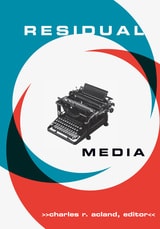
In a society that breathlessly awaits “the new” in every medium, what happens to last year’s new? Ample critical energy has gone into the study of new media, genres, and communities. But what becomes of discarded media? In what manner do the products of technological change reappear as environmental problems, as “the new” in another part of the world, as collectibles, as memories, and as art?

Residual Media grapples with these questions and more in a wide-ranging and eclectic collection of essays. Beginning with how cultural change bumps along unevenly, dragging the familiar into novel contexts, the contributors examine how leftover artifacts can be rediscovered occupying space in storage sheds, traveling the globe, converting to alternative uses, and accumulating in landfills. By exploring reconfigured, renewed, recycled, neglected, abandoned, and trashed media, the essays here combine theoretical challenges to media history with ideas, technology, and uses that have been left behind.

From player pianos to vinyl records, and from the typewriter to the telephone, Residual Media is an innovative approach to the aging of culture and reveals that, ultimately, new cultural phenomena rely on encounters with the old.

Contributors: Jennifer Adams, DePauw U; Jody Berland, York U; Sue Currell, U of Sussex; Maria DiCenzo, Wilfrid Laurier U; Kate Egan, U of Wales; Lisa Gitelman, Catholic U; Alison Griffiths, CUNY; James Hamilton, U of Georgia; James Hay, U of Illinois—Champaign-Urbana; Michelle Henning, U of the West of England; Lisa Parks, UC Santa Barbara; Hillegonda C. Rietveld, South Bank U; Leila Ryan, McMaster U; John Davis, Alfred U; Collette Snowden, U of South Australia; Jonathan Sterne, McGill U; JoAnne Stober, National Archives, Canada; Will Straw, McGill U; Haidee Wasson, Concordia U.

Charles R. Acland is Professor and holds the Concordia University Research Chair in communications studies at Concordia University, Montreal.
[more]
cover of Residues: Thinking Through Chemical Environments

Residues

Thinking Through Chemical Environments

Soraya Boudia

Rutgers University Press, 2022


Winner of the 2023 Merton Award from the Science, Knowledge, and Technology section of the American Sociological Association

Residues offers readers a new approach for conceptualizing the environmental impacts of chemicals production, consumption, disposal, and regulation. Environmental protection regimes tend to be highly segmented according to place, media, substance, and effect; academic scholarship often reflects this same segmented approach. Yet, in chemical substances we encounter phenomena that are at once voluminous and miniscule, singular and ubiquitous, regulated yet unruly. Inspired by recent studies of materiality and infrastructures, we introduce “residual materialism” as a framework for attending to the socio-material properties of chemicals and their world-making powers. Tracking residues through time, space, and understanding helps us see how the past has been built into our present chemical environments and future-oriented regulatory systems, why contaminants seem to always evade control, and why the Anthropocene is as inextricably harnessed to the synthesis of carbon into new molecules as it is driven by carbon’s combustion.
[more]
cover of Resilience in Wireless Networks

Resilience in Wireless Networks

Prashant Krishnamurthy

The Institution of Engineering and Technology, 2027
Resilience in Wireless Networks is the first book to cover this topic at an advanced level. It provides a unified view of the latest research and illustrates the issues, challenges and solutions currently under discussion. The book divides wireless networks into infrastructure and ad hoc topologies and considers the resilience of each separately.
[more]
cover of Resisting Garbage: The Politics of Waste Management in American Cities

Resisting Garbage

The Politics of Waste Management in American Cities

Lily Baum Pollans

University of Texas Press, 2021

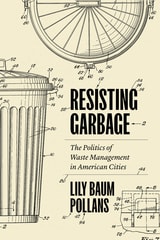
Resisting Garbage presents a new approach to understanding practices of waste removal and recycling in American cities, one that is grounded in the close observation of case studies while being broadly applicable to many American cities today.

Most current waste practices in the United States, Lily Baum Pollans argues, prioritize sanitation and efficiency while allowing limited post-consumer recycling as a way to quell consumers’ environmental anxiety. After setting out the contours of this “weak recycling waste regime,” Pollans zooms in on the very different waste management stories of Seattle and Boston over the last forty years. While Boston’s local politics resulted in a waste-export program with minimal recycling, Seattle created new frameworks for thinking about consumption, disposal, and the roles that local governments and ordinary people can play as partners in a project of resource stewardship. By exploring how these two approaches have played out at the national level, Resisting Garbage provides new avenues for evaluating municipal action and fostering practices that will create environmentally meaningful change.
[more]
cover of Resource Allocation and Productivity in National and International Agricultural Research

Resource Allocation and Productivity in National and International Agricultural Research

Thomas Arndt

University of Minnesota Press, 1977

Resource Allocation and Productivity in National and International Agricultural Research was first published in 1977.Agricultural research in developing countries has grown rapidly in recent years. As the research system has expanded, questions about the productivity of research and the allocation of research resources have become important issues for development planners, science managers, donor agencies, and other individuals and institutions concerned with research operations and opportunities.In this volume, forty contributors - natural and social scientists and research administrators - provide a comprehensive analysis of the implications of agricultural science and technology for agricultural development. They examine recent evidence on the returns to investment in national and international agricultural research systems and explore the relevance of social and economic factors for the organization and management of these systems. In a final section they discuss research strategy and management issues that will affect the future productivity and organization of both the international and the national research systems.The material is based on papers given at a conference held at Airlie House, Virginia, sponsored by the Agricultural Development Council. Funding was provided through the U.S. Agency for International Development (USAID), support of the Council’s Research Training and Network Program, and by additional assistance from the World Bank.
[more]
cover of Resource Allocation in Agricultural Research

Resource Allocation in Agricultural Research

Walter Fishel

University of Minnesota Press, 1971

Resource Allocation in Agricultural Research was first published in 1971.The new knowledge produced by research has accounted for an increasing share of national economic growth in this country. As the economic importance of research has risen, the emerging problems attendant on the allocation of resources to research has attracted increased professional attention.This book presents the views and findings of a number of experts concerned with the problems, issues, and procedures involved in the allocation of resources for agricultural research. The twenty-one contributors include agricultural and general economists, public administration officials, scientists, and other specialists. The chapters are based on papers given at a symposium which was sponsored jointly by the Minnesota Agricultural Experiment Station and the Cooperative States Research Service of the U.S. Department of Agriculture.In his preface Walter L. Fishel, the volume editor, explains: “While the symposium participants presented varying points of view and different approaches to the problems on resource allocation in agricultural research, they generally shared the orientation of economic theory. Both the issues examined and the debate reflect this perspective. The general assumption was that the allocation problem to a considerable extent can be approached within an economic framework. More specifically, it was generally agreed that research may be viewed as an economic activity since it requires scarce resources and produces something of value.”After an introductory chapter which explains the problems and issues, the rest of the volume is divided into sections on research and welfare, investments in research, decision making in practice, and decision making experiments.
[more]
cover of Restoring Baird's Image

Restoring Baird's Image

Donald F. McLean

The Institution of Engineering and Technology, 2000
John Logie Baird, Britain's foremost television pioneer, experimented with video recording onto gramophone discs in the late 1920s. Though unsuccessful at the time, his experiments resulted in several videodiscs, some 25 years before the videotape recorder became practical. These videodiscs - called Phonovision - remained neglected over the decades, considered by experts as unplayable.
[more]
cover of Retro-reflective Beamforming Technique for Microwave Power Transmission

Retro-reflective Beamforming Technique for Microwave Power Transmission

Mingyu Lu

The Institution of Engineering and Technology, 2024
Microwave power transmission technology, which is a sub-discipline of the wireless power transmission technology, aims to transmit electrical power without using wires/cables in the microwave frequency band. The retro-reflective beamforming technique has the potential to enable efficient and safe microwave power transmission, as it includes the following two technical elements. First, a directional microwave beam is generated as the carrier of wireless power. Second, the microwave power beam could be steered in real time toward mobile wireless power receiver(s). This book offers a comprehensive narrative of retro-reflective beamforming in the context of microwave power transmission.
[more]
cover of Reverse Engineering Social Media: Software, Culture, and Political Economy in New Media Capitalism

Reverse Engineering Social Media

Software, Culture, and Political Economy in New Media Capitalism

Robert W Gehl

Temple University Press, 2014

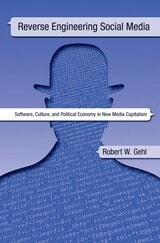
Robert Gehl's timely critique, Reverse Engineering Social Media, rigorously analyzes the ideas of social media and software engineers, using these ideas to find contradictions and fissures beneath the surfaces of glossy sites such as Facebook, Google, and Twitter. 


Gehl adeptly uses a mix of software studies, science and technology studies, and political economy to reveal the histories and contexts of these social media sites. Looking backward at divisions of labor and the process of user labor, he provides case studies that illustrate how binary "Like" consumer choices hide surveillance systems that rely on users to build content for site owners who make money selling user data, and that promote a culture of anxiety and immediacy over depth.


Reverse Engineering Social Media also presents ways out of this paradox, illustrating how activists, academics, and users change social media for the better by building alternatives to the dominant social media sites.
 
[more]
cover of Rewriting the Mechanic: Text, Technology, and the Body in the Eighteenth Century

Rewriting the Mechanic

Text, Technology, and the Body in the Eighteenth Century

Emily M. West

Bucknell University Press, 2027

In the eighteenth century, “technology” didn’t name a particular device or a process. It referred instead to written accounts of the mechanical arts, a now-obsolete category encompassing the wide range of work done by hand, from baking bread to building ships. Rewriting the Mechanic examines how these written descriptions, circulating across genres in eighteenth-century Britain, transformed certain mechanical arts by imagining them as newly innovative, authoritative, and able to make speculative possibilities real—as what we now call technological. Reversing the familiar story in which literature simply reflects technological change, West draws on the work of Robert Hooke, Aphra Behn, Daniel Defoe, Maria Edgeworth, and Jane Austen to demonstrate the influence of literary techniques on ideas about masculinity, power, and the body, and how these texts helped to bring the very idea of technological modernity into being.

Published by Bucknell University Press. Distributed worldwide by Rutgers University Press.
[more]
cover of Rhetorical Mediator: Understanding Agency in Indigenous Translation and Interpretation through Indigenous Approaches to UX

Rhetorical Mediator

Understanding Agency in Indigenous Translation and Interpretation through Indigenous Approaches to UX

Nora K. Rivera

Utah State University Press, 2023

The Rhetorical Mediator reveals how and why scholars and user experience (UX) researchers can include Indigenous technical communicators and oral interpretation practices in their interdisciplinary conversations. Nora Rivera analyzes the challenges that Indigenous interpreters and translators face in Peru, Mexico, and the United States as a means of understanding their agency and examines the various ways in which technical and professional communication, translation and interpreting studies, and UX research can better support the practices of Indigenous interpreters and translators.
 
In places where Indigenous language translation and interpretation are greatly needed, Indigenous language mediators often lack adequate systems to professionalize their field while withstanding Western practices that do not align with their worldviews. Through a “design thinking” methodology based on her work organizing and participating in an Indigenous-focused interpreter and translator conference, Rivera examines testimonios and semi-structured interviews conducted with Indigenous interpreters and translators to emphasize dialogue and desahogo (emotional release) as Indigenous communication practices.
 
The Rhetorical Mediator advocates for Indigenous language practices that have been sidelined by Western scholarship and systems, helping to create more equitable processes to directly benefit Indigenous individuals and other underrepresented groups. This book benefits specialists, including UX researchers, technical and professional communicators, interpreters and translators, and Indigenous professionals, as well as academics teaching graduate and undergraduate methods, Indigenous rhetoric and translation, and UX courses.
 
[more]
cover of Rhumb Lines and Map Wars: A Social History of the Mercator Projection

Rhumb Lines and Map Wars

A Social History of the Mercator Projection

Mark Monmonier

University of Chicago Press, 2004

In Rhumb Lines and Map Wars, Mark Monmonier offers an insightful, richly illustrated account of the controversies surrounding Flemish cartographer Gerard Mercator's legacy. He takes us back to 1569, when Mercator announced a clever method of portraying the earth on a flat surface, creating the first projection to take into account the earth's roundness. As Monmonier shows, mariners benefited most from Mercator's projection, which allowed for easy navigation of the high seas with rhumb lines—clear-cut routes with a constant compass bearing—for true direction. But the projection's popularity among nineteenth-century sailors led to its overuse—often in inappropriate, non-navigational ways—for wall maps, world atlases, and geopolitical propaganda.

Because it distorts the proportionate size of countries, the Mercator map was criticized for inflating Europe and North America in a promotion of colonialism. In 1974, German historian Arno Peters proffered his own map, on which countries were ostensibly drawn in true proportion to one another. In the ensuing "map wars" of the 1970s and 1980s, these dueling projections vied for public support—with varying degrees of success.

Widely acclaimed for his accessible, intelligent books on maps and mapping, Monmonier here examines the uses and limitations of one of cartography's most significant innovations. With informed skepticism, he offers insightful interpretations of why well-intentioned clerics and development advocates rallied around the Peters projection, which flagrantly distorted the shape of Third World nations; why journalists covering the controversy ignored alternative world maps and other key issues; and how a few postmodern writers defended the Peters worldview with a self-serving overstatement of the power of maps. Rhumb Lines and Map Wars is vintage Monmonier: historically rich, beautifully written, and fully engaged with the issues of our time.

[more]
cover of Ridge Waveguides and Passive Microwave Components

Ridge Waveguides and Passive Microwave Components

J. Helszajn

The Institution of Engineering and Technology, 2000
The ridge waveguide, which is a rectangular waveguide with one or more metal inserts (ridges), is an important transmission line in microwave engineering, through which many passive components can be achieved. As such it is a well-established and widely used element in commercial electronics and communications devices. This book collects together much of the work of Professor Helszajn, an international authoriy in the field, and will enable the reader to have direct access to this material without need for exhaustive search of research papers. Generously illustrated, it is likely to become the definitive reference source on this topic. The book includes closed-form and finite element calculations of the propagation constant, attenuation and mode spectrum for the ridge waveguide, as well as power-current and power-voltage definitions of impedance. Circular polarisation is also treated. Propagation properties where the waveguide has a dielectric filler are calculated. The treatment is then extended to more complex designs, including quadruple ridge waveguides with and without a gyromagnetic filler. The text includes descriptions of many of the passive devices which can be realised using these waveguides, including isolators, phase shifters and circulators. A treatment of the finline waveguide is included as its geometry is closely related to that of the ridge waveguide, leading to components such as the 3-port finline calculator.
[more]
cover of Riding the High Wire: Aerial Mine Tramways in the West

Riding the High Wire

Aerial Mine Tramways in the West

Robert A. Trennert

University Press of Colorado, 2001

Riding the High Wire is the first comprehensive history of aerial mine tramways in the American West, describing their place in the evolution of mining after 1870. Robert A. Trennert shows how the mid-nineteenth century development of wire rope manufacturing made it possible for American entrepreneurs such as Andrew S. Hallidie and Charles Huson to begin erecting single-rope tramways in the 1870s and 1880s. Their inventions were followed by the more substantial double-rope systems imported from Europe. By the turn of the century, aerial tramways were common throughout western mining regions, hauling everything from gold and silver ore to coal and salt and changing the face of the industry.

Aerial mine tramways proved to have a special fascination; people often rode them for a thrill, sometimes with disastrous results. They were also very temperamental, needed constant attention, and were prone to accidents. The years between 1900 and 1920 saw the operation of some of the west's most spectacular tramways, but the decline in high-country mining beginning in the 1920s--coupled with the development of more efficient means of transportation--made this technology all but obsolete by the end of the Second World War.

Historians and the general reader will be equally enthralled by Trennert's fascinating story of the rise and fall of aerial mine tramways.

"Professor Trennert has explored a new area of mining history, and is to be commended for his pioneering work." --Liston Leyendecker, author of The Griffith Family and the Founding of Georgetown.
[more]
cover of Risk Principles for Public Utility Regulators

Risk Principles for Public Utility Regulators

Janice A. Beecher

Michigan State University Press, 2016

Risk and risk allocation have always been central issues in public utility regulation. Unfortunately, the term “risk” can easily be misrepresented and misinterpreted, especially when disconnected from long-standing principles of corporate finance.
This book provides those in the regulatory policy community with a basic theoretical and practical grounding in risk as it relates specifically to economic regulation in order to focus and elevate discourse about risk in the utility sector in the contemporary context of economic, technological, and regulatory change. This is not a “how-to” book with regard to calculating risks and returns but rather a resource that aims to improve understanding of the nature of risk. It draws from the fields of corporate finance, behavioral finance, and decision theory as well as the broader legal and economic theories that undergird institutional economics and the economic regulatory paradigm.
We exist in a world of scarce resources and abundant uncertainties, the combination of which can exacerbate and distort our sense of risk. Although there is understandable impulse to reduce risk, attempts to mitigate may be as likely to shift risk, and some measures might actually increase risk exposure. Many of the concepts explored here apply not just to financial decisions, such as those by utility investors, but also to regulatory and utility decision-making in general.
[more]
cover of Risk and Adaptation in a Cancer Cluster Town

Risk and Adaptation in a Cancer Cluster Town

Laura Hart

Rutgers University Press, 2023

In disease cluster communities across the country, environmental contamination from local industries is often suspected as a source of disease. But civic action is notoriously hampered by the slow response from government agencies to investigate the cause of disease and the complexities of risk assessment. 

In Risk and Adaptation in a Cancer Cluster Town, Laura Hart examines another understudied dimension of community inaction: the role of emotion and its relationship to community experiences of social belonging and inequality. Using a cancer cluster community in Northwest Ohio as a case study, Hart advances an approach to risk that grapples with the complexities of community belonging, disconnect, and disruption in the wake of suspected industrial pollution. Her research points to a fear driven not only by economic anxiety, but also by a fear of losing security within the community—a sort of pride that is not only about status, but connectedness. Hart reveals the importance of this social form of risk—the desire for belonging and the risk of not belonging—ultimately arguing that this is consequential to how people make judgements and respond to issues. Within this context where the imperative for self-protection is elusive, affected families experience psychosocial and practical conflicts as they adapt to cancer as a way of life. Considering a future where debates about risk and science will inevitably increase, Hart considers possibilities for the democratization of risk management and the need for transformative approaches to environmental justice.
[more]
cover of Risky Cities: The Physical and Fiscal Nature of Disaster Capitalism

Risky Cities

The Physical and Fiscal Nature of Disaster Capitalism

Albert S. Fu

Rutgers University Press, 2022
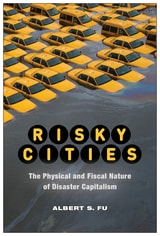
Over half the world’s population lives in urban regions, and increasingly disasters are of great concern to city dwellers, policymakers, and builders. However, disaster risk is also of great interest to corporations, financiers, and investors. Risky Cities is a critical examination of global urban development, capitalism, and its relationship with environmental hazards. It is about how cities live and profit from the threat of sinkholes, garbage, and fire. Risky Cities is not simply about post-catastrophe profiteering. This book focuses on the way in which disaster capitalism has figured out ways to commodify environmental bads and manage risks. Notably, capitalist city-building results in the physical transformation of nature. This necessitates risk management strategies –such as insurance, environmental assessments, and technocratic mitigation plans. As such capitalists redistribute risk relying on short-term fixes to disaster risk rather than address long-term vulnerabilities. 
[more]
cover of Road Pricing: Technologies, economics and acceptability

Road Pricing

Technologies, economics and acceptability

John Walker

The Institution of Engineering and Technology, 2018
Road pricing is increasingly being implemented around the world to combat congestion, curb carbon and other polluting emissions, compensate for falling revenues from fuel duty, improve the efficiency of the existing transport infrastructure, and fund new transport projects.
[more]
cover of Robert Paul and the Origins of British Cinema

Robert Paul and the Origins of British Cinema

Ian Christie

University of Chicago Press, 2019

The early years of film were dominated by competition between inventors in America and France, especially Thomas Edison and the Lumière brothers . But while these have generally been considered the foremost pioneers of film, they were not the only crucial figures in its inception. Telling the story of the white-hot years of filmmaking in the 1890s, Robert Paul and the Origins of British Cinema seeks to restore Robert Paul, Britain’s most important early innovator in film, to his rightful place.
           
From improving upon Edison’s Kinetoscope to cocreating the first movie camera in Britain to building England’s first film studio and launching the country’s motion-picture industry, Paul played a key part in the history of cinema worldwide. It’s not only Paul’s story, however, that historian Ian Christie tells here. Robert Paul and the Origins of British Cinema also details the race among inventors to develop lucrative technologies and the jumbled culture of patent-snatching, showmanship, and music halls that prevailed in the last decade of the nineteenth century. Both an in-depth biography and a magnificent look at early cinema and fin-de-siècle Britain, Robert Paul and the Origins of British Cinema is a first-rate cultural history of a fascinating era of global invention, and the revelation of one of its undervalued contributors.
 
[more]
cover of Robots and Automated Manufacture

Robots and Automated Manufacture

J. Billingsley

The Institution of Engineering and Technology, 1985
To serve its purpose, an industrial robot must be harnessed to a manufacturing task, be it welding, assembly, adjustment or the inspection of food products. Complex tasks are likely to require offline programming, both for economy of equipment use and to permit computer simulations for collision avoidance. Vision and other sensory systems are helping to extend the capabilities of robots, while advanced programming techniques are making their use more accessible to the shop floor.
[more]
cover of Robust and Adaptive Model Predictive Control of Nonlinear Systems

Robust and Adaptive Model Predictive Control of Nonlinear Systems

Martin Guay

The Institution of Engineering and Technology, 2016
Most physical systems possess parametric uncertainties or unmeasurable parameters and, since parametric uncertainty may degrade the performance of model predictive control (MPC), mechanisms to update the unknown or uncertain parameters are desirable in application. One possibility is to apply adaptive extensions of MPC in which parameter estimation and control are performed online. This book proposes such an approach, with a design methodology for adaptive robust nonlinear MPC (NMPC) systems in the presence of disturbances and parametric uncertainties. One of the key concepts pursued is the concept of set-based adaptive parameter estimation, which provides a mechanism to estimate the unknown parameters as well as an estimate of the parameter uncertainty set. The knowledge of non-conservative uncertain set estimates is exploited in the design of robust adaptive NMPC algorithms that guarantee robustness of the NMPC system to parameter uncertainty.
[more]
cover of Romancing Nevada's Past: Ghost Towns And Historic Sites Of Eureka, Lander, And White Pine Counties

Romancing Nevada's Past

Ghost Towns And Historic Sites Of Eureka, Lander, And White Pine Counties

Shawn Hall

University of Nevada Press, 1993
Drawing on county records, newspaper microfilm, personal interviews, and on-site investigation, Hall provides the reader with a history of 175 significant sites, rendering a treasury of interesting facts on every page. This book blends history and old photographs with an update on the present condition of each ghost town or landmark. The sites and towns are arranged alphabetically, county by county, for quick reference.
[more]
cover of Romantic Automata: Exhibitions, Figures, Organisms

Romantic Automata

Exhibitions, Figures, Organisms

Michael Demson

Bucknell University Press, 2020

For most of the eighteenth century, automata were deemed a celebration of human ingenuity, feats of science and reason. Among the Romantics, however, they prompted a contradictory apprehension about mechanization and contrivance: such science and engineering threatened the spiritual nature of life, the source of compassion in human society. A deep dread of puppets and the machinery that propels them consequently surfaced in late eighteenth and early nineteenth century literature. Romantic Automata is a collection of essays examining the rise of this cultural suspicion of mechanical imitations of life.

Recent scholarship in post-humanism, post-colonialism, disability studies, post-modern feminism, eco-criticism, and radical Orientalism has significantly affected the critical discourse on this topic. In engaging with the work and thought of Coleridge, Poe, Hoffmann, Mary Shelley, and other Romantic luminaries, the contributors to this collection open new methodological approaches to understanding human interaction with technology that strives to simulate, supplement, or supplant organic life.


Published by Bucknell University Press. Distributed worldwide by Rutgers University Press. 
[more]
cover of Rome Measured and Imagined: Early Modern Maps of the Eternal City

Rome Measured and Imagined

Early Modern Maps of the Eternal City

Jessica Maier

University of Chicago Press, 2015

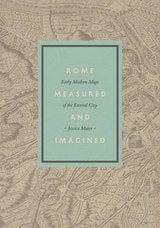
At the turn of the fifteenth century, Rome was in the midst of a dramatic transformation from what the fourteenth-century poet Petrarch had termed a “crumbling city” populated by “broken ruins” into a prosperous Christian capital. Scholars, artists, architects, and engineers fascinated by Rome were spurred to develop new graphic modes for depicting the city—and the genre known as the city portrait exploded.

In Rome Measured and Imagined, Jessica Maier explores the history of this genre—which merged the accuracy of scientific endeavor with the imaginative aspects of art—during the rise of Renaissance print culture. Through an exploration of works dating from the fifteenth to the eighteenth centuries, her book interweaves the story of the city portrait with that of Rome itself.

Highly interdisciplinary and beautifully illustrated with nearly one hundred city portraits, Rome Measured and Imagined advances the scholarship on Renaissance Rome and print culture in fascinating ways.
[more]
cover of Rural Images: Estate Maps in the Old and New Worlds

Rural Images

Estate Maps in the Old and New Worlds

Edited by David Buisseret

University of Chicago Press, 1996

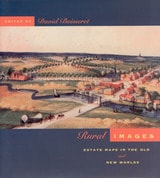
Just when private property materialized as an important social institution, a new kind of map appeared—the estate map. Prepared for private owners rather than national powers, these maps have been a little-studied strain of cadastral mapping until now. Here a group of leading historians—Sarah Bendall, David Buisseret, P. D. A. Harvey, and B. W. Higman—follow the spread of estate maps from their origin in England around 1570 to colonial America, the British Caribbean, and early modern Europe.

Generously illustrated with reproductions of rare manuscripts, including 8 color plates, these accounts reveal how estate maps performed vital economic and cultural functions for property owners until the end of the nineteenth century. From plans of plantations in Jamaica and South Carolina to a map of Queens College, Cambridge, handsome examples show that estate maps formed an important part of the historical record of property ownership for both individuals and corporations, and helped owners manage their land and appraise its value. Exhibited in public places for pleasure and as symbols of wealth, they often displayed elaborate cartouches and elegant coats-of-arms.
[more]