Results by title
2285 books match the query 'Women' and 79 start with r
Rewriting Islam
Decolonialism, Justice, and Contemporary Muslimah LiteratureHasnul Insani Djohar
The Ohio State University Press, 2024
Rewriting the Renaissance
The Discourses of Sexual Difference in Early Modern EuropeEdited by Margaret W. Ferguson, Maureen Quilligan, and Nancy Vickers
University of Chicago Press, 1986
Throughout, the essays focus on the structures of Renaissance patriarchy that organized power relations both in the state and in the family. They explore the major conequences of patriarchy for women—their marginalization and lack of identity and power—and the ways in which individual women or groups of women broke, or in some cases deliberately circumvented, the rules that defined them as a secondary sex. Topics covered include representations of women in literature and art, the actual work done by women both inside and outside of the home, and the writings of women themselves. In analyzing the rhetorical strategies that "marginalized" historical and fictional women, these essays counter scholarly and critical traditions that continue to exhibit patriarchal biases.
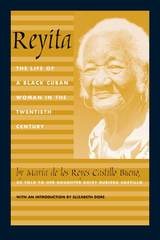
Reyita
The Life of a Black Cuban Woman in the Twentieth CenturyMaría de los Reyes Castillo Bueno
Duke University Press, 2000
Sensitive to and deeply knowledgeable of the systemic causes and consequences of poverty, Reyita’s testimony considers the impact of slavery on succeeding generations, her mother’s internalized racism, and Cuba’s residual discrimination. The humiliation and poverty inflicted on the black Cuban community as well as her decision to marry a white man to ensure a higher standard of living form the basis of other chapters. Reyita actively participated in the life of the community—often caring for the children of prostitutes along with her own eight children and giving herbal medicine and “spiritualist” guidance to ill or troubled neighbors. She describes her growing resistance, over five decades of marriage, to her husband’s sexism and negativity. Strong-willed and frank about her sexuality as well as her religious and political convictions, Reyita recounts joining the revolutionary movement in the face of her husband’s stern objections, a decision that added significant political purpose to her life. At book’s end, Reyita radiates gratification that her 118 descendants have many different hues of skin, enjoy a variety of professions, and—“most importantly”—are free of racial prejudice.
Rhetorical Listening
Identification, Gender, WhitenessKrista Ratcliffe
Southern Illinois University Press, 2005
Extending the feminist rhetorical project to define and model rhetorical listening
Long-ignored within rhetoric and composition studies, listening has returned to the disciplinary radar. Rhetorical Listening: Identification, Gender, Whiteness argues that rhetorical listening facilitates conscious identifications needed for cross-cultural communication.
Krista Ratcliffe establishes eavesdropping, listening metonymically, and listening pedagogically as approaches to rhetorical listening. She defines and models rhetorical listening, addressing identifications with gender and whiteness within public debates, scholarship, and pedagogy. Offering an approach grounded in classical rhetorical theory, Heideggerian theory, feminist theory, and critical race theory, Ratcliffe presents rhetorical listening as an invention tactic that engages spoken and written texts and supplements reading, writing, speaking, and silence as a rhetorical art.
Theorizing intersections of gender and whiteness, Rhetorical Listening examines how whiteness functions as an "invisible" racial category and provides disciplinary and cultural reasons for the displacement of listening and for the use of rhetorical listening as a code of cross-cultural conduct. Ratcliffe presents rhetorical listening in terms of cultural logics, stances, and dominant interpretive tropes. She highlights the modern identification theory of Kenneth Burke and the postmodern identification and disidentification theory of Diana Fuss and presents nonidentification as a more productive site for rhetorical listening.
Rhetorics of Motherhood
Lindal Buchanan
Southern Illinois University Press, 2013
Becoming a mother profoundly alters one’s perception of the world, as Lindal Buchanan learned firsthand when she gave birth. Suddenly attentive to representations of mothers and mothering in advertisements, fiction, film, art, education, and politics, she became intrigued by the persuasive force of the concept of motherhood, an interest that unleashed a host of questions: How is the construct defined? How are maternal appeals crafted, presented, and performed? What do they communicate about gender and power? How do they affect women? Her quest for answers has produced Rhetorics of Motherhood, the first book-length consideration of the topic through a feminist rhetorical lens.
Although both male and female rhetors employ motherhood to promote themselves and their agendas, Buchanan argues it is particularly slippery terrain for women—on the one hand, affording them authority and credibility but, on the other, positioning them disadvantageously within the gendered status quo. Rhetorics of Motherhood investigates that paradox by detailing the cultural construction and performance of the Mother in American public discourse, tracing its use and impact in three case studies, and by theorizing how, when, and why maternal discourses work to women’s benefit or detriment. In the process, the reader encounters a fascinating array of issues—including birth control, civil rights, and abortion—and rhetors, ranging from Diane Nash and Margaret Sanger to Sarah Palin and Michelle Obama.
As Buchanan makes clear, motherhood is a rich site for investigating the interrelationships among gender, power, and public discourse. Her latest book contributes to the discipline of rhetoric by attending to and making a convincing case for the significance of this understudied subject. With its examination of timely controversies, contemporary and historical figures, and powerful women, Rhetorics of Motherhood will appeal to a wide array of readers in rhetoric, communications, American studies, women’s studies, and beyond.
Rich Wife
Emily Bludworth de Barrios
University of Wisconsin Press, 2025
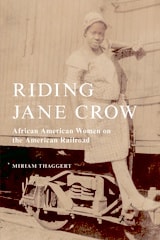
Riding Jane Crow
African American Women on the American RailroadMiriam Thaggert
University of Illinois Press, 2022

Riding on Comets
A MemoirCat Pleska
West Virginia University Press, 2015
Riding on Comets is the true story of an only child growing up in a working-class family during the 1950s and ‘60s.
As the family storyteller, Cat Pleska whispers and shouts about her life growing up around savvy, strong women and hard-working, hard-drinking men. Unlike many family stories set within Appalachia, this story provides an uncommon glimpse into this region: not coal, but an aluminum plant; not hollers, but small-town America; not hillbillies, but a hard-working family with traditional values.
From the dinner table, to the back porch, to the sprawling countryside, Cat Pleska reveals the sometimes tender, sometimes frightening education of a child who listens at the knees of these giants. She mimics and learns every nuance, every rhythm—how they laugh, smoke, cuss, fight, love, and tell stories—as she unwittingly prepares to carry their tales forward, their words and actions forever etched in her mind. And finally, she discovers a life story of her own.
Riotous Flesh
Women, Physiology, and the Solitary Vice in Nineteenth-Century AmericaApril R. Haynes
University of Chicago Press, 2015
As April R. Haynes shows, the crusade against female masturbation was rooted in a generally shared agreement on some major points: that girls and women were as susceptible to masturbation as boys and men; that “self-abuse” was rooted in a lack of sexual information; and that sex education could empower women and girls to master their own bodies. Yet the groups who made this education their goal ranged widely, from “ultra” utopians and nascent feminists to black abolitionists. Riotous Flesh explains how and why diverse women came together to popularize, then institutionalize, the condemnation of masturbation, well before the advent of sexology or the professionalization of medicine.
Rising Up, Living On
Re-Existences, Sowings, and Decolonial CracksCatherine E. Walsh
Duke University Press, 2023
Risk, Courage, and Women
Contemporary Voices in Prose and PoetryKaren A. Waldron
University of North Texas Press, 2007
Risqué Business
Breastaurants in American CultureTy Matejowsky
University of Alabama Press, 2025
Risqué Business serves up the breastaurant industry, where food service, sex appeal, identity, and gender politics mix.
Risqué Business explores the rise and ongoing cultural reckoning of “breastaurants”: sports bar–style restaurants like Hooters and Twin Peaks, which have long relied on the sexualized presentation of female servers to attract a mostly straight, male clientele. Ty Matejowsky, professor of anthropology at the University of Central Florida, is uniquely positioned in America’s foundational, breastaurant-saturated landscape. From this vantage, he offers a well-balanced account that draws on pop culture, media analysis, and contemporary gender politics. He delivers a smart, layered analysis of how breastaurants commodify youth and femininity, uphold retrograde masculinity, and serve as symbolic battlegrounds in today's highly charged political environments including America's deeply polarized Red State/Blue State divide.
With case studies, cultural critique, and a critical lens on labor and sexuality, Matejowsky reveals how these restaurants are more than just risqué marketing gimmicks. They reflect deeper anxieties about gender, identity, and the uneasy fusion of sex and service in American consumer culture. Risqué Business is a high-spirited study of an industry that thrives at the intersection of appetite and identity.
Ritual Soundings
Women Performers and World ReligionsSarah Weiss
University of Illinois Press, 2019
In Ritual Soundings, Sarah Weiss reads deeply into and across the ethnographic details of multiple studies while offering a robust framework for studying music and world religion. Her meta-ethnography reveals surprising patterns of similarity between unrelated cultures. Deftly blending ethnomusicology, the study of gender in religion, and sacred music studies, she invites ethnomusicologists back into comparative work, offering them encouragement to think across disciplinary boundaries. As Weiss delves into a number of less-studied rituals, she offers a forceful narrative of how women assert agency within institutional religious structures while remaining faithful to the local cultural practices the rituals represent.
Rituals and Sisterhoods
Single Women's Households in Mexico, 1560–1750Amos Megged
University Press of Colorado, 2019
Megged analyzes these women’s life stories recorded during the Spanish Inquisition, as well as wills and bequests, petitions, parish records, and private letters that describe—in their own words—how they exercised agency in male-dominated and religious spaces. Translations of select documents and accompanying analysis illustrate the conditions in which women dissolved their marriages, remained in long-lasting extramarital cohabitations, and formed female-led households and “sisterhoods” of their own. Megged provides evidence that single women in colonial Mexico played a far more active and central role in economic systems, social organizations, cults, and political activism than has been previously thought, creating spaces for themselves in which they could initiate and maintain autonomy and values distinct from those of elite society.
The institutionalization of female-headed households in mid-colonial Mexico had wide-ranging repercussions and effects on general societal values. Rituals and Sisterhoods details the particular relevance of these changes to the history of emotions, sexuality, gender concepts, perceptions of marriage, life choices, and views of honor and shame in colonial society. This book will be of significant interest to students and scholars of colonial Latin American history, the history of Early Modern Spain and Europe, and gender and women’s studies.
Riveting and Rationing in Dixie
Alabama Women and the Second World WarMary Martha Thomas
University of Alabama Press, 1987
Covers the experience of both black and white Alabama women as defense workers, volunteers, and homemakers. The most important change for women during the war years was their employment in jobs normally held by men, which posed an implicit challenge to traditional notions about femininity and female limitations.
Thomas describes the women employed in the defense industries—how they were recruited and trained, where they worked and under what conditions, and what changes employers made in the workplace to accommodate women, She also discusses the experience of the women who served as volunteers in the Ground Observer Corps, the Citizens’ Service Corps, the Red Cross, and other volunteer agencies. In addition, the author considers how homemakers coped during a time of rationing, housing shortages, lack of schools, and inadequate medical facilities.
Rivington Street
A NOVELMeredith Tax
University of Illinois Press, 1982
An absorbing, epic novel, Rivington Street is also suitable for use as a classroom text.
Road to Nowhere
How a Highway Map Wrecked BaltimoreEmily Lieb
University of Chicago Press, 2025
In the mid-1950s Baltimore’s Rosemont neighborhood was alive and vibrant with smart rowhouses, a sprawling park, corner grocery stores, and doctor’s offices. By 1957, a proposed expressway threatened to gut this Black, middle-class community from stem to stern.
That highway was never built, but it didn’t matter—even the failure to build it destroyed Rosemont economically, if not physically. In telling the history of the neighborhood and the notional East–West Expressway, Emily Lieb shows the interwoven tragedies caused by racism in education, housing, and transportation policy. Black families had been attracted to the neighborhood after Baltimore’s Board of School Commissioners converted several white schools into “colored” ones, which had also laid the groundwork for predatory real-estate agents who bought low from white sellers and sold high to determined Black buyers. Despite financial discrimination, Black homeowners built a thriving community before the city council formally voted to condemn some nine hundred homes in Rosemont for the expressway, leading to deflated home values and even more predatory real estate deals.
Drawing on land records, oral history, media coverage, and policy documents, Lieb demystifies blockbusting, redlining, and prejudicial lending, highlighting the national patterns at work in a single neighborhood. The result is an absorbing story about the deliberate decisions that produced racial inequalities in housing, jobs, health, and wealth—as well as a testament to the ingenuity of the residents who fought to stay in their homes, down to today.
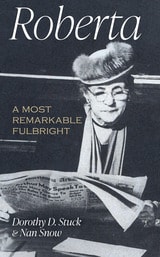
Roberta
A Most Remarkable FulbrightDorothy Stuck
University of Arkansas Press, 1997
Obscured in history by her internationally renowned son, Sen. J. William Fulbright, Roberta Waugh Fulbright was, nonetheless, an extraordinary person deserving of tribute. Here, finally and fittingly, is her biography-a sensitive portrait of a complex woman who was one Arkansas’s dominant figures.
Traditional mother of six children, gardener, thinker, and provocative conversationalist, Roberta Fulbright became a sudden widow at age forty-nine. She eventually took charge of the inherited, fragmented, business holdings, originally assembled by her husband, Jay, and molded them into a multi-enterprise family firm. As such, she emerged as an influential newspaper publisher and columnist, bank president, savvy business owner, and conscientious civic crusader. Through her own self-confidence and canny business sense, she became a formidable competitor in Fayetteville’s male-dominated business establishment. Her resolve was reflected in her signature column in the Northwest Arkansas Times, “As I See It”:
So long as a woman does poorly and the lords of creation can say, “Oh, it’s nothing but a fool woman,” they are fairly content, for they must, every mother’s son of them, have a woman to do much of the work. But let a woman do WELL and she is all but burned at the stake. I will say for the benefit of those who may be interested, I did not choose business as a career, it was thrust upon me. I did choose it in preference to going broke or dissipating my heritage and that of my children.
Intensely interested in politics, Fulbright challenged a corrupt local political machine and, later took on governor, producing a chain of events leading to he4r son’s election to Congress. In her column, she extolled the virtues of women’s talents, and she campaigned for an equal right for women in public life. In doing so, she was a moving force for acknowledgement of women in nontraditional roles, long before feminism became a movement.
Stuck and Snow have produced a brisk, lively story, drawing from a genealogical records, numerous interviews of family members, business associates, and friends, and the almost two million words written by Fulbright in her column. Renowned southern historian Willard B. Gatewood Jr. has said of this work: “I really appreciate [the authors’] treatment of [Roberta] as a person— inquisitive, assertive, benevolent, etc. They have captured superbly the family matriarch, incessant thinker and talker, the indulgent grandmother, and gifted gardener. This is truly a good ‘read’ and represents a highly significant achievement.”
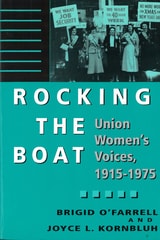
Rocking the Boat
Union Women's Voices, 1915-1975O'Farrell, Brigid
Rutgers University Press, 1996
Rocking the Boat is a celebration of strong, committed women who helped to build the American labor movement. Through the stories of eleven women from a wide range of backgrounds, we experience the turmoil, hardships, and accomplishments of thousands of other union women activists through the period spanning the Great Depression, the New Deal, World War II, the McCarthy era, the civil rights movement, and the women's movement. These women tell powerful stories that highlight and detail women's many roles as workers, trade unionists, and family members. They all faced difficulties in their personal lives, overcame challenges in their unions, and individually and collectively helped improve women's everyday working lives.
Maida Springer-Kemp came from New York City's Harlem, Local 22 of the International Ladies' Garment Workers' Union, to represent the AFL-CIO in Africa. In Chicago, Alice Peurala fought for her job in the steel mill and her place in the steel workers' union. Jessie De La Cruz organized farm workers in California. Esther Peterson, organizer, educator, and lobbyist, became an advisor to four U.S. presidents. In chapters based on oral history interviews, these women and others provide new perspectives and practical advice for today's working women. They share an idealistic and practical commitment to the labor movement. As Dorothy Haener of the United Auto Workers and a founding member of the National Organization of Women said, "You have to take a look at how to rock the boat. You don't want to spill yourself out if you can avoid it, but sometimes you have to rock the boat." From these women we, too, learn how to rock the boat.
Roman Women
Edited by Augusto Fraschetti
University of Chicago Press, 2001
Through this investigation, we encounter a number of idiosyncratic personalities. They include the vestal virgin Claudia; Cornelia, a matron; the passionate Fulvia; a mime known as "Lycoris"; the politician Livia; the martyr and writer Vibia Perpetua; a hostess named Helena Augusta; the intellectual Hypatia; and the saint Melania the Younger. Unlike their silent female counterparts, these women stood out in a culture where it was terribly difficult and odd to do so.
Romance and the Erotics of Property
Mass-Market Fiction for WomenJan Cohn
Duke University Press, 1988
Cohn argues that a full understanding of the contemporary romance requires an investigation of its literary and historical sources and analogues. Three principal sources are examined in the context of women's history in bourgeois society. Pride and Prejudice, Jane Erye, and Gone With the Wind demonstrate the development of romance fiction's themes, yet in all three the central love story is complicated by issues of property, the sign of male power. Jan Cohn further considers the development of the genre n the fictions of Harriet Lewis and May Agnes Fleming, prolific and popular American romance writers of the late nineteenth century who developed the role of the villain, thereby bringing into focus the sexual and economic struggles faced by the heroine.
Romance and the Erotics of Property sets romance fiction against a historic and literary background, arguing that contemporary romance disguises as tales of love the subversive fantasies of female appropriation and male property and power.
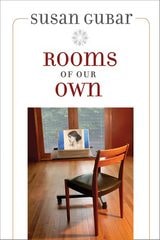
Rooms of Our Own
Susan Gubar
University of Illinois Press, 2006
With a little help from Virginia Woolf, Susan Gubar contemplates startling transformations produced by the women's movement in recent decades. What advances have women made and what still needs to be done? Taking Woolf's classic A Room of One's Own as her guide, Gubar engages these questions by recounting one year in the life of an English professor.
A meditation on the teaching of literature and on the state of the humanities today, her chapters also provide a crash course on the challenges and changes in feminist intellectual history over the past several decades: the influence of post-structuralism and of critical race, postcolonial, and cultural studies scholarship; the stakes of queer theory and the institutionalization of women's studies; and the effects of globalism and bioengineering on conversations about gender, sex, and sexuality. Yet Rooms of Our Own eschews a scholarly approach. Instead, through narrative criticism it enlists a thoroughly contemporary cast of characters who tell us as much about the comedies and tragedies of campus life today as they do about the sometimes contentious but invariably liberating feminisms of our future.
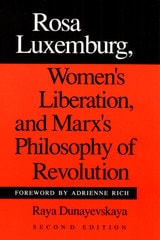
Rosa Luxemburg, Women's Liberation, and Marx's Philosophy of Revolution
Raya Dunayevskaya
University of Illinois Press, 1991
In this important and wide-ranging critique of Rosa Luxemburg (1871-1919) Raya Dunayevskaya examines the life, political thought, and action of one of the most critical revolutionary figures of our time. Dunayevskaya sheds new light on the questions of socialist democracy after the revolution, disclosing both the unprobed feminist dimension of Rosa Luxemburg and the previously unrecognized new moments in Marx's last decade concerning the role of women and the peasantry. As the founder of Marxist-Humanism in the United States, Dunayevskaya (1910-87) was an internationally respected writer, philosopher, and revolutionary. This new and expanded edition includes two previously unpublished articles by Dunayevskaya, including her "Challenge to all Post-Marx Marxists."
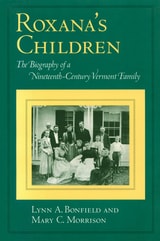
Roxana's Children
The Biography of a Nineteenth-Century Vermont FamilyLynn A. Bonfield
University of Massachusetts Press, 1995
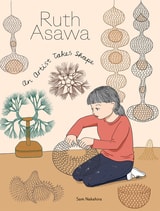
Ruth Asawa
An Artist Takes ShapeSam Nakahira
J. Paul Getty Trust, The, 2024
Renowned for her innovative wire sculptures, Japanese American artist Ruth Asawa (1926–2013) was a teenager in Southern California when Japan bombed Pearl Harbor and the United States entered World War II. Japanese Americans on the West Coast were forcibly removed from their homes. Asawa’s family had to abandon their farm, her father was incarcerated, and she and the rest of her family were sent to a concentration camp. Asawa nurtured her dreams of becoming an artist while imprisoned and eventually made her way to the experimental Black Mountain College in North Carolina.
This graphic biography by Sam Nakahira, developed in consultation with Asawa’s youngest daughter, Addie Lanier, chronicles the genesis of Asawa as an artist—from the horror of Pearl Harbor to her transformative education at Black Mountain College to building a life in San Francisco, where she would further develop and refine her groundbreaking wire sculpture.
Asawa never sought fame, preferring to work on her own terms: for her, art and life were one. Featuring lively illustrations and photographs of Asawa’s work, this retelling of her young adult years demonstrates the power of making art.
Ages thirteen and up

Ruth Benedict
Stranger in This LandBy Margaret M. Caffrey
University of Texas Press, 1989
Poet, anthropologist, feminist—Ruth Fulton Benedict was all of these and much more. Born into the last years of the Victorian era, she came of age during the Progressive years and participated in inaugurating the modern era of American life. Ruth Benedict: Stranger in This Land provides an intellectual and cultural history of the first half of the twentieth century through the life of an important and remarkable woman.
As a Lyricist poet, Ruth Benedict helped define Modernism. As an anthropologist, she wrote the classic Patterns of Culture and at one point was considered the foremost anthropologist in the United States—the first woman ever to attain such status. She was an intellectual and an artist living in a time when women were not encouraged to be either. In this fascinating study, Margaret Caffrey attempts to place Benedict in the cultural matrix of her time and successfully shows the way in which Benedict was a product of and reacted to the era in which she lived.
Caffrey goes far beyond providing simple biographical material in this well-written interdisciplinary study. Based on exhaustive research, including access for the first time to the papers of Margaret Mead, Benedict's student and friend, Caffrey is able to put Benedict's life clearly in perspective. By identifying the family and educational influences that so sharply influenced Benedict's psychological makeup, the author also closely analyzes the currents of thought that were strong when Victorianism paralleled the Modernism that figured in Benedict's life work. The result is a richly detailed study of a gifted woman.
This important work will be of interest to students of Modernism, poetry, and women's studies, as well as to anthropologists.
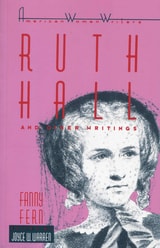
Ruth Hall and Other Writings by Fanny Fern
Edited by Joyce W Warren
Rutgers University Press, 1986
Fanny Fern was one of the most popular American writers of the mid-nineteenth century, the first woman newspaper columnist in the United States, and the most highly paid newspaper writer of her day. This volume gathers together for the first time almost one hundred selections of her best work as a journalist. Writing on such taboo subjects as prostitution, venereal disease, divorce, and birth control, Fern stripped the façade of convention from some of society's most sacred institutions, targeting cant and hypocrisy, pretentiousness and pomp.
Fern portrays a mid-nineteenth century woman who becomes the incarnartion of the American individualist, something regarded as exclusively for men.
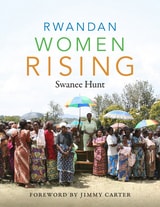
Rwandan Women Rising
Swanee Hunt
Duke University Press, 2017
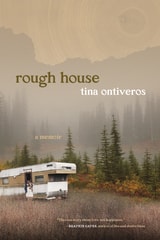
rough house
a memoirTina Ontiveros
Oregon State University Press, 2020
Tina Ontiveros was born into timber on both sides of the family. Her mother spent summers driving logging trucks for her family’s operation, and her father was the son of an itinerant logger, raised in a variety of lumber towns, as Tina herself would be.
A story of growing up in turmoil, rough house recounts a childhood divided between a charming, mercurial, abusive father in the forests of the Pacific Northwest and a mother struggling with small-town poverty. It is also a story of generational trauma, especially for the women—a story of violent men and societal restrictions, of children not always chosen and frequently raised alone.
Ontiveros’s father, Loyd, looms large. Reflecting on his death and long absence from her life, she writes, “I had this ridiculous hope that I would get to enjoy a functional relationship with my father, on my own terms, now that I was an adult.” In searingly honest, straightforward prose, rough house is her attempt to carve out this relationship, to understand her father and her family from an adult perspective.
While some elements of Ontiveros’s story are universal, others are indelibly grounded in the logging camps of the Pacific Northwest at the end of the twentieth century, as the lumber industry shifted and contracted. Tracing her childhood through the working-class towns and forests of Washington and Oregon, Ontiveros explores themes of love and loss, parents and children, and her own journey to a different kind of adulthood.