Results by title
1296 books match the query 'Women authors' and 59 start with r
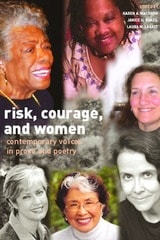
Risk, Courage, and Women
Contemporary Voices in Prose and PoetryKaren A. Waldron
University of North Texas Press, 2007

Road Down Troublesome
Anita Skeen
Michigan State University Press, 2027
A poetic journey through memory, loss, and the stories that define us, Road Down Troublesome blends an unmistakable Appalachian voice with fierce emotional clarity. Through a series of poems that traverse emotional and physical landscapes, Skeen maps a journey toward insight in the wake of death, loss, and grief. The collection foregrounds the shaping forces of the mother-daughter relationship, ecological fragility, and the sustaining bonds of friendship. Opening with a nod to Lisel Mueller’s invitation to give grief language, the book culminates in “After,” a poem that embodies the stillness and transformation achieved through the act of telling.
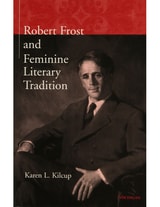
Robert Frost and Feminine Literary Tradition
Karen L. Kilcup
University of Michigan Press, 1998
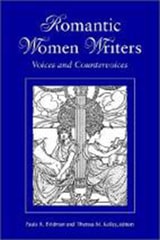
Romantic Women Writers
Voices and CountervoicesPaula R. Feldman and Theresa M. Kelley
Brandeis University Press, 1995
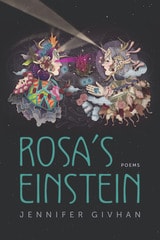
Rosa's Einstein
PoemsJennifer Givhan
University of Arizona Press, 2019
In this full-length poetry collection, the girls of Rosa’s Einstein embark on a quest to discover what is real and what is possible in the realms of imagination, spurred on by scientific curiosity and emotional resilience. Following a structural narrative arc inspired by the archetypal hero’s journey, sisters Rosa and Nieve descend into the desert borderlands of New Mexico to find resolution and healing through a bold and fearless examination of the past, meeting ghostly helpers and hinderers along the way. These metaphorical spirits take the shape of circus performers, scientists, and Lieserl, the lost daughter Albert Einstein gave away.
Poet Jennifer Givhan reimagines the life of Lieserl, weaving her search for her scientist father with Rosa and Nieve’s own search for theirs. Using details both from Einstein’s known life and from quantum physics, Givhan imagines Lieserl in a circus-like landscape of childhood trauma and survival, guided by Rosa and Nieve.

Round Lake
Grace Bonner
Four Way Books, 2016
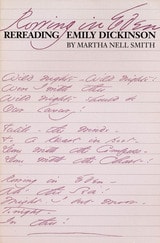
Rowing in Eden
Rereading Emily DickinsonBy Martha Nell Smith
University of Texas Press, 1992
Emily Dickinson wrote a "letter to the world" and left it lying in her drawer more than a century ago. This widely admired epistle was her poems, which were never conventionally published in book form during her lifetime. Since the posthumous discovery of her work, general readers and literary scholars alike have puzzled over this paradox of wanting to communicate widely and yet apparently refusing to publish. In this pathbreaking study, Martha Nell Smith unravels the paradox by boldly recasting two of the oldest and still most frequently asked questions about Emily Dickinson: Why didn't she publish more poems while she was alive? and Who was her most important contemporary audience?
Regarding the question of publication, Smith urges a reconception of the act of publication itself. She argues that Dickinson did publish her work in letters and in forty manuscript books that circulated among a cultured network of correspondents, most important of whom was her sister-in-law, Susan Huntington Gilbert Dickinson. Rather than considering this material unpublished because unprinted, Smith views its alternative publication as a conscious strategy on the poet's part, a daring poetic experiment that also included Dickinson's unusual punctuation, line breaks, stanza divisions, calligraphic orthography, and bookmaking—all the characteristics that later editors tried to standardize or eliminate in preparing the poems for printing.
Dickinson's relationship with her most important reader, Sue Dickinson, has also been lost or distorted by multiple levels of censorship, Smith finds. Emphasizing the poet-sustaining aspects of the passionate bonds between the two women, Smith shows that their relationship was both textual and sexual. Based on study of the actual holograph poems, Smith reveals the extent of Sue Dickinson's collaboration in the production of poems, most notably "Safe in Their Alabaster Chambers." This finding will surely challenge the popular conception of the isolated, withdrawn Emily Dickinson.
Well-versed in poststructuralist, feminist, and new textual criticism, Rowing in Eden uncovers the process by which the conventional portrait of Emily Dickinson was drawn and offers readers a chance to go back to original letters and poems and look at the poet and her work through new eyes. It will be of great interest to a wide audience in literary and feminist studies.

Running to Stand Still
Kimberly Reyes
Omnidawn, 2019
These poems teem with life, a life rich with many selves and many histories that populate in the voice of Reyes’s poetic narrator. They sway between negotiations of hypervisibility and erasure, the inevitable and the chosen, and the perceived and the constructed. Reyes’s poems offer sharp observations and lyrical movement to guide us in a ballad of reconciliation and becoming.
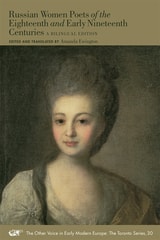
Russian Women Poets of the Eighteenth and Early Nineteenth Centuries
A Bilingual EditionEdited and Translated by Amanda Ewington
Iter Press, 2014
—Marcus C. Levitt
Professor, Department of Slavic Languages, University of Southern California