Results by title
28250 books match the query 'history' and 1215 start with r
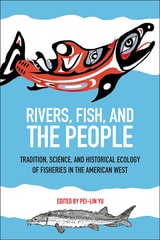
Rivers, Fish, and the People
Tradition, Science, and Historical Ecology of Fisheries in the American WestPei-Lin Yu
University of Utah Press, 2015
America’s western rivers are under assault from development, pollution, invasive species, and climate change. Returning these eco- systems to the time of European contact is often the stated goal for restoration efforts, yet neither the influence of indigenous societ- ies on rivers at the time of contact nor the deeper evolutionary relationships are yet understood by the scientific world. This volume presents a unique synthesis of scientific discoveries and traditional knowledge about the ecology of iconic river species in the American West.
Building from a foundation in fisheries biology and life history data about key species, the book reveals ancient human relationships with those species and describes time-tested Native resource management techniques, drawing from the archaeological record and original ethnographic sources. It evaluates current research trends, summarizes the conceptual foundations for the cultural and evolutionary significance of sustainable use of fish, and seeks pathways for future research. Geographic areas described include the Columbia Plateau, Idaho’s Snake River Plain, the Sacramento River Delta, and the mid-Fraser River of British Columbia. Previously unpublished information is included with the express permission and approval of tribal communities. This approach broadens and deepens the available body of data and establishes a basis for future collaboration between scientists and Native stakeholders toward mutual goals of river ecosystem health.
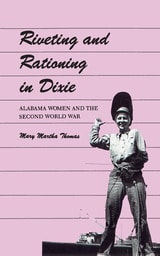
Riveting and Rationing in Dixie
Alabama Women and the Second World WarMary Martha Thomas
University of Alabama Press, 1987
Covers the experience of both black and white Alabama women as defense workers, volunteers, and homemakers. The most important change for women during the war years was their employment in jobs normally held by men, which posed an implicit challenge to traditional notions about femininity and female limitations.
Thomas describes the women employed in the defense industries—how they were recruited and trained, where they worked and under what conditions, and what changes employers made in the workplace to accommodate women, She also discusses the experience of the women who served as volunteers in the Ground Observer Corps, the Citizens’ Service Corps, the Red Cross, and other volunteer agencies. In addition, the author considers how homemakers coped during a time of rationing, housing shortages, lack of schools, and inadequate medical facilities.
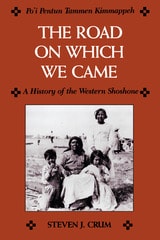
Road On Which We Came
A History of the Western ShoshoneSteven J. Crum
University of Utah Press, 1994
A hundred forty years ago, the Western Shoshone occupied a vast area of present-day Nevada—from Idaho in the north to Death Valley in the south. Today, the Newe hold a fraction of their former territory, still practicing native lifeways while accepting many aspect of American culture. Their story deserves telling.
The Road on Which We Came is the first comprehensive history of the Great Basin Shoshone. Written by historian Steven Crum, an enrolled tribal member, this book presents the Shoshone as an active force in their own history, effectively adapting to harsh physical environment, defending their territory in the nineteenth century, and working to modify or reject assimilationists policy in the present.
Noting that Native American history did not end with Wounded Knee, Crum gives substantial attention to twentieth-century events up to 1990 and emphasizes that in every period tribal actions can be characterized by a plurality of voices and opinions.
Road Trip
A Pocket History of IndianaAndrea Neal
Indiana Historical Society Press, 2016
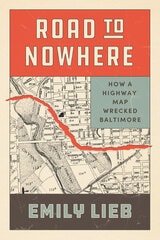
Road to Nowhere
How a Highway Map Wrecked BaltimoreEmily Lieb
University of Chicago Press, 2025
In the mid-1950s Baltimore’s Rosemont neighborhood was alive and vibrant with smart rowhouses, a sprawling park, corner grocery stores, and doctor’s offices. By 1957, a proposed expressway threatened to gut this Black, middle-class community from stem to stern.
That highway was never built, but it didn’t matter—even the failure to build it destroyed Rosemont economically, if not physically. In telling the history of the neighborhood and the notional East–West Expressway, Emily Lieb shows the interwoven tragedies caused by racism in education, housing, and transportation policy. Black families had been attracted to the neighborhood after Baltimore’s Board of School Commissioners converted several white schools into “colored” ones, which had also laid the groundwork for predatory real-estate agents who bought low from white sellers and sold high to determined Black buyers. Despite financial discrimination, Black homeowners built a thriving community before the city council formally voted to condemn some nine hundred homes in Rosemont for the expressway, leading to deflated home values and even more predatory real estate deals.
Drawing on land records, oral history, media coverage, and policy documents, Lieb demystifies blockbusting, redlining, and prejudicial lending, highlighting the national patterns at work in a single neighborhood. The result is an absorbing story about the deliberate decisions that produced racial inequalities in housing, jobs, health, and wealth—as well as a testament to the ingenuity of the residents who fought to stay in their homes, down to today.

Road-Book America
Contemporary Culture and the New PicaresqueRowland A. Sherrill
University of Illinois Press, 2000
Road-Book America discloses how the old picaresque tradition, embodied in such novels as Henry Fielding's Tom Jones and Daniel Defoe's Moll Flanders, opens to include a number of new American texts, both fiction and nonfiction, that decisively share the characterizing form. Sherrill's discussion encompasses hundreds of American narratives published in the past four decades, including such examples of the genre as William Least Heat-Moon's Blue Highways, John Steinbeck's Travels with Charley, James Leo Herlihy's Midnight Cowboy, Bill Moyers's Listening to America, and E. L. Doctorow's Billy Bathgate.
Sketching the socially marginal, ingenuous, traveling characters common to both old and new versions, Sherrill shows how the "new American picaresque" transforms the satirical aims of the original into an effort to map and catalog the immensity and variety of America.
Open, resilient, perennially hopeful, and endowed with a protean adaptability, the protagonist of the new American picaresque follows a therapeutic path for the alienated modern self. Mining the relevance of the reformulated picaresque for American life, Road-Book America shows how this old form, adaptable as the picaro himself, lays the groundwork for spiritual renewal and a restoration of cultural confidence in some old ways of being American.
Roads in the Wilderness
Conflict in Canyon CountryJedediah S. Rogers
University of Utah Press, 2013
Winner of the Wallace Stegner Prize in American Environmental or Western History
The canyon country of southern Utah and northern Arizona—a celebrated desert of rock and sand punctuated by gorges and mesas—is a region hotly contested among vying and disparate interests, from industrial developers to wilderness preservation advocates. Roads are central to the conflicts raging in an area perceived as one of the last large roadless places in the continental United States. The canyon country in fact contains an extensive network of dirt trails and roads, many originally constructed under the authority of a one-sentence statute in an 1866 mining law, later known as R.S. 2477. While well-groomed and paved roads came to signify the industrialization of the modern age, twentiethcentury conservationists have regarded roads as intrusive human imprints on the nation’s wild lands. Roads connect rural communities, spur economic growth, and in some cases blend harmoniously into the landscape, but they also fracture and divide, disturb wildlife and habitat, facilitate industrial development, and spoil wilderness.
Roads of Excess, Palaces of Wisdom
Eroticism and Reflexivity in the Study of MysticismJeffrey J. Kripal
University of Chicago Press, 2001
In his new book, Kripal addresses the twentieth-century study of mysticism as a kind of mystical tradition in its own right, with its own unique histories, discourses, sociological dynamics, and rhetorics of secrecy. Fluidly combining autobiography and biography with scholarly exploration, Kripal takes us on a tour of comparative mystical thought by examining the lives and works of five major historians of mysticism—Evelyn Underhill, Louis Massignon, R. C. Zaehner, Agehananda Bharati, and Elliot Wolfson—as well as relating his own mystical experiences. The result, Kripal finds, is seven "palaces of wisdom": the religious power of excess, the necessity of distance in the study of mysticism, the relationship between the mystical and art, the dilemmas of male subjectivity and modern heterosexuality, a call for ethical criticism, the paradox of the insider-outsider problem in the study of religion, and the magical power of texts and their interpretation.
An original and penetrating analysis of modern scholarship and scholars of mysticism, Roads of Excess, Palaces of Wisdom is also a persuasive demonstration of the way this scholarly activity is itself a mystical phenomenon.
Roads of Home
Beck, Henry
Rutgers University Press, 1983
Long regarded as folklife classics, Henry Charlton Beck's books are vivid recreations of the back roads, small towns, and legends that give New Jersey its special character. Father Henry Charlton Beck, who lived in New Jersey nearly all his life, was the author of numerous books on New Jersey folklife, state editor of the Camden Courier-Post, and writer for the Newark Star-Ledger. He is considered New Jersey's first folklorist and his painstaking work has left us with a rich collection of tales.
Roads to Renewal
The Report of Activities and Accomplishments of the Civil Works Administration in Michigan, November 1933–March 1934James R. Anderson
Michigan State University Press, 2020
Robber Baron
The Life of Charles Tyson YerkesJohn Franch
University of Illinois Press, 2006
Robbers Roost Recollections
Pearl Baker
Utah State University Press, 1991
Robert Altman's Nashville
An Archival ExplorationJustin Wyatt
University of Michigan Press, 2026
This book explores Robert Altman’s classic film from a variety of critical perspectives inspired by the archival materials from the Altman archive in the Screen Arts Mavericks and Makers collection at the University of Michigan Special Collections Research Center. Each chapter is centered around materials on Nashville from the Altman archive: stills, contact sheets, advertising artwork (used and unused), Jean Pagliuso photo shoots, Joan Tewkesbury script drafts, contracts, reviews, internal accounting memos, and the Altman scrapbooks. (Each of his films has a scrapbook of reviews, interviews, and notes from fans.) Using these sources as a starting point, the book seeks to explain the relevance and importance of Nashville after more than half a century.
Robert Ashley
Kyle Gann
University of Illinois Press, 2012
Robert Clifton Weaver and the American City
The Life and Times of an Urban ReformerWendell E. Pritchett
University of Chicago Press, 2008
Tracing Weaver’s career through the creation, expansion, and contraction of New Deal liberalism, Wendell E. Pritchett illuminates his instrumental role in the birth of almost every urban initiative of the period, from public housing and urban renewal to affirmative action and rent control. Beyond these policy achievements, Weaver also founded racial liberalism, a new approach to race relations that propelled him through a series of high-level positions in public and private agencies working to promote racial cooperation in American cities. But Pritchett shows that despite Weaver’s efforts to make race irrelevant, white and black Americans continued to call on him to mediate between the races—a position that grew increasingly untenable as Weaver remained caught between the white power structure to which he pledged his allegiance and the African Americans whose lives he devoted his career to improving.
Robert E. Sherwood
The Playwright in Peace and WarHarriet Hyman Alonso
University of Massachusetts Press, 2007
One of the nation's first film critics, an acclaimed speechwriter on his own and for President Franklin D. Roosevelt, a propagandist during World War II, and a leading producer on Broadway, Robert E. Sherwood scripted some of the most popular plays and films of his day, including Waterloo Bridge, The Best Years of Our Lives, Idiot's Delight, Abe Lincoln in Illinois, and Rebecca. His work brought him four Pulitzer Prizes and an Oscar. In his personal life, however, he was driven by a deep conviction that war was a societal evil that must be eradicated and human rights a moral responsibility that all governments should protect. At times, his belief in pacifism and his commitment to defending freedom and justice came into conflict with each other, causing frustration and emotional trauma which found their way into his writings and actions.
In this book, Harriet Hyman Alonso unravels Sherwood's inner struggle and portrays his political journey. Relying largely on his letters, diaries, plays, films, essays, and biography of Roosevelt and Harry Hopkins, she traces Sherwood's obsession with the world of politics and its effects on his life and art, from his experience as a soldier in World War I to the Cold War. She also describes his participation in the Algonquin Round Table, his friendships and working relationships with such notables as Alfred Lunt, Lynn Fontanne, Edna Ferber, Spencer Tracy, Harry Hopkins, and Franklin D. Roosevelt, his two marriages and uneasy relationship with his daughter, and his leadership role in the Broadway community.
Alonso brings together history, theater and film studies, and peace studies in this interdisciplinary political biography. In the process, she illuminates major currents in U.S. foreign policy, society, and culture from 1896 to 1955—the years of the remarkable life of Robert E. Sherwood.
Robert Estienne's Influence on Lexicography
By DeWitt T. Starnes
University of Texas Press, 1963
Towering above printers of his time and their successors for many years afterward was the figure of Robert Estienne, the great French lexicographer of the sixteenth century, whose contribution to knowledge and its dissemination is the subject of this authoritative book. The span of Robert Estienne's life (1503–1559) encompassed the historical epochs and events which shaped his career: the Renaissance, the Reformation, and the invention of printing by movable type. His keen interest in the revival of ancient literatures and languages and his training in the art of printing pointed the road he would travel, and the climate of opinion in the Reformation determined his destiny.
Robert Estienne promoted classical learning by printing the works of good authors; to spread knowledge of ancient literature he compiled dictionaries and grammars which were adopted by most of the universities of Europe. His dictionary of proper names of Biblical and classical origin, the Dictionarium historicum ac poeticum, became one of the great source books for later compilers of dictionaries and for authors. His influence on English writers was pervasive. Ben Jonson showed familiarity with his texts; Spenser and Milton sometimes set trarislations of his phraseology directly into their poetry. Perpetuation of the few errors he made is one sure proof that his dictionaries were used and copied.
An exemplar of learning in the classics and scripture, he searched in ancient manuscripts to avoid repeating the numerous errors that had crept into Bible translations over hundreds of years. For his efforts he was called a heretic by docteurs de theologie in the Sorbonne, but was protected by the royal favor of Francis I of France. Between attacks of theologians on the one side and the King's protection on the other, he became a "controversial" figure and after many years of calumny and persecution finally took refuge in Geneva.
Estienne established a family tradition of printing correct and beautiful books, and the printing establishments which made the name of Estienne celebrated throughout the world continued for 162 years.
Robert Frost and Feminine Literary Tradition
Karen L. Kilcup
University of Michigan Press, 1998
Robert Frost and the Challenge of Darwin
Robert Faggen
University of Michigan Press, 2001
Combining both intellectual history and detailed analysis of Frost's poems, Robert Faggen shows how Frost's reading of Darwin reflected the significance of science in American culture from Emerson and Thoreau, through James and pragmatism. He provides fresh and provocative readings of many of Frost's shorter lyrics and longer pastoral narratives as they illustrate the impact of Darwinian thought on the concept of nature, with particular exploration of man's relationship to other creatures, the conditions of human equality and racial conflict, the impact of gender and sexual differences, and the survival of religion.
The book shows that Frost was neither a pessimist lamenting the uncertainties of the Darwinian worldview, nor a humanist opposing its power. Faggen draws on Frost's unpublished notebooks to reveal a complex thinker who willingly engaged with the difficult moral and epistemological implications of natural science, and showed their consonance with myths and traditions stretching back to Milton, Lucretius, and the Old Testament. Frost emerges as a thinker for whom poetry was not only artistic expression, but also a forum for the trial of ideas and their impact on humanity.
Robert Frost and the Challenge of Darwin provides a deeper understanding not only of Frost and modern poetry, but of the meaning of Darwin in the modern world, the complex interrelations of literature and science, and the history of American thought.
"A forceful, appealing study of the Frost-Darwin relation, which has gone little noted by previous scholars, and a fresh explanation of Frost's ambivalent relation to modernism, which he scorned but also influenced" --William Howarth, Princeton University
Robert Faggen is Associate Professor of Literature, Claremont McKenna College and Adjunct Associate Professor, Claremont Graduate School.
Robert H. Gardiner and the Reunification of Worldwide Christianity in the Progressive Era
John F. Woolverton
University of Missouri Press, 2005
Robert Hayden in Verse
New Histories of African American Poetry and the Black Arts EraDerik Smith
University of Michigan Press, 2018
This book sheds new light on the work of Robert Hayden (1913–80) in response to changing literary scholarship. While Hayden’s poetry often reflected aspects of the African American experience, he resisted attempts to categorize his poetry in racial terms. This fresh appreciation of Hayden’s work recontextualizes his achievements against the backdrop of the Black Arts Movement and traces his influence on contemporary African American poets. Placing Hayden at the heart of a history of African American poetry and culture spanning the Harlem Renaissance to the Hip-Hop era, the book explains why Hayden is now a canonical figure in 20th-century American literature.
In deep readings that focus on Hayden’s religiousness, class consciousness, and historical vision, author Derik Smith inverts earlier scholarly accounts that figure Hayden as an outsider at odds with the militancy of the Black Arts movement. Robert Hayden in Verse offers detailed descriptions of the poet’s vigorous contributions to 1960s discourse about art, modernity, and blackness to show that the poet was, in fact, an earnest participant in Black Arts-era political and aesthetic debates.
Robert Kipniss
Paintings and Poetry, 1950–1964Robert Kipniss
The Artist Book Foundation, 2013
A comprehensive look at a memorable period in the celebrated painter and printmaker's life and career, Robert Kipniss: Paintings and Poetry, 1950–1964 is the result of his many arduous months revisiting his more-than-half-a-century-ago writings and peoms that were stashed away and essentially forgotten. "Some of the poems are straightforward, some are infused with surreal irony, and some are angry," says Kipniss in his candid and honest preface. Thoughtful and articulate from conception to completion, his never-before-published poems are choreographed with his early paintings in this monograph's contemplation of these influential and foundational fourteen years. "When I stopped writing [in 1961] my vision was no longer divided between word-thinking and picture-thinking: these approaches had merged and in expressing myself I was more whole," reflects Kipniss in his retrospective musings.
This written and visual account of previously unpublished poems and critically acclaimed early paintings includes two astute and illustrative essays that further engage the reader in the evolution of the artist's prolific oeuvre. His prints, drawings, and paintings are remarkable for their eloquence and refinement, earning him international recognition for his expansive landscapes and small town vistas, as well as quiet interors and intimate still lifes.
Readers of this seminal volume are all the richer for catching a glimpse of an intensely personal segment of this accomplished artist's private history. In an unambiguous assessment, Kipniss elaborates, "The most significant insight that arose in this undertaking...came when I began to collate reproductions of my paintings of the 1950s. I could clearly see that my work in the two mediums were from very differing parts of my psyche, and that while they were both in themselves completely engaged, they were not in any way together."
Robert Koehler’s The Strike
The Improbable Story of an Iconic 1886 Painting of Labor ProtestJames M. Dennis
University of Wisconsin Press, 2011
Every work of art has a story behind it. In 1886 the German American artist Robert Koehler painted a dramatic wide-angle depiction of an imagined confrontation between factory workers and their employer. He called this oil painting The Strike. It has had a long and tumultuous international history as a symbol of class struggle and the cause of workers’ rights. First exhibited just days before the tragic Chicago Haymarket riot, The Strike became an inspiration for the labor movement. In the midst of the campaign for an eight-hour workday, it gained international attention at expositions in Paris, Munich, and the 1893 Chicago World’s Fair. Though the painting fell into obscurity for decades in the early twentieth century, The Strike lived on in wood-engraved reproductions in labor publications. Its purchase, restoration, and exhibition by New Left activist Lee Baxandall in the early 1970s launched it to international fame once more, and collectors and galleries around the world scrambled to acquire it. It is now housed in the Deutsches Historisches Museum in Berlin, Germany.

Robert M. Hutchins
Portrait of an EducatorMary Ann Dzuback
University of Chicago Press, 1991
Robert Mugabe
Sue Onslow
Ohio University Press, 2018
Zimbabwe’s President Robert Mugabe sharply divides opinion and embodies the contradictions of his country’s history and political culture. As a symbol of African liberation and a stalwart opponent of white rule, he was respected and revered by many. This heroic status contrasted sharply, in the eyes of his rivals and victims, with repeated cycles of gross human rights violations. Mugabe presided over the destruction of a vibrant society, capital flight, and mass emigration precipitated by the policies of his government, resulting in his demonic image in Western media.
This timely biography addresses the coup, led by some of Mugabe’s closest associates, that forced his resignation after thirty-seven years in power. Sue Onslow and Martin Plaut explain Mugabe’s formative experiences as a child and young man; his role as an admired Afro-nationalist leader in the struggle against white settler rule; and his evolution into a political manipulator and survivalist. They also address the emergence of political opposition to his leadership and the uneasy period of coalition government. Ultimately, they reveal the complexity of the man who stamped his personality on Zimbabwe’s first four decades of independence.
Robert Paul and the Origins of British Cinema
Ian Christie
University of Chicago Press, 2019
From improving upon Edison’s Kinetoscope to cocreating the first movie camera in Britain to building England’s first film studio and launching the country’s motion-picture industry, Paul played a key part in the history of cinema worldwide. It’s not only Paul’s story, however, that historian Ian Christie tells here. Robert Paul and the Origins of British Cinema also details the race among inventors to develop lucrative technologies and the jumbled culture of patent-snatching, showmanship, and music halls that prevailed in the last decade of the nineteenth century. Both an in-depth biography and a magnificent look at early cinema and fin-de-siècle Britain, Robert Paul and the Origins of British Cinema is a first-rate cultural history of a fascinating era of global invention, and the revelation of one of its undervalued contributors.
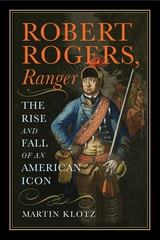
Robert Rogers, Ranger
The Rise and Fall of an American IconMartin Klotz
Westholme Publishing, 2026
Robert Rogers, Ranger: The Rise and Fall of an American Icon by Martin Klotz is a fresh look at the life of this famous, yet highly flawed man. Rogers undeniably had great personal strengths. He was brave nearly to the point of fearlessness. He was physically robust, always the one to cover the retreat, carry the wounded, or go for help when no one else could carry on. He was an intrepid explorer who wrote with eloquence about the splendors of the American frontier. He was bold and unconventional, good at thinking outside the box. He was an outstanding scout and intelligence gatherer who provided invaluable service to a British army inexperienced in woodland warfare. At the same time Rogers had enormous weaknesses that undermined his ability to lead effectively. His boldness was never tempered by judgment, and he was prone to grandiose schemes that came to nothing or, worse, to disaster. His constant self-promotion—including embellishing and lying about his battlefield successes—contributed to his popularity but damaged his reputation with peers and superiors. He succumbed to alcoholism and gambling, was profligate, especially with money—his debts were enormous—and routinely skirted the edges of the law. Rogers never found a comfortable place in America. Instead, his aristocratic patrons in London, who knew him mostly from his own self-description, gave him his most valuable opportunities, including commanding an important military and trading center on the colonial frontier and establishing the Queen’s Rangers to fight alongside Crown forces during the Revolution. But when the British cause failed in America, Rogers became an anathema on both sides of the Atlantic. A fascinating inquiry into an eighteenth-century life, Robert Rogers, Ranger presents this American legend as he lived, crossing the line between fame and misfortune.
Robert Wise
ShadowlandsWes D. Gehring
Indiana Historical Society Press, 2012
Robert de Cotte and the Perfection of Architecture in Eighteenth-Century France
Robert Neuman
University of Chicago Press, 1994
After describing de Cotte's training and the professional context in which he worked, Neuman offers a thorough survey of de Cotte's output. For each commission, he recreates the actual design process, showing how de Cotte manipulated an accepted vocabulary of architectural forms to meet the patron's specific requirements. De Cotte's own drawings, many reproduced here for the first time, and quotations from a wide variety of contemporary writings vividly supplement the case histories. Beautifully illustrated, Neuman's much-needed book reveals de Cotte as an innovative and strikingly modern architect.

Robert of Arbrissel
A Medieval Religious LifeBruce L. Venarde
Catholic University of America Press, 2003
Robert of Arbrissel
Sex, Sin, and Salvation in the Middle AgesJacques Dalarun
Catholic University of America Press, 2006
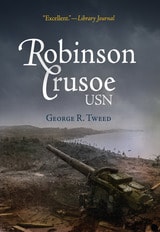
Robinson Crusoe, USN
The Adventures of George R. Tweed Rm1c on Japanese-Held GuamGeorge R. Tweed
Westholme Publishing, 2010
An Inspiring Story of Survival and Friendship
At the same time as the attack on Pearl Harbor, Japan captured American Guam. Given the choice of surrendering or being taken prisoner, George R. Tweed escaped into the countryside. Aided by Chamorro natives who risked their lives to keep him safe, Tweed survived for two and a half years until he was eventually rescued by the U.S. Navy. In Robinson Crusoe, USN, first published in 1945, Tweed recounts his remarkable experiences and the debt of gratitude he held for those who help keep him alive.
Rock 'n' Roll Movies
Sterritt, David
Rutgers University Press, 2018
Rock Art in an Indigenous Landscape
From Atlantic Canada to Chesapeake BayEdward J. Lenik with Nancy L. Gibbs
University of Alabama Press, 2021
A landmark study of Native American rock art from Atlantic Canada to Chesapeake Bay.
Rock art, petroglyphs, and pictographs have been made by indigenous peoples for thousands of years. Images have been found on bedrock, cliff faces, ridge tops, and boulders and in rock shelters. Some rock surfaces are covered with abstract and geometric designs such as concentric circles, zigzag lines, grids, and cross-hatched and ladder-like patterns. Others depict humans, footprints and handprints, mammals, serpents, and mythic creatures. All were meticulously pecked, incised or painted. This ancient art form connects us to Native Americans’ past, traditions, world views, and sacred places.
Rock Art in an Indigenous Landscape: From Atlantic Canada to Chesapeake Bay is the culmination of the research of preeminent rock art scholar Edward J. Lenik. Here, he profiles more than 64 examples of rock art in varied locations from Nova Scotia to Maryland. Chapters are organized geographically and lead the reader through coastal sites, rivers and streams, lakes and ponds, and upland sites.
Lenik discusses the rock art examples in the context of the indigenous landscape, noting the significance of the place of discovery. Coverage includes a meticulous description of the design or motif and suggestions of time frame, artist-makers, and interpretations. Where possible, indigenous views on the artifacts enrich the narrative. Other invaluable elements are a discussion of how to identify indigenous rock art; a glossary of rock art terms and features and archaeological culture periods; an up-to-date bibliography; and an appendix of a number of reported but unconfirmed petroglyph sites in the regions.
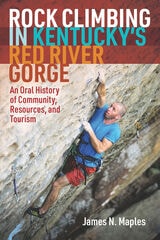
Rock Climbing in Kentucky's Red River Gorge
An Oral History of Community, Resources, and TourismJames N. Maples
West Virginia University Press, 2021
Rock Climbing in Kentucky’s Red River Gorge documents, for the first time, fifty years of oral history from this famous climbing community. Through extensive interviews, Maples reconstructs the growth of rock climbing in the region—including a twice-failed dam project, mysterious first routes, unauthorized sport-route growth on public lands, and a controversial archaeological dig. The book details five decades of collaborations to secure ongoing access to some of the world’s most beautiful and technically demanding routes and the challenges along the way.
More than a recounting of the past, however, Rock Climbing in Kentucky’s Red River Gorge uses the region’s extraordinary history to argue that climbing has the potential to be a valuable source of sustainable economic activity in rural areas throughout Appalachia today and in the years to come. The book concludes by offering policy recommendations and lessons learned about building beneficial partnerships among climbers, local communities, and public land managers to encourage community development and ecotourism alongside preservation.
Rockin' in the Ivory Tower
Rock Music on Campus in the SixtiesJames M. Carter
Rutgers University Press, 2023
Histories of American rock music and the 1960s counterculture typically focus on the same few places: Woodstock, Monterey, Altamont. Yet there was also a very active college circuit that brought edgy acts like the Jefferson Airplane and the Velvet Underground to different metropolitan regions and smaller towns all over the country. These campus concerts were often programmed, promoted, and reviewed by students themselves, and their diverse tastes challenged narrow definitions of rock music.
Rockin’ in the Ivory Tower takes a close look at two smaller universities, Drew in New Jersey and Stony Brook on Long Island, to see how the culture of rock music played an integral role in student life in the late 1960s. Analyzing campus archives and college newspapers, historian James Carter traces connections between rock fandom and the civil rights protests, free speech activism, radical ideas, lifestyle transformations, and anti-war movements that revolutionized universities in the 1960s. Furthermore, he finds that these progressive students refused to segregate genres like folk, R&B, hard rock, and pop. Rockin’ in the Ivory Tower gives readers a front-row seat to a dynamic time for the music industry, countercultural politics, and youth culture.
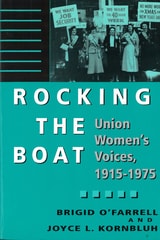
Rocking the Boat
Union Women's Voices, 1915-1975O'Farrell, Brigid
Rutgers University Press, 1996
Rocking the Boat is a celebration of strong, committed women who helped to build the American labor movement. Through the stories of eleven women from a wide range of backgrounds, we experience the turmoil, hardships, and accomplishments of thousands of other union women activists through the period spanning the Great Depression, the New Deal, World War II, the McCarthy era, the civil rights movement, and the women's movement. These women tell powerful stories that highlight and detail women's many roles as workers, trade unionists, and family members. They all faced difficulties in their personal lives, overcame challenges in their unions, and individually and collectively helped improve women's everyday working lives.
Maida Springer-Kemp came from New York City's Harlem, Local 22 of the International Ladies' Garment Workers' Union, to represent the AFL-CIO in Africa. In Chicago, Alice Peurala fought for her job in the steel mill and her place in the steel workers' union. Jessie De La Cruz organized farm workers in California. Esther Peterson, organizer, educator, and lobbyist, became an advisor to four U.S. presidents. In chapters based on oral history interviews, these women and others provide new perspectives and practical advice for today's working women. They share an idealistic and practical commitment to the labor movement. As Dorothy Haener of the United Auto Workers and a founding member of the National Organization of Women said, "You have to take a look at how to rock the boat. You don't want to spill yourself out if you can avoid it, but sometimes you have to rock the boat." From these women we, too, learn how to rock the boat.
Rocky Mountain Boom Town
A History of Durango, ColoradoDuane A. Smith
University Press of Colorado, 1992
Rocky Mountain Heartland
Colorado, Montana, and Wyoming in the Twentieth CenturyDuane A. Smith
University of Arizona Press, 2008
This is the colorful saga of how the Old West became the New West. Beginning at the end of the nineteenth century and concluding after the turn of the twenty-first, Rocky Mountain Heartland explains how Colorado, Montana, and Wyoming evolved over the course of the century. Smith is mindful of all the factors that propelled the region: mining, agriculture, water, immigration, tourism, technology, and two world wars. And he points out how the three states responded in varying ways to each of these forces.
Although this is a regional story, Smith never loses sight of the national events that influenced events in the region. As Smith skillfully shows, the vast natural resources of the three states attracted optimistic, hopeful Americans intent on getting rich, enjoying the outdoors, or creating new lives for themselves and their families. How they resolved these often-conflicting goals is the modern story of the Rocky Mountain region.
Rocky Mountain National Park
A HistoryC. W. Buchholtz
University Press of Colorado, 1983
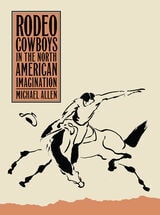
Rodeo Cowboys In The North American Imagination
Michael Allen
University of Nevada Press, 1998
Rodeo is an enduring relic of America’s popular culture, drawing capacity audiences to all its venues, from small western cowtowns to Madison Square Garden. The rodeo cowboy, that figure of rugged independence and solitary courage, continues to evoke the spirit of a vanished frontier and the hardy pioneers who conquered it. In this study historian Michael Allen examines the image of the rodeo cowboy and the role this image has played in popular culture over the past century. He sees rodeo as a significant American folk festival and the rodeo cowboy as the avatar of a nearly extinct authentic figure, the “real cowboy,” who embodies the skills and values of traditional western rural culture. Allen’s analysis explores the evolution of the myth of the rodeo man and its subsequent institutionalization and acculturation into the media of popular culture. He also examines the impact on this myth of significant changes in the rodeo milieu—the commercialization of the event and the professionalization of rodeo performers; the arrival on the rodeo scene of performers from outside the white, male, western, rural origins of the traditional cowboy performers. He discovers that America’s—and indeed the world’s—fascination with the rodeo cowboy reflects feelings far deeper than a taste for exciting entertainment. Allen’s discussion of the archetypal figure of the rodeo cowboy will change forever our perception of rodeo, but it will also help us understand how the ancient tension between frontier and civilization continues to play a role in our national imagination.
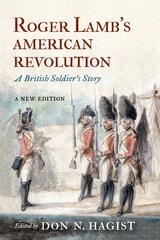
Roger Lamb's American Revolution
A British Soldier's StoryDon N. Hagist
Westholme Publishing, 2022
Of all the British soldiers who served in North America during the American Revolution, none wrote more about his experiences than Roger Lamb. He certainly had a lot to say: his service in two of the most important campaigns—the 1777 Saratoga campaign and the 1781 campaign through the Carolinas to Virginia—put him in the thick of some of the war’s most famous battles. Moreover, he was twice captured and twice escaped, making his way through hostile territory to rejoin the British army. Later in his life he wrote two books chronicling these experiences in great detail. Hundreds of British soldiers went through similar ordeals, sharing in the campaigns, the battles, the captivities, the escapes, but none recounted any aspect of these activities in the level of detail that Lamb did.
The first edition of this book, published in 2004, combined all of Roger Lamb’s first-hand recollections from his two books, An Original and Authentic Journal of Occurrences during the late American War, from its Commencement to the Year 1783 (Dublin, 1809) and Memoir of his Own Life (Dublin, 1811). Since that publication, two more important documents written by Lamb have come to light—an intelligence report written in 1782 recounting details of one of his escapes, and a “commonplace book” kept later in his life to record a vast range of memories, thoughts, and observations. Roger Lamb’s American Revolution: A British Soldier’s Story combines all of the material from these four sources pertaining to Lamb’s career as a soldier, from the time he joined the army to his departure from it, plus his recollections of childhood and post-military life. The result is the most comprehensive first-hand account by a British soldier in the American Revolution, an essential record for understanding the war in its totality.
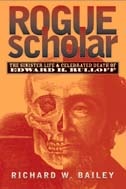
Rogue Scholar
The Sinister Life and Celebrated Death of Edward H. RulloffRichard W. Bailey
University of Michigan Press, 2003
Richard Bailey's narrative, calm and impartial yet spiked with wit and suspense, captures perfectly the slightly haunted and overwrought air of Victorian rural America, calling on newspaper accounts, interviews, and eyewitness reports of the day. Inevitably, the quiet accumulation of details builds to a story that transcends its individual events to touch on the universal themes of any age.
Rogue Scholar is about the evil of one man who lived a life of deception and crime. Yet in a larger sense it is also the portrait of a condemned soul in its final hours, an examination of the death penalty, and a reminder that media sensationalism is nothing new.
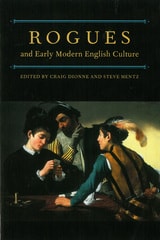
Rogues and Early Modern English Culture
Craig Dionne and Steve Mentz, Editors
University of Michigan Press, 2004
-Jonathan Dollimore, York University
"Rogues and Early Modern English Culture is an up-to-date and suggestive collection on a subject that all scholars of the early modern period have encountered but few have studied in the range and depth represented here."
-Lawrence Manley, Yale University
"A model of cross-disciplinary exchange, Rogues and Early Modern English Culture foregrounds the figure of the rogue in a nexus of early modern cultural inscriptions that reveals the provocation a seemingly marginal figure offers to authorities and various forms of authoritative understanding, then and now. The new and recent work gathered here is an exciting contribution to early modern studies, for both scholars and students."
-Alexandra W. Halasz, Dartmouth College
Rogues and Early Modern English Culture is a definitive collection of critical essays on the literary and cultural impact of the early modern rogue. Under various names-rogues, vagrants, molls, doxies, vagabonds, cony-catchers, masterless men, caterpillars of the commonwealth-this group of marginal figures, poor men and women with no clear social place or identity, exploded onto the scene in sixteenth-century English history and culture. Early modern representations of the rogue or moll in pamphlets, plays, poems, ballads, historical records, and the infamous Tudor Poor Laws treated these characters as harbingers of emerging social, economic, and cultural changes.
Images of the early modern rogue reflected historical developments but also created cultural icons for mobility, change, and social adaptation. The underclass rogue in many ways inverts the familiar image of the self-fashioned gentleman, traditionally seen as the literary focus and exemplar of the age, but the two characters have more in common than courtiers or humanists would have admitted. Both relied on linguistic prowess and social dexterity to manage their careers, whether exploiting the politics of privilege at court or surviving by their wits on urban streets.
Deftly edited by Craig Dionne and Steve Mentz, this anthology features essays from prominent and emerging critics in the field of Renaissance studies and promises to attract considerable attention from a broad range of readers and scholars in literary studies and social history.
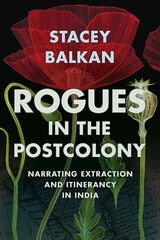
Rogues in the Postcolony
Narrating Extraction and Itinerancy in IndiaStacey Balkan
West Virginia University Press, 2022
Rogues in the Postcolony is a study of Anglophone Indian picaresque novels that dramatize the impacts of extractive capitalism and colonial occupation on local communities in several Indian states. In this materialist history of development on the subcontinent, Stacey Balkan considers works by Amitav Ghosh, Indra Sinha, and Aravind Adiga that critique violent campaigns of enclosure and dispossession at the hands of corporate entities like the English East India Company and its many legatees. By foregrounding the intersections among landscape ideology, agricultural improvement, extractive capitalism, and aesthetic expression, Rogues in the Postcolony also attends to the complicity of popular aesthetic forms with political and economic policy, as well as the colonial and extractivist logics that often frame discussions around the so-called Anthropocene epoch.
Bringing together questions about settler-colonial practices and environmental injustice, Rogues in the Postcolony concludes with an investigation of new extractivist frontiers, including solar capitalism, and considers the possibility of imagining life after extraction on the Indian subcontinent and beyond.
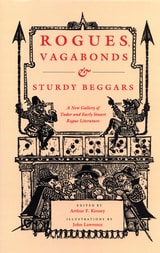
Rogues, Vagabonds, and Sturdy Beggars
A New Gallery of Tudor and Early Stuart Rogue Literature Exposing the Lives, Times, and Cozening Tricks of the Elizabethan UnderworldArthur F. Kinney
University of Massachusetts Press, 1990
In his introduction, Arthur F. Kinney discusses the significance of these works as protonovels and their influence on such writers as Shakespeare. He also explores the social, political, and economic conditions of a time that spawned a community of renegades who conned their way to fame, fortune, and, occasionally, the rope at Tyburn.
Rojava
Revolution, War and the Future of Syria's KurdsThomas Schmidinger
Pluto Press, 2018
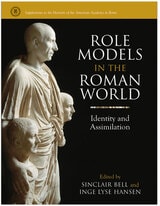
Role Models in the Roman World
Identity and AssimilationSinclair Bell and Inge Lyse Hansen, Editors
University of Michigan Press, 2008
Roll Away Saloon
Rowland W. Rider as told to Deirdre M. Paulsen
Utah State University Press, 1985
Roll Over, Tchaikovsky!
Russian Popular Music and Post-Soviet HomosexualityStephen Amico
University of Illinois Press, 2017
Centered on the musical experiences of homosexual men in St. Petersburg and Moscow, this ground-breaking study examines how post-Soviet popular music both informs and plays off of a corporeal understanding of Russian male homosexuality.
Drawing upon ethnography, musical analysis, and phenomenological theory, Stephen Amico offers an expert technical analysis of Russian rock, pop, and estrada music, dovetailing into an illuminating discussion of homosexual men's physical and bodily perceptions of music. He also outlines how popular music performers use song lyrics, drag, physical movements, images of women, sexualized male bodies, and other tools and tropes to implicitly or explicitly express sexual orientation through performance. Finally, Amico uncovers how such performances help homosexual Russian men to create their own social spaces and selves, in meaningful relation to others with whom they share a "nontraditional orientation."