Results by title
28250 books match the query 'History' and 1215 start with r
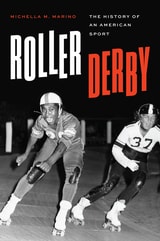
Roller Derby
The History of an American SportBy Michella M. Marino
University of Texas Press, 2021
Since 1935, roller derby has thrilled fans and skaters with its constant action, hard hits, and edgy attitude. However, though its participants’ athleticism is undeniable, roller derby has never been accepted as a “real” sport. Michella M. Marino, herself a former skater, tackles the history of a sport that has long been a cultural mainstay for one reason both utterly simple and infinitely complex: roller derby has always been coed.
Richly illustrated and drawing on oral histories, archival materials, media coverage, and personal experiences, Roller Derby is the first comprehensive history of this cultural phenomenon, one enjoyed by millions yet spurned by mainstream gatekeepers. Amid the social constraints of the mid-twentieth century, roller derby’s emphasis on gender equality attracted male and female athletes alike, producing gender relations and gender politics unlike those of traditional sex-segregated sports. In an enlightening feminist critique, Marino considers how the promotion of pregnancy and motherhood by roller derby management has simultaneously challenged and conformed to social norms. Finally, Marino assesses the sport’s present and future after its resurgence in the 2000s.
Rolling Transition and the Role of Intellectuals
The Case of HungaryAndrás Bozóki
Central European University Press, 2022
Utilizing a new and original framework for examining the role of intellectuals in countries transitioning to democracy, Bozóki analyses the rise and fall of dissident intellectuals in Hungary in the late 20th century. He shows how that framework is applicable to other countries too as he forensically examines their activities.
Bozóki argues that the Hungarian intellectuals did not become a ‘New Class’. By rolling transition, he means an incremental, non-violent, elite driven political transformation which is based on the rotation of agency, and it results in a new regime. This is led mainly by different groups of intellectuals who do not construct a vanguard movement but create an open network which might transform itself into different political parties. Their roles changed from dissidents to reformers, to movement organizers and negotiators through the periods of dissidence, open network building, roundtable negotiations, parliamentary activities, and new movement politics.
Through the prism of political sociology, the author focuses on the following questions: Who were the dissident intellectuals and what did they want? Under what conditions do intellectuals rebel and what are the patterns of their protest? This book will be of interest to students, researchers, and public intellectuals around the world aiming to promote human rights and democracy.
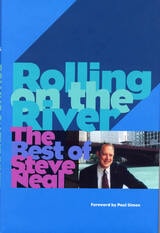
Rolling on the River
The Best of Steve NealSteve Neal. Foreword by Paul Simon
Southern Illinois University Press, 1999
The longtime political columnist for the Chicago Sun-Times, Neal covered Jane M. Byrne's election in 1979 as the city's first woman mayor and Harold Washington's 1983 triumph as Chicago's first African American mayor. Even people who are not interested in politics are drawn to Neal's column because of his hard-hitting style and lucid insights. Rolling on the River is the first published collection of his work.
In these pages, you'll meet the state legislator who never met a special interest he did not like, an alderman groveling to a mob boss, and the prosecutor who gained notoriety as a publicity hound. Of a junketing congressman, Neal writes: "Instead of sending out a congressional newsletter, [he] ought to be sending his constituents 'Wish you were here' postcards of sandy beaches."
Neal's beat is politics, but his interests are rich and varied. He also writes about sports, music, literature, and film with a point of view that is fresh and original. Neal shows how Muhammad Ali became the heavyweight champion who transcended sports and how Sid Luckman changed football. He writes of Kenny Washington's importance in breaking professional football's color barrier and Steve Prefontaine's courage in taking on the little gray men of the sports establishment. Neal chronicles Paul Robeson's struggles: "His name became a great whisper. . . . The injustices against Paul Robeson have not been righted."
Nobel laureate Saul Bellow tells Neal that comedy is the bright hope of American fiction because it is too difficult for writers in this country to grasp the worst of the human condition. Neal tells why Frank Sinatra called Chicago his kind of town and also shows how the city inspires the poetry of Gwendolyn Brooks.
Neal, a former White House correspondent, shares his perspective as one of the few reporters to have interviewed Ronald Reagan in four different decades. He recalls spending an evening with Richard M. Nixon, defends Harry Truman's most controversial decision, and writes from Ireland of John F. Kennedy's enduring legacy in the nation of his ancestors. Neal portrays William Jefferson Clinton as the "world's oldest teenager."
With vivid imagery, Neal makes his subjects come alive. Mayor Richard M. Daley is likened to Forrest Gump, and the legendary boxing announcer Ben Bentley is hailed as the last of the Damon Runyon characters.
Tough but fair. Illuminating. Compassionate. That's the best of Steve Neal.
Roma-Gypsy Presence in the Polish-Lithuanian Commonwealth
15th – 18th centuriesLech Mróz
Central European University Press, 2017
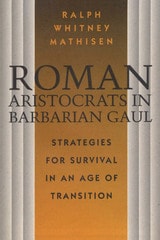
Roman Aristocrats in Barbarian Gaul
Strategies for Survival in an Age of TransitionBy Ralph W. Mathisen
University of Texas Press, 1992
Skin-clad barbarians ransacking Rome remains a popular image of the "decline and fall" of the Roman Empire, but why, when, and how the Empire actually fell are still matters of debate among students of classical history. In this pioneering study, Ralph W. Mathisen examines the "fall" in one part of the western Empire, Gaul, to better understand the shift from Roman to Germanic power that occurred in the region during the fifth century AD.
Mathisen uncovers two apparently contradictory trends. First, he finds that barbarian settlement did provoke significant changes in Gaul, including the disappearance of most secular offices under the Roman imperial administration, the appropriation of land and social influence by the barbarians, and a rise in the overall level of violence. Yet he also shows that the Roman aristocrats proved remarkably adept at retaining their rank and status. How did the aristocracy hold on?
Mathisen rejects traditional explanations and demonstrates that rather than simply opposing the barbarians, or passively accepting them, the Roman aristocrats directly responded to them in various ways. Some left Gaul. Others tried to ignore the changes wrought by the newcomers. Still others directly collaborated with the barbarians, looking to them as patrons and holding office in barbarian governments. Most significantly, however, many were willing to change the criteria that determined membership in the aristocracy. Two new characteristics of the Roman aristocracy in fifth-century Gaul were careers in the church and greater emphasis on classical literary culture.
These findings shed new light on an age in transition. Mathisen's theory that barbarian integration into Roman society was a collaborative process rather than a conquest is sure to provoke much thought and debate. All historians who study the process of power transfer from native to alien elites will want to consult this work.

Roman Art in the Private Sphere
New Perspectives on the Architecture and Decor of the Domus, Villa, and InsulaElaine K. Gazda, Editor
University of Michigan Press, 1991
The essays treat works of art that belonged to every major Roman housing type: the single-family atrium houses and the insula apartment blocks in Italian cities, the dramatically sited villas of the Campanian coast and countryside, and the palatial mansions of late antique provincial aristocrats.
In a complementary fashion the essays consider domestic art in relation to questions of decorum, status, wealth, social privilege, and obligation. Patrons emerge as actively interested in the character of their surroundings; artists appear as responsive to the desire of their patrons. The evidence in private art of homosexual conduct in high society is also set forth.
Originality of subject matter, sophisticated appreciation of stylistic and compositional nuance, and philosophical perceptions of the relationship of humanity and nature are among the themes that the essays explore. Together they demonstrate that Roman domestic art must be viewed on its own terms.
Elaine K. Gazda is Professor of the History of Art and Curator of Hellenistic and Roman Antiquities at the Kelsey Museum of Archaeology, University of Michigan.
Roman Art in the Private Sphere
New Perspectives on the Architecture and Decor of the Domus, Villa, and InsulaElaine K. Gazda, Editor
University of Michigan Press, 2010
---Classical Review
---Classical World
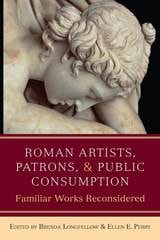
Roman Artists, Patrons, and Public Consumption
Familiar Works ReconsideredBrenda Longfellow and Ellen E. Perry, editors
University of Michigan Press, 2018
The work gathered in Roman Artists, Patrons, and Public Consumption displays the breadth and depth of scholarship in the field made possible by these fundamental changes. The first five essays approach individual objects and artistic tropes, as well as their cultural contexts and functions, from fresh and dynamic angles. The latter essays focus on case studies in Pompeii, demonstrating how close visual analysis firmly rooted in local and temporal contexts not only strengthens understanding of ancient interactions with monuments but also sparks a reconsideration of long-held assumptions reinforced by earlier scholarship.
These rigorous essays reflect and honor the groundbreaking scholarship of Elaine K. Gazda. In addition to volume editors Brenda Longfellow and Ellen E. Perry, contributors include Bettina Bergmann, Elise Friedland, Barbara Kellum, Diana Y. Ng, Jessica Powers, Melanie Grunow Sobocinski, Lea M. Stirling, Molly Swetnam-Burland, Elizabeth Wolfram Thill, and Jennifer Trimble.
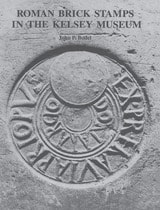
Roman Brick Stamps in the Kelsey Museum
John P. Bodel
University of Michigan Press, 1983
Roman Cities
G. Michael Woloch
University of Wisconsin Press, 1984
Roman Cities provides the first comprehensive study in English of major Roman cities, including an excellent coverage of the Roman legacy which was transmitted to medieval and modern trends in architecture and urban planning..
Roman Coins and Public Life under the Empire
E. Togo Salmon Papers IIGeorge M. Paul and Michael Ierardi, Editors
University of Michigan Press, 1999
Coins are a unique source of information about the Roman world. In the case of the Roman Empire they were issued by or with the approval of the ruling power. The representations and legends they show therefore present an official view of contemporary affairs. The coins themselves, minted for official purposes such as paying the army, when studied carefully can help reconstruct official policies. They can also occasionally reveal what monuments now lost may have looked like.
It is not infrequent to come across pleas that the ancient historian should make more frequent use of numismatic evidence. These essays make clear that efforts are being made both by numismatists and by historians to bring the two disciplines together. At the same time the papers reveal that the task is by no means a straightforward one. The survival of Roman coins is variable, and so attempts to reconstruct the size and distribution of issues calls for skilled and experienced analysis. This collection of papers provides evidence for the kind of deductions that the historian may make from Roman coins as well as the illustrations of the pitfalls that await the unwary.
Those interested in Roman history, amateur coin collectors, and professional numismatists will all find much here to widen their knowledge of the public context of Roman coins.
George Paul is Professor of Classics, McMaster University. Michael Ierardi is Lecturer in Classics, McMaster University.
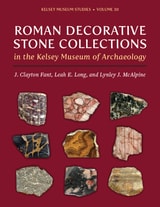
Roman Decorative Stone Collections in the Kelsey Museum of Archaeology
J. Clayton Fant, Leah E. Long, and Lynley J. McAlpine
University of Michigan Press, 2024
In keeping with the nature of the collection, Roman Decorative Stone Collections focuses on archaeological contexts and object biographies, from the stones’ first use to their eventual display in the Kelsey Museum. Entries are accompanied by rich photographs detailing the stones’ appearances, environmental factors, and their collectors. The fully illustrated catalog includes essays deriving from Kelsey’s original notes on sources, buildings, sites, and dealers. As the first formal catalog of these items, Roman Decorative Stone Collections is an accessible resource of Roman archaeology, antiquities, and the decorative arts.
Roman Family Festivals
Fanny Dolansky
University of Michigan Press, 2027
Fanny Dolansky’s Roman Family Festivals explores the vital role religious ritual played in domestic life for Roman families from 200 BCE to 200 CE. Seven festivals, from the Parentalia in February to the Saturnalia in December, are reconstructed and analyzed from varied perspectives, including those of men, women, and children who were free, enslaved, or formerly enslaved. The festivals addressed key concerns for families such as relations between freeborn and enslaved members of the household, spouses, adults and children, and the living and the dead, and played an important role in the ongoing processes of socialization and enculturation of Roman identity. Integrating literary, epigraphic, papyrological, archaeological, and art historical sources, the study pays careful attention to the critical categories of age, gender, and juridical status to understand better who celebrated the festivals and how, and what their participation meant to them individually and to the collective. Roman Family Festivals demonstrates the longevity of family festivals and their continued relevance in late antiquity, despite a rapidly changing religious and cultural landscape.
Roman Historical Sources and Institutions
Edited by Henry A. Sanders
University of Michigan Press, 1904
Roman History and Mythology
Edited by Henry A. Sanders
University of Michigan Press, 1910
Roman Holidays
American Writers and Artists in Nineteenth-Century ItalyRobert K. Martin
University of Iowa Press, 2001

Roman Military Diplomas VI
Edited by Paul Holder
University of London Press, 2024
Each of the 179 diplomas collected here has been cataloged, transcribed, and reconstructed alongside information relating to its physical description, findspot, state of preservation, current location, and new readings, helping to illuminate everything from the commanders of units to the social lives of soldiers. The volume also includes a revised chronology of the diplomas, appendices providing important criteria in dating the fragments, comprehensive indices of witnesses, persons, places, and units, and—for the first time—a table of concordances enabling concurrent work with previous volumes in the Roman Military Diplomas series. Collectively, the volume offers new insights into Roman military procedures and personnel, the social and legal status of soldiers, and the afterlife of the diplomas. It is an essential reference tool for anyone researching Roman imperial history, the Roman army, and the Roman study of ancient inscriptions.
Roman Military Law
By C. E. Brand
University of Texas Press, 1968
Rome was the law-giver for much of the modern world. She was also the greatest military power of antiquity, operating her military organization with remarkable efficiency and effectiveness throughout most of the then-known world. In view of the importance of both the legal and military aspects of the Roman Empire, an account of their combination in a system of disciplinary control for the Roman armies is of considerable significance to historians in both fields—and, in fact, to scholars in general. In Roman Military Law, C. E. Brand describes this system of control.
Since a characterization of such a system can be made most meaningful only against a background of Roman constitutional government and in the light of ideologies current at the time, Brand follows his initial “Note on Sources” with a sketch of the contemporary Roman scene. This first section includes a discussion of the Roman constitution and an examination of Roman criminal law.
The history of Rome, as a republic, principate, and empire, extended over a period of a thousand years, so any attempt to represent a generalized picture must be essentially a matter of extraction and condensation from the voluminous literature of the whole era. Nevertheless, from the fantastic evolution that is the history of Rome, Brand has been able to construct a more or less static historical mosaic that may be considered typically “Roman.” This comes into sharpest focus during the period of the Punic Wars, when the city and its people were most intensely Roman. The picture of the Roman armies is set into this basic framework, in chapters dealing with military organization, disciplinary organization, religion and discipline, and offenses and punishments.
The final section of the book considers briefly the vast changes in Roman institutions that came about under the armies of the Empire, and then concludes with the Latin text and an English translation of the only known code of Roman military justice, promulgated sometime during the later Empire, preserved in Byzantine literature, and handed down to medieval times in Latin translations of Byzantine Greek law, which it has heretofore been confused.
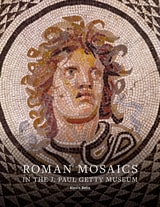
Roman Mosaics in the J. Paul Getty Museum
Alexis Belis
J. Paul Getty Trust, The, 2016
The mosaics in the collection of the J. Paul Getty Museum span the second through the sixth centuries AD and reveal the diversity of compositions found throughout the Roman Empire during this period. Elaborate floors of stone and glass tesserae transformed private dwellings and public buildings alike into spectacular settings of vibrant color, figural imagery, and geometric design. Scenes from mythology, nature, daily life, and spectacles in the arena enlivened interior spaces and reflected the cultural ambitions of wealthy patrons. This online catalogue documents all of the mosaics in the Getty Museum’s collection, presenting their artistry in new color photography as well as the contexts of their discovery and excavation across Rome's expanding empire—from its center in Italy to provinces in southern Gaul, North Africa, and ancient Syria.
Reflecting the Getty's commitment to open content, Roman Mosaics in the J. Paul Getty Museum is available online at www.getty.edu/publications/romanmosaics and may be downloaded free of charge in multiple formats. For readers who wish to have a bound reference copy, a paperback edition has been made available for sale.
The publication of this online catalogue is issued on the occasion of the exhibition, Roman Mosaics across the Empire, on view at the Getty Villa from March 30 through September 12, 2016.
Roman Political Ideas and Practice
F. E. Adcock
University of Michigan Press, 1964
Roman Propertius and the Reinvention of Elegy
Jeri Blair DeBrohun
University of Michigan Press, 2003
DeBrohun finds the most striking element of Book 4 to be the apparent polarity of the poems, whose themes are split between new, aetiological subjects of Roman national significance and amatory affairs that evoke the themes of Propertius' first three books. In her compelling reassessment of Propertius' aspirations in Book 4, DeBrohun identifies the conflict between his new ambitions to produce Roman aetiological elegy and his traditional, exclusive devotion to erotic concerns as the central dynamic of his collection. Roman Propertius and the Reinvention of Elegy reveals how the poet came to find in the subcodes of the elegiac genre a medium of interaction between the opposing values of the two themes.
Roman Propertius will interest not only scholars and students of Greek and Roman Poetry but also students of later traditions who are interested in the questions of genre and the relationship between poetry and wider cultural discourses.
Jeri Blair DeBrohun is Associate Professor of Classics, Brown University.
Roman Siege Warfare
Josh Levithan
University of Michigan Press, 2013
Roman siege warfare had its own structure and customs, and expectations both by the besieged and by the attacking army. Sieges are typically sorted by the techniques and technologies that attackers used, but the more fruitful approach offered in Roman Siege Warfare examines the way a siege follows or diverges from typical narrative and operational plotlines. Author Josh Levithan emphasizes the human elements—morale and motivation—rather than the engineering, and he recaptures the sense of a siege as an event in progress that offers numerous attitudes, methods, and outcomes. Sieges involved a concentration of violent effort in space and the practical challenge posed by a high wall: unlike field battles they were sharply defined in time, in space, and in operational terms.
Chapters examine motivation and behavior during a siege and focus on examples from both the Roman Republic and the Empire: Polybius, Livy, Julius Caesar, Flavius Josephus, and Ammianus Marcellinus. Levithan examines the “gadgetary turn,” during which writers began to lavish attention on artillery and wall-damaging techniques, fetishizing technology and obscuring the centrality of the assault and of human behavior.
This volume speaks to classicists and historians of all stripes. All passages are translated, and references are accessible to nonspecialists. Military historians will also find much of interest in the volume, in its treatment both of Roman military conduct and of wider military practice.

Roman Slavery and Emotional Labor
Sarah Levin-Richardson
University of Wisconsin Press, 2027
Roman slavery was characterized by pervasive exploitation. Sarah Levin-Richardson here takes the innovative step of examining how emotions and affect functioned in this realm. Taking wetnurses, pedagogues, children, sex laborers, and mourners in turn, Levin-Richardson shows how the skills of enslaved individuals—including managing their own affective states, performing the affect required for a situation (such as grief), and inspiring the desired feelings in others—were resources that could be manipulated for slaveowners’ emotional regulation, social capital, personal pleasure, and monetary benefit. This labor catered to the emotional needs of free people from birth through death while providing enslaved individuals a means to protect family and friends, as well as a potential pathway to upward mobility or freedom. A significant contribution to ancient histories of enslavement, Roman Slavery and Emotional Labor illuminates the pervasive emotional labor performed by enslaved individuals, the reliance of enslavers on this labor, and the opportunities for enslaved people to leverage this labor even in the most extreme conditions.
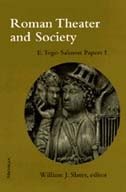
Roman Theater and Society
E. Togo Salmon Papers IWilliam J. Slater, Editor
University of Michigan Press, 1996
William Slater's new volume Roman Theater and Society brings an important perspective to the much-maligned status of the Roman theater, which has only recently been reappraised and appreciated as uniquely Roman rather than criticized for not being Greek. From this point of embarkation, William Slater and the nine contributors discuss theater in Rome and the Greek east with a definition of performance incorporating not only stage performances but also dinnertime entertainment, sporting events, and political events. Contributors are T. D. Barnes, K. M. Coleman, J. C. Edmonson, E. R. Gebhard, J. R. Green, E. J. Jory, W. D. Lebek, and D. S. Potter.
Individual chapters combine literary evidence with archaeological, thereby engendering a deeper appreciation for the social and political roles of Roman theater. It becomes clear that these roles were of great influence in giving voice to the popular demands of the average Roman. In examining the roles of theater the contributors turn to the players and audience themselves for deeper understanding.
Roman Theater and Society will be of great interest to classicists, theater specialists, and anyone interested in the interplay among plays, theaters, and the people on stage and in the audience.
William J. Slater is Professor of Classics, McMaster University.
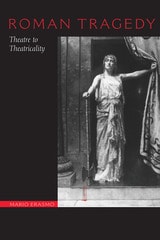
Roman Tragedy
Theatre to TheatricalityBy Mario Erasmo
University of Texas Press, 2004
Roman tragedies were written for over three hundred years, but only fragments remain of plays that predate the works of Seneca in the mid-first century C.E., making it difficult to define the role of tragedy in ancient Roman culture. Nevertheless, in this pioneering book, Mario Erasmo draws on all the available evidence to trace the evolution of Roman tragedy from the earliest tragedians to the dramatist Seneca and to explore the role played by Roman culture in shaping the perception of theatricality on and off the stage.
Performing a philological analysis of texts informed by semiotic theory and audience reception, Erasmo pursues two main questions in this study: how does Roman tragedy become metatragedy, and how did off-stage theatricality come to compete with the theatre? Working chronologically, he looks at how plays began to incorporate a rhetoricized reality on stage, thus pointing to their own theatricality. And he shows how this theatricality, in turn, came to permeate society, so that real events such as the assassination of Julius Caesar took on theatrical overtones, while Pompey's theatre opening and the lavish spectacles of the emperor Nero deliberately blurred the lines between reality and theatre. Tragedy eventually declined as a force in Roman culture, Erasmo suggests, because off-stage reality became so theatrical that on-stage tragedy could no longer compete.
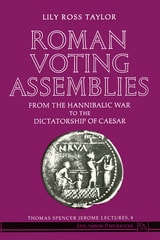
Roman Voting Assemblies
From the Hannibalic War to the Dictatorship of CaesarLily Ross Taylor
University of Michigan Press, 1991
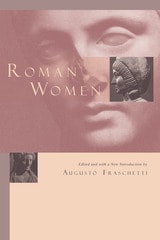
Roman Women
Edited by Augusto Fraschetti
University of Chicago Press, 2001
Through this investigation, we encounter a number of idiosyncratic personalities. They include the vestal virgin Claudia; Cornelia, a matron; the passionate Fulvia; a mime known as "Lycoris"; the politician Livia; the martyr and writer Vibia Perpetua; a hostess named Helena Augusta; the intellectual Hypatia; and the saint Melania the Younger. Unlike their silent female counterparts, these women stood out in a culture where it was terribly difficult and odd to do so.
Romance Of The Road
Literature Of The American HighwayRonald Primeau
University of Wisconsin Press, 1996
Writers examined include Jack Kerouac, Jim Dodge, Ralph Waldo Emerson, William Least Heat Moon, Robert M. Pirsig, Henry Miller, Joan Didion, Mona Simpson, and Walt Whitman.
Romance of Commerce and Culture
Capitalism, Modernism, and the Chicago-Aspen Crusade for Cultural Reform, Revised EditionJames Sloan Allen
University Press of Colorado, 2002
Romance, Remedies, and Revolution
The Journal of Dr. Elihu Ashley of Deerfield, Massachusetts, 1773-1775Edited by Amelia F. Miller and A. R. Riggs
University of Massachusetts Press, 2007
With flashes of humor and close attention to detail, Ashley describes a broad range of activities and experiences in the small village of Deerfield and the surrounding towns of the Connecticut River valley. Articulate as well as observant, this former schoolteacher conveys a sense of immediacy that brings even the most mundane daily events to life. He discusses medical theory and practice, revolutionary politics, farming, his family, his circle of friends, and amusements ranging from singing and dancing to sleigh riding and bouts of drunkenness. He also writes about his love life, including a dalliance with the older sister of his fiancee, Polly Williams, while the latter is away visiting relatives in the Berkshires.
For Ashley, personal relationships and politics were the prominent issues of 1773 and 1774, as events in Massachusetts drew the province toward rebellion. He discusses the gathering of angry mobs in response to the so-called Intolerable Acts, the stoppage of the courts in Hampshire County, the anarchy that ensued, and the persecution of loyalists, with or without the sanction of law. When the revolution breaks out in April 1775, he describes the departure of companies of minutemen as they set out for Boston to challenge the British Army.
Six months later, in November 1775, the journal abruptly ends. By then, however, Elihu Ashley had already bequeathed to posterity an extraordinary firsthand account of life in rural New England in the years immediately preceding the War of Independence.
Romances of the White Man's Burden
Race, Empire, and the Plantation in American Literature, 1880-1936Jeremy Wells
Vanderbilt University Press, 2011
Romances of the White Man's Burden takes on works in American literature in which the proverbial "old plantation" is made to seem not a relic but a harbinger, a sign that the South had arrived at a multiracial modernity and harmony before the rest of the United States. Focusing on writers such as Joel Chandler Harris, Thomas Nelson Page, Henry W. Grady, Thomas Dixon, and William Faulkner, Jeremy Wells reveals their shared fixation on the figure of the white southern man as specially burdened by history. Each of these writers, in his own way, presented the plantation South as an emblem, not an aberration, of America.
Romancing Nevada's Past
Ghost Towns And Historic Sites Of Eureka, Lander, And White Pine CountiesShawn Hall
University of Nevada Press, 1993
Romancing the Maya
Mexican Antiquity in the American Imagination, 1820-1915By R. Tripp Evans
University of Texas Press, 2004
During Mexico's first century of independence, European and American explorers rediscovered its pre-Hispanic past. Finding the jungle-covered ruins of lost cities and artifacts inscribed with unintelligible hieroglyphs—and having no idea of the age, authorship, or purpose of these antiquities—amateur archaeologists, artists, photographers, and religious writers set about claiming Mexico's pre-Hispanic patrimony as a rightful part of the United States' cultural heritage.
In this insightful work, Tripp Evans explores why nineteenth-century Americans felt entitled to appropriate Mexico's cultural heritage as the United States' own. He focuses in particular on five well-known figures—American writer and amateur archaeologist John Lloyd Stephens, British architect Frederick Catherwood, Joseph Smith, founder of the Church of Jesus Christ of Latter-Day Saints, and the French émigré photographers Désiré Charnay and Augustus Le Plongeon. Setting these figures in historical and cultural context, Evans uncovers their varying motives, including the Manifest Destiny-inspired desire to create a national museum of American antiquities in New York City, the attempt to identify the ancient Maya as part of the Lost Tribes of Israel (and so substantiate the Book of Mormon), and the hope of proving that ancient Mesoamerica was the cradle of North American and even Northern European civilization. Fascinating stories in themselves, these accounts of the first explorers also add an important new chapter to the early history of Mesoamerican archaeology.
Romanesque Architectural Sculpture
The Charles Eliot Norton LecturesMeyer Schapiro
University of Chicago Press, 2006
Meyer Schapiro (1904-96), renowned for his critical essays on nineteenth- and twentieth-century painting, also played a decisive role as a young scholar in defining the style of art and architecture known as Romanesque. And, appropriately, when he was invited to deliver the prestigious Charles Eliot Norton Lectures at Harvard, he chose Romanesque architectural sculpture as his topic. These lectures, acclaimed for the verve and freshness with which Schapiro delivered them, languished unpublished for decades. But Linda Seidel, who knew Schapiro well and attended the 1967 lectures, has now expertly transcribed and edited them, presenting them for the first time to an audience beyond the halls of Harvard.
In editing the lectures, Seidel closely followed the recordings of the originals. Sentences are rendered as Schapiro spoke them, affording readers a unique opportunity to experience the legendary teacher as he rarely appears in print: forming his thoughts spontaneously, interrupting himself to develop related ideas, and responding to the audience’s interests by introducing humorous asides. Nonetheless, these lectures are carefully constructed, demonstrating Schapiro’s commitment to the originality and value of artistic production and affirming his lifelong belief in artists’ engagement with their cultures. Amply illustrated with many key works and augmented with Seidel’s indispensable introduction, this long-awaited volume will delight students and scholars of art history, as well as anyone interested in seeing a new side of a profoundly influential mind.
Romani Liberation
A Northern Perspective on Emancipatory Struggles and ProgressJan Selling
Central European University Press, 2022
Centered on the trajectory of the emancipation of Roma people in Scandinavia, Romani Liberation is a powerful challenge to the stereotype describing Romani as passive and incapable of responsibility and agency. The author also criticizes benevolent but paternalistic attitudes that center on Romani victimhood.
The first part of the book offers a comprehensive overview of the chronological phases of Romani emancipation in Sweden and other countries. Underscoring the significance of Roma activism in this process, Jan Selling profiles sixty Romani activists and protagonists, including numerous original photos. The narrative is followed by an analysis of the concepts of historical justice and of the process of decolonizing Romani Studies. Selling highlights the impact of the historical contexts that have enabled or impeded the success of the struggles against discrimination and for equal rights, emphasizing Romani activism as a precondition for liberation.
The particular Swedish framework is accentuated by a stimulating preface by the international activist Nicoleta Bitu, and afterwords by two prominent Romani advocates, the politician Soraya Post and the singer, author, and elder Hans Caldaras.
Romanies in Michigan
Martha Aladjem Bloomfield
Michigan State University Press, 2019
Romans and Barbarians
The Decline of the Western EmpireE. A. Thompson
University of Wisconsin Press, 2002
Available for the first time in paperback, this classic work by renowned historian E.A. Thompson examines the fall of the Roman Empire in the West from the barbarian perspective and experience. Standard interpretations of the decline of the Roman Empire in the West view the barbarian invaders as destroyers. Thompson, however, argues that the relationship between the invaders and the invaded was far more complex than the common interpretation would suggest. This edition includes a new foreword by F.M. Clover and J.H.W.G. Liebeschuetz.
Romans in a New World
Classical Models in Sixteenth-Century Spanish AmericaDavid A. Lupher
University of Michigan Press, 2006
In the course of this debate, many Spaniards were inspired to think more deeply on their own ethnic ancestry and identity, as Spanish treatment of the New World natives awakened the slumbering memory of Roman treatment of the Iberian tribes whom modern Spaniards were now embracing as their truest ancestors. At the same time, growing awareness of the cultural practices--especially the religious rituals--of the American natives framed a new perspective on both the pre-Christian ancestors of modern Europeans and even on the survival of "pagan" customs among modern Europeans themselves. In this incisive study, David A. Lupher addresses the increasingly debated question of the impact the discovery of the New World had upon Europeans' perceptions of their identity and place in history.
Romans in a New World holds much to interest both classicists and students of the history and culture of early modern Europe--especially, though not exclusively, historians of Spain. David A. Lupher's concern with the ideology of imperialism and colonization and with cross-cultural negotiations will be useful to students of cultural studies, as well.
David A. Lupher is Professor of Classics, University of Puget Sound.
Romantic Automata
Exhibitions, Figures, OrganismsMichael Demson
Bucknell University Press, 2020
Recent scholarship in post-humanism, post-colonialism, disability studies, post-modern feminism, eco-criticism, and radical Orientalism has significantly affected the critical discourse on this topic. In engaging with the work and thought of Coleridge, Poe, Hoffmann, Mary Shelley, and other Romantic luminaries, the contributors to this collection open new methodological approaches to understanding human interaction with technology that strives to simulate, supplement, or supplant organic life.
Published by Bucknell University Press. Distributed worldwide by Rutgers University Press.
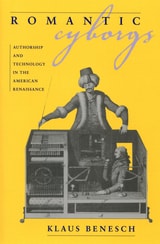
Romantic Cyborgs
Authorship and Technology in the American RenaissanceKlaus Benesch
University of Massachusetts Press, 0
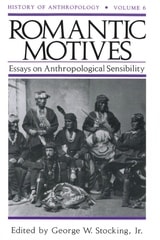
Romantic Motives
Essays on Anthropological SensibilityEdited by George W. Stocking, Jr.
University of Wisconsin Press, 1996

Romantic Sensation
The Queer Lives of Leon A. Belmont, 1853–1927Lizzie Ehrenhalt
University of Minnesota Press, 2026
Exploring gender and sexuality in the Gilded Age through one sensationalized life
Addie Liona Walker. Leon A. Belmont. Nova McClure Carr. Romantic Sensation tells the full story of this one ordinary person’s singular life. Assigned a female sex at birth, Addie was born in Massachusetts in 1853 and lived as a woman for twenty-five years. After transitioning in 1878, Addie became Leon and lived as a man for twenty-four years before making a second gender transition and living as a woman, Nova, for the rest of her life. Placing these milestones within the historical context of the late nineteenth and early twentieth centuries, Lizzie Ehrenhalt traces Belmont’s life, from child laborer to husband, from outlaw to heartthrob, and from stepfather to single mother.
Belmont was a Gilded Age celebrity: he made national news for breaking an ordinance against dressing as the “opposite” sex in Minneapolis, and he inspired a media frenzy when one of his girlfriends told police that he was a woman. While newspapers labeled Belmont a “curious and romantic sensation,” Ehrenhalt shows that he was not much of a sensation after all. Illuminating what his story can tell us about Americans’ developing understandings of sexuality and gender in the 1850s through the 1920s, she reveals how Belmont’s run-ins with police, doctors, courts, and reporters resonate in the evolution of the LGBTQIA+ identities we recognize today.
An empathetic case study of a figure often denied respect in the telling of his story, Romantic Sensation presents Belmont’s gender transitions not as puzzles in need of solving but as acts grounded in the cultural milieu of the Gilded Age. Traversing the dramatic economic upheavals of the second industrial revolution, the Era of Good Stealings, and the Great Railroad Strike of 1922, and spanning the Cult of Domesticity, the invention of sexology, and the rise of New Womanhood, Ehrenhalt uses Belmont’s example to demonstrate how trans, queer, and intersex histories are inseparable from American history.
Retail e-book files for this title are screen-reader friendly with images accompanied by short alt text and/or extended descriptions.
Romantic Women Writers
Voices and CountervoicesPaula R. Feldman and Theresa M. Kelley
Brandeis University Press, 1995
Romanticism Against the Tide of Modernity
Michael Löwy and Robert Sayre
Duke University Press, 2001
After critiquing previous conceptions of romanticism and discussing its first European manifestations, Löwy and Sayre propose a typology of the sociopolitical positions held by romantic writers-from “restitutionist” to various revolutionary/utopian forms. In subsequent chapters, they give extended treatment to writers as diverse as Coleridge and Ruskin, Charles Peguy, Ernst Bloch and Christa Wolf. Among other topics, they discuss the complex relationship between Marxism and romanticism before closing with a reflection on more contemporary manifestations of romanticism (for example, surrealism, the events of May 1968, and the ecological movement) as well as its future.
Students and scholars of literature, humanities, social sciences, and cultural studies will be interested in this elegant and thoroughly original book.
Romanticism and Anthony Trollope
A Study in the Continuities of Nineteenth-Century Literary ThoughtL. J. Swingle
University of Michigan Press, 1990
Romanticism and Transcendence
Wordsworth, Coleridge, and the Religious ImaginationJ. Robert Barth, S.J.
University of Missouri Press, 2003
Romanticism, Nationalism, and the Revolt against Theory
David Simpson
University of Chicago Press, 1993
Simpson demonstrates the close association between "theory" and "method" and shows that by the mid-eighteenth century, "method" had acquired distinctly subversive associations in England. Attributed increasingly to the French and the Germans, "method" paradoxically evoked images both of inhuman rationality and unbridled sentimentality; in either incarnation, it was seen as a threat to what was claimed to be authentically British. Simpson develops these paradigms in relation to feminism, the gendering of Anglo-American culture, and the emergence of literature and literary criticism as antitheoretical discourses. He then looks at the Romantic poets' response to this confining ideology of the cultural role of literature. Finally, Simpson considers postmodern theory's claims for the radical energy of nonrational or antirationalist positions.
This is an essential book not only for students of the Romantic period and intellectual historians concerned with the idea of "method," but for anyone interested in the historical background of today's debates over the excesses and possibilities of "theory."
Romanticism
A German AffairRüdiger Safranski Translated from the German by Robert E. Goodwin
Northwestern University Press, 2014
Romanticism: A German Affair is essential reading for anyone interested in the power of art, culture, and ideas in the life of a nation.
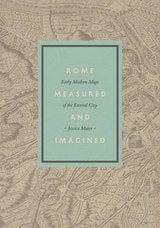
Rome Measured and Imagined
Early Modern Maps of the Eternal CityJessica Maier
University of Chicago Press, 2015
In Rome Measured and Imagined, Jessica Maier explores the history of this genre—which merged the accuracy of scientific endeavor with the imaginative aspects of art—during the rise of Renaissance print culture. Through an exploration of works dating from the fifteenth to the eighteenth centuries, her book interweaves the story of the city portrait with that of Rome itself.
Highly interdisciplinary and beautifully illustrated with nearly one hundred city portraits, Rome Measured and Imagined advances the scholarship on Renaissance Rome and print culture in fascinating ways.
Rome as a Guide to the Good Life
A Philosophical Grand TourScott Samuelson
University of Chicago Press, 2023
This is a guidebook to Rome for those interested in both la dolce vita and what the ancient Romans called the vita beata—the good life. Philosopher Scott Samuelson offers a thinker’s tour of the Eternal City, rooting ideas from this philosophical tradition within the geography of the city itself. As he introduces the city’s great works of art and its most famous sites—the Colosseum, the Forum, the Campo de’ Fiori—Samuelson also gets to the heart of the knotty ethical and emotional questions they pose. Practicing philosophy in place, Rome as a Guide to the Good Life tackles the profound questions that most tours of Rome only bracket. What does all this history tell us about who we are?
In addition to being a thoughtful philosophical companion, Samuelson is also a memorable tour guide, taking us on plenty of detours and pausing to linger over an afternoon Negroni, sample four classic Roman pastas, or explore the city’s best hidden gems. With Samuelson’s help, we understand why Rome has inspired philosophers such as Lucretius and Seneca, poets and artists such as Horace and Caravaggio, filmmakers like Fellini, and adventurers like Rosa Bathurst. This eclectic guidebook to Roman philosophy is for intrepid wanderers and armchair travelers alike—anyone who wants not just a change of scenery, but a change of soul.