Results by title
3576 books match the query 'American' and 141 start with r
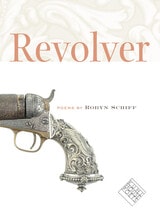
Revolver
Robyn Schiff
University of Iowa Press, 2008
A dirge on the Singer Sewing Machine, an exuberant and unnerving rumination on multipurpose campaign furniture, and a breathless account of Ralph Lauren’s silver Porsche 550 Spyder are among the collection’s exhilarating corporate histories, urgent fantasias, and agonizing love poems. The long, lavish, and utterly unpredictable sentences that Schiff has assembled contort as much to discover what can’t be contained as what can.
This is a book of extremes relentlessly contemporary in scope. And like the eighty-blade sportsman’s knife also described here, Revolver keeps opening and reopening to the daunting possibilities of transformation—“Splayed it is a bouquet of all the ways a point mutates.”
from “Silverware by J. A. Henckels”
Let me be
as streamlined as my knife when I say this.
As cold as my three-pronged fork that
cools the meat even as it steadies it.
A pettiness in me was honed
in this cutlers’ town, later bombed,
in which Adolf Eichmann, who was born there
alongside my wedding pattern, could hear
the constant sharpening of knives
like some children hear the corn in their hometowns
talking to them through the wind.
The horizon is just the score they breathe through
like a box of chickens
breathing through a slit.
Reworlding America
Myth, History, and NarrativeJohn Muthyala
Ohio University Press, 2006
John Muthyala's Reworlding America moves beyond the U.S.-centered approach of traditional American literary criticism. In this groundbreaking book, Muthyala argues for a transgeographical perspective from which to study the literary and cultural histories of the Americas.
By emphasizing transnational migration, border crossing, and colonial modernity, Reworlding America exposes how national, ethnic, linguistic, religious, and cultural boundaries have been continually created and transgressed—with profound consequences for the peoples of the Americas.
Drawing from cultural studies, anthropology, literature, and history, Muthyala examines the literatures of the Americas in terms of their intimate relationship to questions of cultural survival, identity formation, and social power. He goes beyond nationalist, ethnocentric, and religious frameworks used to conceptualize American literary history and examines the connection between modernity and colonialism.
Reworlding America's significance extends into the realm of education, history, ethnography, and literary and cultural studies and contributes to the larger project of refashioning the role of English and American studies in a transborder, postnational global culture.
Rewriting America
New Essays on the Federal Writers' ProjectEdited by Sara Rutkowski
University of Massachusetts Press, 2022
Established in 1935, the Federal Writers’ Project (FWP) sent over 6,500 unemployed historians, teachers, writers, and librarians out to document America’s past and present in the midst of the Great Depression. The English poet W. H. Auden referred to this New Deal program as “one of the noblest and most absurd undertakings ever attempted by any state.”
Featuring original work by scholars from a range of disciplinary perspectives, this edited collection provides fresh insights into how this extraordinary program helped transform American culture. In addition to examining some of the major twentieth-century writers whose careers the FWP helped to launch—including Ralph Ellison, Richard Wright, and Margaret Walker—Rewriting America presents new perspectives on the role of African Americans, Mexican Americans, Asian Americans, and women on the project. Essays also address how the project’s goals continue to resonate with contemporary realities in the midst of major economic and cultural upheaval.
Along with the volume editor, contributors include Adam Arenson, Sue Rubenstein DeMasi, Racheal Harris, Jerrold Hirsch, Kathi King, Maiko Mine, Deborah Mutnick, Diane Noreen Rivera, Greg Robinson, Robert Singer, James Sun, and David A. Taylor.
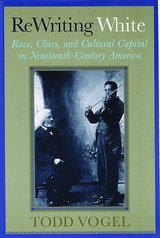
Rewriting White
Race, Class, and Cultural Capital in Nineteenth-Century AmericaTodd Vogel
Rutgers University Press, 2004
What did it mean for people of color in nineteenth-century America to speak or write "white"? More specifically, how many and what kinds of meaning could such "white" writing carry? In ReWriting White, Todd Vogel looks at how America has racialized language and aesthetic achievement. To make his point, he showcases the surprisingly complex interactions between four nineteenth-century writers of color and the "standard white English" they adapted for their own moral, political, and social ends. The African American, Native American, and Chinese American writers Vogel discusses delivered their messages in a manner that simultaneously demonstrated their command of the dominant discourse of their times-using styles and addressing forums considered above their station-and fashioned a subversive meaning in the very act of that demonstration.
The close readings and meticulous archival research in ReWriting White upend our conventional expectations, enrich our understanding of the dynamics of hegemony and cultural struggle, and contribute to the efforts of other cutting-edge contemporary scholars to chip away at the walls of racial segregation that have for too long defined and defaced the landscape of American literary and cultural studies.
Rhetorics of Literacy
The Cultivation of American Dialect PoetryNadia Nurhussein
The Ohio State University Press, 2013
Rhythm & Booze
POEMSJulie Kane
University of Illinois Press, 2003
Mirroring the music of New Orleans, Kane's poems combine traditional form with improvisational flourishes. Rhythm & Booze charts her progress as she undertakes a number of journeys, from youth to experience, from blues bars to college classrooms, from city to country, from chaos to something approaching peace.
Rib Cage
Greg Miller
University of Chicago Press, 2001
Rich Wife
Emily Bludworth de Barrios
University of Wisconsin Press, 2025
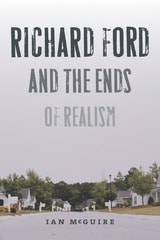
Richard Ford and the Ends of Realism
Ian McGuire
University of Iowa Press, 2015
McGuire also uses this idea of pragmatic realism to mount a larger defense of contemporary realist writing and uses Ford’s example to argue that realism itself remains a useful and necessary critical category. Contemporary realism, rather than being merely conventional or reactionary, as some of its critics have called it, can offer its proponents an aesthetically and philosophically sophisticated way of engaging with and contesting the particularities of contemporary, even postmodern, experience.
In offering this new reading of Richard Ford’s fiction, as well as a fresh understanding of the realist impulse in contemporary American fiction, both become richer, more resonant, and more immediate—reaching both backward into the past and forward to involve themselves in important contemporary debates about history, postmodernity, and moral relativism.
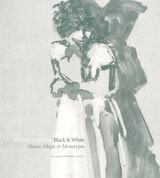
Richard Segalman Black & White
Muses, Magic & MonotypesRichard Segalman
The Artist Book Foundation, 2015
For many, the name Richard Segalman conjures up a vision of light-infused paintings of women gathered on a beach, gazing out the window of a New York City brownstone, or dressed in vcostumes from another era. But just as Edgar Degas, approaching his 60th year, surprised gallery goers with an exhibition not of ballerinas or race horses, but of highly atmospheric monotype landscapes, so too does Segalman surprise us with this exceptional collection of monotypes he began to produce in 1993, at nearly 60. "I reached a sort of plateau and needed a new direction," says the artist. "I came across a monotype... took a course... made one and I was hooked."
The significance of Segalman's shift into this medium is most powerfully conveyed through his arresting black-and-white prints that range from anonymous crowds on Coney Island beaches or New York City streets to a solitary figure in private contemplation. This monochromatic focus makes perfect sense: Segalman's first gallery appearance in New York—a sold-out show that gave him the courage to embrace the life of an artist—consisted entirely of black-and-white charcoal drawings, several stunning examples of which open this book.
Author Susan F. Castle's essay about the artist and his muses—the people, places, and things for which Richard Segalman has an abiding love—illuminates the exceptional work collected for this monograph. She combines excerpts from interviews with the artist and the three master printmakers with whom he has worked in Woodstock and Brooklyn, New York, and in Santa Fe, New Mexico. In addition, Anthony Kirk's insightful introudction provides an essential historical perspective on the artist and his printmaking process.
Richer Entanglements
Essays and Notes on Poetry and PoemsGregory Orr
University of Michigan Press, 1993
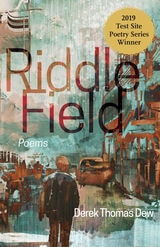
Riddle Field
PoemsDerek Thomas Dew
University of Nevada Press, 2020
"Dew is an exciting and complex new voice in contemporary poetry." —Publisher's Weekly
The beautifully crafted poems in Riddle Field explore two parallel themes, the impact of the impending destruction of a dam on a small town and the trauma of sexual abuse and eventual recovery from it. This work focuses on the environment, human and physical, in which the loss of nature and innocence is born and calls attention to the many ways we create both intimacy and distance when trauma is hidden or denied. Derek Thomas Dew’s language is harsh, honest, and sometimes heartbreaking. His poems capture the confusion and fatigue that must be navigated for a victim of abuse to piece himself back together and the internal strife that comes with carry-ing a traumatic secret that can no longer be ignored.
Rich with unforgettable images and the quiet strength of hard-won survival, Riddle Field tackles the complex process of achieving self-awareness and recovery in the wake of profound trauma.
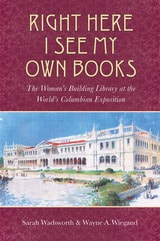
Right Here I See My Own Books
The Woman's Building Library at the World's Columbian ExpositionSarah Wadsworth
University of Massachusetts Press, 2012
By weaving together the behind-the-scenes story of the library's formation and the stories between the covers of books on display, Wadsworth and Wiegand firmly situate the Woman's Building Library within the historical context of the 1890s. Interdisciplinary in approach, their book demonstrates how this landmark collection helped consolidate and institutionalize women's writing in conjunction with the burgeoning women's movement and the professionalization of librarianship in late nineteenth-century America.
Americans in this period debated a wide range of topics, including women's rights, gender identity, racial politics, nationalism, regionalism, imperialism, and modernity. These debates permeated the cultural climate of the Columbian Exposition. Wadsworth and Wiegand's book illuminates the range and complexity of American women's responses to these issues within a public sphere to which the Woman's Building provided unprecedented access.
Rising and the Rain
Collected PoemsJohn Straley
University of Alaska Press, 2008
Risk Culture
Performance and Danger in Early AmericaJoseph Fichtelberg
University of Michigan Press, 2010
---David Shields, University of South Carolina
Risky Writing
Self-Disclosure and Self-Transformation in the ClassroomJeffrey Berman
University of Massachusetts Press, 2001
This is the final volume in a trilogy of works that examine the impact of writing and reading about traumatic subjects. Diaries to an English Professor (1994) explores the ways in which undergraduate students use psychoanalytic diaries to probe conflicted issues in their lives. Surviving Literary Suicide (1999) investigates how graduate students respond to suicidal literature—novels and poems that portray and sometimes glorify self-inflicted death.
In Risky Writing, Jeffrey Berman builds on those earlier studies, describing ways teachers can encourage college students to write safely on a wide range of subjects often deemed too personal or too dangerous for the classroom: grieving the loss of a beloved relative or friend, falling into depression, coping with the breakup of one's family, confronting sexual abuse, depicting a drug or alcohol problem, encountering racial prejudice. Berman points out that nearly everyone has difficulty talking or writing about such issues because they arouse shame and tend to be enshrouded in secrecy and silence. This is especially true for college students, who are just emerging from adolescence and find themselves at institutions that rarely promote self-disclosure.
Recognizing the controversial nature of his subject, Berman confronts academic opposition to personal writing head on. He also discusses the similarities between the “writing cure” and the “talking cure,” the role of the teacher and audience in the self-disclosing classroom, and the pedagogical strategies necessary to minimize risk, including the importance of empathy and other befriending skills.

River Crossings
Contemporary Art Comes HomeJason Rosenfeld
The Artist Book Foundation, 2015
In a unique and groundbreaking 2015 presentation of important contemporary art rarely seen in the traditional environs of the Hudson River Valley, the Thomas Cole National Historic Site and Olana, Frederic Edwin Church's Persian-inspired mansion, showcased the work of contemporary American artists such as Chuck Close, Cindy Sherman, Maya Lin, Martin Puryear, and Gregory Crewdson, some of the 30 artists featured in the exhibition. Stephen Hannock, celebrated Luminist painter and one of the exhibition's co-curators, stated that "this is a terrific opportunity to open up contemporary art, as well as these historic properties, to audiences who will see firsthand these shared artistic concerns."
The works of art selected for the exhibition were shown at the two venues to encourage visitors to experience both of the distinguished properties and the grandeur of their surroundings, and to present a complete overview and understanding of these contemporary works in a location where many art historians believe American art was born. The accompanying publication, River Crossings: Contemporary Art Comes Home, provides readers with a lavish record of this extraordinary and innovative exhibition, and offers unique and highly informative perspectives on the continuity of the American artistic tradition in two of the nation's most historic sites.
In addition to an impressive plate section of more than 60 works with brief artist biographies and descriptive narratives for the individual works, this comprehensive presentation features noteworthy, exceptional contributions. Stephen Hannock's preface details the development of this remarkable exhibition, while co-curator Jason Rosenfeld reveals in his essay the exhibition's importance relative to historical perception as he considers Cole's and Church's support of conemporary art in their time. Cultural historian Maurice Berger considers the realities of race and gender from the nineteenth-century Hudson River Valley to the present, and Marvin Heiferman, curator and writer, examines photography in the exhibition and its connections to Church's work and his use of the medium. Award-winning architectural and landscape photographer Peter Aaron generously provided the stunning installation, exterior, and landscape photographs, a gorgeous complement to this outstanding catalogue.

River Octopus
Paul Christiansen
University of Arkansas Press, 2027
River of Light
A Conversation with KabirJohn Morgan
University of Alaska Press, 2014
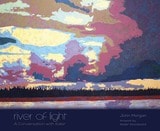
River of Light: A Conversation with Kabir is centered in one man’s meditations and revelations while traveling on a river. John Morgan spent a week traveling the Copper River in Southcentral Alaska, and the resulting encounters form the heart of this book-length poem. The river’s shifting landscape enriches the poem’s meditative mood while currents shape the poem and the pacing of its lines. The mystic poet Kabir is Morgan’s internal guide and serves as a divine foil through quiet stretches that bring to mind questions about war and human nature. Artwork by distinguished Alaska artist Kesler Woodward is a sublime companion to the text.
A combination of adventurer’s tale and spiritual quest, River of Light: A Conversation with Kabir takes the reader on a soulful journey that is both deeply personal and profoundly universal.

Road-Book America
Contemporary Culture and the New PicaresqueRowland A. Sherrill
University of Illinois Press, 2000
Road-Book America discloses how the old picaresque tradition, embodied in such novels as Henry Fielding's Tom Jones and Daniel Defoe's Moll Flanders, opens to include a number of new American texts, both fiction and nonfiction, that decisively share the characterizing form. Sherrill's discussion encompasses hundreds of American narratives published in the past four decades, including such examples of the genre as William Least Heat-Moon's Blue Highways, John Steinbeck's Travels with Charley, James Leo Herlihy's Midnight Cowboy, Bill Moyers's Listening to America, and E. L. Doctorow's Billy Bathgate.
Sketching the socially marginal, ingenuous, traveling characters common to both old and new versions, Sherrill shows how the "new American picaresque" transforms the satirical aims of the original into an effort to map and catalog the immensity and variety of America.
Open, resilient, perennially hopeful, and endowed with a protean adaptability, the protagonist of the new American picaresque follows a therapeutic path for the alienated modern self. Mining the relevance of the reformulated picaresque for American life, Road-Book America shows how this old form, adaptable as the picaro himself, lays the groundwork for spiritual renewal and a restoration of cultural confidence in some old ways of being American.
Robert Francis
Collected ProseEdited by Matthew James Babcock
University of Massachusetts Press, 2026
Rediscovering the quietly radical writing of a poet who chose simplicity, solitude, and contemplation over modern haste
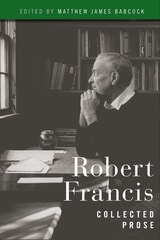
American author Robert Francis, whom Robert Frost called “the best neglected poet,” lived in Amherst, Massachusetts from the 1920s to the 1980s. As an underappreciated but prolific poet, Francis authored eight poetry collections and received a number of prestigious prizes. Still, like many poets committed to their craft, he lived most of his quiet life at or well below the poverty level. To sustain himself financially, Francis turned to essay writing in popular magazines, such as the Christian Science Monitor and Forum. From 1938 to 1953, as America and the world experienced a period of intense modernization, he produced an invigorating, challenging, and enlightening quantity of prose whose quality should rank him alongside writers such as Emerson, Thoreau, Wendell Berry, and Annie Dillard.
Published in one volume for the first time, Robert Francis: Collected Prose invites readers to a retrospective retreat into the solitude and serenity of Francis’s cabin, Fort Juniper, where he ardently and artfully dueled the most psychologically, socially, and economically destructive aspects of industrialized America. These essays, together with selections from Francis’s previously unpublished nature treatise, Traveling in Concord, offer an avenue toward an enhanced understanding of many commonly overlooked aspects of the natural world, offering 21st-century readers a refreshing reorientation of worldviews, advocating life principles of simplicity over unnecessary technological complexity, and conservation over consumerism. Vibrant, jubilant, at times sardonic and brooding but always absorbing, Francis’s essays draw readers into the meditative mood of his woodland walks, apple harvests, and autumn landscapes to discover, as he writes, “the importance of the unimportant, the virtue of the small, the rewards of intense cultivation.”
Robert Frost and Feminine Literary Tradition
Karen L. Kilcup
University of Michigan Press, 1998
Robert Frost and the Challenge of Darwin
Robert Faggen
University of Michigan Press, 2001
Combining both intellectual history and detailed analysis of Frost's poems, Robert Faggen shows how Frost's reading of Darwin reflected the significance of science in American culture from Emerson and Thoreau, through James and pragmatism. He provides fresh and provocative readings of many of Frost's shorter lyrics and longer pastoral narratives as they illustrate the impact of Darwinian thought on the concept of nature, with particular exploration of man's relationship to other creatures, the conditions of human equality and racial conflict, the impact of gender and sexual differences, and the survival of religion.
The book shows that Frost was neither a pessimist lamenting the uncertainties of the Darwinian worldview, nor a humanist opposing its power. Faggen draws on Frost's unpublished notebooks to reveal a complex thinker who willingly engaged with the difficult moral and epistemological implications of natural science, and showed their consonance with myths and traditions stretching back to Milton, Lucretius, and the Old Testament. Frost emerges as a thinker for whom poetry was not only artistic expression, but also a forum for the trial of ideas and their impact on humanity.
Robert Frost and the Challenge of Darwin provides a deeper understanding not only of Frost and modern poetry, but of the meaning of Darwin in the modern world, the complex interrelations of literature and science, and the history of American thought.
"A forceful, appealing study of the Frost-Darwin relation, which has gone little noted by previous scholars, and a fresh explanation of Frost's ambivalent relation to modernism, which he scorned but also influenced" --William Howarth, Princeton University
Robert Faggen is Associate Professor of Literature, Claremont McKenna College and Adjunct Associate Professor, Claremont Graduate School.
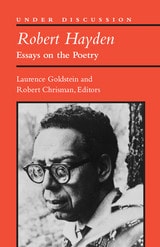
Robert Hayden
Essays on the PoetryLaurence Goldstein and Robert Chrisman, Editors
University of Michigan Press, 2013
This collection of essays by leading critics and poets charts Robert Hayden’s growing reputation as a major writer of some of the twentieth century’s most important poems on African-American themes, including the famed “Middle Passage” and “Frederick Douglass.” The essays illuminate the themes and techniques that established Hayden as a modernist writer with affinities to T. S. Eliot, Federico Garcia Lorca, and W. B. Yeats, as well as to traditions of African-American writings that include such figures as Countee Cullen and Langston Hughes.
Robert Hayden: Essays on the Poetryis the first and only book to collect significant essays on this distinguished poet. Covering sixty years of commentary, book reviews, essays, and Hayden’s own published materials, this volume is an invaluable contribution to our understanding of the poet’s vision of experience, artistry, and influence. The book includes forty different works that examine the life and poetry of Hayden, the first African-American to serve as Consultant in Poetry to the Library of Congress (the post now called Poet Laureate) and to receive the Grand Prix de la Poesie at the First World Festival of Negro Arts, Dakar, Senegal, in 1966.
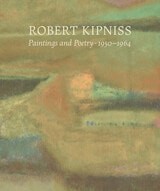
Robert Kipniss
Paintings and Poetry, 1950–1964Robert Kipniss
The Artist Book Foundation, 2013
A comprehensive look at a memorable period in the celebrated painter and printmaker's life and career, Robert Kipniss: Paintings and Poetry, 1950–1964 is the result of his many arduous months revisiting his more-than-half-a-century-ago writings and peoms that were stashed away and essentially forgotten. "Some of the poems are straightforward, some are infused with surreal irony, and some are angry," says Kipniss in his candid and honest preface. Thoughtful and articulate from conception to completion, his never-before-published poems are choreographed with his early paintings in this monograph's contemplation of these influential and foundational fourteen years. "When I stopped writing [in 1961] my vision was no longer divided between word-thinking and picture-thinking: these approaches had merged and in expressing myself I was more whole," reflects Kipniss in his retrospective musings.
This written and visual account of previously unpublished poems and critically acclaimed early paintings includes two astute and illustrative essays that further engage the reader in the evolution of the artist's prolific oeuvre. His prints, drawings, and paintings are remarkable for their eloquence and refinement, earning him international recognition for his expansive landscapes and small town vistas, as well as quiet interors and intimate still lifes.
Readers of this seminal volume are all the richer for catching a glimpse of an intensely personal segment of this accomplished artist's private history. In an unambiguous assessment, Kipniss elaborates, "The most significant insight that arose in this undertaking...came when I began to collate reproductions of my paintings of the 1950s. I could clearly see that my work in the two mediums were from very differing parts of my psyche, and that while they were both in themselves completely engaged, they were not in any way together."
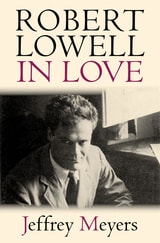
Robert Lowell in Love
Jeffrey Meyers
University of Massachusetts Press, 2016
Lowell's charismatic personality, compelling poetry, and literary fame attracted lovers and friends who were both frightened and excited by his aura of brilliance and danger. He loved the idea of falling in love, and in his recurring manic episodes he needed women at the center of his emotional and artistic life. Each affair became an intense dramatic episode. Though he idealized his loves and encouraged their talents, his frenetic affairs and tortured marriages were always conducted on his own terms. Robert Lowell in Love tells the story of the poet in the grip of love and gives voice to the women who loved him, inspired his poetry, and suffered along with him.
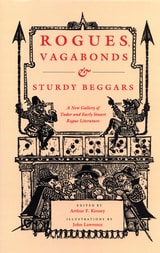
Rogues, Vagabonds, and Sturdy Beggars
A New Gallery of Tudor and Early Stuart Rogue Literature Exposing the Lives, Times, and Cozening Tricks of the Elizabethan UnderworldArthur F. Kinney
University of Massachusetts Press, 1990
In his introduction, Arthur F. Kinney discusses the significance of these works as protonovels and their influence on such writers as Shakespeare. He also explores the social, political, and economic conditions of a time that spawned a community of renegades who conned their way to fame, fortune, and, occasionally, the rope at Tyburn.
Roman Holidays
American Writers and Artists in Nineteenth-Century ItalyRobert K. Martin
University of Iowa Press, 2001
Romances of the White Man's Burden
Race, Empire, and the Plantation in American Literature, 1880-1936Jeremy Wells
Vanderbilt University Press, 2011
Romances of the White Man's Burden takes on works in American literature in which the proverbial "old plantation" is made to seem not a relic but a harbinger, a sign that the South had arrived at a multiracial modernity and harmony before the rest of the United States. Focusing on writers such as Joel Chandler Harris, Thomas Nelson Page, Henry W. Grady, Thomas Dixon, and William Faulkner, Jeremy Wells reveals their shared fixation on the figure of the white southern man as specially burdened by history. Each of these writers, in his own way, presented the plantation South as an emblem, not an aberration, of America.
Romantic Comedy
James Allen Hall
Four Way Books, 2023
James Allen Hall returns to poetry with Romantic Comedy, a sophomore collection sounding the parameters of genre to subvert cultural notions of literary value and artistic legitimacy. What realities do stories authorize, and which remain untold? “This story,” they profess in “Biography,” “is mine: there was / a wound, then a world.” Rather than playing into the attention economy’s appetite for sensationalism, Hall’s poems resist the formulaic while paying homage to the oeuvre, a formal balancing act that celebrates queer life.The poems create liberatory narratives that break constraints or speak through them. Hall parses music from the blizzard — as when “one year / [they] watched the snow / pile to [their] door / all December, all / January,” “the year [they] wanted / to die,” and, faced with winter’s architecture, “learned / another song. Sang / another way.” Whether grieving the death of their father, documenting the survival of sexual assault, interrogating the scripts of addiction, or revisiting an ’80s crime thriller, Hall’s second collection constantly affirms the ingenuity of self-definition as a technology of survival.
Romantic Cyborgs
Authorship and Technology in the American RenaissanceKlaus Benesch
University of Massachusetts Press, 0
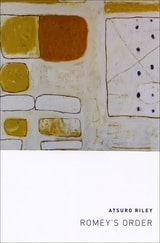
Romey's Order
Atsuro Riley
University of Chicago Press, 2010
Romey's Order is an indelible sequence of poems voiced by an invented (and inventive) boy-speaker called Romey, set alongside a river in the South Carolina lowcountry.
As the word-furious eye and voice of these poems, Romey urgently records--and tries to order--the objects, inscape, injuries, and idiom of his "blood-home" and childhood world. Sounding out the nerves and nodes of language to transform "every burn-mark and blemish," to “bind our river-wrack and leavings," Romey seeks to forge finally (if even for a moment) a chord in which he might live. Intently visceral, aural, oral, Atsuro Riley's poems bristle with musical and imaginative pleasures, with story-telling and picture-making of a new and wholly unexpected kind.
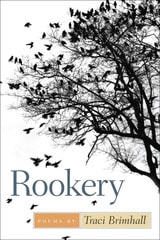
Rookery
Traci Brimhall
Southern Illinois University Press, 2010
Traveling to the most intimate extremes of the human heart
Fraught with madness, brutality, and ecstasy, Traci Brimhall’s Rookery delves into the darkest and most remote corners of the human experience. From the graveyards and battlefields of the Civil War to the ancient forests of Brazil, from desire to despair, landscapes both literal and emotional are traversed in this unforgettable collection of poems. Brimhall guides readers through ever-winding mazes of heartbreak and treachery, and the euphoric dreams of missionaries. The end of days, the intoxication of religion that at times borders on terror, and the post-evangelical experience intertwine with the haunting redemptions and metamorphoses found in violence. These tender yet ruthless poems, brimming with danger and longing, lure readers to “a place where everyone is transformed by suffering.”
Room Where I Was Born
Brian Teare
University of Wisconsin Press, 2003
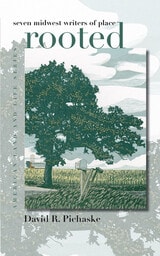
Rooted
Seven Midwest Writers of PlaceDavid R. Pichaske
University of Iowa Press, 2006
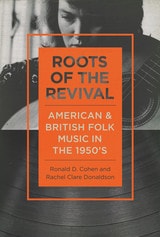
Roots of the Revival
American and British Folk Music in the 1950sRonald D. Cohen and Rachel Clare Donaldson
University of Illinois Press, 2014
After setting the stage with the work of music collectors in the nineteenth century, the authors explore the so-called recovery of folk music practices and performers by Alan Lomax and others, including journeys to and within the British Isles that allowed artists and folk music advocates to absorb native forms and facilitate the music's transatlantic exchange. Cohen and Donaldson place the musical and cultural connections of the twin revivals within the decade's social and musical milieu and grapple with the performers' leftist political agendas and artistic challenges, including the fierce debates over "authenticity" in practice and repertoire that erupted when artists like Harry Belafonte and the Kingston Trio carried folk into the popular music mainstream.
From work songs to skiffle, from the Weavers in Greenwich Village to Burl Ives on the BBC, Roots of the Revival offers a frank and wide-ranging consideration of a time, a movement, and a transformative period in American and British pop culture.
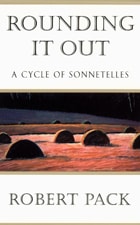
Rounding It Out
A Cycle of SonnetellesRobert Pack
University of Chicago Press, 1999
Rounding It Out is not only about these themes, but also, through reflection, about its own chosen form. Each of the poems is a cross between a sonnet and a villanelle, a formal innovation Pack calls a sonnetelle. Employing meter and rhyme, assonance and alliteration, Pack takes delight and finds consolation in the sensuousness of the English language even in the face of mortality and ongoing personal loss.
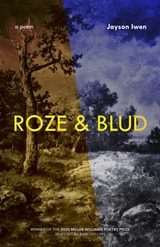
Roze & Blud
a poemJayson Iwen
University of Arkansas Press, 2020
Winner, 2020-2021 Northeastern Minnesota Book Award
In this long poem—almost a novel-in-verse—Jayson Iwen examines the intimate thoughts and feelings of two would-be poets: Roze Mertha, a teenage girl growing up in a trailer park, and William Blud, a veteran navigating age and loneliness in an apartment he shares with an Afghan refugee. Deftly crafting distinct voices for these characters in the upper midwestern terrain they inhabit, Iwen explores the quiet heartbreak and tenderly treasured experiences of two apparently unremarkable people using poetry to understand a world that doesn’t make much space for them.
Ruining the Picture
Pimone Triplett
Northwestern University Press, 1998
"Pimone Triplett has a large discursive intelligenge, a keen lyric sensibility, a strong feeling for drama. . . . What an abiding pleasure to encounter a first book of such maturity." --Edward Hirsch
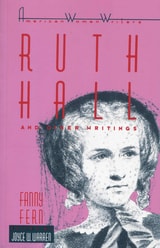
Ruth Hall and Other Writings by Fanny Fern
Edited by Joyce W Warren
Rutgers University Press, 1986
Fanny Fern was one of the most popular American writers of the mid-nineteenth century, the first woman newspaper columnist in the United States, and the most highly paid newspaper writer of her day. This volume gathers together for the first time almost one hundred selections of her best work as a journalist. Writing on such taboo subjects as prostitution, venereal disease, divorce, and birth control, Fern stripped the façade of convention from some of society's most sacred institutions, targeting cant and hypocrisy, pretentiousness and pomp.
Fern portrays a mid-nineteenth century woman who becomes the incarnartion of the American individualist, something regarded as exclusively for men.
rivers of the driftless region
Mark Conway
Four Way Books, 2019