Results by title
24 books match the query 'Embodiment'
A Theology of Sense
John Updike, Embodiment, and Late Twentieth-Century American LiteratureScott Dill
The Ohio State University Press, 2018
Action Bodies
VFX, Identity, and Embodiment in Blockbuster CinemaDrew Ayers
University of Texas Press, 2026
Exploring how digital visual effects have changed the representations of the body and identity in action films.
When Harrison Ford appeared digitally de-aged in Indiana Jones and the Dial of Destiny, audiences witnessed more than a technical feat; they saw how visual effects are reshaping what bodies can be on screen. In Action Bodies, Drew Ayers examines how the contemporary action genre redefines embodiment across human, superhuman, animal, and machine forms. Ayers argues that action films are a crucial site for understanding how popular media both reflect and shape cultural debates about identity, citizenship, disability, and ethics in the era of big data and algorithmic culture.
Through case studies including Top Gun: Maverick, The Woman King, The Fast & the Furious franchise, and Avatar: The Way of Water, Ayers explores how VFX-altered bodies carry ideological weight. While the action genre has long leaned conservative in its politics of identity, its digitally mediated bodies also generate unexpected opportunities: glimpses of more inclusive and flexible modes of embodiment. As artificial intelligence and synthetic imagery continue to transform film production, Action Bodies demonstrates why careful attention to action cinema is essential for understanding how contemporary culture imagines and engineers the future of the body.

Adrian Piper
Race, Gender, and EmbodimentJohn P. Bowles
Duke University Press, 2011
Over the course of a decade, John P. Bowles and Piper conversed about her art and its meaning, reception, and relation to her scholarship on Kant’s philosophy. Drawing on those conversations, Bowles locates Piper’s work at the nexus of Conceptual and feminist art of the late 1960s and 1970s. Piper was the only African American woman associated with the Conceptual artists of the 1960s and one of only a few African Americans to participate in exhibitions of the nascent feminist art movement in the early 1970s. Bowles contends that Piper’s work is ultimately about our responsibility for the world in which we live.

Architectures of Embodiment
Disclosing New IntelligibilitiesEdited by Alex Arteaga
Diaphanes, 2021
Architectures of Embodiment is a constellation of coexisting autonomous artifacts: texts by Alex Arteaga, Mika Elo, Ana García Varas, Lidia Gasperoni, Jonathan Hale, Susanne Hauser, Dieter Mersch and Gerard Vilar in dialogue with one another through comments and comments on the comments. It is conceived as a dialogical research dispositive: an invitation to participate in an open-ended process of research within a growing ecology of research practices.
Behind the Mask of the Strong Black Woman
Voice and the Embodiment of a Costly PerformanceTamara Beauboeuf-Lafontant
Temple University Press, 2009
The author, a noted sociologist, interviews 58 Black women about being strong and proud, to illustrate their “performance” of invulnerability. Beauboeuf-Lafontant explains how such behavior leads to serious symptoms for these women, many of whom suffer from eating disorders and depression.
Drawing on Black feminist scholarship, cultural studies, and women’s history, Behind the Mask of the Strong Black Woman traces the historical and social influences of normative Black femininity, looking at how notions of self-image and strength create a distraction from broader forces of discrimination and power.
Digital Sensations
Space, Identity, And Embodiment In Virtual RealityKen Hillis
University of Minnesota Press, 1999
Considers the cultural and philosophical assumptions underlying virtual reality, and how the technology affects the real world.
Virtual reality is in the news and in the movies, on TV and in the air. Why is the technology-or the idea—so prevalent precisely now? What does it mean—what does it do—to us? Digital Sensations looks closely at how the “lived” world is affected by representational forms generated by communication technologies, especially digital and optical virtual technologies.
Virtual reality, or VR, is a technological reproduction of the process of perceiving the real, yet that process is filtered through the social realities and embedded cultural assumptions about human bodies and space held by the technology’s creators. Through critical histories of the technologies of vision, light, space, and embodiment, Ken Hillis traces the often contradictory intellectual and metaphysical impulses behind the Western transcendental wish to achieve an ever more perfect copy of the real. He advocates that current and proposed virtual technologies reflect a Western desire to escape the body. Because virtual technologies are new, these histories also address unintended and underconsidered consequences flowing from their rapid dissemination, such as commodifications and the alienation of new forms of surveillance. Exploring topics from VR and other, earlier visual technologies, Hillis’s penetrating perspective on the cultural power of place and space broadens our view of the interplay between social relations and technology.
Emergence and Embodiment
New Essays on Second-Order Systems TheoryBruce Clarke and Mark B. N. Hansen, eds.
Duke University Press, 2009
In response to the apparent dissolution of boundaries at work in the contemporary technosciences of emergence, neocybernetics observes that cognitive systems are operationally bounded, semi-autonomous entities coupled with their environments and other systems. Second-order systems theory stresses the recursive complexities of observation, mediation, and communication. Focused on the neocybernetic contributions of von Foerster, Francisco Varela, and Niklas Luhmann, this collection advances theoretical debates about the cultural, philosophical, and literary uses of their ideas. In addition to the interview with von Foerster, Emergence and Embodiment includes essays by Varela and Luhmann. It engages with Humberto Maturana’s and Varela’s creation of the concept of autopoiesis, Varela’s later work on neurophenomenology, and Luhmann’s adaptations of autopoiesis to social systems theory. Taken together, these essays illuminate the shared commitments uniting the broader discourse of neocybernetics.
Contributors. Linda Brigham, Bruce Clarke, Mark B. N. Hansen, Edgar Landgraf, Ira Livingston, Niklas Luhmann, Hans-Georg Moeller, John Protevi, Michael Schiltz, Evan Thompson, Francisco J. Varela, Cary Wolfe

Inward
Vipassana Meditation and the Embodiment of the SelfMichal Pagis
University of Chicago Press, 2019
Materializing New Media
Embodiment in Information AestheticsAnna Munster
Dartmouth College Press, 2006

Nonreligious Lifeworlds in Egypt
Sense-Making, Emotion, and EmbodimentKarin van Nieuwkerk
University of Texas Press, 2026
An analysis of the growing visibility of nonreligion in Egypt.
Egypt's 2011 Uprising, while often perceived as a failed revolution, nonetheless nonetheless had durable social effects. Among these has been a rise in expressing atheism and agnosticism, especially among educated and affluent youth—the country’s future leaders.
An intimate ethnography, Nonreligious Lifeworlds in Egypt explores the intellectual and emotional transformations of atheists and agnostics inspired by the aspirational freedom-seeking of the Arab Spring. Rejecting both of Egypt’s dominant religious traditions, Islam and Coptic Christianity, nonreligious people are widely viewed as agents of moral outrage. Amid media-driven panics, their sanity is often questioned by their own families as they experiment with new ways of living and relating. Drawing from in-depth fieldwork, interviews, and social media analysis, Karin van Nieuwkerk reveals her interlocutors’ changing perspectives on sex and gender, eating and drinking, and life and death. Above all, she emphasizes the affective experiences of renouncing religion, marked by anxiety and regret—but also liberation and relief. With rigor and compassion, Van Nieuwkerk opens our minds to the arduous process of exchanging established norms for self-determination.
Phenomenology and Embodiment
Husserl and the Constitution of SubjectivityJoona Taipale
Northwestern University Press, 2014
Reproducing the French Race
Immigration, Intimacy, and Embodiment in the Early Twentieth CenturyElisa Camiscioli
Duke University Press, 2009
By focusing on telling aspects of the immigration debate, Camiscioli reveals how racial hierarchies were constructed, how gender figured in their creation, and how only white Europeans were cast as assimilable. Delving into pronatalist politics, she describes how potential immigrants were ranked according to their imagined capacity to adapt to the workplace and family life in France. She traces the links between racialized categories and concerns about industrial skills and output, and she examines medico-hygienic texts on interracial sex, connecting those to the crusade against prostitution and the related campaign to abolish “white slavery,” the alleged entrapment of (white) women for sale into prostitution abroad. Camiscioli also explores the debate surrounding the 1927 law that first made it possible for French women who married foreigners to keep their French nationality. She concludes by linking the Third Republic’s impulse to create racial hierarchies to the emergence of the Vichy regime.
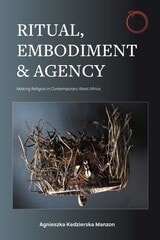
Ritual, Embodiment, and Agency
Making Religion in Contemporary West AfricaAgnieszka Kedzierska Manzon
HAU, 2026
Ritual, Embodiment, and Agency shows through rich ethnographic analysis how Mande people in West Africa resort to multiple ritual practices to address an “episteme of doubt.” In the context of armed conflicts and terrorist attacks, climate disruptions, financial crises, and illness, members of “hunter societies," experts who handle certain agentive artifacts, and adepts in a spiritual possession cult deal with a complex past and uncertain future through creative embodied engagement. Formed within and partially against a predominantly Islamic context and the spread of charismatic Christianities, such embodied ways of acting enable these religious specialists to become “virtuous subjects” to change their relations to the world and to themselves. This is an English translation of Corps rituels. La fabrique du religieux en pays mandingue (Mali, Guinée, Côte d'Ivoire).
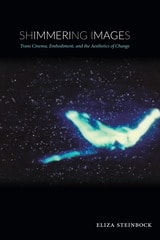
Shimmering Images
Trans Cinema, Embodiment, and the Aesthetics of ChangeEliza Steinbock
Duke University Press, 2019
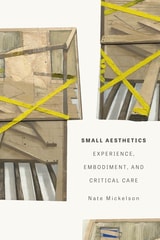
Small Aesthetics
Experience, Embodiment, and Critical CareNate Mickelson
Northwestern University Press, 2027
Synthesizing emerging theories of aesthetic action in relation to literary and art criticism
Drawing attention to what critical theorist Heather Love identifies as “the micro,” contemporary artists use small materials and cross‑media methods to elicit interpretation and foster critical engagement, immersing audiences in the entangled relations engendered with near and distant others through artistic experience. Small Aesthetics analyzes this insurgent tradition in twentieth- and twenty‑first-century poetry and art to show how it confronts the challenges of creating mutually sustaining lives. Feminist and feminist‑of‑color theorists have long argued that acts of care take on critical force when they foreground collective well-being and solidarity across power, class, and cultural differences. Guided by their insights, Nate Mickelson proposes that literary and visual artworks elicit acts of caring attention that engage audiences in their responsibilities to tend to the collective structures through which their lives unfold. Through his close readings, he extends the “post‑critical turn” in literary and art criticism and demonstrates the urgent vitality of feminist, Black, Latine, queer, and trans lives in increasingly hostile social contexts.

The Border and Its Bodies
The Embodiment of Risk Along the U.S.-México LineEdited by Thomas E. Sheridan and Randall H. McGuire
University of Arizona Press, 2019
The increasingly militarized U.S.-México border is an intensely physical place, affecting the bodies of all who encounter it. The essays in this volume explore how crossing becomes embodied in individuals, how that embodiment transcends the crossing of the line, and how it varies depending on subject positions and identity categories, especially race, class, and citizenship.
Timely and wide-ranging, this book brings into focus the traumatic and real impact the border can have on those who attempt to cross it, and it offers new perspectives on the effects for rural communities and ranchers. An intimate and profoundly human look at migration, The Border and Its Bodies reminds us of the elemental fact that the border touches us all.
Contributors
Bruce E. Anderson
Jared Beatrice
Rebecca Crocker
Jason De León
Linda Green
Randall H. McGuire
Shaylih Muehlmann
Robin Reineke
Olivia T. Ruiz Marrujo
David Seibert
Thomas E. Sheridan
Angela Soler
Ruth M. Van Dyke

The Critical Limits of Embodiment
Reflections on Disability Criticism, Volume 13Carol A. Breckenridge and Candace Vogler, eds.
Duke University Press, 0
The articles in this collection build on recent work in the larger arena of disability studies and address such subjects as the hegemony of the concept of normalcy, the idea of the able body, and the constitutive place of disability in ethics, liberalism, and capitalism. The Critical Limits of Embodiment examines the commonsense foundations of disability studies, which tend to universalize Western norms and assumptions in which the normal is foregrounded and the able body forms the basis for the universal liberal subject. The broad geographic scope of these essays constitutes one of their greatest contributions to the field. In order to query the body-related universalisms of Western thought, the issue seeks to be self-conscious about cultural locations.
The volume examines the figure of the disabled in the cultural imaginaries of a variety of historical, cultural, and disciplinary contexts including literature, anthropology, philosophy, and art history.
Contributors. Renu Addlakha, Carol A. Breckenridge, Veena Das, Faye Ginsburg, Wu Hung, Eva Kittay, Celeste Langan, David Mitchell, Rayna Rapp, Susan Schweik, Sharon Snyder, Candace Vogler, Hank Vogler
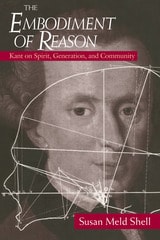
The Embodiment of Reason
Kant on Spirit, Generation, and CommunitySusan Meld Shell
University of Chicago Press, 1996
Shell argues that the central animating issues of Kant's lifework concerned the perplexing relation of spirit to body. Through an exacting analysis of individual writings, Shell maps the philosophical contours of Kant's early intellectual struggles and their relation to his more mature thought. The paradox of mind in matter and the tensions it generates—between freedom and determinacy, independence and community, ideal and real—are shown to inform the whole of his work. Shell's fresh, penetrating analysis of the precritical works will surely catapult them to new prominence in Kant studies.
Shell's critique goes further to consider the context of contemporary intellectual life. She explores the fascinating realm of Kant's sexual and medical idiosyncracies, linking them to the primary concerns of his critical philosophy. She develops a sure-to-be controversial treatment of the connection between Kant's philosophy and his chronic hypochondria, and illuminates previously unforeseen connections in a remarkable convergence of life and thought, with important theoretical and practical implications for modern times.

The Question of Embodiment, Volume 15
Elizabeth Weed and Ellen Rooney, eds.
Duke University Press, 0
Contributors. Anne Fausto-Sterling, Petra Kuppers, Jennifer Reardon, Gayle Salamon, Elizabeth A. Wilson
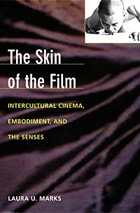
The Skin of the Film
Intercultural Cinema, Embodiment, and the SensesLaura U. Marks
Duke University Press, 2000
Much of intercultural cinema, Marks argues, has its origin in silence, in the gaps left by recorded history. Filmmakers seeking to represent their native cultures have had to develop new forms of cinematic expression. Marks offers a theory of “haptic visuality”—a visuality that functions like the sense of touch by triggering physical memories of smell, touch, and taste—to explain the newfound ways in which intercultural cinema engages the viewer bodily to convey cultural experience and memory. Using close to two hundred examples of intercultural film and video, she shows how the image allows viewers to experience cinema as a physical and multisensory embodiment of culture, not just as a visual representation of experience. Finally, this book offers a guide to many hard-to-find works of independent film and video made by Third World diasporic filmmakers now living in the United States, Great Britain, and Canada.
The Skin of the Film draws on phenomenology, postcolonial and feminist theory, anthropology, and cognitive science. It will be essential reading for those interested in film theory, experimental cinema, the experience of diaspora, and the role of the sensuous in culture.
The Spectral Jew
Conversion and Embodiment in Medieval EuropeSteven F. Kruger
University of Minnesota Press, 2006
Looking closely at how medieval Jewish and Christian identities are distinguished from each other, yet intimately intertwined, Kruger demonstrates how Jews were often corporealized in ways that posited them as inferior to Christians—archaic and incapable of change—even as the two mutually shaped each other. But such attempts to differentiate Jews and Christians were inevitably haunted by the knowledge that Christianity had emerged out of Judaism and was, in its own self-understanding, a community of converts.
Examining the points of contact between Christian and Jewish communities, Kruger discloses the profound paradox of the Jew as different in all ways, yet capable of converting to fully Christian status. He draws from central medieval authors and texts such as Peter Damian, Guibert of Nogent, the Barcelona Disputation, and the Hebrew chronicles of the First Crusade, as well as lesser known writings such as the disputations of Ceuta, Majorca, and Tortosa and the immensely popular Dialogues of Peter Alfonsi.
By putting the conversion narrative at the center of this analysis, Kruger exposes it as a disruption of categories rather than a smooth passage and reveals the prominent role Judaism played in the medieval Christian imagination.
Steven F. Kruger is professor of English and medieval studies at Queens College and the Graduate Center, CUNY. He is author of several books and editor with Glenn Burger of Queering the Middle Ages (Minnesota, 2001).
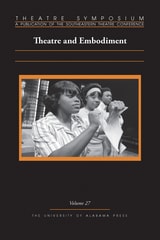
Theatre Symposium, Vol. 27
Theatre and EmbodimentEdited by Sarah McCarroll
University of Alabama Press, 2019
Theatre is inescapably about bodies. By definition, theatre requires the live bodies of performers in the same space and at the same time as the live bodies of an audience. And, yet, it’s hard to talk about bodies. We talk about characters; we talk about actors; we talk about costume and movement. But we often approach these as identities or processes layered onto bodies, rather than as inescapably entwined with them. Bodies on the theatrical stage hold the power of transformation. Theatre practitioners, scholars, and educators must think about what bodies go where onstage and what stories which bodies to tell.
The essays in Theatre Symposium, Volume 27 explore a broad range of issues related to embodiment. The volume begins with Rhonda Blair’s keynote essay, in which she provides an overview of the current cognitive science underpinning our understanding of what it means to be “embodied” and to talk about “embodiment.” She also provides a set of goals and cautions for theatre artists engaging with the available science on embodiment, while issuing a call for the absolute necessity for that engagement, given the primacy of the body to the theatrical act.
The following three essays provide examinations of historical bodies in performance. Timothy Pyles works to shift the common textual focus of Racinian scholarship to a more embodied understanding through his examination of the performances of the young female students of the Saint-Cyr academy in two of Racine’s Biblical plays. Shifting forward in time by three centuries, Travis Stern’s exploration of the auratic celebrity of baseball player Mike Kelly uncovers the ways in which bodies may retain the ghosts of their former selves long after physical ability and wealth are gone. Laurence D. Smith’s investigation of actress Manda Björling’s performances in Miss Julie provides a model for how cognitive science, in this case theories of cognitive blending, can be integrated with archival theatrical research and scholarship.
From scholarship grounded in analysis of historical bodies and embodiment, the volume shifts to pedagogical concerns. Kaja Amado Dunn’s essay on the ways in which careless selection of working texts can inflict embodied harm on students of color issues an imperative call for careful and intentional classroom practice in theatre training programs. Cohen Ambrose’s theorization of pedagogical cognitive ecologies, in which subjects usually taught disparately (acting, theatre history, costume design, for example) could be approached collaboratively and through embodiment, speaks to ways in which this call might be answered.
Tessa Carr’s essay on "The Integration of Tuskegee High School" brings together ideas of historical bodies and embodiment in the academic theatrical context through an examination of the process of creating a documentary theatre production. The final piece in the volume, Bridget Sundin’s exchange with the ghost of Marlene Dietrich, is an imaginative exploration of how it is possible to open the archive, to create new spaces for performance scholarship, via an interaction with the body.

Theatrical Reality
Space, Embodiment and Empathy in PerformanceCampbell Edinborough
Intellect Books, 2016
Virtual Gender
Fantasies of Subjectivity and EmbodimentMary Ann O'Farrell and Lynne Vallone, Editors
University of Michigan Press, 1999