Results by title
4413 books match the query 'Anthropology' and 221 start with r

Remembering Victoria
A Tragic Nahuat Love StoryBy James M. Taggart
University of Texas Press, 2007
On October 15, 1983, a young mother of six was murdered while walking across her village of Huitzilan de Serdán, Mexico, with her infant son and one of her daughters. This woman, Victoria Bonilla, was among more than one hundred villagers who perished in violence that broke out soon after the Mexican army chopped down a cornfield that had been planted on an unused cattle pasture by forty Nahuat villagers.
In this anthropological account, based on years of fieldwork in Huitzilan, James M. Taggart turns to Victoria's husband, Nacho Angel Hernández, to try to understand how a community based on respect and cooperation descended into horrific violence and fratricide. When the army chopped down the cornfield at Talcuaco, the war that broke out resulted in the complete breakdown of the social and moral order of the community.
At its heart, this is a tragic love story, chronicling Nacho's feelings for Victoria spanning their courtship, marriage, family life, and her death. Nacho delivered his testimonio to the author in Nahuat, making it one of the few autobiographical love stories told in an Amerindian language, and a very rare account of love among the indigenous people of Mesoamerica. There is almost nothing in the literature on how a man develops and changes his feelings for his wife over his lifetime. This study contributes to the anthropology of emotion by focusing on how the Nahuat attempt to express love through language and ritual.
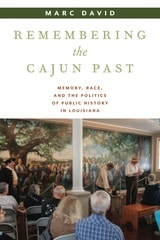
Remembering the Cajun Past
Memory, Race, and the Politics of Public History in LouisianaMarc David
University of Massachusetts Press, 2025
Exploring how public history creates collective memory of this white ethnic group through memorials
Cajuns arrived in southern Louisiana in the 18th century after the British exiled them from eastern Canada. Also known as Acadians, they retain a unique dialect of French, and their distinctive music, food, and other cultural traits characterized them as an ethnic group. Until the 1960s, authorities viewed them as a serious problem, allegedly blocking the state’s progress as they clung to their antiquated ways. Few Cajun residents in the region remembered the remote past of their ancestors, but by the 1970s, organizations ranging from local non-profits to the National Park Service created sites that commemorated their history, such as the Acadian Memorial in St. Martinville, allowing Cajuns to connect their lives to their past and claim it as their own.
In Remembering the Cajun Past, anthropologist Marc David studies the cultural and political dynamics that reconfigured Cajun memory and identity. Focusing on St. Martinville and the Acadian Memorial, he explores how authorities changed their minds about Cajuns and demonstrates how Cajuns’ historical memories took shape. Part ethnography and part history, David examines the racial aspects of the Memorial’s creation in the wake of the Civil Rights movement and the growth of a new Cajun history, one through which individual Cajuns rejected the label’s connotation of “white trash” and embraced belonging within a storied white ethnic group. Based on decades of fieldwork and deep engagement with public history practices, David explores how historical memory and the historic sites that foster it are intertwined with the politics of civic life.
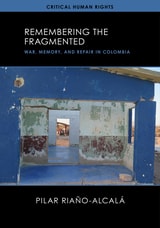
Remembering the Fragmented
War, Memory, and Repair in ColombiaPilar Riaño-Alcalá
University of Wisconsin Press, 2027
The South American nation of Colombia has experienced decades of violence involving state, guerrilla, and paramilitary actors, resulting in profound and enduring consequences. Scholars have examined both the violent events and the subsequent truth and reconciliation initiatives addressing this complex history. Pilar Riaño-Alcalá introduces a novel perspective by integrating Black, Indigenous, and memory studies in her analysis of two significant sites of mass violence: Bahia Portete, a Wayuu Indigenous territory in Upper Guajira, and Bojayá, a Black and Embera Indigenous territory in Chocó. By recognizing nonhuman and nonliving community members as actants and foregrounding Indigenous and Black ontologies in collective remembrance, Riaño-Alcalá reveals the processes through which these communities engage in social repair. She demonstrates how they interpret, restore, sustain, and reimagine their identities amid ongoing challenges posed by war and racial capitalism. This work advances scholarship in human rights studies, memory studies, Indigenous studies, Latin American studies, and the anthropology of social repair, offering significant new insights into a well-examined historical context.
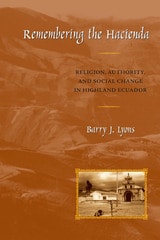
Remembering the Hacienda
Religion, Authority, and Social Change in Highland EcuadorBy Barry J. Lyons
University of Texas Press, 2006
From the colonial period through the mid-twentieth century, haciendas dominated the Latin American countryside. In the Ecuadorian Andes, Runa—Quichua-speaking indigenous people—worked on these large agrarian estates as virtual serfs. In Remembering the Hacienda: Religion, Authority, and Social Change in Highland Ecuador, Barry Lyons probes the workings of power on haciendas and explores the hacienda's contemporary legacy.
Lyons lived for three years in a Runa village and conducted in-depth interviews with elderly former hacienda laborers. He combines their wrenching accounts with archival evidence to paint an astonishing portrait of daily life on haciendas. Lyons also develops an innovative analysis of hacienda discipline and authority relations. Remembering the Hacienda explains the role of religion as well as the reshaping of Runa culture and identity under the impact of land reform and liberation theology.
This beautifully written book is a major contribution to the understanding of social control and domination. It will be valuable reading for a broad audience in anthropology, history, Latin American studies, and religious studies.
Remembering to Live
Illness at the Intersection of Anxiety and Knowledge in Rural IndonesiaM. Cameron Hay
University of Michigan Press, 2004
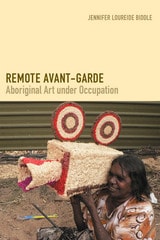
Remote Avant-Garde
Aboriginal Art under OccupationJennifer Loureide Biddle
Duke University Press, 2016

Remote Warfare
New Cultures of ViolenceRebecca A. Adelman
University of Minnesota Press, 2020
Considers how people have confronted, challenged, and resisted remote warfare
Drone warfare is now a routine, if not predominant, aspect of military engagement. Although this method of delivering violence at a distance has been a part of military arsenals for two decades, scholarly debate on remote warfare writ large has remained stuck in tired debates about practicality, efficacy, and ethics. Remote Warfare broadens the conversation, interrogating the cultural and political dimensions of distant warfare and examining how various stakeholders have responded to the reality of state-sponsored remote violence.
The essays here represent a panoply of viewpoints, revealing overlooked histories of remoteness, novel methodologies, and new intellectual challenges. From the story arc of Homeland to redefining the idea of a “warrior,” these thirteen pieces consider the new nature of surveillance, similarities between killing with drones and gaming, literature written by veterans, and much more. Timely and provocative, Remote Warfare makes significant and lasting contributions to our understanding of drones and the cultural forces that shape and sustain them.
Contributors: Syed Irfan Ashraf, U of Peshawar, Pakistan; Jens Borrebye Bjering, U of Southern Denmark; Annika Brunck, U of Tübingen; David A. Buchanan, U.S. Air Force Academy; Owen Coggins, Open U; Andreas Immanuel Graae, U of Southern Denmark; Brittany Hirth, Dickinson State U; Tim Jelfs, U of Groningen; Ann-Katrine S. Nielsen, Aarhus U; Nike Nivar Ortiz, U of Southern California; Michael Richardson, U of New South Wales; Kristin Shamas, U of Oklahoma; Sajdeep Soomal; Michael Zeitlin, U of British Columbia.

Rendering Life Molecular
Models, Modelers, and Excitable MatterNatasha Myers
Duke University Press, 2015

Renegade Dreams
Living through Injury in Gangland ChicagoLaurence Ralph
University of Chicago Press, 2014
Going deep into a West Side neighborhood most Chicagoans only know from news reports—a place where children have been shot just for crossing the wrong street—Ralph unearths the fragile humanity that fights to stay alive there, to thrive, against all odds. He talks to mothers, grandmothers, and pastors, to activists and gang leaders, to the maimed and the hopeful, to aspiring rappers, athletes, or those who simply want safe passage to school or a steady job. Gangland Chicago, he shows, is as complicated as ever. It’s not just a warzone but a community, a place where people’s dreams are projected against the backdrop of unemployment, dilapidated housing, incarceration, addiction, and disease, the many hallmarks of urban poverty that harden like so many scars in their lives. Recounting their stories, he wrestles with what it means to be an outsider in a place like this, whether or not his attempt to understand, to help, might not in fact inflict its own damage. Ultimately he shows that the many injuries these people carry—like dreams—are a crucial form of resilience, and that we should all think about the ghetto differently, not as an abandoned island of unmitigated violence and its helpless victims but as a neighborhood, full of homes, as a part of the larger society in which we all live, together, among one another.
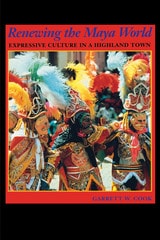
Renewing the Maya World
Expressive Culture in a Highland TownBy Garrett W. Cook
University of Texas Press, 2000
Each year in the Highland Guatemala town of Santiago Momostenango, Maya religious societies, dance teams, and cofradías perform the annual cycle of rituals and festivals prescribed by Costumbre (syncretized Maya Christian religion), which serves to renew the cosmic order. In this richly detailed ethnography, Garrett Cook explores how these festivals of Jesucristo and the saints derive from and reenact three major ancient Maya creation myths, thus revealing patterns of continuity between contemporary expressive culture and the myths, rituals, and iconography of the Classic and Postclassic Maya.
Drawing on fieldwork conducted in the 1970s and renewed in the 1990s, Cook describes the expressive culture tradition performed in and by the cofradías and their dance teams. He listens as dancers and cofrades explain the meaning of service and of the major ritual symbols in the cults of the saints and Jesucristo. Comparing these symbols to iconographic evidence from Palenque and myths from the Popol Vuh, Cook persuasively argues that the expressive culture of Momostenango enacts major Maya creation myths—the transformative sunrise, the representation of the year as the life cycle of anthropomorphized nature, and the erection of an axis mundi.
This research documents specific patterns of continuity and discontinuity in the communal expression of Maya religious and cosmogonic themes. Along with other recent research, it demonstrates the survival of a basic Maya pattern—the world-creating vegetative renewal cycle—in the highland Maya cults of the saints and Jesucristo.
Repatriating Polanyi
Market Society in the Visegrád StatesChris Hann
Central European University Press, 2019
Karl Polanyi’s “substantivist” critique of market society has found new popularity in the era of neoliberal globalization. The author reclaims this polymath for contemporary anthropology, especially economic anthropology, in the context of Central Europe, where Polanyi (1886–1964) grew up. The Polanyian approach illuminates both the communist era, in particular the “market socialist” economy which evolved under János Kádár in Hungary, as well as the post-communist transformations of property relations, civil society and ethno-national identities throughout the region.
Hann’s analyses are based primarily on his own ethnographic investigations in Hungary and South-East Poland. They are pertinent to the rise of neo-nationalism in those countries, which is theorized as a malign countermovement to the domination of the market. At another level, Hann’s adaptation of Polanyi’s social philosophy points beyond current political turbulence to an original concept of “social Eurasia”.
Repossessing Shanland
Myanmar, Thailand, and a Nation-State DeferredJane M. Ferguson
University of Wisconsin Press, 2022
Based on close readings of Shan-language media and years of ethnographic research in a community of soldiers and their families, Jane M. Ferguson details the origins of these movements and tells the story of the Shan in their own voices. She shows how the Shan have forged a homeland and identity during great upheaval by using state building as an ongoing project of resistance, resilience, and accommodation within both countries. In avoiding a good/bad moral binary and illuminating cultural complexities, Repossessing Shanland offers a fresh perspective on identity formation, transformation, and how people understand and experience borderlands today.
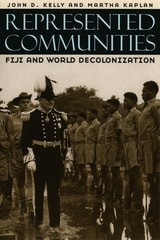
Represented Communities
Fiji and World DecolonizationJohn D. Kelly and Martha Kaplan
University of Chicago Press, 2001
Now, in Represented Communities, John D. Kelly and Martha Kaplan offer an extensive and devastating critique of Anderson's depictions of colonial history, his comparative method, and his political anthropology. The authors build a forceful argument around events in Fiji from World War II to the 2000 coups, showing how focus on "imagined communities" underestimates colonial history and obscures the struggle over legal rights and political representation in postcolonial nation-states. They show that the "self-determining" nation-state actually emerged with the postwar construction of the United Nations, fundamentally changing the politics of representation.
Sophisticated and impassioned, this book will further anthropology's contribution to the understanding of contemporary nationalisms.
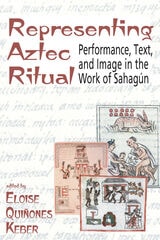
Representing Aztec Ritual
Performance, Text, and Image in the Work of SahagunEloise Quiñones Keber
University Press of Colorado, 2020
Representing Aztec Ritual: Performance, Text, and Image in the Work of Sahagún uses Sahagún's corpus as a starting point to focus on ritual performance, a key element in the functioning of the Aztec world. With topics ranging from the ritual use of sand and paper to the sacrifice of women, contributors explore how Aztec rites were represented in the images and texts of documents compiled under colonial rule and the implications of this European filter for our understanding of these ceremonies. Incorporating diverse disciplinary perspectives, contributors include Davíd Carrasco, Philip P. Arnold, Kay Read, H. B. Nicholson, Eduardo Matos Moctezuma, Guilhem Olivier, Doris Heyden, and Eloise Quiñones Keber.

Representing Talent
Hollywood Agents and the Making of MoviesViolaine Roussel
University of Chicago Press, 2017
The book takes readers behind the scenes to observe the day-to-day activities of agents, revealing their influence on artistic careers and the prospects of Hollywood’s forthcoming projects. Agents are crucial to understanding how creative and economic power are intertwined in Hollywood today. They play a key role in the process by which artistic worth and economic value are evaluated and attributed to people and projects. Roussel’s fieldwork examines what “having relationships” really means for agents, and how they perform the relationship work that’s at the heart of their professional existence and success. Representing Talent helps us to understand the players behind the definition of entertainment itself, as well as behind its current transformations.
Repression, Exile, and Democracy
Uruguayan CultureSaul Sosnowski and Louise B. Popkin, eds.
Duke University Press, 1992
The first section provides a context for the volume, with its analyses of the historical, political, and social aspects of the Uruguayan experience. The following chapters explore various aspects of cultural production, including personal experiences of exile and imprisonment, popular music, censorship, literary criticism, return from exile, and the role that culture plays in redemocratization.
This book's appeal extends well beyond the study of Uruguay to scholars and students of the history and culture of other Latin American nations, as well as to fields of comparative literature and politics in general.
Contributors. Hugo Achugar, Alvarro Barros-Lémez, Lisa Block de Behar, Amanda Berenguer, Hiber Conteris, José Pedro Díaz, Eduardo Galeano, Edy Kaufman, Leo Masliah, Carina Perelli, Teresa Porzecanski, Juan Rial, Mauricio Rosencof, Jorge Ruffinelli, Saúl Sosonowski, Martin Weinstein, Ruben Yáñez
Reproducing Inequities
Poverty and the Politics of Population in HaitiMaternowska, M. Catherine
Rutgers University Press, 2006
Residents of Haiti-one of the poorest and most unstable countries in the world-face a grim reality of starvation, violence, lack of economic opportunity, and minimal health care. For years, aid organizations have sought to alleviate the problems by creating health and family planning clinics, including one modern (and, by local standards, luxurious) center in the heart of Cit Soleil. During its height of service in the 1980s and 1990s, the clinic boasted nineteen staff members, an array of modern contraceptives, an accessible location, and convenient hours-but very few clients.
Why did this initiative fail so spectacularly despite surveys finding that residents would like to have fewer children? Why don't poor women heed the message of family planning, when smaller families seem to be in their best interest? In Reproducing Inequities, M. Catherine Maternowska argues that we too easily overlook the political dynamics that shape choices about family planning. Through a detailed study of the attempt to provide modern contraception in the community of Cit Soleil, Maternowska demonstrates the complex interplay between local and global politics that so often thwarts well-intended policy initiatives.
Medical anthropologists, she argues, have an important role to play in developing new action plans for better policy implementation. Ethnographic studies in desperate, dangerous locations provide essential data that can point the way to solutions for the dilemmas of contraception in poor communities worldwide.
Reproduction, Globalization, and the State
New Theoretical and Ethnographic PerspectivesCarole H. Browner and Carolyn F. Sargent, eds.
Duke University Press, 2011
Contributors. Aditya Bharadwaj, Caroline H. Bledsoe, Carole H. Browner, Junjie Chen, Aimee R. Eden, Susan L. Erikson, Didier Fassin, Claudia Lee Williams Fonseca, Ellen Gruenbaum, Matthew Gutmann, Marcia C. Inhorn, Mark B. Padilla, Rayna Rapp, Lisa Ann Richey, Carolyn Sargent, Papa Sow, Cecilia Van Hollen, Linda Whiteford
Reproductive Boundaries
Psychosocial Care and Pregnancy in SwitzerlandEdmée Ballif
Rutgers University Press, 2026
Reproductive Boundaries examines the shifting boundaries of prenatal care in Switzerland, focusing on the Pregnancy Support Center's innovative psychosocial model. By redefining the territory of care, the Center extends its reach beyond the medical domain, exemplifying the reproductivization of life, the increasing organization of various life aspects through a reproductive lens. The book explores how this approach challenges traditional borders between medical and psychosocial care, offering an alternative to Switzerland's heavily medicalized reproductive care. Through ethnographic insights into reproductive talk, it reveals how psychosocial advisors shift the boundaries of reproductive care, balancing support with broader state goals of reproductive governance. Set against Switzerland's history of stratified reproductive policies, the study critically examines how psychosocial care reshapes the landscape of pregnancy, raising questions about surveillance and evolving gender roles. This thought-provoking work invites readers to reconsider the limits and possibilities of care in a fragmented society.
This book is also freely available online as an open access digital edition. (https://www.rutgersuniversitypress.org/media/wysiwyg/documents/Reproductive_Boundaries_PDF.pdf)
Rereading Cultural Anthropology
George E. Marcus, ed.
Duke University Press, 1992
Drawing together work by both younger and well-established scholars, this volume reveals various influences in the remaking of traditions of ethnographic work in anthropology; feminist studies, poststructuralism, cultural critiques, and disciplinary challenges to established boundaries between the social sciences and humanities. Moving from critiques of anthropological representation and practices to modes of political awareness and experiments in writing, this collection offers systematic access to what is now understood to be a fundamental shift (still ongoing) in anthropology toward engagement with the broader interdisciplinary stream of cultural studies.
Contributors. Arjun Appadurai, Keith H. Basso, David B. Coplan, Vincent Crapanzano, Faye Ginsburg, George E. Marcus, Enrique Mayer, Fred Meyers, Alcida R. Ramos, John Russell, Orin Starn, Kathleen Stewart, Melford E. Spiro, Ted Swedenburg, Michael Taussig, Julie Taylor, Robert Thornton, Stephen A. Tyler, Geoffrey M. White
Res
Anthropology and Aesthetics, volume 75-76 number 1 (2021)The University of Chicago Press
University of Chicago Press Journals, 2021

Res
Anthropology and Aesthetics, volume 77-78 number 1 (2022)The University of Chicago Press
University of Chicago Press Journals, 2022
Res
Anthropology and Aesthetics, volume 79-80 number 1 (2023)The University of Chicago Press
University of Chicago Press Journals, 2023

Res
Anthropology and Aesthetics, volume 81-82 number 1 (2024)The University of Chicago Press
University of Chicago Press Journals, 2024

Res
Anthropology and Aesthetics, volume 83 number 1 (2025)The University of Chicago Press
University of Chicago Press Journals, 2025

Res
Anthropology and Aesthetics, volume 84 number 1 (Autumn 2025)The University of Chicago Press
University of Chicago Press Journals, 2025

Res
Anthropology and Aesthetics, volume 85 number 1 (Spring 2026)The University of Chicago Press
University of Chicago Press Journals, 2026
Rescued from the Nation
Anagarika Dharmapala and the Buddhist WorldSteven Kemper
University of Chicago Press, 2014
Drawing on huge stores of source materials—nearly one hundred diaries and notebooks—Kemper reconfigures Dharmapala as a world-renouncer first and a political activist second. Following Dharmapala on his travels between East Asia, South Asia, Europe, and the United States, he traces his lifelong project of creating a unified Buddhist world, recovering the place of the Buddha’s Enlightenment, and imitating the Buddha’s life course. The result is a needed corrective to Dharmapala’s embattled legacy, one that resituates Sri Lanka’s political awakening within the religious one that was Dharmapala’s life project.
Research, Education and American Indian Partnerships at the Crow Canyon Archaeological Center
Susan C. Ryan
University Press of Colorado, 2024
Research, Education, and American Indian Partnerships at the Crow Canyon Archaeological Center guides Southwestern archaeology and public education beyond current practices—particularly regarding Indigenous partnerships—and provides a strategic handbook for readers into and through the mid-twenty-first century.
Open access edition supported by the Crow Canyon Archaeological Center King Family Fund and subvention supported in part by the Crow Canyon Archaeological Center and the Arizona Archaeological and Historical Society.

Researches Into the Physical History of Man
James Cowles Prichard
University of Chicago Press, 1973
In his extensive introductory essay, "From Chronology to Ethnology: Prichard and British Anthropology, 1800-1850," George W. Stocking, Jr., uses Prichard's career to illuminate this previously neglected period—the "dark age" between the Victorian evolutionists and their eighteenth-century Scottish precursors. Focusing on the heritage of Christian chronological writing as a source of nineteenth-century anthropological speculation, Professor Stocking shows how Prichard's work gradually transformed this tradition into "ethnology."
Prichard's central problem was to trace to a single source all the races of men from the earliest historical records to the dispersion of mankind after the Deluge. It was in the attempt to solve this "ethnological problem" that the "embracive" tradition of late nineteenth-century English and American anthropology had its roots. As Prichard's work illustrates, every type of evidence—linguistic, cultural, and physical—was brought forth to establish affinities between different human groups.
Expanded in subsequent editions to five volumes, Prichard's Researches was to remain the major compendium of ethnological knowledge in the English language until the second half of the nineteenth century. The present reprinting of the 1813 edition in its entirety should help to reestablish Prichard's reputation as one of the "fathers" of anthropology.

Researching American Culture
A Guide for Student AnthropologistsConrad Phillip Kottak, Editor
University of Michigan Press, 1982
Conducting original fieldwork is a science and an art. Anthropology students can easily get an A in Aborigines without ever understanding their own tribal behavior. American culture, like all others, has its share of ritual and myths, ranging from singles bars to sports events. This volume guides undergraduate students to correct scientific methods and successful personal approaches in their work.
Researching American Culture covers the universe of ethnography: the researcher’s role, interviewing, questionnaire construction, ethics, coping with the limitations of time and space. Guides for researchers, original research papers by undergraduates, and essays by professional anthropologists are all included. By applying anthropological techniques to today’’s behavior, students learn to be objective about their own culture and skeptical about practices rarely questioned.
Reshaping Ethnic Relations
Immigrants in a Divided CityJudith Goode and Jo Anne Schneider
Temple University Press, 1994
What happens when people from diverse racial and ethnic backgrounds come together to live and work in the same neighborhood? Unlike other examinations of this question that focus on one group, this book looks at the interaction of both old and new immigrant populations in three Philadelphia neighborhoods.
In this ethnographic study, which is a result of the Ford Foundation-funded Changing Relations: Newcomers and Established Residents in Philadelphia Project, the authors consider five primary groups—whites, African Americans, Puerto Ricans, Koreans, and Eastern Europeans—in Olney, Kensington, and Port Richmond. Focusing on the interaction of racial, ethnic, and immigrant communities in schools, organized community celebrations and social events, the workplace, shopping areas, and neighborhood politics, the authors show that the contradictions of individual beliefs, actions, and strategies of power are not easily resolved.
By examining the local, citywide, and national economy and government, previous human relations efforts, changing immigration patterns, community-level power structures, real estate turnover, and gentrification, the authors evaluate current strategies to create harmony in communities with an ever-changing mix of established residents and newly arrived immigrants. Through their findings, Judith Goode and Jo Anne Schneider develop better alternatives that will encourage understanding and cooperation among different racial and ethnic groups sharing their lives and neighborhoods.
Reshaping the World
Debates on Mesoamerican CosmologiesAna Díaz
University Press of Colorado, 2019
By reanalyzing and recontextualizing both indigenous and colonial texts and imagery in nine case studies examining Maya, Zapotec, Nahua, and Huichol cultures, the contributors discuss and challenge the commonly accepted notion that the cosmos was a static structure of superimposed levels unrelated to and unaffected by historical events and human actions. Instead, Mesoamerican cosmology consisted of a multitude of cosmographic repertoires that operated simultaneously as a result of historical circumstances and regional variations. These spaces were, and are, dynamic elements shaped, defined, and redefined throughout the course of human history. Indigenous cosmographies could be subdivided and organized in complex and diverse arrangements—as components in a dynamic interplay, which cannot be adequately understood if the cosmological discourse is reduced to a superposition of nine and thirteen levels.
Unlike previous studies, which focus on the reconstruction of a pan-Mesoamerican cosmological model, Reshaping the World shows how the movement of people, ideas, and objects in New Spain and neighboring regions produced a deep reconfiguration of Prehispanic cosmological and social structures, enriching them with new conceptions of space and time. The volume exposes the reciprocal influences of Mesoamerican and European theologies during the colonial era, offering expansive new ways of understanding Mesoamerican models of the cosmos.
Contributors:
Sergio Botta, Ana Díaz, Kerry Hull, Katarzyna Mikulska, Johannes Neurath, Jesper Nielsen, Toke Sellner Reunert†, David Tavárez, Alexander Tokovinine, Gabrielle Vail
Resilience and the Localisation of Trauma in Aceh, Indonesia
Catherine Smith
National University of Singapore Press, 2017
In this book, Catherine Smith examines the global reach of the contested, yet compelling, concept of trauma. She explores how what is considered “trauma” has expanded well beyond the bounds of therapeutic practice to become a powerful cultural idiom shaping the ways people understand the effects of violence and imagine possible responses to suffering. In Aceh, conflict survivors have incorporated the ideas of trauma into their local languages, healing practices, and political imaginaries. The appearance of this idiom of distress into the Acehnese medical-moral landscape provides an ethnographic perspective on suffering and recovery, and contributes to our contemporary debates about the international reach of psychiatry and the cultural consequences as it spreads beyond the domain of medicine.

Resisting State Violence
Radicalism, Gender, and Race in U.S. CultureJoy James
University of Minnesota Press, 1996
An incendiary critique of contemporary American society that also offers concrete solutions for the dilemmas facing progressive politics.
As the political climate of the United States moves rightward, effective and visionary voices from the left become both rarer and more essential. In Resisting State Violence, African American scholar-activist Joy James provides such a voice. Taking the convergence of race, gender, and class as fundamental trajectories, James offers a stimulating and iconoclastic account of a world in which the United States functions as the political-police center.
At its core, Resisting State Violence is about the many ways the current structure of American government and society is inimical to human rights. James examines the prevalence of racist violence in U.S. policies, making provocative connections between seemingly disparate themes and events, and always, insistently, linking global and U.S. domestic politics. She creates a picture of a nation that consistently uses dehumanization to normalize and rationalize violence in foreign policy, all the while creating a domestic climate that pathologizes blackness and sexuality, portraying those most vulnerable to violence as its carriers. In the systematic and ubiquitous nature of state violence, however, James sees a possibility of hope in the building of coalitions across race, class, gender, and national divides. She argues that the very commonality that makes the system seem so overpowering can serve as the basis for resistance-that the elements that hold together a web of oppression and misuse of power also mark its vulnerabilities, especially when confronted with an equally systematic resistance. James offers concrete solutions for the dilemmas facing progressive politics and the individuals who work to achieve social justice. Resisting State Violence is a clear-sighted and uncompromising guidebook for those who want to understand the forces that hinder social change, and to effectively move beyond them.
Resisting War
The Politics of Conscientious ObjectionPinar Kemerli
Duke University Press, 2027
Resisting War
The Politics of Conscientious ObjectionPinar Kemerli
Duke University Press, 2027
Resisting Work
The Corporatization of Life and Its DiscontentsPeter Fleming
Temple University Press, 2015
A job is no longer something we "do," but instead something we "are." As the boundaries between work and non-work have dissolved, we restructure ourselves and our lives using social ingenuity to get things done and be resourceful outside the official workday.
In his provocative book, Resisting Work Peter Fleming insists that many jobs in the West are now regulated by a new matrix of power-biopower-where "life itself" is put to work through our ability to self-organize around formal rules. This neoliberal system of employment tries to absorb our life attributes--from our consumer tastes, "downtime," and sexuality--into employment so that questions of human capital and resources replace questions of employee, worker, and labor.
Fleming then suggests that the corporation turns to communal life-what he calls "the common"-in order to reproduce itself and reinforce corporate culture. Yet a resistance against this new definition of work is in effect, and Fleming shows how it may already be taking shape.
Resonance
Beyond the WordsUnni Wikan
University of Chicago Press, 2012
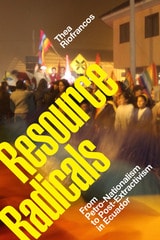
Resource Radicals
From Petro-Nationalism to Post-Extractivism in EcuadorThea Riofrancos
Duke University Press, 2020
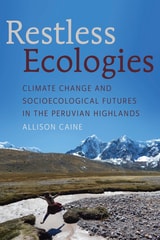
Restless Ecologies
Climate Change and Socioecological Futures in the Peruvian HighlandsAllison Caine
University of Arizona Press, 2025
Drawing on the Quechua concept of k’ita, or restlessness, Allison Caine explores how herders in the community of Chillca in the Cordillera Vilcanota mountain range of the southeastern Peruvian Andes sense and make sense of changing conditions. Capricious mountains, distracted alpacas, and wayward children deviate from their expected spatial and temporal trajectories. When practices of sociality start to fall apart—when animals no longer listen to herders’ whistles, children no longer visit their parents, and humans no longer communicate with mountains—these failures signal a broader ecological instability that threatens the viability of the herder’s world.
For more than two years, the author herded alongside the women of the Cordillera Vilcanota, observing them and talking with them about their interactions with their animals, landscapes, and neighbors. Emphasizing the importance of Indigenous knowledge and traditional ecological practices, Caine argues that Quechua understandings of restlessness align with and challenge broader theoretical understandings of what it is to be vulnerable in a time of planetary crisis.
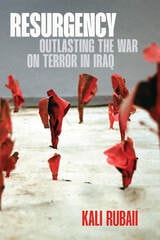
Resurgency
Outlasting the War on Terror in IraqKali Rubaii
Duke University Press, 2026
In Resurgency, Kali Rubaii offers detailed ethnographic insight into how decades of war have affected everyday life in Iraq. Drawing on fieldwork in Anbar province and Iraqi Kurdistan in 2014–15 and 2021–24, Rubaii foregrounds the practices of displaced people who stubbornly outlast their occupiers, returning to homes that feel estranging, repairing war-damaged land, and surviving into futures to which they have been disinvited. Following Anbari farmers in their struggle to counter the social and environmental fallout from toxic military waste, depleted ecosystems, and transformed political economies, Resurgency expands the temporal and descriptive categories of what war is—and what resistance looks like. By asking what actions and dispositions make sense when conditions of survival are diminished, and when today may be better than tomorrow, Rubaii offers new methods and insights to those concerned about the possibilities of life amid environmental devastation, mass displacement, and the slow violence of the forever wars.

Retelling Trickster in Naapi's Language
Nimachia Howe
University Press of Colorado, 2019
Naapi is commonly and inaccurately categorized by Western scholars as a trickster figure. Research on him is rife with misnomers and repeated misinterpretations, many resulting from untranslatable terms and concepts, comparisons with the binary tenets of “good” vs. “bad,” and efforts by Niitsitapii storytellers to protect the stories. The five stories included in their entirety in this volume present Naapi’s established models of reciprocity, connection, kinship, reincarnation, and offerings, shown in descriptions of, and predictions for, the balance between life and death, the rising and setting of planets, wind directions and forces, and the cyclical nature of animals, birds, plants, glaciers, and rivers.
Retelling Trickster in Naapi’s Language will be of interest to students and scholars of Native American studies, ethnography, folklore, environmental philosophy, and Indigenous language, literature, and religion.
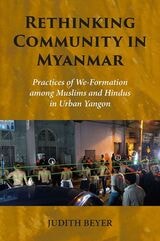
Rethinking Community in Myanmar
Practices of We-Formation among Muslims and Hindus in Urban YangonJudith Beyer
National University of Singapore Press, 2023
Rethinking Objectivity
Allan Megill
Duke University Press, 1994
In diverse essays the authors provide fascinating studies of objectivity in such areas as anthropological research, corporate and governmental bureaucracies, legal discourse, photography, and the study and practice of the natural sciences. Taken together, Megill argues, this volume calls for developing a notion of "objectivities." The absolute sense of objectivity--that is, objectivity as a "God's eye view"—must be supplemented, and in part supplanted, by disciplinary, procedural, and dialectical senses of objectivity. This book will be of great interest to a broad range of scholars as it presents current thinking on a topic of fundamental concern across the disciplines in the humanities and social sciences.
Contributors. Barry Barnes, Dagmar Barnouw, Lorraine Code, Lorraine Daston, Johannes Fabian, Kenneth J. Gergen, Mary E. Hawkesworth, Barbara Herrnstein Smith, Evelyn Fox Keller, George Levine, Allan Megill, Peter Miller, Andy Pickering, Theodore M. Porter

Rethinking Pastoralism In Africa
Gender, Culture, and the Myth of the Patriarchal PastoralistDorothy L. Hodgson
Ohio University Press, 2001
The dominant trend in pastoralist studies has long assumed that pastoralism and pastoral gender relations are inherently patriarchal. The contributors to this collection, in contrast, use diverse analytic approaches to demonstrate that pastoralist gender relations are dynamic, relational, historical, and produced through complex local-translocal interactions. Combining theoretically sophisticated analysis with detailed case studies, this collection will appeal to those doing research and teaching in African studies, gender studies, anthropology, and history. Among the topics discussed are pastoralism, patriarchy, and history among Maasai in Tanganyika; women’s roles in peacemaking in Somali society; the fertility of houses and herds; gender, aging, and postchildbearing experience in a Tuareg community; and milk selling among Fulani women in Northern Burkina Faso.
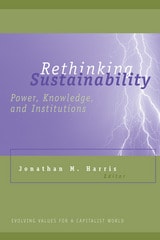
Rethinking Sustainability
Power, Knowledge, and InstitutionsJonathan Harris, Editor
University of Michigan Press, 2003
Any theory of sustainable development must take into account economic, social, and environmental dimensions. Until recently, the question "What is development?" was often answered predominantly from the economist's perspective, with high priority being assigned to expansion of economic output. Social, political, institutional, and ethical aspects have often been neglected. But now that sustainable development has become a broadly accepted concept, it is impossible to maintain a narrowly economistic view of development. For this reason, the varied perspectives offered by the contributors to this volume are crucial to understanding the process of development as it relates to environmental sustainability and human well-being.
The selection of articles is meant to be stimulating and provocative rather than comp-rehensive. They are roughly divided between those dealing with broad theoretical issues concerning the economic, political, and social aspects of development (Part I) and those presenting more applied analysis (Part II). The common thread is a concern for examining which factors contribute to making development socially just and environmentally sound.
Rethinking Sustainability will be of interest to economists and social scientists, development professionals, and instructors seeking to offer their students a broad perspective on development issues.
Jonathan Harris is Senior Research Associate, Global Development and Environment Institute at Tufts University, as well as Adjunct Associate Professor of International Economics at Tufts University Fletcher School of Law.
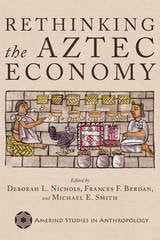
Rethinking the Aztec Economy
Edited by Deborah L. Nichols, Frances F. Berdan, and Michael E. Smith
University of Arizona Press, 2017
With its rich archaeological and historical record, the Aztec empire provides an intriguing opportunity to understand the dynamics and structure of early states and empires. Rethinking the Aztec Economy brings together leading scholars from multiple disciplines to thoroughly synthesize and examine the nature of goods and their movements across rural and urban landscapes in Mesoamerica. In so doing, they provide a new way of understanding society and economy in the Aztec empire.
The volume is divided into three parts. Part 1 synthesizes our current understanding of the Aztec economy and singles out the topics of urbanism and provincial merchant activity for more detailed analysis. Part 2 brings new data and a new conceptual approach that applies insights from behavioral economics to Nahua and Aztec rituals and social objects. Contributors also discuss how high-value luxury goods, such as feather art, provide insights about both economic and sacred concepts of value in Aztec society. Part 3 reexamines the economy at the Aztec periphery. The volume concludes with a synthesis on the scale, integration, and nature of change in the Aztec imperial economy.
Rethinking the Aztec Economy illustrates how superficially different kinds of social contexts were in fact integrated into a single society through the processes of a single economy. Using the world of goods as a crucial entry point, this volume advances scholarly understanding of life in the Aztec world.
Contributors:
Frances F. Berdan
Laura Filloy Nadal
Janine Gasco
Colin Hirth
Kenneth G. Hirth
Sarah Imfeld
María Olvido Moreno Guzmán
Deborah L. Nichols
Alan R. Sandstrom
Pamela Effrein Sandstrom
Michael E. Smith
Barbara L. Stark
Emily Umberger
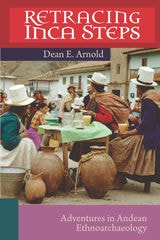
Retracing Inca Steps
Adventures in Andean EthnoarchaeologyDean E. Arnold
University of Utah Press, 2021
This first-person narrative reveals the challenges of living and working in another culture and the many obstacles one can encounter while doing field research. Arnold shares how his feelings of frustration and perceived failure led him to refocus his project, a shift that ultimately led to an entirely new perspective on pottery production in the Andes. Masterfully weaving details about Peru’s geography, ecology, history, prehistory, and culture into his story, he chronicles his change from small-town Midwesterner to a person of much broader vision, newly aware of his North American views and values.
Retracing Inca Steps is an excellent read for the lay person wishing to learn about the environment, prehistory, history, and culture of Peru as well as for students wanting to know more about the joys and rigors of fieldwork.
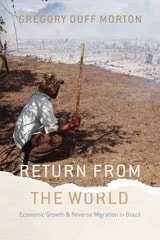
Return from the World
Economic Growth and Reverse Migration in BrazilGregory Duff Morton
University of Chicago Press, 2024
In Return from the World, anthropologist Gregory Duff Morton traces the migrations of Brazilian workers who leave a thriving labor market and return to their home villages to become peasant farmers. Morton seeks to understand what it means to turn one’s back deliberately on the promise of economic growth.
Giving up their positions in factories, at construction sites, and as domestic workers, these migrants travel thousands of miles back to villages without running water or dependable power. There, many take up subsistence farming. Some become activists with the MST, Brazil’s militant movement of landless peasants. Bringing their stories vividly to life, Morton dives into the dreams and disputes at play in finding freedom in the shared rejection of growth.