Results by title
2728 books match the query 'Education' and 151 start with r
Requirements for Certification of Teachers, Counselors, Librarians, Administrators for Elementary and Secondary Schools, Seventy-fifth edition, 2010-2011
Edited by Elizabeth A. Kaye and Jeffrey J. Makos
University of Chicago Press, 2010
This annual volume offers the most complete and current listings of the requirements for certification of a wide range of educational professionals at the elementary and secondary levels. Requirements for Certification is a valuable resource, making much-needed knowledge available in one straightforward volume.
Requirements for Certification of Teachers, Counselors, Librarians, Administrators for Elementary and Secondary Schools, Seventy-first Edition, 2006-2007
Edited by Elizabeth A. Kaye
University of Chicago Press, 2006
Requirements for Certification of Teachers, Counselors, Librarians, Administrators for Elementary and Secondary Schools, Seventy-ninth Edition, 2014-2015
Edited by Elizabeth A. Kaye
University of Chicago Press, 2014
Requirements for Certification of Teachers, Counselors, Librarians, Administrators for Elementary and Secondary Schools, Seventy-seventh Edition, 2012-2013
Edited by Elizabeth A. Kaye
University of Chicago Press, 2012
This annual volume offers the most complete and current listings of the requirements for certification of a wide range of educational professionals at the elementary and secondary levels. Requirements for Certification is a valuable resource, making much-needed knowledge available in one straightforward volume.
Requirements for Certification of Teachers, Counselors, Librarians, Administrators for Elementary and Secondary Schools, Seventy-sixth Edition, 2011-2012
Edited by Elizabeth A. Kaye
University of Chicago Press, 2011
This annual volume offers the most complete and current listings of the requirements for certification of a wide range of educational professionals at the elementary and secondary levels. Requirements for Certification is a valuable resource, making much-needed knowledge available in one straightforward volume.

Requirements for Certification of Teachers, Counselors, Librarians, and Administrators for Elementary and Secondary Schools, 2001-2002
Edited by Elizabeth A. Kaye
University of Chicago Press, 2001
Requirements for Certification of Teachers, Counselors, Librarians, and Administrators for Elementary and Secondary Schools, 2002-2003
Edited by Elizabeth A. Kaye
University of Chicago Press, 2002
Requirements for Certification of Teachers, Counselors, Librarians, and Administrators for Elementary and Secondary Schools, 2004-2005, Sixty-ninth Edition
Edited by Elizabeth A. Kaye
University of Chicago Press, 2004
Requirements for Certification of Teachers, Counselors, Librarians, and Administrators for Elementary and Secondary Schools, Seventy-third Edition, 2008-2009
Edited by Elizabeth A. Kaye and Jeffrey J. Makos
University of Chicago Press, 2008
Requirements for Certification of Teachers, Counselors, Librarians, and Administrators for Elementary and Secondary Schools, Sixty-eighth edition, 2003-2004
Edited by Elizabeth A. Kaye
University of Chicago Press, 2003

Research in Art and Design Education
Issues and ExemplarsEdited by Richard Hickman
Intellect Books, 2008

Research in Global Learning
Methodologies for Global Citizenship and Sustainable Development EducationEdited by Douglas Bourn
University College London, 2023
Young people around the world are calling ever more urgently on policymakers to address today’s global challenges of sustainability, structural inequality, and social justice. It is little surprise that learning in a global society, understanding sustainable development, and being active global citizens are increasingly popular themes for education at all levels. Educational research makes a crucial contribution to knowledge that can address the great questions of our time, and evidence from a diversity of studies is vital if we are to build a clear picture. Research in Global Learning showcases methods and findings from a range of early career researchers who conducted illuminating studies located around the globe, specifically Brazil, China, Ghana, Greece, Israel, Jamaica, Japan, Kazakhstan, Pakistan, Poland, South Korea, Trinidad and Tobago, Turkey, the United States, and the United Kingdom.
Flexibility of approach is key to successful educational research in differing contexts. The studies in this volume use a range of approaches to investigate four important themes: the relationship between policy and practice, opportunities and constraints within the education system and the role of teachers, challenges and opportunities for higher education, and the perspectives of young people and students. Case studies, quantitative and qualitative research, participatory action research, longitudinal studies, and analysis of textbooks through critical discourse analysis are all used to demonstrate how learning about global citizenship and sustainability can inspire learners and contribute to quality education.
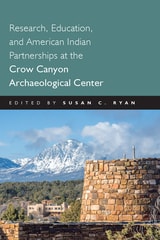
Research, Education and American Indian Partnerships at the Crow Canyon Archaeological Center
Susan C. Ryan
University Press of Colorado, 2024
Research, Education, and American Indian Partnerships at the Crow Canyon Archaeological Center guides Southwestern archaeology and public education beyond current practices—particularly regarding Indigenous partnerships—and provides a strategic handbook for readers into and through the mid-twenty-first century.
Open access edition supported by the Crow Canyon Archaeological Center King Family Fund and subvention supported in part by the Crow Canyon Archaeological Center and the Arizona Archaeological and Historical Society.
Researching Writing
An Introduction to Research MethodsJoyce Kinkead
Utah State University Press, 2016
Author Joyce Kinkead lays out the research process, including finding and defining questions, planning, and starting the research. Expository content introduces the language and methods of writing research, and specific methods are demonstrated in published examples, illustrating student work using student work and showing that it is possible for students to join the scholarly conversation in writing studies. Other features include student activities, instructor resources, student resources, and links to external content on journal websites, digital publications, YouTube, and similar work.
The first-ever textbook for research methods in writing studies for undergraduates, Researching Writing takes a hands-on approach that excites and engages students in the depth and complexities of research and will influence the creation of courses in new writing majors as the field continues to grow.

Resource Allocation in Higher Education
William F. Massy, Editor
University of Michigan Press, 1996
Resource Allocation in Higher Education describes how colleges, universities, and government agencies can use budgeting processes to improve program planning and productivity. Drawn from the contributors' direct experiences as well as research findings, it blends conceptual foundations with practical insights. Many resource allocation processes in higher education need reform, and this volume will stimulate and assist that effort. Beginning with the economic theory of nonprofits, the essays examine current budgeting systems in both theoretical and practical terms. Resource allocation systems from other domains such as health care are explored for relevant insights. Throughout, decentralization remains a major theme. Topics range from the eminently practical—how to establish a global accounting system or choose an endowment spending rate—to the more abstract—the theory of how various nonprofit enterprises balance academic values against market pressures. The volume ends by proposing value responsibility budgeting, which offers institutions a potentially better way of pursuing their academic values while remaining responsive to market pressures. Those within higher education institutions who are responsible for resource allocation, such as provosts, chief financial officers, or budget directors, will find much that speaks to them. While mostly in the domain of higher education economics, management, and planning, the essays are written for any serious reader concerned with the problem of reform in higher education.

Respecting the Wicked Child
A Philosophy of Secular Jewish Identity and EducationMitchell Silver
University of Massachusetts Press, 1998
Responding to Writing
A Practical Sourcebook for InstructorsDana R. Ferris, Grant Eckstein, and Betsy Gilliland
University of Michigan Press, 2027
Responding to Writing brings together practical, cutting-edge ideas from teachers who spend their days working with student writers and trying to make feedback genuinely useful. The book shares classroom approaches that have been tested in real courses, from high school settings to college and graduate programs. It shows how teachers, peers, and students themselves can make feedback a more collaborative and manageable part of writing instruction.
Each chapter presents a student‑centered approach that helps writers feel supported and more in control of their own writing and revision process. In addition to a summary of the approach with light background and context, readers will find straightforward examples, tools, and routines they can adapt to their own classrooms, including ways to use technology, build reflection into assignments, and support writers with varied backgrounds and needs. This book offers working instructors a set of dependable methods for helping students improve as writers while keeping feedback purposeful and humane.
Response to Reform
Composition and the Professionalization of TeachingMargaret J. Marshall
Southern Illinois University Press, 2003
Response to Reform: Composition and the Professionalization of Teaching critiques the politics of labor and gender biases inherent in the composition workplace that prevent literacy teachers from attaining professional status and respect. Scrutinizing the relationship between scholarship and teaching, Margaret J. Marshall calls for a reconceptualization of what it means to prepare for and enter the field of composition instruction.
Interrogating the approach the education system takes to certify teachers without actually “professionalizing” their careers, Marshall contends that these programs rely on outdated rhetorics of labor that only widen the gap between teaching and other professional jobs. Such attempts to re-educate literacy teachers exploit and marginalize their work, and thus prevent them from claiming the status of academic professionals. In providing an overview of the history of and language used to literacy instruction, she also points out that while women are overrepresented in composition instruction, they are underrepresented in tenure track and administrative positions.
To correct and combat these inequities, Marshall advocates an alternate alignment of power structures and rhetorical choices. In a wide-ranging survey that sheds new light on the composition workplace as well as higher education at large, Response to Reform: Composition and the Professionalization of Teaching boldly asks us to do away with the reductive language we inherit from the past that characterize teaching and professionalization, as well as our customary responses to public criticism of education. The result is a new articulation of composition as a meritorious profession.
Rethinking Class Size
The Complex Story of Impact on Teaching and LearningPeter Blatchford and Anthony Russell
University College London, 2020
Drawing on twenty years of systematic classroom observations, surveys of practitioners, detailed case studies, and extensive reviews of research, Peter Blatchford and Anthony Russell contend that common ways of researching the impact of class size are limited and sometimes misguided. While class size may have no direct effect on pupil outcomes, it can have a significant impact on interconnections within classroom processes. In describing these connections, the book opens up the everyday world of the classroom and shows that the influence of class size is felt everywhere.
Rethinking Open Society
CONTRIBUTORS: Anne Applebaum • Erica Benner• Dorothee Bohle • Thomas Christiano • Tim Crane • Niall Ferguson • Timothy Garton Ash • Béla Greskovits • Michael Ignatieff • Robert D. Kaplan • János Kis • Ivan Krastev • Mark Lilla • Margaret MacMillan • Jan-Werner Müller • Alina Mungiu-Pippidi • Stefan Roch • Pierre Rosanvallon • Jacques Rupnik • András Sajó • Daniela Schwarzer • Sir Roger Scruton • Stephen M. Walt
Central European University Press, 2018
Rethinking Racism
Emotion, Persuasion, and Literacy Education in an All-White High SchoolJennifer Seibel Trainor
Southern Illinois University Press, 2008
In Rethinking Racism: Emotion, Persuasion, and Literacy Education in an All-White High School, Jennifer Seibel Trainor proposes a new understanding of the roots of racism, one that is based on attention to the role of emotion and the dynamics of persuasion. This one-year ethnographic study argues against previous assumptions about racism, demonstrating instead how rhetoric and emotion, as well as the processes and culture of schools, are involved in the formation of racist beliefs.
Telling the story of a year spent in an all-white high school, Trainor suggests that contrary to prevailing opinion, racism often does not stem from ignorance, a lack of exposure to other cultures, or the desire to protect white privilege. Rather, the causes of racism are frequently found in the realms of emotion and language, as opposed to rational calculations of privilege or political ideologies. Trainor maintains that racist assertions often originate not from prejudiced attitudes or beliefs but from metaphorical connections between racist ideas and nonracist values. These values are reinforced, even promoted by schooling via "emotioned rules" in place in classrooms: in tacit, unexamined lessons, rituals, and practices that exert a powerful—though largely unacknowledged—persuasive force on student feelings and beliefs about race.
Through in-depth analysis of established anti-racist pedagogies, student behavior, and racial discourses, Trainor illustrates the manner in which racist ideas are subtly upheld through social and literacy education in the classroom—and are thus embedded in the infrastructures of schools themselves. It is the emotional and rhetorical framework of the classroom that lends racism its compelling power in the minds of students, even as teachers endeavor to address the issue of cultural discrimination. This effort is continually hindered by an incomplete understanding of the function of emotions in relation to antiracist persuasion and cannot be remedied until the root of the problem is addressed.
Rethinking Racism calls for a fresh approach to understanding racism and its causes, offering crucial insight into the formative role of schooling in the perpetuation of discriminatory beliefs. In addition, this highly readable narrative draws from white students' own stories about the meanings of race in their learning and their lives. It thus provides new ways of thinking about how researchers and teachers rep- resent whiteness. Blending narrative with more traditional forms of ethnographic analysis, Rethinking Racism uncovers the ways in which constructions of racism originate in literacy research and in our classrooms—and how these constructions themselves can limit the rhetorical positions students enact.
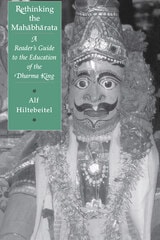
Rethinking the Mahabharata
A Reader's Guide to the Education of the Dharma KingAlf Hiltebeitel
University of Chicago Press, 2001
This work is the fourth volume in Hiltebeitel's study of the Draupadi cult. Other volumes include Mythologies: From Gingee to Kuruksetra (Volume One), On Hindu Ritual and the Goddess (Volume Two), and Rethinking India's Oral and Classical Epics (Volume Three).

Rethinking the Youth Question
Education, Labour, and Cultural StudiesPhil Cohen
Duke University Press, 1999
With a preface that contextualizes Cohen’s essays for an American audience, Rethinking the Youth Question reflects his tenure as a community organizer and activist in inner-city London and includes ethnographic, theoretical, and historical studies of Britain’s urban youth. Cohen offers an enlightening analysis of British educational policy, develops historical and structural accounts of generational and gendered divisions of labor, and discusses such topics as racism and the rise of the New Right. Also exploring broader questions such as the theoretical and sociological significance of youth as a category, this book is a model of useful methodology and engaged cultural reflection.
With empirical research that combines biographical, autobiographical, critical, cultural, and social elements, Rethinking the Youth Question is sure to impact debates surrounding the pedagogical value of cultural studies and the nature and future of this field in both the United States and Britain. This collection will be informative reading for students and scholars of cultural studies, sociologists, and others interested in the category of youth.
Reversing the Lens
Ethnicity, Race, Gender, and Sexuality through FilmJun Xing
University Press of Colorado, 2003
Revising Moves
Writing Stories of (Re)MakingChristina LaVecchia
Utah State University Press, 2024
In these narrative-driven essays written by a wide range of writing professionals, Revising Moves describes revision as a messy, generative, and often collaborative act. These meditations reveal how revision is both a micro practice tracked by textual change and a macro phenomenon rooted in family life, institutional culture, identity commitments, and political and social upheaval. Contributors depict revision as a holistic undertaking and a radically contextualized, distributed practice that showcases its relationality to everything else. Authors share their revision processes when creating scholarly works, institutional and self-promoting documents, and creative projects. Through narrative the volume opens a window to what is often unseen in a finished text: months or years of work, life events that disrupt or alter writing plans, multiple draft changes, questions about writerly identity and positionality, layers of (sometimes contradictory) feedback, and much more.
Revisiting Racialized Voice
African American Ethos in Language and LiteratureDavid G. Holmes
Southern Illinois University Press, 2004
Revisiting Racialized Voice:African American Ethos in Language and Literature argues that past misconceptions about black identity and voice, codified from the 1870s through the 1920s, inform contemporary assumptions about African American authorship and ethos. Tracing elements of racial consciousness in the works of Frederick Douglass, Charles Chesnutt, W. E. B. DuBois, Zora Neale Hurston, and others, David G. Holmes urges a revisiting of narratives from this period to strengthen and advance notions about racialized writing and to shape contemporary composition pedagogies.
Pointing to the intersection of African American identity, literature, and rhetoric, Revisiting Racialized Voice begins to construct rhetorically workable yet ideologically flexible definitions of black voice. Holmes maintains that political pressure to embrace“color blindness” endangers scholars’ ability to uncover links between racialized discourses of the past and those of the present, and he calls instead for a reassessment of the material realities and theoretical assumptions race represents and with which it has been associated.
Revitalizing Federal Education Research and Development
Improving the R&D Centers, Regional Educational Laboratories, and the "New" OERIMaris A. Vinovskis
University of Michigan Press, 2001
Maris A. Vinovskis uses the research he has done over the past decade, along with the findings of other policymakers, to argue that the American public school system needs to gain functional reform if research institutions are to conduct more effective studies for policymakers. He examines here both recent reform policies as well as the history behind educational reform.
Vinovskis's vigorous investigation of the process of educational research and development in the United States will be of particular interest to individuals whose careers depend on continued federal funding. This book will also appeal to educators, policymakers, and public policy analysts and will be of unequaled value in understanding the formulation of new educational policies in the twenty-first century.
Maris A. Vinovskis is active on Capitol Hill and lectures throughout the country at such prestigious institutions as the American Academy of Arts and Sciences, the Brookings Institution, and the John F. Kennedy School of Government at Harvard. He is Professor of History, University of Michigan.
Revolutions at Home
The Origin of Modern Childhood and the German Middle ClassEmily C. Bruce
University of Massachusetts Press, 2021
Revolutions at Home analyzes a rich set of documents created for and by young Germans to show that children were central to reinventing their own education between 1770 and 1850. Through their reading and writing, they helped construct the modern child subject. The active child who emerged at this time was not simply a consequence of expanding literacy but, in fact, a key participant in defining modern life.
Reworking the Student Departure Puzzle
John M. Braxton
Vanderbilt University Press, 2000
The contributors, including Tinto himself, offer a variety of both theoretical and methodological perspectives to the Student Departure Puzzle.
Reworlding America
Myth, History, and NarrativeJohn Muthyala
Ohio University Press, 2006
John Muthyala's Reworlding America moves beyond the U.S.-centered approach of traditional American literary criticism. In this groundbreaking book, Muthyala argues for a transgeographical perspective from which to study the literary and cultural histories of the Americas.
By emphasizing transnational migration, border crossing, and colonial modernity, Reworlding America exposes how national, ethnic, linguistic, religious, and cultural boundaries have been continually created and transgressed—with profound consequences for the peoples of the Americas.
Drawing from cultural studies, anthropology, literature, and history, Muthyala examines the literatures of the Americas in terms of their intimate relationship to questions of cultural survival, identity formation, and social power. He goes beyond nationalist, ethnocentric, and religious frameworks used to conceptualize American literary history and examines the connection between modernity and colonialism.
Reworlding America's significance extends into the realm of education, history, ethnography, and literary and cultural studies and contributes to the larger project of refashioning the role of English and American studies in a transborder, postnational global culture.
Rewriting
How To Do Things With TextsJoseph Harris
Utah State University Press, 2006
"Like all writers, intellectuals need to say something new and say it well. But unlike many other writers, what intellectuals have to say is bound up with the books we are reading . . . and the ideas of the people we are talking with."
What are the moves that an academic writer makes? How does writing as an intellectual change the way we work from sources? In Rewriting, a textbook for the undergraduate classroom, Joseph Harris draws the college writing student away from static ideas of thesis, support, and structure, and toward a more mature and dynamic understanding. Harris wants college writers to think of intellectual writing as an adaptive and social activity, and he offers them a clear set of strategies—a set of moves—for participating in it.
Rewriting
How to Do Things with Texts, Second EditionJoseph Harris
Utah State University Press, 2017
“Like all writers, intellectuals need to say something new and say it well. But for intellectuals, unlike many other writers, what we have to say is bound up with the books we are reading . . . and the ideas of the people we are talking with.”
What are the moves that an academic writer makes? How does writing as an intellectual change the way we work from sources? In Rewriting, Joseph Harris draws the college writing student away from static ideas of thesis, support, and structure, and toward a more mature and dynamic understanding. Harris wants college writers to think of intellectual writing as an adaptive and social activity, and he offers them a clear set of strategies—a set of moves—for participating in it. Introducing remixing as an additional signature move and updated with new attention to digital writing, the second edition both extends and rethinks the ideas of the original.
Rhetoric at the Margins
Revising the History of Writing Instruction in American Colleges, 1873-1947David Gold
Southern Illinois University Press, 2008
Rhetoric at the Margins: Revising the History of Writing Instruction in American Colleges, 1873-1947 examines the rhetorical education of African American, female, and working-class college students in the late nineteenth and early twentieth centuries. The rich case studies in this work encourage a reconceptualization of both the history of rhetoric and composition and the ways we make use of it.
Author David Gold uses archival materials to study three types of institutions historically underrepresented in disciplinary histories: a black liberal arts college in rural East Texas (Wiley College); a public women's college (Texas Woman's University); and an independent teacher training school (East Texas Normal College). The case studies complement and challenge previous disciplinary histories and suggest that the epistemological schema that have long applied to pedagogical practices may actually limit our understanding of those practices.
Gold argues that each of these schools championed intellectual and pedagogical traditions that differed from the Eastern liberal arts model—a model that often serves as the standard bearer for rhetorical education. He demonstrates that by emphasizing community uplift and civic participation and attending to local needs, these schools created contexts in which otherwise moribund curricular features of the era—such as strict classroom discipline and an emphasis on prescription—took on new possibilities.
Rhetoric at the Margins describes the recent revisionist turn in rhetoric and composition historiography, argues for the importance of diverse institutional microhistories, and argues that the nineteenth and early twentieth centuries offer rich lessons for contemporary classroom practice. The study brings alive the voices of black, female, rural, Southern, and first-generation college students and their instructors, effectively linking these histories to the history of rhetoric and writing. Appendices include excerpts of important and rarely seen primary source material, allowing readers to experience in fuller detail the voices captured in this work.
Rhetorical Education In America
Cheryl Jean Glenn
University of Alabama Press, 2009
A timely collection of essays by prominent scholars in the field—on the past, present, and future of rhetoric instruction.
From Isocrates and Aristotle to the present, rhetorical education has consistently been regarded as the linchpin of a participatory democracy, a tool to foster civic action and social responsibility. Yet, questions of who should receive rhetorical education, in what form, and for what purpose, continue to vex teachers and scholars.
The essays in this volume converge to explore the purposes, problems, and possibilities of rhetorical education in America on both the undergraduate and graduate levels and inside and outside the academy. William Denman examines the ancient model of the "citizen-orator" and its value to democratic life. Thomas Miller argues that English departments have embraced a literary-research paradigm and sacrificed the teaching of rhetorical skills for public participation. Susan Kates explores how rhetoric is taught at nontraditional institutions, such as Berea College in Kentucky, where Appalachian dialect is espoused. Nan Johnson looks outside the academy at the parlor movement among women in antebellum America. Michael Halloran examines the rhetorical education provided by historical landmarks, where visitors are encouraged to share a common public discourse. Laura Gurak presents the challenges posed to traditional notions of literacy by the computer, the promises and dangers of internet technology, and the necessity of a critical cyber-literacy for future rhetorical curricula.
Collectively, the essays coalesce around timely political and cross-disciplinary issues. Rhetorical Education in America serves to orient scholars and teachers in rhetoric, regardless of their disciplinary home, and help to set an agenda for future classroom practice and curriculum design.
Rhetorical Speculations
The Future of Rhetoric, Writing, and TechnologyScott Sundvall
Utah State University Press, 2019
Rhetoric and writing studies often engages technological shifts reactively, after the production and reception of rhetoric and writing has changed. This collection allows rhetoric and writing scholars to explore modes of critical speculation into the transformative effect of emerging technologies, particularly as a means to speculate on future shifts in the intellectual, pedagogical, and institutional frameworks of the field. In doing so, the project repositions rhetoric and writing scholars as proprietors of our technological future to come rather than as secondary receivers, critics, and adjusters of the technological present.
Major and emerging voices in the field offer a range of styles that include pragmatic, technical, and philosophical approaches to the issue of speculative rhetoric, exploring what new media/writing studies could be—theoretically, pedagogically, and institutionally—as future technologies begin to impinge on the work of writing. Rhetorical Speculations is at the cutting edge of the subject of futures thinking and will have broad appeal to scholars of rhetoric, literacy, futures studies, and material and popular culture.
Contributors:
Bahareh Brittany Alaei, Sarah J. Arroyo, Kristine L. Blair, Geoffrey V. Carter, Sid Dobrin, Kristie S. Fleckenstein, Steve Holmes, Kyle Jensen, Halcyon Lawrence, Alexander Monea, Sean Morey, Alex Reid, Jeff Rice, Gregory L. Ulmer, Anna Worm
Rhetorics of Whiteness
Postracial Hauntings in Popular Culture, Social Media, and EducationEdited by Tammie M. Kennedy, Joyce Irene Middleton, Krista Ratcliffe, with a foreword by Lilia D. Monzó and Peter McLaren
Southern Illinois University Press, 2017
With the election of our first black president, many Americans began to argue that we had finally ended racism, claiming that we now live in a postracial era. Yet near-daily news reports regularly invoke white as a demographic category and recount instances of racialized violence as well as an increased sensitivity to expressions of racial unrest. Clearly, American society isn’t as color-blind as people would like to believe. In Rhetorics of Whiteness: Postracial Hauntings in Popular Culture, Social Media, and Education, contributors reveal how identifications with racialized whiteness continue to manifest themselves in American culture.
The sixteen essays that comprise this collection not only render visible how racialized whiteness infiltrates new twenty-first-century discourses and material spaces but also offer critical tactics for disrupting this normative whiteness. Specifically, contributors examine popular culture (novels, films, TV), social media (YouTube, eHarmony, Facebook), education (state law, the textbook industry, dual credit programs), pedagogy (tactics for teaching via narratives, emotional literacy, and mindfulness) as well as cultural theories (concepts of racialized space, anti-dialogicism, and color blindness). Offering new approaches to understanding racialized whiteness, this volume emphasizes the importance of a rhetorical lens for employing whiteness studies’ theories and methods to identify, analyze, interpret, and interrupt representations of whiteness.
Although whiteness studies has been waning as an active research field for the past decade, the contributors to Rhetorics of Whiteness assert that it hasn’t lost its relevancy because racialized whiteness and issues of systemic racism persist in American society and culture today. Few whiteness studies texts have been published in rhetoric and composition in the past decade, so this collection should quickly become mandatory reading. By focusing on common, yet often overlooked, contemporary examples of how racialized whiteness haunts U.S. society, Rhetorics of Whiteness serves as a valuable text for scholars in the field as well as anyone else interested in the topic.
Rhyme and Reason in Reading and Spelling
Lynette Bradley
University of Michigan Press, 1985
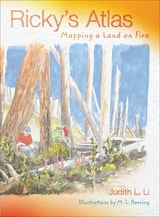
Ricky's Atlas
Mapping a Land on FireLi
Oregon State University Press, 2016
In this sequel to Ellie’s Log: Exploring the Forest Where the Great Tree Fell, Ricky Zamora brings his love of map-making and his boundless curiosity to the arid landscapes east of the Cascades Mountains. He arrives during a wild thunderstorm, and watches his family and their neighbors scramble to deal with a wildfire sparked by lightning. Joined by his friend Ellie, he sees how plants, animals, and people adjust to life with wildfires.
While hiking across a natural prairie, climbing up a fire tower, and studying historical photos and maps, Ricky and Ellie learn about the role of fire in shaping the landscape of the semi-arid plateau east of the mountains. They experience the scary days of wildfire in progress, explore a gritty site after a wildfire, and discover how some plants and animals depend on fire to survive.
Color pen-and-ink drawings accompany the text and vividly illustrate plants, animals, and events encountered in this exciting summer adventure. With his friend Ellie, Ricky creates a brightly colored diary of the fire, with maps, timelines, and sketches of what they see in this fire-prone land. Ricky’s notebook about his summer visit to his uncle’s ranch becomes an atlas of fire ecology, weather patterns, and life in the rain shadow.
Upper elementary kids will enjoy the mixture of amazing adventures with actual historical, physical, and ecological data about the region. Woven into the story are the small pleasures of ranch life, intriguing histories of Native Americans and early settlers, and almost unbelievable views of ancient fossils. Ricky and Ellie’s explorations, accompanied by their hand-written notes, introduce readers to a very special landscape and history east of the mountains.
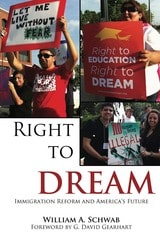
Right to DREAM
Immigration Reform and America’s FutureWilliam A. Schwab
University of Arkansas Press, 2013
Rise Up!
Activism as EducationAmalia Dache
Michigan State University Press, 2019
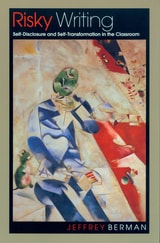
Risky Writing
Self-Disclosure and Self-Transformation in the ClassroomJeffrey Berman
University of Massachusetts Press, 2001
This is the final volume in a trilogy of works that examine the impact of writing and reading about traumatic subjects. Diaries to an English Professor (1994) explores the ways in which undergraduate students use psychoanalytic diaries to probe conflicted issues in their lives. Surviving Literary Suicide (1999) investigates how graduate students respond to suicidal literature—novels and poems that portray and sometimes glorify self-inflicted death.
In Risky Writing, Jeffrey Berman builds on those earlier studies, describing ways teachers can encourage college students to write safely on a wide range of subjects often deemed too personal or too dangerous for the classroom: grieving the loss of a beloved relative or friend, falling into depression, coping with the breakup of one's family, confronting sexual abuse, depicting a drug or alcohol problem, encountering racial prejudice. Berman points out that nearly everyone has difficulty talking or writing about such issues because they arouse shame and tend to be enshrouded in secrecy and silence. This is especially true for college students, who are just emerging from adolescence and find themselves at institutions that rarely promote self-disclosure.
Recognizing the controversial nature of his subject, Berman confronts academic opposition to personal writing head on. He also discusses the similarities between the “writing cure” and the “talking cure,” the role of the teacher and audience in the self-disclosing classroom, and the pedagogical strategies necessary to minimize risk, including the importance of empathy and other befriending skills.
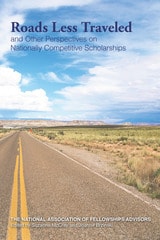
Roads Less Traveled and Other Perspectives on Nationally Competitive Scholarships
Suzanne McCray
University of Arkansas Press, 2017
For many, the applications present an unfamiliar territory, so students seek out informed advisors who can help them navigate the terrain. This volume of essays is a great way for anyone advising students through an application to become an expert. Roads Less Traveled and Other Perspectives on Nationally Competitive Scholarships provides critical information from scholarship foundations about the best ways to guide students—from considering a career path, to completing the application, to preparing for an interview. Experienced advisors also share helpful tips on practical topics like writing letters of endorsement or assisting those who want to study abroad, and they provide programmatic advice on how to broaden the pool of applicants, address those with financial needs, and make all who apply feel the process has value beyond winning. Roads Less Traveled and Other Perspectives on Nationally Competitive Scholarships is a must for anyone advising students on scholarships.
Robert M. Hutchins
Portrait of an EducatorMary Ann Dzuback
University of Chicago Press, 1991
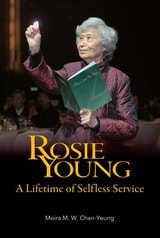
Rosie Young
A Lifetime of Selfless ServiceMoira M. W. Chan-Yeung
Hong Kong University Press, 2024
In Rosie Young: A Lifetime of Selfless Service, Moira Chan-Yeung presents a brief history of professor Young’s remarkable career in medical education and administration at the University of Hong Kong (HKU) and her wide-ranging public service to the community over many decades. As the first female dean of HKU’s Faculty of Medicine, her career was deeply intertwined with the socio-economic development of Hong Kong. After she retired from HKU, she continued to serve HKU and the community until the present. This book illustrates her many contributions to the development of medical education in Hong Kong and the university administration at HKU. Young’s extensive public service in the field of medicine also helped improve primary care, hospital care, and public health in Hong Kong. In short, this book provides a valuable record of a female giant in medical history and documents her selfless and enduring service to the HKU community and Hong Kong society.
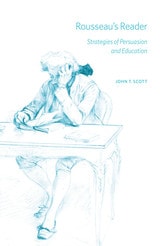
Rousseau's Reader
Strategies of Persuasion and EducationJohn T. Scott
University of Chicago Press, 2020
In Rousseau’s Reader, John T. Scott looks at the different strategies Rousseau used to engage and persuade the readers of his major philosophical works, including the Social Contract, Discourse on Inequality, and Emile. Considering choice of genre; textual structure; frontispieces and illustrations; shifting authorial and narrative voice; addresses to readers that alternately invite and challenge; apostrophe, metaphor, and other literary devices; and, of course, paradox, Scott explores how the form of Rousseau’s writing relates to the content of his thought and vice versa. Through this skillful interplay of form and content, Rousseau engages in a profoundly transformative dialogue with his readers.
While most political philosophers have focused, understandably, on Rousseau’s ideas, Scott shows convincingly that the way he conveyed them is also of vital importance, especially given Rousseau’s enduring interest in education. Giving readers the key to Rousseau’s style, Scott offers fresh and original insights into the relationship between the substance of his thought and his literary and rhetorical techniques, which enhance our understanding of Rousseau’s project and the audiences he intended to reach.
Rubrics
What Every Teacher Needs to KnowDeborah Crusan and Robyn Brinks Lockwood
University of Michigan Press, 2026
As workloads and work responsibilities continue to increase, assessment often causes teachers anxiety. Rubrics: What Every Teacher Needs to Know is a handbook that combines theory and pragmatism in clear language to help pre- and in-service teachers and teacher trainers obtain assessment information quickly and efficiently. While many teachers do not realize that creating an assignment is creating an assessment, they should go hand in hand. This book highlights both the value of rubrics and the value of assessment literacy, which is the knowledge, skills, and abilities needed to create, administer, and understand the results of assessments to improve student learning.
Rubrics provides new and experienced teachers with the tools to become more transparent assessors of their students’ writing, reading, listening, speaking, grammar, and vocabulary. Deborah Crusan and Robyn Brinks Lockwood bring their expertise in assessment and English for academic purposes to address the challenges teachers face in writing clear assignments and grading them fairly. They emphasize that teachers need to think about what they want their students to be able to do, clarify their expectations to their students, and convey those expectations on a rubric/scoring guide. While transparent, step-by-step instructions are included in the book to help teachers create their own assignments and assessments, the appendix materials containing ready-made assignments and their accompanying rubrics will be sure to delight busy teachers.
Rumors of Indiscretion
The University of Missouri's "Sex Questionnaire" Scandal in the Jazz AgeLawrence J. Nelson
University of Missouri Press, 2003
Rural Literacies
Kim Donehower, Charlotte Hogg, and Eileen Schell
Southern Illinois University Press, 2006
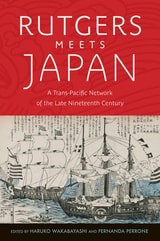
Rutgers Meets Japan
A Trans-Pacific Network of the Late Nineteenth CenturyHaruko Wakabayashi
Rutgers University Press, 2026
Griffis and Kusakabe were only a small piece of a vast transnational network of leading modernizers of Japan in the 1860s and 70s. The Japanese students in New Brunswick were young and innovative men of samurai and aristocratic lineage, who were sent by reform-minded leaders of Japan, which was undergoing a dramatic transformation. They came to New Brunswick seeking Western knowledge that was much needed for the modernization of a newly forming nation. New Brunswick became the hub of a network of Japanese nationals that extended to the major cities of New York, Philadelphia, and Boston, and from there to the smaller towns of New England. Once in New Brunswick, these Japanese students were embraced by Protestant ministers, educators, and missionaries—both men and women—whose network encompassed Rutgers College and the neighboring New Brunswick Theological Seminary, and which stretched to Dutch Reformed parishes throughout the Eastern seaboard, and westward as far as the Dutch enclave of Holland, Michigan. Meanwhile, the American teachers and missionaries who left for Japan became part of a network of reformist leaders and Japanese returnees that extended to schools, colleges, and missions in Japan, and formed the foundations of Japan’s modern educational system. Through contributions from scholars and archivists in the U.S., Canada, and Japan, Rutgers Meets Japan aims to reconstruct the early Rutgers-Japan connections and examine the role and impact of this transnational network on Japan and the U.S. in the late nineteenth century.
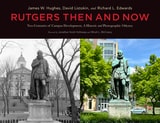
Rutgers Then and Now
Two Centuries of Campus Development: A Historic and Photographic OdysseyJames W. Hughes
Rutgers University Press, 2025
Rutgers, Then and Now tells this story, proceeding through ten sequential development phases of College Avenue and Piscataway campus expansions—each with its own buildings and physical layouts—that took place over the course of 250 years. It delivers stunning photographic and historic documentation of the growth of the university, showing “what it was and appeared originally” versus “what it is and looks like today.” Among other in-depth analyses, the book compares the diminutive geographic scale of today’s historical College Avenue Campus—once the entirety of Rutgers—to the much larger-sized (in acreage) Busch Campus. Replete with more than 500 images, the book also considers the Rutgers campuses that might have been, examining plans that were changed or abandoned. Shedding light on the sacrifices and gifts that transformed a small college into a vital hub for research and beloved home for students, it explores how Rutgers grew to become a world-class university.