Results by title
3258 books match the query 'Performing Arts' and 136 start with r
Reuse, Misuse, Abuse
The Ethics of Audiovisual Appropriation in the Digital EraJaimie Baron
Rutgers University Press, 2021

Reverberations across Small-Scale British Theatre
Politics, Aesthetics and FormsEdited by Patrick Duggan and Victor Ukaegbu
Intellect Books, 2013
Revisiting Women's Cinema
Feminism, Socialism, and Mainstream Culture in Modern ChinaLingzhen Wang
Duke University Press, 2021
Revolution Televised
Prime Time and the Struggle for Black PowerChristine Acham
University of Minnesota Press, 2005
In Revolution Televised, Christine Acham offers a more complex reading of this period in African American television history, finding within these programs opposition to dominant white constructions of African American identity. She explores the intersection of popular television and race as witnessed from the documentary coverage of the civil rights and Black Power movements, the personal politics of Flip Wilson and Soul Train’s Don Cornelius, and the ways in which notorious X-rated comic Redd Foxx reinvented himself for prime time.
Reflecting on both the potential of television to effect social change as well as its limitations, Acham concludes with analyses of Richard Pryor’s politically charged and short-lived sketch comedy show and the success of outspoken comic Chris Rock. Revolution Televised deftly illustrates how black television artists operated within the constraints of the television industry to resist and ultimately shape the mass media’s portrayal of African American life.
Christine Acham is assistant professor in African American and African studies at the University of California, Davis.
Revolutionary Stagecraft
Theater, Technology, and Politics in Modern ChinaTarryn Li-Min Chun
University of Michigan Press, 2024
2026 NYU Joe Callaway Prize Winner
- 2025 Association for Theatre in Higher Education Outstanding Book Award in Innovative Achievement Winner
- 2024 Theatre Library Association George Freedley Memorial Award Co-Winner
- American Society for Theatre Research Barnard Hewitt Award for Outstanding Research in Theatre History Finalist
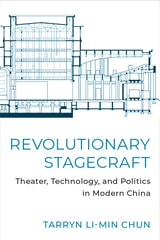
Revolutionary Stagecraft draws on a rich corpus of literary, historical, and technical materials to reveal a deep entanglement among technological modernization, political agendas, and the performing arts in modern China. This unique approach to Chinese theater history combines a close look at plays themselves, performance practices, technical theater details, and behind-the-scenes debates over “how to” make theater amid the political upheavals of China’s 20th century. The book begins at a pivotal moment in the 1920s—when Chinese theater artists began to import, use, and write about modern stage equipment—and ends in the 1980s when China's scientific and technological boom began. By examining iconic plays and performances from the perspective of the stage technologies involved, Tarryn Li-Min Chun provides a fresh perspective on their composition and staging. The chapters include stories on the challenges of creating imitation neon, rigging up a makeshift revolving stage, and representing a nuclear bomb detonating onstage.
In thinking about theater through technicity, the author mines well-studied materials such as dramatic texts and performance reviews for hidden technical details and brings to light a number of previously untapped sources such as technical journals and manuals; set design renderings, lighting plots, and prop schematics; and stage technology how-to guides for amateur thespians. This approach focuses on material stage technologies, situating these objects equally in relation to their technical potential, their human use, and the social, political, economic, and cultural forces that influence them. In each of its case studies, Revolutionary Stagecraft reveals the complex and at times surprising ways in which Chinese theater artists and technicians of the 20th century envisioned and enacted their own revolutions through the materiality of the theater apparatus.
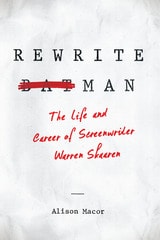
Rewrite Man
The Life and Career of Screenwriter Warren SkaarenBy Alison Macor
University of Texas Press, 2017
In Rewrite Man, Alison Macor tells an engrossing story about the challenges faced by a top screenwriter at the crossroads of mixed and conflicting agendas in Hollywood. Whether writing love scenes for Tom Cruise on the set of Top Gun, running lines with Michael Keaton on Beetlejuice, or crafting Nietzschean dialogue for Jack Nicholson on Batman, Warren Skaaren collaborated with many of New Hollywood’s most powerful stars, producers, and directors. By the time of his premature death in 1990, Skaaren was one of Hollywood’s highest-paid writers, although he rarely left Austin, where he lived and worked. Yet he had to battle for shared screenwriting credit on these films, and his struggles yield a new understanding of the secretive screen credit arbitration process—a process that has only become more intense, more litigious, and more public for screenwriters and their union, the Writers Guild of America, since Skaaren’s time. His story, told through a wealth of archival material, illuminates crucial issues of film authorship that have seldom been explored.
Rewriting Television
Alison Peirse
Rutgers University Press, 2025
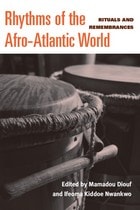
Rhythms of the Afro-Atlantic World
Rituals and RemembrancesEdited by Mamadou Diouf and Ifeoma Kiddoe Nwankwo
University of Michigan Press, 2010
"Collecting essays by fourteen expert contributors into a trans-oceanic celebration and critique, Mamadou Diouf and Ifeoma Kiddoe Nwankwo show how music, dance, and popular culture turn ways of remembering Africa into African ways of remembering. With a mix of Nuyorican, Cuban, Haitian, Kenyan, Senegalese, Trinidagonian, and Brazilian beats, Rhythms of the Afro-Atlantic World proves that the pleasures of poly-rhythm belong to the realm of the discursive as well as the sonic and the kinesthetic."
---Joseph Roach, Sterling Professor of Theater, Yale University
"As necessary as it is brilliant, Rhythms of the Afro-Atlantic World dances across, beyond, and within the Black Atlantic Diaspora with the aplomb and skill befitting its editors and contributors."
---Mark Anthony Neal, author of Soul Babies: Black Popular Culture and the Post-Soul Aesthetic
Along with linked modes of religiosity, music and dance have long occupied a central position in the ways in which Atlantic peoples have enacted, made sense of, and responded to their encounters with each other. This unique collection of essays connects nations from across the Atlantic---Senegal, Kenya, Trinidad, Cuba, Brazil, and the United States, among others---highlighting contemporary popular, folkloric, and religious music and dance. By tracking the continuous reframing, revision, and erasure of aural, oral, and corporeal traces, the contributors to Rhythms of the Afro-Atlantic World collectively argue that music and dance are the living evidence of a constant (re)composition and (re)mixing of local sounds and gestures.
Rhythms of the Afro-Atlantic World distinguishes itself as a collection focusing on the circulation of cultural forms across the Atlantic world, tracing the paths trod by a range of music and dance forms within, across, or beyond the variety of locales that constitute the Atlantic world. The editors and contributors do so, however, without assuming that these paths have been either always in line with national, regional, or continental boundaries or always transnational, transgressive, and perfectly hybrid/syncretic. This collection seeks to reorient the discourse on cultural forms moving in the Atlantic world by being attentive to the specifics of the forms---their specific geneses, the specific uses to which they are put by their creators and consumers, and the specific ways in which they travel or churn in place.
Mamadou Diouf is Leitner Family Professor of African Studies, Director of the Institute of African Studies, and Professor of History at Columbia University.
Ifeoma Kiddoe Nwankwo is Associate Professor of English at Vanderbilt University.
Jacket photograph by Elias Irizarry
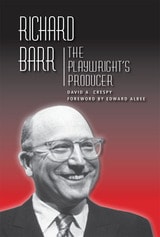
Richard Barr
The Playwright's ProducerDavid A. Crespy
Southern Illinois University Press, 2013
In Richard Barr: The Playwright’s Producer, author David A. Crespy investigates the career of one of the theatre’s most vivid luminaries, from his work on the film and radio productions of Orson Welles to his triumphant—and final—production of Stephen Sondheim’s Sweeney Todd: The Demon Barber of Fleet Street. Explored in detail along the way are the producer’s relationship with playwright Edward Albee, whose major plays such as A Zoo Story and Who’s Afraid of Virginia Woolf Barr was the first to produce, and his innovative productions of controversial works by playwrights like Samuel Beckett, Terrence McNally, and Sam Shepard. Crespy draws on Barr’s own writings on the theatre, his personal papers, and more than sixty interviews with theatre professionals to offer insight into a man whose legacy to producers and playwrights resounds in the theatre world. Also included in the volume are a foreword and an afterword by Edward Albee, a three-time Pulitzer Prize–winning playwright and one of Barr’s closest associates.
Richard Linklater
David T. Johnson
University of Illinois Press, 2012
Ring Shout, Wheel About
The Racial Politics of Music and Dance in North American SlaveryKatrina D. Thompson
University of Illinois Press, 2014
In this ambitious project, historian Katrina Thompson examines the conceptualization and staging of race through the performance, sometimes coerced, of black dance from the slave ship to the minstrel stage. Drawing on a rich variety of sources, Thompson explicates how black musical performance was used by white Europeans and Americans to justify enslavement, perpetuate the existing racial hierarchy, and mask the brutality of the domestic slave trade. Whether on slave ships, at the auction block, or on plantations, whites often used coerced performances to oppress and demean the enslaved.
As Thompson shows, however, blacks' "backstage" use of musical performance often served quite a different purpose. Through creolization and other means, enslaved people preserved some native musical and dance traditions and invented or adopted new traditions that built community and even aided rebellion.
Thompson shows how these traditions evolved into nineteenth-century minstrelsy and, ultimately, raises the question of whether today's mass media performances and depictions of African Americans are so very far removed from their troublesome roots.
Ring of Liberation
Deceptive Discourse in Brazilian CapoeiraJ. Lowell Lewis
University of Chicago Press, 1992
Capoeira originated in early slave culture and is practiced widely today by urban Brazilians and others. At once game, sport, mock combat, and ritualized performance, it involves two players who dance and "battle" within a ring of musicians and singers. Stunning physical performances combine with music and poetry in a form as expressive in movement as it is in word.
J. Lowell Lewis explores the convergence of form and content in capoeira. The many components and characteristics of this elaborate black art form—for example, competing genre frameworks and the necessary fusion of multiple modes of expression—demand, Lewis feels, to be given "body" as well as "voice." In response, he uses Peircean semiotics and recent work in discourse and performance theory to map the connections between physical, musical, and linguistic play in capoeira and to reflect on the general relations between semiotic systems and the creation and recording of cultural meaning.
Risk Culture
Performance and Danger in Early AmericaJoseph Fichtelberg
University of Michigan Press, 2010
---David Shields, University of South Carolina
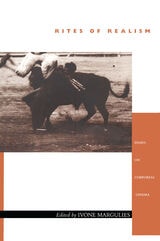
Rites of Realism
Essays on Corporeal CinemaIvone Margulies, ed.
Duke University Press, 2003
By providing close readings of classic and contemporary works, Rites of Realism signals the need to return to a focus on films as the main innovators of realist representation. The collection is inspired by André Bazin's theories on film's inherent heterogeneity and unique ability to register contingency (the singular, one-time event). This volume features two new translations: of Bazin's seminal essay "Death Every Afternoon" and Serge Daney's essay reinterpreting Bazin's defense of the long shot as a way to set the stage for a clash or risky confrontation between man and animal. These pieces evince key concerns—particularly the link between cinematic realism and contingency—that the other essays explore further.
Among the topics addressed are the provocative mimesis of Luis Buñuel's Land Without Bread; the adaptation of trial documents in Carl Dreyer's Passion of Joan of Arc; the use of the tableaux vivant by Wim Wenders and Peter Greenaway; and Pier Paolo Pasolini's strategies of analogy in his transposition of The Gospel According to St. Matthew from Palestine to southern Italy. Essays consider the work of filmmakers including Michelangelo Antonioni, Maya Deren, Mike Leigh, Cesare Zavattini, Zhang Yuan, and Abbas Kiarostami.
Contributors: Paul Arthur, André Bazin, Mark A. Cohen, Serge Daney, Mary Ann Doane, James F. Lastra, Ivone Margulies, Abé Mark Normes, Brigitte Peucker, Richard Porton, Philip Rosen, Catherine Russell, James Schamus, Noa Steimatsky, Xiaobing Tang
Ritwik Ghatak
Occasional Essays for a 100th BirthdayEdited by Gayatri Chakravorty Spivak and Surya Parekh
Seagull Books, 2025
The cinema of Ritwik Ghatak (1925–76) continues to resonate across borders and generations. His films—largely shaped by the 1947 Partition of Bengal and the experience of displacement—probe the fractured human condition through bold formal experimentation, unforgettable soundscapes, and a profound sense of myth and memory. Though his body of work was modest in size, Ghatak’s influence has steadily expanded, securing his place as a major figure in world cinema. This distinctive volume, which marks the centenary of this visionary filmmaker, gathers essays by important scholars and thinkers from around the world.
Moving beyond conventional film criticism and area studies, the collection stages new, transnational encounters with Ghatak’s films—approaching them as world texts, as sonic and visual experiments, and as meditations on migration, collectivity, and social existence.
Robert Altman’s Subliminal Reality
Robert T. Self
University of Minnesota Press, 2002
The most complete and compelling analysis available of Altman’s films
With his complex and unconventional films, Robert Altman often draws an impassioned response from critics but bafflement and indifference from the general public. Some audiences have dismissed his movies as insignificant, unsatisfying, and unreadable. Ironically, Altman might agree: he makes films in order to challenge filmgoers’s expectations of straightforward narratives and easily understood endings.
In Robert Altman’s Subliminal Reality, Robert T. Self sheds light on Altman’s work and provides the most comprehensive analysis of his films to date. With close readings of classics like MASH, McCabe and Mrs. Miller, and Nashville, as well as more recent films like The Player, Short Cuts, and Cookie’s Fortune, Self asserts the value of Altman’s work not only to film theory and the entertainment industry but to American culture itself. In his analysis, Self identifies Altman’s films particularly as they address issues of form, identity, and industry. He explains how Altman critiques moviemaking forms by using an open, fragmented mode of storytelling and by turning conventional Hollywood genres inside out. He examines Altman’s characterization of social and individual identity as fragile and fragmentary and his depiction of antiheroic characters debilitated by their socially constructed gender roles. Finally, Self shows how Altman challenges the entertainment industry itself, questioning its methods and motives and critiquing its role in our cultural alienation. Self frames his study of Altman’s work with a discussion of the director’s efforts to create a "subliminal reality" in his narratives—to touch audiences on an unconscious level and to recognize the unspoken, and unspeakable, dimensions in human interactions. According to Self, this striving for "subliminal reality" makes Altman’s films not only exemplary of the potential of art cinema narration but instrumental in keeping such narrative alive.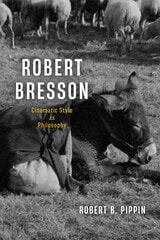
Robert Bresson
Cinematic Style as PhilosophyRobert B. Pippin
University of Chicago Press, 2026
Over a forty-year career, Robert Bresson developed one of the most distinctive cinematic styles in the history of filmmaking. Criticizing conventional movies as “filmed theater,” Bresson proposed instead a way of writing with images, which he called “cinematographs.” Robert B. Pippin argues here for a way of understanding how these stylistic innovations express a range of philosophical commitments, explorations of the possible sources of meaning in late modern life, and the implications of the absence of such sources.
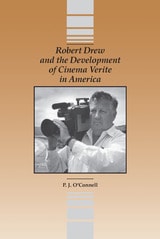
Robert Drew and the Development of Cinema Verite in America
P.J. O'Connell
Southern Illinois University Press, 1992
Author P. J. O’Connell traces Robert Drew’s influence on cinema verite through extensive interviews with Drew and with some of the founding fathers of American cinema verite filmmaking—Donn Alan Pennebaker, Gregory Shuker, and Richard Leacock.
Robert Drew’s contributions to documentary film have been both technical and conceptual. Realizing that his equipment was too heavy and intrusive, Drew persuaded Time-Life Broadcasting to sponsor the development of new, lightweight, portable synchronous sound equipment that freed documentary filmmakers from the bulky, tripod-mounted, AC-powered equipment of the past. His new technology allowed him to capture intense moments as they happened, and to make viewers feel personally involved in the events he presented. While making more than twenty documentaries in the early 1960s, Drew continued to initiate innovations that were not thought possible a generation before him.
P. J. O’Connell is the executive producer of public affairs at Penn State Television and an affiliate assistant professor in the School of Communication at Penn State University.
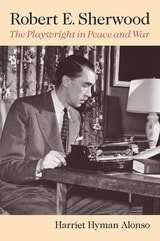
Robert E. Sherwood
The Playwright in Peace and WarHarriet Hyman Alonso
University of Massachusetts Press, 2007
One of the nation's first film critics, an acclaimed speechwriter on his own and for President Franklin D. Roosevelt, a propagandist during World War II, and a leading producer on Broadway, Robert E. Sherwood scripted some of the most popular plays and films of his day, including Waterloo Bridge, The Best Years of Our Lives, Idiot's Delight, Abe Lincoln in Illinois, and Rebecca. His work brought him four Pulitzer Prizes and an Oscar. In his personal life, however, he was driven by a deep conviction that war was a societal evil that must be eradicated and human rights a moral responsibility that all governments should protect. At times, his belief in pacifism and his commitment to defending freedom and justice came into conflict with each other, causing frustration and emotional trauma which found their way into his writings and actions.
In this book, Harriet Hyman Alonso unravels Sherwood's inner struggle and portrays his political journey. Relying largely on his letters, diaries, plays, films, essays, and biography of Roosevelt and Harry Hopkins, she traces Sherwood's obsession with the world of politics and its effects on his life and art, from his experience as a soldier in World War I to the Cold War. She also describes his participation in the Algonquin Round Table, his friendships and working relationships with such notables as Alfred Lunt, Lynn Fontanne, Edna Ferber, Spencer Tracy, Harry Hopkins, and Franklin D. Roosevelt, his two marriages and uneasy relationship with his daughter, and his leadership role in the Broadway community.
Alonso brings together history, theater and film studies, and peace studies in this interdisciplinary political biography. In the process, she illuminates major currents in U.S. foreign policy, society, and culture from 1896 to 1955—the years of the remarkable life of Robert E. Sherwood.
Robert Paul and the Origins of British Cinema
Ian Christie
University of Chicago Press, 2019
From improving upon Edison’s Kinetoscope to cocreating the first movie camera in Britain to building England’s first film studio and launching the country’s motion-picture industry, Paul played a key part in the history of cinema worldwide. It’s not only Paul’s story, however, that historian Ian Christie tells here. Robert Paul and the Origins of British Cinema also details the race among inventors to develop lucrative technologies and the jumbled culture of patent-snatching, showmanship, and music halls that prevailed in the last decade of the nineteenth century. Both an in-depth biography and a magnificent look at early cinema and fin-de-siècle Britain, Robert Paul and the Origins of British Cinema is a first-rate cultural history of a fascinating era of global invention, and the revelation of one of its undervalued contributors.
Rock 'n' Roll Movies
Sterritt, David
Rutgers University Press, 2018
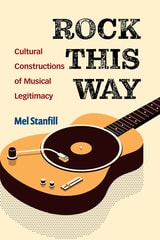
Rock This Way
Cultural Constructions of Musical LegitimacyMel Stanfill
University of Michigan Press, 2023
Any and all songs are capable of being remixed. But not all remixes are treated equally. Rock This Way examines transformative musical works—cover songs, remixes, mash-ups, parodies, and soundalike songs—to discover what contemporary American culture sees as legitimate when it comes to making music that builds upon other songs. Through examples of how popular discussion talked about such songs between 2009 and 2018, Mel Stanfill uses a combination of discourse analysis and digital humanities methods to interrogate our broader understanding of transformative works and where they converge at the legal, economic, and cultural ownership levels.
Rock This Way provides a new way of thinking about what it means to re-create and borrow music, how the racial identity of both the reusing artist and the reused artist matters, and the ways in which the law polices artists and their works. Ultimately, Stanfill demonstrates that the extent to which a work is seen as having new expression or meaning is contingent upon notions of creativity, legitimacy, and law, all of which are shaped by white supremacy.
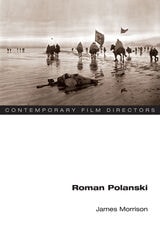
Roman Polanski
James Morrison
University of Illinois Press, 2006
James Morrison's critical study offers a comprehensive and critically engaged treatment on Roman Polanski's immense body of work. Tracing the filmmaker's remarkably diverse career from its beginnings to 2007, the book provides commentary on all of Polanski's major films in their historical, cultural, social, and artistic contexts. Morrison locates Polanski's work within the genres of comedy and melodrama, arguing that he is not merely obsessed with the theme of repression, but that his true interest is in the concrete—what is out in the open—and why we so rarely see it.
The range of Polanski's filmmaking challenges traditional divisions between high and low culture. For example, The Ninth Gate is a brash pastiche of the horror genre, while The Pianist is an Academy Award-winner about the Holocaust. Dubbing Polanski a relentless critic of modernity, Morrison concludes that his career is representative of the fissures, victories, and rehabilitations of the last fifty years of international cinema.
A volume in the series Contemporary Film Directors, edited by James Naremore
Roman Theater and Society
E. Togo Salmon Papers IWilliam J. Slater, Editor
University of Michigan Press, 1996
William Slater's new volume Roman Theater and Society brings an important perspective to the much-maligned status of the Roman theater, which has only recently been reappraised and appreciated as uniquely Roman rather than criticized for not being Greek. From this point of embarkation, William Slater and the nine contributors discuss theater in Rome and the Greek east with a definition of performance incorporating not only stage performances but also dinnertime entertainment, sporting events, and political events. Contributors are T. D. Barnes, K. M. Coleman, J. C. Edmonson, E. R. Gebhard, J. R. Green, E. J. Jory, W. D. Lebek, and D. S. Potter.
Individual chapters combine literary evidence with archaeological, thereby engendering a deeper appreciation for the social and political roles of Roman theater. It becomes clear that these roles were of great influence in giving voice to the popular demands of the average Roman. In examining the roles of theater the contributors turn to the players and audience themselves for deeper understanding.
Roman Theater and Society will be of great interest to classicists, theater specialists, and anyone interested in the interplay among plays, theaters, and the people on stage and in the audience.
William J. Slater is Professor of Classics, McMaster University.
Rooms with a View
The Stages of Community in the Modern TheaterRichard L. Barr
University of Michigan Press, 1998
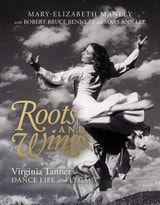
Roots and Wings
Virginia Tanner's Dance Life and LegacyMary-Elizabeth Manley with Mary Ann Lee and Robert Bruce Bennett
University of Utah Press, 2023
Roots and Wings recounts Virginia Tanner’s remarkable career as a dancer, artist, and educator. From her early experiences assisting at Evelyn Davis’s dance school in Washington, DC, to the creation of the Tanner Dance Program at the University of Utah, her influence on the field was pervasive. She channeled children’s energy, sharpened their senses, and encouraged youthful, authentic dance expression.
Manley’s extensive archival research and personal interviews depict Virginia Tanner as an innovative dance artist and ambitious leader in the field of modern dance. While exploring Tanner’s story, Roots and Wings emphasizes the value of unique instructional methodologies for teaching dance to young children and the vital role the arts play in children’s lives. Tanner’s work endures, continuing to echo with sensitivity and spirit in young dancers throughout the United States and abroad.
Rough Magic
Making Theatre at the Royal Shakespeare CompanySteven Adler. Foreword by Chris Parry
Southern Illinois University Press, 2001
Steven Adler examines the dynamic life and workings of the theatre company responsible for some of the world’s most compelling performances and influential productions of the last forty years, including Marat/Sade, A Midsummer Night’s Dream, Les Misérables, Les Liaisons Dangereuses, and Nicholas Nickleby.
Rough Magic provides a thorough analysis of the many strands of theatrical activity on both sides of the footlights that coalesce in the artistic vigor of the Royal Shakespeare Company. Adler traces the company’s evolution from its origins in 1879 as a week-long festival presented by Stratford-upon-Avon as a birthday homage to its native son, to its current incarnation as one of the world’s most distinguished institutional theatres. He probes the aspirations and achievements of the RSC’s four successive artistic directors: Peter Hall, Trevor Nunn, Terry Hands, and Adrian Noble. He offers a comprehensive view of the design and aesthetics of the RSC’s five theatres in Stratford and London, and explores the intricate process of crafting a repertoire at home and on tour that responds to the needs of the artists as well as the demands of the box office.
Vivid illustrations, personal observation, research, and dozens of interviews with current and former members of the Royal Shakespeare Company unite to produce Rough Magic.
Rowdy Carousals
The Bowery Boy on Stage, 1848-1913J. Chris Westgate
University of Iowa Press, 2024
The book’s examination of working-class whiteness on stage, in the theatre, and in print culture invites theatre historians and critics to check the impulse to downplay or ignore questions about race and ethnicity in discussion of the Bowery Boy. J. Chris Westgate further explores links between the Bowery Boy’s rowdyism in the nineteenth century and the resurgence of white supremacy in the early twenty-first century.
Rubble Films
German Cinema In Shadow Of 3Rd ReichRobert R. Shandley
Temple University Press, 2001
Rubble Films is a close look at German cinema in the immediate postwar era, and a careful examination of its relationship to Allied occupation. Shandley reveals how German film borrowed -- both literally and figuratively -- from its Nazi past, and how the occupied powers (specifically the US) used its position as victor to open Europe to Hollywood movie products and aesthetics.
Incorporating a careful reading of several important postwar films, Shandley also discusses how the German studio system operated immediately after the war, in the east and the west, giving special focus on DEFA, the east German studio that rose during Soviet occupation.
Pathbreaking in its research, Rubble Films sheds new light on a significant moment of German cultural rebirth, and adds a new dimension to the study of the history of film.
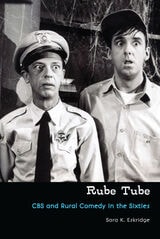
Rube Tube
CBS and Rural Comedy in the SixtiesSara K. Eskridge
University of Missouri Press, 2022
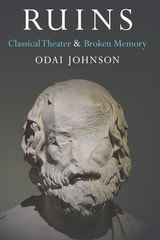
Ruins
Classical Theater and Broken MemoryOdai Johnson
University of Michigan Press, 2018
Much of the theater of antiquity is marked by erasures: missing origins, broken genres, fragments of plays, ruins of architecture, absented gods, remains of older practices imperfectly buried and ghosting through the civic productions that replaced them. Ruins: Classical Theater and Broken Memory traces the remains, the remembering, and the forgetting of performance traditions of classical theater. The book argues that it is only when we look back over the accumulation of small evidence over a thousand-year sweep of classical theater that the remarkable and unequaled endurance of the tradition emerges. In the absence of more evidence, Odai Johnson turns instead to the absence itself, pressing its most legible gaps into a narrative about scars, vanishings, erasures, and silence: all the breakages that constitute the ruins of antiquity.
In ten wide-ranging case studies, theater history and performance theory are brought together to examine the texts, artifacts, and icons left behind, reading them in fresh ways to offer an elegantly written, extended meditation on “how the aesthetic of ruins offered a model for an ideal that dislodged and ultimately stood in for the historic.”
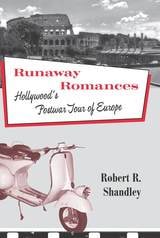
Runaway Romances
Hollywood's Postwar Tour of EuropeRobert R. Shandley
Temple University Press, 2009
In the 1950s and early 1960s, America imagined itself young and in love in Europe. And Hollywood films of the era reflected this romantic allure. From a young and naïve Audrey Hepburn falling in love with Gregory Peck inRoman Holiday to David Lean’s Summertime, featuring Katherine Hepburn’s sexual adventure in Venice, these glossy travelogue romances were shot on location, and established an exciting new genre for Hollywood.
As Robert Shandley shows in Runaway Romances, these films were not only indicative of the ideology of the American-dominated postwar world order, but they also represented a shift in Hollywood production values. Eager to capture new audiences during a period of economic crisis, Hollywood’s European output utilized the widescreen process to enhance cinematic experience. The films—To Catch a Thief, Three Coins in the Fountain, and Funny Face among them—enticed viewers to visit faraway places for romantic escapades. In the process, these runaway romances captured American fantasies for a brief, but intense, period that ended as audiences grew tired of old World splendors, and entered into a new era of sexual awakening.
Russia, Freaks and Foreigners
Three Performance TextsJames MacDonald
Intellect Books, 2008
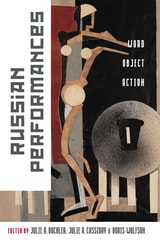
Russian Performances
Word, Object, ActionEdited by Julie A. Buckler, Julie A. Cassiday, and Boris Wolfson
University of Wisconsin Press, 2018
Challenging the primacy of the written word in this field, the volume fosters a larger intellectual community informed by theories and practices of performance from anthropology, art history, dance studies, film studies, cultural and social history, literary studies, musicology, political science, theater studies, and sociology.

Russian Theater
The Twenty-first Century, Volume 36Tom Sellar and Yana Ross, eds.
Duke University Press, 0
In the first English-language collection to examine twenty-first-century Russian theater, this special issue of Theater also includes the complete texts of two new Russian plays, published for the first time in English. Ivan Vyrypaev’s Oxygen is a poetic panorama of new Russian identity set to techno music, and Danila Privalov’s 5-25 explores traditional Dostoyevskian existential themes in the language of a new generation. One contributor chronicles the sweeping cultural and institutional changes in the Russian theater since 2000, while another provides an overview of the regional theater system in the world’s most geographically vast country. Another essay explores the development of the new playwriting movement, identifying its key writers and producers. This special issue also includes interviews with the movement’s directors and producers. Additionally, it contains letters, previously unpublished in English, from the Moscow Art Theater’s Olga Bokshanskaya to the Russian theatrical titan Vladimir Nemirovich-Danchenko, reporting on the Moscow Art Theater’s legendary U.S. tour in 1920–22, which was recorded in theater history as a turning point for American acting.
Contributors. AKHE, Dmitri Chernikov, Nina Chusova, Marina Dmitrievskaya, Sasha Dugdale, John Freedman, Elena Gremina, Nina Karpova, Mindaugus Korbauskis, Ryan McKittrick, Arkady Ostrovsky, Danila Privalov, Victor Rizhakov, Yana Ross, Tom Sellar, Kirill Serebrennikov, Anatoly Smeliansky, Julia Smeliansky, Ivan Vyrypaev
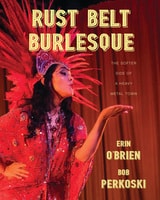
Rust Belt Burlesque
The Softer Side of a Heavy Metal TownErin O’Brien
Ohio University Press, 2019
The performance art of burlesque, once a faded form, has made a comeback in the twenty-first century, and it has shimmied back to life with a vengeance in Cleveland. Thanks to fans and entrepreneurs, neo-burlesque has taken the stage—and it’s more inclusive, less seedy, and emphatically fun.
Rust Belt Burlesque traces the history of burlesque in Cleveland from the mid-1800s to the present day, while also telling the story of Bella Sin, a Mexican immigrant who largely drove Northeast Ohio’s neo-burlesque comeback. The historical center of Cleveland burlesque was the iconic Roxy Theater on East Ninth Street. Here, in its twentieth-century heyday, famed dancers like Blaze Starr and comics like Red Skelton and Abbott and Costello entertained both regulars and celebrity guests.
Erin O’Brien’s lively storytelling and Bob Perkoski’s color photos give readers a peek into the raucous Ohio Burlesque Festival that packs the house at the Beachland Ballroom every year. Today’s burlies come in all shapes, ethnicities, and orientations, drawing a legion of adoring fans. This is a show you won’t want to miss.