Results by title
4038 books match the query 'Social aspects' and 216 start with r
Rejecting Climate Doomism
Diana Stuart
University of Michigan Press, 2026
Drawing from climate science, sociology, psychology, and philosophy, Rejecting Climate Doomism outlines the reasons to instead choose action grounded in active hope. It examines how global warming could be effectively limited through specific policy proposals. Despite the many obstacles to achieving some of the policies discussed in this book, they are still possible and worth pursuing. By outlining a positive vision of the far-reaching changes that can be used to minimize warming, the book encourages readers to advocate for the social and economic changes necessary to forge the best path for people and the planet.
Relocating Authority
Japanese Americans Writing to Redress Mass IncarcerationMira Shimabukuro
University Press of Colorado, 2015
Relocating Authority examines the ways Japanese Americans have continually used writing to respond to the circumstances of their community’s mass imprisonment during World War II. Using both Nikkei cultural frameworks and community-specific history for methodological inspiration and guidance, Mira Shimabukuro shows how writing was used privately and publicly to individually survive and collectively resist the conditions of incarceration.
Examining a wide range of diverse texts and literacy practices such as diary entries, note-taking, manifestos, and multiple drafts of single documents, Relocating Authority draws upon community archives, visual histories, and Asian American history and theory to reveal the ways writing has served as a critical tool for incarcerees and their descendants. Incarcerees not only used writing to redress the “internment” in the moment but also created pieces of text that enabled and inspired further redress long after the camps had closed.
Relocating Authority highlights literacy’s enduring potential to participate in social change and assist an imprisoned people in relocating authority away from their captors and back to their community and themselves. It will be of great interest to students and scholars of ethnic and Asian American rhetorics, American studies, and anyone interested in the relationship between literacy and social justice.
Reluctant Capitalists
Bookselling and the Culture of ConsumptionLaura J. Miller
University of Chicago Press, 2006
In Reluctant Capitalists, Miller looks at a century of book retailing, demonstrating that the independent/chain dynamic is not entirely new. It began one hundred years ago when department stores began selling books, continued through the 1960s with the emergence of national chain stores, and exploded with the formation of “superstores” in the 1990s. The advent of the Internet has further spurred tremendous changes in how booksellers approach their business. All of these changes have met resistance from book professionals and readers who believe that the book business should somehow be “above” market forces and instead embrace more noble priorities.
Miller uses interviews with bookstore customers and members of the book industry to explain why books evoke such distinct and heated reactions. She reveals why customers have such fierce loyalty to certain bookstores and why they identify so strongly with different types of books. In the process, she also teases out the meanings of retailing and consumption in American culture at large, underscoring her point that any type of consumer behavior is inevitably political, with consequences for communities as well as commercial institutions.
Remaindered Life
Neferti X. Tadiar
Duke University Press, 2022

Remaking Chinese America
Immigration, Family, and Community, 1940-1965Zhao, Xiaojian
Rutgers University Press, 2001
In Remaking Chinese America, Xiaojian Zhao explores the myriad forces that changed and unified Chinese Americans during a key period in American history. Prior to 1940, this immigrant community was predominantly male, but between 1940 and 1965 it was transformed into a family-centered American ethnic community. Zhao pays special attention to forces both inside and outside of the country in order to explain these changing demographics. She scrutinizes the repealed exclusion laws and the immigration laws enacted after 1940. Careful attention is also paid to evolving gender roles, since women constituted the majority of newcomers, significantly changing the sex ratio of the Chinese American population.
As members of a minority sharing a common cultural heritage as well as pressures from the larger society, Chinese Americans networked and struggled to gain equal rights during the cold war period. In defining the political circumstances that brought the Chinese together as a cohesive political body, Zhao also delves into the complexities they faced when questioning their personal national allegiances. Remaking Chinese America uses a wealth of primary sources, including oral histories, newspapers, genealogical documents, and immigration files to illuminate what it was like to be Chinese living in the United States during a period that—until now—has been little studied.

Remapping Sound Studies
Gavin Steingo and Jim Sykes, editors
Duke University Press, 2019
Contributors
Tripta Chandola, Michele Friedner, Louise Meintjes, Jairo Moreno, Ana María Ochoa Gautier, Michael Birenbaum Quintero, Jeff Roy, Jessica Schwartz, Shayna Silverstein, Gavin Steingo, Jim Sykes, Benjamin Tausig, Hervé Tchumkam
Remembering 1989
Future Archives of Public ProtestAnke Pinkert
University of Chicago Press, 2024
For many, 1989 is an iconic date, one we associate with the fall of the Berlin Wall and the end of the Cold War. The year prompts some to rue the defeat of socialism in the East, while others celebrate a victory for democracy and capitalism in the reunified Germany. Remembering 1989 focuses on a largely forgotten interregnum: the months between the outbreak of protests in the German Democratic Republic in 1989 and its absorption by the West in 1990. Anke Pinkert, who herself participated in those protests, recalls these months as a volatile but joyous “laboratory of radical democracy,” and tells the story of how and why this “time out of joint” has been erased from Germany’s national memory.
Remembering 1989 argues that in order to truly understand Germany’s historic transformation, we must revisit protesters’ actions across a wide range of minor, vernacular, and often transient sources. Drawing on rich archives including videotapes of untelevised protests, illegally printed petitions by Church leaders, audio recordings of dissident meetings, and interview footage with military troops, Pinkert opens the discarded history of East European social uprisings to new interpretations and imagines alternatives to Germany’s neoliberal status quo. The result is a vivid, unexpected contribution to memory studies and European history.
Remembering Communism
Private and Public Recollections of Lived Experience in Southeast EuropeContributors: Simina Bădica, Iskra Baeva, Tanya Boneva, Corina Cimpoieru, Liliana Deyanova, Albena Hranova, Nataliya Hristova, Petya Kabakchieva, Evgenia Kalinova, Anny Kirilova, Thomas Lindenberger, Tamás Lőnhárt, Izabella Main, Tsvetana Manova, Iliiana Marcheva, Vasil Markov, Andi Mihalache, Cătălina Mihalache, Milla Mineva, Cristina Petrescu, Dragoş Petrescu, Vania Stoyanova, Virgiliu Ţârău, Nikolai Vukov, Smaranda Vultur
Central European University Press, 2014
Remembering Communism examines the formation and transformation of the memory of communism in the post-communist period. The majority of the articles focus on memory practices in the post-Stalinist era in Bulgaria and Romania, with occasional references to the cases of Poland and the GDR. Based on an interdisciplinary approach, including history, anthropology, cultural studies and sociology, the volume examines the mechanisms and processes that influence, determine and mint the private and public memory of communism in the post-1989 era. The common denominator to all essays is the emphasis on the process of remembering in the present, and the modalities by means of which the present perspective shapes processes of remembering, including practices of commemoration and representation of the past.
The volume deals with eight major thematic blocks revisiting specific practices in communism such as popular culture and everyday life, childhood, labor, the secret police, and the perception of “the system”.
Remembering Suffering and Resistance
Memory Politics and the Serbian Orthodox ChurchKarin Roginer Hofmeister
Central European University Press, 2024
Assessing issues related to the Orthodox Church from an academic, secular point of view is a sensitive matter. However, by tracing and interpreting the engagement of the Serbian Church with the memory of Serbian heroic victimhood in World War II through a kind of “methodological agnosticism,” this volume has managed to tackle the subtle topic in a very delicate and value-neutral way. Arguing that the search for a collective memory is particularly urgent in the face of societal uncertainty and that religious institutions often use their memory potential to reaffirm their public relevance, the book examines the motivations, forms, strategies, and outcomes of a wide range of mnemonic activities the Serbian Orthodox Church engaged in following the upheavals caused by the collapse of Yugoslav socialism, the violent dissolution of the country, and the fall of the Milošević regime. These activities, taking place within the memory fields framed by the post-socialist, post-conflict, and post-secular horizons, took liturgical and non-liturgical forms, often involving a hybrid fusion of the two. As a result of this mnemonic endeavor, the author argues, the Church was successful in reasserting its power and legitimacy in the public sphere of post-2000 Serbia.
Remembering the Alamo
Memory, Modernity, and the Master SymbolBy Richard R. Flores
University of Texas Press, 2002
"Remember the Alamo!" reverberates through Texas history and culture, but what exactly are we remembering? Over nearly two centuries, the Mexican victory over an outnumbered band of Alamo defenders has been transformed into an American victory for the love of liberty. Why did the historical battle of 1836 undergo this metamorphosis in memory and mythology to become such a potent master symbol in Texan and American culture?
In this probing book, Richard Flores seeks to answer that question by examining how the Alamo's transformation into an American cultural icon helped to shape social, economic, and political relations between Anglo and Mexican Texans from the late nineteenth to the mid-twentieth centuries. In the first part of the book, he looks at how the attempts of heritage society members and political leaders to define the Alamo as a place have reflected struggles within Texas society over the place and status of Anglos and Mexicans. In the second part, he explores how Alamo movies and the transformation of Davy Crockett into an Alamo hero/martyr have advanced deeply racialized, ambiguous, and even invented understandings of the past.
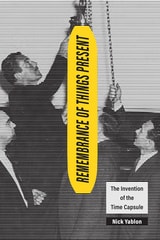
Remembrance of Things Present
The Invention of the Time CapsuleNick Yablon
University of Chicago Press, 2019
By offering a direct line to posterity, time capsules stimulated various hopes for the future. Remembrance of Things Present delves into these treasure chests to unearth those forgotten futures.
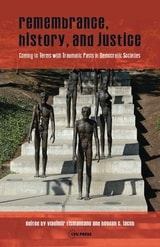
Remembrance, History, and Justice
Coming to terms with traumatic pasts in democratic societiesBogdan C. Iacob
Central European University Press, 2015
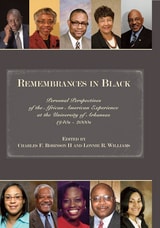
Remembrances in Black
Personal Perspectives of the African American Experience at the University of Arkansas, 1940s–2000sCharles F. Robinson II
University of Arkansas Press, 2015
Remittance as Belonging
Global Migration, Transnationalism, and the Quest for HomeHasan Mahmud
Rutgers University Press, 2025
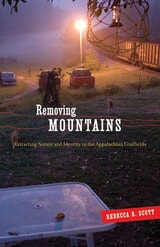
Removing Mountains
Extracting Nature and Identity in the Appalachian CoalfieldsRebecca R. Scott
University of Minnesota Press, 2010
In this rich ethnography of life in Appalachia, Scott examines mountaintop removal in light of controversy and protests from environmental groups calling for its abolishment. But Removing Mountains takes the conversation in a new direction, telling the stories of the businesspeople, miners, and families who believe they depend on the industry to survive. Scott reveals these southern Appalachian coalfields as a meaningful landscape where everyday practices and representations help shape a community's relationship to the environment.
Removing Mountains demonstrates that the paradox that faces this community-forced to destroy their land to make a wage-raises important questions related not only to the environment but also to American national identity, place, and white working-class masculinity.

Renaissance Revivals
City Comedy and Revenge Tragedy in the London Theater, 1576-1980Wendy Griswold
University of Chicago Press, 1986
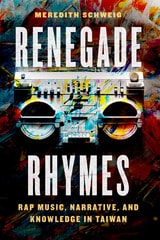
Renegade Rhymes
Rap Music, Narrative, and Knowledge in TaiwanMeredith Schweig
University of Chicago Press, 2022
Like many states emerging from oppressive political rule, Taiwan saw a cultural explosion in the late 1980s, when nearly four decades of martial law under the Chinese Nationalist Party ended. As members of a multicultural, multilingual society with a complex history of migration and colonization, Taiwanese people entered this moment of political transformation eager to tell their stories and grapple with their identities. In Renegade Rhymes, ethnomusicologist Meredith Schweig shows how rap music has become a powerful tool in the post-authoritarian period for both exploring and producing new knowledge about the ethnic, cultural, and political history of Taiwan.
Schweig draws on extensive ethnographic fieldwork, taking readers to concert venues, music video sets, scenes of protest, and more to show how early MCs from marginalized ethnic groups infused rap with important aspects of their own local languages, music, and narrative traditions. Aiming their critiques at the educational system and a neoliberal economy, new generations of rappers have used the art form to nurture associational bonds and rehearse rituals of democratic citizenship, making a new kind of sense out of their complicated present.
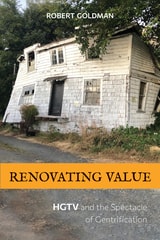
Renovating Value
HGTV and the Spectacle of GentrificationRobert Goldman
Temple University Press, 2021
HGTV has perfected stories about creating and capturing value in the housing market. But according to Robert Goldman, this lifestyle network’s beloved flagship programs, Flip or Flop, Property Brothers, and Fixer Upper—where people revitalize modern spaces and reinvent property values—offer “fairy tales” in the wake of the 2008 economic crisis. The cable channel’s seductive, bingeable programs may show how to find and extract value from properties, but, in fact, they insidiously ignore the realities of the real estate and mortgage markets, housing inequality, gentrification, economic insecurity, and even homelessness. In effect, HGTV has turned house flipping into a master narrative about getting ahead in America during an era of otherwise uneasy economic prospects.
HGTV pictures its insular moral economy as an alternative to a crisis-ridden neoliberal finance system that shaped landscapes of foreclosure and financial uncertainty for millions of households. Renovating Value explores the circuitry of consumer credit and debt, and a rent-gap model of gentrification that charts a path to the rehabilitation of Value. Goldman shrewdly critiques the aspirational myth of adding value to a home simply by using imagination, elbow grease, and aesthetic know-how.
Reparations and the Human
David L. Eng
Duke University Press, 2025
Replaying Marc Anthony
Sonic, Political, and Cultural ResonancesFrances R. Aparicio
The Ohio State University Press, 2025

Reporting of Social Science in the National Media
Carol Weiss
Russell Sage Foundation, 1988
Representations of the Post/Human
Monsters, Aliens, and Others in Popular CultureGraham, Elaine L.
Rutgers University Press, 2002
Microchips. Genetic modification of plants. Cloning. Advances in technology promise to shape our lives more profoundly than ever before. Exciting new discoveries in reproductive, genetic, and information technologies all serve to call into question the immutability of the boundaries between humans, animals, and machines. The category of the “posthuman” reflects the implications of such new technologies on contemporary culture, especially in their capacity to reconfigure the human body and to challenge our most fundamental understandings of human nature.
Elaine L. Graham explores these issues as they are expressed within popular culture and the creative arts. From the myth of Prometheus and the Gothic horror of Frankenstein’s monster to contemporary postmodern science fiction, a gallery of fantastic creatures haunts Western myth, religion, and literature. They serve to connect contemporary debates with enduring concerns about the potential—and the limits—of human creativity.
This book breaks new ground in drawing together a wide range of literature on new technologies and their ethical implications. In her explorations of the monstrous and the cyborg, Graham covers the Jewish legend of the golem, the Human Genome Project, Star Trek: Next Generation, Star Trek: Voyager, Fritz Lang’s Metropolis, Donna Haraway’s cyborg writing, andmany other related topics. This book will interest students in cultural studies, literature, ethics, religion, information technology, and the life sciences.
Reproducing Jews
A Cultural Account of Assisted Conception in IsraelSusan Martha Kahn
Duke University Press, 2000
In this ethnographic study of the new reproductive technologies in Israel, Susan Martha Kahn explores the cultural meanings and contemporary rabbinic responses to artificial insemination, in-vitro fertilization, egg donation, and surrogacy. Kahn draws on fieldwork with unmarried Israeli women who are using state-subsidized artificial insemination to get pregnant and on participant-observation in Israeli fertility clinics. Through close readings of traditional Jewish texts and careful analysis of Israeli public discourse, she explains how the Israeli embrace of new reproductive technologies has made Jewish beliefs about kinship startlingly literal. Kahn also reveals how a wide range of contemporary Israelis are using new reproductive technologies to realize their reproductive futures, from ultraorthodox infertile married couples to secular unmarried women.
As the first scholarly account of assisted conception in Israel, this multisited ethnography will contribute to current anthropological debates on kinship studies. It will also interest those involved with Jewish studies.
Reproduction by Design
Sex, Robots, Trees, and Test-Tube Babies in Interwar BritainAngus McLaren
University of Chicago Press, 2012
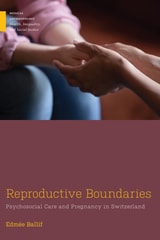
Reproductive Boundaries
Psychosocial Care and Pregnancy in SwitzerlandEdmée Ballif
Rutgers University Press, 2026
Reproductive Boundaries examines the shifting boundaries of prenatal care in Switzerland, focusing on the Pregnancy Support Center's innovative psychosocial model. By redefining the territory of care, the Center extends its reach beyond the medical domain, exemplifying the reproductivization of life, the increasing organization of various life aspects through a reproductive lens. The book explores how this approach challenges traditional borders between medical and psychosocial care, offering an alternative to Switzerland's heavily medicalized reproductive care. Through ethnographic insights into reproductive talk, it reveals how psychosocial advisors shift the boundaries of reproductive care, balancing support with broader state goals of reproductive governance. Set against Switzerland's history of stratified reproductive policies, the study critically examines how psychosocial care reshapes the landscape of pregnancy, raising questions about surveillance and evolving gender roles. This thought-provoking work invites readers to reconsider the limits and possibilities of care in a fragmented society.
This book is also freely available online as an open access digital edition. (https://www.rutgersuniversitypress.org/media/wysiwyg/documents/Reproductive_Boundaries_PDF.pdf)
Reproductive Technologies as Global Form
Ethnographies of Knowledge, Practices, and Transnational EncountersEdited by Michi Knecht, Maren Klotz, and Stefan Beck
Campus Verlag, 2012
In the thirty years since the first “test-tube baby,” in-vitro fertilization and other methods of reproductive assistance have become a common aspect of family life and medicine in developed nations—and, increasingly, throughout the world. This collection brings together ethnographic studies of how these reproductive technologies are deployed across a wide variety of nations and cultures, taking special account of how they are linked to aspirations towards modernity—and how they contribute to an ongoing reconfiguration of the boundaries of knowledge and human agency. The resulting volume offers both a current snapshot of the cultural state of reproductive technologies and a plethora of provocative questions for the future.
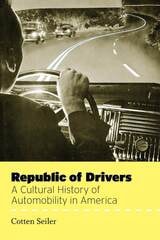
Republic of Drivers
A Cultural History of Automobility in AmericaCotten Seiler
University of Chicago Press, 2008
Cotten Seiler combs through a vast number of historical, social scientific, philosophical, and literary sources to illustrate the importance of driving to modern American conceptions of the self and the social and political order. He finds that as the figure of the driver blurred into the figure of the citizen, automobility became a powerful resource for women, African Americans, and others seeking entry into the public sphere. And yet, he argues, the individualistic but anonymous act of driving has also monopolized our thinking about freedom and democracy, discouraging the crafting of a more sustainable way of life. As our fantasies of the open road turn into fears of a looming energy crisis, Seiler shows us just how we ended up a republic of drivers—and where we might be headed.
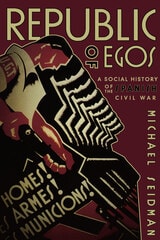
Republic of Egos
A Social History of the Spanish Civil WarMichael Seidman
University of Wisconsin Press, 2002
Most histories of the Spanish Civil War (1936–1939) have examined major leaders or well-established political and social groups to explore class, gender, and ideological struggles. The war in Spain was marked by momentous conflicts between democracy and dictatorship, Communism and fascism, anarchism and authoritarianism, and Catholicism and anticlericalism that still provoke our fascination.
In Republic of Egos, Michael Seidman focuses instead on the personal and individual experiences of the common men and women who were actors in a struggle that defined a generation and helped to shape our world. By examining the roles of anonymous individuals, families, and small groups who fought for their own interests and survival—and not necessarily for an abstract or revolutionary cause—Seidman reveals a powerful but rarely considered pressure on the outcome of history. He shows how price controls and inflation in the Republican zone encouraged peasant hoarding, black marketing, and unrest among urban workers. Soldiers of the Republican Army responded to material shortages by looting, deserting, and fraternizing with the enemy. Seidman’s focus on average, seemingly nonpolitical individuals provides a new vision of both the experience and outcome of the war.
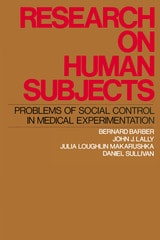
Research on Human Subjects
Problems of Social Control in Medical ExperimentationBernard Barber
Russell Sage Foundation, 1973
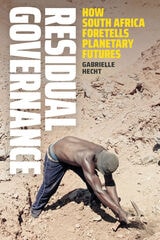
Residual Governance
How South Africa Foretells Planetary FuturesGabrielle Hecht
Duke University Press, 2023

Residual Media
Charles R. Acland
University of Minnesota Press, 2006
Residual Media grapples with these questions and more in a wide-ranging and eclectic collection of essays. Beginning with how cultural change bumps along unevenly, dragging the familiar into novel contexts, the contributors examine how leftover artifacts can be rediscovered occupying space in storage sheds, traveling the globe, converting to alternative uses, and accumulating in landfills. By exploring reconfigured, renewed, recycled, neglected, abandoned, and trashed media, the essays here combine theoretical challenges to media history with ideas, technology, and uses that have been left behind.
From player pianos to vinyl records, and from the typewriter to the telephone, Residual Media is an innovative approach to the aging of culture and reveals that, ultimately, new cultural phenomena rely on encounters with the old.
Contributors: Jennifer Adams, DePauw U; Jody Berland, York U; Sue Currell, U of Sussex; Maria DiCenzo, Wilfrid Laurier U; Kate Egan, U of Wales; Lisa Gitelman, Catholic U; Alison Griffiths, CUNY; James Hamilton, U of Georgia; James Hay, U of Illinois—Champaign-Urbana; Michelle Henning, U of the West of England; Lisa Parks, UC Santa Barbara; Hillegonda C. Rietveld, South Bank U; Leila Ryan, McMaster U; John Davis, Alfred U; Collette Snowden, U of South Australia; Jonathan Sterne, McGill U; JoAnne Stober, National Archives, Canada; Will Straw, McGill U; Haidee Wasson, Concordia U.
Charles R. Acland is Professor and holds the Concordia University Research Chair in communications studies at Concordia University, Montreal.
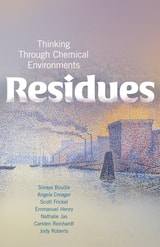
Residues
Thinking Through Chemical EnvironmentsSoraya Boudia
Rutgers University Press, 2022
Winner of the 2023 Merton Award from the Science, Knowledge, and Technology section of the American Sociological Association
Residues offers readers a new approach for conceptualizing the environmental impacts of chemicals production, consumption, disposal, and regulation. Environmental protection regimes tend to be highly segmented according to place, media, substance, and effect; academic scholarship often reflects this same segmented approach. Yet, in chemical substances we encounter phenomena that are at once voluminous and miniscule, singular and ubiquitous, regulated yet unruly. Inspired by recent studies of materiality and infrastructures, we introduce “residual materialism” as a framework for attending to the socio-material properties of chemicals and their world-making powers. Tracking residues through time, space, and understanding helps us see how the past has been built into our present chemical environments and future-oriented regulatory systems, why contaminants seem to always evade control, and why the Anthropocene is as inextricably harnessed to the synthesis of carbon into new molecules as it is driven by carbon’s combustion.
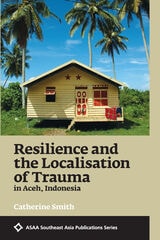
Resilience and the Localisation of Trauma in Aceh, Indonesia
Catherine Smith
National University of Singapore Press, 2017
In this book, Catherine Smith examines the global reach of the contested, yet compelling, concept of trauma. She explores how what is considered “trauma” has expanded well beyond the bounds of therapeutic practice to become a powerful cultural idiom shaping the ways people understand the effects of violence and imagine possible responses to suffering. In Aceh, conflict survivors have incorporated the ideas of trauma into their local languages, healing practices, and political imaginaries. The appearance of this idiom of distress into the Acehnese medical-moral landscape provides an ethnographic perspective on suffering and recovery, and contributes to our contemporary debates about the international reach of psychiatry and the cultural consequences as it spreads beyond the domain of medicine.
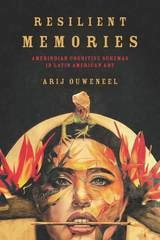
Resilient Memories
Amerindian Cognitive Schemas in Latin American ArtArij Ouweneel
The Ohio State University Press, 2018
Exploring works ranging in popularity, from Alfonso Cuarón’s Y Tu Mamá También to the paintings of Peruvian artists Claudia Coca and Jorge Miyagui, and from Mexican Zapatistas to hip-hop, Ouweneel details the ways in which artists interact with the embodied memory of the community but also assert their own place within it as crucial, furthering their audiences’ understanding of and interaction with existing cultural schemas. In this way, Ouweneel shows that memories must serve the present or they will be forgotten.

Resistance to Innovation
Its Sources and ManifestationsShaul Oreg and Jacob Goldenberg
University of Chicago Press, 2015
Shaul Oreg and Jacob Goldenberg bring the insights of marketing and organizational behavior to bear on the attitudes and behaviors of the remaining 80 percent who resist innovation. The authors identify two competing definitions of resistance: In marketing, resistance denotes a reluctance to adopt a worthy new product, or one that offers a clear benefit and carries little or no risk. In the field of organizational behavior, employees are defined as resistant if they are unwilling to implement changes regardless of the reasons behind their reluctance. Seeking to clarify the act of rejecting a new product from the reasons—rational or not—consumers may have for doing so, Oreg and Goldenberg propose a more coherent definition of resistance less encumbered by subjective, context-specific factors and personality traits. The application of this tighter definition makes it possible to disentangle resistance from its sources and ultimately offers a richer understanding of consumers’ underlying motivations. This important research is made clear through the use of many real-life examples.
Resisting Dialogue
Modern Fiction and the Future of DissentJuan Meneses
University of Minnesota Press, 2019
A bold new critique of dialogue as a method of eliminating dissent
Is dialogue always the productive political and communicative tool it is widely conceived to be? Resisting Dialogue reassesses our assumptions about dialogue and, in so doing, about what a politically healthy society should look like. Juan Meneses argues that, far from an unalloyed good, dialogue often serves as a subtle tool of domination, perpetuating the underlying inequalities it is intended to address.
Meneses investigates how “illusory dialogue” (a particular dialogic encounter designed to secure consensus) is employed as an instrument that forestalls—instead of fostering—articulations of dissent that lead to political change. He does so through close readings of novels from the English-speaking world written in the past hundred years—from E. M. Forster’s A Passage to India and Jeanette Winterson’s The Passion to Indra Sinha’s Animal’s People and more. Resisting Dialogue demonstrates how these novels are rhetorical exercises with real political clout capable of restoring the radical potential of dialogue in today’s globalized world. Expanding the boundaries of postpolitical theory, Meneses reveals how these works offer ways to practice disagreement against this regulatory use of dialogue and expose the pitfalls of certain other dialogic interventions in relation to some of the most prominent questions of modern history: cosmopolitanism at the end of empire, the dangers of rewriting the historical record, the affective dimension of neoliberalism, the racial and nationalist underpinnings of the “war on terror,” and the visibility of environmental violence in the Anthropocene.
Ultimately, Resisting Dialogue is a complex, provocative critique that, melding political and literary theory, reveals how fiction can help confront the deployment of dialogue to preempt the emergence of dissent and, thus, revitalize the practice of emancipatory politics.
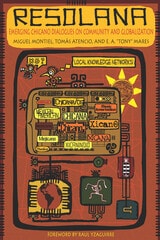
Resolana
Emerging Chicano Dialogues on Community and GlobalizationMiguel Montiel
University of Arizona Press, 2009
Coming from diverse backgrounds in social work, sociology, public administration, literature, history, and education, three modern resolaneros take the twin concepts of resolana and el oro del barrio on a breathtaking journey from their rural roots to their application in an urban setting and on to a holistic view of globalization. The authors offer a humane perspective on transborder cultures and all communities struggling to maintain their cultural and linguistic identities. They share an optimistic view of how ordinary people everywhere can take back control of their own destinies. This book is about uncovering subjugated knowledge—el oro del barrio—through resolana, a dynamic process of thought and action.
Resolana will inspire dialogue and creativity from those interested in sociology, political science, social work, and Chicano studies, as well as public-policy makers and the general public.
Resonant Dissonance
The Russian Joke in Cultural ContextSeth Graham
Northwestern University Press, 2009
Resonant Violence
Affect, Memory, and Activism in Post-Genocide SocietiesKerry Whigham
Rutgers University Press, 2022
Respawn
Gamers, Hackers, and Technogenic LifeColin Milburn
Duke University Press, 2018
Restaurant Republic
The Rise of Public Dining in BostonKelly Erby
University of Minnesota Press, 2016
Before the 1820s, the vast majority of Americans ate only at home. As the nation began to urbanize and industrialize, home and work became increasingly divided, resulting in new forms of commercial dining.
In this fascinating book, Kelly Erby explores the evolution of such eating alternatives in Boston during the nineteenth century. Why Boston? Its more modest assortment of restaurants, its less impressive—but still significant—expansion in commerce and population, and its growing diversity made it more typical of the nation’s other urban centers than New York. Restaurants, clearly segmented along class, gender, race, ethnic, and other lines, helped Bostonians become more comfortable with deepening social stratification in their city and young republic even as the experience of eating out contributed to an emerging public consumer culture.
Restaurant Republic sheds light on how commercial dining both reflected and helped shape growing fragmentation along lines of race, class, and gender—from the elite Tremont House, which served fashionable French cuisine, to such plebeian and ethnic venues as oyster saloons and Chinese chop suey houses. The epilogue takes us to the opening, in 1929 near Boston, of the nation’s first Howard Johnson’s and that restaurant’s establishment as a franchise in the next decade. The result is a compelling story that continues to shape America.
Resurgency
Outlasting the War on Terror in IraqKali Rubaii
Duke University Press, 2026
In Resurgency, Kali Rubaii offers detailed ethnographic insight into how decades of war have affected everyday life in Iraq. Drawing on fieldwork in Anbar province and Iraqi Kurdistan in 2014–15 and 2021–24, Rubaii foregrounds the practices of displaced people who stubbornly outlast their occupiers, returning to homes that feel estranging, repairing war-damaged land, and surviving into futures to which they have been disinvited. Following Anbari farmers in their struggle to counter the social and environmental fallout from toxic military waste, depleted ecosystems, and transformed political economies, Resurgency expands the temporal and descriptive categories of what war is—and what resistance looks like. By asking what actions and dispositions make sense when conditions of survival are diminished, and when today may be better than tomorrow, Rubaii offers new methods and insights to those concerned about the possibilities of life amid environmental devastation, mass displacement, and the slow violence of the forever wars.
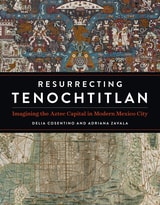
Resurrecting Tenochtitlan
Imagining the Aztec Capital in Modern Mexico CityDelia Cosentino and Adriana Zavala
University of Texas Press, 2023
Honorable Mention, ALAA-Arvey Foundation Book Award, Association of Latin American Art
Finalist, 2024 Charles Rufus Morey Book Award, College Art Association
How Mexican artists and intellectuals created a new identity for modern Mexico City through its ties to Aztec Tenochtitlan.
After archaeologists rediscovered a corner of the Templo Mayor in 1914, artists, intellectuals, and government officials attempted to revive Tenochtitlan as an instrument for reassessing Mexican national identity in the wake of the Revolution of 1910. What followed was a conceptual excavation of the original Mexica capital in relation to the transforming urban landscape of modern Mexico City.
Revolutionary-era scholars took a renewed interest in sixteenth century maps as they recognized an intersection between Tenochtitlan and the foundation of a Spanish colonial settlement directly over it. Meanwhile, Mexico City developed with modern roads and expanded civic areas as agents of nationalism promoted concepts like indigenismo, the embrace of Indigenous cultural expressions. The promotion of artworks and new architectural projects such as Diego Rivera’s Anahuacalli Museum helped to make real the notion of a modern Tenochtitlan. Employing archival materials, newspaper reports, and art criticism from 1914 to 1964, Resurrecting Tenochtitlan connects art history with urban studies to reveal the construction of a complex physical and cultural layout for Mexico’s modern capital.
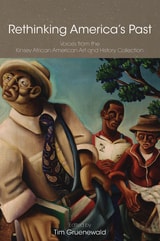
Rethinking America's Past
Voices from the Kinsey African American Art and History CollectionEdited by Tim Gruenewald
University of Minnesota Press, 2019
Among the first scholarly books dedicated to a private African American collection, Rethinking America’s Past: Voices from the Kinsey African American Art and History Collection both chronicles the reach of this important cultural collection and contributes to its project by sharing selected objects and stories with a broader audience. Essays range in subject from iconic African American artists, such as Loïs Mailou Jones and Beauford Delaney, to important historical figures such as Frederick Douglas and Martin Luther King, to individuals whose experiences might be lost to history but for the found objects that preserve their stories. Rethinking America’s Past demonstrates how the African American story, from slavery through the present, is represented and can be actively remembered through the act of collecting.
Rethinking America’s Past will appeal to audiences interested in African American history as well as art history, but its real power is in linking the two, showing how important collections are in constructing and repairing historical narratives, and how in the words of editor Tim Gruenewald, “Collecting overlooked aspects of our past and sharing such collections enables a deeper understanding of the present moment, and facilitates a more inclusive and just future.”

Rethinking American Music
Edited by Tara Browner and Thomas L. Riis
University of Illinois Press, 2019
Rethinking Ethos
A Feminist Ecological Approach to RhetoricEdited by Kathleen J. Ryan, Nancy Myers, and Rebecca Jones
Southern Illinois University Press, 2016
Editors Kathleen J. Ryan, Nancy Myers, and Rebecca Jones identify three rhetorical maneuvers that characterize ethos in the feminist ecological imaginary: ethe as interruption/interrupting, ethe as advocacy/advocating, and ethe as relation/relating. Each section of the book explores one of these rhetorical maneuvers. An afterword gathers contributors’ thoughts on the collection’s potential impact and influence, possibilities for future scholarship, and the future of feminist rhetorical studies.
With its rich mix of historical examples and contemporary case studies, Rethinking Ethos offers a range of new perspectives, including queer theory, transnational approaches, radical feminism, Chicana feminism, and indigenous points of view, from which to consider a feminist approach to ethos.

Rethinking Expertise
Harry Collins and Robert Evans
University of Chicago Press, 2007
What does it mean to be an expert? In Rethinking Expertise, Harry Collins and Robert Evans offer a radical new perspective on the role of expertise in the practice of science and the public evaluation of technology.
Collins and Evans present a Periodic Table of Expertises based on the idea of tacit knowledge—knowledge that we have but cannot explain. They then look at how some expertises are used to judge others, how laypeople judge between experts, and how credentials are used to evaluate them. Throughout, Collins and Evans ask an important question: how can the public make use of science and technology before there is consensus in the scientific community? This book has wide implications for public policy and for those who seek to understand science and benefit from it.
“Starts to lay the groundwork for solving a critical problem—how to restore the force of technical scientific information in public controversies, without importing disguised political agendas.”—Nature
“A rich and detailed ‘periodic table’ of expertise . . . full of case studies, anecdotes and intriguing experiments.”—Times Higher Education Supplement (UK)
Rethinking Sustainability
Power, Knowledge, and InstitutionsJonathan Harris, Editor
University of Michigan Press, 2003
Any theory of sustainable development must take into account economic, social, and environmental dimensions. Until recently, the question "What is development?" was often answered predominantly from the economist's perspective, with high priority being assigned to expansion of economic output. Social, political, institutional, and ethical aspects have often been neglected. But now that sustainable development has become a broadly accepted concept, it is impossible to maintain a narrowly economistic view of development. For this reason, the varied perspectives offered by the contributors to this volume are crucial to understanding the process of development as it relates to environmental sustainability and human well-being.
The selection of articles is meant to be stimulating and provocative rather than comp-rehensive. They are roughly divided between those dealing with broad theoretical issues concerning the economic, political, and social aspects of development (Part I) and those presenting more applied analysis (Part II). The common thread is a concern for examining which factors contribute to making development socially just and environmentally sound.
Rethinking Sustainability will be of interest to economists and social scientists, development professionals, and instructors seeking to offer their students a broad perspective on development issues.
Jonathan Harris is Senior Research Associate, Global Development and Environment Institute at Tufts University, as well as Adjunct Associate Professor of International Economics at Tufts University Fletcher School of Law.
Retuning Culture
Musical Changes in Central and Eastern EuropeMark Slobin
Duke University Press, 1996
During the period of state socialism, both the reinterpretation of the folk music heritage and the domestication of Western forms of music offered ways to resist and redefine imposed identities. With the removal of state control and support, music was free to channel and to shape emerging forms of cultural identity. Stressing both continuity and disjuncture in a period of enormous social and cultural change, this volume focuses on the importance and evolution of traditional and popular musics in peasant communities and urban environments in Hungary, Poland, Romania, Russia, the Czech Republic, Ukraine, the former Yugoslavia, Macedonia, and Bulgaria. Written by longtime specialists in the region and considering both religious and secular trends, these essays examine music as a means of expressing diverse aesthetics and ideologies, participating in the formation of national identities, and strengthening ethnic affiliation.
Retuning Culture provides a rich understanding of music’s role at a particular cultural and historical moment. Its broad range of perspectives will attract readers with interests in cultural studies, music, and Central and Eastern Europe.
Contributors. Michael Beckerman, Donna Buchanan, Anna Czekanowska, Judit Frigyesi, Barbara Rose Lange, Mirjana Lausevic, Theodore Levin, Margarita Mazo, Steluta Popa, Ljerka Vidic Rasmussen, Timothy Rice, Carol Silverman, Catherine Wanner
Return from the World
Economic Growth and Reverse Migration in BrazilGregory Duff Morton
University of Chicago Press, 2024
In Return from the World, anthropologist Gregory Duff Morton traces the migrations of Brazilian workers who leave a thriving labor market and return to their home villages to become peasant farmers. Morton seeks to understand what it means to turn one’s back deliberately on the promise of economic growth.
Giving up their positions in factories, at construction sites, and as domestic workers, these migrants travel thousands of miles back to villages without running water or dependable power. There, many take up subsistence farming. Some become activists with the MST, Brazil’s militant movement of landless peasants. Bringing their stories vividly to life, Morton dives into the dreams and disputes at play in finding freedom in the shared rejection of growth.