Results by title
5550 books match the query 'Biography & Autobiography' and 229 start with r

Ring Lardner - American Writers 49
University of Minnesota Pamphlets on American WritersOtto Friedrich
University of Minnesota Press, 1965
Ring Lardner - American Writers 49 was first published in 1965. Minnesota Archive Editions uses digital technology to make long-unavailable books once again accessible, and are published unaltered from the original University of Minnesota Press editions.
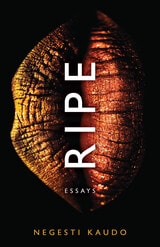
Ripe
EssaysNegesti Kaudo
The Ohio State University Press, 2022
A LitHub Most Anticipated Book of 2022
“Emotional range without consequence,” Negesti Kaudo writes in her debut collection, Ripe, is a privilege of whiteness. In these essays, she fights back, exhorting readers to follow her through fury, grief, love, and hope as she confronts what it means to own her Blackness and her body in contemporary America. A scathing and nuanced cultural critic, she disentangles intersections of race, class, pop culture, size, sexuality, and more in spaces where she always seems to be either too Black or not Black enough. From attending private school as a poor Black student to the evolution of her hair routine to being fat and sexual when society says she should be neither, Kaudo overlooks nothing as she names the ways that white America simultaneously denigrates and steals Black culture. Most of all, she writes against the idea that a Black woman’s anger makes her an “angry Black woman,” claiming full emotional range as her birthright and as a tool against injustice on her quest to find herself no matter how uncomfortable the journey.
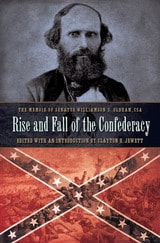
Rise and Fall of the Confederacy
The Memoir of Senator Williamson S. Oldham, CSAEdited & Intro by Clayton E. Jewett
University of Missouri Press, 2006
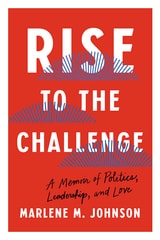
Rise to the Challenge
A Memoir of Politics, Leadership, and LoveJohnson
University of Minnesota Press, 2024
The inspiring life story of Minnesota’s first woman lieutenant governor: breaking political ground, navigating patriarchal tradition, and persevering through great personal loss
Marking a milestone for women in state government, Marlene M. Johnson became Minnesota’s first woman lieutenant governor under Rudy Perpich’s gubernatorial administration in January 1983. That same year, she met her husband, Peter, and their deeply loving relationship profoundly sustained her for twenty-seven years. Rise to the Challenge weaves these personal and professional stories together in a courageous portrait of dedication and leadership.
Growing up in rural Minnesota, Johnson began organizing and advocating for change early, beginning with a campaign to introduce foreign languages into her high school curriculum. Pursuing a deeply felt commitment to improving the lives of others, she continued to sharpen her leadership skills throughout her life, participating in activist work in college, cofounding organizations to support women entrepreneurs and politicians, and eventually running an international education nonprofit.
A stalwart supporter, her husband gave Marlene strength and encouragement to face the challenges of the political landscape and its gender biases. Then, in 2010, he suffered a traumatic brain injury that would change both of their lives. Learning how to be a medical advocate and, eventually, facing the sorrow of Peter’s death, Marlene relied on the hard-fought resilience and belief in herself that Peter had helped her to develop.
A story of learning and leadership in politics, business, and public service, Rise to the Challenge is a moving portrayal of spirit, perseverance, and grace in the face of daunting personal challenges, supported by unwavering faith in the public good.
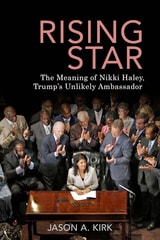
Rising Star
The Meaning of Nikki Haley, Trump’s Unlikely AmbassadorJason A. Kirk
University of Arkansas Press, 2021
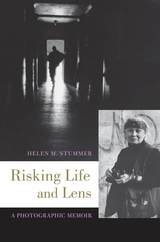
Risking Life and Lens
A Photographic MemoirHelen M. Stummer
Temple University Press, 2017
For more than forty years, Helen M. Stummer has captured images depicting the dignity, humanity, and suffering of people living in conditions of poverty. Her efforts taught her to understand firsthand the resilience of people living in insufferable conditions. In her inspiring memoir, Risking Life and Lens, Stummer recounts her experiences as a socially-concerned documentary photographer whose passion for her work overcame her fears.
Stummer’s images, from the mean streets of Manhattan and Newark, New Jersey, to the back woods of Maine and the mountains of Guatemala, expose the myths of poverty and serve as a metaphor for her challenges in her own life. The 159 photographs reproduced here recount Stummer’s journey as an artist and her personal quest for truth.
Risking Life and Lens shares Stummer’s work and educational efforts and it provides valuable insights about race, class, and social justice—issues that continue to divide the country and the world. Her work has created change in both her own life and the lives of those who view it.

River Fever
Adventures on the Mississippi, 1969-1972Will Bagley
Signature Books, 2019
Beginning in the spring of 1969, Huckleberry Finn inspired a question: Could you build a raft, float down the Mississippi River to New Orleans, and on the way learn something about America and its peoples? Will Bagley, a vagrant longhair and future prize-winning western historian, and his friends could, and did. Now, a half century after the adventure, Bagley tells his story.

River Fever
Adventures on the Mississippi, 1969-1972Will Bagley
Signature Books, 2019
Beginning in the spring of 1969, Huckleberry Finn inspired a question: Could you build a raft, float down the Mississippi River to New Orleans, and on the way learn something about America and its peoples? Will Bagley, a vagrant longhair and future prize-winning western historian, and his friends could, and did. Now, a half century after the adventure, Bagley tells his story.
River of Books
Donna Seaman
Prickly Paradigm Press, 2024
With the infectious curiosity of an inveterate bibliophile and the prose of a fine stylist, Donna Seaman charts the course of her early reading years in a book-by-book chronicle of the significance books have held in her life. River of Books recounts Seaman’s journey in becoming an editor for Booklist, a reviewer, an author, and a literary citizen, and lays bare how she nourished both body and soul in working with books. Seaman makes palpable the power and self-recognition that she discovered in a life dedicated to reading.

Roads to Rome
A Guide to Notable Converts from Britain and Ireland from the Reformation to theJohn Beaumont
St. Augustine's Press, 2010
To be a Christian is to be a convert. The word “convert” applies in a real sense both to cradle-born Catholics and to those, traditionally regarded as converts, who become Catholics as adults. The Catholic Church is the divinely established framework of the program of a conversion, which Christ presented as a thorough change of mind and heart (metanoia). While for a cradle-born Catholic the implementation of that program is usually a gradual process, for converts it contains a momentous act as they vote, so to speak, with their feet, on behalf of Truth, by joining the Church as the One True Fold, the Sole Ark of Salvation, to recall hallowed phrases dear to John Henry Newman, easily the greatest convert during the nineteenth century.
The aim of this book is to summarize the lives of notable converts from Britain and Ireland and explain (by reference to quotations from their writings) why they entered the Catholic Church. These reasons were many. Some looked chiefly at history and saw the apostolic Church in their day to be residing in the Catholic communion. Others, though appreciating the fact of the gift of faith, saw reason as the chief support of the step they were taking. To yet others it was the endurance of both the Church and that remarkable office of the papacy that proved the necessary stimulus. Many were inspired by the witness of some unsung saint in their neighbourhood. Some were eminent even before their “move to Rome,” others almost completely unknown. Some found fame on their conversion, others suffered greatly for their zeal for the one true fold of Christ. Some came into the Church relatively early in life, others entered at the final hour, even while on their death bed.
Taken altogether these accounts provide a profound and moving witness to the operation of divine grace in human souls.
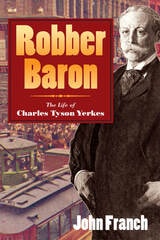
Robber Baron
The Life of Charles Tyson YerkesJohn Franch
University of Illinois Press, 2006
Robert Ashley
Kyle Gann
University of Illinois Press, 2012
Robert B. Heilman and Eric Voegelin
A Friendship in Letters, 1944-1984Edited & Intro by Charles R. Embry & Foreword by Champlin B. Heilman
University of Missouri Press, 2004
Heilman and Voegelin first became acquainted around 1941, when Voegelin delivered a guest lecture for the political science department at Louisiana State University. At that time, Heilman was teaching in the English department at LSU along with Robert Penn Warren and Cleanth Brooks. What began as simple exchanges after Voegelin moved to LSU soon grew into full-fledged correspondence—beginning with an eight-page letter by Voegelin commenting on Heilman’s manuscripton Shakespeare’s King Lear. Their correspondence lasted until four months before Voegelin’s death in January 1985.
These letters represent Voegelin’s most prolonged correspondence with a native-born American scholar and provide readers with an insight into Voegelin as a literary critic. While Voegelin’s analysis of Henry James’s The Turn of the Screw is well known, these letters reveal the context from which the analysis grew. Additional comments by Voegelin on Mann, Eliot, Shakespeare, Homer, Proust, Flaubert, and other significant writers are uncovered throughout his exchanges with Heilman.
Readers will appreciate not only Heilman’s elegant style but also his efforts to clarify for himself the meaning and implications of Voegelin’s developing philosophy. Heilman’s questions are often ones that readers of Voegelin continue to ask today. In his queries, as well as in the exposition of his theories of tragedy and melodrama, human nature, and expressionist drama, Heilman displays a canny perception of the philosophical issues and problems of modernity that sustained their interdisciplinary discussion. The letters exchanged by Robert B. Heilman and Eric Voegelin demonstrate the warm friendship these two scholars shared and illuminate many of the turns and transformations in their work as they developed as thinkers.
Robert C. Byrd
Child of the Appalachian CoalfieldsRobert C. Byrd
West Virginia University Press, 2010
This autobiography follows United States Senator Robert C. Byrd’s experiences from his boyhood in the early 1920s to his election in 2000, which won him an unprecedented eighth term in the Senate. Along the way, Senator Byrd offers commentary on national and international events that occurred throughout his long life in public service. Senator Byrd’s journey from the hardscrabble coalfields to the marbled halls of Congress has inspired generations of people in West Virginia and throughout the nation. From reading the stories of the Founding Fathers as a young boy by the light of a kerosene lamp to the swearing of an oath for more than a half-century to guard the United States Constitution, Senator Byrd’s life is legendary. Byrd always stands by his principles, earning the affection of the people of his home state and the respect of Americans from all walks of life. With his beloved Erma ever by his side, Robert C. Byrd has never forgotten his roots, harkening back to those early lessons that he learned as a child of the Appalachian coalfields.
Robert C. Byrd
Child of the Appalachian CoalfieldsROBERT C. BYRD
West Virginia University Press, 2015
This autobiography follows West Virginia senator Robert C. Byrd’s experiences from his boyhood in the early 1920s to his election in 2000, which won him an unprecedented eighth term in the Senate. Within these pages, Senator Byrd offers commentary on national and international events that occurred throughout his long life in public service.
His journey from the hardscrabble coalfields to the marbled halls of Congress has inspired generations of people in West Virginia and throughout the nation. From reading the stories of the Founding Fathers as a young boy by the light of a kerosene lamp to the swearing of an oath for more than a half-century to guard the US Constitution, Senator Byrd’s life is legendary.
Until his death on June 28, 2010, Byrd stood by his principles, earning the affection of the people of his home state and the respect of Americans from all walks of life. With his beloved Erma ever by his side, Robert C. Byrd never forgot his roots, harkening back to those early lessons that he learned as a child of the Appalachian coalfields.
This new paperback edition includes a foreword by Gaston Caperton, governor of West Virginia from 1989–1997.
Robert Clifton Weaver and the American City
The Life and Times of an Urban ReformerWendell E. Pritchett
University of Chicago Press, 2008
Tracing Weaver’s career through the creation, expansion, and contraction of New Deal liberalism, Wendell E. Pritchett illuminates his instrumental role in the birth of almost every urban initiative of the period, from public housing and urban renewal to affirmative action and rent control. Beyond these policy achievements, Weaver also founded racial liberalism, a new approach to race relations that propelled him through a series of high-level positions in public and private agencies working to promote racial cooperation in American cities. But Pritchett shows that despite Weaver’s efforts to make race irrelevant, white and black Americans continued to call on him to mediate between the races—a position that grew increasingly untenable as Weaver remained caught between the white power structure to which he pledged his allegiance and the African Americans whose lives he devoted his career to improving.
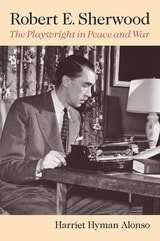
Robert E. Sherwood
The Playwright in Peace and WarHarriet Hyman Alonso
University of Massachusetts Press, 2007
One of the nation's first film critics, an acclaimed speechwriter on his own and for President Franklin D. Roosevelt, a propagandist during World War II, and a leading producer on Broadway, Robert E. Sherwood scripted some of the most popular plays and films of his day, including Waterloo Bridge, The Best Years of Our Lives, Idiot's Delight, Abe Lincoln in Illinois, and Rebecca. His work brought him four Pulitzer Prizes and an Oscar. In his personal life, however, he was driven by a deep conviction that war was a societal evil that must be eradicated and human rights a moral responsibility that all governments should protect. At times, his belief in pacifism and his commitment to defending freedom and justice came into conflict with each other, causing frustration and emotional trauma which found their way into his writings and actions.
In this book, Harriet Hyman Alonso unravels Sherwood's inner struggle and portrays his political journey. Relying largely on his letters, diaries, plays, films, essays, and biography of Roosevelt and Harry Hopkins, she traces Sherwood's obsession with the world of politics and its effects on his life and art, from his experience as a soldier in World War I to the Cold War. She also describes his participation in the Algonquin Round Table, his friendships and working relationships with such notables as Alfred Lunt, Lynn Fontanne, Edna Ferber, Spencer Tracy, Harry Hopkins, and Franklin D. Roosevelt, his two marriages and uneasy relationship with his daughter, and his leadership role in the Broadway community.
Alonso brings together history, theater and film studies, and peace studies in this interdisciplinary political biography. In the process, she illuminates major currents in U.S. foreign policy, society, and culture from 1896 to 1955—the years of the remarkable life of Robert E. Sherwood.
Robert Estienne's Influence on Lexicography
By DeWitt T. Starnes
University of Texas Press, 1963
Towering above printers of his time and their successors for many years afterward was the figure of Robert Estienne, the great French lexicographer of the sixteenth century, whose contribution to knowledge and its dissemination is the subject of this authoritative book. The span of Robert Estienne's life (1503–1559) encompassed the historical epochs and events which shaped his career: the Renaissance, the Reformation, and the invention of printing by movable type. His keen interest in the revival of ancient literatures and languages and his training in the art of printing pointed the road he would travel, and the climate of opinion in the Reformation determined his destiny.
Robert Estienne promoted classical learning by printing the works of good authors; to spread knowledge of ancient literature he compiled dictionaries and grammars which were adopted by most of the universities of Europe. His dictionary of proper names of Biblical and classical origin, the Dictionarium historicum ac poeticum, became one of the great source books for later compilers of dictionaries and for authors. His influence on English writers was pervasive. Ben Jonson showed familiarity with his texts; Spenser and Milton sometimes set trarislations of his phraseology directly into their poetry. Perpetuation of the few errors he made is one sure proof that his dictionaries were used and copied.
An exemplar of learning in the classics and scripture, he searched in ancient manuscripts to avoid repeating the numerous errors that had crept into Bible translations over hundreds of years. For his efforts he was called a heretic by docteurs de theologie in the Sorbonne, but was protected by the royal favor of Francis I of France. Between attacks of theologians on the one side and the King's protection on the other, he became a "controversial" figure and after many years of calumny and persecution finally took refuge in Geneva.
Estienne established a family tradition of printing correct and beautiful books, and the printing establishments which made the name of Estienne celebrated throughout the world continued for 162 years.
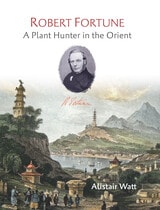
Robert Fortune
A Plant Hunter in the OrientAlistair Watt
Royal Botanic Gardens, Kew, 2016
This is the first full biography of Fortune, and it uses substantial un-studied materials, detailing his travels, collections, and more, and featuring the first maps ever produced that track his collecting itineraries in China. Alistair Watt, a plant hunter himself, brings Fortune to life, showing us how he traveled in disguise in China, and clearing up some misconceptions about his role as a scout for a possible tea industry in the United States. The result is a rounded portrait of an extraordinary man, his times, and his lasting contribution to horticultural knowledge.
Robert Frost - American Writers 2
University of Minnesota Pamphlets on American WritersLawrance Thompson
University of Minnesota Press, 1959
Robert Frost - American Writers 2 was first published in 1959. Minnesota Archive Editions uses digital technology to make long-unavailable books once again accessible, and are published unaltered from the original University of Minnesota Press editions.
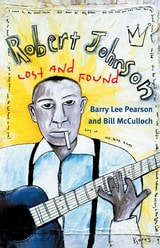
Robert Johnson
Lost and FoundBarry Lee Pearson and Bill McCulloch
University of Illinois Press, 2002
Even with just forty-one recordings to his credit, Robert Johnson (1911-38) is a towering figure in the history of the blues. His vast influence on twentieth-century American music, combined with his mysterious death at the age of twenty-seven, still encourage the speculation and myth that have long obscured the facts about his life. The most famous legend depicts a young Johnson meeting the Devil at a dusty Mississippi crossroads at midnight and selling his soul in exchange for prodigious guitar skills.
Barry Lee Pearson and Bill McCulloch examine the full range of writings about Johnson and weigh the conflicting accounts of Johnson's life story against interviews with blues musicians and others who knew the man. Their extensive research uncovers a life every bit as compelling as the fabrications and exaggerations that have sprung up around it. In examining the bluesman's life and music, and the ways in which both have been reinvented and interpreted by other artists, critics, and fans, Robert Johnson: Lost and Found charts the cultural forces that have mediated the expression of African American artistic traditions.
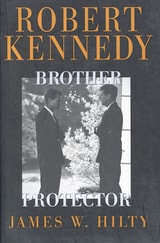
Robert Kennedy
Brother ProtectorJames Hilty
Temple University Press, 2000
The centerpiece of the book is the remarkable political partnership that formed between Robert and John. As the manager of John's political campaigns Robert proved himself "hard as nails" (in his father's admiring words), relentless in securing his brother's victory and unforgiving in overseeing his brother's presidency. Hilty marshals a great deal of evidence to show that while they did not always see eye to eye -- Lyndon Johnson's selection as John's running mate being a notable disagreement -- Robert and John discussed virtually every issue, gauging the likely political effects of every position. Robert was so close to the President that insiders called him "number one and a-half"; their consultations were so intimate that they spoke in a kind of code, barely intelligible to those around them. In Hilty's evocative but unsentimental recounting of the political crises of the Kennedy Administration, Robert and John prove to have been more calculating and astute leaders than today's pundits allow. Theirs was a partnership that was unprecedented and, thanks to an act signed into law by Lyndon Johnson, is never to be equaled.
The Kennedy family's story seems to have been lived in the public eye and Americans apparently never tire of the photographs and familiar anecdotes. Most of the written accounts, however, either highlight the multiple tragedies and scandals, preserve the latter-day Camelot myth, or follow the elusive traces of some conspiracy.
In contrast, Hilty's concern is for historical perspective -- for accuracy, plausibility, and thoroughness. With facts and reasoned conclusions, he challenges the stories about the Kennedys in relation to Marilyn Monroe, J. Edgar Hoover, and Martin Luther King, Jr. that have passed into American folklore. He develops a portrait of Robert Kennedy as a complex public figure, a man of centrist political allegiances and firm moral convictions who easily adapted to the crusader's role in working for Joseph McCarthy or pursuing James Hoffa for racketeering. Hilty's great care in sifting through the evidence and weighing competing theories gives us a sense of Kennedy as a public servant whose dedication to social justice intensified after he was in office and further deepened after his brother's assassination.
Even as he took charge of family matters and supported Jacqueline during the long ordeal of the state funeral, Robert's own crushing pain was evident to the world. It was then that "Bobby" ceased being a disparaging term and became a mark of respect and affection.
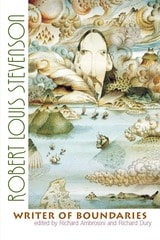
Robert Louis Stevenson
Writer of BoundariesEdited by Richard Ambrosini and Richard Dury
University of Wisconsin Press, 2006
Robert Louis Stevenson: Writer of Boundaries reinstates Stevenson at the center of critical debate and demonstrates the sophistication of his writings and the present relevance of his kaleidoscopic achievements. While most young readers know Robert Louis Stevenson (1850–1894) as the author of Treasure Island, few people outside of academia are aware of the breadth of his literary output. The contributors to Robert Louis Stevenson: Writer of Boundaries look, with varied critical approaches, at the whole range of his literary production and unite to confer scholarly legitimacy on this enormously influential writer who has been neglected by critics.
As the editors point out in their Introduction, Stevenson reinvented the “personal essay” and the “walking tour essay,” in texts of ironic stylistic brilliance that broke completely with Victorian moralism. His first full-length work of fiction, Treasure Island, provocatively combined a popular genre (subverting its imperialist ideology) with a self-conscious literary approach.
Stevenson, one of Scotland’s most prolific writers, was very effectively excluded from the canon by his twentieth-century successors and rejected by Anglo-American Modernist writers and critics for his play with popular genres and for his non-serious metaliterary brilliance. While Stevenson’s critical recognition has been slowly increasing, there have been far fewer published single-volume studies of his works than those of his contemporaries, Henry James and Joseph Conrad.
Robert Lowell - American Writers 92
University of Minnesota Pamphlets on American WritersJay Martin
University of Minnesota Press, 1970
Robert Lowell - American Writers 92 was first published in 1970. Minnesota Archive Editions uses digital technology to make long-unavailable books once again accessible, and are published unaltered from the original University of Minnesota Press editions.
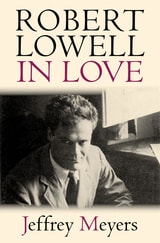
Robert Lowell in Love
Jeffrey Meyers
University of Massachusetts Press, 2016
Lowell's charismatic personality, compelling poetry, and literary fame attracted lovers and friends who were both frightened and excited by his aura of brilliance and danger. He loved the idea of falling in love, and in his recurring manic episodes he needed women at the center of his emotional and artistic life. Each affair became an intense dramatic episode. Though he idealized his loves and encouraged their talents, his frenetic affairs and tortured marriages were always conducted on his own terms. Robert Lowell in Love tells the story of the poet in the grip of love and gives voice to the women who loved him, inspired his poetry, and suffered along with him.
Robert Lowell's Life and Work
Damaged GrandeurRichard Tillinghast, Editor
University of Michigan Press, 1995

Robert M. Hutchins
Portrait of an EducatorMary Ann Dzuback
University of Chicago Press, 1991
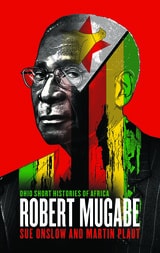
Robert Mugabe
Sue Onslow
Ohio University Press, 2018
Zimbabwe’s President Robert Mugabe sharply divides opinion and embodies the contradictions of his country’s history and political culture. As a symbol of African liberation and a stalwart opponent of white rule, he was respected and revered by many. This heroic status contrasted sharply, in the eyes of his rivals and victims, with repeated cycles of gross human rights violations. Mugabe presided over the destruction of a vibrant society, capital flight, and mass emigration precipitated by the policies of his government, resulting in his demonic image in Western media.
This timely biography addresses the coup, led by some of Mugabe’s closest associates, that forced his resignation after thirty-seven years in power. Sue Onslow and Martin Plaut explain Mugabe’s formative experiences as a child and young man; his role as an admired Afro-nationalist leader in the struggle against white settler rule; and his evolution into a political manipulator and survivalist. They also address the emergence of political opposition to his leadership and the uneasy period of coalition government. Ultimately, they reveal the complexity of the man who stamped his personality on Zimbabwe’s first four decades of independence.
Robert Penn Warren - American Writers 44
University of Minnesota Pamphlets on American WritersPaul West
University of Minnesota Press, 1964
Robert Penn Warren - American Writers 44 was first published in 1964. Minnesota Archive Editions uses digital technology to make long-unavailable books once again accessible, and are published unaltered from the original University of Minnesota Press editions.
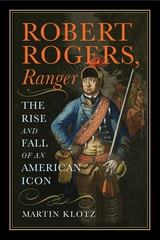
Robert Rogers, Ranger
The Rise and Fall of an American IconMartin Klotz
Westholme Publishing, 2026
Robert Rogers, Ranger: The Rise and Fall of an American Icon by Martin Klotz is a fresh look at the life of this famous, yet highly flawed man. Rogers undeniably had great personal strengths. He was brave nearly to the point of fearlessness. He was physically robust, always the one to cover the retreat, carry the wounded, or go for help when no one else could carry on. He was an intrepid explorer who wrote with eloquence about the splendors of the American frontier. He was bold and unconventional, good at thinking outside the box. He was an outstanding scout and intelligence gatherer who provided invaluable service to a British army inexperienced in woodland warfare. At the same time Rogers had enormous weaknesses that undermined his ability to lead effectively. His boldness was never tempered by judgment, and he was prone to grandiose schemes that came to nothing or, worse, to disaster. His constant self-promotion—including embellishing and lying about his battlefield successes—contributed to his popularity but damaged his reputation with peers and superiors. He succumbed to alcoholism and gambling, was profligate, especially with money—his debts were enormous—and routinely skirted the edges of the law. Rogers never found a comfortable place in America. Instead, his aristocratic patrons in London, who knew him mostly from his own self-description, gave him his most valuable opportunities, including commanding an important military and trading center on the colonial frontier and establishing the Queen’s Rangers to fight alongside Crown forces during the Revolution. But when the British cause failed in America, Rogers became an anathema on both sides of the Atlantic. A fascinating inquiry into an eighteenth-century life, Robert Rogers, Ranger presents this American legend as he lived, crossing the line between fame and misfortune.
Robert Schumann
The Life and Work of a Romantic ComposerMartin Geck
University of Chicago Press, 2012
Robert Wise
ShadowlandsWes D. Gehring
Indiana Historical Society Press, 2012
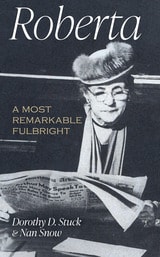
Roberta
A Most Remarkable FulbrightDorothy Stuck
University of Arkansas Press, 1997
Obscured in history by her internationally renowned son, Sen. J. William Fulbright, Roberta Waugh Fulbright was, nonetheless, an extraordinary person deserving of tribute. Here, finally and fittingly, is her biography-a sensitive portrait of a complex woman who was one Arkansas’s dominant figures.
Traditional mother of six children, gardener, thinker, and provocative conversationalist, Roberta Fulbright became a sudden widow at age forty-nine. She eventually took charge of the inherited, fragmented, business holdings, originally assembled by her husband, Jay, and molded them into a multi-enterprise family firm. As such, she emerged as an influential newspaper publisher and columnist, bank president, savvy business owner, and conscientious civic crusader. Through her own self-confidence and canny business sense, she became a formidable competitor in Fayetteville’s male-dominated business establishment. Her resolve was reflected in her signature column in the Northwest Arkansas Times, “As I See It”:
So long as a woman does poorly and the lords of creation can say, “Oh, it’s nothing but a fool woman,” they are fairly content, for they must, every mother’s son of them, have a woman to do much of the work. But let a woman do WELL and she is all but burned at the stake. I will say for the benefit of those who may be interested, I did not choose business as a career, it was thrust upon me. I did choose it in preference to going broke or dissipating my heritage and that of my children.
Intensely interested in politics, Fulbright challenged a corrupt local political machine and, later took on governor, producing a chain of events leading to he4r son’s election to Congress. In her column, she extolled the virtues of women’s talents, and she campaigned for an equal right for women in public life. In doing so, she was a moving force for acknowledgement of women in nontraditional roles, long before feminism became a movement.
Stuck and Snow have produced a brisk, lively story, drawing from a genealogical records, numerous interviews of family members, business associates, and friends, and the almost two million words written by Fulbright in her column. Renowned southern historian Willard B. Gatewood Jr. has said of this work: “I really appreciate [the authors’] treatment of [Roberta] as a person— inquisitive, assertive, benevolent, etc. They have captured superbly the family matriarch, incessant thinker and talker, the indulgent grandmother, and gifted gardener. This is truly a good ‘read’ and represents a highly significant achievement.”
Robinson Crusoe, USN
The Adventures of George R. Tweed Rm1c on Japanese-Held GuamGeorge R. Tweed
Westholme Publishing, 2010
An Inspiring Story of Survival and Friendship
At the same time as the attack on Pearl Harbor, Japan captured American Guam. Given the choice of surrendering or being taken prisoner, George R. Tweed escaped into the countryside. Aided by Chamorro natives who risked their lives to keep him safe, Tweed survived for two and a half years until he was eventually rescued by the U.S. Navy. In Robinson Crusoe, USN, first published in 1945, Tweed recounts his remarkable experiences and the debt of gratitude he held for those who help keep him alive.
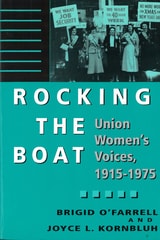
Rocking the Boat
Union Women's Voices, 1915-1975O'Farrell, Brigid
Rutgers University Press, 1996
Rocking the Boat is a celebration of strong, committed women who helped to build the American labor movement. Through the stories of eleven women from a wide range of backgrounds, we experience the turmoil, hardships, and accomplishments of thousands of other union women activists through the period spanning the Great Depression, the New Deal, World War II, the McCarthy era, the civil rights movement, and the women's movement. These women tell powerful stories that highlight and detail women's many roles as workers, trade unionists, and family members. They all faced difficulties in their personal lives, overcame challenges in their unions, and individually and collectively helped improve women's everyday working lives.
Maida Springer-Kemp came from New York City's Harlem, Local 22 of the International Ladies' Garment Workers' Union, to represent the AFL-CIO in Africa. In Chicago, Alice Peurala fought for her job in the steel mill and her place in the steel workers' union. Jessie De La Cruz organized farm workers in California. Esther Peterson, organizer, educator, and lobbyist, became an advisor to four U.S. presidents. In chapters based on oral history interviews, these women and others provide new perspectives and practical advice for today's working women. They share an idealistic and practical commitment to the labor movement. As Dorothy Haener of the United Auto Workers and a founding member of the National Organization of Women said, "You have to take a look at how to rock the boat. You don't want to spill yourself out if you can avoid it, but sometimes you have to rock the boat." From these women we, too, learn how to rock the boat.
Rocky Marciano
The Rock of His TimesRussell Sullivan
University of Illinois Press, 2002
In this captivating and complex portrait of an American sports legend, Russell Sullivan confirms Rocky Marciano's place as a symbol and cultural icon of his era. As much as he embodied the wholesome, rags-to-riches patriotism of a true American hero, he also reflected the racial and ethnic tensions festering behind the country's benevolent facade.
Spirited, fast-paced, and rich in detail, Rocky Marciano is the first book to place the boxer in the context of his times. Capturing his athletic accomplishments against the colorful backdrop of the 1950s fight scene, Sullivan examines how Marciano's career reflected the glamour and scandal of boxing as well as tenor of his times.
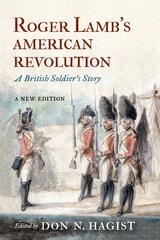
Roger Lamb's American Revolution
A British Soldier's StoryDon N. Hagist
Westholme Publishing, 2022
Of all the British soldiers who served in North America during the American Revolution, none wrote more about his experiences than Roger Lamb. He certainly had a lot to say: his service in two of the most important campaigns—the 1777 Saratoga campaign and the 1781 campaign through the Carolinas to Virginia—put him in the thick of some of the war’s most famous battles. Moreover, he was twice captured and twice escaped, making his way through hostile territory to rejoin the British army. Later in his life he wrote two books chronicling these experiences in great detail. Hundreds of British soldiers went through similar ordeals, sharing in the campaigns, the battles, the captivities, the escapes, but none recounted any aspect of these activities in the level of detail that Lamb did.
The first edition of this book, published in 2004, combined all of Roger Lamb’s first-hand recollections from his two books, An Original and Authentic Journal of Occurrences during the late American War, from its Commencement to the Year 1783 (Dublin, 1809) and Memoir of his Own Life (Dublin, 1811). Since that publication, two more important documents written by Lamb have come to light—an intelligence report written in 1782 recounting details of one of his escapes, and a “commonplace book” kept later in his life to record a vast range of memories, thoughts, and observations. Roger Lamb’s American Revolution: A British Soldier’s Story combines all of the material from these four sources pertaining to Lamb’s career as a soldier, from the time he joined the army to his departure from it, plus his recollections of childhood and post-military life. The result is the most comprehensive first-hand account by a British soldier in the American Revolution, an essential record for understanding the war in its totality.
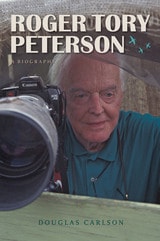
Roger Tory Peterson
A BiographyBy Douglas Carlson
University of Texas Press, 2007
Beginning with his 1934 Field Guide to the Birds, Roger Tory Peterson introduced literally millions of people to the pleasures of observing birds in the wild. His field guide, which has gone through five editions and sold more than four million copies, fostered an appreciation for the natural world that set the stage for the contemporary environmental movement. When Rachel Carson's Silent Spring sounded a warning about the threat to birds and their habitats in the 1960s, the Peterson field guides had already prepared the public and the scientific community to heed the warning and fight to save habitat and protect endangered species—a result that Peterson wholeheartedly approved.
In this authoritative, highly readable biography of Roger Tory Peterson (1908-1996), Douglas Carlson creates a fascinating portrait of the complex, often conflicted man behind the brand name. He describes how Peterson's obsession with birds began in boyhood and continued throughout a multifaceted career as a painter, writer, educator, environmentalist, and photographer. Carlson traces Peterson's long struggle to become both an accomplished bird artist and a scientific naturalist—competing goals that drove Peterson to work to the point of exhaustion and that also deprived him of many aspects of a normal personal life. Carlson also records Peterson's many lasting achievements, from the phenomenal success of the field guides, to the bird paintings that brought him renown as "the twentieth century's Audubon," to the establishment of the Roger Tory Peterson Institute to carry on his work in conservation and education.
Roger Zelazny
F. Brett Cox
University of Illinois Press, 2021
Roger Zelazny combined poetic prose with fearless literary ambition to become one of the most influential science fiction writers of the 1960s. Yet many critics found his later novels underachieving and his turn to fantasy a disappointment. F. Brett Cox surveys the landscape of Zelazny's creative life and contradictions. Launched by the classic 1963 short story "A Rose for Ecclesiastes," Zelazny soon won the Hugo Award for Best Novel with …And Call Me Conrad and two years later won again for Lord of Light. Cox looks at the author's overnight success and follows Zelazny into a period of continued formal experimentation, the commercial triumph of the Amber sword and sorcery novels, and renewed acclaim for Hugo-winning novellas such as "Home Is the Hangman" and "24 Views of Mt. Fuji, by Hokusai." Throughout, Cox analyzes aspects of Zelazny's art, from his preference for poetically alienated protagonists to the ways his plots reflected his determined individualism.
Clear-eyed and detailed, Roger Zelazny provides an up-to-date reconsideration of an often-misunderstood SF maverick.
Rogue Scholar
The Sinister Life and Celebrated Death of Edward H. RulloffRichard W. Bailey
University of Michigan Press, 2003
Richard Bailey's narrative, calm and impartial yet spiked with wit and suspense, captures perfectly the slightly haunted and overwrought air of Victorian rural America, calling on newspaper accounts, interviews, and eyewitness reports of the day. Inevitably, the quiet accumulation of details builds to a story that transcends its individual events to touch on the universal themes of any age.
Rogue Scholar is about the evil of one man who lived a life of deception and crime. Yet in a larger sense it is also the portrait of a condemned soul in its final hours, an examination of the death penalty, and a reminder that media sensationalism is nothing new.
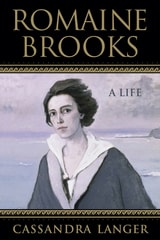
Romaine Brooks
A LifeCassandra Langer
University of Wisconsin Press, 2015
Romaine Brooks: A Life introduces much fresh information from Langer's decades of research on Brooks and establishes this groundbreaking artist's centrality to feminism and contemporary sexual politics as well as to visual culture.
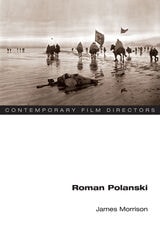
Roman Polanski
James Morrison
University of Illinois Press, 2006
James Morrison's critical study offers a comprehensive and critically engaged treatment on Roman Polanski's immense body of work. Tracing the filmmaker's remarkably diverse career from its beginnings to 2007, the book provides commentary on all of Polanski's major films in their historical, cultural, social, and artistic contexts. Morrison locates Polanski's work within the genres of comedy and melodrama, arguing that he is not merely obsessed with the theme of repression, but that his true interest is in the concrete—what is out in the open—and why we so rarely see it.
The range of Polanski's filmmaking challenges traditional divisions between high and low culture. For example, The Ninth Gate is a brash pastiche of the horror genre, while The Pianist is an Academy Award-winner about the Holocaust. Dubbing Polanski a relentless critic of modernity, Morrison concludes that his career is representative of the fissures, victories, and rehabilitations of the last fifty years of international cinema.
A volume in the series Contemporary Film Directors, edited by James Naremore
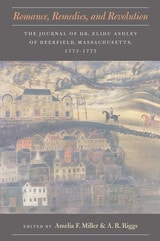
Romance, Remedies, and Revolution
The Journal of Dr. Elihu Ashley of Deerfield, Massachusetts, 1773-1775Edited by Amelia F. Miller and A. R. Riggs
University of Massachusetts Press, 2007
With flashes of humor and close attention to detail, Ashley describes a broad range of activities and experiences in the small village of Deerfield and the surrounding towns of the Connecticut River valley. Articulate as well as observant, this former schoolteacher conveys a sense of immediacy that brings even the most mundane daily events to life. He discusses medical theory and practice, revolutionary politics, farming, his family, his circle of friends, and amusements ranging from singing and dancing to sleigh riding and bouts of drunkenness. He also writes about his love life, including a dalliance with the older sister of his fiancee, Polly Williams, while the latter is away visiting relatives in the Berkshires.
For Ashley, personal relationships and politics were the prominent issues of 1773 and 1774, as events in Massachusetts drew the province toward rebellion. He discusses the gathering of angry mobs in response to the so-called Intolerable Acts, the stoppage of the courts in Hampshire County, the anarchy that ensued, and the persecution of loyalists, with or without the sanction of law. When the revolution breaks out in April 1775, he describes the departure of companies of minutemen as they set out for Boston to challenge the British Army.
Six months later, in November 1775, the journal abruptly ends. By then, however, Elihu Ashley had already bequeathed to posterity an extraordinary firsthand account of life in rural New England in the years immediately preceding the War of Independence.
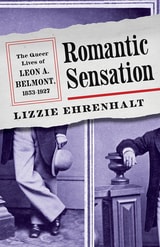
Romantic Sensation
The Queer Lives of Leon A. Belmont, 1853–1927Lizzie Ehrenhalt
University of Minnesota Press, 2026
Exploring gender and sexuality in the Gilded Age through one sensationalized life
Addie Liona Walker. Leon A. Belmont. Nova McClure Carr. Romantic Sensation tells the full story of this one ordinary person’s singular life. Assigned a female sex at birth, Addie was born in Massachusetts in 1853 and lived as a woman for twenty-five years. After transitioning in 1878, Addie became Leon and lived as a man for twenty-four years before making a second gender transition and living as a woman, Nova, for the rest of her life. Placing these milestones within the historical context of the late nineteenth and early twentieth centuries, Lizzie Ehrenhalt traces Belmont’s life, from child laborer to husband, from outlaw to heartthrob, and from stepfather to single mother.
Belmont was a Gilded Age celebrity: he made national news for breaking an ordinance against dressing as the “opposite” sex in Minneapolis, and he inspired a media frenzy when one of his girlfriends told police that he was a woman. While newspapers labeled Belmont a “curious and romantic sensation,” Ehrenhalt shows that he was not much of a sensation after all. Illuminating what his story can tell us about Americans’ developing understandings of sexuality and gender in the 1850s through the 1920s, she reveals how Belmont’s run-ins with police, doctors, courts, and reporters resonate in the evolution of the LGBTQIA+ identities we recognize today.
An empathetic case study of a figure often denied respect in the telling of his story, Romantic Sensation presents Belmont’s gender transitions not as puzzles in need of solving but as acts grounded in the cultural milieu of the Gilded Age. Traversing the dramatic economic upheavals of the second industrial revolution, the Era of Good Stealings, and the Great Railroad Strike of 1922, and spanning the Cult of Domesticity, the invention of sexology, and the rise of New Womanhood, Ehrenhalt uses Belmont’s example to demonstrate how trans, queer, and intersex histories are inseparable from American history.
Retail e-book files for this title are screen-reader friendly with images accompanied by short alt text and/or extended descriptions.
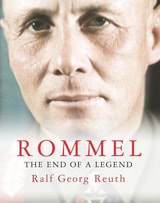
Rommel
The End of a LegendRalf Georg Reuth
Haus Publishing, 2019
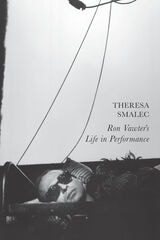
Ron Vawter's Life in Performance
Theresa Smalec
Seagull Books, 2018
Partly recuperative history, Ron Vawter’s Life in Performance explores the complex intersections of individual and group biography. It also offers a unique perspective on an era that spanned from the Vietnam War to the AIDS crisis, putting Vawter’s own activism at the forefront. This volume’s broad historical and cultural reach, coupled with its careful study of a beloved yet enigmatic performer, will make it a tremendous resource for theater scholars and practitioners.
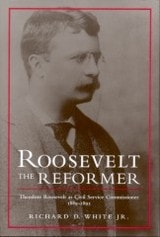
Roosevelt the Reformer
Theodore Roosevelt as Civil Service Commissioner, 1889-1895Richard D. White Jr
University of Alabama Press, 2003
Discover the overlooked years that forged Theodore Roosevelt’s reforming spirit, revealing how bureaucratic battles shaped a future president and transformed American government forever
Roosevelt the Reformer is a compelling scholarly biography that uncovers a neglected chapter of Theodore Roosevelt’s life: his six-year tenure as U.S. Civil Service Commissioner from 1889 to 1895. Rather than focusing on his presidency or battlefield exploits, the book reveals how Roosevelt’s administrative work shaped his reformist zeal, political skills, and enduring impact on American governance. Through vivid narrative and careful analysis, it shows how this “quiet” period contributed directly to the modernization of the federal government and the emergence of the merit-based civil service.
Structured chronologically, the book traces each year of Roosevelt’s commissionership while weaving together political events, personal life, and broader social context. It draws on rich primary sources—letters, speeches, and contemporary accounts—and includes scholarly features such as notes, bibliography, and index. Richard D. White Jr., a historian of American political development, combines narrative storytelling with rigorous research to illuminate Roosevelt’s battles with patronage politics, his reform strategies, and his growing administrative expertise.
This book will appeal to historians, political scientists, and general readers interested in the Gilded Age, the Progressive Era, and the origins of modern government. It is especially valuable for readers seeking fresh perspectives on Theodore Roosevelt, public administration, or reform movements, offering both an engaging biography and a nuanced study of how institutions and leaders are transformed.
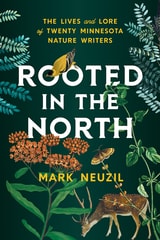
Rooted in the North
The Lives and Lore of Twenty Minnesota Nature WritersMark Neuzil
University of Minnesota Press, 2026
Discover unforgettable writers who taught Minnesota how to see its wild heart
In this engaging collection, environmental journalist Mark Neuzil revives the voices that showed generations how to appreciate Minnesota’s wild places. Comprising twenty vivid biographical essays, Rooted in the North traces the lives and lore of writers who shaped our understanding of this great state, from Minnesota’s northwoods to its tallgrass prairies to the storied landscape of the Boundary Waters Canoe Area Wilderness.
Readers will encounter towering figures of conservation such as Sigurd F. Olson, whose spiritual vision of wilderness helped define the modern environmental movement, alongside beloved chroniclers like Florence Page Jaques and Helen Hoover, whose intimate portraits of wildlife still resonate decades later. Neuzil also highlights writers Charles Eastman and Maude Kegg, who share insights into their Indigenous childhoods, and once-popular authors like Charles Hallock and George Leonard Herter, restoring them to their rightful place in the state’s literary heritage. Rooted in the North broadens our definition of “nature writer” to include novelists whose fiction grew from close observation of the land. Writers such as Martha Ostenso, Frederick Manfred, and Gary Paulsen appear here not just as storytellers but as keen interpreters of Minnesota’s natural world.
In what began as a popular series for the Minnesota Star Tribune, these essays explore the philosophy, science, adventure, faith, and everyday oddities that enlivened their subjects. The result is the only book of its kind—an illuminating portrait of the voices that helped us define and fall in love with Minnesota’s natural landscapes.
Retail e-book files for this title are screen-reader friendly with images accompanied by short alt text and/or extended descriptions.
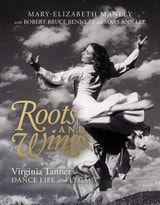
Roots and Wings
Virginia Tanner's Dance Life and LegacyMary-Elizabeth Manley with Mary Ann Lee and Robert Bruce Bennett
University of Utah Press, 2023
Roots and Wings recounts Virginia Tanner’s remarkable career as a dancer, artist, and educator. From her early experiences assisting at Evelyn Davis’s dance school in Washington, DC, to the creation of the Tanner Dance Program at the University of Utah, her influence on the field was pervasive. She channeled children’s energy, sharpened their senses, and encouraged youthful, authentic dance expression.
Manley’s extensive archival research and personal interviews depict Virginia Tanner as an innovative dance artist and ambitious leader in the field of modern dance. While exploring Tanner’s story, Roots and Wings emphasizes the value of unique instructional methodologies for teaching dance to young children and the vital role the arts play in children’s lives. Tanner’s work endures, continuing to echo with sensitivity and spirit in young dancers throughout the United States and abroad.
Rosa Luxemburg and the Struggle for Democratic Renewal
Jon Nixon
Pluto Press, 2018