Results by title
4531 books match the query 'Cultural & Ethnic Studies' and 272 start with r
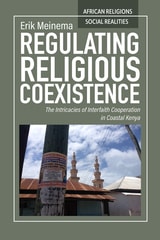
Regulating Religious Coexistence
The Intricacies of Interfaith Cooperation in Coastal KenyaErik Meinema
Ohio University Press, 0
Regulating Religious Coexistence offers a compelling ethnographic analysis of how Muslims, Christians, and practitioners of indigenous African religions negotiate coexistence in Kenya’s coastal region. The book conceptualizes religious diversity as a dynamic field shaped by multiple partly intersecting and partly conflicting models of interaction. These include the political secularism promoted by the Kenyan state and civil society organizations focused on interfaith harmony, forms of competition between religious groups, and pluralistic practices in which individuals draw on multiple traditions to meet spiritual needs.
Through a close examination of civil society initiatives funded by Western donors to foster peacebuilding and to counter violent extremism, the book investigates how these models for coexistence are negotiated and contested and how they intersect with historical and contemporary patterns. It demonstrates that modes of religious coexistence in coastal Kenya have been shaped by colonial and postcolonial governance, transregional connections, and interactions between Christians, Muslims, and Traditionalists across time.
As one of the few monographs on political secularism in an African context, Regulating Religious Coexistence makes a significant contribution to scholarship on religious diversity and coexistence. It situates Christianity, Islam, and indigenous African traditions within a single conceptual framework, broadening earlier studies that mostly treated them in isolation. This book is essential reading for scholars of religion, anthropology, African studies, and political theory, offering fresh insights into the complex realities of religious diversity in Africa and beyond.
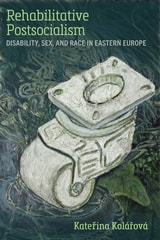
Rehabilitative Postsocialism
Disability, Sex, and Race in Eastern EuropeKaterina Kolárová
University of Michigan Press, 2025
Winner of the 2019 Tobin Siebers Prize for Disability Studies in the Humanities
Kateřina Kolářová’s Rehabilitative Postsocialism offers a timely interdisciplinary and intersectional analysis of how disability, race, class, and gender operate as ideological tools within the postsocialist Czech Republic (formerly Czechoslovakia). Kolářová presents postsocialism as an analytic that can and should be brought to bear to understand cultural politics, economic formations, and state politics through the present day.
Rehabilitative Postsocialism names disability, sexuality, and race as central yet invisible to negotiations of the postsocialist consensus. Drawing from a rich and varied archive, Rehabilitative Postsocialism maps the formation of new structures of inequalities and social imaginaries of wellness, merit, and justice in order to understand current articulations of global disenchantment with democracy, social justice, and solidarity. The book also makes clear that disability, race, and ethnicity continue to circulate in depictions of Eastern Europe as suspended in a chronic developmental “delay.” Rehabilitative Postsocialism both situates this positioning within its political and historical formation and offers the analytical tools to challenge its continued deployment.
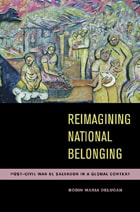
Reimagining National Belonging
Post-Civil War El Salvador in a Global ContextRobin Maria DeLugan
University of Arizona Press, 2012
Examining events that unfolded between 1992 and 2011, DeLugan both illustrates the idiosyncrasies of state and society in El Salvador and opens a larger portal into conditions of constructing a state in the present day around the globe—particularly the process of democratization in an age of neoliberalism. She demonstrates how academics, culture experts, popular media, and the United Nations and other international agencies have all helped shape ideas about national belonging in El Salvador. She also reveals the efforts that have been made to include populations that might have been overlooked, including indigenous people and faraway citizens not living inside the country’s borders. And she describes how history and memory projects have begun to recall the nation’s violent past with the goal of creating a more just and equitable nation.
This illuminating case study fills a gap in the scholarship about culture and society in contemporary El Salvador, while offering an “ethnography of the state” that situates El Salvador in a global context.
Reinventing Citizenship
Black Los Angeles, Korean Kawasaki, and Community ParticipationKazuyo Tsuchiya
University of Minnesota Press, 2014
In the 1960s and 1970s, the United States and Japan went through massive welfare expansions that sparked debates about citizenship. At the heart of these disputes stood African Americans and Koreans. Reinventing Citizenship offers a comparative study of African American welfare activism in Los Angeles and Koreans’ campaigns for welfare rights in Kawasaki. In working-class and poor neighborhoods in both locations, African Americans and Koreans sought not only to be recognized as citizens but also to become legitimate constituting members of communities.
Local activists in Los Angeles and Kawasaki ardently challenged the welfare institutions. By creating opposition movements and voicing alternative visions of citizenship, African American leaders, Tsuchiya argues, turned Lyndon B. Johnson’s War on Poverty into a battle for equality. Koreans countered the city’s and the nation’s exclusionary policies and asserted their welfare rights. Tsuchiya’s work exemplifies transnational antiracist networking, showing how black religious leaders traveled to Japan to meet Christian Korean activists and to provide counsel for their own struggles.
Reinventing Citizenship reveals how race and citizenship transform as they cross countries and continents. By documenting the interconnected histories of African Americans and Koreans in Japan, Tsuchiya enables us to rethink present ideas of community and belonging.
Reinventing the State
Economic Strategy and Institutional Change in PeruCarol Wise
University of Michigan Press, 2003
Relative Races
Genealogies of Interracial Kinship in Nineteenth-Century AmericaBrigitte Fielder
Duke University Press, 2020
Religion and Spirituality in Korean America
Edited by David K. Yoo and Ruth H. Chung
University of Illinois Press, 2007
Contributors: Ruth H. Chung, Jae Ran Kim, Jung Ha Kim, Rebecca Kim, Sharon Kim, Okyun Kwon, Sang Hyun Lee, Anselm Kyongsuk Min, Sharon A. Suh, Sung Hyun Um, and David K. Yoo
Religious Change in Post-Mao China
Toward a New Sociology of ReligionYanfei Sun
University of Chicago Press, 2026
In Religious Change in Post-Mao China, sociologist Yanfei Sun examines the transformation of major religions and the broader religious ecology in China in the wake of the death of Mao Zedong. Drawing on two decades of research that integrates ethnographic, historical, and comparative methods, this book explores the remarkable rise of Protestantism, the challenges faced by Catholicism, the revival of Chinese popular religion, the complex dynamics of Chinese Buddhism, and the unrealized potential of new religious movements. Why do some religions thrive and others struggle in post-Mao China? Sun describes both the internal institutional factors that allow some religions to flourish and the wider sociopolitical context that supports or discourages religious expansion. She thereby introduces an ambitious theoretical framework—one whose applicability extends beyond China, offering a template for analyzing religious dynamics in other parts of the world.
A must-read for scholars of religious studies, sociology, and China studies, Religious Change in Post-Mao China not only provides critical insights into China’s evolving religious landscape but also offers a powerful lens for examining the forces behind religious change, both past and present.
Religious Pluralism and the Nigerian State
Mis Af#66Simeon O. Ilesanmi
Ohio University Press, 1996
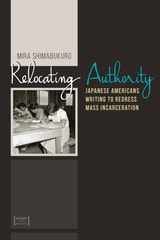
Relocating Authority
Japanese Americans Writing to Redress Mass IncarcerationMira Shimabukuro
University Press of Colorado, 2015
Relocating Authority examines the ways Japanese Americans have continually used writing to respond to the circumstances of their community’s mass imprisonment during World War II. Using both Nikkei cultural frameworks and community-specific history for methodological inspiration and guidance, Mira Shimabukuro shows how writing was used privately and publicly to individually survive and collectively resist the conditions of incarceration.
Examining a wide range of diverse texts and literacy practices such as diary entries, note-taking, manifestos, and multiple drafts of single documents, Relocating Authority draws upon community archives, visual histories, and Asian American history and theory to reveal the ways writing has served as a critical tool for incarcerees and their descendants. Incarcerees not only used writing to redress the “internment” in the moment but also created pieces of text that enabled and inspired further redress long after the camps had closed.
Relocating Authority highlights literacy’s enduring potential to participate in social change and assist an imprisoned people in relocating authority away from their captors and back to their community and themselves. It will be of great interest to students and scholars of ethnic and Asian American rhetorics, American studies, and anyone interested in the relationship between literacy and social justice.
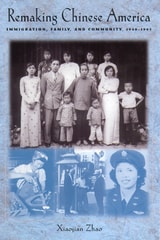
Remaking Chinese America
Immigration, Family, and Community, 1940-1965Zhao, Xiaojian
Rutgers University Press, 2001
In Remaking Chinese America, Xiaojian Zhao explores the myriad forces that changed and unified Chinese Americans during a key period in American history. Prior to 1940, this immigrant community was predominantly male, but between 1940 and 1965 it was transformed into a family-centered American ethnic community. Zhao pays special attention to forces both inside and outside of the country in order to explain these changing demographics. She scrutinizes the repealed exclusion laws and the immigration laws enacted after 1940. Careful attention is also paid to evolving gender roles, since women constituted the majority of newcomers, significantly changing the sex ratio of the Chinese American population.
As members of a minority sharing a common cultural heritage as well as pressures from the larger society, Chinese Americans networked and struggled to gain equal rights during the cold war period. In defining the political circumstances that brought the Chinese together as a cohesive political body, Zhao also delves into the complexities they faced when questioning their personal national allegiances. Remaking Chinese America uses a wealth of primary sources, including oral histories, newspapers, genealogical documents, and immigration files to illuminate what it was like to be Chinese living in the United States during a period that—until now—has been little studied.
Remaking New Orleans
Beyond Exceptionalism and AuthenticityThomas J. Adams and Matt Sakakeeny, editors
Duke University Press, 2019
Contributors. Thomas Jessen Adams, Vincanne Adams, Vern Baxter, Maria Celeste Casati Allegretti, Shannon Lee Dawdy, Rien Fertel, Megan French-Marcelin, Cedric G. Johnson, Alecia P. Long, Vicki Mayer, Toby Miller, Sue Mobley, Marguerite Nguyen, Aaron Nyerges, Adolph Reed Jr., Helen A. Regis, Matt Sakakeeny, Heidi Schmalbach, Felipe Smith, Bryan Wagner
Remapping Biblical Studies
CUREMP at ThirtyStephanie Buckhanon Crowder
SBL Press, 2023
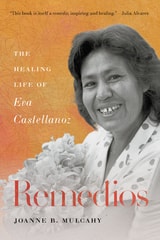
Remedios
The Healing Life of Eva Castellanoz, Updated EditionJoanne B. Mulcahy
Oregon State University Press, 2010
The result of a twenty-year friendship between Joanne Mulcahy and Eva Castellanoz, Remedios traces the transformation of an indigenous Mexican migrant worker to a curandera (healer), community activist, and winner of a National Heritage Fellowship from the National Endowment for the Arts. Blending creative nonfiction and ethnographic research, Mulcahy shares Eva’s stories, from her early years in Mexico and the Rio Grande Valley to her adult years as a wife, mother, and grandmother in Nyssa, Oregon. Her testimonios capture the hardships and resilience of her life and the lives of others in her community. As a healer, Eva combines rituals, metaphors, and herbs to attend to those who seek her help. The floral crowns she fashions for young women’s quinceañeras and other arts preserve traditions while offering life lessons. Remedios gives us an intimate glimpse into Eva’s family life, her passionate activism, and her complex identity as an indigenous, Catholic curandera.
This updated edition includes revisions throughout the text and a new afterword by the author underscoring the changes in Eva’s life and in the larger world since Remedios’s original publication. For her important work, Eva has been recognized by several organizations and programs including the Oregon Arts Commission, Arts Build Communities, and the Portland Opera. The Crown Maker, a youth opera by the Portland Opera To Go program, celebrates Eva Castellanoz’s legacy and displays how even in a time of fear and divisiveness, hope endures through people who advocate for others and inspire social change.
Remembering Brown at Fifty
The University of Illinois Commemorates Brown v. Board of EducationEdited by Orville Vernon Burton and David O'Brien
University of Illinois Press, 2009
Inspired by the University of Illinois's celebration of the Brown v. Board of Education decision's fiftieth anniversary, this collection addresses the significance of Brown in the contributors' lives or work in education and civil rights. Several authors describe their personal roles in the Brown case or similar cases, while others examine and illustrate events, performances, and exhibitions that were part of the anniversary commemoration. The book not only explores the repercussions of the Brown decision, but also stands as a historic document in its own right, preserving the reactions of many prominent intellectuals, artists, and activists fifty years after the decision.
Contributors are Kal Alston, Margaret L. Andersen, Kathryn H. Anthony, Nathaniel C. Banks, Bernice McNair Barnett, Christopher Benson, Ed Blankenheim, Julian Bond, Orville Vernon Burton, Jason Chambers, Constance Curry, Joseph A. De Laine Jr., Mary L. Dudziak, Joe R. Feagin, John Hope Franklin, Ophelia De Laine Gona, Lani Guinier, Darlene Clark Hine, Freeman A. Hrabowski III, John Jennings, Ralph Lemon, George Lipsitz, Jim Loewen, Laughlin McDonald, David O'Brien, James C. Onderdonk, Sekou Sundiata, Christopher Teal, Nicholas Watkins, Carrie Mae Weems, Juan Williams, and Joy Ann Williamson.

Remembering Emmett Till
Dave Tell
University of Chicago Press, 2019
In Remembering Emmett Till, Dave Tell gives us five accounts of the commemoration of this infamous crime. In a development no one could have foreseen, Till’s murder—one of the darkest moments in the region’s history—has become an economic driver for the Delta. Historical tourism has transformed seemingly innocuous places like bridges, boat landings, gas stations, and riverbeds into sites of racial politics, reminders of the still-unsettled question of how best to remember the victim of this heinous crime. Tell builds an insightful and persuasive case for how these memorials have altered the Delta’s physical and cultural landscape, drawing potent connections between the dawn of the civil rights era and our own moment of renewed fire for racial justice.
Remembering Pinochet's Chile
On the Eve of London 1998Steve J. Stern
Duke University Press, 2004
“A thoughtful, nuanced study of how Chileans remember the traumatic 1973 coup by Augusto Pinochet against Salvador Allende and the nearly two decades of military government that followed. . . . In light of the recent revelations of American human rights abuses of Iraqi prisoners, [Stern’s] insights into the legacies of torture and abuse in the Chilean prisons of the 1970s certainly have contemporary significance for any society that undergoes a national trauma.”—Publishers Weekly
“This outstanding work of scholarship sets a benchmark in the history of state terror, trauma, and memory in Latin America.”—Thomas Miller Klubock, American Historical Review
“This is a book of uncommon depth and introspection. . . . Steve J. Stern has not only advanced the memory of the horrors of the military dictatorship; he has assured the place of Pinochet’s legacy of atrocity in our collective conscience.”—Peter Kornbluh, author of The Pinochet File: A Declassified Dossier on Atrocity and Accountability
“Steve J. Stern’s book elegantly recounts the conflicted recent history of Chile. He has found a deft solution to the knotty problem of evenhandedness in representing points of view so divergent they defy even the most careful attempts to portray the facts of the Pinochet period. He weaves a tapestry of memory in which narratives of horror and rupture commingle with the sincere perceptions of Chileans who remember Pinochet’s rule as salvation. The facts are there, but more important is the understanding we gain by knowing how ordinary Chileans—Pinochet’s supporters and his victims—work through their unresolved past.”—John Dinges, author of The Condor Years: How Pinochet and His Allies Brought Terrorism to Three Continents

Remembering Victoria
A Tragic Nahuat Love StoryBy James M. Taggart
University of Texas Press, 2007
On October 15, 1983, a young mother of six was murdered while walking across her village of Huitzilan de Serdán, Mexico, with her infant son and one of her daughters. This woman, Victoria Bonilla, was among more than one hundred villagers who perished in violence that broke out soon after the Mexican army chopped down a cornfield that had been planted on an unused cattle pasture by forty Nahuat villagers.
In this anthropological account, based on years of fieldwork in Huitzilan, James M. Taggart turns to Victoria's husband, Nacho Angel Hernández, to try to understand how a community based on respect and cooperation descended into horrific violence and fratricide. When the army chopped down the cornfield at Talcuaco, the war that broke out resulted in the complete breakdown of the social and moral order of the community.
At its heart, this is a tragic love story, chronicling Nacho's feelings for Victoria spanning their courtship, marriage, family life, and her death. Nacho delivered his testimonio to the author in Nahuat, making it one of the few autobiographical love stories told in an Amerindian language, and a very rare account of love among the indigenous people of Mesoamerica. There is almost nothing in the literature on how a man develops and changes his feelings for his wife over his lifetime. This study contributes to the anthropology of emotion by focusing on how the Nahuat attempt to express love through language and ritual.
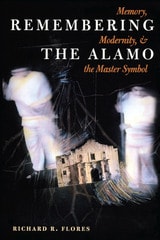
Remembering the Alamo
Memory, Modernity, and the Master SymbolBy Richard R. Flores
University of Texas Press, 2002
"Remember the Alamo!" reverberates through Texas history and culture, but what exactly are we remembering? Over nearly two centuries, the Mexican victory over an outnumbered band of Alamo defenders has been transformed into an American victory for the love of liberty. Why did the historical battle of 1836 undergo this metamorphosis in memory and mythology to become such a potent master symbol in Texan and American culture?
In this probing book, Richard Flores seeks to answer that question by examining how the Alamo's transformation into an American cultural icon helped to shape social, economic, and political relations between Anglo and Mexican Texans from the late nineteenth to the mid-twentieth centuries. In the first part of the book, he looks at how the attempts of heritage society members and political leaders to define the Alamo as a place have reflected struggles within Texas society over the place and status of Anglos and Mexicans. In the second part, he explores how Alamo movies and the transformation of Davy Crockett into an Alamo hero/martyr have advanced deeply racialized, ambiguous, and even invented understandings of the past.
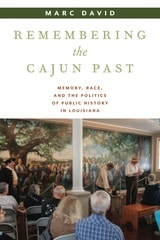
Remembering the Cajun Past
Memory, Race, and the Politics of Public History in LouisianaMarc David
University of Massachusetts Press, 2025
Exploring how public history creates collective memory of this white ethnic group through memorials
Cajuns arrived in southern Louisiana in the 18th century after the British exiled them from eastern Canada. Also known as Acadians, they retain a unique dialect of French, and their distinctive music, food, and other cultural traits characterized them as an ethnic group. Until the 1960s, authorities viewed them as a serious problem, allegedly blocking the state’s progress as they clung to their antiquated ways. Few Cajun residents in the region remembered the remote past of their ancestors, but by the 1970s, organizations ranging from local non-profits to the National Park Service created sites that commemorated their history, such as the Acadian Memorial in St. Martinville, allowing Cajuns to connect their lives to their past and claim it as their own.
In Remembering the Cajun Past, anthropologist Marc David studies the cultural and political dynamics that reconfigured Cajun memory and identity. Focusing on St. Martinville and the Acadian Memorial, he explores how authorities changed their minds about Cajuns and demonstrates how Cajuns’ historical memories took shape. Part ethnography and part history, David examines the racial aspects of the Memorial’s creation in the wake of the Civil Rights movement and the growth of a new Cajun history, one through which individual Cajuns rejected the label’s connotation of “white trash” and embraced belonging within a storied white ethnic group. Based on decades of fieldwork and deep engagement with public history practices, David explores how historical memory and the historic sites that foster it are intertwined with the politics of civic life.
Remembering the Forgotten War
The Enduring Legacies of the U.S.-Mexican WarMichael Scott Van Wagenen
University of Massachusetts Press, 2012
On February 2, 1848, representatives of the United States and Mexico signed the Treaty of Guadalupe Hidalgo, officially ending hostilities between the two countries and ceding over one-half million square miles of land to the northern victors. In Mexico, this defeat has gradually moved from the periphery of dishonor to the forefront of national consciousness. In the United States, the war has taken an opposite trajectory, falling from its once-celebrated prominence into the shadowy margins of forgetfulness and denial.
Why is the U.S.–Mexican War so clearly etched in the minds of Mexicans and so easily overlooked by Americans? This book investigates that issue through a transnational, comparative analysis of how the tools of collective memory—books, popular culture, historic sites, heritage groups, commemorations, and museums—have shaped the war's multifaceted meaning in the 160 years since it ended. Michael Van Wagenen explores how regional, ethnic, and religious differences influence Americans and Mexicans in their choices of what to remember and what to forget. He further documents what happens when competing memories clash in a quest for dominance and control.
In the end, Remembering the Forgotten War addresses the deeper question of how remembrance of the U.S.–Mexican War has influenced the complex relationship between these former enemies now turned friends. It thus provides a new lens through which to view today's cross-border rivalries, resentments, and diplomatic pitfalls.
Remembering to Live
Illness at the Intersection of Anxiety and Knowledge in Rural IndonesiaM. Cameron Hay
University of Michigan Press, 2004
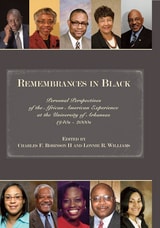
Remembrances in Black
Personal Perspectives of the African American Experience at the University of Arkansas, 1940s–2000sCharles F. Robinson II
University of Arkansas Press, 2015
Remittance as Belonging
Global Migration, Transnationalism, and the Quest for HomeHasan Mahmud
Rutgers University Press, 2025
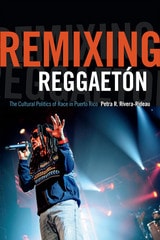
Remixing Reggaetón
The Cultural Politics of Race in Puerto RicoPetra R. Rivera-Rideau
Duke University Press, 2015
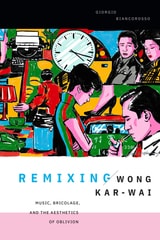
Remixing Wong Kar-wai
Music, Bricolage, and the Aesthetics of OblivionGiorgio Biancorosso
Duke University Press, 2025
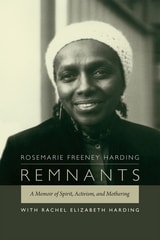
Remnants
A Memoir of Spirit, Activism, and MotheringRosemarie Freeney Harding with Rachel Elizabeth Harding
Duke University Press, 2015
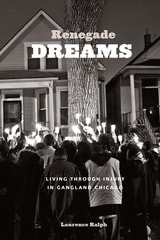
Renegade Dreams
Living through Injury in Gangland ChicagoLaurence Ralph
University of Chicago Press, 2014
Going deep into a West Side neighborhood most Chicagoans only know from news reports—a place where children have been shot just for crossing the wrong street—Ralph unearths the fragile humanity that fights to stay alive there, to thrive, against all odds. He talks to mothers, grandmothers, and pastors, to activists and gang leaders, to the maimed and the hopeful, to aspiring rappers, athletes, or those who simply want safe passage to school or a steady job. Gangland Chicago, he shows, is as complicated as ever. It’s not just a warzone but a community, a place where people’s dreams are projected against the backdrop of unemployment, dilapidated housing, incarceration, addiction, and disease, the many hallmarks of urban poverty that harden like so many scars in their lives. Recounting their stories, he wrestles with what it means to be an outsider in a place like this, whether or not his attempt to understand, to help, might not in fact inflict its own damage. Ultimately he shows that the many injuries these people carry—like dreams—are a crucial form of resilience, and that we should all think about the ghetto differently, not as an abandoned island of unmitigated violence and its helpless victims but as a neighborhood, full of homes, as a part of the larger society in which we all live, together, among one another.
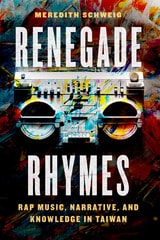
Renegade Rhymes
Rap Music, Narrative, and Knowledge in TaiwanMeredith Schweig
University of Chicago Press, 2022
Like many states emerging from oppressive political rule, Taiwan saw a cultural explosion in the late 1980s, when nearly four decades of martial law under the Chinese Nationalist Party ended. As members of a multicultural, multilingual society with a complex history of migration and colonization, Taiwanese people entered this moment of political transformation eager to tell their stories and grapple with their identities. In Renegade Rhymes, ethnomusicologist Meredith Schweig shows how rap music has become a powerful tool in the post-authoritarian period for both exploring and producing new knowledge about the ethnic, cultural, and political history of Taiwan.
Schweig draws on extensive ethnographic fieldwork, taking readers to concert venues, music video sets, scenes of protest, and more to show how early MCs from marginalized ethnic groups infused rap with important aspects of their own local languages, music, and narrative traditions. Aiming their critiques at the educational system and a neoliberal economy, new generations of rappers have used the art form to nurture associational bonds and rehearse rituals of democratic citizenship, making a new kind of sense out of their complicated present.
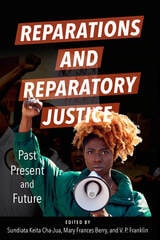
Reparations and Reparatory Justice
Past, Present, and FutureEdited by Sundiata Keita Cha-Jua, Mary Frances Berry, and V. P. Franklin
University of Illinois Press, 2024
Sharing a focus on reparations as an issue of justice, the contributors provide a historical primer of the movement; introduce the philosophical, political, economic, legal and ethical issues surrounding reparations; explain why government, corporations, universities, and other institutions must take steps to rehabilitate, compensate, and commemorate African Americans; call for the restoration of Black people’s human and civil rights and material and psychological well-being; lay out specific ideas about how reparations can and should be paid; and advance cutting-edge interpretations of the complex long-lasting effects that enslavement, police and vigilante actions, economic discrimination, and other behaviors have had on people of African descent.
Groundbreaking and innovative, Reparations and Reparatory Justice offers a multifaceted resource to anyone wishing to explore a defining moral issue of our time.
Contributors: Dedrick Asante-Muhammad, Hilary McDonald Beckles, Mary Frances Berry, Sundiata Keita Cha-Jua, Chuck Collins, Ron Daniels, V. P. Franklin, Danny Glover, Adom Gretachew, Charles Henry, Kamm Howard, Earl Ofari Hutchinson, Jesse Jackson, Sr., Brian Jones, Sheila Jackson Lee, James B. Stewart, the Movement 4 Black Lives, the National African American Reparations Commission, the National Coalition of Blacks for Reparations in America, the New Afrikan Peoples Organization/Malcolm X Grassroots Movement
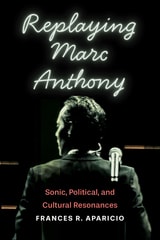
Replaying Marc Anthony
Sonic, Political, and Cultural ResonancesFrances R. Aparicio
The Ohio State University Press, 2025
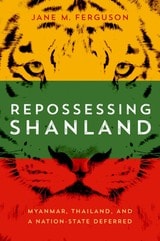
Repossessing Shanland
Myanmar, Thailand, and a Nation-State DeferredJane M. Ferguson
University of Wisconsin Press, 2022
Based on close readings of Shan-language media and years of ethnographic research in a community of soldiers and their families, Jane M. Ferguson details the origins of these movements and tells the story of the Shan in their own voices. She shows how the Shan have forged a homeland and identity during great upheaval by using state building as an ongoing project of resistance, resilience, and accommodation within both countries. In avoiding a good/bad moral binary and illuminating cultural complexities, Repossessing Shanland offers a fresh perspective on identity formation, transformation, and how people understand and experience borderlands today.
Representing
Hip Hop Culture and the Production of Black CinemaS. Craig Watkins
University of Chicago Press, 1998
"Watkins is at his most sophisticated and persuasive when he explains the surprising success of hyper-talented, entrepreneurial, and energetic black artists."—Archon Fung, Boston Book Review
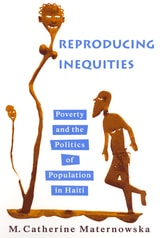
Reproducing Inequities
Poverty and the Politics of Population in HaitiMaternowska, M. Catherine
Rutgers University Press, 2006
Residents of Haiti-one of the poorest and most unstable countries in the world-face a grim reality of starvation, violence, lack of economic opportunity, and minimal health care. For years, aid organizations have sought to alleviate the problems by creating health and family planning clinics, including one modern (and, by local standards, luxurious) center in the heart of Cit Soleil. During its height of service in the 1980s and 1990s, the clinic boasted nineteen staff members, an array of modern contraceptives, an accessible location, and convenient hours-but very few clients.
Why did this initiative fail so spectacularly despite surveys finding that residents would like to have fewer children? Why don't poor women heed the message of family planning, when smaller families seem to be in their best interest? In Reproducing Inequities, M. Catherine Maternowska argues that we too easily overlook the political dynamics that shape choices about family planning. Through a detailed study of the attempt to provide modern contraception in the community of Cit Soleil, Maternowska demonstrates the complex interplay between local and global politics that so often thwarts well-intended policy initiatives.
Medical anthropologists, she argues, have an important role to play in developing new action plans for better policy implementation. Ethnographic studies in desperate, dangerous locations provide essential data that can point the way to solutions for the dilemmas of contraception in poor communities worldwide.
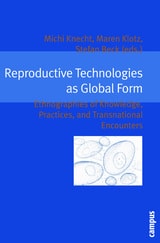
Reproductive Technologies as Global Form
Ethnographies of Knowledge, Practices, and Transnational EncountersEdited by Michi Knecht, Maren Klotz, and Stefan Beck
Campus Verlag, 2012
In the thirty years since the first “test-tube baby,” in-vitro fertilization and other methods of reproductive assistance have become a common aspect of family life and medicine in developed nations—and, increasingly, throughout the world. This collection brings together ethnographic studies of how these reproductive technologies are deployed across a wide variety of nations and cultures, taking special account of how they are linked to aspirations towards modernity—and how they contribute to an ongoing reconfiguration of the boundaries of knowledge and human agency. The resulting volume offers both a current snapshot of the cultural state of reproductive technologies and a plethora of provocative questions for the future.

Research Directions of Black Psychologists
Wade Boykin
Russell Sage Foundation, 1979

Research Guide to Japanese Film Studies
Abé Mark Nornes and Aaron Gerow
University of Michigan Press, 2009
Research Guide to People’s Daily Editorials, 1949–1975
Michel Oksenberg and Gail Henderson, Editors
University of Michigan Press, 1982
Researching Black Communities
A Methodological GuideJames S. Jackson, Cleopatra Howard Caldwell, Sherrill L. Sellers, editors
University of Michigan Press, 2014
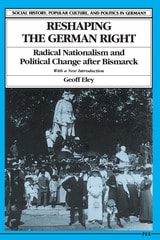
Reshaping the German Right
Radical Nationalism and Political Change after BismarckGeoff Eley
University of Michigan Press, 1991
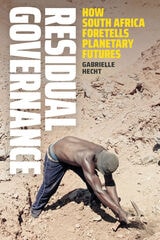
Residual Governance
How South Africa Foretells Planetary FuturesGabrielle Hecht
Duke University Press, 2023
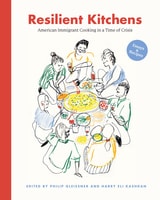
Resilient Kitchens
American Immigrant Cooking in a Time of Crisis, Essays and RecipesPhilip Gleissner
Rutgers University Press, 0
Winner of the James Beard Award for Best Book in Food Issues and Advocacy
Immigrants have left their mark on the great melting pot of American cuisine, and they have continued working hard to keep America’s kitchens running, even during times of crisis like the COVID-19 pandemic. For some immigrant cooks, the pandemic brought home the lack of protection for essential workers in the American food system. For others, cooking was a way of reconnecting with homelands they could not visit during periods of lockdown.
Resilient Kitchens: American Immigrant Cooking in a Time of Crisis is a stimulating collection of essays about the lives of immigrants in the United States before and during the COVID-19 pandemic, told through the lens of food. It includes a vibrant mix of perspectives from professional food writers, restaurateurs, scholars, and activists, whose stories range from emotional reflections on hardship, loss, and resilience to journalistic investigations of racism in the American food system. Each contribution is accompanied by a recipe of special importance to the author, giving readers a taste of cuisines from around the world. Every essay is accompanied by gorgeous food photography, the authors’ snapshots of pandemic life, and hand-drawn illustrations by Filipino American artist Angelo Dolojan.
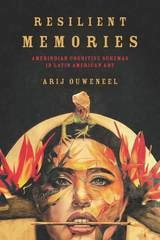
Resilient Memories
Amerindian Cognitive Schemas in Latin American ArtArij Ouweneel
The Ohio State University Press, 2018
Exploring works ranging in popularity, from Alfonso Cuarón’s Y Tu Mamá También to the paintings of Peruvian artists Claudia Coca and Jorge Miyagui, and from Mexican Zapatistas to hip-hop, Ouweneel details the ways in which artists interact with the embodied memory of the community but also assert their own place within it as crucial, furthering their audiences’ understanding of and interaction with existing cultural schemas. In this way, Ouweneel shows that memories must serve the present or they will be forgotten.
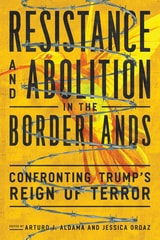
Resistance and Abolition in the Borderlands
Confronting Trump's Reign of TerrorEdited by Arturo J. Aldama and Jessica Ordaz; Foreword by Leo R. Chavez; Afterword by Karma R. Chávez
University of Arizona Press, 2024
This volume provides a well-argued look at the Trump era. Insightful contributions delve into the impact of Donald Trump’s rhetoric and policies on migrants detained and returned, immigrant children separated from their parents and placed in detention centers, and migrant women subjected to sexual and reproductive abuses, among other timely topics. The chapter authors document a long list in what the book calls “Trump’s Reign of Terror.”
Organized thematically, the book has four sections: The first gathers histories about the Trump years’ roots in a longer history of anti-migration; the second includes essays on artistic and activist responses on the border during the Trump years; the third critiques the normalization of Trump’s rhetoric and actions in popular media and culture; and the fourth envisions the future.
Resistance and Abolition in the Borderlands is an essential reader for those wishing to understand the extent of the damage caused by the Trump era and its impact on Latinx people.
Contributors
Arturo J. Aldama
Rebecca Avalos
Cynthia Bejarano
Tria Blu Wakpa
Renata Carvalho Barreto
Karma R. Chávez
Leo R. Chavez
Jennifer Cullison
Jasmin Lilian Diab
Allison Glover
Jamila Hammami
Alexandria Herrera
Diana J. Lopez
Sergio A. Macías
Cinthya Martinez
Alexis N. Meza
Roberto A. Mónico
José Enrique Navarro
Jessica Ordaz
Eliseo Ortiz
Kiara Padilla
Leslie Quintanilla
J-M Rivera
Heidy Sarabia
Tina Shull
Nishant Upadhyay
Maria Vargas
Antonio Vásquez
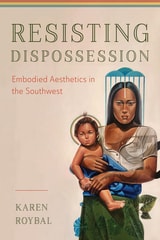
Resisting Dispossession
Embodied Aesthetics in the SouthwestKaren R. Roybal
University of Arizona Press, 2027
Illuminating the impacts of ongoing dispossession across the modern American Southwest
Resisting Dispossession examines how Native/Indigenous, Chicana/o/x, and Black communities in the American Southwest have confronted displacement and dispossession from the nineteenth century to the present. Moving beyond abstract theory, Karen R. Roybal centers cultural expression and embodied knowledge, revealing how colonialism, preservation, urban renewal, and gentrification continue to shape relationships to land, place, and belonging.
Drawing on Indigenous, Chicana feminist, and Black epistemologies, Roybal explores a diverse cultural archive of photographs, literature, musical compositions, oral histories, and storytelling practices. Through analyses of figures such as Kali Fajardo-Anstine, Raven Chacon, and Louis Carlos Bernal, alongside the stories of Chicana land grant heirs in New Mexico and southern Colorado, she demonstrates how artistic and cultural expression becomes a powerful tool for resisting erasure and reclaiming presence. Contesting representations of the Southwest made popular by figures like Ansel Adams and Georgia O’Keeffe, these works preserve alternative histories, challenge dominant narratives, and illuminate the ongoing impacts of dispossession across the region.
Interdisciplinary in scope, this work offers a fresh perspective on the intersections of aesthetics, embodiment, and power in the West and Southwest.

Resisting War
The Politics of Conscientious ObjectionPinar Kemerli
Duke University Press, 2027
Resisting War
The Politics of Conscientious ObjectionPinar Kemerli
Duke University Press, 2027
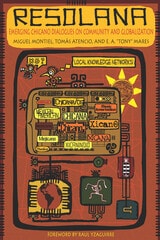
Resolana
Emerging Chicano Dialogues on Community and GlobalizationMiguel Montiel
University of Arizona Press, 2009
Coming from diverse backgrounds in social work, sociology, public administration, literature, history, and education, three modern resolaneros take the twin concepts of resolana and el oro del barrio on a breathtaking journey from their rural roots to their application in an urban setting and on to a holistic view of globalization. The authors offer a humane perspective on transborder cultures and all communities struggling to maintain their cultural and linguistic identities. They share an optimistic view of how ordinary people everywhere can take back control of their own destinies. This book is about uncovering subjugated knowledge—el oro del barrio—through resolana, a dynamic process of thought and action.
Resolana will inspire dialogue and creativity from those interested in sociology, political science, social work, and Chicano studies, as well as public-policy makers and the general public.
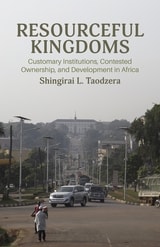
Resourceful Kingdoms
Customary Institutions, Contested Ownership, and Community Development in AfricaShingirai Taodzera
Ohio University Press, 0
Resourceful Kingdoms investigates the struggle for control over Uganda’s emerging oil sector, centering on the Bunyoro Kingdom’s unsuccessful effort to secure ownership of resources discovered on its ancestral lands. Drawing on extensive fieldwork, the book shows how the military-backed National Resistance Movement government consolidated authority over an estimated two billion barrels of oil, while Bunyoro communities experienced displacement, land loss, political tension, and significant environmental harm even before production began. The Bunyoro case reflects a wider pattern in which rural, resource-rich populations across Africa are marginalized as governments and multinational corporations convert natural resources into state-centered revenues.
The book further explores how indigenous kingdoms might come to own resources and channel revenues toward sustainable, culturally grounded development. Through comparative case studies of Uganda’s powerful Buganda Kingdom and South Africa’s Bafokeng Kingdom—widely recognized for community-based mineral ownership and effective wealth management—Resourceful Kingdoms illustrates how traditional institutions can pair with corporate structures, private land ownership, and diversified investment strategies to strengthen community prosperity.
From this analysis emerges strategic coexistence, a new framework that outlines how kingdoms can secure resource rights independent of shifting state policies or corporate social-responsibility initiatives. Presented as both a philosophy and a set of practical steps, strategic coexistence urges kingdoms to formalize land ownership, build strong indigenous governance systems, create community-owned corporations, reinvest resource revenues in long-term development, and transition away from dependence on extractive industries. Resourceful Kingdoms ultimately repositions African kingdoms as dynamic, contemporary governance institutions with significant potential to influence natural resource administration and advance community well-being.
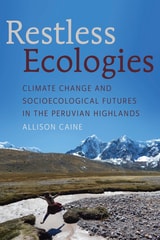
Restless Ecologies
Climate Change and Socioecological Futures in the Peruvian HighlandsAllison Caine
University of Arizona Press, 2025
Drawing on the Quechua concept of k’ita, or restlessness, Allison Caine explores how herders in the community of Chillca in the Cordillera Vilcanota mountain range of the southeastern Peruvian Andes sense and make sense of changing conditions. Capricious mountains, distracted alpacas, and wayward children deviate from their expected spatial and temporal trajectories. When practices of sociality start to fall apart—when animals no longer listen to herders’ whistles, children no longer visit their parents, and humans no longer communicate with mountains—these failures signal a broader ecological instability that threatens the viability of the herder’s world.
For more than two years, the author herded alongside the women of the Cordillera Vilcanota, observing them and talking with them about their interactions with their animals, landscapes, and neighbors. Emphasizing the importance of Indigenous knowledge and traditional ecological practices, Caine argues that Quechua understandings of restlessness align with and challenge broader theoretical understandings of what it is to be vulnerable in a time of planetary crisis.