Results by title
138 books match the query 'Logic' and 16 start with a
A Manual of Intensional Logic
2nd EditionJohan van Benthem
CSLI, 1988
A Paradigm for Program Semantics
Chris Brink and Ingrid Rewitsky
CSLI, 2001
A Philosophical Introduction to Probability
Maria Carla Galavotti
CSLI, 2004
A Poetic for Sociology
Toward a Logic of Discovery for the Human SciencesRichard Harvey Brown
University of Chicago Press, 1989
By recognizing this "aesthetic" common ground between science and art, Brown demonstrates that a fusion can be achieved within the human sciences of these two principal ideals of knowledge—the scientific or positivist one and the artistic or intuitive one. A path, then, is opened for creating a knowledge of ourselves and society which is at once objective and subjective, at once valid scientifically and significantly humane.
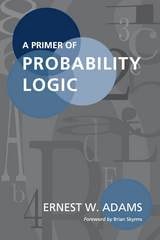
A Primer of Probability Logic
Ernest W. Adams
CSLI, 1996
This book is meant to be a primer, that is, an introduction, to probability logic, a subject that appears to be in its infancy. Probability logic is a subject envisioned by Hans Reichenbach and largely created by Adams. It treats conditionals as bearers of conditional probabilities and discusses an appropriate sense of validity for arguments such conditionals, as well as ordinary statements as premisses.
This is a clear well-written text on the subject of probability logic, suitable for advanced undergraduates or graduates, but also of interest to professional philosophers. There are well-thought-out exercises, and a number of advanced topics treated in appendices, while some are brought up in exercises and some are alluded to only in footnotes. By this means, it is hoped that the reader will at least be made aware of most of the important ramifications of the subject and its tie-ins with current research, and will have some indications concerning recent and relevant literature.
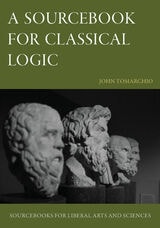
A Sourcebook for Classical Logic
John Tomarchio
Catholic University of America Press, 2023
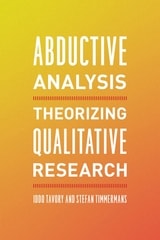
Abductive Analysis
Theorizing Qualitative ResearchIddo Tavory and Stefan Timmermans
University of Chicago Press, 2014
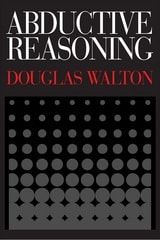
Abductive Reasoning
Douglas Walton
University of Alabama Press, 2005
Examines three areas in which abductive reasoning is especially important: medicine, science, and law. The reader is introduced to abduction and shown how it has evolved historically into the framework of conventional wisdom in logic. Discussions draw upon recent techniques used in artificial intelligence, particularly in the areas of multi-agent systems and plan recognition, to develop a dialogue model of explanation. Cases of causal explanations in law are analyzed using abductive reasoning, and all the components are finally brought together to build a new account of abductive reasoning.
By clarifying the notion of abduction as a common and significant type of reasoning in everyday argumentation, Abductive Reasoning will be useful to scholars and students in many fields, including argumentation, computing and artificial intelligence, psychology and cognitive science, law, philosophy, linguistics, and speech communication and rhetoric.
Acquaintance, Knowledge, and Logic
New Essays on Bertrand Russell's "The Problems of Philosophy"Edited and with an Introduction by Donovan Wishon and Bernard Linsky
CSLI, 2015
Ad Hominem Arguments
Douglas Walton
University of Alabama Press, 2009
A vital contribution to legal theory and media and civic discourse
In the 1860s, northern newspapers attacked Abraham Lincoln's policies by attacking his character, using the terms "drunk," "baboon," "too slow," "foolish," and "dishonest." Steadily on the increase in political argumentation since then, the argumentum ad hominem, or personal attack argument, has now been carefully refined as an instrument of "oppo tactics" and "going negative" by the public relations experts who craft political campaigns at the national level. In this definitive treatment of one of the most important concepts in argumentation theory and informal logic, Douglas Walton presents a normative framework for identifying and evaluating ad hominem or personal attack arguments.
Personal attack arguments have often proved to be so effective, in election campaigns, for example, that even while condemning them, politicians have not stopped using them. In the media, in the courtroom, and in everyday confrontation, ad hominem arguments are easy to put forward as accusations, are difficult to refute, and often have an extremely powerful effect on persuading an audience.
Walton gives a clear method for analyzing and evaluating cases of ad hominem arguments found in everyday argumentation. His analysis classifies the ad hominem argument into five clearly defined subtypes—abusive (direct), circumstantial, bias, "poisoning the well," and tu quoque ("you're just as bad") arguments—and gives methods for evaluating each type. Each subtype is given a well-defined form as a recognizable type of argument. The numerous case studies show in concrete terms many practical aspects of how to use textual evidence to identify and analyze fallacies and to evaluate argumentation as fallacious or not in particular cases.
Advances in Modal Logic, Volume 1
Edited by Marcus Kracht, Maarten de Rijke, Heinrich Wansing, and Michael Zakhary
CSLI, 1998
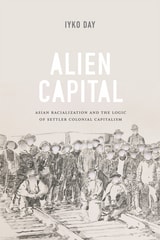
Alien Capital
Asian Racialization and the Logic of Settler Colonial CapitalismIyko Day
Duke University Press, 2016
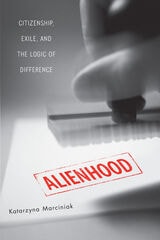
Alienhood
Citizenship, Exile, And The Logic Of DifferenceKatarzyna Marciniak
University of Minnesota Press, 2006
Using examples from exilic literature and cinema, including the works of Julia Alvarez, Eva Hoffman, Gregory Nava, and Roman Polanski, Alienhood theorizes multicultural experiences of liminal characters that belong in the interstices between nations. Investigating gendered, racialized, and ideological formations of “aliens,” Marciniak’s readings put into dialogue narratives from both the second world and the third world in relation to “first worldness.” This dialogue problematizes the meanings of “transnational” and brings the so-called second world into these debates. In doing so, Marciniak reorients the study of immigrant or exile subjects beyond the celebrated notion of transnationalism.
With its unique focus on “aliens” in relation to discourses of immigration, exile, and displacement, Alienhood shows how transnationality is, for many dislocated people, an unattainable privilege.
Katarzyna Marciniak is associate professor of English at Ohio University.
An Essay on Contraction
André Fuhrmann
CSLI, 1996
Arrow Logic and Multi-Modal Logic
Edited by Maarten Marx, László Pólos, and Michael Masuch
CSLI, 1996