Results by title
5448 books match the query 'History and criticism' and 301 start with r
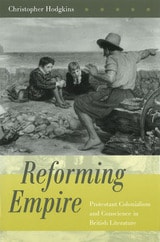
Reforming Empire
Protestant Colonialism and Conscience in British LiteratureChristopher Hodgkins
University of Missouri Press, 2002
“The strength of Empire,” wrote Ben Jonson, “is in religion.” In Reforming Empire, Christopher Hodgkins takes Jonson’s dictum as his point of departure, showing how for more than four centuries the Protestant imagination gave the British Empire its main paradigms for dominion and also, ironically, its chief languages of anti-imperial dissent. From Edmund Spenser’s Faerie Queene to Rudyard Kipling’s “The Man Who Would Be King,” English literature about empire has turned with strange constancy to themes of worship and idolatry, atrocity and deliverance, slavery and service, conversion, prophecy, apostasy, and doom.
Focusing on the work of the Protestant imagination from the Renaissance origins of English overseas colonization through the modern end of England’s colonial enterprise, Hodgkins organizes his study around three kinds of religious binding—unification, subjugation, and self-restraint. He shows how early modern Protestants like Hakluyt and Spenser reformed the Arthurian chronicles and claimed to inherit Rome’s empire from the Caesars: how Ralegh and later Cromwell imagined a counterconquest of Spanish America, and how Milton’s Satan came to resemble Cortés; how Drake and the fictional Crusoe established their status as worthy colonial masters by refusing to be worshiped as gods; and how seventeenth-century preachers, poets, and colonists moved haltingly toward a racist metaphysics—as Virginia began by celebrating the mixed marriage of Pocahontas but soon imposed the draconian separation of the Color Line.
Yet Hodgkins reveals that Tudor-Stuart times also saw the revival of Augustinian anti-expansionism and the genesis of Protestant imperial guilt. From the start, British Protestant colonialism contained its own opposite: a religion of self-restraint. Though this conscience often was co-opted or conscripted to legitimize conquests and pacify the conquered, it frequently found memorable and even fierce literary expression in writers such as Shakespeare, Daniel, Herbert, Swift, Johnson, Burke, Blake, Austen, Browning, Tennyson, Conrad, Forster, and finally the anti-Protestant Waugh. Written in a lively and accessible style, Reforming Empire will be of interest to all scholars and students of English literature.
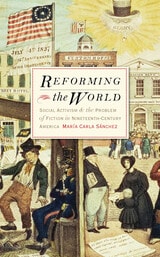
Reforming the World
Social Activism and the Problem of Fiction in Nineteenth-Century AmericaMaria Carla Sanchez
University of Iowa Press, 2009
In her informed and innovative work, Sánchez considers those authors both familiar (Lydia Maria Child, Harriet Jacobs, and Harriet Beecher Stowe) and those all but lost to history (Timothy Shay Arthur). Along the way, she refers to some of the most notable American writers in the period (Emerson, Thoreau, and Poe). Illuminating the intersection of reform and fiction, Reforming the World visits important questions about the very purpose of literature, telling the story of “a revolution that never quite took place," one that had no grandiose or even catchy name. But it did have numerous settings and participants: from the slums of New York, where prostitutes and the intemperate made their homes, to the offices of lawyers who charted the downward paths of broken men, to the tents for revival meetings, where land and souls alike were “burned over” by the grace of God.
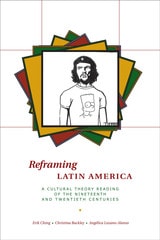
Reframing Latin America
A Cultural Theory Reading of the Nineteenth and Twentieth CenturiesBy Erik Ching, Christina Buckley, and Angélica Lozano-Alonso
University of Texas Press, 2007
Providing an extensive introduction to cultural studies in general, regardless of chronological or geographic focus, and presenting provocative, essential readings from Latin American writers of the last two centuries, Reframing Latin America brings much-needed accessibility to the concepts of cultural studies and postmodernism.
From Saussure to semiotics, the authors begin by demystifying terminology, then guide readers through five identity constructs, including nation, race, and gender. The readings that follow are presented with insightful commentary and encompass such themes as "Civilized Folk Marry the Barbarians" (including José Martí's "Our America") and "Boom Goes the Literature: Magical Realism as the True Latin America?" (featuring Elena Garro's essay "It's the Fault of the Tlaxcaltecas"). Films such as Like Water for Chocolate are discussed in-depth as well. The result is a lively, interdisciplinary guide for theorists and novices alike.
Reframing Rhetorical History
Cases, Theories, and MethodologiesEdited by Kathleen J. Turner and Jason Edward Black
University of Alabama Press, 2022
A collection of essays providing insights into new directions in rhetorical history
Kathleen J. Turner’s 1998 multicontributor volume Doing Rhetorical History: Concepts and Cases quickly became a foundational text in the field, and the studies in the book have served as an important roadmap for scholars undertaking such scholarship. In the decades since its publication, developments in rhetorical-historical research, engaged scholarship, and academic interventionism have changed the practice of rhetorical history tremendously.
To address this shift, Turner and Jason Edward Black have edited a much-anticipated follow-up volume: Reframing Rhetorical History: Cases, Theories, and Methodologies, which reassesses both history as rhetoric and rhetorical history as practice. This new book attends to a number of topics that have become not just hot-button issues in rhetorical scholarship but have entrenched themselves as anchors within the field. These include digital rhetoric, public memory, race and ethnicity, gender dynamics and sexualities, health and well-being, transnationalism and globalization, social justice, archival methods and politics, and colonialism and decoloniality.
The sixteen essays are divided into four major parts: “Digital Humanities and Culture” introduces methods and cases using twenty-first century technologies; “Identities, Cultures, and Archives” addresses race and gender within the contexts of critical race theory, gendered health rhetoric, race-based public memory, and class/sectionalism; “Approaches to Nationalism and Transnationalism” explores ideologies related to US and international cultures; and “Metahistories and Pedagogies” explores creative ways to approach the frame of metarhetorical history given what the field has learned since the publication of Doing Rhetorical History.
CONTRIBUTORS
Andrew D. Barnes / Jason Edward Black / Bryan Crable / Adrienne E. Hacker Daniels / Matthew deTar / Margaret Franz / Joe Edward Hatfield / J. Michael Hogan / Andre E. Johnson / Madison A. Krall / Melody Lehn / Lisbeth A. Lipari / Chandra A. Maldonado / Roseann M. Mandziuk / Christina L. Moss / Christopher J. Oldenburg / Sean Patrick O’Rourke / Daniel P. Overton / Shawn J. Parry-Giles / Philip Perdue / Kathleen J. Turner
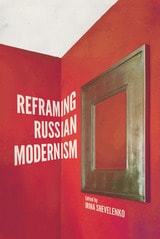
Reframing Russian Modernism
Edited by Irina Shevelenko
University of Wisconsin Press, 2018
Expanding upon prior studies that focus more specifically on literary manifestations of the movement, Reframing Russian Modernism features original research that ranges broadly, from political aesthetics to Darwinism to yoga. These unique complementary perspectives counter reductionism of any kind, integrating the study of Russian modernism into the larger body of humanistic scholarship devoted to modernity.
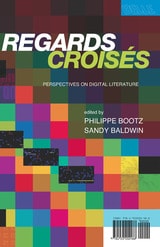
Regards Croises
Perspectives on Digital Literatureedited by Philippe Bootz and Sandy Baldwin
West Virginia University Press, 2010
What happens to literature in an age of digital technology? Regards Croisés: Perspectives on Digital Literature provides an answer, with a collection of cutting-edge critical essays on literature gone digital. Regards Croisés is an important addition to existing research on digital literature, and will appeal to scholars of electronic writing, digital art,humanities computing, media and communication, and others interested in the field. It offers a significant advance in the field through its wide-angle perspective that globalizes digital literature and diversifies the current critical paradigms. Regards Croisés shows how digital literature connects with traditions and future directions of reading and writing communities all over the world. With contributions by authors from eight countries and three continents, the collection presents points of view on a transcontinental practice of digital literature. Regards Croisés also opens dialogues with expanded critical paradigms of digital literature, beyond earlier critical concern with the aesthetics of the screen as a space of hypertext links. Many of the essays recognize a rich history and ongoing literary practice engaged with the basic fact of the computer as a programmable device. Other essays explore the latest developments in social media and Web 2.0 as venues for digital literature. Regards Croisés shows the vibrant engagement of writers and readers with literary practice in a digital world.
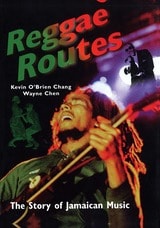
Reggae Routes
The Story of Jamaican MusicKevin Chang
Temple University Press, 1997
Jamaican music can be roughly divided into four eras, each with a distinctive beat - ska, rocksteady, reggae, and dancehall. Ska dates from about 1960 to mid-1966 and rocksteady from 1966 to 1968, while from 1969 to 1983 reggae was the popular beat. The reggae era had two phases, "early reggae" up to 1974 and "roots reggae" up to 1983. Since 1983 dancehall has been the prevalent the prevalent sound.
The authors describe each stage in the development of the music, identifying the most popular songs and artists, highlighting the significant social, political, and economic issues as they affected the music scene. While they write from a Jamaican perspective, the intended audience is "any person, local or foreign, interested in an intelligent discussion of reggae music and Jamaica." Featuring some four hundred illustrations that range from album covers to rare photos, Reggae Routes profiles the innumerable artists, producers, and recordings that secured an international audience for Jamaican music.
Artists discussed: Toots and the Maytals, the Wailers, Gaylads, Desmond Dekker, Delroy Wilson, Alton Ellis, Burning Spear, Itals, Wailing Souls, Skatalites, Heptones, and hundreds more.
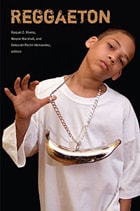
Reggaeton
Raquel Z. Rivera, Wayne Marshall, and Deborah Pacini Hernandez, eds.
Duke University Press, 2009
The collection opens with an in-depth exploration of the social and sonic currents that coalesced into reggaeton in Puerto Rico during the 1990s. Contributors consider reggaeton in relation to that island, Panama, Jamaica, and New York; Cuban society, Miami’s hip-hop scene, and Dominican identity; and other genres including reggae en español, underground, and dancehall reggae. The reggaeton artist Tego Calderón provides a powerful indictment of racism in Latin America, while the hip-hop artist Welmo Romero Joseph discusses the development of reggaeton in Puerto Rico and his refusal to embrace the upstart genre. The collection features interviews with the DJ/rapper El General and the reggae performer Renato, as well as a translation of “Chamaco’s Corner,” the poem that served as the introduction to Daddy Yankee’s debut album. Among the volume’s striking images are photographs from Miguel Luciano’s series Pure Plantainum, a meditation on identity politics in the bling-bling era, and photos taken by the reggaeton videographer Kacho López during the making of the documentary Bling’d: Blood, Diamonds, and Hip-Hop.
Contributors. Geoff Baker, Tego Calderón, Carolina Caycedo, Jose Davila, Jan Fairley, Juan Flores, Gallego (José Raúl González), Félix Jiménez, Kacho López, Miguel Luciano, Wayne Marshall, Frances Negrón-Muntaner, Alfredo Nieves Moreno, Ifeoma C. K. Nwankwo, Deborah Pacini Hernandez, Raquel Z. Rivera, Welmo Romero Joseph, Christoph Twickel, Alexandra T. Vazquez
Regional Fictions
Culture and Identity in Nineteenth-Century American LiteratureStephanie Foote
University of Wisconsin Press, 2001
Out of many, one—e pluribus unum—is the motto of the American nation, and it sums up neatly the paradox that Stephanie Foote so deftly identifies in Regional Fictions. Regionalism, the genre that ostensibly challenges or offers an alternative to nationalism, in fact characterizes and perhaps even defines the American sense of nationhood.
In particular, Foote argues that the colorful local characters, dialects, and accents that marked regionalist novels and short stories of the late nineteenth century were key to the genre’s conversion of seemingly dangerous political differences—such as those posed by disaffected Midwestern farmers or recalcitrant foreign nationals—into appealing cultural differences. She asserts that many of the most treasured beliefs about the value of local identities still held in the United States today are traceable to the discourses of this regional fiction, and she illustrates her contentions with insightful examinations of the work of Sarah Orne Jewett, Hamlin Garland, Gertrude Atherton, George Washington Cable, Jacob Riis, and others. Broadening the definitions of regional writing and its imaginative territory, Regional Fictions moves beyond literary criticism to comment on the ideology of national, local, ethnic, and racial identity.
Reimagining Apocalypticism
Apocalyptic Literature in the Dead Sea Scrolls and Related WritingsLorenzo DiTommaso
SBL Press, 2023
Reimagining Environmental History
Ecological Memory in the Wake of Landscape ChangeChristian Knoeller
University of Nevada Press, 2017
Reading across centuries and genres, Knoeller gives us a vibrant new appraisal of Midwestern/North American interior literary traditions and makes clear how vital environmental writing is to this region. To date, no one has written such an eloquent and comprehensive cross-genre analysis of Midwestern environmental literature.
Reimagining the Middle Passage
Black Resistance in Literature, Television, and SongTara T. Green
The Ohio State University Press, 2018
Exploring the presence of water and its impact on African descendants,Reimagining the Middle Passageoffers fresh analyses of Alex Haley’sRootsand the television adaptations; the history of flooding in Black communities in literature such as Jesmyn Ward’sSalvage the Bonesand Paule Marshall’sPraisesong for the Widow, in blues songs, and in television shows such asTreme; and stories of resistance found in myths associated with Marie Laveau and flying Africans.
Reinterpreting the Spanish American Essay
Women Writers of the 19th and 20th CenturiesEdited by Doris Meyer
University of Texas Press, 1995
Latin American women have long written essays on topics ranging from gender identity and the female experience to social injustice, political oppression, lack of educational opportunities, and the need for female solidarity in a patriarchal environment. But this rich vein of writing has often been ignored and is rarely studied.
This volume of twenty-one original studies by noted experts in Latin American literature seeks to recover and celebrate the accomplishments of Latin American women essayists. Taking a variety of critical approaches, the authors look at the way women writers have interpreted the essay genre, molded it to their expression, and created an intellectual tradition of their own. Some of the writers they treat are Flora Tristan, Gertrudis Gómez de Avellaneda, Clorinda Matto de Turner, Victoria Ocampo, Alfonsina Storni, Rosario Ferré, Christina Peri Rossi, and Elena Poniatowska.
This book is the first of a two-volume project that reexamines the Latin American essay from a feminist perspective. The second volume, also edited by Doris Meyer, contains thirty-six essays in translation by twenty-two women authors.
Reinventing Romantic Poetry
Russian Women Poets of the Mid-Nineteenth CenturyDiana Greene
University of Wisconsin Press, 2003
Reinventing Romantic Poetry offers a new look at the Russian literary scene in the nineteenth century. While celebrated poets such as Aleksandr Pushkin worked within a male-centered Romantic aesthetic—the poet as a bard or sexual conqueror; nature as a mother or mistress; the poet’s muse as an idealized woman—Russian women attempting to write Romantic poetry found they had to reinvent poetic conventions of the day to express themselves as women and as poets. Comparing the poetry of fourteen men and fourteen women from this period, Diana Greene revives and redefines the women’s writings and offers a thoughtful examination of the sexual politics of reception and literary reputation.
The fourteen women considered wrote poetry in every genre, from visions to verse tales, from love lyrics to metaphysical poetry, as well as prose works and plays. Greene delves into the reasons why their writing was dismissed, focusing in particular on the work of Evdokiia Rostopchina, Nadezhda Khvoshchinskaia, and Karolina Pavlova. Greene also considers class as a factor in literary reputation, comparing canonical male poets with the work of other men whose work, like the women’s, was deemed inferior at the time. The book also features an appendix of significant poems by Russian women discussed in the text. Some, found in archival notebooks, are published here for the first time, and others are reprinted for the first time since the mid-nineteenth century.
Reinventing the Peabody Sisters
Monika M. Elbert
University of Iowa Press, 2006
Reinventing the Peabody Sisters seeks to redefine this dynamic trio’s relationship to the literary and political movements of the mid nineteenth century. Previous scholarship has romanticized, vilified, or altogether erased their influences and literary productions or viewed these individuals solely in light of their relationships to other nineteenth-century luminaries, particularly men—Ralph Waldo Emerson, Nathaniel Hawthorne, Horace Mann. This collection underscores that each woman was a creative force in her own right.
Despite their differences and sibling conflicts, all three sisters thrived in the rarefied—if economically modest—atmosphere of a childhood household that glorified intellectual and artistic pursuits. This background allowed each woman to negotiate the nineteenth-century literary marketplace and in the process redefine its scope. Elizabeth, Mary, and Sophia remained linked throughout their lives, encouraging, complementing, and sometimes challenging each other's endeavors while also contributing to each other’s literary work.
The essays in this collection examine the sisters’ confrontations with and involvement in the intellectual movements and social conflicts of the nineteenth century, including Transcendentalism, the Civil War, the role of women, international issues, slavery, Native American rights, and parenting. Among the most revealing writings that the sisters left behind, however, are those which explore the interlaced relationship that continued throughout their remarkable lives.
Reinventing the South
Versions of a Literary RegionMark Royden Winchell
University of Missouri Press, 2006
Relatability
Sharing and Oversharing with the New York School PoetsBrian Glavey
University of Chicago Press, 2026
An engaging account of how the New York School poets used art to imagine their queerness as something that might be shared with other people.
How did Frank O’Hara and other New York School poets—a small coterie associated with experimental art and gay culture —become fixtures in today’s culture, quoted on prestige television shows, in teen romances, and at the wedding ceremonies of straight celebrities? How, in other words, did these poets become so relatable? Brian Glavey’s Relatability tells the story of an aesthetic as it traveled from a cluster of mostly queer poets in the middle of the twentieth century to become increasingly central to everyday life in the early twenty-first century.
That the New York School poets are more relatable now than they were during their own lifetime speaks in part to the growing acceptance of same-sex desire in American culture. But Glavey argues that this transformation also tells the story of a shift in the way that aesthetic experience is understood to work. Moving away from forms of modernist impersonality, O’Hara, John Ashbery, James Schuyler, and Joe Brainard made sociability central to the experience of art and literature. Attempting to share their experience of works of art, they were willing to risk the reader’s judgment that they had, perhaps, overshared. Glavey advances an idea of aesthetic judgment that takes seriously its missed connections as well as its successes. Relatability adds a fresh perspective to current conversations around attachment and affect in literary studies.
Relative Races
Genealogies of Interracial Kinship in Nineteenth-Century AmericaBrigitte Fielder
Duke University Press, 2020

Relatos y relaciones de Hispanoamérica colonial
Compilado y editado por Otto Olivera
University of Texas Press, 2004
This anthology of foundational sixteenth-century Spanish-language texts presents the European side of the discovery and colonization of the New World. Otto Olivera has chosen representative selections from the works of eighteen authors, including Garcilaso de la Vega, Bartolomé de Las Casas, Bernal Díaz del Castillo, Hernán Cortés, and Alvar Núñez Cabeza de Vaca. Their writings present an impressive panorama of the first years of a real New World that could compete with any portrayed in European novels of chivalry or travel. To put these texts in historical context, Olivera has written an introduction that links the literature of colonization in its first century to the classical and medieval myths that helped shape Spaniards' thinking about the New World. He also provides a brief history of the discovery and conquest and a discussion of the social organization of the Spanish colonies.

Religion and Spanish Film
Luis Buñuel, the Franco Era, and Contemporary DirectorsElizabeth Scarlett
University of Michigan Press, 2014

Religious Imaginaries
The Liturgical and Poetic Practices of Elizabeth Barrett Browning, Christina Rossetti, and Adelaide ProcterKaren Dieleman
Ohio University Press, 2012
Explores liturgical practice as formative for how three Victorian women poets imagined the world and their place in it and, consequently, for how they developed their creative and critical religious poetics.
This new study rethinks several assumptions in the field: that Victorian women’s faith commitments tended to limit creativity; that the contours of church experiences matter little for understanding religious poetry; and that gender is more significant than liturgy in shaping women’s religious poetry.
Exploring the import of bodily experience for spiritual, emotional, and cognitive forms of knowing, Karen Dieleman explains and clarifies the deep orientations of different strands of nineteenth-century Christianity, such as Congregationalism’s high regard for verbal proclamation, Anglicanism’s and Anglo-Catholicism’s valuation of manifestation, and revivalist Roman Catholicism’s recuperation of an affective aesthetic. Looking specifically at Elizabeth Barrett Browning, Christina Rossetti, and Adelaide Procter as astute participants in their chosen strands of Christianity, Dieleman reveals the subtle textures of these women’s religious poetry: the different voices, genres, and aesthetics they create in response to their worship experiences. Part recuperation, part reinterpretation, Dieleman’s readings highlight each poet’s innovative religious poetics.
Dieleman devotes two chapters to each of the three poets: the first chapter in each pair delineates the poet’s denominational practices and commitments; the second reads the corresponding poetry. Religious Imaginaries has appeal for scholars of Victorian literary criticism and scholars of Victorian religion, supporting its theoretical paradigm by digging deeply into primary sources associated with the actual churches in which the poets worshipped, detailing not only the liturgical practices but also the architectural environments that influenced the worshipper’s formation. By going far beyond descriptions of various doctrinal positions, this research significantly deepens our critical understanding of Victorian Christianity and the culture it influenced.
Remaining Relevant after Communism
The Role of the Writer in Eastern EuropeAndrew Baruch Wachtel
University of Chicago Press, 2005
According to Andrew Baruch Wachtel, the fall of the Berlin Wall and the creation of fledgling societies in Eastern Europe brought an end to the conditions that put the region's writers on a pedestal. In the euphoria that accompanied democracy and free markets, writers were liberated from the burden of grandiose political expectations. But no group is happy to lose its influence: despite recognizing that their exalted social position was related to their reputation for challenging political oppression, such writers have worked hard to retain their status, inventing a series of new strategies for this purpose. Remaining Relevant after Communism considers these strategies—from pulp fiction to public service—documenting what has happened on the East European scene since 1989.

Remembering and Repeating
On Milton's Theology and PoeticsRegina M. Schwartz
University of Chicago Press, 1993
"A brilliant study that quietly but powerfully recharacterizes many of the contexts of discussion in Milton criticism. Particularly noteworthy is Schwartz's ability to introduce advanced theoretical perspectives without ever taking the focus of attention away from the dynamics and problematics of Milton's poem."—Stanley Fish
Remixing Reggaetón
The Cultural Politics of Race in Puerto RicoPetra R. Rivera-Rideau
Duke University Press, 2015
Renaissance Drama 38
William N. West
Northwestern University Press, 2010
Renaissance Drama, an annual interdisciplinary publication, is devoted to drama and performance as a central feature of Renaissance culture. The essays in each volume explore the traditional canon of drama, the significance of performance, broadly construed, to early modern culture, and the impact of new forms of interpretation on the study of Renaissance plays, theater, and performance.
Volume 38 includes essays that explore topics in early modern drama ranging from Shakespeare’s Jewish questions in The Merchant of Venice and the gender of rhetoric in Shakespeare’s sonnets and Jonson’s plays to improvisation in the commedia dell’arte and the rebirth of tragedy in 1940 Germany.
Renaissance Drama 40
What is Renaissance Drama?William N. West
Northwestern University Press, 2012
In this fortieth volume of Renaissance Drama, we pause again, not with the idea that we could define, or even describe, what might be, ought to be, or is included in the study of Renaissance drama (or if it is even always or ever the Renaissance, or the drama, that we study). But this does not even seem to have been what moved the first conversations that became "Research Opportunities" and Renaissance Drama. Rather, as they seem to have felt, we want to look at where we are and where our studies might lead us, and we too think we might as well make a beginning. For this issue, the editors invited a number of scholars working on different kinds of Renaissance drama, in a variety of ways and in several languages, to contribute brief essays addressing the state of the field of Renaissance drama, "the field" being convenient shorthand for the practical but productive indefinition under which we carry out our research and publish Renaissance Drama. In particular we asked them to consider these questions:
- How and with what effects has the study of Renaissance drama (or early modern performance) changed over the past half-century?
- What now is Renaissance drama? What could Renaissance drama become?
- What do you see as the most exciting (or least productive) development in the field?
- How have other developments in literary studies, performance studies, or other historical periods affected work in the field?
- What is missing from work in the field that it would be desirable to include or revive?
- Are there strategies you would propose for working through the divisions in the field based on national boundaries, between languages and traditions, or between canonical figures like Shakespeare, Molière, and other kinds of work? What kinds of distinctions do you see in the field? How are they useful or misleading?
- What new avenues in the field should open up further? Where should we look now?
- What is the most important work being done, or remaining to be done?
Renaissance Postscripts
Responding to Ovid's Heroides in Sixteenth-Century FrancePaul White
The Ohio State University Press, 2009

Renaissance Reflections
Selected EssaysArthur F. Kinney
University of Massachusetts Press, 2014
Renaissance Revivals
City Comedy and Revenge Tragedy in the London Theater, 1576-1980Wendy Griswold
University of Chicago Press, 1986
Renaissance Self-Fashioning
From More to ShakespeareStephen Greenblatt
University of Chicago Press, 1983
"No one who has read [Greenblatt's] accounts of More, Tyndale, Wyatt, and others can fail to be moved, as well as enlightened, by an interpretive mode which is as humane and sympathetic as it is analytical. These portraits are poignantly, subtly, and minutely rendered in a beautifully lucid prose alive in every sentence to the ambivalences and complexities of its subjects."—Harry Berger Jr., University of California, Santa Cruz

Renaissance Self-Fashioning
From More to ShakespeareStephen Greenblatt
University of Chicago Press, 2005
"No one who has read [Greenblatt's] accounts of More, Tyndale, Wyatt, and others can fail to be moved, as well as enlightened, by an interpretive mode which is as humane and sympathetic as it is analytical. These portraits are poignantly, subtly, and minutely rendered in a beautifully lucid prose alive in every sentence to the ambivalences and complexities of its subjects."—Harry Berger Jr., University of California, Santa Cruz
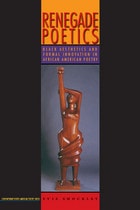
Renegade Poetics
Black Aesthetics and Formal Innovation in African American PoetryEvie Shockley
University of Iowa Press, 2011
Beginning with a deceptively simple question—What do we mean when we designate behaviors, values, or forms of expression as “black”?—Evie Shockley’s Renegade Poetics separates what we think we know about black aesthetics from the more complex and nuanced possibilities the concept has long encompassed. The study reminds us, first, that even among the radicalized young poets and theorists who associated themselves with the Black Arts Movement that began in the mid-1960s, the contours of black aesthetics were deeply contested and, second, that debates about the relationship between aesthetics and politics for African American artists continue into the twenty-first century.
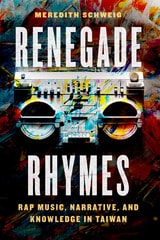
Renegade Rhymes
Rap Music, Narrative, and Knowledge in TaiwanMeredith Schweig
University of Chicago Press, 2022
Like many states emerging from oppressive political rule, Taiwan saw a cultural explosion in the late 1980s, when nearly four decades of martial law under the Chinese Nationalist Party ended. As members of a multicultural, multilingual society with a complex history of migration and colonization, Taiwanese people entered this moment of political transformation eager to tell their stories and grapple with their identities. In Renegade Rhymes, ethnomusicologist Meredith Schweig shows how rap music has become a powerful tool in the post-authoritarian period for both exploring and producing new knowledge about the ethnic, cultural, and political history of Taiwan.
Schweig draws on extensive ethnographic fieldwork, taking readers to concert venues, music video sets, scenes of protest, and more to show how early MCs from marginalized ethnic groups infused rap with important aspects of their own local languages, music, and narrative traditions. Aiming their critiques at the educational system and a neoliberal economy, new generations of rappers have used the art form to nurture associational bonds and rehearse rituals of democratic citizenship, making a new kind of sense out of their complicated present.
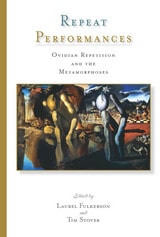
Repeat Performances
Ovidian Repetition and the <i>Metamorphoses<i/>Edited by Laurel Fulkerson and Tim Stover
University of Wisconsin Press, 2016
A shared vision of the possibilities of Latin epic poetry unites the essays, as does a series of attempts to realize those opportunities. Some of the pieces represent a traditional vein of allusion and intertextuality; others are more innovative in their approaches. Each, in a sense, stands as a placeholder for a methodology of theorizing the repetitive practices of poetry, of epic, and of Ovid in particular.
Contributors: Antony Augoustakis, Neil W. Bernstein, Barbara Weiden Boyd, Andrew Feldherr, Peter Heslin, Stephen Hinds, Sharon L. James, Alison Keith, Peter E. Knox, Darcy Krasne

Repeating Žižek
Agon Hamza, ed.
Duke University Press, 2015
Contributors. Henrik Jøker Bjerre, Bruno Bosteels, Agon Hamza, Brian Benjamin Hansen, Adrian Johnston, Katja Kolšek, Adam Kotsko, Catherine Malabou, Benjamin Noys, Geoff Pfeifer, Frank Ruda, Oxana Timofeeva, Samo Tomšic, Gabriel Tupinambá, Fabio Vighi, Gavin Walker, Sead Zimeri, Slavoj Žižek
Repertory of Shakespeare's Company, 1594–1613
Roslyn Lander Knutson
University of Arkansas Press, 1991
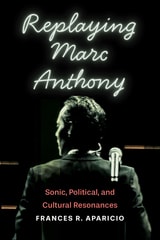
Replaying Marc Anthony
Sonic, Political, and Cultural ResonancesFrances R. Aparicio
The Ohio State University Press, 2025
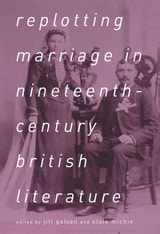
Replotting Marriage in Nineteenth-Century British Literature
Edited by Jill Galvan and Elsie Michie
The Ohio State University Press, 2018
In Replotting Marriage in Nineteenth-Century British Literature, Jill Galvan and Elsie Michie bring together top Victorian scholars to scrutinize nineteenth-century marriage in incisive ways. The volume puts marriage in conversation with many aspects of culture, from education and anthropology to Darwinism and crime. It aims to widen the repertoire of critical questions we ask about how fiction represents conjugal coupling, employing, among other approaches, transimperial reading, queer theory, disability studies, and philosophies of the formation of human society. By paying close attention to elements of genre and narrative, moreover, the collection analyzes the story of marriage as formally and structurally diverse, rather than as a familiar plot line.
These essays point to nineteenth-century marriage studies as a new field of inquiry. With contributions by Ian Duncan, Elisha Cohn, Kathy Psomiades, Kelly Hager, Lauren Goodlad, Marlene Tromp, Sukanya Banerjee, Holly Furneaux, Talia Schaffer, and Helena Michie, and an afterword by Mary Jean Corbett, Replotting Marriage in Nineteenth-Century British Literature demonstrates how both established and developing fields can be brought to bear on a long-examined institution—ultimately prompting a rethinking of the nineteenth century itself.
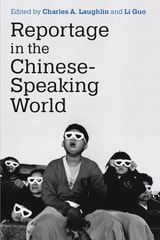
Reportage in the Chinese-Speaking World
Edited by Charles A. Laughlin and Li Guo
University of Michigan Press, 2026
Reportage in the Chinese-Speaking World examines reportage as an important aesthetic form of cultural production in the Sinophone world. Originating as a proletarian nonfiction form in interwar Europe, reportage spread around the world, coming into its own in the Sinophone world from the 1930s to today. Going beyond fact-based journalism, reportage is pursued through a variety of artistic forms and media, from nonfiction writing to photography to documentary film. Reportage’s plurimedial representations facilitate and amplify intersectional struggles against multiple forms of social and political oppression. Engaging its audiences in affective ethico-political exchanges with (human or nonhuman) subjects, reportage promotes audiences’ empathetic responses to the democratic appeals of marginalized groups whose status, identity, or situation manifest emergent ethical challenges in the society of their time.
This work offers new understandings of reportage’s dialectical relationship with its readership by evoking sympathetic identifications with personal contemplations of place, hearth, and senses of belonging. Covering a breadth of media across mainland China, Taiwan, and the Sinophone diaspora in the United States and Japan, this book examines how intermediality cultivates distinctive expressions in reportage, cross-cultural empathy, and ethico-political relationships between the reporter, photographer, filmmaker, and their surroundings.
Representing Jazz
Krin Gabbard
Duke University Press, 1995
Krin Gabbard has gathered essays by distinguished writers from a variety of fields. They provide engaging analyses of films such as Round Midnight, Bird, Mo’ Better Blues, Cabin in the Sky, and Jammin’ the Blues; the writings of Eudora Welty and Dorothy Baker; the careers of the great lindy hoppers of the 1930s and 1940s; Mura Dehn’s extraordinary documentary on jazz dance; the jazz photography of William Claxton; painters of the New York School; the traditions of jazz autobiography; and the art of "vocalese." The contributors to this volume assess the influence of extramusical sources on our knowledge of jazz and suggest that the living contexts of the music must be considered if a more sophisticated jazz scholarship is ever to evolve. Transcending the familiar patterns of jazz history and criticism, Representing Jazz looks at how the music actually has been heard and felt at different levels of American culture.
With its companion anthology, Jazz Among the Discourses, this volume will enrich and transform the literature of jazz studies. Its provocative essays will interest both aficionados and potential jazz fans.
Contributors. Karen Backstein, Leland H. Chambers, Robert P. Crease, Krin Gabbard, Frederick Garber, Barry K. Grant, Mona Hadler, Christopher Harlos, Michael Jarrett, Adam Knee, Arthur Knight, James Naremore
Representing the Past
Essays in Performance HistoriographyCharlotte M. Canning
University of Iowa Press, 2010
How do historians represent the past? How do theatre historians represent performance events? The fifteen challenging essays in Representing the Past: Essays in Performance Historiography focus on the fundamental epistemological conditions and procedures that serve as the foundational ideas that guide all historians in their endeavors. Unified by their investigations into how best to understand and then represent the past, this diverse group of scholars in the field of theatre history and performance studies offers insights into the abiding issues that all historians face in the task of representing human events and actions.
Five primary ideas provide the topics as well as the intellectual parameters for this book: archive, time, space, identity, and narrative. Taking these as the conceptual framework for historical research and analysis, the essayists cover an expansive range of case studies and problems in the historical study of performance from the Americas to Africa and from Europe to India and China. Considering not only how historians think about these concepts in their research and writing but more pointedly—and historiographically—how they think with them, the essayists demonstrate the power and centrality of each of these five ideas in historical scholarship from initial research to the writing of essays and books.
Performance history has a diversity of identities, locations, sources, and narratives. This compelling engagement with the concepts essential to historical understanding is a valuable contribution to the historiography of performance—for students, teachers, and the future of the discipline itself. Expanding upon its classic predecessor, Interpreting the Theatrical Past: Essays in the Historiography of Performance, this exciting new collection illustrates the contemporary richness of historical thinking and writing in the field of performance history.
Representing the Troubles in Irish Short Fiction
Michael L. Storey
Catholic University of America Press, 2004
Reproduction by Design
Sex, Robots, Trees, and Test-Tube Babies in Interwar BritainAngus McLaren
University of Chicago Press, 2012

Reproductions of Banality
Fascism, Literature, and French Intellectual LifeAlice Yaeger KaplanForeword by Russell Berman
University of Minnesota Press, 1986
Reproductions of Banality was first published in 1986. Minnesota Archive Editions uses digital technology to make long-unavailable books once again accessible, and are published unaltered from the original University of Minnesota Press editions.
An established fascist state has never existed in France, and after World War II there was a tendency to blame the Nazi Occupation for the presence of fascists within the country. Yet the memory of fascism within their ranks still haunts French intellectuals, and questions about a French version of fascist ideology have returned to the political forefront again and again in the years since the war. In Reproductions of Banality, Alice Yaegar Kaplan investigates the development of fascist ideology as it was manifested in the culture of prewar and Occupied France. Precisely because it existed only in a "gathering" or formative stage, and never achieved the power that brings with it a bureaucratic state apparatus, French fascism never lost its utopian, communal elements, or its consequent aesthetic appeal. Kaplan weighs this fascist aesthetic and its puzzling power of attraction by looking closely at its material remains: the narratives, slogans, newspapers, and film criticism produced by a group of writers who worked in Paris in the 1930s and early 1940s — their "most real moment."
These writers include Pierre Drieu la Rochelle, Louis-Ferdinand Celine, Lucien Rebatat, Robert Brasillach, and Maurice Bardeche, as well as two precursors of French fascism, Georges Sorel and the Italian futurist F.T. Marinetti, who made of the airplane an industrial carrier of sexual fantasies and a prime mover in the transit from futurism to fascism. Kaplan's work is grounded in the major Marxist and psychoanalytic theories of fascism and in concepts of banality and mechanical reproduction that draw upon Walter Benjamin. Emphasizing the role played by the new technologies of sight and sound, she is able to suggest the nature of the long-repressed cultural and political climate that produced French fascism, and to show—by implication — that the mass marketing of ideology in democratic states bears a family resemblance to the fascist mode of an earlier time.
Rereading the Revolution
The Turn-of-the-Century American Revolutionary War NovelAnita Lawson
University of Wisconsin Press, 2000
Approximately fifty historical novels dealing with the American Revolution were published in the United States from 1896 to 1906. Benjamin S. Lawson critically examines the narrative strategies employed in these works and the ways in which fiction is made to serve the purpose of vivifying national history.
Writing within the conventions of the historical romance, these authors created plots that reflect the enveloping concerns of the War for Independence, such as the young American woman who often must choose between suitors on opposite sides in the wider conflict.
Lawson concludes that these works reassured readers of the worth of an Anglo-American heritage. They were escapist fantasies to the degree that they failed to confront contemporary realities of crisis and change: the New Immigration, urbanization and industrialization, labor strife, the plight of the poor, and agitation on behalf of women and ethnic minorities.
Rescue and Romance
Popular Novels Before World War IDiana Reep
University of Wisconsin Press, 1982
This study of the rescue motif in popular American novels before World War I focuses on the rescue convention as part of the romantic plot of the novels. The rescue as a structured convention that controls the movement of the romantic plot appears in all types of domestic novels, gothics, dime novels, historical romances, and westerns.

Resident Alien
On Border-crossing and the Undocumented DivineKazim Ali
University of Michigan Press, 2015
Resistance and Survival
Children’s Narrative from Central America and the CaribbeanAnn González
University of Arizona Press, 2009
Many of these stories are in some way lessons in resistance and survival in a world where “the toughest kid on the block,” often an outsider, demands that a group of children “play or pay,” on his terms. González demonstrates that where traditional strategies have proposed the model of the “trickster” or the “paradoxically astute fool,” to mock the pretensions of the would-be oppressor, new trends indicate that the region’s children—and those who write for them—show increasing interest in playing the game on their own terms, getting to know the Other, embracing difference, and redefining their identity and role within the new global culture.
Resistance and Survival emphasizes the hope underlying this contemporary children’s literature for a world in which all voices can be heard and valued—the hope of an authentic happy ending.
Resisting Dialogue
Modern Fiction and the Future of DissentJuan Meneses
University of Minnesota Press, 2019
A bold new critique of dialogue as a method of eliminating dissent
Is dialogue always the productive political and communicative tool it is widely conceived to be? Resisting Dialogue reassesses our assumptions about dialogue and, in so doing, about what a politically healthy society should look like. Juan Meneses argues that, far from an unalloyed good, dialogue often serves as a subtle tool of domination, perpetuating the underlying inequalities it is intended to address.
Meneses investigates how “illusory dialogue” (a particular dialogic encounter designed to secure consensus) is employed as an instrument that forestalls—instead of fostering—articulations of dissent that lead to political change. He does so through close readings of novels from the English-speaking world written in the past hundred years—from E. M. Forster’s A Passage to India and Jeanette Winterson’s The Passion to Indra Sinha’s Animal’s People and more. Resisting Dialogue demonstrates how these novels are rhetorical exercises with real political clout capable of restoring the radical potential of dialogue in today’s globalized world. Expanding the boundaries of postpolitical theory, Meneses reveals how these works offer ways to practice disagreement against this regulatory use of dialogue and expose the pitfalls of certain other dialogic interventions in relation to some of the most prominent questions of modern history: cosmopolitanism at the end of empire, the dangers of rewriting the historical record, the affective dimension of neoliberalism, the racial and nationalist underpinnings of the “war on terror,” and the visibility of environmental violence in the Anthropocene.
Ultimately, Resisting Dialogue is a complex, provocative critique that, melding political and literary theory, reveals how fiction can help confront the deployment of dialogue to preempt the emergence of dissent and, thus, revitalize the practice of emancipatory politics.

Resisting Regionalism
Gender And Naturalism In American Fiction, 1885-1915Donna Campbell
Ohio University Press, 1997
When James Lane Allen defined the “Feminine Principle” and the “Masculine Principle” in American fiction for the Atlantic Monthly in 1897, he in effect described local color fiction and naturalism, two branches of realism often regarded as bearing little relationship to each other. In this award-winning study of both movements, Resisting Regionalism explores the effect the cultural dominance of women’s local color fiction in the 1890’s had on young male naturalist writers, who rebelled against the local colorists and their “teacup tragedies.”
An immensely popular genre, local color fiction reached its peak in the 1880s in such literary journals as Harper’s Monthly, Scribner’s, the Atlantic Monthly, and the Century. These short stories exhibited local “characters,” depicted marginal groups and vanishing folkways, and addressed issues of absence, loss, limitation, and the past. Despite such prickly themes, according to Donna Campbell, local color fiction “fulfilled some specific needs of the public – for nostalgia, for a retreat into mildly exotic locales, for a semblance of order preserved in ritual.”
By the turn of the century, however, local color fiction was fading from the scene, supplanted by writers of adventure fiction and historical romances, with whom local colorists increasingly merged, and opposed by the naturalists. In examining this historic shift, Resisting Regionalism shows that far from being distanced from local color fiction, nationalism emerged in part as a dissenting response to its popularity and to the era’s concerns about the dominance of feminine influence in American literature. The new generation of authors, including Crane, Norris, London, Frederic, Wharton, resisted the cultural myths and narrative strategies common to local colorists Sarah Orne Jewett, Rose Terry Cooke, Mary E. Wilkins Freeman, and Constance Fenimore Woolson. Yet, as Campbell underscores in her analysis of Stephan Crane’s The Monster, the naturalists could, and did, integrate local color conventions with the grotesque and horrifying to powerful effect.
In clear, accessible prose, Resisting Regionalism provides fresh readings of naturalistic works in the context of the dispute between local color and naturalism. In the process, this book shows the debt naturalism owes to local color fiction and illuminates a neglected but significant literary era.