Results by title
3785 books match the query 'Poetry' and 163 start with r
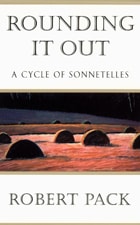
Rounding It Out
A Cycle of SonnetellesRobert Pack
University of Chicago Press, 1999
Rounding It Out is not only about these themes, but also, through reflection, about its own chosen form. Each of the poems is a cross between a sonnet and a villanelle, a formal innovation Pack calls a sonnetelle. Employing meter and rhyme, assonance and alliteration, Pack takes delight and finds consolation in the sensuousness of the English language even in the face of mortality and ongoing personal loss.
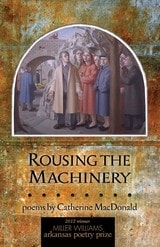
Rousing the Machinery
PoemsCatherine MacDonald
University of Arkansas Press, 2012
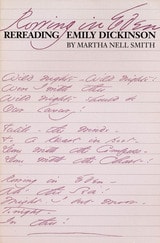
Rowing in Eden
Rereading Emily DickinsonBy Martha Nell Smith
University of Texas Press, 1992
Emily Dickinson wrote a "letter to the world" and left it lying in her drawer more than a century ago. This widely admired epistle was her poems, which were never conventionally published in book form during her lifetime. Since the posthumous discovery of her work, general readers and literary scholars alike have puzzled over this paradox of wanting to communicate widely and yet apparently refusing to publish. In this pathbreaking study, Martha Nell Smith unravels the paradox by boldly recasting two of the oldest and still most frequently asked questions about Emily Dickinson: Why didn't she publish more poems while she was alive? and Who was her most important contemporary audience?
Regarding the question of publication, Smith urges a reconception of the act of publication itself. She argues that Dickinson did publish her work in letters and in forty manuscript books that circulated among a cultured network of correspondents, most important of whom was her sister-in-law, Susan Huntington Gilbert Dickinson. Rather than considering this material unpublished because unprinted, Smith views its alternative publication as a conscious strategy on the poet's part, a daring poetic experiment that also included Dickinson's unusual punctuation, line breaks, stanza divisions, calligraphic orthography, and bookmaking—all the characteristics that later editors tried to standardize or eliminate in preparing the poems for printing.
Dickinson's relationship with her most important reader, Sue Dickinson, has also been lost or distorted by multiple levels of censorship, Smith finds. Emphasizing the poet-sustaining aspects of the passionate bonds between the two women, Smith shows that their relationship was both textual and sexual. Based on study of the actual holograph poems, Smith reveals the extent of Sue Dickinson's collaboration in the production of poems, most notably "Safe in Their Alabaster Chambers." This finding will surely challenge the popular conception of the isolated, withdrawn Emily Dickinson.
Well-versed in poststructuralist, feminist, and new textual criticism, Rowing in Eden uncovers the process by which the conventional portrait of Emily Dickinson was drawn and offers readers a chance to go back to original letters and poems and look at the poet and her work through new eyes. It will be of great interest to a wide audience in literary and feminist studies.
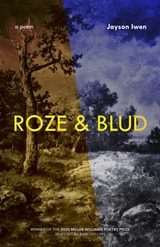
Roze & Blud
a poemJayson Iwen
University of Arkansas Press, 2020
Winner, 2020-2021 Northeastern Minnesota Book Award
In this long poem—almost a novel-in-verse—Jayson Iwen examines the intimate thoughts and feelings of two would-be poets: Roze Mertha, a teenage girl growing up in a trailer park, and William Blud, a veteran navigating age and loneliness in an apartment he shares with an Afghan refugee. Deftly crafting distinct voices for these characters in the upper midwestern terrain they inhabit, Iwen explores the quiet heartbreak and tenderly treasured experiences of two apparently unremarkable people using poetry to understand a world that doesn’t make much space for them.
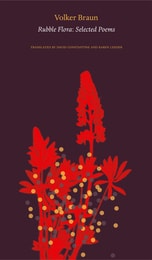
Rubble Flora
Selected PoemsVolker Braun
Seagull Books, 2019
Ruining the Picture
Pimone Triplett
Northwestern University Press, 1998
"Pimone Triplett has a large discursive intelligenge, a keen lyric sensibility, a strong feeling for drama. . . . What an abiding pleasure to encounter a first book of such maturity." --Edward Hirsch
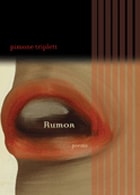
Rumor
PoemsPimone Triplett
Northwestern University Press, 2009
Over the course of the book, she explores how a child grows from a hint, a rumor, to a full force of intelligence and knowing. "Motherland" and "Last Wave" amplify voices, respectively, of exploited children in the brutal Thai sex trade and the victims in the aftermath of the 2004 tsunami in the Indian Ocean. The fragmentary nature of rumor, whether in the form of tabloid gossip or in the spread of partial knowledge, has consequence on a personal and even a world historical scale in Triplett's powerful poems.
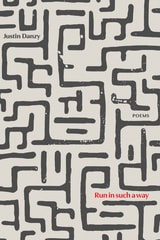
Run in Such a Way
PoemsJustin Danzy
Northwestern University Press, 2027
A poet’s candid and probing exploration of faith, Blackness, and masculinity
With poems that closely examine familial bonds and heritage, biblical teachings, a shifting understanding of home, and the violence of toxic masculinity, Justin Danzy’s Run in Such a Way sits at the crossroads of religion, race, gender, and more. A collection about pursuit, tracking the narrative of its speaker’s journey toward a deeper understanding of himself and of his community as he moves from child to man, the book wrestles with the way an identity is constructed, deconstructed, and reconstructed again throughout one’s life. Playful and sincere in equal measure, Danzy’s command of the line carries us through as we travel with the speaker to the precipice of belief. Danzy’s lyrical voice and fealty to his people pays homage to the world that made him, and considers all that the speaker of this tremendous debut has—both wisely and foolishly—run toward and away from in the search for truth.
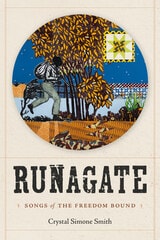
Runagate
Songs of the Freedom BoundCrystal Simone Smith
Duke University Press, 2025
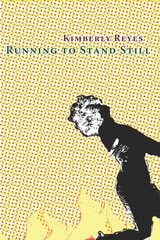
Running to Stand Still
Kimberly Reyes
Omnidawn, 2019
These poems teem with life, a life rich with many selves and many histories that populate in the voice of Reyes’s poetic narrator. They sway between negotiations of hypervisibility and erasure, the inevitable and the chosen, and the perceived and the constructed. Reyes’s poems offer sharp observations and lyrical movement to guide us in a ballad of reconciliation and becoming.
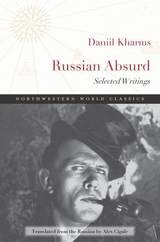
Russian Absurd
Selected WritingsDaniil Kharms, Translated from the Russian by Alex Cigale
Northwestern University Press, 2017
A writer who defies categorization, Daniil Kharms has come to be regarded as an essential artist of the modernist avant-garde. His writing, which partakes of performance, narrative, poetry, and visual elements, was largely suppressed during his lifetime, which ended in a psychiatric ward where he starved to death during the siege of Leningrad. His work, which survived mostly in notebooks, can now be seen as one of the pillars of absurdist literature, most explicitly manifested in the 1920s and ’30s Soviet Union by the OBERIU group, which inherited the mantle of Russian futurism from such poets as Vladimir Mayakovsky and Velimir Khlebnikov. This selection of prose and poetry provides the most comprehensive portrait of the writer in English translation to date, revealing the arc of his career and including a particularly generous selection of his later work.
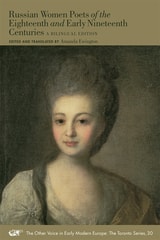
Russian Women Poets of the Eighteenth and Early Nineteenth Centuries
A Bilingual EditionEdited and Translated by Amanda Ewington
Iter Press, 2014
—Marcus C. Levitt
Professor, Department of Slavic Languages, University of Southern California
rivers of the driftless region
Mark Conway
Four Way Books, 2019