Results by title
8812 books match the query 'Political Science' and 436 start with r
Redesigning Social Inquiry
Fuzzy Sets and BeyondCharles C. Ragin
University of Chicago Press, 2008
Redesigning Social Inquiry provides a substantive critique of the standard approach to social research—namely, assessing the relative importance of causal variables drawn from competing theories. Instead, Ragin proposes the use of set-theoretic methods to find a middle path between quantitative and qualitative research. Through a series of contrasts between fuzzy-set analysis and conventional quantitative research, Ragin demonstrates the capacity for set-theoretic methods to strengthen connections between qualitative researchers’ deep knowledge of their cases and quantitative researchers’ elaboration of cross-case patterns. Packed with useful examples, Redesigning Social Inquiry will be indispensable to experienced professionals and to budding scholars about to embark on their first project.
Redesigning the Medicare Contract
Politics, Markets, and AgencyEdward F. Lawlor
University of Chicago Press, 2003
Challenging conventional ideas, Lawlor suggests that we look at Medicare as a contract between the federal government, the program's beneficiaries, and health care providers. Medicare reform, then, would involve rewriting this contract so that it more successfully serves the interests of both beneficiaries and taxpayers. To do this, Lawlor argues that we must improve the agency of the program—the informational, organizational, and incentive elements that assure Medicare program carries out beneficiary and taxpayer interests in providing the most appropriate, high-quality care possible. The book includes a chapter devoted solely to concepts and applications that give definition to this brand of agency theory. Lawlor's innovative agency approach is matched with lucid explanation of the more comprehensive groundwork in the history and politics of the Medicare program.
Lawlor's important and timely book reframes the Medicare debate in a productive manner and effectively analyzes alternatives for reform. Lawlor argues that effective policy design for Medicare requires greater appreciation of the vulnerability of beneficiaries, the complexity of the program itself, its wide geographical variations in services and financing, and the realistic possibilities for government and private sector roles. Tackling difficult problems like end-of-life and high-tech care—and offering sensible solutions—Redesigning the Medicare Contract will interest political scientists, economists, policy analysts, and health care professionals alike.
Reducing Firearm Injury and Death
A Public Health Sourcebook on GunsTrudy A. Karlson
Rutgers University Press, 1997
There are few issues more explosive than guns. "Guns don't kill people, people kill people," is an often-heard response to calls for firearm control. But are there ways to make guns safer without placing further restrictions on gun owners? Can guns be engineered to reduce the number and severity of injuries?
This book is about guns and new solutions for addressing problems they create. Trudy Karlson and Stephen Hargarten, two experts in public health and injury control, show readers how guns are products, designed to injure and kill, and how changes in the design, technology, and marketing of firearms can lead to reductions in the number of injuries and fatalities.
Just as innovations in the design and technology of motor vehicles succeeded in creating safer cars, Karlson and Hargarten describe how responsible changes to gun products can reduce the number of serious injuries and fatalities. The injury control perspective illustrates how the characteristics of guns and ammunition are associated with their ability to cause injury and death. It also provides options for how guns can be re-engineered to ensure a greater degree of safety and protection. Reducing Firearm Injury and Death teaches basic facts about guns and gun injuries, and by reframing the problem of firearms as a public health issue, offers hope for saving lives.
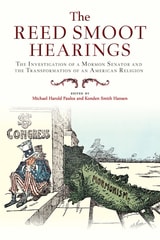
Reed Smoot Hearings
The Investigation of a Mormon Senator and the Transformation of an American ReligionMichael Harold Paulos
Utah State University Press, 2022
The work adds new insights into the role religion and the secular played in the shaping of US political institutions and national policies. Chapters also look at the history of anti-polygamy laws, the persistence of post-1890 plural marriage, the continuation of anti-Mormon sentiment, the intimacies and challenges of religious privatization, the dynamic of federal power on religious reform, and the more intimate role individuals played in effecting these institutional and national developments.
The Smoot hearings stand as an important case study that highlights the paradoxical history of religious liberty in America and the principles of exclusion and coercion that history is predicated on. Framed within a liberal Protestant sensibility, these principles of secular progress mapped out the relationship of religion and the nation-state for the new modern century. The Reed Smoot Hearings will be of significant interest to students and scholars of Mormon, western, American, and religious history.
Publication supported, in part, by Gonzaba Medical Group.
Contributors: Gary James Bergera, John Brumbaugh, Kenneth L. Cannon II, Byron W. Daynes, Kathryn M. Daynes, Kathryn Smoot Egan, D. Michael Quinn
Reel Inequality, Second Edition
Hollywood Actors and RacismNancy Wang Yuen
Rutgers University Press, 2027
Reel Inequality was the first book to systematically document how Hollywood's institutional racism shapes the lives and careers of actors of color. In this updated edition, Nancy Wang Yuen again translates academic research on structural racism into an engaging, accessible narrative for general readers. Connecting personal stories from actors of color, industry data and practices, and historical patterns, she reveals how racism operates both behind the scenes and on the screen. She also examines Hollywood’s retreat from diversity efforts amid the broader backlash against DEI.
Yuen draws on newly released industry data and recently published interviews with actors of color, showing how racism continues to shape who gets cast, who gets hired, and who gets to tell their own story. She looks closely at the pressures actors of color face, including typecasting, financial precarity, and racial burdens, even as many push back and forge their own paths. She also uses the lens of Hollywood to explore broader issues of race, inequality, and representation.
Reel Inequality
Hollywood Actors and RacismNancy Wang Yuen
Rutgers University Press, 2016
Reflections in Prison
Voices From the South African Liberation StruggleMac Maharaj
University of Massachusetts Press, 2002
Written by Mandela, Walter Sisulu, Ahmed Kathrada, Govan Mbeki, and four other leaders of the anti-apartheid movement, these essays provide a rare view of their thinking at a critical point in the liberation struggle, on the eve of the 1976 Soweto Uprising. The leaders describe their philosophies, strategies, and hopes. They debate such crucial issues as violent versus nonviolent forms of struggle, diversity and unity, the ideological challenge of the Black Consciousness movement, and how to accommodate different interpretations of African nationalism.
The book begins with a foreword by Desmond Tutu and a contextualizing introduction by Maharaj. Then come two essays by Mandela and one each by Sisulu, Kathrada, Mbeki, Billy Nair, John Pokela, Eddie Daniels and Andimba Toivo Ya Toivo. Each essay is preceded by a short biography of the author, a description of his life in prison, and a pencil sketch by a black South African artist.

Reflections in a Bloodshot Lens
America, Islam and the War of IdeasLawrence Pintak
Pluto Press, 2006
There exists today a tragic rift between Americans and the world’s Muslims. Yet in the immediate aftermath of 9/11, there was widespread sympathy for the U.S. throughout the Muslim world. This book explores what happened. It examines the disconnect that leads Americans and Muslims to view the same words and images in fundamentally different ways. Partly a result of a centuries-old 'us' against 'them' dichotomy, the problem is exacerbated by an increasingly polarised media and by leaders on both sides who either don't understand or don't care what impact their words and policies have in the world at large.
Journalist-scholar Lawrence Pintak, a former CBS News Middle East correspondent, argues that the Arab media revolution and the rise of 'patriot-journalists' in the US marginalized voices of moderation, distorting perceptions on both sides of the divide with potentially disastrous results.
Built on the author's extensive journalistic experience, the book will appeal to policymakers, students of media studies, Middle East studies and Islamic studies, and general current affairs readers.
Reflections of a Would-Be Anarchist
Ideals and Institutions of LiberalismRichard E. Flathman
University of Minnesota Press, 1998
Reflections on Latin American Development
By Roberto de Olivera Campos; introduction by Benjamin Higgins
University of Texas Press, 1967
Economic development has been an challenge facing the countries of Latin America. Because the United States, from the very nature of its geographic and economic relationship with its southern neighbors, must inevitably exercise a strong influence on the course which that development takes, it is important that North Americans understand conditions in Latin America and the attitudes of its peoples. Roberto de Oliveira Campos, former Brazilian Minister of Economic Planning, is in a unique position to evaluate both past accomplishments and future problems.
In this group of essays, Campos gives a comprehensive analysis of many aspects of Latin American development in the mid-twentieth century. He examines relations between the United States and Latin America from a variety of angles, and he outlines the basic problems of economic development, of governmental policy, and of public and private administration. He gives particular attention in several essays to the relationship of foreign trade and foreign aid to economic development, and he presents a long discussion of the Alliance for Progress—its history, its purposes, its accomplishments, and its failures.
Campos’s philosophy regarding the role of the state in economic development and other questions emerges clearly from these pithy essays. “The valid distinction I see on the basis of my analysis of men and things is between pragmatic or functional nationalists and romantic or temperamental nationalists,” he writes. “The latter confuse intention with results. They start with enthusiasm and end in fanaticism, this being, according to Santayana, ‘the art of redoubling efforts after losing sight of objectives.’ . . . Many [romantic nationalists], though they do not confess it, favor the dangerous purgery of revolution.
“The pragmatic nationalist seeks to operate within the frame of democratic institutions and prefers reform to revolution. As to myself, I shall continue considering myself a pragmatic nationalist. I renounce the temptation of mobilizing resentment in order to gain the authority to plan development. I would rather strengthen the national entrepreneur than merely antagonize the foreigner. I would want the state not to do what it cannot do in order to do what it should do. I prefer to love my own country rather than to hate the others’.”
Reflections on Public Administration
John Merriman Gaus
University of Alabama Press, 2008
An exploration of government, society, and the ecology of public administration.
Reflections on Public Administration is a foundational work by John Merriman Gaus, one of the most influential thinkers in the development of modern public administration. First published in 1947, this enduring classic examines the relationship between government institutions and the broader social, economic, political, and technological environments in which they operate. Gaus argues that public administration cannot be understood in isolation; rather, it is shaped by an interconnected "ecology" of people, resources, ideas, geography, and public needs.
Drawing on historical examples and keen observation, Gaus explores how major societal changes during the first half of the twentieth century led citizens to increasingly rely on government to address public challenges. As demands expanded, so too did the responsibilities and influence of administrative agencies, contributing to the rise of the modern administrative state. His analysis provides valuable insight into the evolution of governance, public policy, and institutional development.
Written with clarity and foresight, Reflections on Public Administration continues to resonate with contemporary discussions about government effectiveness, public service, and democratic accountability. Widely regarded as a landmark contribution to political science and public affairs, it remains essential reading for anyone seeking to understand the theoretical foundations and practical realities of public administration.
Reflections on a Disruptive Decade
Essays from the SixtiesEugene Davidson
University of Missouri Press, 2000
As editor of Modern Age in the 1960s, Eugene Davidson introduced each quarterly issue with a thought-provoking contemplation of one or another of the decade's dizzying events. Gathered together here for the first time, the essays in Reflections on a Disruptive Decade present an intellectual conservative's perspective on an era which, because it underscores so many of the political divisions still with us today, continues to hold our fascination.
Davidson deals with the marvelous but confused realm of post-1945 international politics, in which the American people faced a new enemy, one often baffling and terrifying. The Cuban missile crisis was probably the most uncertain moment in foreign policy during this century. Although the crisis was resolved without bloodshed, there was intense danger of irrationality, for the Russians foolhardily had sent nuclear missiles to Cuba.
Other topics Davidson addresses are the Civil Rights movement, the policies and programs of Lyndon Johnson's Great Society, and the East-West battles of ideology and arms in Europe, Vietnam, and the Middle East. With remarkable shrewdness, Davidson illuminates many contradictions and excesses of the decade's liberal ascendancy, and presciently detects signs pointing to a resurgence of the nation's conservative forces.
Although more than thirty years have passed, Davidson's essays still contain great clarity, and his appraisals are still keen. Reflections on a Disruptive Decade is a truly remarkable addition to the work of this distinguished scholar.
Reflections on the Just
Paul Ricoeur
University of Chicago Press, 2007
Now in paperback, the definitive English translation of Ricoeur's second collection of essays (after The Just) about justice and law.
At the time of his death in 2005, French philosopher Paul Ricoeur was regarded as one of the great thinkers of his generation. In more than half a century of writing about the essential questions of human life, Ricoeur’s thought encompassed a vast range of wisdom and experience, and he made landmark contributions that would go on to influence later scholars in such areas as phenomenology, hermeneutics, structuralism, and theology.
Toward the end of his life, Ricoeur began to focus directly on ethical questions that he feared had been overshadowed by his other work; the result was a two-volume collection of essays on justice and the law. The University of Chicago Press published the English translation of the first volume, The Just, to great acclaim in 2000. Now this translation of the second volume, Reflections on the Just, completes the set and makes available to readers the whole of Ricoeur’s meditations on the concept.
Consisting of fifteen thematically organized essays, Reflections on the Just continues and expands on the work Ricoeur began with his “little ethics” in Oneself as Another and The Just. In the preface, he considers what revisions he would make were he to start over and how that is reflected in these essays. The opening part brings phenomenology to bear on ethics; the second group of essays comprises shorter, occasional pieces considering the concept of justice in the works of other philosophers, including Max Weber and Charles Taylor. The final part turns to the specific domains of medicine and the law, examining how concepts of right and justice operate in those realms.
Cogent, deeply considered, and fully engaged with the realities of the contemporary world, Reflections on the Just is an essential work for understanding the development of Ricoeur’s thought in his final years.
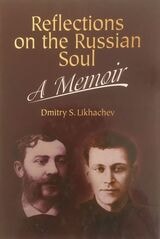
Reflections on the Russian Soul
A MemoirDmitry S. Likhachev
Central European University Press, 2000
This compelling and often traumatic book is the memoir of one of the most important figures in modern Russian history, Dmitry S. Likhachev, revered as ‘a guardian of national culture’. Reflections on the Russian Soul is an incredible account of an intellectual’s turbulent journey through twentieth century Russia. Likhachev re-counts the fortunes of people with whom he came into contact and reproduces the air of passed years in Russia.
Likhachev vividly portrays his childhood years in St. Petersburg and continues into his student life at Leningrad University that led to an agonizing period of imprisonment and near death. He describes how a harmless prank caught the attention of the Secret Police, resulting in his exile and confinement within the infamous prison island of Solovki. He describes his first-hand experience of brutality in prison during the early Stalin years and the incident that not only saved him but also haunted him for the rest of his life.
He reflects on the years after his release from prison and the events leading up to the Second World War. His powerful recollection of the blockade of Leningrad provides the reader with a horrific insight into the harsh effects of war, hunger and survival. Lichachev goes on to describe post-war Russia and how his own livelihood developed from literary editor to a return to Leningrad University as Professor of History. This compelling autobiography finishes with Likhachev’s poignant return to Solovki as a free man.
Reflections
Conversations with PoliticiansPeter Hennessy and Robert Shepherd
Haus Publishing, 2016
Reflections collects transcripts of the best interviews from the BBC Radio 4 series Reflections with Peter Hennessy, a show on which the British political elite have spoken candidly about their careers and the moments that came to define their political lives. Supplementing the interviews are short biographies and profiles of the interviewees, allowing readers a fuller picture of each speaker’s background and professional trajectory. This revealing book includes conversations with political heavyweights such as former prime minister John Major; former foreign secretaries Margaret Beckett, David Owen, and Jack Straw; Labour Party leader Neil Kinnock; Liberal Party leader David Steel; and chancellor of exchequer Nigel Lawson. In addition, Reflections presents interviews with leading women, including Shirley Williams and Clare Short, who spent years at the forefront of their parties in Westminster.
The latest volume in the popular Haus Curiosities series, Reflections offers valuable insights from some of today’s most influential political figures.
Reflections
Conversations with Politicians Volume IIPeter Hennessy and Robert Shepherd
Haus Publishing, 2019
Reforming Intelligence
Obstacles to Democratic Control and EffectivenessEdited by Thomas C. Bruneau and Steven C. Boraz
University of Texas Press, 2007
These days, it's rare to pick up a newspaper and not see a story related to intelligence. From the investigations of the 9/11 commission, to accusations of illegal wiretapping, to debates on whether it's acceptable to torture prisoners for information, intelligence—both accurate and not—is driving domestic and foreign policy. And yet, in part because of its inherently secretive nature, intelligence has received very little scholarly study. Into this void comes Reforming Intelligence, a timely collection of case studies written by intelligence experts, and sponsored by the Center for Civil-Military Relations (CCMR) at the Naval Postgraduate School, that collectively outline the best practices for intelligence services in the United States and other democratic states.
Reforming Intelligence suggests that intelligence is best conceptualized as a subfield of civil-military relations, and is best compared through institutions. The authors examine intelligence practices in the United States, United Kingdom, and France, as well as such developing democracies as Brazil, Taiwan, Argentina, and Russia. While there is much more data related to established democracies, there are lessons to be learned from states that have created (or re-created) intelligence institutions in the contemporary political climate. In the end, reading about the successes of Brazil and Taiwan, the failures of Argentina and Russia, and the ongoing reforms in the United States yields a handful of hard truths. In the murky world of intelligence, that's an unqualified achievement.
Reforming Legislatures
American Voters and State Ballot Measures, 1792-2020Peverill Squire
University of Missouri Press, 2024
Legislatures are ubiquitous in the American political experience. First created in Virginia in 1619, they have existed continuously ever since. Indeed, they were established in even the most unlikely of places, notably in sparsely populated frontier settlements, and functioned as the focal point of every governing system devised.
Despite the ubiquity of state legislatures, we know remarkably little about how Americans have viewed them as organizations, in terms of their structures, rules, and procedures. But with the rise of modern public opinion surveys in the twentieth century, we now have extensive data on how Americans have gauged legislative performance throughout the many years. That said, the responses to the questions pollsters typically pose reflect partisanship, policy, and personality. Generally, respondents respond favorably to legislatures controlled by their own political party and those in power during good economic times. Incumbent lawmakers get ratings boosts from having personalities, “home styles” that mesh with those of their constituents. These relationships are important indicators of people’s thoughts regarding the current performance of their legislatures and legislators, but they tell us nothing about attitudes toward the institution and its organizational characteristics.
This study offers a unique perspective on what American voters have historically thought about legislatures as organizations and legislators as representatives. Rather than focusing on responses to surveys that ask respondents how they rate the current performance of lawmakers and legislatures, this study leverages the most significant difference between national and state politics: the existence of ballot propositions in the latter. At the national level Americans have never had any say over Congress’s structure, rules, or procedures. In contrast, at the state level they have had ample opportunities over the course of more than two centuries to shape their state legislatures. The data examined here look at how people have voted on more than 1,500 state ballot propositions targeting a wide array of legislative organizational and parliamentary features. By linking the votes on these measures with the public debates preceding them, this study documents not only how American viewed various aspects of their legislatures, but also whether their opinions held constant or shifted over time. The findings reported paint a more nuanced picture of Americans’ attitudes toward legislatures than the prevailing one derived from survey research. When presented with legislative reform measures on which concrete choices were offered and decisions on them had to be made, the analyses presented here reveal that, counter to the conventional wisdom that people loved their representatives but hated the legislature, voters usually took charitable positions toward the institution while harboring skeptical attitudes about lawmakers’ motives and behaviors.
Reforming Philadelphia, 1682–2022
Richardson Dilworth
Temple University Press, 2023
Reforming Philadelphia examines the cyclical efforts of insurgents to change the city’s government over nearly 350 years. Political scientist Richardson Dilworth tracks reformers as they create a new purpose for the city or reshape the government to reflect emerging ideas. Some wish to thwart the “corrupt machine,” while others seek to gain control of the government via elections. These actors formed coalitions and organizations that disrupted the status quo in the hope of transforming the city (and perhaps also enriching themselves).
Dilworth addresses Philadelphia’s early development through the present day, including momentous changes from its new city charter in 1885 and the Republican machine that emerged around the same time to its transformation to a Democratic stronghold in the 1950s, when the city also experienced a racial transition. Focusing primarily on the twentieth and twenty-first centuries, Dilworth evaluates the terms of Mayors Frank Rizzo, Wilson Goode, and Ed Rendell, as well as John Street, Michael Nutter, and Jim Kenney to illustrate how power and resistance function, and how Philadelphia’s political history and reform cycles offer a conceptual model that can easily be applied to other cities.
Reforming Philadelphia provides a new framework for understanding the evolving relationship between national politics and local, city politics.
Reforming Philosophy
A Victorian Debate on Science and SocietyLaura J. Snyder
University of Chicago Press, 2006
Mill—philosopher, political economist, and Parliamentarian—remains a canonical author of Anglo-American philosophy, while Whewell—Anglican cleric, scientist, and educator—is now often overlooked, though in his day he was renowned as an authority on science. Placing their teachings in their proper intellectual, cultural, and argumentative spheres, Laura Snyder revises the standard views of these two important Victorian figures, showing that both men’s concerns remain relevant today.
A philosophically and historically sensitive account of the engagement of the major protagonists of Victorian British philosophy, Reforming Philosophy is the first book-length examination of the dispute between Mill and Whewell in its entirety. A rich and nuanced understanding of the intellectual spirit of Victorian Britain, it will be welcomed by philosophers and historians of science, scholars of Victorian studies, and students of the history of philosophy and political economy.
Reforming Public Welfare
A Critique of the Negative Income Tax ExperimentPeter H. Rossi
Russell Sage Foundation, 1976
Reforming the Reform
Problems of Public Schooling in the American Welfare StateSusan L. Moffitt, Michaela Krug O'Neill, and David K. Cohen
University of Chicago Press, 2023
School reform is almost always born out of big dreams and well-meaning desires to change the status quo. But between lofty reform legislation and the students whose education is at stake, there are numerous additional policies and policymakers who determine how reforms operate. Even in the best cases, school reform initiatives can perpetuate problems created by earlier reforms or existing injustices, all while introducing new complications. In Reforming the Reform, political scientist Susan L. Moffitt, education policy scholar Michaela Krug O’Neill, and the late policy and education scholar David K. Cohen take on a wide-ranging examination of the many intricacies of school reform.
With a particular focus on policymakers in the spaces between legislation and implementation, such as the countless school superintendents and district leaders tasked with developing new policies in the unique context of their district or schools, the authors identify common problems that arise when trying to operationalize ambitious reform ideas. Their research draws on more than 250 interviews with administrators in Tennessee and California (chosen as contrasts for their different political makeup and centralization of the education system) and is presented here alongside survey data from across the United States as well as archival data to demonstrate how public schools shoulder enormous responsibilities for the American social safety net. They provide a general explanation for problems facing social policy reforms in federalist systems (including healthcare) and offer pathways forward for education policy in particular.
Refounding Democracy through Intersectional Activism
How Progressive Era Feminists Redefined Who We Are, and What It Means TodayWendy Sarvasy
Temple University Press, 2024
Sarvasy shows how these activists worked to incorporate women by combining political democracy with the creation of a welfare state. They embedded this nation-state project within a new humanitarian transnational level as they evolved their multileveled social citizenship.
Refounding Democracy through Intersectional Activism demonstrates how a theory-activist dynamic played out in experimental socializing spaces and democratic conversations. It offers an inspirational method for intersectional activists today.
Refounding Environmental Ethics
Pragmatism, Principle, and PracticeBen Minteer
Temple University Press, 2011
Providing a bold and original rethinking of environmental ethics, Ben Minteer's Refounding Environmental Ethics will help ethicists and their allies resolve critical debates in environmental policy and conservation practice.
Minteer considers the implications of John Dewey's pragmatist philosophy for environmental ethics, politics, and practice. He provides a new and compelling intellectual foundation for the field—one that supports a more activist, collaborative and problem-solving philosophical enterprise.
Combining environmental ethics, democratic theory, philosophical pragmatism, and the environmental social sciences, Minteer makes the case for a more experimental, interdisciplinary, and democratic style of environmental ethics—one that stands as an alternative to the field's historically dominant “nature-centered” outlook.
Minteer also provides examples of his pragmatic approach in action, considering a wide range of application and issues, including invasive species, ecological research, biodiversity loss, protected area management, and conservation under global climate change.
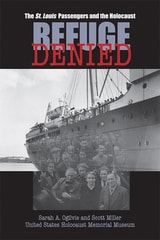
Refuge Denied
The St. Louis Passengers and the HolocaustSarah A. Ogilvie and Scott Miller
University of Wisconsin Press, 2006
Although the episode of the St. Louis is well known, the actual fates of the passengers, once they disembarked, slipped into historical obscurity. Prompted by a former passenger’s curiosity, Sarah Ogilvie and Scott Miller of the United States Holocaust Memorial Museum set out in 1996 to discover what happened to each of the 937 passengers. Their investigation, spanning nine years and half the globe, took them to unexpected places and produced surprising results. Refuge Denied chronicles the unraveling of the mystery, from Los Angeles to Havana and from New York to Jerusalem.
Some of the most memorable stories include the fate of a young toolmaker who survived initial selection at Auschwitz because his glasses had gone flying moments before and a Jewish child whose apprenticeship with a baker in wartime France later translated into the establishment of a successful business in the United States. Unfolding like a compelling detective thriller, Refuge Denied is a must-read for anyone interested in the Holocaust and its impact on the lives of ordinary people.

Refugee Reception in Southern Africa
Nicholas Maple
University of London Press, 2024
While state-based reception is frequently framed as one-off moments such as registration, Refugee Reception in Southern Africa proposes a new understanding whereby reception is a process that reflects the complex dynamics of contemporary refugee arrival. By adopting this understanding, the book demonstrates how reception is a complex and ongoing process of negotiations between refugees and the state. Indeed, the relationship between the refugee and host state often remains fragile and prone to ruptures, especially when less formal reception policies allow refugees to move back and forth between refugee camps and local areas. Nevertheless, through these negotiations, Refugee Reception in Southern Africa shows how reception policies are vital in shaping a refugee’s ability to settle and engage with local communities and labor markets.
Using the cases of Zambia and South Africa, the book explores why some countries maintain encampment reception policies for refugees and others use a more liberal “free settlement” approach, whereby refugees are granted freedom of movement and permitted to settle in cities and towns. This book offers an original and unique perspective on refugee hosting in southern Africa, one that does not look upon persons who flee across a border as a homogenous group whose movement abruptly ends once they arrive in a host state or refugee camp.
Refugee Talk
Propositions on Ethics and AestheticsEva
Pluto Press, 2022
An innovative approach to the refugee crisis through a focus on language use, discourse and representation
'A wide-ranging, erudite and multi-faceted analyses of the fundamental problem of who gets to be counted as human' - Kate Evans
What does it mean to be a refugee? What political questions do they raise? Through what political rhetoric is their experiences parsed? The ongoing refugee crisis has sparked all these questions and more.
Refugee Talk uses conversation as a research method and ethical practice to approach the representation of and the discourse about and by the refugee. Though refugees who cross borders are routinely registered, filed, and detained, the individual stories they carry are just as routinely overlooked or ignored. When language itself becomes another border that excludes refugees, the need for a new vocabulary that decriminalizes and re-humanizes the refugee experience asserts itself.
The authors engage theoretically with thinkers from Hannah Arendt to Paolo Freire and Kwame A. Appiah and structure the book around conversations with academics, activists, journalists, and refugee artists and writers. The result is a comprehensive humanities approach that places ethics and aesthetics at its core.
Refugees and Citizens in Twentieth-Century East Central Europe
An Unlikely Refuge?Michal Frankl
Central European University Press, 2026
Refugees in America
Stories of Courage, Resilience, and Hope in Their Own WordsLee T Bycel
Rutgers University Press, 2019
Each chapter of Refugees in America focuses on an individual from a different country, from a 93-year-old Polish grandmother who came to the United States after surviving the horrors of Auschwitz to a young undocumented immigrant from El Salvador who became an American college graduate, despite being born impoverished and blind. Some have found it easy to reinvent themselves in the United States, while others have struggled to adjust to America, with its new culture, language, prejudices, and norms.
Each of them speaks candidly about their experiences to author Lee T. Bycel, who provides illuminating background information on the refugee crises in their native countries. Their stories help reveal the real people at the center of political debates about US immigration.
Giving a voice to refugees from such far-flung locations as South Sudan, Guatemala, Syria, and Vietnam, this book weaves together a rich tapestry of human resilience, suffering, and determination.
Profits from the sale of this book will be donated to two organizations that are doing excellent refugee resettlement work and offer many opportunities to support refugees: HIAS (founded as the Hebrew Immigrant Aid Society) hias.org International Rescue Committee (IRC) rescue.org
Regimes of Contention
Resistance and the Governmentality of Resources in Indigenous PhilippinesMacario Lacbawan
Campus Verlag, 2021
The notion of indigeneity in the Philippines is politically fraught. Most who live on the archipelago are descendants of aboriginal peoples, whether they claim tribal affiliation or not, and those who do enact traditional identities share little else in common. As a result, the term “indigenous” remains unstable and malleable seventy-five years after independence. Connecting insights from Tillian and Foucauldian social theory, Regimes illuminates how the ever-changing Philippine state, from the 1970s through today, constructs artificial subjectivities that Indigenous peoples must embody to access ancestral resources held by the federal government. What emerges is a lucid illustration of how governmentality is entangled with indigeneity in the Philippines.
Regional Economic Institutions and Conflict Mitigation
Design, Implementation, and the Promise of PeaceYoram Z. Haftel
University of Michigan Press, 2014
In addition to the explicit goal of advancing mutual economic interests, regional economic organizations (REOs) are intended to foster regional cohesion and peace. Drawing on a data set detailing the institutional features of 25 REOs established during the 1980s and 1990s, complemented by a case study of ASEAN, Yoram Z. Haftel investigates the factors that affect REOs' ability to mitigate interstate military conflict. He finds fewer interstate conflicts among REO members who have developed high levels of economic integration and who cultivate regular interaction among member-states' representatives. Haftel concludes that, with an appropriate institutional design and fully implemented agreements, an REO can indeed play a role in mitigating interstate conflict and make a meaningful contribution to regional peace.
Regional Governance and the Politics of Housing in the San Francisco Bay Area
Paul G. Lewis and Nicholas J. Marantz
Temple University Press, 2023
The authors evaluate six potential reforms, arguing that targeted changes to local and regional institutions could generate durable improvements to the region’s housing opportunities. The main lesson from the case of the San Francisco Bay Area is the need to focus on governance when addressing the housing challenge. As the authors effectively illustrate, leaving a solution up to individual cities is unlikely to lead to increased housing supply.
Regional Integration in Latin America and the Caribbean
The Political Economy of Open RegionalismEdited by Victor Bulmer-Thomas
University of London Press, 2001
Regional Perspectives on Learning by Doing
Stories from Engaged Universities around the WorldLorlene Hoyt
Michigan State University Press, 2017
Regulating Difference
Religious Diversity and Nationhood in the Secular WestMarian Burchardt
Rutgers University Press, 2020
Transnational migration has contributed to the rise of religious diversity and has led to profound changes in the religious make-up of society across the Western world. As a result, societies and nation-states have faced the challenge of crafting ways to bring new religious communities into existing institutions and the legal frameworks. Regulating Difference explores how the state regulates religious diversity and examines the processes whereby religious diversity and expression becomes part of administrative landscapes of nation-states and people’s everyday lives. Arguing that concepts of nationhood are key to understanding the governance of religious diversity, Regulating Difference employs a transatlantic comparison of the Spanish region of Catalonia and the Canadian province of Quebec to show how processes of nation-building, religious heritage-making and the mobilization of divergent interpretations of secularism are co-implicated in shaping religious diversity. It argues that religious diversity has become central for governing national and urban spaces.
This book is also freely available online as an open access digital edition.

Regulating Digital Media in Africa
Politics, Law and GovernanceEdited by Vincent Obia, Sulayman Bah, Yemisi Akinbobola, and Oliver Carter
Intellect Books, 2026
As one of the few books focused exclusively on the governance of new media across the African continent, Regulating Digital Media in Africa offers a timely and critical engagement with the legal and policy frameworks shaping broadcasting, social media, and the broader digital ecosystem. Drawing on in-depth case studies from African scholars who cover a wide range of African countries and political systems and interviews with professionals involved in shaping or contesting regulatory outcomes, the book reveals key trends, contradictions, and policy dilemmas in new media regulation. It highlights how governments are responding to challenges such as internet shutdowns, online harms, data governance, and digital legislation.
This book provides a strong conceptual and empirical foundation for scholars, policymakers, and practitioners interested in digital governance in Africa. With its Global South perspective, it offers valuable contributions to broader debates on media regulation, sovereignty, and internet governance.
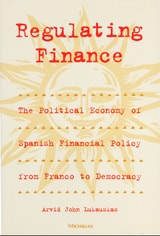
Regulating Finance
The Political Economy of Spanish Financial Policy from Franco to DemocracyArvid John Lukauskas
University of Michigan Press, 1997
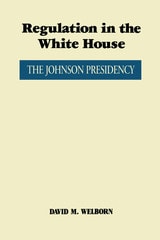
Regulation in the White House
The Johnson PresidencyBy David M. Welborn
University of Texas Press, 1993
Regulation in the White House is an examination of regulatory policy and its development in the Johnson administration and the first comprehensive study of any presidency and regulation. Based upon a thorough analysis of presidential papers in the Lyndon B. Johnson Library, the book investigates the working relationships linking the presidency, regulatory commissions, and executive agencies with regulatory responsibilities in both the economic and social spheres.
David Welborn finds that the president's business included regulation as a major component. Johnson's concerns in regulation were varied and complex. He and his aides worked assiduously and successfully to establish effective, cooperative relationships with regulators and to avoid the exercise of undue influence on particular regulatory determinations. In Welborn's view, Johnson traversed the treacherous ground of regulatory politics with adeptness and achieved his major purposes in regulation.
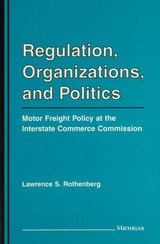
Regulation, Organizations, and Politics
Motor Freight Policy at the Interstate Commerce CommissionLawrence S. Rothenberg
University of Michigan Press, 1994
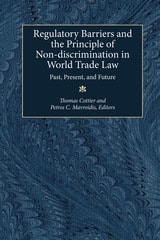
Regulatory Barriers and the Principle of Non-discrimination in World Trade Law
Past, Present, and FutureThomas Cottier and Petros C. Mavroidis, Editors
University of Michigan Press, 2000
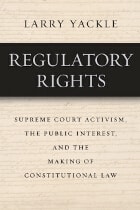
Regulatory Rights
Supreme Court Activism, the Public Interest, and the Making of Constitutional LawLarry Yackle
University of Chicago Press, 2007
Traversing a wide range of Supreme Court decisions that established crucial precedents about racial discrimination, the death penalty, and sexual freedom, Yackle contends that the rights we enjoy are neither more nor less than what the justices choose to make of them. Regulatory Rights is a bracing read that will be heatedly debated by all those interested in constitutional law and the judiciary.
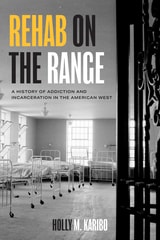
Rehab on the Range
A History of Addiction and Incarceration in the American WestHolly M. Karibo
University of Texas Press, 2024
2026 Texas Christian University (TCU) Texas Book Award Winner
2025 Coral Horton Tullis Memorial Prize, Texas State Historical Association
2025 Outstanding Academic Title, CHOICE
The first study of the Fort Worth Narcotic Farm, an institution that played a critical role in fusing the War on Drugs, mass incarceration, and public health in the American West.
In 1929, the United States government approved two ground-breaking and controversial drug addiction treatment programs. At a time when fears about a supposed rise in drug use reached a fevered pitch, the emergence of the nation’s first “narcotic farms” in Fort Worth, Texas, and Lexington, Kentucky, marked a watershed moment in the treatment of addiction. Rehab on the Range is the first in-depth history of the Fort Worth Narcotic Farm and its impacts on the American West. Throughout its operation from the 1930s to the 1970s, the institution was the only federally funded drug treatment center west of the Mississippi River. Designed to blend psychiatric treatment, physical rehabilitation, and vocational training, the Narcotic Farm, its proponents argued, would transform American treatment policies for the better. The reality was decidedly more complicated.
Holly M. Karibo tells the story of how this institution—once framed as revolutionary for addiction care—ultimately contributed to the turn towards incarceration as the solution to the nation’s drug problem. Blending an intellectual history of addiction and imprisonment with a social history of addicts’ experiences, Rehab on the Range provides a nuanced picture of the Narcotic Farm and its cultural impacts. In doing so, it offers crucial historical context that can help us better understand our current debates over addiction, drug policy, and the rise of mass incarceration.

Reichsrock
The International Web of White-Power and Neo-Nazi Hate MusicDyck, Kirsten
Rutgers University Press, 2016
Reimaging Britain
500 Years of Black and Asian HistoryRon Ramdin
Pluto Press, 1999
Blacks and Asians have a long history in the British Isles. Ramdin illustrates this by covering a 500-year period, from 1500 to the present day. He recounts the major historical episodes and covers all the major figures, including Ottobah Cugoano, William Cuffay, William Davidson, George Padmore, Mary Seacole, C.L.R. James, V.S. Naipaul, Sam Selvon, Walter Tull, Shirley Bassey, Bill Morris, Salman Rushdie, Hanif Kureshi and Bernie Grant.
In bringing the largely hidden histories of these immigrant communities to the fore, Ron Ramdin’s wide-ranging study challenges conventional histories of the British Isles. Reimaging Britain will lead to a reappraisal of how ‘British’ history is written in the future.
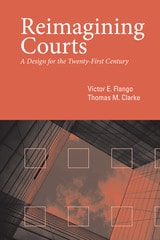
Reimagining Courts
A Design for the Twenty-First CenturyVictor E Flango
Temple University Press, 2017
Reimagining Courts recommends a triage process based upon case characteristics, litigant goals, and resolution processes. Courts must fundamentally reorganize their business processes around the concept of the litigant as a customer. Each adjudication process that the authors propose requires a different case management process and different amounts of judicial, staff, and facility resources.
Reimagining Courts should spark much-needed debate. This book will be of significant interest to lawyers, judges, and professionals in the court system as well as to scholars in public administration and political science.
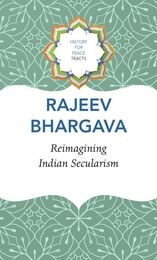
Reimagining Indian Secularism
Rajeev Bhargava
Seagull Books, 2023
What is unique about Indian secularism? In this book, Rajeev Bhargava argues that secularism in India, as opposed to in the West, did not arise in a society that had already been religiously homogenized, where the need of the hour was to break the political nexus between church and state. In India, secularism does not demand that the state is against or indifferent to religion, but rather that it combat institutionalized religious domination, both between and within religions. Apathy or antipathy to religion, Bhargava points out, would foment inter-religious rivalries that intensify anti-reformist tendencies, fueling further division.
As secularism receives daily ridicule in India, Bhargava provides an account of how this “principled distance” from religion has been a victim of misunderstandings by its proponents, abuse by its practitioners, and deliberate distortion by its opponents. Reimagining Indian Secularism offers a proposal of how we might one day be able to rehabilitate secularism.
Reimagining Marginalized Foods
Global Processes, Local PlacesEdited by Elizabeth Finnis
University of Arizona Press, 2012
With globalization has come an increased focus on food—where it comes from, how it is transported, who eats it, and what cultural significance it has. This volume brings together ethnographically based anthropological analyses of shifting meanings and representations associated with the foods, ingredients, and cooking practices of marginalized and/or indigenous cultures. Contributors are particularly interested in how these foods intersect with politics, nationhood and governance, identity, authenticity, and conservation.
The chapters cover diverse locales, issues, and foods: the cultural meanings of sinonggi, a thick sago porridge from Sulawesi, Indonesia; the significance of pom, a Surinam dish popular in the Netherlands; the transformation of alpaca meat in Peru; the impact of culinary tourism on indigenous cuisine in Mexico; the re-presenting of minor millets in South India; and the development of cheeses in the Italian Alps. A conceptual essay on food and social boundaries rounds out the collection.
Throughout, the contributors address important questions, including: How are traditional foods “repackaged” in the process of mainstreaming access? What does this repackaging mean for the ways local or indigenous peoples view their traditional food practices? How are local cuisines mobilized in movements to create national images and identities? What tensions emerge between new representations of foods and local cultural meanings?
Together the contributors provide a thoughtful inquiry into what happens when food and culinary practices are moved from the cultural or physical margins, and how such movements can be shaped by—and employed in the pursuit of—political, social, and cultural goals.
Reimagining the American Pacific
From South Pacific to Bamboo Ridge and BeyondRob Wilson
Duke University Press, 2000
Wilson begins by tracing the arrival of American commerce and culture in the Pacific through missionary and imperial forces in the nineteenth century and the parallel development of Asia/Pacific as an idea. Using an impressive range of texts—from works by Herman Melville, James Michener, Maori and Western Samoan novelists, and Bamboo Ridge poets to Baywatch, films and musicals such as South Pacific and Blue Hawaii, and native Hawaiian shark god poetry—Wilson illustrates what it means for a space to be “regionalized.” Claiming that such places become more open to transnational flows of information, labor, finance, media, and global commodities, he explains how they then become isolated, their borders simultaneously crossed and fixed. In the case of Hawai’i, Wilson argues that culturally innovative, risky forms of symbol making and a broader—more global—vision of local plight are needed to counterbalance the racism and increasing imbalance of cultural capital and goods in the emerging postplantation and tourist-centered economy.
Reimagining the American Pacific leaves the reader with a new understanding of the complex interactions of global and local economies and cultures in a region that, since the 1970s, has been a leading trading partner of the United States. It is an engaging and provocative contribution to the fields of Asian and American studies, as well as those of cultural studies and theory, literary criticism, and popular culture.
Reimagining the Nation-State
The Contested Terrains of Nation-BuildingJim MacLaughlin
Pluto Press, 2001
Mac Laughlin offers a theoretical and empirical analysis of nation building, taking as a case study the historical connections between Ireland and Great Britain in the clash between 'big nation' historic British nationalism on the one hand, and minority Irish nationalism on the other. Locating the origins of the historic nation in the seventeenth and eighteenth centuries, Mac Laughlin emphasises the difficulties, and specifities, of minority nationalisms in the nineteenth century. In so doing he calls for a place-centred approach which recognises the symbolic and socio-economic significance of territory to the different scales of nation-building. Exploring the evolution of Irish Nationalism, Reimaging the Nation State also shows how minority nations can challenge the hegemony of dominant states and threaten the territorial integrity of historic nations.
Reinsuring Health
Why More Middle-Class People Are Uninsured and What Government Can DoKatherine Swartz
Russell Sage Foundation, 2006