Results by title
22279 books match the query 'Social Science' and 1072 start with r
Racial Americana, Volume 104
John L. Jackson, Jr., ed.
Duke University Press, 0
Imagining America’s racialist future, the diverse contributors to this special issue—anthropologists, sociologists, historians, poets, and literary critics—offer their conceptualizations of race today, discuss how racial ideology has changed through the years, and explain its continuing ability to morph according to geopolitical, cultural, and economic strictures. Essays focus on how notions of race have helped constitute varied definitions of Americanness in the past and the present; offer critiques and recuperations of antiessentialist efforts; excavate the affective links between racism and patriotism after September 11; examine how race and gender intersect in the lives of African American jazz musicians; and determine what Du Bois's earlier arguments say about contemporary representations of “Latinidad.”
Contributors. Elizabeth Alexander, Amiri Baraka, Tess Chakkalakal, Theodore A. Harris, John Hartigan Jr., Sharon P. Holland, John L. Jackson Jr., Marcyliena Morgan, Vijay Prashad, Don Robotham, Nichole T. Rustin, Brackette F. Williams
Racial Beings
Experiments in Asian American New MaterialismsMichelle N. Huang
Duke University Press, 2026

Racial Blackness and Indian Ocean Slavery
Iran's Cinematic ArchiveParisa Vaziri
University of Minnesota Press, 2023
Rethinking the history of African enslavement in the western Indian Ocean through the lens of Iranian cinema
From the East African and Red Sea coasts to the Persian Gulf ports of Bushihr, Kish, and Hurmuz, sailing and caravan networks supplied Iran and the surrounding regions with African slave labor from antiquity to the nineteenth century. This book reveals how Iranian cinema preserves the legacy of this vast and yet long-overlooked history that has come to be known as Indian Ocean slavery.
How does a focus on blackness complicate traditional understandings of history and culture? Parisa Vaziri addresses this question by looking at residues of the Indian Ocean slave trade in Iranian films from the second half of the twentieth century. Revealing the politicized clash between commercial cinema (fīlmfārsī) and alternative filmmaking (the Iranian New Wave), she pays particular attention to the healing ritual zār, which is both an African slave descendent practice and a constitutive element of Iranian culture, as well as to cinematic sīyāh bāzī (Persian black play). Moving beyond other studies on Indian Ocean and trans-Saharan slavery, Vaziri highlights the crystallization of a singular mode of historicity within these cinematic examples—one of “absence” that reflects the relative dearth of archival information on the facts surrounding Indian Ocean slavery.
Bringing together cinema studies, Middle East studies, Black studies, and postcolonial theory, Racial Blackness and Indian Ocean Slavery explores African enslavement in the Indian Ocean through the revelatory and little-known history of Iranian cinema. It shows that Iranian film reveals a resistance to facticity representative of the history of African enslavement in the Indian Ocean and preserves the legacy of African slavery’s longue durée in ways that resist its overpowering erasure in the popular and historical imagination.
Retail e-book files for this title are screen-reader friendly with images accompanied by short alt text and/or extended descriptions.
Racial Blackness and the Discontinuity of Western Modernity
Edited by Justin A. Joyce, Dwight A. McBride, and John Carlos Rowe
University of Illinois Press, 2013
Racial Care
On Asian American Suffering and SurvivalJames McMaster
Duke University Press, 2025
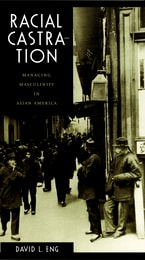
Racial Castration
Managing Masculinity in Asian AmericaDavid L. Eng
Duke University Press, 2001
Eng juxtaposes theortical discussions of Freud, Lacan, and Fanon with critical readings of works by Frank Chin, Maxine Hong Kingston, Lonny Kaneko, David Henry Hwang, Louie Chu, David Wong Louie, Ang Lee, and R. Zamora Linmark. While situating these literary and cultural productions in relation to both psychoanalytic theory and historical events of particular significance for Asian Americans, Eng presents a sustained analysis of dreamwork and photography, the mirror stage and the primal scene, and fetishism and hysteria. In the process, he offers startlingly new interpretations of Asian American masculinity in its connections to immigration exclusion, the building of the transcontinental railroad, the wartime internment of Japanese Americans, multiculturalism, and the model minority myth. After demonstrating the many ways in which Asian American males are haunted and constrained by enduring domestic norms of sexuality and race, Eng analyzes the relationship between Asian American male subjectivity and the larger transnational Asian diaspora. Challenging more conventional understandings of diaspora as organized by race, he instead reconceptualizes it in terms of sexuality and queerness.
Racial Conditions
Politics, Theory, ComparisonsHoward Winant
University of Minnesota Press, 1994
More than a quarter-century after the passage of civil rights legislation in the United States and decades since the last European colonies attained their independence, race continues to play a central role in cultural, political, and economic life, both in the United States and around the globe. Race divides societies and individuals, shapes social policies of the most diverse sort, and organizes basic ideas about human identity and difference. Why?
This ambitious book addresses the gaps in our understanding of contemporary racial dynamics, and develops a powerful theoretical approach to the vast subject of race. Howard Winant, one of the leading writers in the United States on the subject, argues that race cannot be understood as a "social problem" or as a "survival" of earlier, more benighted ages. Indeed, from the rise of Europe to the present, race has been a social condition, a permanent though flexible feature of human society and identity. The key to Winant's analysis is racial formation theory, an approach he refines and advances as he considers a wide range of contemporary controversies in racial theory and politics. Among these are the relationship between race and class, as well as the racial dimensions of gender, diaspora, colonialism, and fascism. Other key topics include the changing nature of racial identity in the post-civil rights era, the 1992 Los Angeles riot, and politics of race in Brazil. Intellectually challenging and clearly written, well informed and deeply committed to social and racial justice, Racial Conditions marks an important advance in critical thinking about race today. Howard Winant teaches sociology at Temple University.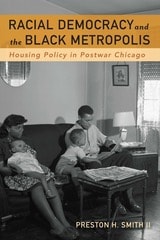
Racial Democracy and the Black Metropolis
Housing Policy in Postwar ChicagoPreston H. Smith II
University of Minnesota Press, 2012
“The African American community.” “The black position.” In accounts of black politics after the Second World War, these phrases reflect how the African American perspective generally appeared consistent, coherent, and unified. In Racial Democracy and the Black Metropolis, Preston H. Smith II examines housing debates in Chicago that go beyond black and white politics, and he shows how class and factional conflicts among African Americans actually helped to reproduce stunning segregation along economic lines.
Class and factional conflicts were normal in the rough-and-tumble world of land use politics. They are, however, often not visible in accounts of the postwar fight against segregation. Smith outlines the ideological framework that black civic leaders in Chicago used to formulate housing policy, both within and outside the black community, to reveal a surprising picture of leaders who singled out racial segregation as the source of African Americans’ inadequate housing rather than attacking class inequalities. What are generally presented as black positions on housing policy in Chicago, Smith makes clear, belonged to the black elite and did not necessarily reflect black working-class participation or interests.
This book details how black civic leaders fought racial discrimination in ways that promoted—or at least did not sacrifice—their class interests in housing and real estate struggles. And, as Smith demonstrates, their accommodation of the real estate practices and government policy of the time has had a lasting effect: it contributed to a legacy of class segregation in the housing market in Chicago and major metropolitan areas across the country that is still felt today.
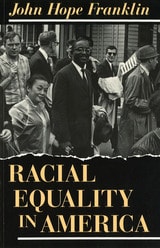
Racial Equality in America
John Hope Franklin
University of Missouri Press, 1976
This is distinguished historian John Hope Franklin's eloquent and forceful meditation on the persistent disparity between the goal of racial equality in America and the facts of discrimination.
In a searing critique of Thomas Jefferson, Franklin shows that this spokesman for democracy did not include African Americans among those "created equal." Franklin chronicles the events of the nineteenth century that solidified inequality in America and shows how emancipation dealt only with slavery, not with inequality.
In the twentieth century, America finally confronted the fact that equality is indivisible: it must not be divided so that it is extended to some at the expense of others. Once this indivisibility is accepted, Franklin charges, America faces the monumental task of overcoming its long heritage of inequality.
Racial Equality in America is a powerful reminder that our history is more than a record of idealized democratic traditions and institutions. It is a dramatic message to all Americans, calling them to know their history and themselves.

Racial Feelings
Asian America in a Capitalist Culture of EmotionJeffrey Santa Ana
Temple University Press, 2015
Santa Ana explores various forms of Asian American cultural production, ranging from literature and graphic narratives to film and advertising, to illuminate the connections between global economic relations and the emotions that shape aspirations for the good life. He illustrates his argument with examples including the destitute Filipino immigrant William Paulinha, in Han Ong’s Fixer Chao, who targets his anger on the capitalist forces of objectification that racially exploit him, and Nan and Pingpin in Ha Jin’s A Free Life, who seek happiness and belonging in America.
Racial Feelings addresses how Asian Americans both resist and rely on stereotypes in their writing and art work. In addition, Santa Ana investigates how capitalism shapes and structures an emotional discourse that represents Asians as both economic exemplars and threats.
Racial Melancholia, Racial Dissociation
On the Social and Psychic Lives of Asian AmericansDavid L. Eng and Shinhee Han
Duke University Press, 2018
Racial Policies and Practices of Real Estate Brokers
Rose Helper
University of Minnesota Press, 1969
Racial Politics in Contemporary Brazil
Michael Hanchard, ed.
Duke University Press, 1999
The contributors to Racial Politics in Contemporary Brazil examine such topics as the legacy of slavery and its abolition, the historical impact of social movements, race-related violence, and the role of Afro-Brazilian activists in negotiating the cultural politics surrounding the issue of Brazilian national identity. These essays also provide comparisons of racial discrimination in the United States and Brazil, as well as an analysis of residential segregation in urban centers and its affect on the mobilization of blacks and browns. With a focus on racialized constructions of class and gender and
sexuality, Racial Politics in Contemporary Brazil reorients the direction of Brazilian studies, providing new insights into Brazilian culture, politics, and race relations.
This volume will be of importance to a wide cross section of scholars engaged with Brazil in particular, and Latin American studies in general. It will also appeal to those invested in the larger issues of political and social movements centered on the issue of race.
Contributors. Benedita da Silva, Nelson do Valle Silva, Ivanir dos Santos, Richard Graham, Michael Hanchard, Carlos Hasenbalg, Peggy A. Lovell, Michael Mitchell, Tereza Santos, Edward Telles, Howard Winant
Racial Resentment in the Political Mind
Darren W. Davis and David C. Wilson
University of Chicago Press, 2022
In Racial Resentment in the Political Mind, Darren W. Davis and David C. Wilson challenge the commonly held notion that all racial negativity, disagreements, and objections to policies that seek to help racial minorities stem from racial prejudice. They argue that racial resentment arises from just-world beliefs and appraisals of deservingness that help explain the persistence of racial inequality in America in ways more consequential than racism or racial prejudice alone.
The culprits, as many White people see it, are undeserving people of color, who are perceived to benefit unfairly from, and take advantage of, resources that come at Whites’ expense—a worldview in which any attempt at modest change is seen as a challenge to the status quo and privilege. Yet, as Davis and Wilson reveal, many Whites have become racially resentful due to their perceptions that African Americans skirt the “rules of the game” and violate traditional values by taking advantage of unearned resources. Resulting attempts at racial progress lead Whites to respond in ways that retain their social advantage—opposing ameliorative policies, minority candidates, and other advancement on racial progress. Because racial resentment is rooted in beliefs about justice, fairness, and deservingness, ordinary citizens, who may not harbor racist motivations, may wind up in the same political position as racists, but for different reasons.
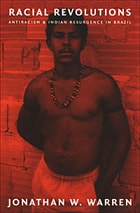
Racial Revolutions
Antiracism and Indian Resurgence in BrazilJonathan W. Warren
Duke University Press, 2001
The growing number of pardos who claim Indian identity represents a radical shift in the direction of Brazilian racial formation. For centuries, the predominant trend had been for Indians to shed tribal identities in favor of non-Indian ones. Warren argues that many factors—including the reduction of state-sponsored anti-Indian violence, intervention from the Catholic church, and shifts in anthropological thinking about ethnicity—have prompted a reversal of racial aspirations and reimaginings of Indianness. Challenging the current emphasis on blackness in Brazilian antiracist scholarship and activism, Warren demonstrates that Indians in Brazil recognize and oppose racism far more than any other ethnic group.
Racial Revolutions fills a number of voids in Latin American scholarship on the politics of race, cultural geography, ethnography, social movements, nation building, and state violence.
Designated a John Hope Franklin Center book by the John Hope Franklin Seminar Group on Race, Religion, and Globalization.
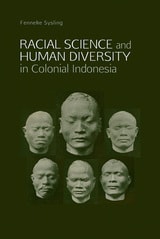
Racial Science and Human Diversity in Colonial Indonesia
Fenneke Sysling
National University of Singapore Press, 2016
In this new monograph, Fenneke Sysling draws on published works and private papers to describe the way Dutch racial scientists tried to make sense of the human diversity in the Indonesian archipelago. The making of racial knowledge, it contends, cannot be explained solely in terms of internal European intellectual developments. It was ‘on the ground’ that ideas about race were made and unmade with a set of knowledge strategies that did not always combine well. Sysling describes how skulls were assembled through the colonial infrastructure, how measuring sessions were resisted, what role photography and plaster casting played in racial science and shows how these aspects of science in practice were entangled with the Dutch colonial Empire.
Racial Stasis
The Millennial Generation and the Stagnation of Racial Attitudes in American PoliticsChristopher D. DeSante and Candis Watts Smith
University of Chicago Press, 2020
With Racial Stasis, Christopher D. DeSante and Candis Watts Smith argue persuasively that this is because millennials, a generational cohort far removed from Jim Crow and the Civil Rights era, lack sufficient understanding of the structural nature of racial inequalities in the United States and therefore also the contextual and historical knowledge to be actively anti-racist. While these younger whites may be open to the idea of interracial marriage or living next to a family of a different race, they often do not understand why policies like affirmative action still need to exist and are weary about supporting these kinds of policies. In short, although millennials’ language and rationale around race, racism, and racial inequalities are different from previous generations’, the end result is the same.
Racial Transformations
Latinos and Asians Remaking the United StatesNicholas De Genova, ed.
Duke University Press, 2006
Several contributors illuminate ways that Latinos and Asians were historically racialized: by U.S. occupiers of Puerto Rico and the Philippines at the end of the nineteenth century, by public health discourses and practices in early-twentieth-century Los Angeles, by anthropologists collecting physical data—height, weight, head measurements—from Chinese Americans to show how the American environment affected “foreign” body types in the 1930s, and by Los Angeles public officials seeking to explain the alleged criminal propensities of Mexican American youth during the 1940s. Other contributors focus on the coalitions and tensions between Latinos and Asians in the context of the fight to integrate public schools and debates over political redistricting. One addresses masculinity, race, and U.S. imperialism in the literary works of Junot Díaz and Chang-rae Lee. Another looks at the passions, identifications, and charges of betrayal aroused by the sensationalized cases of Elián González, the young Cuban boy rescued off the shore of Florida, and Wen Ho Lee, the Los Alamos physicist accused of spying on the United States. Throughout this volume contributors interrogate many of the assumptions that underlie American and ethnic studies even as they signal the need for a research agenda that expands the purview of both fields.
Contributors. Nicholas De Genova, Victor Jew, Andrea Levine, Natalia Molina, Gary Y. Okihiro, Crystal Parikh, Greg Robinson, Toni Robinson, Leland T. Saito
Racial Union
Law, Intimacy, and the White State in Alabama, 1865-1954Julie Novkov
University of Michigan Press, 2008
In November 2001, the state of Alabama opened a referendum on its long-standing constitutional prohibition against interracial marriage. A bill on the state ballot offered the opportunity to relegate the state's antimiscegenation law to the dustbin of history. The measure passed, but the margin was alarmingly slim: more than half a million voters, 40 percent of those who went to the polls, voted to retain a racist and constitutionally untenable law.
Julie Novkov's Racial Union explains how and why, nearly forty years after the height of the civil rights movement, Alabama struggled to repeal its prohibition against interracial marriage---the last state in the Union to do so. Novkov's compelling history of Alabama's battle over miscegenation shows how the fight shaped the meanings of race and state over ninety years. Novkov's work tells us much about the sometimes parallel, sometimes convergent evolution of our concepts of race and state in the nation as a whole.
"A remarkably nuanced account of interlocked struggles over race, gender, class and state power. Novkov's site is Alabama, but her insights are for all America."
---Rogers M. Smith, Christopher H. Browne Distinguished Professor of Political Science, University of Pennsylvania
"Hannah Arendt shocked Americans in the 1950s by suggesting that interracial intimacy was the true measure of a society's racial order. Julie Novkov's careful, illuminating, powerful book confirms Arendt's judgment. By ruling on who may be sexually linked with whom, Alabama's courts and legislators created a racial order and even a broad political order; Novkov shows us just how it worked in all of its painful, humiliating power."
---Jennifer L. Hochschild, Henry LaBarre Jayne Professor of Government, Professor of African and African American Studies, and Harvard College Professor
Racialized Politics
The Debate about Racism in AmericaEdited by David O. Sears, James Sidanius, and Lawrence Bobo
University of Chicago Press, 1999
In Racialized Politics, political scientists, sociologists, and psychologists explore the current debate surrounding the sources of racism in America. Published here for the first time, the essays represent three major approaches to the topic. The social psychological approach maintains that prejudice socialized early in life feeds racial stereotypes, while the social structural viewpoint argues that behavior is shaped by whites' fear of losing their privileged status. The third perspective looks to non-racially inspired ideology, including attitudes about the size and role of government, as the reason for opposition to policies such as affirmative action. Timely and important, this collection provides a state-of-the-field assessment of the current issues and findings on the role of racism in mass politics and public opinion.
Contributors are Lawrence Bobo, Gretchen C. Crosby, Michael C. Dawson, Christopher Federico, P. J. Henry, John J. Hetts, Jennifer L. Hochschild, William G. Howell, Michael Hughes, Donald R. Kinder, Rick Kosterman, Tali Mendelberg, Thomas F. Pettigrew, Howard Schuman, David O. Sears, James Sidanius, Pam Singh, Paul M. Sniderman, Marylee C. Taylor, and Steven A. Tuch.
Racializing Objectivity
How the White Southern Press Used Journalism Standards to Defend Jim CrowGwyneth Mellinger
University of Massachusetts Press, 2024
Winner of the 2025 American Journalism Historians Association Book of the Year Award
Winner of the 2025 Association for Education in Journalism and Mass Communication (AEJMC)'s Tankard Book Award and the AEJMC's History Division Book Award
When the civil rights movement began to challenge Jim Crow laws, the white southern press reframed the coverage of racism and segregation as a debate over journalism standards. Many white southern editors, for instance, designated Black Americans as “Negro” in news stories, claiming it was necessary for accuracy and “objectivity,” even as white subjects went unlabeled. These news professionals disparaged media outlets that did not adhere to these norms, such as the Black press. In this way, the southern white press weaponized journalism standards—and particularly the idea of objectivity—to counter and discredit reporting that challenged white supremacy.
Through deep engagement with letters and other materials in numerous archives from editors, journalists, and leaders of newswire services, Racializing Objectivity interrogates and exposes how the white southern press used journalism standards as a professional rationalization for white supremacy and a political strategy to resist desegregation. Gwyneth Mellinger argues that white skin privilege gave these news professionals a stake in the racial status quo and was thus a conflict of interest as they defended Jim Crow. Her study includes an examination of the Southern Education Reporting Service, an objectivity project whose impartiality, she contends, instead affirmed systemic racism. In a pointed counternarrative, Mellinger highlights Black editors and academics who long criticized the supposed objectivity of the press and were consequently marginalized and often dismissed as illegitimate, fanciful, and even paranoid.
Elegant and incisive, Racializing Objectivity unequivocally demonstrates that a full telling of twentieth-century press history must reckon with the white southern press’s cooptation of objectivity and other professional standards to skew racial narratives about Black Americans, the freedom struggle, and democracy itself.
Racializing the Ummah
Muslim Humanitarians beyond Black, Brown, and WhiteRhea Rahman
University of Minnesota Press, 2026
A robust ethnography of Islamic Relief explores difficult questions about the extensive reach of white supremacy
An ethnography of Islamic Relief (IR), the largest Islamic NGO based in the West, Racializing the Ummah explores how a Muslim organization can do good in a world that defines Muslimness as less than human. Rooted in more than a decade of international research, Rhea Rahman’s study on the organization’s projects, methods, and limitations reveals how racial capitalism permeates all aspects of humanitarianism.
Beginning with a counterhistory of Muslims in the United Kingdom following World War II, Rahman analyzes IR’s mission and transnational activities in and across places including the UK, South Africa, and Mali in the broader context of global white supremacy. She shows how IR’s approaches often effectively secularize Islam to evade anti-Muslim racism and Islamophobia, implicating concepts such as the “good” Muslim aid worker, who complies with War on Terror surveillance while attending to victims of Western colonialism. Meanwhile, Rahman theorizes the tactics of aid workers on the ground, who creatively draw on an Islamic Black radical tradition to drive real change.
Through her engagement with IR and other organizations, Rahman paints a frank, nuanced portrait of the constraints Islamic aid entities face in the effort to disentangle themselves from neocolonialism and Western hegemony. Yet she also locates the possibility of escape from the all-encompassing dictates of racial capitalism in alternative visions of doing good—ones that are grounded in Islam as the foundation of a revolutionary praxis.
Retail e-book files for this title are screen-reader friendly.
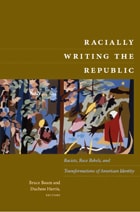
Racially Writing the Republic
Racists, Race Rebels, and Transformations of American IdentityBruce Baum and Duchess Harris, eds.
Duke University Press, 2009
The contributors analyze Thomas Jefferson’s legacy in light of his sexual relationship with his slave, Sally Hemings; the way that Samuel Gompers, the first president of the American Federation of Labor, rallied his organization against Chinese immigrant workers; and the eugenicist origins of the early-twentieth-century birth-control movement led by Margaret Sanger. They draw attention to the writing of Sarah Winnemucca, a Northern Piute and one of the first published Native American authors; the anti-lynching activist Ida B. Wells-Barnett; the Filipino American writer Carlos Bulosan; and the playwright Lorraine Hansberry, who linked civil rights struggles in the United States to anticolonial efforts abroad. Other figures considered include Alexis de Tocqueville and his traveling companion Gustave de Beaumont, Juan Nepomuceno Cortina (who fought against Anglo American expansion in what is now Texas), Abraham Lincoln, Theodore Roosevelt, and W. E. B. Du Bois. In the afterword, George Lipsitz reflects on U.S. racial politics since 1965.
Contributors. Bruce Baum, Cari M. Carpenter, Gary Gerstle, Duchess Harris, Catherine A. Holland, Allan Punzalan Isaac, Laura Janara, Ben Keppel, George Lipsitz, Gwendolyn Mink, Joel Olson, Dorothy Roberts, Patricia A. Schechter, John Kuo Wei Tchen, Jerry Thompson

Racing Romance
Love, Power, and Desire among Asian American/White CouplesNemoto, Kumiko
Rutgers University Press, 2009
Similar to black/white relationships, stereotypes have long played crucial roles in Asian American/white encounters. Partners grapple with media representations of Asian women as submissive or hypersexual and Asian men are often portrayed as weak laborers or powerful martial artists. Racing Romance reveals how allegedly progressive interracial relationships remain firmly shaped by the logic of patriarchy and gender inherent to the ideal of marriage, family, and nation in America, even as this ideal is juxtaposed with discourses of multiculturalism and color blindness.
Racing Translingualism in Composition
Toward a Race-Conscious Translingualismedited by Tom Do and Karen Rowan
Utah State University Press, 2022
This collection extends the disciplinary conversations about translingualism by foregrounding the role race and racism play in the construction and maintenance of language differences. In doing so, the contributors examine the co-naturalization of race and language in order to theorize a race-conscious translingual praxis. The book begins by offering generative critiques of translingualism, centering on the ways in which the approach’s democratic orientation to language avoids issues of race, language, and power and appeals to colorblind racist tropes of equal opportunity. Following these critiques, contributors demonstrate the important intersections of race and translingualism by drawing upon voices typically marginalized by monolingual language ideologies and pedagogies. Finally, Racing Translingualism concludes by attending to the pedagogical implications of a race-conscious translingual praxis in writing and literacy education.
Making the case for race-conscious, rather than colorblind, theories and pedagogies, Racing Translingualism offers a unique take on how translingualism is theorized and practiced and moves the field forward through its direct consideration of the links between language, race, and racism.
Contributors: Lindsey Albracht, Steven Alvarez, Bethany Davila, Tom Do, Jaclyn Hilberg, Bruce Horner, Aja Martinez, Esther Milu, Stephanie Mosher, Yasmine Romero, Karen Rowan, Rachael Shapiro, Shawanda Stewart, Brian Stone, Victor Villanueva, Missy Watson

Racing Uphill
Confronting a Life with EpilepsyStacia Kalinoski
University of Minnesota Press, 2025
The candid, inspiring story of a woman’s experience with a chronic, unpredictable neurological condition
When twenty-nine-year-old reporter Stacia Kalinoski regained consciousness on a couch at the TV station where she worked, she assumed that she’d had another seizure. But the electrical storm that had just torn through her brain was more destructive than she could have imagined, and the broadcast journalism career she loved swiftly came to an end. Forced to confront the reality of her medical condition, Kalinoski made the risky decision to undergo brain surgery, targeting the epilepsy that was ravaging her life.
In Racing Uphill, Kalinoski describes the seizures that occurred while she was running, which led to her pursuit of an uncertain cure. Rallying the grit she developed as an athlete and engaging the research and reporting skills she acquired as a journalist, she gives us a rare inside look at the ways epilepsy can change a life. Moving beyond her own personal experience, Kalinoski interviews prominent epileptologists to understand how seizures can spread, steal memories, and create strange behaviors and mood disorders. She seamlessly joins what she learned from her research with her own story, offering valuable insight into the experience of grappling with a relentless neurological disease.
The vivid auras that preceded seizures and the damage that followed; the toll of her epilepsy on her family and loved ones; the extraordinary determination her reckoning required—these are all part of Kalinoski’s story of adversity, denial, acceptance, and resilience. In sharing the remarkable opportunity that epilepsy presented for her courage and growth, Stacia Kalinoski speaks to anyone facing an uphill battle and offers inspiration for taking control of one’s own health.
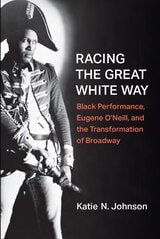
Racing the Great White Way
Black Performance, Eugene O’Neill, and the Transformation of BroadwayKatie N. Johnson
University of Michigan Press, 2023
Finalist: 2023 Theatre Library Association George Freedley Memorial Award
The early drama of Eugene O’Neill, with its emphasis on racial themes and conflicts, opened up extraordinary opportunities for Black performers to challenge racist structures in modern theater and cinema. By adapting O’Neill’s dramatic writing—changing scripts to omit offensive epithets, inserting African American music and dance, or including citations of Black internationalism--theater artists of color have used O’Neill’s texts to raze barriers in American and transatlantic theater.
Challenging the widely accepted idea that Broadway was the white-hot creative engine of U.S. theater during the early 20th century, author Katie N. Johnson reveals a far more complex system of exchanges between the Broadway establishment and a vibrant Black theater scene in New York and beyond to chart a new history of American and transnational theater. In spite of their dichotomous (and at times problematic) representation of Blackness, O’Neill’s plays such as The Emperor Jones and All God’s Chillun Got Wings make ideal case studies because of the way these works stimulated traffic between Broadway and Harlem—and between white and Black America. These investigations of O’Neill and Broadway productions are enriched by the vibrant transnational exchange found in early to mid-20th century artistic production. Anchored in archival research, Racing the Great White Way recovers not only vital lost performance histories, but also the layered contexts for performing bodies across the Black Atlantic and the Circum-Atlantic.
Racism
Albert Memmi
University of Minnesota Press, 1999
Racism: It is social, not “natural”; it is general, not “personal”; and it is tragically effective. In a remarkable meditation on a subject at the troubled center of American life, Albert Memmi investigates racism as social pathology-a cultural disease that prevails because it allows one segment of society to empower itself at the expense of another. By turns historical, sociological, and autobiographical, Racism moves beyond individual prejudice and taste to engage the broader questions of collective behavior and social responsibility.
The book comprises three sections-“Description,” “Definition,” and “Treatment”-in which Memmi delineates racism’s causes and hidden workings, examines its close affinity to colonialism, and considers its everyday manifestations over a period of centuries throughout the West.
For Memmi, the structure of racism has four “moments”: the insistence on difference; the negative valuation imposed on those who differ; the generalizing of this negative valuation to an entire group; and the use of generalization to legitimize hostility. Memmi shows how it is not racism’s content-which can change at will-but its form that gives it such power and tenacity.
Born in a poor section of Tunis, Tunisia, a Jew among Muslims, an Arab among Europeans, Memmi brings his own experience of the complex contours of prejudice to his analysis of a problem that divides societies the world over. Writing in the tradition of Frantz Fanon, Memmi redirects debates about racism-and offers a rare chance for progress against social prejudice.
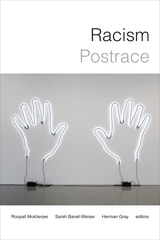
Racism Postrace
Roopali Mukherjee, Sarah Banet-Weiser, and Herman Gray, editors
Duke University Press, 2019
Contributors. Inna Arzumanova, Sarah Banet-Weiser, Aymer Jean Christian, Kevin Fellezs, Roderick A. Ferguson, Herman Gray, Eva C. Hageman, Daniel Martinez HoSang, Victoria E. Johnson, Joseph Lowndes, Roopali Mukherjee, Safiya Umoja Noble, Radhika Parameswaran, Sarah T. Roberts, Catherine R. Squires, Brandi Thompson Summers, Karen Tongson, Cynthia A. Young
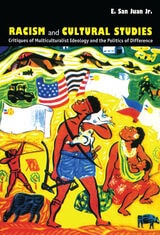
Racism and Cultural Studies
Critiques of Multiculturalist Ideology and the Politics of DifferenceE. San Juan Jr.
Duke University Press, 2002
Individual chapters engage the themes of ethnicity versus racism, gender inequality, sexuality, and the politics of identity configured with the discourse of postcoloniality and postmodernism. Questions of institutional racism, social justice, democratization, and international power relations between the center and the periphery are explored and analyzed. San Juan fashions a critique of dominant disciplinary approaches in the humanities and social sciences and contends that “the racism question” functions as a catalyst and point of departure for cultural critiques based on a radical democratic vision. He also asks urgent questions regarding globalization and the future of socialist transformation of “third world” peoples and others who face oppression.
As one of the most notable cultural theorists in the United States today, San Juan presents a provocative challenge to the academy and other disciplinary institutions. His intervention will surely compel the attention of all engaged in intellectual exchanges where race/ethnicity serves as an urgent focus of concern.
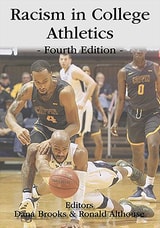
Racism in College Athletics
Fourth EditionDana Brooks
FiT Publishing, 2020
Intercollegiate sport has historically been a source of frustration for and discrimination against African American athletes, coaches, and athletic administrators, and yet is a place of courage and achievement for those who have been given the opportunity to play, coach, and administer college sports. However, for full opportunity and equality to be achieved for African Americans in college sports, a number of issues must still be resolved.
In the fourth edition of Racism in College Athletics, editors Dana Brooks and Ronald Althouse, along with a collection of expert chapter authors, add to the conversation on topics of race, gender, identity, culture, social class, and support services. This updated edition explores historical and contemporary issues and predicts a future direction for African American student-athletes that includes strategies for addressing social injustices not just in college sports, but of student-athlete development in all phases of life, including outcomes and post-collegiate career opportunities.
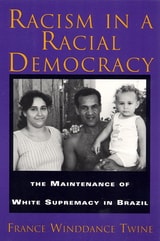
Racism in a Racial Democracy
The Maintenance of White Supremacy in BrazilTwine, Francine Winddance
Rutgers University Press, 1997
In Racism in a Racial Democracy, France Winddance Twine asks why Brazilians, particularly Afro-Brazilians, continue to have faith in Brazil's "racial democracy" in the face of pervasive racism in all spheres of Brazilian life. Through a detailed ethnography, Twine provides a cultural analysis of the everyday discursive and material practices that sustain and naturalize white supremacy.
This is the first ethnographic study of racism in southeastern Brazil to place the practices of upwardly mobile Afro-Brazilians at the center of analysis. Based on extensive field research and more than fifty life histories with Afro- and Euro-Brazilians, this book analyzes how Brazilians conceptualize and respond to racial disparities. Twine illuminates the obstacles Brazilian activists face when attempting to generate grassroots support for an antiracist movement among the majority of working class Brazilians. Anyone interested in racism and antiracism in Latin America will find this book compelling.
"Twine offers one of the most sophisticated analyses to date of the intransigence of Brazilian racism. Her nuanced account of the complex interplay of gender, race, and class is particularly exciting. This book will have a powerful impact not only on the field of Brazilian racial studies, but on the whole burgeoning literature on the African Diaspora." -- Howard Winant, author of Racial Conditions: Politics, Theory, Comparisons
"A revealing and sharply observed dissection of how racism works 'on the ground' in Brazil." -- George Reid Andrews, author of Blacks and Whites in Sao Paulo, Brazil, 1888-1988

Racism in the Irish Experience
Steve Garner
Pluto Press, 2003
This book is a unique analysis of the racialisation of Irish identities. The author examines key phases in the historical development of an Irish 'racial' consciousness, including 16th century colonisation and 19th century immigration to America and Great Britain. He then examines the legacy of this relationship, both in terms of the new migration into Ireland and relations with indigenous minorities -- travellers and Irish Jews.
Garner explores the problematic links between nationalist ideologies and racism. He assesses the economic, social and political factors framing the experience of minorities in contemporary Ireland, and places these in a broader European context.
Racism
A Critical AnalysisMike Cole
Pluto Press, 2015
Mike Cole tackles three countries in-depth: the United Kingdom, the United States and Australia. In the United Kingdom, he focuses on the effects of colonialism as well as looking at non-colour-coded racism, such as anti-Gipsy, Roma, and Traveller racism and xeno-racism directed at Eastern Europeans. Turning to the United States, Cole charts the dual legacies of indigenous genocide and slavery, as well as exploring anti-Latina/o and anti-Asian racism. Finally, in Australia, he interrogates the idea of "Terra Nullius" and its ongoing impact on the indigenous peoples, as well as other forms of racism, such as that experienced by South Sea Islanders, anti-Asian racism, and that which targets migrants. The Pauline Hanson phenomenon is also addressed. Islamophobia, antisemitism and anti-Irish racism are also dealt with in the book, as is that aimed at asylum-seekers.
Cole demonstrates that racism is both endemic and multifaceted. This book will undoubtedly establish itself as required reading for students and other critical readers looking for a comprehensive, critical overview of the study of racism in Anglophone countries.
Racist Love
Asian Abstraction and the Pleasures of FantasyLeslie Bow
Duke University Press, 2022

Rackham Funds of the University of Michigan, 1933-1953
Sheridan W. Baker, Jr.
University of Michigan Press, 1955
Radiant Infrastructures
Media, Environment, and Cultures of UncertaintyRahul Mukherjee
Duke University Press, 2020

Radiation Brain Moms and Citizen Scientists
The Gender Politics of Food Contamination after FukushimaAya Hirata Kimura
Duke University Press, 2016
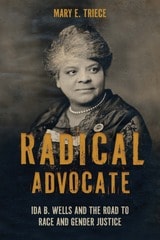
Radical Advocate
Ida B. Wells and the Road to Race and Gender JusticeMary E. Triece
University of Alabama Press, 2025
Pinpoints the persuasive strategies that typified Wells’s efforts to shape broader cultural conversations concerning the causes of racial, social, and gender inequity
Born into the brutal reality of slavery, Ida B. Wells rose to become an audacious journalist, teacher, and activist for racial and gender justice. In Radical Advocate, Mary E. Triece examines the rhetorical strategies employed by Wells to challenge deeply rooted systems of oppression, strategies that remain powerful and relevant today.
Triece introduces the concept of “radical embodied advocacy” to give an account of Wells’s unique position as a Black woman whose personal encounters with white violence were palpable, experienced physically and mentally. White men lynched Wells’s friends and threatened her own life, forcing her into exile after destroying the very press on which she wrote and edited. From this perspective, Wells understood lynching as linked to white economic and political control. Through a close analysis of Wells’s speeches, writings, and journalism, Triece reveals how Wells pioneered a form of “intersectional journalism” that centered the voices of those marginalized by race, gender, and class.
By examining Wells’s work through the lens of philosophy, rhetoric, and Black feminism, Triece underscores the epistemic challenges faced by marginalized advocates and the importance of their perspectives in shaping social change. Radical Advocate ultimately positions Wells as a prophetic figure whose insights into the systemic nature of racism remain profoundly relevant in today’s world.
Radical Aesthetics and Modern Black Nationalism
GerShun Avilez
University of Illinois Press, 2016
A bold addition to an advancing field, Radical Aesthetics and Modern Black Nationalism rewrites recent black cultural production even as it uncovers unexpected ways of locating black radicalism.
Radical Artifice
Writing Poetry in the Age of MediaMarjorie Perloff
University of Chicago Press, 1992
Radical Care
Hi'iliei Hobart and Tamara Kneese, special issue editors
Duke University Press, 0
Contributors. Nicole Charles, Elijah Adiv Edelman, Hi‘ilei Hobart, Tamara Kneese, Micki McGee, Leyla Savloff, Cotten Seiler, Dean Spade
Radical Cartographies
Participatory Mapmaking from Latin AmericaEdited by Bjørn Sletto, Joe Bryan, Alfredo Wagner, and Charles Hale
University of Texas Press, 2020
Cartography has a troubled history as a technology of power. The production and distribution of maps, often understood to be ideological representations that support the interests of their developers, have served as tools of colonization, imperialism, and global development, advancing Western notions of space and place at the expense of Indigenous peoples and other marginalized communities. But over the past two decades, these marginalized populations have increasingly turned to participatory mapping practices to develop new, innovative maps that reassert local concepts of place and space, thus harnessing the power of cartography in their struggles for justice.
In twelve essays written by community leaders, activists, and scholars, Radical Cartographies critically explores the ways in which participatory mapping is being used by Indigenous, Afro-descendant, and other traditional groups in Latin America to preserve their territories and cultural identities. Through this pioneering volume, the authors fundamentally rethink the role of maps, with significant lessons for marginalized communities across the globe, and launch a unique dialogue about the radical edge of a new social cartography.

Radical Desires
French Gay Liberation and Anticolonial CritiqueEdited by Hauke Branding and Julian Volz
Diaphanes, 2025
Despite a historically rich tradition of thinking about the relation between sexuality, desire, and revolution, there is little engagement with desire’s radicality today. This volume attends to the radicality of desire as a starting point for overcoming heteropatriarchal capitalism by turning to the specific radical homosexual critique as it was first formulated in France in the 1970s in the writings of the Mouvement de Libération des Femmes and the Front Homosexuel d’Action Révolutionnaire, as well as in the conceptions of their most important protagonists, Monique Wittig and Guy Hocquenghem.
Radical Desires seeks to emphasize the anti-identitarian character of the French gay liberation movement, as well as its implicit and explicit critique of gender and sexual binaries. At the same time, the volume is also interested in intersectionally expanding this critique by confronting it with anticolonial and queer of color perspectives. As French gay liberation activists’ relations to North African men were often problematic, several contributions engage with the latent orientalist and racist tropes that appear in the movement’s writings. By aiming to go beyond a mere historicization of these ambivalences and exploring which contemporary problems appear in a different light as a result, Radical Desires highlights the (dis-)continuous relationship between current debates and those in 1970s France.
To explore the multiplicity of forms with or in which these critiques were expressed, this volume places theoretical perspectives in conversation with artistic perspectives on queer liberation in a transnational context. Contributors include Friederike Beier, Antoine Idier, Émilie Notéris, Lukas Betzler, Mohammad Shawky Hassan, Sido Lansari, Todd Shepard, and Julian Volz.

Radical Family
Trailblazing Lesbian Moms Tell Their StoriesEdited by Margaret Mooney
Wisconsin Historical Society Press, 2025
A powerful collection of personal essays from lesbian moms who fought for the right to raise children
For generations, lesbians across the United States were systematically denied opportunities to raise children and build families, opportunities that were readily available to straight people. Radical Family honors the history-making struggles and triumphs of lesbian families in Madison, Wisconsin, who raised children in the 1980s, ’90s, and early 2000s—a time when lesbian motherhood was widely considered extreme and unnatural. In a collection of nine profoundly personal essays, the contributors recount their diverse paths to parenthood, as well as the hopes and challenges each family experienced. While the stories in Radical Family are unique, they all share a common thread: the mothers’ resilience and the risks they took, both small and sweeping, to defend their family’s right to exist.
For lesbians, the desire to raise children has historically been met with vilification and legal and social prejudice. Adoption agencies consistently rejected applications from out lesbians. Doctors and clinics refused to provide fertility treatments and other medical options to help them get pregnant. Lesbians who were able to raise children commonly lost custody to estranged spouses or grandparents.
Trailblazing lesbian mothers—and their children—fought to defy and, ultimately, shift this paradigm. Lesbian parents, like those in Radical Family, created informal networks in their local communities, where they could share survival strategies and find acceptance among other families that looked like theirs. With no rule book to guide them, and few laws to protect them, lesbian mothers created a new—some might even say radical—standard for what it means to be a family.
Over and over, the stories in Radical Family show how families fought back against hatred and homophobia with love, resilience, commitment, and creativity. Their stories deepen our understanding of what it means to be a mother—while showing how safety, belonging, and acceptance are universal human needs.
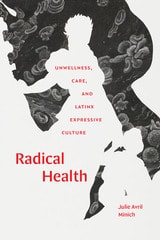
Radical Health
Unwellness, Care, and Latinx Expressive CultureJulie Avril Minich
Duke University Press, 2023
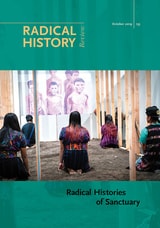
Radical Histories of Sanctuary
A. Naomi Paik, Jason Ruiz, and Rebecca Schreiber, special issue editors
Duke University Press, 2019
Contributors. Rachel Ida Buff, Caleb Duarte, Treva Ellison, Jason Ezell, Carla Hung, Kyle B. T. Lambelet, Sunaina Maira, Rachel McIntire, A. Naomi Paik, Jason Ruiz, Rebecca M. Schreiber, Aimee Villarreal, Elliot Young
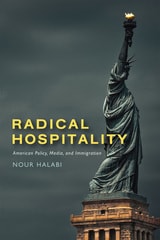
Radical Hospitality
American Policy, Media, and ImmigrationNour Halabi
Rutgers University Press, 2022
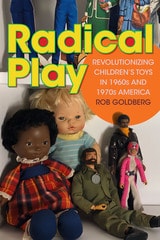
Radical Play
Revolutionizing Children’s Toys in 1960s and 1970s AmericaRob Goldberg
Duke University Press, 2023
Radical Secrecy
The Ends of Transparency in Datafied AmericaClare Birchall
University of Minnesota Press, 2021
Reimagining transparency and secrecy in the era of digital data
When total data surveillance delimits agency and revelations of political wrongdoing fail to have consequences, is transparency the social panacea liberal democracies purport it to be? This book sets forth the provocative argument that progressive social goals would be better served by a radical form of secrecy, at least while state and corporate forces hold an asymmetrical advantage over the less powerful in data control. Clare Birchall asks: How might transparency actually serve agendas that are far from transparent? Can we imagine a secrecy that could act in the service of, rather than against, a progressive politics?
To move beyond atomizing calls for privacy and to interrupt the perennial tension between state security and the public’s right to know, Birchall adapts Édouard Glissant’s thinking to propose a digital “right to opacity.” As a crucial element of radical secrecy, she argues, this would eventually give rise to a “postsecret” society, offering an understanding and experience of the political that is free from the false choice between secrecy and transparency. She grounds her arresting story in case studies including the varied presidential styles of George W. Bush, Barack Obama, and Donald Trump; the Snowden revelations; conspiracy theories espoused or endorsed by Trump; WikiLeaks and guerrilla transparency; and the opening of the state through data portals.
Postsecrecy is the necessary condition for imagining, finally, an alternative vision of “the good,” of equality, as neither shaped by neoliberal incarnations of transparency nor undermined by secret state surveillance. Not least, postsecrecy reimagines collective resistance in the era of digital data.