Results by title
18284 books match the query 'United States' and 833 start with r

Rainbow at Midnight
LABOR AND CULTURE IN THE 1940SGeorge Lipsitz
University of Illinois Press, 1994

Rainy Day Ready
Financial Literacy Programs and ToolsMelanie Welch
American Library Association, 2020
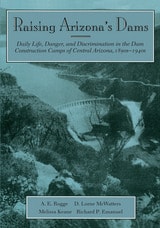
Raising Arizona's Dams
Daily Life, Danger, and Discrimination in the Dam Construction Camps of Central Arizona, 1890s-1940sA. E. Rogge, D. Lorne McWatters, Melissa Keane, and Richard P. Emanuel
University of Arizona Press, 1995
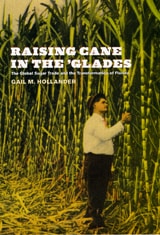
Raising Cane in the 'Glades
The Global Sugar Trade and the Transformation of FloridaGail M. Hollander
University of Chicago Press, 2008
Using, among other sources, interviews, government and corporate documents, and recently declassified U.S. State Department memoranda, Gail M. Hollander demonstrates that the development of Florida’s sugar region was the outcome of pitched battles reaching the highest political offices in the U.S. and in countries around the world, especially Cuba—which emerges in her narrative as a model, a competitor, and the regional “other” to Florida’s “self.” Spanning the period from the age of empire to the era of globalization, the book shows how the “sugar question”—a label nineteenth-century economists coined for intense international debates on sugar production and trade—emerges repeatedly in new guises. Hollander uses the sugar question as a thread to stitch together past and present, local and global, in explaining Everglades transformation.
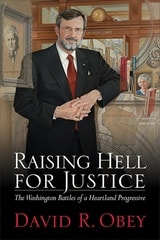
Raising Hell for Justice
The Washington Battles of a Heartland ProgressiveDavid R. Obey
University of Wisconsin Press, 2007
Here, in his autobiography, Obey looks back on his journey in politics beginning with his early years in the Wisconsin Legislature, when Wisconsin moved through eras of shifting balance between Republicans and Democrats. On a national level Obey traces, as few others have done, the dramatic changes in the workings of the U.S. Congress since his first election to the House in 1969. He discusses his own central role in the evolution of Congress and ethics reforms and his view of the recent Bush presidency—crucial chapters in our democracy, of interest to all who observe politics and modern U.S. history.
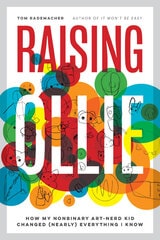
Raising Ollie
How My Nonbinary Art-Nerd Kid Changed (Nearly) Everything I KnowTom Rademacher
University of Minnesota Press, 2021
The account of one radically new school year for a Teacher of the Year and for his nonbinary, art-obsessed, brilliant child
Seven-year-old Ollie was researching local advanced school programs—because every second grader does that, right? Ollie, who used to hate weekends because they meant no school, was crying on the way to school almost every day. Sure, there were the slings and arrows of bullies and bad teachers, but, maybe worse, Ollie, a funny, anxious, smart kid with a thing for choir and an eye for graphic art, was gravely underchallenged and also struggling with identity and how to live totally as themselves. Ollie begged to switch to a new school with “kids like me,” where they wouldn’t feel so alone, or so bored, and so they made the change.
Raising Ollie is dad Tom Rademacher’s story (really, many stories) of that eventful and sometimes painful school year, parenting Ollie and relearning every day what it means to be a father and teacher. As Ollie—who is nonbinary and uses they/them pronouns, and prefers art to athletics, vegetables to cake, and animals to most humans—flourishes in their new school, Rademacher is making an eye-opening adjustment to a new school of his own, one that’s whiter and more suburban than anywhere he has previously taught, with a history of racial tension that he tries to address and navigate.
While Ollie is learning to code, 3D model, animate, speak Japanese, and finally feel comfortable at school, Rademacher increasingly sees how his own educational struggles, anxieties, and childhood upbringing are reflected in his teaching, writing, and parenting, as well as in Ollie’s experience. And with this story of one anything-but-academic year of inquiry and wonder, doubt and revelation, he shows us how raising a kid changes everything—and how much raising a kid like Ollie can teach us about who we are and what we’re doing in the world.
Raising Secular Jews
Yiddish Schools and Their Periodicals for American Children, 1917–1950Naomi Prawer Kadar
Brandeis University Press, 2016
Raising Your Kids Right
Children's Literature and American Political ConservatismAbate, Michelle Ann
Rutgers University Press, 2011
Highlighting the works of William Bennett, Lynne Cheney, Bill O'Reilly, and others, Michelle Ann Abate brings together such diverse fields as cultural studies, literary criticism, political science, childhood studies, brand marketing, and the cult of celebrity. Raising Your Kids Right dispels lingering societal attitudes that narratives for young readers are unworthy of serious political study by examining a variety of texts that offer information, ideology, and even instructions on how to raise kids right, not just figuratively but politically.
Raising the Dead
Readings of Death and (Black) SubjectivitySharon Patricia Holland
Duke University Press, 2000
Holland argues that the presence of blacks, Native Americans, women, queers, and other “minorities” in society is, like death, “almost unspeakable.” She gives voice to—or raises—the dead through her examination of works such as the movie Menace II Society, Toni Morrison’s novel Beloved, Leslie Marmon Silko’s Almanac of the Dead, Randall Kenan’s A Visitation of Spirits, and the work of the all-white, male, feminist hip-hop band Consolidated. In challenging established methods of literary investigation by putting often-disparate voices in dialogue with each other, Holland forges connections among African-American literature and culture, queer and feminist theory.
Raising the Dead will be of interest to students and scholars of American culture, African-American literature, literary theory, gender studies, queer theory, and cultural studies.
Raising the Floor
Federalism and the Politics of US Minimum Wage PolicyShanna Rose
University of Chicago Press, 2026
A rich history of the development of American minimum wage policy with lessons for today.
Despite broad popular support for robust minimum wage policy, the federal minimum wage is now worth less—in real, inflation-adjusted terms—than at any time since 1949. While some state and local governments have stepped in to fill this void, others have declined to set any minimum wage standard at all. Traversing more than 100 years of history, Raising the Floor examines how interest groups have navigated the highly decentralized American political system to shape the development of federal, state, and local minimum wage laws.
In her analysis, Shanna Rose highlights the importance of American federalism. She argues that because federalism creates multiple arenas for policy change, interest groups have sought out the sites most conducive to their goals, shifting their lobbying efforts as new obstacles and opportunities emerge. Federalism has facilitated minimum wage policymaking by fostering policy experimentation, learning, and diffusion across states and by allowing state and local governments to overcome gridlock and status-quo biases at the national level. Yet, federalism has also been an instrument for containment, enabling those opposed to minimum wage increases to litigate and preempt local-level laws.
With rich historical chapters that illuminate different phases in the development of today’s patchwork of wage standards, Raising the Floor is a deep examination of the past, present, and future of American minimum wage law.
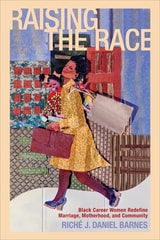
Raising the Race
Black Career Women Redefine Marriage, Motherhood, and CommunityBarnes, Riché J. Daniel
Rutgers University Press, 2015
Popular discussions of professional women often dwell on the conflicts faced by the woman who attempts to “have it all,” raising children while climbing up the corporate ladder. Yet for all the articles and books written on this subject, there has been little work that focuses on the experience of African American professional women or asks how their perspectives on work-family balance might be unique.
Raising the Race is the first scholarly book to examine how black, married career women juggle their relationships with their extended and nuclear families, the expectations of the black community, and their desires to raise healthy, independent children. Drawing from extensive interviews with twenty-three Atlanta-based professional women who left or modified careers as attorneys, physicians, executives, and administrators, anthropologist Riché J. Daniel Barnes found that their decisions were deeply rooted in an awareness of black women’s historical struggles. Departing from the possessive individualistic discourse of “having it all,” the women profiled here think beyond their own situation—considering ways their decisions might help the entire black community.
Giving a voice to women whose perspectives have been underrepresented in debates about work-family balance, Barnes’s profiles enable us to perceive these women as fully fledged individuals, each with her own concerns and priorities. Yet Barnes is also able to locate many common themes from these black women’s experiences, and uses them to propose policy initiatives that would improve the work and family lives of all Americans.
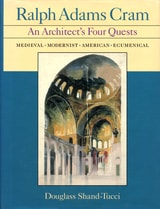
Ralph Adams Cram
An Architect's Four QuestsDouglass Shand-Tucci
University of Massachusetts Press, 2005
With his partner Bertram Goodhue, Cram won a number of important commissions, beginning with the West Point competition in 1903. Although an increasingly bitter rivalry with Goodhue would lead to the dissolution of their partnership in 1912, Cram had already begun to strike out on his own. Supervising architect at Princeton, consulting architect at Wellesley, and head of the MIT School of Architecture, he would also design most of New York's Cathedral of St. John the Divine and the campus of Rice University, as well as important church and collegiate structures throughout the country. By the 1920s Cram had become a household name, even appearing on the cover of Time magazine.
A complex man, Cram was a leading figure in what Shand-Tucci calls "a full-fledged homosexual monastery" in England, while at the same time married to Elizabeth Read. Their relationship was a complicated one, the effect of which on his children and his career is explored fully in this book. So too is his work as a religious leader and social theorist.
Shand-Tucci traces the influence on Cram of such disparate figures as Franklin Delano Roosevelt, Phillips Brooks, Henry Adams, and Ayn Rand. He divides Cram's career into four lifelong "quests": medieval, modernist, American, and ecumenical. Some quests may have failed, but in each he left a considerable legacy, ultimately transforming the visual image of American Christianity in the twentieth century.
Handsomely illustrated with over 130 photographs and drawings and eight pages of color plates, Ralph Adams Cram can be read on its own or in conjunction with Boston Bohemia, 1881–1900. Together, the two volumes complete what the Christian Century has described as a "superbly researched and captivating biography."

Ralph J. Bunche
Selected Speeches and WritingsCharles P. Henry, Editor
University of Michigan Press, 1996
Bunche was a pioneer in every sense of the word. The first black American to hold a doctorate in political science, Bunche established the political science department at Howard University and co-founded the National Negro Congress. He served as the first African- American section head in the Office of Strategic Services and later moved to the State Department. He played a major part in the delegation that established the United Nations and, when he retired as Under Secretary General, was the highest- ranking black in that organization. In 1950, he was awarded the Nobel Peace Prize and thus became the first black Nobel laureate.
Bunche's thinking and writing was broad, ranging from the political left to the center. Early works flirt with socialist or even Bolshevist ideas, while later works maintained that a flawed American democracy was better than an impending threat of Nazi-influenced fascism. Bunche was one of the first African Americans to do academic work in Africa, forcing him to think through notions of colonialism and class that would influence his work at the United Nations. Although his passion for peace and civil rights never faltered, his relationship with American black movements vascillated from an early embrace of radicalism to a significant distancing during the mid-sixties to a final rapprochement during the last years of his life. A monumental contribution, Ralph J. Bunche: Selected Speeches and Writings reasserts the thinking of a great American whose views are entirely relevant to a generation still striving for the world Bunche envisioned.
Charles P. Henry is Associate Professor of African American Studies at the University of California, Berkeley.
From the book:
"I abhor racism as a dangerous virus, whether it is spread by white or black peoples. I seek total integration, which to me means the Negro taking his place in the very mainstream of American life . . . . My ancestors have contributed very much to the development of this country and therefore I have a vested interest in it that I intend to realize and protect."
"It seems painfully clear to me that there is no possibility in the affluent, highly industrialized and technological white-majority American society for anyone to be at once black, separate and equal."
"The colonial system in its modern version, implicitly arrogant and self-serving, was instituted and perpetuated chiefly by self-righteous and superior- minded Europeans. Its positive achievements notwithstanding, colonialism's evil legacies will bedevil the world for years to come."
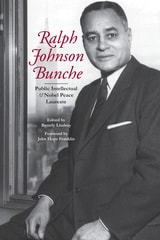
Ralph Johnson Bunche
Public Intellectual and Nobel Peace LaureateEdited by Beverly Lindsay; Foreword by John Hope Franklin
University of Illinois Press, 2007
Nobel Peace Prize winner Ralph Johnson Bunche (1904-71) was one of the twentieth century’s foremost diplomats and intellectuals. In the wake of centennial celebrations of his birth, leading scholars and diplomats assess Bunche’s historical importance and enduring impact on higher education, public policy, and international politics. Their essays reveal not only the breadth of Bunche’s influence, such as his United Nations work to broker peace during times of civil war in Africa, the Middle East, and Asia, but also the depth of his intellectual perspectives on race, civil rights, higher education, and international law. Probing his publications, speeches, and public policy initiatives, the volume offers telling insights into the critical roles of universities, public intellectuals, and diplomats in working together to find solutions to domestic and international problems through public and scholarly engagement. In this way, the volume highlights the very connections that Bunche exhibited as an academic, intellectual, and diplomat.
Contributors include Lorenzo DuBois Baber, John Hope Franklin, Jonathan Scott Holloway, Charles P. Henry, Ben Keppel, Beverly Lindsay, Princeton Lyman, Edwin Smith, and Hanes Walton Jr.
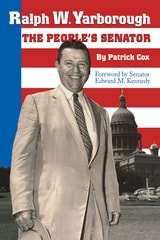
Ralph W. Yarborough, the People's Senator
By Patrick L. Cox
University of Texas Press, 2002
Semifinalist, 22nd Annual Robert F. Kennedy Book Award, 2002
Finalist, Spur Award in western nonfiction biography, Western Writers of America, 2002
Revered by many Texans and other Americans as "the People's Senator," Ralph Webster Yarborough (1903-1996) fought for "the little people" in a political career that places him in the ranks of the most influential leaders in Texas history. The only U. S. Senator representing a former Confederate state to vote for every significant piece of modern civil rights legislation, Yarborough became a cornerstone of Lyndon Johnson's Great Society programs in the areas of education, environmental preservation, and health care. In doing so, he played a major role in the social and economic modernization of Texas and the American South. He often defied conventional political wisdom with his stands against powerful political interests and with his vocal opposition to the Vietnam War. Yet to this day, his admirers speak of Yarborough as an inspiration for public service and a model of political independence and integrity.
This biography offers the first in-depth look at the life and career of Ralph Yarborough. Patrick L. Cox draws on Yarborough's personal and professional papers, as well as on extensive interviews with the Senator and his associates, to follow Yarborough from his formative years in East Texas through his legal and judicial career in the 1930s, decorated military service in World War II, unsuccessful campaigns for Texas governor in the 1950s, distinguished tenure in the United States Senate from 1957 to 1970, and return to legal practice through the 1980s.
Although Yarborough's liberal politics set him at odds with most of the Texas power brokers of his time, including Lyndon Johnson, his accomplishments have become part of the national fabric. Medicare recipients, beneficiaries of the Cold War G. I. Bill, and even beachcombers on Padre Island National Seashore all share in the lasting legacy of Senator Ralph Yarborough.
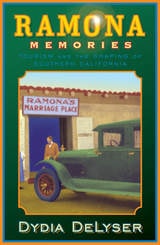
Ramona Memories
Tourism and the Shaping of Southern CaliforniaDydia DeLyser
University of Minnesota Press, 2005

Ramparts of Resistance
Why Workers Lost Their Power, and How to Get It BackSheila Cohen
Pluto Press, 2006
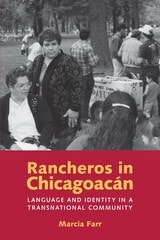
Rancheros in Chicagoacán
Language and Identity in a Transnational CommunityBy Marcia Farr
University of Texas Press, 2006
Rancheros hold a distinct place in the culture and social hierarchy of Mexico, falling between the indigenous (Indian) rural Mexicans and the more educated city-dwelling Mexicans. In addition to making up an estimated twenty percent of the population of Mexico, rancheros may comprise the majority of Mexican immigrants to the United States. Although often mestizo (mixed race), rancheros generally identify as non-indigenous, and many identify primarily with the Spanish side of their heritage. They are active seekers of opportunity, and hence very mobile. Rancheros emphasize progress and a self-assertive individualism that contrasts starkly with the common portrayal of rural Mexicans as communal and publicly deferential to social superiors.
Marcia Farr studied, over the course of fifteen years, a transnational community of Mexican ranchero families living both in Chicago and in their village-of-origin in Michoacán, Mexico. For this ethnolinguistic portrait, she focuses on three culturally salient styles of speaking that characterize rancheros: franqueza (candid, frank speech); respeto (respectful speech); and relajo (humorous, disruptive language that allows artful verbal critique of the social order maintained through respeto). She studies the construction of local identity through a community's daily talk, and provides the first book-length examination of language and identity in transnational Mexicans.
In addition, Farr includes information on the history of rancheros in Mexico, available for the first time in English, as well as an analysis of the racial discourse of rancheros within the context of the history of race and ethnicity in Mexico and the United States. This work provides groundbreaking insight into the lives of rancheros, particularly as seen from their own perspectives.
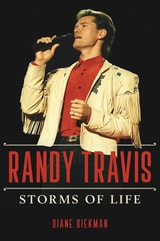
Randy Travis
Storms of LifeDiane Diekman
University of Illinois Press, 2025
Randy Travis’s 1986 breakthrough put him at the forefront of Nashville’s new traditionalist sound and, in the words of Garth Brooks, saved country music. The singer’s warm baritone and all-time classic songs like “Forever and Ever, Amen” landed him atop the charts sixteen times. His cross-genre appeal brought a level of multiplatinum success that no country artist before him had ever achieved.
Diane Diekman’s biography follows the life and career of one of country music’s most beloved figures. Steered from a troubled path as a teen, Travis served a long apprenticeship under manager and future wife Lib Hatcher before being rejected by the Nashville music industry as “too country.” The single “On the Other Hand” and his smash debut album did away with the doubters and began a dominant four-year run that stretched into ongoing success as a recording artist, trailblazing live performer, and actor in film and television. Diekman uses dozens of interviews and in-depth research to fill in the details of Travis’s pre-fame life and his enormous impact on country, popular, and gospel music. From there, she pivots to telling the story of the singer’s difficult divorce from Hatcher, subsequent problems with alcohol and run-ins with the law, and the challenges he overcame in the aftermath of a devastating 2013 stroke.
Informed by a wealth of new research and interviews, Randy Travis is the first in-depth biography of the country music legend.
Rank-and-File Rebels
Theories of Power and Change in the 2018 Education StrikesErin Dyke
University Press of Colorado, 2024
Rape by the Numbers
Producing and Contesting Scientific Knowledge about Sexual ViolenceEthan Czuy Levine
Rutgers University Press, 2021
Rape in Chicago
Race, Myth, and the CourtsDawn Rae Flood
University of Illinois Press, 2018
Rape, Agency, and Carceral Solutions
From Criminal Justice to Social JusticeLeland G. Spencer
University of Massachusetts Press, 2023
Winner of the 2023 National Communication Association's American Studies Division Outstanding Book Award
News media and popular culture in the United States have produced a conventional narrative of the outcomes of sexual abuse: someone perpetrates sexual violence, goes to trial, and is then punished with prison time. Survivors recede into the background, becoming minor characters in their own stories as intrepid prosecutors, police officers, and investigators gather evidence and build a case.
Leland G. Spencer explains how the stories we tell about sexual assault serve to reinforce rape culture, privileging criminal punishment over social justice and community-based responses to sexual violence. Examining a broad range of popular media, including news coverage of the Brock Turner case, Naomi Iizuka’s popular play Good Kids, the television program Criminal Minds, and the book turned television show 13 Reasons Why, Spencer demonstrates how these representations shore up the carceral state, perpetuate rape myths, blame victims, and excuse those who harm. While increased discussion about sexual violence represents feminist progress, these narratives assume that policing and prosecution are the only means of achieving justice, sidelining other potential avenues for confronting perpetrators and supporting victims.
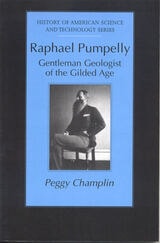
Raphael Pumpelly
Gentleman Geologist of the Gilded AgePeggy Champlin
University of Alabama Press, 1994
A definitive biography illuminating the scientific, industrial, and exploratory contributions of America’s pioneering economic geologist.
Raphael Pumpelly: Gentleman Geologist of the Gilded Age provides an excellent opportunity to look at the development of the profession of geology during the years spanned by his career, from 1860 to the early twentieth century. In this period, the practical applications of geology to resource development were of major importance, but geologists were also investigating new subjects, such as petrology, geomorphology, glaciology, and structural geology. These investigations resulted in an explosion of knowledge in these areas and in the growth of subdisciplines. Pumpelly did research in these fields but like others of his generation did not limit himself to any one of them; he remained a generalist in a time of increasing specialization, a transitional figure in a period of rapid change.
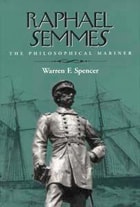
Raphael Semmes
The Philosophical MarinerWarren F. Spencer
University of Alabama Press, 1997
Naval hero for all the South, Raphael Semmes (1809-1877) sailed two famous Confederate raiders. He outfitted CSS Sumter in 1861 and captured 18 Union merchant ships in six months before the raider was blockaded at Gibraltar. Next he took command of CSS Alabama, an English-built raider, and terrorized U.S. merchant vessels on the high seas from August 1862 until the raider was sunk in battle off Cherbourg in June 1864. During that two-year period, he captured more enemy merchant ships than any other cruiser captain in maritime history. He is considered one of the greatest ship's commanders that America has produced.
In this first, full-scale biography that relies on Semmes's private papers, unpublished diaries, and correspondence, Spencer has produced a well-balanced and comprehensive account of the man, as well as the naval officer. The biographer paints a vivid portrait of Semmes—the intellectual, the family man, lawyer, romanticist, nationalist—providing a greater understanding of the man behind the heroic deeds.
Semmes was born in Maryland to a slave-holding family and entered the United States Navy in 1826. In 1849, he moved his family to Mobile, Alabama, to be near the navy base at Pensacola, Florida, and to practice law during leaves. Semmes was an astute student, not only of international and maritime law but also of weather patterns; astronomy; flora and fauna; naval, social, and cultural history; and the classics. His study of constitutional law led him to side with his adopted state in 1861, a move that set the stage for his place in history.

Rare Integrity
A Portrait of L. W. Payne, Jr.Hansen Alexander
University of North Texas Press, 1986
Rarities
Conservation Science in a Time of Unintended ConsequencesZoe Nyssa
University of Chicago Press, 2026
A sweeping study that reveals how conservation science does more than simply protect by inadvertently making nature valuable in new ways.
Climate change and other environmental transformations are causing species to go extinct at accelerating rates. What, then, should a science of saving nature look like? In Rarities, Zoe Nyssa traces how conservation emerged as a distinct scientific endeavor in the United States over the twentieth century and how this history has shaped environmental research practices and policy today. Drawing on archival and ethnographic research with leading conservation labs and programs, Nyssa explores how conservation science appears to generate contradictory, even counterintuitive, results as scientists, policymakers, and the public all take up, respond to, and repurpose scientists’ ideas about rarity, vulnerability, and endangerment. The designation of new nature reserves can lead to increased poaching and habitat destruction. The listing of a species as endangered fuels their black-market consumption as pets, food, or luxury items. Protection of natural resources can push resource extraction into unprotected areas. Other effects are less simple to calculate; persuading the public to care about one species might siphon support for another, and paying for one kind of conservation behavior can discourage other forms of conservation activity.
The science of saving nature spans a century of work by ecologists and others to develop a scientific basis for conservation. Yet Nyssa shows how their efforts to understand the natural world in terms of endangerment and extinction unleashed new ways for nonscientists to experience and understand nature as well. The scientific values that emerge, she argues, can transform the complex interconnections between human and nonhuman life. Rarities offers a framework for understanding these surprising socio-ecological dynamics and why they matter, both for contemporary science and for the planet.
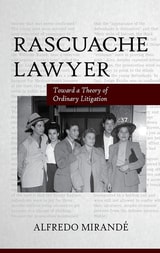
Rascuache Lawyer
Toward a Theory of Ordinary LitigationAlfredo Mirandé
University of Arizona Press, 2011
Every chapter presents an actual case from Mirandé’s experience (only the names and places have been changed). His clients have been charged with everything from carrying a concealed weapon, indecent exposure, and trespassing to attempted murder, domestic violence, and child abuse. Among them are recent Mexican immigrants, drug addicts, gang members, and the homeless. All of them are destitute, and many are victims of racial profiling. Some “pay” Mirandé with bartered services such as painting, home repairs, or mechanical work on his car. And Mirandé doesn’t always win their cases. But, as he recounts, he certainly works tirelessly to pursue all legal remedies.
Each case is presented as a letter to a fascinating (fictional) “Super Chicana” named Fermina Gabriel, who we are told is an accomplished lawyer, author, and singer. This narrative device allows the author to present his cases as if he were recounting them to a friend, drawing in the reader as a friend as well.
Bookending the individual cases, Mirandé’s introductions and conclusions offer a compelling vision of progressive legal practice grounded in rascuache lawyering.
Rational Expectations and Economic Policy
Edited by Stanley Fischer
University of Chicago Press, 1982
"This is a most timely and valuable contribution. . . . The contributors and commentators are highly distinguished and the editor has usefully collated comments and the ensuing discussion. Unusually for a conference proceedings the book is well indexed and it is also replete with numerous and up-to-date references. . . . This is the first serious book to examine the rational expectations thesis in any depth, and it will prove invaluable to anyone involved with macroeconomic policy generally and with monetary economics in particular."—G. K. Shaw, The Economic Journal
Rationality of Irrationality
Political Determinants and Effects of Party Position BlurringKyung Joon Han
University of Michigan Press, 2022
Citizens in democracies complain that political parties’ positions on major issues are too ambiguous for them to confidently understand. Why is party position ambiguity so common? Are party positions ambiguous because political parties fail in forming clear policies or because they deliberately blur their positions? Rationality of Irrationality argues that political parties are motivated to strategically blur their position on an issue when they struggle with a certain disadvantage in the issue. Specifically, political parties present an ambiguous position when their own supporters are divided in their stances on the issue. A political party also blurs position stances when voters do not acknowledge that the party has the ability and integrity to solve problems related to the issue. Political parties blur their position in these cases because ambiguous party positions divert voters’ attention from the issue. Voters support a political party whose policy positions on major issues are close to their own stances. However, voters cannot confidently and exactly estimate party positions on an issue when they are only ambiguous.
Rationalizing Capitalist Democracy
The Cold War Origins of Rational Choice LiberalismS.M. Amadae
University of Chicago Press, 2003
Rattlesnakes
By J. Frank Dobie
University of Texas Press, 1982
Here are observations and speculations, legends and yarns, even gossip about the habits and dispositions of these extraordinary creatures—rattlesnakes—their reported size, deadliness, and power to charm their natural enemies. Here are descriptions of actual fights to the death between rattlesnakes and other animals and accounts of the strange experiences human beings have had with them, as well as tips on where to find them and how to act when you see one.
Dobie began systematically collecting lore about the rattlesnake world many years ago, using some of it in such regional publications as Southwest Review and incorporating much of it into essays—with the intention of eventually putting together a book about rattlesnakes. Now, in this collection of twenty-two articles, his wish is posthumously fulfilled.
Only Frank Dobie could tell of this fascinating and frightening creature with such wisdom and humor, thereby tempering "the age-old feud between the snake and man." And the rattlesnake—who once aroused fear among even the boldest men in the Old West—can at last be regarded with tolerance, respect, and even affection.
Raw Edges
A MemoirPhyllis Barber
University of Nevada Press, 2012
When Phyllis Barber’s thirty-three-year marriage ended, she had to redefine herself as a woman, a mother, and an artist. Raw Edges is her moving account of the “lean years” that followed her divorce. It is interwoven with a narrative of the marriage of two gifted people that begins with “sealing” in a Mormon temple, endures through the birth of four sons and the development of two careers, and founders when the couple’s personal needs no longer match their aspirations or the rigid strictures of Mormon life. Raw Edges reflects the predicament that many women experience as their marriages disintegrate and they fail to achieve their own expectations as well as those set by their society and their faith. It is also a story of hope, of how a woman overcome by grief and confusion eventually finds a new approach to life.
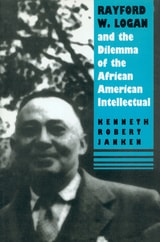
Rayford W. Logan and the Dilemma of the African American Intellectual
Kenneth Robert Janken
University of Massachusetts Press, 1993
This biography of the African-American activist and scholar, Rayford W. Logan, draws from his own work, letters, diaries and autobiography to create a portrait of a lesser-known member of the Black scholarly elite in the mid-20th century.
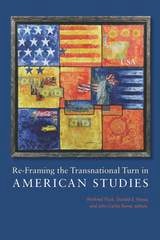
Re-Framing the Transnational Turn in American Studies
Edited by Winfried Fluck, Donald E. Pease, and John Carlos Rowe
Dartmouth College Press, 2011
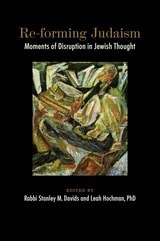
Re-forming Judaism
Moments of Disruption in Jewish ThoughtRabbi Stanley M. Davids and Leah Hochman, PhD
Central Conference of American Rabbis, 2023
Throughout Jewish history, revolutionary events and subversive ideas have burst forth, repeatedly transforming Jewish experience. Re-forming Judaism seeks to explore these ideas—and the individuals behind them—by delving into historical disruptions that led to lasting change in Jewish thought. A distinguished array of scholars take us on a journey from the disruptive prophets of ancient times, through rational, mystical, and extremist medievalists, to the impact of Haskalah and early Reform thought in modernity. Contemporary innovations such as changes in liturgy and music, feminism, and post-Holocaust theology are included, as are insights into Sephardic and North African experiences. By showing how Judaism forms—then re-forms, and re-forms again—the contributors demonstrate that tensions between continuity and change have always been part of Jewish life, helping us to both understand the past and contemplate the future.
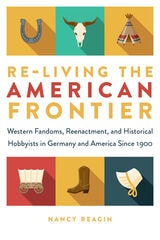
Re-living the American Frontier
Western Fandoms, Reenactment, and Historical Hobbyists in Germany and America Since 1900Nancy Reagin
University of Iowa Press, 2021
But the Old West (like all visions of the past) proved to be shifting cultural terrain. In both Germany and the U. S., Western narratives of white settlement were once seen as “apolitical” and were widely accepted by white people. But during the Nazi period in Germany and in East Germany after 1945, the American West was reevaluated and politically repurposed. Then, during the late twentieth century, understandings of the West changed in the U. S. as well, while the violence of white settler colonialism and the displacement of Indigenous peoples became a flashpoint in the culture wars between right and left. Reagin shows that the past that fans seek to recreate is shaped by the changing present, as each new generation adapts and relives their own West.
Re-membering Culture
Erasure and Renewal in Hmong American EducationBic Ngo
University of Minnesota Press, 2024
The untold stories of resilience in Hmong American education
Re-membering Culture is a deep exploration of the intricate dynamics of cultural memory and education, centering the experiences of Hmong American students and educators. Arguing that the school, as a product of coloniality, perpetuates the marginalization and erasure of non-Western epistemologies, author Bic Ngo sheds light on the subtle yet impactful process of structured forgetting within the American education system. This politics of forgetting, in turn, contributes to the fragmentation of Hmong cultural heritage, identity, and community.
Based on a high school in an urban center with a considerable Hmong immigrant community, Ngo’s work draws on extensive ethnographic research with Hmong American community leaders, school administrators, parents, teachers, staff, and high school students to understand how they navigate the terrain of Western pedagogy while attempting to retain and preserve Hmong knowledge systems. Exploring a range of school experiences, Ngo traverses students’ challenges in balancing school with family life and the everyday cultural racism encountered in the classroom as well as grassroots efforts to preserve culture, including the establishment of a Hmong Cultural Club.
Highlighting these experiences and voices, Ngo provides a nuanced understanding of the challenges Hmong Americans face within an assimilationist society while contesting the dominant anti-immigrant narratives of refugee suffering and poverty. Through these practices of (re)storytelling, resurgence, and refusal, she underscores the agency of the Hmong American community, illuminating how the critical consciousness fostered by re-membering serves as a powerful tool in confronting white hegemonic ideologies in education.
Retail e-book files for this title are screen-reader friendly.
Reaching for a New Deal
Ambitious Governance, Economic Meltdown, and Polarized Politics in Obama's First Two YearsTheda Skocpol
Russell Sage Foundation, 2011
Read Me a Rhyme in Spanish and English
Rose Zertuche Treviño
American Library Association, 2009
Readers' Advisory Service in the Public Library
Joyce G. Saricks
American Library Association, 2005
Reading America
Citizenship, Democracy, and Cold War LiteratureKristin L. Matthews
University of Massachusetts Press, 2016
During the Cold War, the editor of Time magazine declared, “A good citizen is a good reader.” As postwar euphoria faded, a wide variety of Americans turned to reading to understand their place in the changing world. Yet, what did it mean to be a good reader? And how did reading make you a good citizen?
In Reading America, Kristin L. Matthews puts into conversation a range of political, educational, popular, and touchstone literary texts to demonstrate how Americans from across the political spectrum—including “great works” proponents, New Critics, civil rights leaders, postmodern theorists, neoconservatives, and multiculturalists—celebrated particular texts and advocated particular interpretive methods as they worked to make their vision of "America" a reality. She situates the fiction of J. D. Salinger, Ralph Ellison, Thomas Pynchon, John Barth, and Maxine Hong Kingston within these debates, illustrating how Cold War literature was not just an object of but also a vested participant in postwar efforts to define good reading and citizenship.
Reading Chinese Fortune Cookie
The Making of Chinese American RhetoricLuMing Mao
Utah State University Press, 2006
ecent scholarship tends to explain such influences as contributing to language hybridity---an advance over the traditional "deficit model." But Mao suggests that the "hybridity" approach is perhaps too arid or sanitized, missing rich nuances of mutual exchange, resistance, or even subversion. Through his concept of "togetherness in difference, Mao suggests that speakers of hybrid discourse may not be attempting the standard (and failing), but instead may be deliberately importing cultural material to create a distance between themselves and the standard. This practice, over time, becomes a process that transforms English, enriching and enlarging it through the infusion of non-Western discourse features, subverting power structures, and even providing unique humorous touches.
Of interest to scholars in composition, cultural studies, and linguistics as well, Reading Chinese Fortune Cookie leads in an important new direction for both our understanding and our teaching of English.
Reading Embodied Citizenship
Disability, Narrative, and the Body PoliticRussell, Emily
Rutgers University Press, 2011
Liberal individualism, a foundational concept of American politics, assumes an essentially homogeneous population of independent citizens. When confronted with physical disability and the contradiction of seemingly unruly bodies, however, the public searches for a story that can make sense of the difference. The narrative that ensues makes "abnormality" an important part of the dialogue about what a genuine citizen is, though its role is concealed as an exception to the rule of individuality rather than a defining difference. Reading Embodied Citizenship brings disability to the forefront, illuminating its role in constituting what counts as U.S. citizenship.
Drawing from major figures in American literature, including Mark Twain, Flannery O'Connor, Carson McCullers, and David Foster Wallace, as well as introducing texts from the emerging canon of disability studies, Emily Russell demonstrates the place of disability at the core of American ideals. The narratives prompted by the encounter between physical difference and the body politic require a new understanding of embodiment as a necessary conjunction of physical, textual, and social bodies. Russell examines literature to explore and unsettle long-held assumptions about American citizenship.
Reading National Geographic
Catherine A. Lutz and Jane L. Collins
University of Chicago Press, 1993
Lutz and Collins take us inside the National Geographic Society to investigate how its photographers, editors, and designers select images and text to produce representations of Third World cultures. Through interviews with the editors, they describe the process as one of negotiating standards of "balance" and "objectivity," informational content and visual beauty. Then, in a close reading of some six hundred photographs, they examine issues of race, gender, privilege, progress, and modernity through an analysis of the way such things as color, pose, framing, and vantage point are used in representations of non-Western peoples. Finally, through extensive interviews with readers, the authors assess how the cultural narratives of the magazine are received and interpreted, and identify a tension between the desire to know about other peoples and their ways and the wish to validate middle-class American values.
The result is a complex portrait of an institution and its role in promoting a kind of conservative humanism that acknowledges universal values and celebrates diversity while it allows readers to relegate non-Western peoples to an earlier stage of progress. We see the magazine and the Society as a key middlebrow arbiter of taste, wealth, and power in America, and we get a telling glimpse into middle-class American culture and all the wishes, assumptions, and fears it brings to bear on our armchair explorations of the world.
Reading Places
Literacy, Democracy, and the Public Library in Cold War AmericaChristine Pawley
University of Massachusetts Press, 2010
Central to the experiment were well-stocked bookmobiles that brought books to rural districts and the one-room schools that dotted the region. Three years after the project began, state officials and local librarians judged it an overwhelming success. Library circulation figures soared to two-and-a-half times their previous level. Over 90 percent of grade-school children in the rural schools used the bookmobile service, and their reading scores improved beyond expectation.
Despite these successes, however, local communities displayed deeply divided reactions. Some welcomed the book-mobiles and new library services wholeheartedly, valuing print and reading as essential to the exercise of democracy, and keen to widen educational opportunities for children growing up on hardscrabble farms where books and magazines were rare. Others feared the intrusion of govern- ment into their homes and communities, resented the tax increases that library services entailed, and complained about the subversive or immoral nature of some books.
Analyzing the history of tensions between various community groups, Pawley delineates the long-standing antagonisms arising from class, gender, and ethnic differences which contributed to a suspicion of official projects to expand education. Relating a seemingly small story of library policy, she teases out the complex interaction of reading, locality, and cultural difference. In so doing, she illuminates broader questions regarding libraries, literacy, and citizenship, reaching back to the nineteenth century and forward to the present day.
Reading Prisoners
Literature, Literacy, and the Transformation of American Punishment, 1700–1845Schorb, Jodi
Rutgers University Press, 2014
Reading Public Opinion
How Political Actors View the Democratic ProcessSusan Herbst
University of Chicago Press, 1998
Herbst draws on ideas from political science, sociology, and psychology to explore how three sets of political participants—legislative staffers, political activists, and journalists—actually evaluate and assess public opinion. She concludes that many political actors reject "the voice of the people" as uninformed and nebulous, relying instead on interest groups and the media for representations of public opinion. Her important and original book forces us to rethink our assumptions about the meaning and place of public opinion in the realm of contemporary democratic politics.
Reading Ronell
Edited by Diane Davis
University of Illinois Press, 2008
Avital Ronell has won worldwide acclaim for her work across literature and philosophy, psychoanalysis and popular culture, political theory and feminism, art and rhetoric, drugs and deconstruction. In works such as The Test Drive, Stupidity, Crack Wars, and The Telephone Book, she has perpetually raised new and powerful questions about how we think, what thinking does, and how we fool ourselves about the troubled space between thought and action.
In this collection, some of today's most distinguished and innovative thinkers turn their attention to Ronell's teaching, writing, and provocations, observing how Ronell reads and what comes from reading her. By reading Ronell, and reading Ronell reading, contributors examine the ethico-political implications of her radical dislocations and carefully explicate, extend, and explore the paraconcepts addressed in her works.
Reading Southern Art
Essays on the Visual Arts in the United States from the Colonies to TodayRachel Stephens
University of Arkansas Press, 2027
For too long, the visual culture of the American South has been framed through narrow lenses: elite patronage, regional nostalgia, and selective narratives that privilege whiteness while overlooking the complexity of the region’s artistic production. Reading Southern Art: Essays on the Visual Arts in the United States from the Colonies to Today intervenes decisively in this tradition, illuminating the vast visual and material history of the South through works produced by a variety of artists across the region.
Edited by Rachel Stephens, this collection examines Southern art from the seventeenth century until today, covering a diverse variety of media, from traditional fine arts to material and visual culture, ephemera, and public monuments. Analyzing an array of works, from portraits to vernacular traditions to contemporary artistic practice, Reading Southern Art considers how histories, visual and otherwise, are constructed and revised and how the art of the American South has shaped, and been shaped by, such contested histories.