Results by title
4743 books match the query 'Religion' and 288 start with r
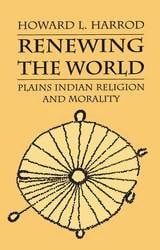
Renewing the World
Plains Indian Religion and MoralityHoward L. Harrod
University of Arizona Press, 1987
"Harrod's discussion of kinship and reciprocity in Northwest Plains cosmology contains valuable insight into Native American worldview, and his emphasis on the moral dimension of ritual process is a major addition to the too-often ignored subject of Native American moral life." —Journal of Religion
"Includes the major works on Blackfoot, Crow, Cheyennes, and Arapaho religion, the works to which anyone who wishes to understand the religious life of these tribes must continue to turn." —Choice
"Plains people, Harrod suggests, refracted nature and conceived an environmental ethic through a metaphor of kinship. He is particularly skillful in characterizing the ambiguity Plains people expressed at the necessity of killing and eating their animal kin. Renewing the World also contributes to another new and uncultivated science we might call 'ecology of mind'." —Great Plains Quarterly
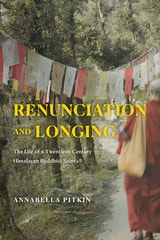
Renunciation and Longing
The Life of a Twentieth-Century Himalayan Buddhist SaintAnnabella Pitkin
University of Chicago Press, 2022
In the early twentieth century, Khunu Lama journeyed across Tibet and India, meeting Buddhist masters while sometimes living, so his students say, on cold porridge and water. Yet this elusive wandering renunciant became a revered teacher of the Fourteenth Dalai Lama. At Khunu Lama’s death in 1977, he was mourned by Himalayan nuns, Tibetan lamas, and American meditators alike. The many surviving stories about him reveal significant dimensions of Tibetan Buddhism, shedding new light on questions of religious affect and memory that reimagines cultural continuity beyond the binary of traditional and modern.
In Renunciation and Longing, Annabella Pitkin explores devotion, renunciation, and the teacher-student lineage relationship as resources for understanding Tibetan Buddhist approaches to modernity. By examining narrative accounts of the life of a remarkable twentieth-century Himalayan Buddhist and focusing on his remembered identity as a renunciant bodhisattva, Pitkin illuminates Tibetan and Himalayan practices of memory, affective connection, and mourning. Refuting long-standing caricatures of Tibetan Buddhist communities as unable to be modern because of their religious commitments, Pitkin shows instead how twentieth- and twenty-first-century Tibetan and Himalayan Buddhist narrators have used themes of renunciation, devotion, and lineage as touchstones for negotiating loss and vitalizing continuity.
Replanted
Faith-Based Support for Adoptive and Foster FamiliesJenn Ranter Hook
Templeton Press, 2019
Many people embark on the journey of adoption and foster care but are unprepared for the challenges that await them along the way. Replanted takes an honest look at the joys and hardships that come with choosing this journey and provides a model of faith-based support made up of three parts to help families thrive: Soil, Sunlight, and Water.
- Soil, or emotional support, addresses the need for grace-filled settings where families can connect with other families who understand their experience.
- Sunlight, or informational support, focuses on obtaining helpful training to raise children who may have unique needs or challenges.
- Water, or tangible support, deals with concrete resources such as medical care, child care, and financial support.
Throughout the book, the Replanted model is brought to life by stories and examples based on the clinical work and personal experiences of the authors. Their candid insight will serve families who are actively involved in adoption or foster care, as well as people who are eager to help support those families.
Replanted affirms that with the right support system in place, parents can answer this sacred call not only with open hearts but also with their eyes wide open.
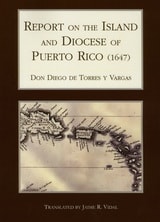
Report on the Island and Diocese of Puerto Rico (1647)
Don Diego Torres y Vargas, Translated by Jaime R. Vidal
University of Scranton Press, 2010
Composed at the request of the Royal Spanish Chronicler of the Indies, Don Diego Torres y Vargas’s Report on the Island & Diocese of Puerto Rico was the first history of Puerto Rico written by a native of the Spanish island colony. Torres y Vargas, a fourth generation Puerto Rican and descendant of Ponce de Leon, records here the history of the Catholic Church in Puerto Rico as well as the political, social, military, economic, and natural history of the island.
This translation—the first ever into English—includes three historical essays by eminent Puerto Rican and Latino Studies scholar Anthony Stevens-Arroyo and extensive translator notes to guide the reader through the realities of seventeenth-century Puerto Rican culture and society.
Reproducing Jews
A Cultural Account of Assisted Conception in IsraelSusan Martha Kahn
Duke University Press, 2000
In this ethnographic study of the new reproductive technologies in Israel, Susan Martha Kahn explores the cultural meanings and contemporary rabbinic responses to artificial insemination, in-vitro fertilization, egg donation, and surrogacy. Kahn draws on fieldwork with unmarried Israeli women who are using state-subsidized artificial insemination to get pregnant and on participant-observation in Israeli fertility clinics. Through close readings of traditional Jewish texts and careful analysis of Israeli public discourse, she explains how the Israeli embrace of new reproductive technologies has made Jewish beliefs about kinship startlingly literal. Kahn also reveals how a wide range of contemporary Israelis are using new reproductive technologies to realize their reproductive futures, from ultraorthodox infertile married couples to secular unmarried women.
As the first scholarly account of assisted conception in Israel, this multisited ethnography will contribute to current anthropological debates on kinship studies. It will also interest those involved with Jewish studies.
Republicanism, Religion, and the Soul of America
Ellis Sandoz
University of Missouri Press, 2006
Rereading the Renaissance
Petrarch, Augustine, and the Language of HumanismCarol Everhart Quillen
University of Michigan Press, 1998
Carol Quillen argues that the essential role of Augustine's words and authority in the expression of Petrarch's humanism is best grasped through a study of the complex textual practices exemplified in the writings of both men. Petrarch's reliance on Augustine is most evident in his ways of reading and in his strategies of argument. Secondly, she maintains that Petrarch's appropriation of Augustine's words is only intelligible in light of his struggle to legitimate his cultural ideals in the face of compelling opposition. Finally, Quillen shows how Petrarch's uses of Augustine can simultaneously uphold his humanist ideals and challenge the legitimacy of the assumptions on which those ideals were founded.
Interdisciplinary in scope and method, this volume speaks to important debates that span the humanities. Scholars of literary and historical studies, as well as those in the fields of classical studies, patristics, and comparative literature, will find in Rereading the Renaissance a solid contribution to their interests.
Carol Everhart Quillen is Associate Professor of History, Rice University.
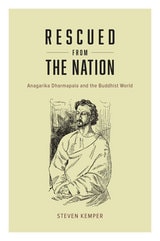
Rescued from the Nation
Anagarika Dharmapala and the Buddhist WorldSteven Kemper
University of Chicago Press, 2014
Drawing on huge stores of source materials—nearly one hundred diaries and notebooks—Kemper reconfigures Dharmapala as a world-renouncer first and a political activist second. Following Dharmapala on his travels between East Asia, South Asia, Europe, and the United States, he traces his lifelong project of creating a unified Buddhist world, recovering the place of the Buddha’s Enlightenment, and imitating the Buddha’s life course. The result is a needed corrective to Dharmapala’s embattled legacy, one that resituates Sri Lanka’s political awakening within the religious one that was Dharmapala’s life project.
Research On Altruism & Love
An Annotated Bibliography of Major Studies in Psychology, Sociology, Evolutionary Biology, and TheologyStephen Post
Templeton Press, 2003
Research on Altruism and Love is a compendium of annotated bibliographies reviewing literature and research studies on the nature of love. An essay introduces each of the annotated bibliographies.
A variety of literature directly related to science-and-love issues or supporting those issues is covered in the Religious Love Interfaces with Science section. This annotated bibliography is unique in that it approaches the field from a decidedly religious perspective. It includes classical expositions of love that continue to influence contemporary scholars, including Platos' work on eros, the work and words of Jesus, Aristotle, Augustine of Hippo, Martin Luther, Kierkegaard, and Ghandi, among others. The contemporary discussion includes Anders Nygren's theological arguments in his classic, Agape and Eros; Pitirim Sorokin; and others. An issue that often emerges in this literature is the question of the nature and definition of love.
A second annotated bibliography features current empirical research in the field of Personality and Altruism, with a focus on social psychology. Among the topics covered are the altruistic personality, altruistic behavior, empathy, helping behavior, social responsibility, and volunteerism. Methodologies are diverse, and studies include experiments, local and national surveys, naturalistic observation, and combinations of these.
The Evolutionary Biology annotated bibliography covers the most significant works on altruism and love in the field of biology and evolutionary psychology.
The fourth and final annotated bibliography in this volume is entitled Sociology of Faith-Based Volunteerism. Here the focus is on literature on the interface of helping behavior and religious organizations, as well as major pieces on voluntary associations.
Reshaping the World
Debates on Mesoamerican CosmologiesAna Díaz
University Press of Colorado, 2019
By reanalyzing and recontextualizing both indigenous and colonial texts and imagery in nine case studies examining Maya, Zapotec, Nahua, and Huichol cultures, the contributors discuss and challenge the commonly accepted notion that the cosmos was a static structure of superimposed levels unrelated to and unaffected by historical events and human actions. Instead, Mesoamerican cosmology consisted of a multitude of cosmographic repertoires that operated simultaneously as a result of historical circumstances and regional variations. These spaces were, and are, dynamic elements shaped, defined, and redefined throughout the course of human history. Indigenous cosmographies could be subdivided and organized in complex and diverse arrangements—as components in a dynamic interplay, which cannot be adequately understood if the cosmological discourse is reduced to a superposition of nine and thirteen levels.
Unlike previous studies, which focus on the reconstruction of a pan-Mesoamerican cosmological model, Reshaping the World shows how the movement of people, ideas, and objects in New Spain and neighboring regions produced a deep reconfiguration of Prehispanic cosmological and social structures, enriching them with new conceptions of space and time. The volume exposes the reciprocal influences of Mesoamerican and European theologies during the colonial era, offering expansive new ways of understanding Mesoamerican models of the cosmos.
Contributors:
Sergio Botta, Ana Díaz, Kerry Hull, Katarzyna Mikulska, Johannes Neurath, Jesper Nielsen, Toke Sellner Reunert†, David Tavárez, Alexander Tokovinine, Gabrielle Vail
Resilience and the virtue of fortitude
Aquinas in Dialogue with the Psychosocial SciencesCraig Steven Titus
Catholic University of America Press, 2006

Resistance
The Essence of the Islamist RevolutionAlastair Crooke
Pluto Press, 2009
This book traces the essence of the Islamist Revolution from its origins in Egypt, through Najaf, Lebanon, Iran and the Iranian Revolution to today. Alastair Crooke presents a compelling account of the ideas and energy which are mobilising the Islamic world.
Crooke argues that the West faces a mass mobilisation against the US-led Western project. The roots of this conflict are described in terms of religious themes that extend back over 500 years. They represent clashing systems of thinking and values. Islamists have a vision for the future of their own societies which would entail radical change from Western norms. Resistance is presented as the means to force Western behaviour to change and to expose the essential differences between the two modes of thinking.
This is a rigourous account that traces the threads of revolution of various movements, including the influence of 'political Shi'ism' and the Iranian Revolution and its impact on Hezbollah and Hamas.
Respectably Catholic and Scientific
Evolution and Birth Control Between the World WarsAlexander Pavuk
Catholic University of America Press, 2021
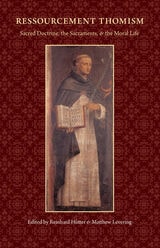
Ressourcement Thomism
Sacred Doctrine, the Sacraments, and the Moral LifeReinhard Hütter
Catholic University of America Press, 2010
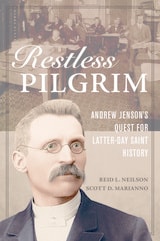
Restless Pilgrim
Andrew Jenson's Quest for Latter-day Saint HistoryReid L. Neilson and Scott D. Marianno
University of Illinois Press, 2022
Engaging and informed, Restless Pilgrim is a groundbreaking study of an important figure in Latter-day Saint intellectual life during a transformative era in Church history.

Restoring the Faith
The Assemblies of God, Pentecostalism, and American CultureEdith L. Blumhofer
University of Illinois Press, 1993
Edith Blumhofer uses the Assemblies of God, the largest classical Pentecostal denomination in the world, as a lens through which to view the changing nature of Anglo Pentecostalism in the United States. She illustrates how the original mission to proclaim the end resulted in the development of Bible schools, the rise of the charismatic movement, and the popularity of such figures as Aimee Semple McPherson, Charles Fox Parham, and David Du Plessis. Blumhofer also examines the sect's use of radio and television and the creation of a parallel Christian culture
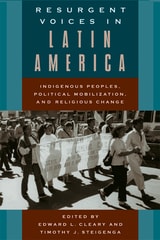
Resurgent Voices in Latin America
Indigenous Peoples, Political Mobilization, and Religious ChangeCleary, Edward L.
Rutgers University Press, 2004
After more than 500 years of marginalization, Latin America’s forty million Indians have recently made major strides in gaining political recognition and civil rights. In this book, social scientists explore the important role of religion in indigenous activism, showing the ways that religion has strengthened indigenous identity and contributed to the struggle for indigenous rights in the region.
Drawing on case studies from Bolivia, Peru, Guatemala, Ecuador, Paraguay, and Mexico, the contributors explore four key questions. How have traditional religions interacted with Christianity to produce new practices and beliefs? What resources, motivations, and ideological legitimacies do religious institutions provide for indigenous social movements? How effective are these movements in achieving their goals? Finally, as new religious groups continue to compete for adherents in the region, how will individuals’ religious choices affect political outcomes?
Resurgent Voices in Latin America offers new insight into the dynamics of indigenous social movements and into the complex and changing world of Latin American religions. The essays show that religious beliefs, practices, and institutions have both affected and been affected by political activism.
Resurrection in Paul
Cognition, Metaphor, and TransformationFrederick S. Tappenden
SBL Press, 2016
Explore the embodied foundations of Paul's resurrection ideals
It is commonly recognized that Paul's resurrection ideals are bodily ideals, though this dictum is usually configured along literal and metaphorical lines. The realism of future resurrected bodies is disconnected from the metaphoricity of bodily transformation in the present. Drawing on cognitive linguistics, this fresh and innovative study addresses this problem. By eschewing the opposition of metaphor and realism, Tappenden explores the concepts and metaphors Paul uses to fashion notions of resurrection, and the uses to which those notions are put. Rather than asserting resurrection as a disembodied, cognicentric proposition, this book illuminates the body's central role in shaping and grounding the apostle's thought and writings.
Features:
- Close examination of Paul's letters within multiple, interlocking cultural contexts
- Provides a novel and fresh approach to assessing (in)coherence across the undisputed letters
- Addresses the materialist nature of early Christian and Judean resurrection ideals without compromising the metaphoricity of those ideals
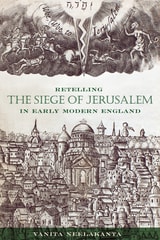
Retelling the Siege of Jerusalem in Early Modern England
Vanita Neelakanta
University of Delaware Press, 2019
Published by University of Delaware Press. Distributed worldwide by Rutgers University Press.
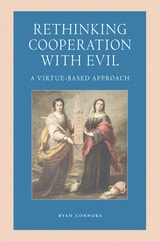
Rethinking Cooperation with Evil
A Virtue-Based ApproachRyan Connors
Catholic University of America Press, 2023
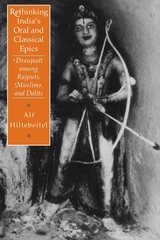
Rethinking India's Oral and Classical Epics
Draupadi among Rajputs, Muslims, and DalitsAlf Hiltebeitel
University of Chicago Press, 1999
Using his own fieldwork as a starting point, Alf Hiltebeitel analyzes how the oral tradition of the south Indian cult of the goddess Draupadi and five regional martial oral epics compare with one another and tie in with the Sanskrit epics. Drawing on literary theory and cultural studies, he reveals the shared subtexts of the Draupadi cult Mahabharata and the five oral epics, and shows how the traditional plots are twisted and classical characters reshaped to reflect local history and religion. In doing so, Hiltebeitel sheds new light on the intertwining oral traditions of medieval Rajput military culture, Dalits ("former Untouchables"), and Muslims.
Breathtaking in scope, this work is indispensable for those seeking a deeper understanding of South Asia's Hindu and Muslim traditions.
This work is the third volume in Hiltebeitel's study of the Draupadi cult. Other volumes include Mythologies: From Gingee to Kuruksetra (Volume One), On Hindu Ritual and the Goddess (Volume Two), and Rethinking the Mahabharata (Volume Four).
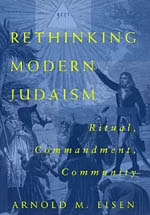
Rethinking Modern Judaism
Ritual, Commandment, CommunityArnold M. Eisen
University of Chicago Press, 1998
"Fascinating . . . an insightful entrance point to understanding the evolution of the theologies of America's largest Jewish denominations."—Tikkun
"I know of no other treatment of these issues that matches Eisen's talents for synthesizing a wide variety of historical, philosophical, and social scientific sources, and bringing them to bear in a balanced and open-minded way on the delicate questions of why modern Jews relate as they do to the practices of Judaism."—Joseph Reimer, Boston Book Review
"At once an incisive survey of modern Jewish thought and an inquiry into how Jews actually live their religious lives, Mr. Eisen's book is an invaluable addition to the study of American Judaism."—Elliott Abrams, Washington Times
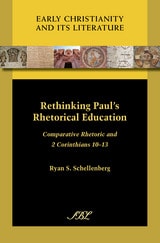
Rethinking Paul's Rhetorical Education
Comparative Rhetoric and 2 CorinthiansRyan S. Schellenberg
SBL Press, 2013
Did Paul have formal training in Greco-Roman rhetoric, or did he learn what he knew of persuasion informally, as social practice? Pauline scholars recognize the importance of this question both for determining Paul’s social status and for conceptualizing the nature of his letters, but they have been unable to reach a consensus. Using 2 Corinthians 10–13 as a test case, Ryan Schellenberg undertakes a set of comparisons with non-Western speakers—most compellingly, the Seneca orator Red Jacket—to demonstrate that the rhetorical strategies Paul employs in this text are also attested in speakers known to have had no formal training in Greco-Roman rhetoric. Since there are no specific indicators of formal training in the way Paul uses these strategies, their appearance in his letters does not constitute evidence that Paul received formal rhetorical education.
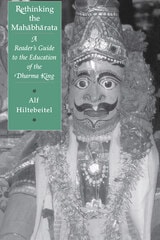
Rethinking the Mahabharata
A Reader's Guide to the Education of the Dharma KingAlf Hiltebeitel
University of Chicago Press, 2001
This work is the fourth volume in Hiltebeitel's study of the Draupadi cult. Other volumes include Mythologies: From Gingee to Kuruksetra (Volume One), On Hindu Ritual and the Goddess (Volume Two), and Rethinking India's Oral and Classical Epics (Volume Three).
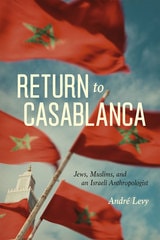
Return to Casablanca
Jews, Muslims, and an Israeli AnthropologistAndré Levy
University of Chicago Press, 2015
Levy visits a host of sites and historical figures to assemble a compelling history of social change, while seamlessly interweaving his study with personal accounts of his returns to his homeland. Central to this story is the massive migration of Jews out of Morocco. Levy traces the institutional and social changes such migrations cause for those who choose to stay, introducing the concept of “contraction” to depict the way Jews deal with the ramifications of their demographic dwindling. Turning his attention outward from Morocco, he goes on to explore the greater complexities of the Jewish diaspora and the essential paradox at the heart of his adventure—leaving Israel to return home.
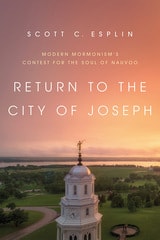
Return to the City of Joseph
Modern Mormonism's Contest for the Soul of NauvooScott C. Esplin
University of Illinois Press, 2018

Returning to Ceremony
Spirituality in Manitoba Métis CommunitiesChantal Fiola
University of Manitoba Press, 2021
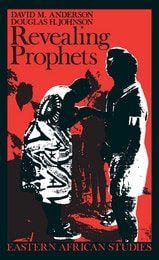
Revealing Prophets
Prophecy In Eastern African HistoryDavid M. Anderson
Ohio University Press, 1994
This book examines the richly textured histories of prophets and prophecies within East Africa. It gives an analytical account of the significantly different forms prophecy has taken over the past century across the country.
Each of the chapters takes a new look at the active dialogue between prophets and the communities whom they addressed. This dialogue continues today as the politicians and activists throughout the region still look to prophetic traditions, garnering interpretations of the past in order to provide the validation of prophetic wisdom and heroes for the present.

Revelation Occurs via Signs
God's Self-Communication to Humanity in Its Semiotic ConstitutionVincent Birch
Catholic University of America Press, 2027
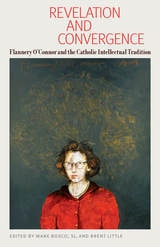
Revelation and Convergence
Mark Bosco
Catholic University of America Press, 2017
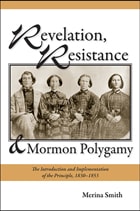
Revelation, Resistance, and Mormon Polygamy
The Introduction and Implementation of the Principle, 1830–1853Merina Smith
Utah State University Press, 2013
When Joseph Smith began to reveal and teach the doctrine of plural marriage in 1841, even stalwart members like Brigham Young were shocked and confused. In this thoughtful study, Smith argues that the secret introduction of plural marriage among the leadership coincided with an evolving public theology that provided a contextualizing religious narrative that persuaded believers to accept the principle.
This fresh interpretation draws from diaries, letters, newspapers, and other primary sources and is especially effective in its use of family narratives. It will be of great interest not only to scholars and the general public interested in Mormon history but in American history, religion, gender and sexuality, and the history of marriage and families.
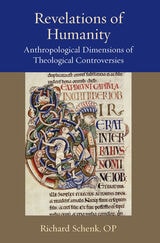
Revelations of Humanity
Anthropological Dimensions of Theological ControversiesRichard Schenk, OP
Catholic University of America Press, 2022
Review of Biblical Literature, 2020
Alicia J. Batten
SBL Press, 2021
The annual Review of Biblical Literature presents a selection of reviews of the most recent books in biblical studies and related fields, including topical monographs, multi-author volumes, reference works, commentaries, and dictionaries. RBL reviews German, French, Italian, and English books and offers reviews in those languages.
Features:
- Reviews of new books written by top scholars
- Topical divisions make research easy
- Indexes of authors and editors, reviewers, and publishers
Review of Biblical Literature, 2021
Alicia J. Batten
SBL Press, 2022
Review of Biblical Literature, 2022
Alicia J. Batten
SBL Press, 2022
The annual Review of Biblical Literature presents a selection of reviews of the most recent books in biblical studies and related fields, including topical monographs, multi-author volumes, reference works, commentaries, and dictionaries. RBL reviews German, French, Italian, and English books and offers reviews in those languages.
Review of Biblical Literature, 2023
Alicia J. Batten
SBL Press, 2023
Review of Biblical Literature, 2024
Alicia J. Batten
SBL Press, 2024
Review of Biblical Literature, 2025
Alicia J. Batten
SBL Press, 2025
Revising Eternity
27 Latter-day Saint Men Reflect on Modern RelationshipsEdited by Holly Welker
University of Illinois Press, 2022
An insightful exploration of the gap between human realities and engrained ideals, Revising Eternity sheds light on how Latter-day Saint men view and experience marriage today.
Revisiting the Idea of Vocation
Theological ExplorationsJohn C. Haughey, S.J.
Catholic University of America Press, 2004
Revival and Awakening
American Evangelical Missionaries in Iran and the Origins of Assyrian NationalismAdam H. Becker
University of Chicago Press, 2015
American evangelicals arrived in Iran in the 1830s. Becker examines how these missionaries, working with the “Nestorian” Church of the East—an Aramaic-speaking Christian community in the borderlands between Qajar Iran and the Ottoman Empire—catalyzed, over the span of sixty years, a new national identity. Instructed at missionary schools in both Protestant piety and Western science, this indigenous group eventually used its newfound scriptural and archaeological knowledge to link itself to the history of the ancient Assyrians, which in time led to demands for national autonomy. Exploring the unintended results of this American attempt to reform the Orient, Becker paints a larger picture of religion, nationalism, and ethnic identity in the modern era.
Revival and Reconciliation
The Anglican Church and the Politics of RwandaPhillip A. Cantrell II
University of Wisconsin Press, 2022
Drawing from new archival materials as well as on-the-ground field research, Revival and Reconciliation is a Rwanda-centered account of the country's ecclesiastical and national historiography. Cantrell calls attention to the harms the postgenocide church risks doing should it continue to support false narratives about Rwanda's colonial and postcolonial past—with dangerous consequences for the future.
Revivalism and Cultural Change
Christianity, Nation Building, and the Market in the Nineteenth-Century United StatesGeorge M. Thomas
University of Chicago Press, 1989
"Subtle and complex. . . . Fascinating."—Randolph Roth, Pennsylvania History
"[Revivalism and Cultural Change] should be read with interest by those interested in religious movements as well as the connections among religion, economics, and politics."—Charles L. Harper, Contemporary Sociology
"Readers old and new stand to gain much from Thomas's sophisticated study of the macrosociology of religion in the United States during the nineteenth century. . . . He has given the sociology of religion its best quantitative study of revivalism since the close of the 1970s."—Journal for the Scientific Study of Religion
Revivals, Awakening and Reform
William G. McLoughlin
University of Chicago Press, 1980
"This book is sensitive, thought-provoking and stimulating. It is 'must' reading for those interested in awakenings, and even though some may not revise their views as a result of McLoughlin's suggestive outline, none can remain unmoved by the insights he has provided on the subject."—Christian Century
"This is one of the best books I have read all year. Professor McLoughlin has again given us a profound analysis of our culture in the midst of revivalistic trends."—Review and Expositor
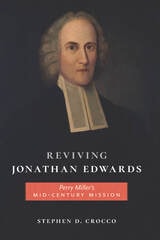
Reviving Jonathan Edwards
Perry Miller’s Mid-Century MissionStephen D. Crocco
University of Massachusetts Press, 2026
The untold story of how an unlikely Harvard atheist helped resurrect one of America’s greatest Puritans
Jonathan Edwards is widely regarded as one of America’s most important and original thinkers. Prior to the mid-twentieth century, however, he was largely unknown to the learned community, except, perhaps, as a preacher of terror due to his well-known sermon, “Sinners in the Hands of an Angry God.” In 1948 and 1949, Harvard professor of English Perry Miller published four pieces on him, including the acclaimed biography, Jonathan Edwards, and only a few years later he became the general editor of Edwards’s collected works. Miller’s efforts helped to resurrect Edwards as America’s greatest Puritan and to solidify him as central to the American experience, and their names have been closely intertwined ever since.
Miller, an iconoclastic scholar widely considered to be the founder of American studies, was known for his brilliant scholarship, devoted teaching, and hard living. Dying prematurely in 1963, he remains an enigmatic and controversial figure, with no biography available. In Reviving Jonathan Edwards, Stephen D. Crocco explores why this Harvard atheist, with an eerie sense that his time was short, delayed work on his planned magnum opus—a sweeping intellectual history of early America—to edit the works of the greatest of all American Puritans.
In a riveting history that combines biographical insight with a detailed look into mid-century academia, Crocco draws on a large body of unpublished correspondence to offer an intricate detective tale of a decades-long publishing endeavor. He provides fresh portraits of Miller and the editorial committee he assembled, which included Sydney Ahlstrom, Roland Bainton, H. Richard Niebuhr, Norman Holmes Pearson, Paul Ramsey, and John E. Smith, and follows the story long after Miller’s death, tracing the repeated, sometimes seemingly intractable challenges that publishing the many volumes on Edwards’s work faced. He concludes by tracing Edwards studies up to 2003, the 300th anniversary of his birth, when the quiet revival of this colonial minister had evolved into a full scholarly renaissance.

Reviving the Artist Who Fought Hitler
My Life with Arthur SzykIrvin Ungar
University of Texas Press, 2026
The intertwining story of a noted anti-Nazi artist and the former rabbi who revived his reputation.
During World War II, the Polish-Jewish immigrant Arthur Szyk became America’s leading anti-Nazi artist. His art was so effective that Adolf Hitler reportedly put a bounty on his head while the US military declared him a “citizen-soldier” of the free world. Szyk steadfastly fought for the rescue of European Jewry during the Holocaust, creating artworks like De Profundis, which imagines Jesus sharing the suffering of countless lifeless Jews. His civil rights art challenged segregation and his illuminated Declaration of Independence resides in the Library of Congress. Szyk’s masterwork, an illustrated Passover Haggadah, is considered by many to be one of the most beautiful books ever produced by human hands.
Once world-famous, Arthur Szyk was all but forgotten after his death in 1951. Reviving the Artist Who Fought Hitler recounts Irvin Ungar's decades-long journey to restore Szyk to public consciousness, and become the principal collector, dealer, scholar, and promoter of Szyk’s art in the United States, Europe, and Israel. Richly illustrated and full of forgotten history, this memoir is an inspiring story of artistic passion and an invitation to commune with a heroic advocate for all humanity.
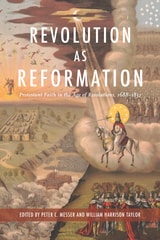
Revolution as Reformation
Protestant Faith in the Age of Revolutions, 1688–1832Edited by Peter C. Messer and William Harrison Taylor
University of Alabama Press, 2021
Essays that explore how Protestants responded to the opportunities and perils of revolution in the transatlantic age
Revolution as Reformation: Protestant Faith in the Age of Revolutions, 1688–1832 highlights the role that Protestantism played in shaping both individual and collective responses to revolution. These essays explore the various ways that the Protestant tradition, rooted in a perpetual process of recalibration and reformulation, provided the lens through which Protestants experienced and understood social and political change in the Age of Revolutions. In particular, they call attention to how Protestants used those changes to continue or accelerate the Protestant imperative of refining their faith toward an improved vision of reformed religion.
The editors and contributors define faith broadly: they incorporate individuals as well as specific sects and denominations, and as much of “life experience” as possible, not just life within a given church. In this way, the volume reveals how believers combined the practical demands of secular society with their personal faith and how, in turn, their attempts to reform religion shaped secular society.
The wide-ranging essays highlight the exchange of Protestant thinkers, traditions, and ideas across the Atlantic during this period. These perspectives reveal similarities between revolutionary movements across and around the Atlantic. The essays also emphasize the foundational role that religion played in people’s attempts to make sense of their world, and the importance they placed on harmonizing their ideas about religion and politics. These efforts produced novel theories of government, encouraged both revolution and counterrevolution, and refined both personal and collective understandings of faith and its relationship to society.
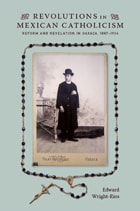
Revolutions in Mexican Catholicism
Reform and Revelation in Oaxaca, 1887–1934Edward Wright-Rios
Duke University Press, 2009
Wright-Rios demonstrates that pastors, peasants, and laywomen sought to enliven and shape popular religion in Oaxaca. The clergy tried to adapt the Vatican’s blueprint for Catholic revival to Oaxaca through institutional reforms and attempts to alter the nature and feel of lay religious practice in what amounted to a religious modernization program. Yet some devout women had their own plans. They proclaimed their personal experiences of miraculous revelation, pressured priests to recognize those experiences, marshaled their supporters, and even created new local institutions to advance their causes and sustain the new practices they created. By describing female-led visionary movements and the ideas, traditions, and startling innovations that emerged from Oaxaca’s indigenous laity, Wright-Rios adds a rarely documented perspective to Mexican cultural history. He reveals a remarkable dynamic of interaction and negotiation in which priests and parishioners as well as prelates and local seers sometimes clashed and sometimes cooperated but remained engaged with one another in the process of making their faith meaningful in tumultuous times.
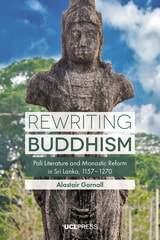
Rewriting Buddhism
Pali Literature and Monastic Reform in Sri Lanka, 1157–1270Alastair Gornall
University College London, 2020
Rewriting Islam
Decolonialism, Justice, and Contemporary Muslimah LiteratureHasnul Insani Djohar
The Ohio State University Press, 2024