Results by title
8812 books match the query 'Political Science' and 436 start with r

Replaying Communism
Trauma and Nostalgia in European Cultural ProductionLucy Jeffery
Central European University Press, 2026
The volume adopts an interdisciplinary approach to extend debates on the lasting impact of the communist era across Central and Eastern Europe with chapters thematically threaded through concepts including curation, immersion, interaction, humor and authenticity. A ‘trauma/nostalgia paradigm’ emerges as the tissue connecting the plurality of post-communist efforts employed to address the region’s contested pasts. Twelve original essays by contributors from both ‘inside’ and ‘outside’ the region detail how twenty-first-century cultural productions reengage the communist past. The impact of this past is seen as fundamental to understanding and shaping Central and Eastern European identities.

Report on the State of UK-Based Research on Latin America and the Caribbean 2014
Edited by Antoni Kapcia and Linda A. Newson
University of London Press, 2015
Reporting of Social Science in the National Media
Carol Weiss
Russell Sage Foundation, 1988
Reporting on Risk
How the Mass Media Portray Accidents, Diseases, Other HazardsEleanor Singer
Russell Sage Foundation, 1993
Representation Rights and the Burger Years
Nancy Maveety
University of Michigan Press, 1991

Representation and Rebellion
The Rockefeller Plan at the Colorado Fuel and Iron Company, 1914-1942Jonathan H. Rees
University Press of Colorado, 2010

Representation in America
Majority Rule in a Divided Political SystemStephen Ansolabehere and Shiro Kuriwaki
University of Chicago Press, 0
A landmark appraisal of how Congress represents public opinion.
Drawing on nearly two decades of the Cooperative Congressional Election Study of American public opinion and more than one hundred key legislative proposals, Representation in America presents the most comprehensive, data-driven look at how Congress has represented the American public, spanning the presidencies of George W. Bush through Joe Biden. The result is a sweeping account of how electoral and legislative institutions channel and amplify majority preferences while tempering the most divisive proposals.
Stephen Ansolabehere and Shiro Kuriwaki trace each stage of the representation process, from constituents to their representatives to Congress’s collective decisions. Contrary to conceptions of democratic dysfunction, Ansolabehere and Kuriwaki find a strong majoritarian tendency: most proposals on the legislative agenda enjoy the support of the majority of Americans; voters tend to choose legislators whose positions they agree with; most legislators vote in line with the majority of their constituencies most of the time; and legislative districts magnify rather than mute majority opinion. When majority rule falls short, it usually takes the form of popular legislation stalling rather than Congress passing laws the public opposes.
Representative Democracy
Principles and GenealogyNadia Urbinati
University of Chicago Press, 2006
Represented Communities
Fiji and World DecolonizationJohn D. Kelly and Martha Kaplan
University of Chicago Press, 2001
Now, in Represented Communities, John D. Kelly and Martha Kaplan offer an extensive and devastating critique of Anderson's depictions of colonial history, his comparative method, and his political anthropology. The authors build a forceful argument around events in Fiji from World War II to the 2000 coups, showing how focus on "imagined communities" underestimates colonial history and obscures the struggle over legal rights and political representation in postcolonial nation-states. They show that the "self-determining" nation-state actually emerged with the postwar construction of the United Nations, fundamentally changing the politics of representation.
Sophisticated and impassioned, this book will further anthropology's contribution to the understanding of contemporary nationalisms.
Repression And Mobilization
Christian Davenport
University of Minnesota Press, 2005
Brings together leading scholars from political science and sociology
Recent events—from the collapse of Leninist regimes in Eastern Europe to the democratization of South Asian and South American states—have profoundly changed our ways of understanding and studying contentious politics, particularly the relationship between state repression and political mobilization.
With case studies that range from Germany to the Philippines, the United States to Japan, Guatemala to China, the authors take up topics as varied as the dynamic interactions between protesters and policing agents, distinctions between “hard” and “soft” repression, the impact of media on our understanding of political contention, the timing and shape of protest and resistance cycles, and how measurements of social and geographic control influence states’s responses to insurgencies. Together these essays synthesize what we know about repression and mobilization and provide thoughtful insight for the future.
Contributors: Patrick Ball, Science and Human Rights Program of the American Association for the Advancement of Science; Vince Boudreau, City College of New York; Myra Marx Ferree, U of Wisconsin; Ronald A. Francisco, U of Kansas; Ruud Koopmans, Free U Amsterdam; Mark Lichbach, U of Maryland; John D. McCarthy, Pennsylvania State U; Clark McPhail, U of Illinois, Urbana-Champaign; Patricia Steinhoff, U of Hawaii; Charles Tilly, Columbia U; Gilda Zwerman, SUNY, Old Westbury.

Reproducing Jews
A Cultural Account of Assisted Conception in IsraelSusan Martha Kahn
Duke University Press, 2000
In this ethnographic study of the new reproductive technologies in Israel, Susan Martha Kahn explores the cultural meanings and contemporary rabbinic responses to artificial insemination, in-vitro fertilization, egg donation, and surrogacy. Kahn draws on fieldwork with unmarried Israeli women who are using state-subsidized artificial insemination to get pregnant and on participant-observation in Israeli fertility clinics. Through close readings of traditional Jewish texts and careful analysis of Israeli public discourse, she explains how the Israeli embrace of new reproductive technologies has made Jewish beliefs about kinship startlingly literal. Kahn also reveals how a wide range of contemporary Israelis are using new reproductive technologies to realize their reproductive futures, from ultraorthodox infertile married couples to secular unmarried women.
As the first scholarly account of assisted conception in Israel, this multisited ethnography will contribute to current anthropological debates on kinship studies. It will also interest those involved with Jewish studies.
Reproduction, Globalization, and the State
New Theoretical and Ethnographic PerspectivesCarole H. Browner and Carolyn F. Sargent, eds.
Duke University Press, 2011
Contributors. Aditya Bharadwaj, Caroline H. Bledsoe, Carole H. Browner, Junjie Chen, Aimee R. Eden, Susan L. Erikson, Didier Fassin, Claudia Lee Williams Fonseca, Ellen Gruenbaum, Matthew Gutmann, Marcia C. Inhorn, Mark B. Padilla, Rayna Rapp, Lisa Ann Richey, Carolyn Sargent, Papa Sow, Cecilia Van Hollen, Linda Whiteford

Reproductive Justice
The Politics of Health Care for Native American WomenGurr, Barbara
Rutgers University Press, 2015

Reproductive Labor and Innovation
Against the Tech Fix in an Era of HypeJennifer Denbow
Duke University Press, 2024
Reproductive Rights in a Global Context
South Africa, Uganda, Peru, Denmark, United States, Vietnam, JordanLara M. Knudsen
Vanderbilt University Press, 2006
Traveling alone when she was between 17 and 22, with no institutional affiliation and no financial assistance, the author visited five developing countries and two developed ones on five continents. Her goal was to extend her own experience in an abortion clinic in Portland, Oregon. Lara Knudsen interviewed over 90 women's rights activists, health professionals, NGO workers, and government officials, gaining a sense of both official policies and the actual delivery of services in local clinics. The book places the experiences of women within the global context of how international population control agendas have influenced women's reproductive rights in the past, and how the changing international discourse on reproductive health continues to influence those rights today.

Republic of Barbecue
Stories Beyond the BrisketBy Elizabeth S. D. Engelhardt
University of Texas Press, 2009
Winner, Barbara Sudler Award, Colorado Historical Society, 2010
It's no overstatement to say that the state of Texas is a republic of barbecue. Whether it's brisket, sausage, ribs, or chicken, barbecue feeds friends while they catch up, soothes tensions at political events, fuels community festivals, sustains workers of all classes, celebrates brides and grooms, and even supports churches. Recognizing just how central barbecue is to Texas's cultural life, Elizabeth Engelhardt and a team of eleven graduate students from the University of Texas at Austin set out to discover and describe what barbecue has meant to Texans ever since they first smoked a beef brisket.
Republic of Barbecue presents a fascinating, multifaceted portrait of the world of barbecue in Central Texas. The authors look at everything from legendary barbecue joints in places such as Taylor and Lockhart to feedlots, ultra-modern sausage factories, and sustainable forests growing hardwoods for barbecue pits. They talk to pit masters and proprietors, who share the secrets of barbecue in their own words. Like side dishes to the first-person stories, short essays by the authors explore a myriad of barbecue's themes—food history, manliness and meat, technology, nostalgia, civil rights, small-town Texas identity, barbecue's connection to music, favorite drinks such as Big Red, Dr. Pepper, Shiner Bock, and Lone Star beer—to mention only a few. An ode to Texas barbecue in films, a celebration of sports and barbecue, and a pie chart of the desserts that accompany brisket all find homes in the sidebars of the book, while photographic portraits of people and places bring readers face-to-face with the culture of barbecue.
Republic of Signs
Liberal Theory and American Popular CultureAnne Norton
University of Chicago Press, 1993
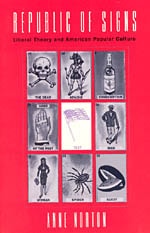
The author ranges over a wide expanse of popular activities (e.g. wrestling, roller derby, lotteries, shopping sprees, and dining out), as well as conventional political topics (e.g., the Constitution, presidency, news media, and centrality of law). Yet the argument is pointed and probling, never shallow or superficial. Fred and Wilma Flintstone are as vital to the republic as Franklin and Eleanor Roosevelt.
"In discussions that range from the Constitution and the presidency to money and shopping, voting, lotteries, and survey research, Norton discerns and imaginatively invents possibilities that exceed recognized actualities and already approved opportunities."—Richard E. Flathman, American Political Science Review
"[S]timulating and stylish exploration of political theory, language, culture, and shopping at the mall . . . popular culture at its best, informed by history and theory, serious in purpose, yet witty and modest in tone."—Bernard Mergen, American Studies International
Republic on the Wire
Cable Television, Pluralism, and the Politics of New Technologies, 1948-1984McMurria, John
Rutgers University Press, 2017
Republican Portugal
A Political History, 1910–1926Douglas L. Wheeler
University of Wisconsin Press, 1998
Reputation Analytics
Public Opinion for CompaniesDaniel Diermeier
University of Chicago Press, 2023
A scientific approach to corporate reputation from the field’s leading scholar.
Public opinion is a core factor of any organization’s success—and sometimes its failings. Whether through crisis, mismanagement, or sudden shifts in public sensibility, an organization can run afoul in the span of a Tweet.
In Reputation Analytics, Daniel Diermeier offers the first rigorous analytical framework for understanding and managing corporate reputation and public perception. Drawing on his expertise as a political scientist and management scholar, Diermeier incorporates lessons from game theory, psychology, and text analytics to create a methodology that has immediate application in both scholarship and practice.
A milestone work from one of social science’s most eminent scholars, Reputation Analytics unveils an advanced understanding of an elusive topic, resulting in an essential guide for academics and readers across industries.
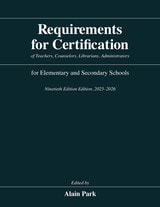
Requirements for Certification of Teachers, Counselors, Librarians, Administrators for Elementary and Secondary Schools, Ninetieth Edition, 2025–2026
Edited by Alain Park
University of Chicago Press, 2025
This annual volume offers the most complete and current listings of the requirements for certification of a wide range of educational professionals at the elementary and secondary levels. Requirements for Certification is a valuable resource, making much-needed knowledge available in one straightforward volume.

Rereading Marx in the Age of Digital Capitalism
Christian Fuchs
Pluto Press, 2019
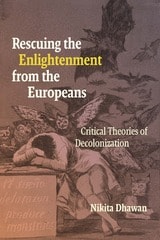
Rescuing the Enlightenment from the Europeans
Critical Theories of DecolonizationNikita Dhawan
Duke University Press, 2026
Researching Black Communities
A Methodological GuideJames S. Jackson, Cleopatra Howard Caldwell, Sherrill L. Sellers, editors
University of Michigan Press, 2014
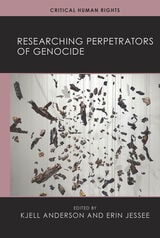
Researching Perpetrators of Genocide
Edited by Kjell Anderson and Erin Jessee
University of Wisconsin Press, 2021
This collection of case studies by scholars from a range of disciplinary backgrounds turns a critical and reflective eye toward qualitative fieldwork on the topic. Framed by an introduction that sets out key issues in perpetrator research and a conclusion that proposes and outlines a code of best practice, the volume provides an essential starting point for future research while advancing genocide studies, transitional justice, and related fields. This original, important, and welcome contribution will be of value to historians, political scientists, criminologists, anthropologists, lawyers, and legal scholars.
Residues
Thinking Through Chemical EnvironmentsSoraya Boudia
Rutgers University Press, 2022
Winner of the 2023 Merton Award from the Science, Knowledge, and Technology section of the American Sociological Association
Residues offers readers a new approach for conceptualizing the environmental impacts of chemicals production, consumption, disposal, and regulation. Environmental protection regimes tend to be highly segmented according to place, media, substance, and effect; academic scholarship often reflects this same segmented approach. Yet, in chemical substances we encounter phenomena that are at once voluminous and miniscule, singular and ubiquitous, regulated yet unruly. Inspired by recent studies of materiality and infrastructures, we introduce “residual materialism” as a framework for attending to the socio-material properties of chemicals and their world-making powers. Tracking residues through time, space, and understanding helps us see how the past has been built into our present chemical environments and future-oriented regulatory systems, why contaminants seem to always evade control, and why the Anthropocene is as inextricably harnessed to the synthesis of carbon into new molecules as it is driven by carbon’s combustion.
Resist the Punitive State
Grassroots Struggles Across Welfare, Housing, Education and PrisonsEmily Luise Hart
Pluto Press, 2019

Resist the Punitive State
Grassroots Struggles Across Welfare, Housing, Education and PrisonsEmily Luise Hart
Pluto Press, 2019
Resistance and Abolition in the Borderlands
Confronting Trump's Reign of TerrorEdited by Arturo J. Aldama and Jessica Ordaz; Foreword by Leo R. Chavez; Afterword by Karma R. Chávez
University of Arizona Press, 2024
This volume provides a well-argued look at the Trump era. Insightful contributions delve into the impact of Donald Trump’s rhetoric and policies on migrants detained and returned, immigrant children separated from their parents and placed in detention centers, and migrant women subjected to sexual and reproductive abuses, among other timely topics. The chapter authors document a long list in what the book calls “Trump’s Reign of Terror.”
Organized thematically, the book has four sections: The first gathers histories about the Trump years’ roots in a longer history of anti-migration; the second includes essays on artistic and activist responses on the border during the Trump years; the third critiques the normalization of Trump’s rhetoric and actions in popular media and culture; and the fourth envisions the future.
Resistance and Abolition in the Borderlands is an essential reader for those wishing to understand the extent of the damage caused by the Trump era and its impact on Latinx people.
Contributors
Arturo J. Aldama
Rebecca Avalos
Cynthia Bejarano
Tria Blu Wakpa
Renata Carvalho Barreto
Karma R. Chávez
Leo R. Chavez
Jennifer Cullison
Jasmin Lilian Diab
Allison Glover
Jamila Hammami
Alexandria Herrera
Diana J. Lopez
Sergio A. Macías
Cinthya Martinez
Alexis N. Meza
Roberto A. Mónico
José Enrique Navarro
Jessica Ordaz
Eliseo Ortiz
Kiara Padilla
Leslie Quintanilla
J-M Rivera
Heidy Sarabia
Tina Shull
Nishant Upadhyay
Maria Vargas
Antonio Vásquez
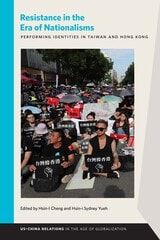
Resistance in the Era of Nationalisms
Performing Identities in Taiwan and Hong KongHsin-I Cheng
Michigan State University Press, 2023
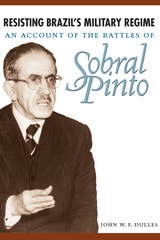
Resisting Brazil's Military Regime
An Account of the Battles of Sobral PintoBy John W. F. Dulles
University of Texas Press, 2007
Praised by his many admirers as a "courageous and fearless" defender of human rights, Heráclito Fontoura Sobral Pinto (1893-1991) was the most consistently forceful opponent of the regime of Brazilian dictator Getúlio Vargas. John W. F. Dulles chronicled Sobral's battles with the Vargas government in Sobral Pinto, "The Conscience of Brazil": Leading the Attack against Vargas (1930-1945), which History: Reviews of New Books called "a must-read for anyone wanting to understand twentieth-century Brazil."
In this second and final volume of his biography of Sobral Pinto, Professor Dulles completes the story of the fiery crusader's fight for democracy, morality, and justice, particularly for the downtrodden. Drawing on Sobral's vast correspondence, Dulles offers an extensive account of Sobral's opposition to the military regime that ruled Brazil from 1964 to 1985. He describes how Sobral Pinto defended those who had been politically influential before April, 1964, as well as other victims of the regime, including Communists, once-powerful labor leaders, priests, militant journalists, and students. Because Sobral Pinto participated in so many of the struggles against the military regime, his experiences provide vivid new insights into this important period in recent Brazilian history. They also shed light on developments in the Catholic Church (Sobral, a devout Catholic, vigorously opposed liberation theology), as well as on Sobral's key role in preserving Brazil's commission for defending human rights.
Resisting Dialogue
Modern Fiction and the Future of DissentJuan Meneses
University of Minnesota Press, 2019
A bold new critique of dialogue as a method of eliminating dissent
Is dialogue always the productive political and communicative tool it is widely conceived to be? Resisting Dialogue reassesses our assumptions about dialogue and, in so doing, about what a politically healthy society should look like. Juan Meneses argues that, far from an unalloyed good, dialogue often serves as a subtle tool of domination, perpetuating the underlying inequalities it is intended to address.
Meneses investigates how “illusory dialogue” (a particular dialogic encounter designed to secure consensus) is employed as an instrument that forestalls—instead of fostering—articulations of dissent that lead to political change. He does so through close readings of novels from the English-speaking world written in the past hundred years—from E. M. Forster’s A Passage to India and Jeanette Winterson’s The Passion to Indra Sinha’s Animal’s People and more. Resisting Dialogue demonstrates how these novels are rhetorical exercises with real political clout capable of restoring the radical potential of dialogue in today’s globalized world. Expanding the boundaries of postpolitical theory, Meneses reveals how these works offer ways to practice disagreement against this regulatory use of dialogue and expose the pitfalls of certain other dialogic interventions in relation to some of the most prominent questions of modern history: cosmopolitanism at the end of empire, the dangers of rewriting the historical record, the affective dimension of neoliberalism, the racial and nationalist underpinnings of the “war on terror,” and the visibility of environmental violence in the Anthropocene.
Ultimately, Resisting Dialogue is a complex, provocative critique that, melding political and literary theory, reveals how fiction can help confront the deployment of dialogue to preempt the emergence of dissent and, thus, revitalize the practice of emancipatory politics.
Resisting Europe
Practices of Contestation in the Mediterranean Middle EastEdited by Raffaella A. Del Sarto and Simone Tholens
University of Michigan Press, 2020
Resisting Extractivism
Peruvian Gold, Everyday Violence, and the Politics of AttentionMichael Wilson Becerril
Vanderbilt University Press, 2021
Peru is classified as one of the deadliest countries in the world for environmental defenders, where activists face many forms of violence. Through an ethnographic and systematic comparison of four gold-mining conflicts in Peru, Resisting Extractivism presents a vivid account of subtle and routine forms of violence, analyzing how meaning-making practices render certain types of damage and suffering noticeable while occluding others. The book thus builds a theory of violence from the ground up—how it is framed, how it impacts people’s lived experiences, and how it can be confronted. By excavating how the everyday interactions that underlie conflicts are discursively concealed and highlighted, this study assists in the prevention and transformation of violence over resource extraction in Latin America.
The book draws on a controlled, qualitative comparison of four case studies, extensive ethnographic research conducted over fourteen months of fieldwork, analysis of over nine hundred archives and documents, and unprecedented access to more than 250 semi-structured interviews with key actors across industry, the state, civil society, and the media. Michael Wilson Becerril identifies, traces, and compares these dynamics to explain how similar cases can lead to contrasting outcomes—insights that may be usefully applied in other contexts to save lives and build better futures.

Resisting War
The Politics of Conscientious ObjectionPinar Kemerli
Duke University Press, 2027
Resisting War
The Politics of Conscientious ObjectionPinar Kemerli
Duke University Press, 2027

Resolving Disputes Between Nations
Coercion or Conciliation?Martin Patchen
Duke University Press, 1988

Resonance of Violence
Bersiap and the Dynamics of Violence in the First Phase of the Indonesian Revolution, 1945-1946Esther Captain
Amsterdam University Press, 2026
The authors expressly situate this terrifying period within the wider context of mutual Indonesian violence and the use of violence by the Japanese, British and Dutch against Indonesian citizens. Java, Sumatra, and other islands are discussed in the book, as well as the complex issue of the number of victims. Finally, they discuss the development of the term "bersiap" over the past 75 years, which grew into a key concept in the Netherlands to describe the earliest phase of the Indonesian War of Independence.
Resonant Violence
Affect, Memory, and Activism in Post-Genocide SocietiesKerry Whigham
Rutgers University Press, 2022
Resource Radicals
From Petro-Nationalism to Post-Extractivism in EcuadorThea Riofrancos
Duke University Press, 2020
Respect and Loathing in American Democracy
Polarization, Moralization, and the Undermining of EqualityJeff Spinner-Halev and Elizabeth Theiss-Morse
University of Chicago Press, 2024
A deep examination of why respect is in short supply in politics today and why it matters.
Respect is in trouble in the United States. Many Americans believe respecting others is a necessary virtue, yet many struggle to respect opposing partisans. Surprisingly, it is liberal citizens, who hold respect as central to their view of democratic equality, who often have difficulty granting respect to others. Drawing on evidence from national surveys, focus groups, survey experiments, and the views of political theorists, Jeff Spinner-Halev and Elizabeth Theiss-Morse explain why this is and why respect is vital to—and yet so lacking in—contemporary US politics.
Respect and Loathing in American Democracy argues that liberals and conservatives are less divided than many believe, but alienate one another because they moralize different issues. Liberals moralize social justice, conservatives champion national solidarity, and this worldview divide keeps them at odds.
Respect is both far-reaching and vital, yet it is much harder to grant than many recognize, partly because of the unseen tension between respect, social justice, and national solidarity. Respect and Loathing in American Democracy proposes a path forward that, while challenging, is far from impossible for citizens to traverse.
Respectability and Violence
Military Values, Masculine Honor, and Italy’s Road to Mass DeathLorenzo Benadusi
University of Wisconsin Press, 2021
In the aftermath of national unification in the 1860s, the Italian army was tasked with molding generations of men from warring regions and different social strata into obedient citizens of a centralized state. Integrating large numbers of the educated middle classes into the young kingdom’s armed forces proved decisive in establishing the army as the “main school” and backbone for mass nationalization. Lorenzo Benadusi examines the intersection of Italian military and civil society over the last century as they coalesced in the figure of the gentleman-officer—an idealized image of an altruistic, charming, and competent ruling class that could influence the choices, values, and behavior of the “new Italians.”
Respectability and Violence traces the relationship between civic virtues and military values from the post-Risorgimento period through the end of World War I, when the trauma of trench warfare made it necessary to again redefine ideas of chivalry and manliness and to accept violence as a necessary tool in defense of society and state. The language of conflict and attitudes about war forged in these decades—characterized by patriotism, heroism, and sacrifice—shaped the cultured bourgeoise into loyalists who ushered in Italy’s transition to a powerful Fascist political system. This unique study of the officer is crucial for understanding the military, social, and political history of Italy.
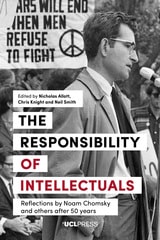
Responsibility of Intellectuals
Reflections by Noam Chomsky and Others after 50 yearsEdited by Nicholas Allott, Chris Knight, and Neil Smith
University College London, 2019
This book revisits “The Responsibility of Intellectuals” half a century later. It includes six new essays written to celebrate Chomsky’s famous intervention and explore its relevance in today’s world. Nicholas Allott, Chris Knight, Milan Rai, and Neil Smith have studied and written about Chomsky’s thought for many years, while Craig Murray and Jackie Walker describe the personal price they have paid for speaking out. The book concludes with Chomsky’s recollections of the background to the original publication of his essay, followed by extensive commentary from him on its fiftieth anniversary.
Responsive Democracy
Increasing State Accountability in East AsiaJeeyang Rhee Baum
University of Michigan Press, 2011
"Responsive Democracy is a pioneering contribution to the political analysis of administrative law in East Asia. Both political scientists and legal academics will greatly benefit from the author's in-depth analysis of the intersection between presidential power and administrative law in the contrasting cases of South Korea, Taiwan, and the Philippines."
---Susan Rose-Ackerman, Yale University Law School
"Baum's book is a very significant contribution because it focuses on a part of the world that has often been neglected in studies of democratization. It focuses attention on the nuts and bolts of what we mean by democratic consolidation and responsiveness. Indeed, if more political science were written with this clarity, we would all enjoy reading the literature much more!"
---Joseph Fewsmith, Boston University
Under what conditions is a newly democratic government likely to increase transparency, accountability, and responsiveness to its citizens? What incentives might there be for bureaucrats, including those appointed by a previously authoritarian government, to carry out the wishes of an emerging democratic regime? Responsive Democracy addresses an important problem in democratic transition and consolidation: the ability of the chief executive to control the state bureaucracy.
Using three well-chosen case studies---the Philippines, South Korea, and Taiwan---Jeeyang Rhee Baum explores the causes and consequences of codifying rules and procedures in a newly democratic government. In the Philippines, a president facing opposition has the option of appointing and dismissing officials at will and, therefore, has no need for administrative procedure acts. However, in South Korea and Taiwan, presidents employ such legislation to rein in recalcitrant government agencies, and, as a consequence, increase transparency, accountability, and responsiveness. Moreover, as Baum demonstrates by drawing upon surveys conducted both before and after implementation, administrative procedural reforms in South Korea and Taiwan improved public confidence in and attitudes toward democratic institutions.
Jeeyang Rhee Baum is a Research Fellow at the Ash Center for Democratic Governance and Innovation, John F. Kennedy School of Government, Harvard University.
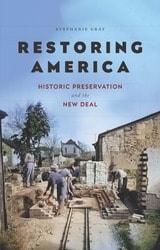
Restoring America
Historic Preservation and the New DealStephanie Gray
University of Massachusetts Press, 2025
Honorable Mention, New Deal Book Award
Exploring how the New Deal shaped history through politically driven commemoration
During the Great Depression, Americans employed historic preservation as a tool to address the political, economic, and social upheavals of the era. Inspired by the Roosevelt administration’s unprecedented support of federal arts projects, US politicians, architects, laborers, artisans, and local boosters skillfully used New Deal funds to restore, mythologize, and politicize the “historic shrines” in their communities. Restoring America illustrates how and why Americans turned to historic preservation as a strategy for managing both political realities and ambitions.
Stephanie Gray presents four thoroughly researched and diverse case studies: a colonial theater in the Deep South, a Puritan minister’s home in New England, aviator Charles Lindbergh's modest farmhouse and parklands of the Upper Midwest, and a multi-layered Spanish-German-Mexican arts village in the Central South. Collectively, these examples show how the restoration of old places emerged as a popular form of cultural production, an instrument of economic reconstruction, and a striking expression of political theater during the Depression. Moreover, these New Deal preservation projects make evident that any exercise in physically preserving the past is both conservative and progressive, reactive and proactive.
Restoring America contends that the federally funded and locally driven preservation initiatives of the 1930s and 1940s can help inform contemporary public history debates over the politics of commemoration and imagine possibilities for future preservation practice.
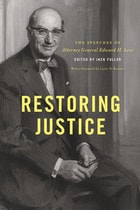
Restoring Justice
The Speeches of Attorney General Edward H. LeviEdward H. Levi
University of Chicago Press, 2013
Serving at an almost unprecedentedly difficult time, Levi was among the most admired attorney generals of the modern era. Published here for the first time, the speeches in Restoring Justice offer a superb sense of the man and his work.
Restricted Data
The History of Nuclear Secrecy in the United StatesAlex Wellerstein
University of Chicago Press, 2021
The American atomic bomb was born in secrecy. From the moment scientists first conceived of its possibility to the bombings of Hiroshima and Nagasaki and beyond, there were efforts to control the spread of nuclear information and the newly discovered scientific facts that made such powerful weapons possible. The totalizing scientific secrecy that the atomic bomb appeared to demand was new, unusual, and very nearly unprecedented. It was foreign to American science and American democracy—and potentially incompatible with both. From the beginning, this secrecy was controversial, and it was always contested. The atomic bomb was not merely the application of science to war, but the result of decades of investment in scientific education, infrastructure, and global collaboration. If secrecy became the norm, how would science survive?
Drawing on troves of declassified files, including records released by the government for the first time through the author’s efforts, Restricted Data traces the complex evolution of the US nuclear secrecy regime from the first whisper of the atomic bomb through the mounting tensions of the Cold War and into the early twenty-first century. A compelling history of powerful ideas at war, it tells a story that feels distinctly American: rich, sprawling, and built on the conflict between high-minded idealism and ugly, fearful power.
Restructuring World Politics
Transnational Social Movements, Networks, And NormsSanjeev Khagram
University of Minnesota Press, 2002
From the earliest campaign against Augusto Pinochet’s repressive practices to the recent massive demonstrations against the World Trade Organization, transnational collective action involving nongovernmental organizations has been restructuring politics and changing the world. Ranging from Santiago to Seattle and covering more than twenty-five years of transnational advocacy, the essays in Restructuring World Politics offer a clear, richly nuanced picture of this process and its far-reaching implications in an increasingly globalized political economy. The book brings together scholars, activists, and policy makers to show how such advocacy addresses—and reshapes—key issues in the areas of labor, human rights, gender justice, democratization, and sustainable development throughout the world.
A primary goal of transnational advocacy is to create, strengthen, implement, and monitor international norms. How transnational networks go about doing this, why and when they succeed, and what problems and complications they face are the main themes of this book. Looking at a wide range of cases where nongovernmental actors attempt to change norms and the practices of states, international organizations, and firms in the private sector—from debt restructuring to protecting human rights, from anti-dam projects in India to the prodemocracy movement in Indonesia—the authors compellingly depict international nongovernmental organizations and transnational social movements as considerable, emerging powers in international politics, initiating, facilitating, and directing the transformation of global norms and practices.
Contributors: Karen Brown Thompson, U of Minnesota; Charles T. Call, Brown U; Elizabeth A. Donnelly, Harvard U; Darren Hawkins, Brigham Young U; Thalia G. Kidder; Smitu Kothari; Paul J. Nelson, U of Pittsburgh; August Nimtz, U of Minnesota; Mark Ritchie, Institute for Agriculture and Trade Policy; Jackie Smith, SUNY Stony Brook; Daniel C. Thomas, U of Illinois, Chicago.
Restructuring the Philadelphia Region
Metropolitan Divisions and InequalityCarolyn Adams, David W. Bartelt, David Elesh and Ira Goldstein with Joshua Freely Michelle Schmitt
Temple University Press, 2008
Restructuring the Philadelphia Region offers one of the most comprehensive and careful investigations written to date about metropolitan inequalities in America’s large urban regions. Moving beyond simplistic analyses of cities-versus-suburbs, the authors use a large and unique data set to discover the special patterns of opportunity in greater Philadelphia, a sprawling, complex metropolitan region consisting of more than 350 separate localities. With each community operating its own public services and competing to attract residents and businesses, the places people live offer them dramatically different opportunities.
The book vividly portrays the region’s uneven development—paying particular attention to differences in housing, employment and educational opportunities in different communities—and describes the actors who are working to promote greater regional cooperation. Surprisingly, local government officials are not prominent among those actors. Instead, a rich network of “third-sector” actors, represented by nonprofit organizations, quasi-governmental authorities and voluntary associations, is shaping a new form of regionalism.
Resurgent Voices in Latin America
Indigenous Peoples, Political Mobilization, and Religious ChangeCleary, Edward L.
Rutgers University Press, 2004
After more than 500 years of marginalization, Latin America’s forty million Indians have recently made major strides in gaining political recognition and civil rights. In this book, social scientists explore the important role of religion in indigenous activism, showing the ways that religion has strengthened indigenous identity and contributed to the struggle for indigenous rights in the region.
Drawing on case studies from Bolivia, Peru, Guatemala, Ecuador, Paraguay, and Mexico, the contributors explore four key questions. How have traditional religions interacted with Christianity to produce new practices and beliefs? What resources, motivations, and ideological legitimacies do religious institutions provide for indigenous social movements? How effective are these movements in achieving their goals? Finally, as new religious groups continue to compete for adherents in the region, how will individuals’ religious choices affect political outcomes?
Resurgent Voices in Latin America offers new insight into the dynamics of indigenous social movements and into the complex and changing world of Latin American religions. The essays show that religious beliefs, practices, and institutions have both affected and been affected by political activism.