Results by title
22279 books match the query 'Social Science' and 1072 start with r
Reading the Literatures of Asian America
Shirley Geok-lin Lim
Temple University Press, 1992
Reading with the Transcendentalists
Ten Works that Made a MovementPhilip F. Gura
University of Massachusetts Press, 2026
Exploring the books and reading practices behind the creation of Transcendentalist philosophy and community
Transcendentalism emerged in early 19th century New England as a uniquely American philosophical, spiritual, and literary movement. Its first generation of thinkers—including Ralph Waldo Emerson, Theodore Parker, and Margaret Fuller—created a worldview that stressed the inherent goodness of the “self-reliant” individual and the presence of the divine in nature. These intellectuals gathered in informal symposia devoted to what Emerson called “creative reading,” a practice that stresses the transformative potential of the written word that was central to the movement’s emergence, growth, and spread. But what were these thinkers reading and how did it influence the development of Transcendentalism?
In Reading with the Transcendentalists, renowned literary scholar Philip F. Gura focuses on 10 American, British, and European books that were essential to the movement’s thoughts, writings, and activities. Many of the authors of these books—James Marsh, Madame de Staël, Samson Reed, George Ripley, Thomas Carlyle, Albert Brisbane, and George Sand—stood outside of Transcendentalism yet profoundly influenced it. Others such as Emerson, Parker, and Fuller were the movement’s central architects, whose writings in turn inspired the next generation, including Henry David Thoreau and Caroline Healey Dall. Each of these books challenged prevailing religious, philosophical, and social conventions in ways that resonated deeply with burgeoning Transcendentalist ideals.
Blending intellectual biography with book history, Gura crafts a captivating cultural history that reconstructs the dynamic social networks of the early Transcendentalists, in which ideas from the written word circulated, evolved, and acquired new meanings. The result is an rich portrait of reading as a creative and communal act, and an exploration of how books ignite curiosity, sustain friendship, and catalyze intellectual transformation. Through a carefully developed narrative structure that is filled not only with books and reading but with headline-worthy scandals, disputes, and falling outs and realignments, Gura traces the historical arc of a transnational intellectual movement that helped lay the foundation for the idea of “America.”
Readings In American Indian Law
Jo Carrillo
Temple University Press, 1998
Courses in federal Indian law are often aimed at understanding rules, not cultural conflicts. This book expands doctrinal discussions into understandings of culture, strategy, history, identity, and hopes for the future. Contributions from law, history, anthropology, ethnohistory, biography, sociology, socio-legal studies, and fiction offer an array of alternative paradigms as strong antidotes to our usual conceptions of federal Indian law.
Each selection reveals an aspect of how federal Indian law is made, interpreted, implemented, or experienced. Throughout, the book centers on the ever present and contentious issue of identity. At the point where identity and law intersect lies an important new way to contextualize the legal concerns of Native Americans.

Readings at the Edge of Literature
Myra Jehlen
University of Chicago Press, 2002
Throughout these essays Jehlen demonstrates the crucial role that the process of writing itself plays in unfolding these paradoxes, whether in the form of novels by Harriet Beecher Stowe and Virginia Woolf; the histories of Captain John Smith; or even a work of architecture, such as the Guggenheim museum in Bilbao.
Readings in Evaluation Research, 2ed
Francis G. Caro
Russell Sage Foundation, 1977
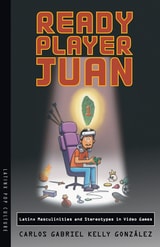
Ready Player Juan
Latinx Masculinities and Stereotypes in Video GamesCarlos Gabriel Kelly González
University of Arizona Press, 2023
The book employs an intersectional approach through performance theory, border studies, and lived experience to analyze the designed identity “Player Juan.” Player Juan manifests in video game representations through a discourse of criminality that sets expectations of who and what Latinxs can be and do. Developing an original approach to video game experiences, the author theorizes video games as border crossings, and defines a new concept—digital mestizaje—that pushes players, readers, and scholars to deploy a Latinx way of seeing and that calls on researchers to consider a digital object’s constructive as well as destructive qualities.

Ready Player Two
Women Gamers and Designed IdentityShira Chess
University of Minnesota Press, 2017
Cultural stereotypes to the contrary, approximately half of all video game players are now women. A subculture once dominated by men, video games have become a form of entertainment composed of gender binaries. Supported by games such as Diner Dash, Mystery Case Files, Wii Fit, and Kim Kardashian: Hollywood—which are all specifically marketed toward women—the gamer industry is now a major part of imagining what femininity should look like.
In Ready Player Two, media critic Shira Chess uses the concept of “Player Two”—the industry idealization of the female gamer—to examine the assumptions implicit in video games designed for women and how they have impacted gaming culture and the larger society. With Player Two, the video game industry has designed specifically for the feminine ideal: she is white, middle class, heterosexual, cis-gendered, and abled. Drawing on categories from time management and caregiving to social networking, consumption, and bodies, Chess examines how games have been engineered to shape normative ideas about women and leisure.
Ready Player Two presents important arguments about how gamers and game developers must change their thinking about both women and games to produce better games, better audiences, and better industry practices. Ultimately, this book offers vital prescriptions for how one of our most powerful entertainment industries must evolve its ideas of women.
Real Black
Adventures in Racial SincerityJohn L. Jackson Jr.
University of Chicago Press, 2005
Jackson argues that authenticity caricatures identity as something imposed on people, imprisoning them within stereotypes: an African American high school student who excels in the classroom, for instance, might be dismissed as "acting white." On the other hand, sincerity, as Jackson defines it, imagines authenticity as an incomplete measuring stick, an analytical model that attempts to deny people agency in their search for identity.
Drawing on more than ten years of ethnographic research in and around New York City, Jackson offers a kaleidoscope of subjects and stories that directly and indirectly address how race is negotiated in today's world—including tales of book-vending numerologists, urban conspiracy theorists, corrupt police officers, mixed-race neo-Nazis, and gospel choirs forbidden to catch the Holy Ghost. Jackson records and retells their interconnected sagas, all the while attempting to reconcile these stories with his own crisis of identity and authority as an anthropologist terrified by fieldwork. Finding ethnographic significance where mere mortals see only bricks and mortar, his invented alter ego Anthroman takes to the streets, showing how race is defined and debated, imposed and confounded every single day.
Real Folks
Race and Genre in the Great DepressionSonnet H. Retman
Duke University Press, 2011
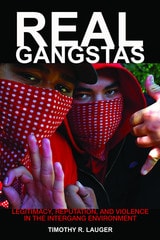
Real Gangstas
Legitimacy, Reputation, and Violence in the Intergang EnvironmentLauger, Timothy R
Rutgers University Press, 2012
Street gangs are a major concern for residents in many inner-city communities. However, gangs’ secretive and, at times, delinquent tendencies limit most people’s exposure to the realities of gang life. Based on eighteen months of qualitative research on the streets of Indianapolis, Real Gangstas provides a unique and intimate look at the lives of street gang members as they negotiate a dangerous peer environment in a major midwestern city.
Timothy R. Lauger interviewed and observed a mix of fifty-five gang members, former gang members, and non-gang street offenders. He spent much of his fieldwork time in the company of a particular gang, the “Down for Whatever Boyz,” who allowed him to watch and record many of their day-to-day activities and conversations. Through this extensive research, Lauger is able to understand and explain the reasons for gang membership, including a chaotic family life, poverty, and the need for violent self-assertion in order to foster the creation of a personal identity.
Although the book exposes many troubling aspects of gang life, it is not a simple descriptive or a sensationalistic account of urban despair and violence. Steeped in the tradition of analytical ethnography, the study develops a central theoretical argument: combinations of street gangs within cities shape individual gang member behavior within those urban settings. Within Indianapolis, members of rival gangs interact on a routine basis within an ambiguous and unstable environment. Participants believe that many of their contemporaries claiming gang affiliations are not actually “real” gang members, but instead are imposters who gain access to the advantages of gang membership through fraud and pretense. Consequently, the ability to discern “real” gang members—or to present oneself successfully as a real gang member—is a critical part of gangland Indianapolis.
Real Gangstas offers an objective and fair characterization of active gang members, successfully balancing the seemingly conflicting idea that they generally seem like normal teenagers, yet are abnormally concerned with—and too often involved in—violence. Lauger takes readers to the edge of an actual gang conflict, providing a rare and up-close look at the troubling processes that facilitate hostility and violence.
Real Heat
Gender and Race in the Urban Fire ServiceChetkovich, Carol
Rutgers University Press, 1997
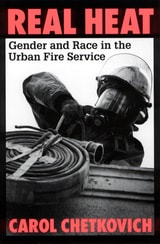
In the struggle over affirmative action, no employment setting has seen more friction than urban fire departments. Thirty years of legal and political efforts have opened the doors of this historically white male preserve, but men of color have yet to consolidate their gains, and women's progress has been even more tenuous. In this unique and compelling account of affirmative action at the "street level," Carol Chetkovich explores the ways in which this program has succeeded and failed.
Chetkovich follows the men and women of the Oakland Fire Department Class 1-91 through their academy training and eighteen-month probation. In vivid and sometimes surprising narratives, newcomers tell of their first battle with a full-fledged fire, their reactions to hazing rituals, and their relationships with veterans and fellow trainees. Real Heat explores how the process of becoming a firefighter interacts with the dimensions of race and gender to support some and discourage others. The book examines the implications of these interactions for public policy and social justice.
Real Men Don't Sing
Crooning in American CultureAllison McCracken
Duke University Press, 2015

Real Pigs
Shifting Values in the Field of Local PorkBrad Weiss
Duke University Press, 2016
Real Places
An Unconventional Guide to America's Generic LandscapeGrady Clay
University of Chicago Press, 1994
"This book provides a language for the architecture of everyday life."—Ross Miller, Chicago Tribune
"Spirited observations and capsule histories."—Suzanne Stephens, New York Times Book Review
"Compelling. . . . Included here are many nuggets of insight and illumination."—Brad Knickerbocker, Christian Science Monitor
"An amusing and touching book about the reality we Americans have captured in our language."—Boston Sunday Globe
Real Recognizes Real
The Credible Messenger Mentoring MovementDavid C. Brotherton, Danny Kessler, Bahiyyah M. Muhammad, Rodrigo Martinez, and Louis Kontos
Temple University Press, 2027
The Credible Messenger Mentoring Initiative (CMMI), launched in New York City in 2012, is a transformative program where adults who had been in the justice system serve as mentors, role models, and life coaches for 16- to 24-year-olds. The program socializes and empowers these at-risk and formerly incarcerated youth offenders, diverting them from juvenile justice institutions and rehabilitation centers. It aims to build trust, deepen their ties to their community and family, and help them become peacemakers and role models for other youths.
Real Recognizes Real is the first in-depth study of the CMMI, focusing on the Washington, DC branch of the program, which is becoming a model for a new movement of anti-violent interventions. It shows the advantages of the CMMI being built on the love that members of a community have for one another rather than on outside intervention. The authors also explain how this state-run, non-profit program reduced recidivism rates and helped its participants, youth and mentors alike, develop more meaningful and lasting relationships.
Featuring interviews with youths and their mentors, Real Recognizes Real evaluates the successes, challenges, failures, and lessons of the CMMI, while emphasizing its value in the campaign for juvenile justice reform.
In the series Studies in Transgression
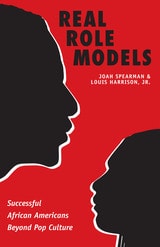
Real Role Models
Successful African Americans Beyond Pop CultureBy Joah Spearman and Louis Harrison, Jr.
University of Texas Press, 2010
All young people need good role models, and black youth especially need positive and real examples beyond the famous and wealthy people they see on SportsCenter highlights and MTV Cribs. While success as a celebrity athlete or entertainer may seem like an achievable dream, the reality is that young African Americans have a much greater chance of succeeding in the professions through education and hard work—and a mentor to show them the path. Real Role Models introduces high school and college-age African Americans to twenty-three black professionals who have achieved a high level of success in their chosen fields and who tell their stories to inspire young people to pursue a professional career and do the work necessary to achieve their dreams.
Some of the individuals profiled by Joah Spearman and Louis Harrison, Jr., include Leonard Pitts, Pulitzer Prize–winning columnist for the Miami Herald; Melody Barnes, Director of the White House Domestic Policy Council; Danyel Smith, editor-in-chief of Vibe; and Dr. Tim George, Chief of Pediatric Neuroscience at Dell Children's Medical Center of Central Texas. They and other interviewees describe their backgrounds, career paths, and desire to give back by helping others reach their goals. Representing a wide range of occupations, these real role models prove to African American youths that a whole world of successful, rewarding careers awaits them.
The Real Role Models
- Rufus Cormier, JD, Partner at the Baker Botts Law Firm, Houston, Texas
- Melody Barnes, Director of the White House Domestic Policy Council, Washington, D.C.
- Eric Motley, PhD, Managing Director of the Aspen Institute's Henry Crown Fellowship Program, Aspen, Colorado
- James McIntyre, Spokesman for the Federal Emergency Management Agency, Washington, D.C.
- Tracie Hall, Assistant Dean and Librarian at Dominican University, River Forest, Illinois
- Kimberlydawn Wisdom, MD, Surgeon General of the State of Michigan, Lansing, Michigan
- Timothy George, MD, Chief of Pediatric Neuroscience at Dell Children's Medical Center, Austin, Texas
- Victoria Holloway Barbosa, MD, Ethnic Dermatologist and Former Executive for L'Oreal, Chicago, Illinois
- Bill Douglas, White House Correspondent for McClatchy Newspapers, Washington, D.C.
- Leonard Pitts, Jr., Columnist for the Miami Herald, Miami, Florida
- Danyel Smith, Editor of Vibe Magazine, New York, New York
- Ed Stewart, Managing Director of External Communications for Delta Airlines, Atlanta, Georgia
- Lynn Tyson, Vice President of Investor Relations for Dell, Austin, Texas
- Willie Miles, Jr., Founder and CEO of Miles Wealth Management, Houston, Texas
- Horace Allen, Founder and CEO of TeamPact, Atlanta, Georgia
- Deavra Daughtry, President and CEO of Excellent Care Management, Houston, Texas
- Je'Caryous Johnson, Founder and CEO of I'm Ready Productions, Houston, Texas
- Steve Jones, Cofounder of a graphic design company, Oakland, California
- Isiah Warner, PhD, Chemistry Professor at Louisiana State University, Baton Rouge, Louisiana
- Gloria Ladson-Billings, PhD, Professor of Education at the University of Wisconsin, Madison, Wisconsin
- Bernard Muir, Athletic Director at Georgetown University, Washington, D.C.
- Craig Littlepage, Athletic Director at the University of Virginia, Charlottesville, Virginia
- Beverly Kearney, Women's Track Coach at the University of Texas at Austin, Austin, Texas
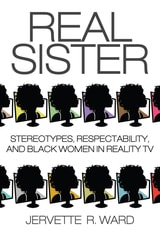
Real Sister
Stereotypes, Respectability, and Black Women in Reality TVWard, Jervette R
Rutgers University Press, 2015
The first book of scholarship devoted to the issue of how black women are depicted on reality television, Real Sister offers an even-handed consideration of the genre. The book’s ten contributors—black female scholars from a variety of disciplines—provide a wide range of perspectives, while considering everything from Basketball Wives to Say Yes to the Dress. As regular viewers of reality television, these scholars are able to note ways in which the genre presents positive images of black womanhood, even as they catalog a litany of stereotypes about race, class, and gender that it tends to reinforce.
Rather than simply dismissing reality television as “trash,” this collection takes the genre seriously, as an important touchstone in ongoing cultural debates about what constitutes “trashiness” and “respectability.” Written in an accessible style that will appeal to reality TV fans both inside and outside of academia, Real Sister thus seeks to inspire a more nuanced, thoughtful conversation about the genre’s representations and their effects on the black community.
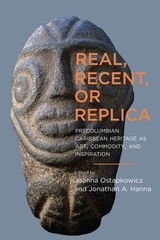
Real, Recent, or Replica
Precolumbian Caribbean Heritage as Art, Commodity, and InspirationEdited by Joanna Ostapkowicz and Jonathan A. Hanna
University of Alabama Press, 2021
A CHOICE OUTSTANDING ACADEMIC TITLE, 2022
Examines the largely unexplored topics in Caribbean archaeology of looting of heritage sites, fraudulent artifacts, and illicit trade of archaeological materials
Real, Recent, or Replica: Precolumbian Caribbean Heritage as Art, Commodity, and Inspiration is the first book-length study of its kind to highlight the increasing commodification of Caribbean Precolumbian heritage. Amerindian art, including “Taíno” art, has become highly coveted by collectors, spurring a prolific and increasingly sophisticated black market of forgeries, but also contemporary artistic engagement, openly appreciated as modern artworks taking inspiration from the past. The contributors to this volume contend with difficult subject matter including the continued looting of archaeological sites in the region, the seismic increase of forgeries, and the imbalance of power and economic relations between the producers and consumers of neo-Amerindian art.
The case studies document the considerable time depth of forgeries in the region (since the late nineteenth century), address the policies put in place by Caribbean governments and institutions to safeguard national patrimony, and explore the impact looted and forged artifacts have on how museums and institutions collect and ultimately represent the Caribbean past to their audiences. Overall, the volume emphasizes the continued desire for the “authentic” Precolumbian artifact, no matter the cost. It provides insights for archaeologists, museum professionals, art historians, and collectors to combat illegal trade and support communities in creating sustainable heritage industries.
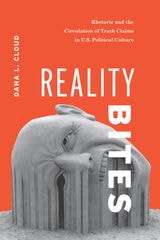
Reality Bites
Rhetoric and the Circulation of Truth Claims in U.S. Political CultureDana L. Cloud
The Ohio State University Press, 2018
Reality Gendervision
Sexuality and Gender on Transatlantic Reality TelevisionBrenda R. Weber, ed.
Duke University Press, 2014
Contributors. David Greven, Dana Heller, Su Holmes, Deborah Jermyn, Misha Kavka, Amanda Ann Klein, Susan Lepselter, Diane Negra, Laurie Ouellette, Gareth Palmer, Kirsten Pike, Maria Pramaggiore, Kimberly Springer, Rebecca Stephens, Lindsay Steenberg, Brenda R. Weber
Realizing the Dream of R. A. Kartini
Her Sisters’ Letters from Colonial JavaJoost J. Coté
Ohio University Press, 2008
Realizing the Dream of R. A. Kartini: Her Sisters’ Letters from Colonial Java presents a unique collection of documents reflecting the lives, attitudes, and politics of four Javanese women in the early twentieth century. Joost J. Coté translates the correspondence between Raden Ajeng Kartini, Indonesia’s first feminist, and her sisters, revealing for the first time her sisters’ contributions in defining and carrying out her ideals. With this collection, Coté aims to situate Kartini’s sisters within the more famous Kartini narrative–and indirectly to situate Kartini herself within a broader narrative.
The letters reveal the emotional lives of these modern women and their concerns for the welfare of their husbands and the success of their children in rapidly changing times. While by no means radical nationalists, and not yet extending their horizons to the possibility of an Indonesian nation, these members of a new middle class nevertheless confidently express their belief in their own national identity.
Realizing the Dream of R. A. Kartini is essential reading for scholars of Indonesian history, providing documentary evidence of the culture of modern, urban Java in the late colonial era and an insight into the ferment of the Indonesian nationalist movement in which these women and their husbands played representative roles.

Really Fake
Alexandra Juhasz
University of Minnesota Press, 2020
The new truth is the one that circulates: digital truth emerges from lists, databases, archives, and conditions of storage. Multiple truths may be activated through search, link, and retrieve queries. Alexandra Juhasz, Ganaele Langlois, and Nishant Shah respond by taking up story, poetry, and other human logics of care, intelligence, and dignity to explore sociotechnological and politico-aesthetic emergences in a world where information overload has become a new ontology of not-knowing. Their feminist digital methods allow considerations of internet things through alternative networked internet time: slowing down to see, honor, and engage with our past; invoking indeterminacy as a human capacity that lets multiple truths commingle on a page or in a body; and saving the truths of ourselves and our others differently from the corporate internet’s perpetual viral movement.
Writing across their own shared truisms, actors, and touchstones, the authors propose creative tactics, theoretical overtures, and experimental escape routes built to a human scale as ways to regain our capacities to know and tell truths about ourselves.
Reason's Muse
Sexual Difference and the Birth of DemocracyGeneviève Fraisse
University of Chicago Press, 1994
Through an analysis of literary, religious, legal, philosophical, and medical texts, Fraisse links a range of positions on women's proper role in society to specific historical and rhetorical circumstances. She shows how the Revolution marked a sharp break in the way women were represented in language, as traditional bantering about the "war of the sexes" gave way to serious discussions of the political and social meanings of sexual difference. Following this discussion on three different planes—the economical, the political, and the biological—Fraisse looks at the exclusion of women against the backdrop of democracy's inevitable lie: the affirmation of an equality so abstract it was impossible to concretely apply.
This study of the place of sexual equality in the founding moment of democracy offers insight into a persistent question: whether female emancipation is to be found through the achievement of equality with men or in the celebration of female difference.

Reasons of Conscience
The Bioethics Debate in GermanyStefan Sperling
University of Chicago Press, 2013
Reassembling the UAW
Insurgency, Contention, and the Struggle for Unionism in the American SouthAbe Walker
Temple University Press, 2026
Abe Walker chronicles the organizing campaign from its origin in 2014 to the union’s breakthrough victory in 2024, illustrating what went wrong—and what went right—along the way. Walker provides a systematic analysis of the strategic challenges and tactical shifts, showing the patterns that persisted across three election cycles while highlighting their differences, from global-level alliances to local labor issues.
Reassembling the UAW also demonstrates how rebel rank-and-file workers ousted the old-guard leadership and transformed the UAW into a militant union to achieve results. Ultimately, Walker offers valuable lessons for organizational strategy, the power of collective action, and the future of the labor movement.
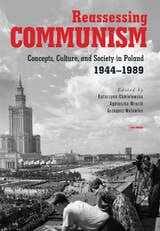
Reassessing Communism
Concepts, Culture, and Society in Poland 1944–1989Instytutem Badan Literackich PAN Chmielewska
Central European University Press, 2021
The thirteen authors of this collective work undertook to articulate matter-of-fact critiques of the dominant narrative about communism in Poland while offering new analyses of the concept, and also examining the manifestations of anticommunism. Approaching communist ideas and practices, programs and their implementations, as an inseparable whole, they examine the issues of emancipation, upward social mobility, and changes in the cultural canon.
The authors refuse to treat communism in Poland in simplistic categories of totalitarianism, absolute evil and Soviet colonization, and similarly refuse to equate communism and fascism. Nor do they adopt the neoliberal view of communism as a project doomed to failure. While wholly exempt from nostalgia, these essays show that beyond oppression and bad governance, communism was also a regime in which people pursued a variety of goals and sincerely attempted to build a better world for themselves.
The book is interdisciplinary and applies the tools of social history, intellectual history, political philosophy, anthropology, literature, cultural studies, and gender studies to provide a nuanced view of the communist regimes in east-central Europe.
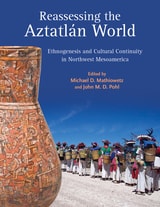
Reassessing the Aztatlán World
Ethnogenesis and Cultural Continuity in Northwest MesoamericaEdited by Michael D. Mathiowetz and John M. D. Pohl
University of Utah Press, 2024
Volume contributors show how those responsible for the Aztatlán tradition were direct ancestors of diverse Indigenous peoples such as the Náayeri (Cora), Wixárika (Huichol), O’dam (Tepehuan), Caz’ Ahmo (Caxcan), Yoeme (Yaqui), Yoreme (Mayo), and others who continue to reside across the former Aztatlán region and its frontiers. The prosperity of the Aztatlán tradition was achieved through long-distance networks that fostered the development of new ritual economies and integrated peoples in Greater Mesoamerica with those in the U.S. Southwest/Mexican Northwest.
Reattachment Theory
Queer Cinema of RemarriageLee Wallace
Duke University Press, 2020
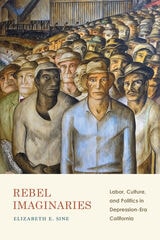
Rebel Imaginaries
Labor, Culture, and Politics in Depression-Era CaliforniaElizabeth E. Sine
Duke University Press, 2021
Rebel Women
Feminism, Modernism and the Edwardian NovelJane Eldridge Miller
University of Chicago Press, 1996
"Miller's is the best account we have, not only of Edwardian women novelists, but of early 20th-century women novelists; the measure of her achievement is that the distinction no longer seems workable." —David Trotter, The London Review of Books

Rebellion or Revolution?
Harold Cruse
University of Minnesota Press, 2009
A classic work of African American cultural, social, and political thought by a forerunner of the Black Power movement
One of the leading writers of African American intellectual life in the second half of the twentieth century, Harold Cruse first came to international attention in 1967 with the publication of his influential and inflammatory book, The Crisis of the Negro Intellectual. This fiercely opinionated and deeply informed critique of both integrationism and black nationalism established Cruse as a bold new voice on race and resistance in America.
First published in the wake of The Crisis of the Negro Intellectual’s success, Rebellion or Revolution? collects reviews and essays Cruse wrote between 1950 and 1966, examining the relevance of such figures as James Baldwin, Booker T. Washington, Albert Camus, and Josephine Baker, as well as such subjects as Marxism and the African American community, the economics of black nationalism, and the emerging Black Power movement. Rebellion or Revolution? contains a number of significant writings not available elsewhere.Now, with a new foreword by Cedric Johnson, this work finally emerges as both an essential document from a crucial moment in African American history and a road map to the origins and evolution of Cruse’s critical thought, asserting its importance in today’s debates on race in America.
Rebels and Runaways
Slave Resistance in Nineteenth-Century FloridaLarry Eugene Rivers
University of Illinois Press, 2013
Against a smoldering backdrop of violence, this study analyzes the various degrees of slave resistance--from the perspectives of both slave and master--and how they differed in various regions of antebellum Florida. In particular, Rivers demonstrates how the Atlantic world view of some enslaved blacks successfully aided their escape to freedom, a path that did not always lead North but sometimes farther South to the Bahama Islands and Caribbean. Identifying more commonly known slave rebellions such as the Stono, Louisiana, Denmark (Telemaque) Vesey, Gabriel, and the Nat Turner insurrections, Rivers argues persuasively that the size, scope, and intensity of black resistance in the Second Seminole War makes it the largest sustained slave insurrection ever to occur in American history.
Meticulously researched, Rebels and Runaways offers a detailed account of resistance, protest, and violence as enslaved blacks fought for freedom.
Rebels in Law
Voices in History of Black Women LawyersJ. Clay Smith, Jr., Editor
University of Michigan Press, 2000
The essays demonstrate the involvement of black women lawyers in important public issues of our time and show them addressing the sensitive subjects of race, equality, justice and freedom. Drawing together many writings that have never been published or have been published in obscure journals or newspapers, Rebels in Law is a groundbreaking study. In addition, it offers historical background information on each writer and on the history of black women lawyers. Providing an opportunity to study the origins of black women as professionals, community leaders, wives, mothers, and feminists, it will be of interest to scholars in the fields of law, history, political science, sociology, black studies and women's studies.
J. Clay Smith, Jr., is Professor of Law, Howard University Law School. He was formerly a member of the United States Equal Employment Opportunity Commission, Dean of Howard University Law School, and President of the Washington Bar Association. He is the author of Emancipation: The Making of the Black Lawyer, 1844-1944 and numerous articles.
Rebels, Rubyfruit, and Rhinestones
Queering Space in the Stonewall SouthSears, James T.
Rutgers University Press, 2001
Rebels
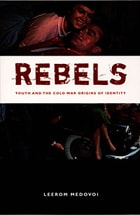
Youth and the Cold War Origins of IdentityLeerom Medovoi
Duke University Press, 2005
Alongside the young rebel, the contemporary concept of identity emerged in the 1950s. It was in that decade that “identity” was first used to define collective selves in the politicized manner that is recognizable today: in terms such as “national identity” and “racial identity.” Medovoi traces the rapid absorption of identity themes across many facets of postwar American culture, including beat literature, the young adult novel, the Hollywood teen film, early rock ‘n’ roll, black drama, and “bad girl” narratives. He demonstrates that youth culture especially began to exhibit telltale motifs of teen, racial, sexual, gender, and generational revolt that would burst into political prominence during the ensuing decades, bequeathing to the progressive wing of contemporary American political culture a potent but ambiguous legacy of identity politics.
Rebirth of the Clinic
Places and Agents in Contemporary Health CareCindy Patton
University of Minnesota Press, 2010
Combining theory, history, and ethnography, the contributors to this volume ground today's clinic in a larger scheme of power relations, identifying the cultural, political, and economic pressures that frame clinical relationships, including the instrumentalist definition of health, actuarial-based medical practices, and patient self-help movements, which simultaneously hem in and create the conditions under which agents creatively change ideas of illness and treatment.
From threatened community health centers in poor African American locales to innovative nursing practices among the marginally housed citizens of Canada's poorest urban neighborhood, this volume addresses not just the who, what, where, and how of place-specific clinical practices, but also sets these local experiences against a theoretical backdrop that links them to the power of modern medicine in shaping fundamental life experiences.
Rebuilding Community after Katrina
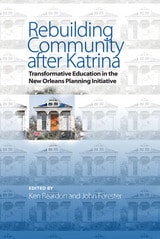
Transformative Education in the New Orleans Planning InitiativeKen Reardon
Temple University Press, 2015
Rebuilding Community after Katrina chronicles the innovative and ambitious partnership between Cornell University’s City and Regional Planning department and ACORN Housing, an affiliate of what was the nation’s largest low-income community organization. These unlikely allies came together to begin to rebuild devastated neighborhoods in New Orleans after Hurricane Katrina.
The editors and contributors to this volume allow participants’ voices to show how this partnership integrated careful, technical analysis with aggressive community outreach and organizing. With essays by activists, organizers, community members, and academics on the ground, Rebuilding Community after Katrina presents insights on the challenges involved in changing the way politicians and analysts imagined the future of New Orleans’ Ninth Ward.
What emerges from this complex drama are lessons about community planning, organizational relationships, and team building across multi-cultural lines. The accounts presented in Rebuilding Community after Katrina raise important and sensitive questions about the appropriate roles of outsiders in community-based planning processes.
Rebuilding Jewish Life in Germany
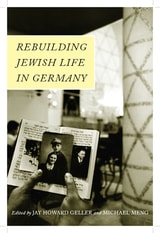
Jay Howard Geller
Rutgers University Press, 2020
Rebuilding Native Nations
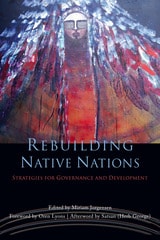
Strategies for Governance and DevelopmentEdited by Miriam Jorgensen; Foreword by Oren Lyons; Afterword by Satsan (Herb George)
University of Arizona Press, 2007
Produced by the Native Nations Institute for Leadership, Management, and Policy at the University of Arizona and the Harvard Project on American Indian Economic Development, this book traces the contours of that revolution as Native nations turn the dream of self-determination into a practical reality. Part report, part analysis, part how-to manual for Native leaders, it discusses strategies for governance and community and economic development being employed by American Indian nations and First Nations in Canada as they move to assert greater control over their own affairs.
Rebuilding Native Nations provides guidelines for creating new governance structures, rewriting constitutions, building justice systems, launching nation-owned enterprises, encouraging citizen entrepreneurs, developing new relationships with non-Native governments, and confronting the crippling legacies of colonialism. For nations that wish to join that revolution or for those who simply want to understand the transformation now underway across Indigenous North America, this book is a critical resource.
CONTENTS
Foreword by Oren Lyons
Editor's Introduction
Part 1
Starting Points
1. Two Approaches to the Development of Native Nations: One Works, the Other Doesn't
Stephen Cornell and Joseph P. Kalt
2. Development, Governance, Culture: What Are They and What Do They Have to Do with Rebuilding Native Nations?
Manley A. Begay, Jr., Stephen Cornell, Miriam Jorgensen, and Joseph P. Kalt
Part 2
Rebuilding the Foundations
3. Remaking the Tools of Governance: Colonial Legacies, Indigenous Solutions
Stephen Cornell
4. The Role of Constitutions in Native Nation Building: Laying a Firm Foundation
Joseph P. Kalt
5 . Native Nation Courts: Key Players in Nation Rebuilding
Joseph Thomas Flies-Away, Carrie Garrow, and Miriam Jorgensen
6. Getting Things Done for the Nation: The Challenge of Tribal Administration
Stephen Cornell and Miriam Jorgensen
Part 3
Reconceiving Key Functions
7. Managing the Boundary between Business and Politics: Strategies for Improving the Chances for Success in Tribally Owned Enterprises
Kenneth Grant and Jonathan Taylor
8. Citizen Entrepreneurship: An Underutilized Development Resource
Stephen Cornell, Miriam Jorgensen, Ian Wilson Record, and Joan Timeche
9. Governmental Services and Programs: Meeting Citizens' Needs
Alyce S. Adams, Andrew J. Lee, and Michael Lipsky
10. Intergovernmental Relationships: Expressions of Tribal Sovereignty
Sarah L. Hicks
Part 4
Making It Happen
11. Rebuilding Native Nations: What Do Leaders Do?
Manley A. Begay, Jr., Stephen Cornell, Miriam Jorgensen, and Nathan Pryor
12. Seizing the Future: Why Some Native Nations Do and Others Don't
Stephen Cornell, Miriam Jorgensen, Joseph P. Kalt, and Katherine Spilde Contreras
Afterword by Satsan (Herb George)
References
About the Contributors
Index
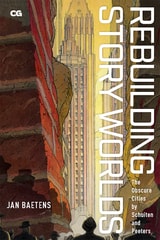
Rebuilding Story Worlds
The Obscure Cities by Schuiten and PeetersJan Baetens
Rutgers University Press, 2020
Rebuilding Story Worlds offers the first full-length study of this seminal series, exploring both the artistic traditions from which it emerges and the innovative ways it plays with genre, gender, and urban space. Comics scholar Jan Baetens examines how Schuiten’s work as an architectural designer informs the series’ concerns with the preservation of historic buildings. He also includes an original interview with Peeters, which reveals how poststructuralist critical theory influenced their construction of a rhizomatic fictional world, one which has made space for fan contributions through the Alta Plana website.
Synthesizing cutting-edge approaches from both literary and visual studies, Rebuilding Story Worlds will give readers a new appreciation for both the aesthetic ingenuity of The Obscure Cities and its nuanced conception of politics.
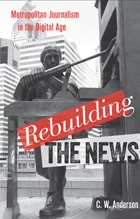
Rebuilding the News
Metropolitan Journalism in the Digital AgeC. W. Anderson
Temple University Press, 2013
Breaking down the walls of the traditional newsroom, Rebuilding the News traces the evolution of news reporting as it moves from print to online. As the business models of newspapers have collapsed, author C. W. Anderson chronicles how bloggers, citizen journalists, and social networks are implicated in the massive changes confronting journalism.
Through a combination of local newsroom fieldwork, social-network analysis, and online archival research, Rebuilding the News places the current shifts in news production in socio-historical context. Focusing on the Philadelphia Inquirer, the Philadelphia Daily News, Anderson presents a gripping case study of how these papers have struggled to adapt to emerging economic, social, and technological realities.
As he explores the organizational, networked culture of journalism, Anderson lays bare questions about the future of news-oriented media and its evolving relationship with “the public” in the digital age.

Recasting Commodity and Spectacle in the Indigenous Americas
Edited by Helen Gilbert and Charlotte Gleghorn
University of London Press, 2014
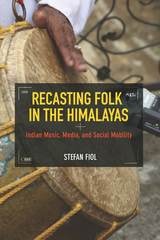
Recasting Folk in the Himalayas
Indian Music, Media, and Social MobilityStefan Fiol
University of Illinois Press, 2017
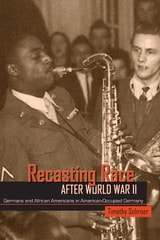
Recasting Race after World War II
Germans and African Americans in American-Occupied GermanyTimothy L. Schroer
University Press of Colorado, 2007
The segregation of U.S. Army forces fed a growing debate in America about whether a Jim Crow army could truly be a democratizing force in postwar Germany. Schroer follows the evolution of that debate and examines the ways in which postwar conditions necessitated reexamination of race relations. He reveals how anxiety about interracial relationships between African American men and German women united white American soldiers and the German populace. He also traces the importation and influence of African American jazz music in Germany, illuminating the subtle ways in which occupied Germany represented a crucible in which to recast the meaning of race in a post-Holocaust world.
Recasting Race after World War II will appeal to historians and scholars of American, African American, and German studies.

Receiving States
Refugee Policy in Central America During the Salvadoran Civil WarRachael De La Cruz
University of Wisconsin Press, 2026
Between the outbreak of civil war in El Salvador in 1979 and its conclusion in 1992, some 1.5 million Salvadorans fled the violence. This book focuses on the displaced Salvadorans who remained in Central America, seeking refuge in Belize, Costa Rica, Guatemala, Honduras, Nicaragua, and Panama. Their story has been almost entirely overshadowed by the greater numbers who fled farther north to the United States; however, as Rachael De La Cruz shows, the Central American history of Salvadoran refugees is rich, complex, and instructive for scholars of refugee studies, international relations, and human rights.
The isthmus nations that received Salvadoran refugees did not react consistently, and the arriving Salvadorans themselves were not passive participants. National mythologies, perceptions of economic contributions and burdens, regional militarization, state violence, and varying capacities for refugee activism, compounded by the fraught and variable circumstances of the Cold War, together shaped the multitude of government attitudes and policies toward the refugee communities within these countries’ borders. Rarely were refugees simply “a problem to solve”; rather, they represented and acted as catalysts for economic, social, and geopolitical change.
Recent Developments in Southeastern Archaeology
From Colonization to ComplexityDavid G. Anderson
University Press of Colorado, 2012
Receptive Bodies
Leo Bersani
University of Chicago Press, 2018
Recharting the Caribbean
Land, Law, and Citizenship in the British Virgin IslandsBill Maurer
University of Michigan Press, 2000
Recipes and Everyday Knowledge
Medicine, Science, and the Household in Early Modern EnglandElaine Leong
University of Chicago Press, 2018
In Recipes and Everyday Knowledge, Elaine Leong situates recipe knowledge and practices among larger questions of gender and cultural history, the history of the printed word, and the history of science, medicine, and technology. The production of recipes and recipe books, she argues, were at the heart of quotidian investigations of the natural world or “household science”. She shows how English homes acted as vibrant spaces for knowledge making and transmission, and explores how recipe trials allowed householders to gain deeper understandings of sickness and health, of the human body, and of natural and human-built processes. By recovering this story, Leong extends the parameters of natural inquiry and productively widens the cast of historical characters participating in and contributing to early modern science.
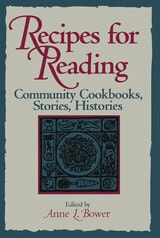
Recipes for Reading
Community Cookbooks, Stories, HistoriesAnne L. Bower
University of Massachusetts Press, 1997
The volume is divided into three sections. Part One provides a historical overview of community cookbooks, a discussion of their narrative strategies, and insights into the linguistic peculiarities of recipes. Part Two contains essays about particular cookbooks and their relationship to specific cultural groups. Examined here are Methodist, Mormon, and Canadian recipe collections and a recent cookbook from the National Council of Negro Women. Part Three considers a range of community cookbooks in terms of their culinary, historical, ethnic, and literary contexts. Included is a reading of the novel Like Water for Chocolate, an analysis of an early Jewish cookbook, and a look at how Mexican history and culinary changes are paralleled in cookbooks of the nineteenth century.