314 books match the query 'African' and 21 start with s

cover of Sacred River: A Novel

Sacred River

A Novel

Syl Cheney-Coker

Ohio University Press, 2015

The reincarnation of a legendary nineteenth-century Caribbean emperor as a contemporary African leader is at the heart of this novel. Sacred River deals with the extraordinary lives, hopes, powerful myths, stories, and tragedies of the people of a modern West African nation. It is also the compelling love story of an idealistic philosophy professor and an ex-courtesan of incomparable beauty. Two hundred years after his death, the great Haitian emperor Henri Christophe miraculously appears in a dream to Tankor Satani, president of the fictional West African country of Kissi, with instructions for Tankor to continue Henri Christophe’s rule, which had been interrupted by “that damned Napoleon.” Ambitious in scope, Sacred River is a diaspora-inspired novel, in which Cheney-Coker has tackled the major themes of politics, social strife, crime and punishment, and human frailty and redemption in Malagueta, the fictional, magical town and its surroundings first created by the author in The Last Harmattan of Alusine Dunbar, for which he was awarded the coveted Commonwealth Writers’ Prize. Sacred River is equally about love and politics, and marks the return to fiction of one of Africa’s major writers.
[more]
cover of Saharan Winds: Energy Systems and Aeolian Imaginaries in Western Sahara

Saharan Winds

Energy Systems and Aeolian Imaginaries in Western Sahara

Allan, Joanna

West Virginia University Press, 2024

Winner, ASLE-UKI Critical Book Prize, 2025
Finalist, Ecocritical Book Award, 2025, Association for the Study of Literature and Environment (ASLE)
Longlisted, Bread and Roses Award for Radical Publishing, 2025

As climate crisis ensues, a transition away from fossil fuels becomes urgent. However, some renewable energy developments are propagating injustices such as landgrabs, colonial dispossession, and environmentally destructive practices. Changing the way we imagine and understand wind will help us ensure a globally just wind energy future. 

Saharan Winds contributes to a fairer energy horizon by illuminating the role of imaginaries--how we understand energy sources such as wind and the meanings we attach to wind--in determining the wider politics, whether oppressive or just, associated with energy systems. This book turns to various cultures and communities across different time periods in one space, Western Sahara, to explore how wind imaginaries affect the development, management, and promotion of windfarms; the distribution of energy that windfarms produce; and, vitally, the type of politics mediated by all these elements combined. Highlighting the wind-fueled oppression of colonial energy systems, the book shows the potential offered by nomadic, Indigenous wind imaginaries for contributing to a fairer energy future.
 
[more]
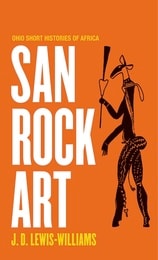
cover of San Rock Art

San Rock Art

J.D. Lewis-Williams

Ohio University Press, 2011

San rock paintings, scattered over the range of southern Africa, are considered by many to be the very earliest examples of representational art. There are as many as 15,000 known rock art sites, created over the course of thousands of years up until the nineteenth century. There are possibly just as many still awaiting discovery.

Taking as his starting point the magnificent Linton panel in the Iziko-South African Museum in Cape Town, J. D. Lewis-Williams examines the artistic and cultural significance of rock art and how this art sheds light on how San image-makers conceived their world. It also details the European encounter with rock art as well as the contentious European interaction with the artists’ descendants, the contemporary San people.
[more]
cover of Secure the Base: Making Africa Visible in the Globe

Secure the Base

Making Africa Visible in the Globe

Ngugi wa Thiong’o

Seagull Books, 2016

The first comprehensive collection of Kenyan writer Ngũgĩ wa Thiong’o's nonfiction, spanning lectures and texts on colonialism, labor and political struggles, and the legacies of slavery. 
 
For more than sixty years, Ngũgĩwa Thiong’o has been fearlessly writing about the questions, challenges, histories, and futures of Africans, particularly those of his homeland, Kenya. In his work, which has included plays, novels, and essays, Ngũgĩ narrates the injustice of colonial violence and the dictatorial betrayal of decolonization, the fight for freedom and subsequent incarceration, and the aspiration toward economic equality in the face of gross inequality. With both hope and disappointment, he questions the role of language in both the organization of power structures and the pursuit of autonomy and self-expression.

Ngũgĩ's fiction has been met with wide acclaim, but his nonfiction work, while equally brilliant, is more difficult to find. Secure the Base changes this by bringing together for the first time essays spanning nearly three decades. Originating as disparate lectures and texts, this complete volume will remind readers anew of Ngũgĩ's power and importance. Written in a personal and accessible style, the book covers a range of issues, including the role of the intellectual, the place of Asia in Africa, labor and political struggles in an era of rampant capitalism, and the legacies of slavery and prospects for peace. At a time when Africa looms large in our discussions of globalization, Secure the Base is mandatory reading.
[more]
cover of Senegal Abroad: Linguistic Borders, Racial Formations, and Diasporic Imaginaries

Senegal Abroad

Linguistic Borders, Racial Formations, and Diasporic Imaginaries

Maya Angela Smith

University of Wisconsin Press, 2020

Senegal Abroad explores the fascinating role of language in national, transnational, postcolonial, racial, and migrant identities. Capturing the experiences of Senegalese in Paris, Rome, and New York, it depicts how they make sense of who they are—and how they fit into their communities, countries, and the larger global Senegalese diaspora. Drawing on extensive interviews with a wide range of emigrants as well as people of Senegalese heritage, Maya Angela Smith contends that they shape their identity as they purposefully switch between languages and structure their discourse.

The Senegalese are notable, Smith suggests, both in their capacity for movement and in their multifaceted approach to language. She finds that, although the emigrants she interviews express complicated relationships to the multiple languages they speak and the places they inhabit, they also convey pleasure in both travel and language. Offering a mix of poignant, funny, reflexive, introspective, and witty stories, they blur the lines between the utility and pleasure of language, allowing a more nuanced understanding of why and how Senegalese move.
[more]
cover of Senegal Taxi

Senegal Taxi

Juan Felipe Herrera

University of Arizona Press, 2013

“I wish I could find the words to tell you the story of our village after you were killed.” So begins Senegal Taxi, the new work by one of contemporary poetry’s most vibrant voices, Juan Felipe Herrera. Known for his activism and writings that bring attention to oppression and injustice, Herrera turns to stories of genocide and hope in Sudan. Senegal Taxi offers the voices of three children escaping the horrors of war in Africa.

Unflinching in its honesty, brutality, and beauty, the collection fiercely addresses conflict and childhood, inviting readers to engage in complex and often challenging issues. Senegal Taxi weaves together verse, dialogue, and visual art created by Herrera specifically for the book. Stylistically genre-leaping, these many layers are part of the collection’s innovation. Phantom-like televisions, mud drawings, witness testimonies, insects, and weaponry are all storytellers that join the siblings for a theatrical crescendo. Each poem is told from a different point of view, which Herrera calls “mud drawings,” referring to the evocative symbols of hope the children create as they hide in a cave on their way to Senegal, where they plan to catch a boat to the United States.

This collection signals a poignant shift for Herrera as he continues to use his craft to focus attention on global concerns. In so doing, he offers an acknowledgment that the suffering of some is the suffering of all.
[more]
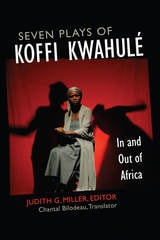
cover of Seven Plays of Koffi Kwahulé: In and Out of Africa

Seven Plays of Koffi Kwahulé

In and Out of Africa

Judith G. Miller, Editor, Chantal Bilodeau, Translator

University of Michigan Press, 2017

The work of renowned Ivoirian playwright Koffi Kwahulé has been translated into some 15 languages and is performed regularly throughout Europe, Africa, and the Americas. For the first time, Seven Plays of Koffi Kwahulé: In and Out of Africa makes available to an Anglophone audience some of the best and most representative plays by one of Francophone Africa’s most accomplished living playwrights.

Kwahulé’s theater delves into both the horror of civil war in Africa and the diasporic experience of peoples of African origin living in Europe and the “New World.” From the split consciousness of the protagonist and rape victim in Jaz to the careless buffoonery of mercenaries in Brewery, Kwahulé’s characters speak in riffs and refrains that resonate with the improvisational pulse of jazz music. He confronts us with a violent world that represents the damage done to Africa and asks us, through exaggeration and surreal touches, to examine the reality of an ever-expanding network of global migrants. His plays speak to the contemporary state of humanity, suffering from exile, poverty, capitalist greed, collusion, and fear of “the other”—however that “other” gets defined.

Judith G. Miller’s introductory essay situates Kwahulé among his postcolonial contemporaries. Short introductory essays to each play, accompanied by production photos, contextualize possible approaches to Kwahulé’s often enigmatic work. Anglophone theater scholars and theater professionals eager to engage with contemporary theater beyond their borders, particularly in terms of what so-called minority theater artists from other countries are creating, will welcome this indispensable collection. Students and scholars of African studies and of global French studies will also find this work intriguing and challenging.
 
[more]
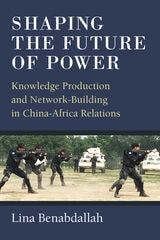
cover of Shaping the Future of Power: Knowledge Production and Network-Building in China-Africa Relations

Shaping the Future of Power

Knowledge Production and Network-Building in China-Africa Relations

Lina Benabdallah

University of Michigan Press, 2020
China’s rise to power is one of the biggest questions in International Relations theory (IRT) and foreign policy circles. Although power has been a core concept of IRT for a long time, the faces and mechanisms of power as it relates to Chinese foreign policymaking has changed the contours of that debate. The rise of China and other powers across the global political arena sparks a new visibility for different kinds of encounters between states, particularly between China and other Global South states. These encounters are more visible to IR scholars because of the increasing influence that rising powers have in the international system. This book shows that foreign policy encounters between rising powers and Global South states do not necessarily exhibit the same logics, behaviors, or investment strategies of Euro-American hegemons. Instead, they have distinctive features that require new theoretical frameworks for analysis. Shaping the Future of Power probes the types of power mechanisms that build, diffuse, and project China’s power in Africa. One must take into account the processes of knowledge production, social capital formation, and skills transfers that Chinese foreign policy directs toward African states to fully understand China’s power-building mechanisms. The relational power framework requires these elements to capture both the material aspects and ideational people-centered aspects to power. By examining China’s investments in human resource development programs for Africa, the book reveals a vital, yet undertheorized, aspect of China’s foreign policy making.
[more]
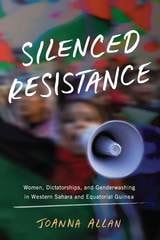
cover of Silenced Resistance: Women, Dictatorships, and Genderwashing in Western Sahara and Equatorial Guinea

Silenced Resistance

Women, Dictatorships, and Genderwashing in Western Sahara and Equatorial Guinea

Joanna Allan

University of Wisconsin Press, 2021
Spain’s former African colonies—Equatorial Guinea and Western Sahara—share similar histories. Both are under the thumbs of heavy-handed, postcolonial regimes, and are known by human rights organizations as being among the worst places in the world with regard to oppression and lack of civil liberties. Yet the resistance movement in one is dominated by women, the other by men. In this innovative work, Joanna Allan demonstrates why we should foreground gender as key for understanding both authoritarian power projection and resistance. She brings an ethnographic component to a subject that has often been looked at through the lens of literary studies to examine how concerns for equality and women’s rights can be co-opted for authoritarian projects. She reveals how Moroccan and Equatoguinean regimes, in partnership with Western states and corporations, conjure a mirage of promoting equality while simultaneously undermining women’s rights in a bid to cash in on oil, minerals, and other natural resources. This genderwashing, along with historical local, indigenous, and colonially imposed gender norms mixed with Western misconceptions about African and Arab gender roles, plays an integral role in determining the shape and composition of public resistance to authoritarian regimes.
[more]
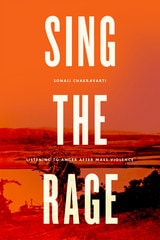
cover of Sing the Rage: Listening to Anger after Mass Violence

Sing the Rage

Listening to Anger after Mass Violence

Sonali Chakravarti

University of Chicago Press, 2014

What is the relationship between anger and justice, especially when so much of our moral education has taught us to value the impartial spectator, the cold distance of reason? In Sing the Rage, Sonali Chakravarti wrestles with this question through a careful look at the emotionally charged South African Truth and Reconciliation Commission, which  from 1996 to 1998 saw, day after day, individuals taking the stand to speak—to cry, scream, and wail—about the atrocities of apartheid. Uncomfortable and surprising, these public emotional displays, she argues, proved to be of immense value, vital to the success of transitional justice and future political possibilities.
           
Chakravarti takes up the issue from Adam Smith and Hannah Arendt, who famously understood both the dangers of anger in politics and the costs of its exclusion. Building on their perspectives, she argues that the expression and reception of anger reveal truths otherwise unavailable to us about the emerging political order, the obstacles to full civic participation, and indeed the limits—the frontiers—of political life altogether. Most important, anger and the development of skills needed to truly listen to it foster trust among citizens and recognition of shared dignity and worth. An urgent work of political philosophy in an era of continued revolution, Sing the Rage offers a clear understanding of one of our most volatile—and important—political responses.
[more]
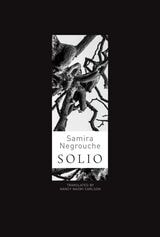
cover of Solio

Solio

Samira Negrouche

Seagull Books, 2024

Poetry that serves as an evocative portrayal of diverse landscapes and cultures.
 
In these otherworldly poetry sequences, Samira Negrouche reminds us that “all life is movement,” where “time passes through me / beings pass through me / they are me / I am them.” The “I” is representative of one voice, three voices, all voices, all rooted in movement as their bodies brush past one another, brush against thresholds of time and space. Everything is in flux—including the dream-like landscapes at the borders of borders—as the poet seeks to recover parts of self and memory, on both a personal and universal level. In these poems, history-laden locales such as Algiers, Timbuktu, N’Djamena, Cotonou, Zanzibar, Cape Town, and Gorée are evoked. Even the language, expertly and sensitively translated by Nancy Naomi Carlson, refuses to be pinned down, as it loops back on itself. At times contradictory, at times fractured in meaning, syntax, and diction, the playful language is riddled with “restless” verbs. In the end, the “I” takes on prophetic overtones, instilling hope for the future.
[more]
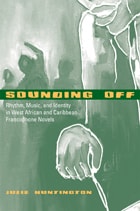
cover of Sounding Off: Rhythm, Music, and Identity in West African and Caribbean Francophone Novels

Sounding Off

Rhythm, Music, and Identity in West African and Caribbean Francophone Novels

Julie Huntington

Temple University Press, 2009

Intrigued by "texted" sonorities—the rhythms, musics, ordinary noises, and sounds of language in narratives—Julie Huntington examines the soundscapes in contemporary Francophone novels such as Ousmane Sembene's God's Bits of Wood (Senegal), and Patrick Chamoiseau's Solibo Magnificent (Martinique). Through an ethnomusicological perspective, Huntington argues in Sounding Off that the range of sounds —footsteps, heartbeats, drumbeats—represented in West African and Caribbean works provides a rhythmic polyphony that creates spaces for configuring social and cultural identities.

Huntington’s analysis shows how these writers and others challenge the aesthetic and political conventions that privilege written texts over orality and invite readers-listeners to participate in critical dialogues—to sound off, as it were, in local and global communities.
[more]
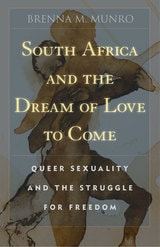
cover of South Africa and the Dream of Love to Come: Queer Sexuality and the Struggle for Freedom

South Africa and the Dream of Love to Come

Queer Sexuality and the Struggle for Freedom

Brenna M. Munro

University of Minnesota Press, 2012

After apartheid, South Africa established a celebrated new political order that imagined the postcolonial nation as belonging equally to the descendants of indigenous people, colonizing settlers, transported slaves, indentured laborers, and immigrants. Its constitution, adopted in 1996, was the first in the world to include gays and lesbians as full citizens. Brenna M. Munro examines the stories that were told about sexuality, race, and nation throughout the struggle against apartheid in order to uncover how these narratives ultimately enabled gay people to become imaginable as fellow citizens. She also traces how the gay, lesbian, or bisexual person appeared as a stock character in the pageant of nationhood during the transition to democracy. In the process, she offers an alternative cultural history of South Africa.

Munro asserts that the inclusion of gay people made South Africans feel “modern”—at least for a while. Being gay or being lesbian was reimagined in the 1990s as distinctly South African, but the “newness” that made these sexualities apt symbols for a transformed nation can also be understood as foreign and un-African. Indeed, a Western-style gay identity is often interpreted through the formula “gay equals modernity equals capitalism.” As South Africa’s reentrance into the global economy has failed to bring prosperity to the majority of its citizens, homophobic violence has been on the rise.

Employing a wide array of texts—including prison memoirs, poetry, plays, television shows, photography, political speeches, and the postapartheid writings of Nobel Laureates Nadine Gordimer and J. M. Coetzee—Munro reports on how contemporary queer activists and artists are declining to remain ambassadors for the “rainbow nation” and refusing to become scapegoats for the perceived failures of liberation and liberalism.
[more]
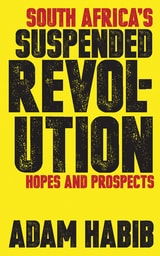
cover of South Africa’s Suspended Revolution: Hopes and Prospects

South Africa’s Suspended Revolution

Hopes and Prospects

Adam Habib

Ohio University Press, 2013

South Africa’s Suspended Revolution tells the story of South Africa’s democratic transition and the prospects for the country to develop a truly inclusive political system. Beginning with an account of the transition in the leadership of the African National Congress from Thabo Mbeki to Jacob Zuma, the book then broadens its lens to examine the relationship of South Africa’s political elite to its citizens. It also examines the evolution of economic and social policies through the democratic transition, as well as the development of a postapartheid business community and a foreign policy designed to re-engage South Africa with the world community.

Written by one of South Africa’s leading scholars and political commentators, the book combines historical and contemporary analysis with strategies for an alternative political agenda. Adam Habib connects the lessons of the South African experience with theories of democratic transition, social change, and conflict resolution. Political leaders, scholars, students, and activists will all find material here to deepen their understanding of the challenges and opportunities of contemporary South Africa.
[more]
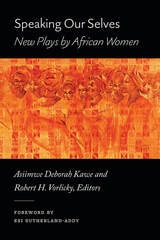
cover of Speaking Our Selves: New Plays by African Women

Speaking Our Selves

New Plays by African Women

Asiimwe Deborah Kawe and Robert H. Vorlicky, Editors

University of Michigan Press, 2025

Speaking Our Selves brings together eight remarkable plays by women writers from the under-represented African countries of Tanzania, Mozambique, Ethiopia, Mali, Burundi, Benin, and Sudan, plus a play by award-winning Ugandan playwright and volume coeditor Asiimwe Kawe. Four of the plays are translated into English from Kiswahili, French, or Kirundi and French, while most of the plays preserve African indigenous languages, including Runyankore, Lusoga, Mina, Fon, Bambara, Luganda, Kiswahili, and Kirundi. Although the plays are united in presenting women as central figures who own their voices, they also represent a rich diversity of story-telling. Each unique dramaturgy is rooted in African forms of story-telling that occasionally merge with recognizable Western forms to create hybrid, dramatic forms. These hybrid methods emphasize the striking ways in which African women writers continue to experiment with form, moving beyond Western-influenced dramaturgy if and when it jeopardizes their authentic ways of artistic expression and creation through language, movement, and music, centered in African Cosmology.

The plays within Speaking Our Selves confront a range of ideas and issues, including women embracing the potential of agency in often contested subject positions; confronting their historical object positions in worlds of devastating patriarchal authority; resisting toxic masculinity and persistent, oppressive binaries of gender roles; finding power in communities of women; increasing their acumen in financial, business, and economic spheres; facing tensions between traditional religious tenets and efforts toward secularization; living with perpetual acts of violence toward their bodies; and the rising mental health issues among girls and women across the continent. Readers and audiences are challenged by these plays not to be passive witnesses by observing from safe vantage points, but rather to be active participants in the stories being told.
[more]
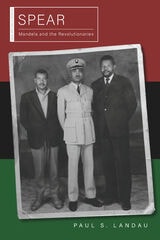
cover of Spear: Mandela and the Revolutionaries

Spear

Mandela and the Revolutionaries

Paul S. Landau

Ohio University Press, 2022
A revelatory and definitive account of how Nelson Mandela and his peers led South Africa to the brink of revolution against the postwar twentieth century’s most infamously racist regime. Spear: Mandela and the Revolutionaries brings to life the brief revolutionary period in which Nelson Mandela and his comrades fought apartheid not just with words but also with violence. After the 1960 Sharpeville police shootings of civilian protesters, Mandela and his comrades in the mass-resistance order of the African National Congress (ANC) and the Communist Party pioneered the use of force and formed Umkhonto we Sizwe (MK), or Spear of the Nation. A civilian-based militia, MK stockpiled weapons and waged a war of sabotage against the state with pipe bombs, Molotov cocktails, and dynamite. In response, the state passed draconian laws, militarized its police, and imprisoned its enemies without trial. Drawing from several hundred first-person accounts, most of which are unpublished, Paul Landau traces Mandela’s allies—and opponents—in communist, pan-Africanist, liberal, and other groups involved in escalating resistance alongside the ANC. After Mandela’s capture, the Pan Africanist Congress planned to initiate street violence, and MK organized Operation Mayibuye, an uprising to be led by trained commandos. The state short-circuited those plans and subsequently jailed, exiled, tortured, and murdered revolutionaries. The era of high apartheid then began. Spear reshapes our understanding of Mandela by focusing on this intense but relatively neglected period of escalation in the movement against apartheid. Landau’s book is not a biography, nor is it a history of a militia or an army; rather, it is a riveting story about ordinary civilians debating and acting together in extremis. Contextualizing Mandela and MK’s activities amid anticolonial change and Black Marxism in the early 1960s, Spear also speaks to today’s transnational antiracism protests and worldwide struggles against oppression.
[more]
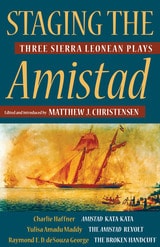
cover of Staging the Amistad: Three Sierra Leonean Plays

Staging the Amistad

Three Sierra Leonean Plays

Charlie Haffner

Ohio University Press, 2019
Staging the Amistad collects in print for the first time plays about the Amistad slave revolt by three of Sierra Leone’s most influential playwrights of the latter decades of the twentieth century: Charlie Haffner, Yulisa Amadu “Pat” Maddy, and Raymond E. D. de’Souza George. Until the late 1980s, when the first of these plays was performed, the 1839 shipboard slave rebellion and the return of its victors to their homes in what is modern-day Sierra Leone had been an unrecognized chapter in the country’s history. The plays recast the tale of heroism, survival, and resistance to tyranny as a distinctly Sierra Leonean story, emphasizing the agency of its African protagonists. For this reason, Haffner, Maddy, and de’Souza George counterbalance the better-known American representations of the rebellion, which center on American characters and American political and cultural concerns. The first public performances of these plays constituted a watershed moment. Written and staged immediately before and after the start of Sierra Leone’s decade-long conflict, they brought the Amistad rebellion to public consciousness. Furthermore, their turn to a uniquely Sierra Leonean history of heroic resistance to tyranny highlights the persistent faith in nation-state nationalism and the dreams of decolonization.
[more]
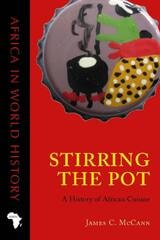
cover of Stirring the Pot: A History of African Cuisine

Stirring the Pot

A History of African Cuisine

James C. McCann

Ohio University Press, 2009

Africa’s art of cooking is a key part of its history. All too often Africa is associated with famine, but in Stirring the Pot, James C. McCann describes how the ingredients, the practices, and the varied tastes of African cuisine comprise a body of historically gendered knowledge practiced and perfected in households across diverse human and ecological landscape. McCann reveals how tastes and culinary practices are integral to the understanding of history and more generally to the new literature on food as social history.

Stirring the Pot offers a chronology of African cuisine beginning in the sixteenth century and continuing from Africa’s original edible endowments to its globalization. McCann traces cooks’ use of new crops, spices, and tastes, including New World imports like maize, hot peppers, cassava, potatoes, tomatoes, and peanuts, as well as plantain, sugarcane, spices, Asian rice, and other ingredients from the Indian Ocean world. He analyzes recipes, not as fixed ahistorical documents,but as lively and living records of historical change in women’s knowledge and farmers’ experiments. A final chapter describes in sensuous detail the direct connections of African cooking to New Orleans jambalaya, Cuban rice and beans, and the cooking of African Americans’ “soul food.”

Stirring the Pot breaks new ground and makes clear the relationship between food and the culture, history, and national identity of Africans.
[more]
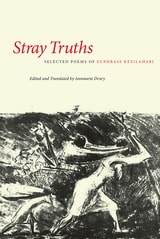
cover of Stray Truths: Selected Poems of Euphrase Kezilahabi

Stray Truths

Selected Poems of Euphrase Kezilahabi

Annmarie Drury

Michigan State University Press, 2015
Stray Truths is a stirring introduction to the poetry of Euphrase Kezilahabi, one of Africa’s major living authors, published here for the first time in English. Born in 1944 on Ukerewe Island in Tanzania (then the Territory of Tanganyika), Kezilahabi came of age in the newly independent nation. His poetry confronts the task of postcolonial nation building and its conundrums, and explores personal loss in parallel with nationwide disappointments. Kezilahabi sparked controversy when he published his first poetry collection in 1974, introducing free verse into Swahili. His next two volumes of poetry (published in 1988 and 2008) confirmed his status as a pioneering and modernizing literary force. Stray Truths draws on each of those landmark collections, allowing readers to encounter the myriad forms and themes significant to this poet over a span of more than three decades. Even as these poems jettison the constraints of traditional Swahili forms, their use of metaphor connects them to traditional Swahili poetics, and their representational strategies link them to indigenous African arts more broadly. To date, translations of Swahili poetry have been focused on scholarly interpretations. This literary translation, in contrast, invites a wide audience of readers to appreciate the verbal art of this seminal modernist writer.
[more]
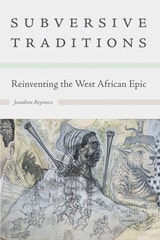
cover of Subversive Traditions: Reinventing the West African Epic

Subversive Traditions

Reinventing the West African Epic

Jonathon Repinecz

Michigan State University Press, 2019
How can traditions be subversive? The kinship between African traditions and novels has been under debate for the better part of a century, but the conversation has stagnated because of a slowness to question the terms on which it is based: orality vs. writing, tradition vs. modernity, epic vs. novel. These rigid binaries were, in fact, invented by colonialism and cemented by postcolonial identity politics. Thanks to this entrenched paradigm, far too much ink has been poured into the so-called Great Divide between oral and writing societies, and to the long-lamented decline of the ways of old. Given advances in social science and humanities research—studies in folklore, performance, invented traditions, colonial and postcolonial ethnography, history, and pop culture—the moment is right to rewrite this calcified literary history. This book is not another story of subverted traditions, but of subversive ones. West African epics like Sunjata, Samori, and Lat-Dior offer a space from which to think about, and criticize, the issues of today, just as novels in European languages do. Through readings of documented performances and major writers like Yambo Ouologuem and Amadou Hampâté Bâ of Mali, Ahmadou Kourouma of Ivory Coast, and Aminata Sow Fall and Boubacar Boris Diop of Senegal, this book conducts an entirely new analysis of West African oral epic and its relevance to contemporary world literature. 
[more]
cover of Swahili Beyond the Boundaries: Literature, Language, and Identity

Swahili Beyond the Boundaries

Literature, Language, and Identity

Alamin Mazrui

Ohio University Press, 2007

Africa is a marriage of cultures: African and Asian, Islamic and Euro-Christian. Nowhere is this fusion more evident than in the formation of Swahili, Eastern Africa’s lingua franca, and its cultures. Swahili Beyond the Boundaries: Literature, Language, and Identity addresses the moving frontiers of Swahili literature under the impetus of new waves of globalization in the twentieth and twenty-first centuries. These momentous changes have generated much theoretical debate on several literary fronts, as Swahili literature continues to undergo transformation in the mill of human creativity.

Swahili literature is a hybrid that is being reconfigured by a conjuncture of global and local forces. As the interweaving of elements of the colonizer and the colonized, this hybrid formation provides a representation of cultural difference that is said to constitute a “third space,” blurring existing boundaries and calling into question established identitarian categorizations. This cultural dialectic is clearly evident in the Swahili literary experience as it has evolved in the crucible of the politics of African cultural production.

However, Swahili Beyond the Boundaries demonstrates that, from the point of view of Swahili literature, while hybridity evokes endless openness on questions of home and identity, it can simultaneously put closure on specific forms of subjectivity. In the process of this contestation, a new synthesis may be emerging that is poised to subject Swahili literature to new kinds of challenges in the politics of identity, compounded by the dynamics and counterdynamics of post–Cold War globalization.
[more]