Results by title
209 books match the query 'Alaska' and 18 start with s
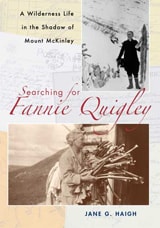
Searching for Fannie Quigley
A Wilderness Life in the Shadow of Mount McKinleyJane G. Haigh
Ohio University Press, 2007
At the age of 27, Fannie Sedlacek left her Bohemian homestead in Nebraska to join the gold rush to the Klondike. From the Klondike to the Tanana, Fannie continued north, finally settling in Katishna near Mount McKinley. This woman, later known as Fannie Quigley, became a prospector who staked her own claims and a cook who ran a roadhouse. She hunted and trapped and thrived for nearly forty years in an environment that others found unbearable.
Her wilderness lifestyle inspired many of those who met her to record their impressions of this self-sufficient woman, who died in 1944. To many of the 700,000 annual visitors to Denali National Park she is a symbol of the enduring spirit of the original pioneers.
Searching for Fannie Quigley: A Wilderness Life in the Shadow of Mount McKinley goes beyond the mere biographical facts of this unique woman’s journey. It also tells historian Jane G. Haigh’s own story of tracking and tracing the many paths that Fannie Quigley’s intriguing life took. Uncovering remote clues, digging through archives, and listening to oral accounts from a wide array of sources, Haigh has fashioned this rich lode into a compelling narrative.
In Searching for Fannie Quigley, Haigh separates fact from fiction to reveal the true story of this highly mythologized pioneer woman.
Seven Words for Wind
Essays and Field Notes from Alaska's Pribilof IslandsSumner MacLeish
University of Alaska Press, 2008
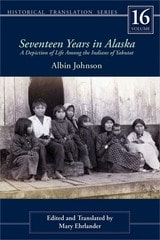
Seventeen Years in Alaska
A Depiction of Life Among the Indians of YakutatAlbin Johnson
University of Alaska Press, 2014
Seventeen Years in Alaska is Johnson’s eyewitness account of this tumultuous time. It is a captivating narrative of an ancient people facing rapid change and of the missionaries working to stem a corrupting tide. His journals offer a candid look at the beliefs and lives of missionaries, and they ultimately reveal the profound effect that he and other missionaries had on the Tlingit. Tracing nearly two decades of spiritual hopes and earthbound failures, Johnson’s memoir is a fascinating portrait of a rapidly changing world in one of the most far-flung areas of the globe.

Seward's Folly
A New Look at the Alaska PurchaseLee A. Farrow
University of Alaska Press, 2016
This book aims to correct that. Lee Farrow offers here a detailed account of just what the Alaska Purchase was, how it came about, its impact at the time, and more. Farrow shows why both America and Russia had plenty of good reasons to want the sale to occur, including Russia’s desire to let go of an unprofitable, hard-to-manage colony and the belief in the United States that securing Alaska could help the nation gain control of British Columbia and generate closer trade ties with Asia . Farrow also delves into the implications of the deal for foreign policy and international diplomacy far beyond Russia and the United States at a moment when the global balance of power was in question.
A thorough, readable retelling of a story we only think we know, Seward’s Folly will become the standard book on the Alaska Purchase.

Shadow of the Hunter
Richard K. Nelson
University of Chicago Press, 1983
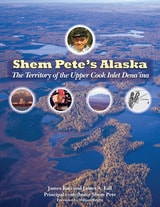
Shem Pete's Alaska
The Territory of the Upper Cook Inlet Dena'inaJames Kari and James A. Fall
University of Alaska Press, 2003
This expanded edition of Shem Pete's Alaska presents 973 named places in 16 drainage-based chapters. The names form a reconstructed network from the vantage points of the life experiences of Shem Pete and other Dena'ina and Ahtna speakers. It is annotated with comments and stories by Shem Pete and more than 50 other contributors, plus historic references, vignettes, copious photographs, historic maps, and shaded-relief placename maps. The authors provide perspective on Dena'ina language and culture, as well as a summary of Dena'ina geographic knowledge and placename research methodology.
This beautifully produced edition is a treasure for all Alaskans and for anyone interested in the "personal connectedness to a beautiful land" voiced by Dena'ina elders.
From the foreword by William Bright: "Shem Pete's experience and wisdom as an elder of the Dena'ina Athabascan Indians shine through this work like the sun—as do the skill and devotion of James Kari, James Fall, and the other Dena'ina, Ahtna, Alaska Native, and Anglo-American people who contributed to making the book a reality. . . . We have a volume that offers a vivid picture of Native Alaskan culture, history, geography, and language, with added glimpses of oral literature and music. . . . All Native American Peoples, indeed, all traditional communities in the world would be fortunate and proud to have this kind of record of their life and culture."
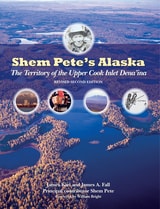
Shem Pete's Alaska
The Territory of the Upper Cook Inlet Dena'inaJames Kari and James A. Fall
University of Alaska Press, 2016
The first two editions of Shem Pete’s Alaska contributed much to Dena’ina cultural identity and public appreciation of the Dena’ina place names network in Upper Cook Inlet. This new edition adds nearly thirty new place names to its already extensive source material from Shem Pete and more than fifty other contributors, along with many revisions and new annotations. The authors provide synopses of Dena’ina language and culture and summaries of Dena’ina geographic knowledge, and they also discuss their methodology for place name research.
Exhaustively refined over more than three decades, Shem Pete’s Alaska will remain the essential reference work on the landscape of the Dena’ina people of Upper Cook Inlet. As a book of ethnogeography, Native language materials, and linguistic scholarship, the extent of its range and influence is unlikely to be surpassed.
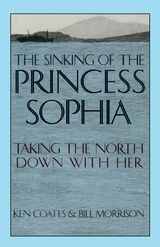
Sinking of the Princess Sophia
Taking the North Down with HerKen Coates and Bill Morrison
University of Alaska Press, 1991
On October 23, 1918, a storm rose and the Canadian Pacific steamer Princess Sophia ran aground on Vanderbilt Reef, northwest of Juneau, Alaska. Tragically, there were no survivors. The 353 aboard represented a significant cross-section of the population of the Yukon and Alaska, and their loss was a heavy blow to a society that, with the end of the gold rush, was already in decline. This book tells the dramatic stories of many of the passengers, how they had gone to the north, what they did there, and why they were leaving that fall, and sheds light on a little-known aspect of Alaska's history.
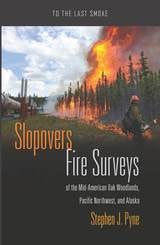
Slopovers
Fire Surveys of the Mid-American Oak Woodlands, Pacific Northwest, and AlaskaStephen J. Pyne
University of Arizona Press, 2019
The Mid-American oak woodlands were the scene of vigorous settlement in the late eighteenth and early nineteenth centuries and thus the scene of changing fire practices. The debate over the origin of the prairies—by climate or fire—foreshadowed the more recent debate about fire in oak and hickory hardwoods. In both cases, today’s thinking points to the critical role of fire.
The Pacific Northwest was the great pivot between laissez-faire logging and state-sponsored conservation and the fires that would accompany each. Then fire faded as an environmental issue. But it has returned over the past decade like an avenging angel, forcing the region to again consider the defining dialectic between axe and flame.
And Alaska—Alaska is different, as everyone says. It came late to wildland fire protection, then managed an extraordinary transfiguration into the most successful American region to restore something like the historic fire regime. But Alaska is also a petrostate, and climate change may be making it the vanguard of what the Anthropocene will mean for American fire overall.
Slopovers collates surveys of these three regions into the national narrative. With a unique mixture of journalism, history, and literary imagination, renowned fire expert Stephen J. Pyne shows how culture and nature, fire from nature and fire from people, interact to shape our world with three case studies in public policy and the challenging questions they pose about the future we will share with fire.
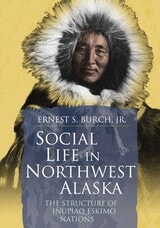
Social Life in Northwest Alaska
The Structure of Inupiaq Eskimo NationsErnest Burch Jr.
University of Alaska Press, 2006
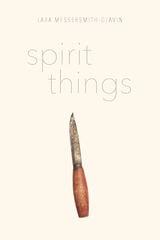
Spirit Things
Lara Messersmith-Glavin
University of Alaska Press, 2022
“Spirit things” are those mundane objects that offer new insights into the world on closer consideration—fishing nets, a favorite knife, and the bioluminescent gleam of seawater in a twilight that never truly grows dark. Spirit Things recounts stories of fishing, family, synesthesia, storytelling, gender, violence, and meaning. Each essay takes an object and follows it through histories: personal, material, and scientific, drawing together the delicate lines that link things through their making and use, their genesis and evolution, and the ways they gain significance in an individual’s life.
A contemplative take on everything from childcare to neurodivergence, comfort foods to outlaws, Spirit Things uses experiences from the human world and locates them on the edges of nature. Contact with wilderness, with wildness, be it twenty-foot seas in the ocean off Alaska’s coast or chairs flying through windows of a Kodiak bar, provides an entry point for meditations on the ways in which patterns, magic, and wonder overlap.

Staking Her Claim
Life Of Belinda MulrooneyMelanie J. Mayer
Ohio University Press, 1999
In Staking Her Claim, Melanie Mayer and Robert N. DeArmond provide a faithful and comprehensive portrait of this unique character in North American frontier history. Their exhaustive research has resulted in a sweeping saga of determination and will, tempered by disaster and opportunity.
Like any good Horatio Alger hero, Belinda overcame the challenges that confronted her, including poverty, prejudice, a lack of schooling, and the early loss of parents. Her travels took her from her native Ireland as a young girl to a coal town in Pennsylvania to Chicago, San Francisco, and finally, in 1897, to the Yukon.
Staking Her Claim is a testament to the human spirit and to the idea of the frontier. It is a biography of a woman who made her own way in the world and in doing so left an indelible mark.
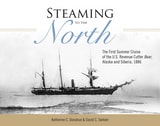
Steaming to the North
The First Summer Cruise of the US Revenue Cutter Bear, Alaska and Chukotka, Siberia, 1886Katherine C. Donahue and David C. Switzer
University of Alaska Press, 2014
Steaming to the North follows the Bear from May to October 1886 as it takes its first summer cruise from San Francisco up to Point Barrow and back again. This is the first book to exhibit the photographs taken by 3rd Lt. Charles Kennedy of New Bedford, introducing rarely seen photos of the last sail-and-steam whaling ships, capturing early interactions of Natives with white whalemen and explorers, and showing lives otherwise lost to time. Essays follow the logbook of the cruise and allow readers to vividly ride alongside the crew on a history-making voyage.
Stories Find You, Places Know
Yup'ik Narratives of a Sentient WorldHolly Cusack-McVeigh
University of Utah Press, 2017
For the Yup’ik people, places are also social actors that react to human actions and emotions. Stories tell how people learn about each other through encounters on the land, and thereby places also learn about people. Places comment on human behavior through the land's responses to specific actions. Stories variously reveal ideas about human associations and relationships between humans and nonhuman beings. Pointing to a systematic correlation between places and narrative elements that has not been previously explored, this volume makes a unique contribution to the literature on place.
Winner of the Brian McConnell Book Award from the International Society for Contemporary Legend Research.
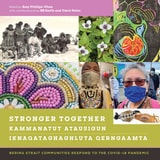
Stronger Together / Kammanatut Atausigun / Iknaqataghaghluta Qerngaamta
Bering Strait Communities Respond to the COVID-19 PandemicAmy Phillips-Chan
University of Alaska Press, 2024
The featured artists narrativize works inspired by the pandemic, from walrus ivory masks and sealskin face coverings to scenes of subsistence activities and informal family portraits. Full-color illustrations enliven the text with vibrant images of local community members, activities, and artwork from those who call this northern expanse of rolling tundra and icy seas home.
Stronger Together features hopeful and redemptive behind-the-scenes perspectives of how remote Alaskan communities endured the COVID-19 pandemic and appeals to anyone looking for hopeful and redemptive stories of this time, as well as museum, public arts, and culture program administrators; student and scholars of Indigenous and Alaska Native languages and culture; the Alaska anthropology community; artists and art enthusiasts; and those with a general interest in Alaska.
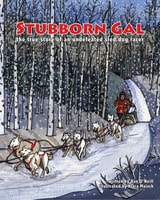
Stubborn Gal
The True Story of an Undefeated Sled Dog RacerDan O'Neill
University of Alaska Press, 2015
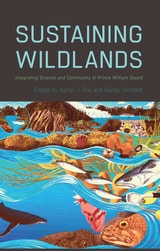
Sustaining Wildlands
Integrating Science and Community in Prince William SoundEdited by Aaron J. Poe and Randy Gimblett
University of Arizona Press, 2017
Nearly three decades later, changes in recreation use run counter to what was initially expected. Instead of avoiding Prince William Sound, tourists and visitors flock there. Economic revitalization efforts have resulted in increased wilderness access as new commercial enterprises offer nature tourism in remote bays and fjords. This increased visitation has caused concerns that the wilderness may again be threatened—not by oil but rather by the very humans seeking those wilderness experiences.
In Sustaining Wildlands, scientists and managers, along with local community residents, address what has come to be a central paradox in public lands management: the need to accommodate increasing human use while reducing the environmental impact of those activities. This volume draws on diverse efforts and perspectives to dissect this paradox, offering an alternative approach where human use is central to sustaining wildlands and recovering a damaged ecosystem like Prince William Sound.
Contributors:
Brad A. Andres, Chris Beck, Nancy Bird, Dale J. Blahna, Harold Blehm, Sara Boario, Bridget A. Brown, Courtney Brown, Greg Brown, Milo Burcham, Kristin Carpenter, Ted Cooney, Patience Andersen Faulkner, Maryann Smith Fidel, Jessica B. Fraver, Jennifer Gessert, Randy Gimblett, Michael I. Goldstein, Samantha Greenwood, Lynn Highland, Marybeth Holleman, Shay Howlin, Tanya Iden, Robert M. Itami, Lisa Jaeger, Laura A. Kennedy, Spencer Lace, Nancy Lethcoe, Kate McLaughlin, Rosa H. Meehan, Christopher Monz, Karen A. Murphy, Lisa Oakley, Aaron J. Poe, Chandra B. Poe, Karin Preston, Jeremy Robida, Clare M. Ryan, Gerry Sanger, Bill Sherwonit, Lowell H. Suring, Paul Twardock, Sarah Warnock, and Sadie Youngstrom