Results by title
977 books match the query 'American literature' and 63 start with s

SOS-Calling All Black People
A Black Arts Movement ReaderBracey John H.
University of Massachusetts Press, 0
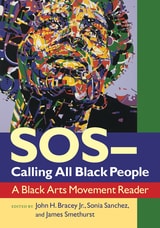
SOS—Calling All Black People
A Black Arts Movement ReaderJohn H. Bracey
University of Massachusetts Press, 2014
Many of the movement's leading artists, including Ed Bullins, Nikki Giovanni, Woodie King, Haki Madhubuti, Sonia Sanchez, Askia Touré, and Val Gray Ward remain artistically productive today. Its influence can also be seen in the work of later artists, from the writers Toni Morrison, John Edgar Wideman, and August Wilson to actors Avery Brooks, Danny Glover, and Samuel L. Jackson, to hip hop artists Mos Def, Talib Kweli, and Chuck D.
SOS—Calling All Black People includes works of fiction, poetry, and drama in addition to critical writings on issues of politics, aesthetics, and gender. It covers topics ranging from the legacy of Malcolm X and the impact of John Coltrane's jazz to the tenets of the Black Panther Party and the music of Motown. The editors have provided a substantial introduction outlining the nature, history, and legacy of the Black Arts Movement as well as the principles by which the anthology was assembled.
Sacred Place
W Scott Olsen
University of Utah Press, 1996
Some of today's most significant writers and poets explore the relation between what we call the sacred and what we witness in the apparent world.
This unprecedented anthology brings together a provocative mix of new and well known writers whose poetry and prose broaches the possibility of something "bigger" going on, something more significant at stake. Is some powerful agency at work in what we see or are we just wishing (or fearing) that there were? Who can say? Who would dare? What’s most intriguing about the selections in this volume is that the authors do dare. What’s most attractive about them is that they resist answering that dare with reductions. They prefer the swoon of multiple possibilities over the relative comfort of conclusions. Various as they are, the works collected in The Sacred Place share a common reverence for the word itself, and perhaps best of all—they share a common understanding that no one of them comprehends fully what that means. They seem to desire instead a sense that the humble stuff surrounding us affords a likely enough habitation for the sacred, even now.
Scales of Captivity
Racial Capitalism and the Latinx ChildMary Pat Brady
Duke University Press, 2022

Scarring the Black Body
Race and Representation in African American LiteratureCarol E. Henderson
University of Missouri Press, 2002

Scepticism and Hope in Twentieth Century Fantasy Literature
Kath Filmer
University of Wisconsin Press, 1992
Scrap Theory
Reproductive Injustice in the Black Feminist ImaginationMali D. Collins
The Ohio State University Press, 2025
Screening the Beats
Media Culture and the Beat SensibilityDavid Sterritt
Southern Illinois University Press, 2004
Film critic David Sterritt’s Screening the Beats: Media Culture and the Beat Sensibility showcases the social and aesthetic viewpoints of lynchpin Beat writers Jack Kerouac, William S. Burroughs, and Allen Ginsberg, juxtaposing their artistry with 1950s culture and achieving what Kerouac might have called a “bookmovie” riff. In clear prose, Sterritt captures the raw energy of the Beats and joins in their celebration of aesthetic freakishness. Tapping into the diversified spirit of the Beat Generation and its nuanced relationship with postwar American culture, Sterritt considers how the Beats variously foreground, challenge, and illuminate major issues in Hollywood and avant-garde film, critical and cultural theory, and music in the mass-media age.
Sterritt engages the creative and spiritual facets of the Beats, emulating their desire to evoke ephemeral aspects of human existence. Dealing with both high and low cultures as well as various subcultures, he highlights the complementary contributions to cultural creativity made by these authors. Screening the Beats grapples with paradoxes in Beat writing, in particular the conflict between spiritual purity and secular connectedness, which often materialized in the beatific bebop spontaneity, Zen-like transcendentalism, and plain hipster smarts that characterized the writings of Kerouac, Burroughs, and Ginsberg.
This interdisciplinary study tackles such topics as Ginsberg’s and Kerouac’s uses of racial and ethnic stereotypes prevalent in the popular movies of the 1950s era; the uses and limitations of improvisation as a creative tool in literature, jazz, and film; Kerouac’s use of cinematic metaphor to evoke Buddhist concepts; and intersections of the grotesque and carnivalesque in works as seemingly diverse as autobiographical novels by Kerouac, a radio play by Antonin Artaud, cultural theories of Gilles Deleuze and Félix Guattari, and the boisterous lunacy of Three Stooges farce. Deftly threading literary, musical, and cinematic works with a colorful array of critical theories, Screening the Beats illuminates the relationship between American culture and the imaginative forces of the Beat Generation.
Search and Clear
Critical Responses to Selected Literature and Films of the Vietnam WarWilliam J. Searle
University of Wisconsin Press, 1988
Seasoned Authors for a New Season
The Search for Standards in Popular WritingEdited by Louis Filler
University of Wisconsin Press, 1980
Seeing Red
Anger, Sentimentality, and American IndiansCari M. Carpenter
The Ohio State University Press, 2008
Seems Like Murder Here
Southern Violence and the Blues TraditionAdam Gussow
University of Chicago Press, 2002
Seems Like Murder Here offers a revealing new account of the blues tradition. Far from mere laments about lost loves and hard times, the blues emerge in this provocative study as vital responses to spectacle lynchings and the violent realities of African American life in the Jim Crow South. With brilliant interpretations of both classic songs and literary works, from the autobiographies of W. C. Handy, David Honeyboy Edwards, and B. B. King to the poetry of Langston Hughes and the novels of Zora Neale Hurston, Seems Like Murder Here will transform our understanding of the blues and its enduring power.
Selected Writings of John V. Kelleher on Ireland and Irish America
John V. Kelleher. Edited by Charles Fanning
Southern Illinois University Press, 2002
A collection of eighteen critical essays and twenty-six translations spanning the career of one of the founding intellects of Irish Studies, the Selected Writings of John V. Kelleher on Ireland and Irish America consists of five accessible sections. The first gathers Kelleher’s essays on the most widely known Irish cultural phenomenon—the literary renaissance of the early twentieth century. Part two contains his judicious assessments of Irish literature in its post-Revolutionary phase. The third section includes Kelleher’s insightful essays on the experience of the Irish in America. The fourth section contains essays that examine early Irish literature and culture, opening with a benchmark essay for Irish Studies, “Early Irish History and Pseudo-History,” which was read at the inaugural meeting of the American Conference for Irish Studies in 1961. The collection concludes with Kelleher’s translations and adaptations of poems in Old, Middle, and Modern Irish, illustrating his command of the language at every stage.
Self-Determined Stories
The Indigenous Reinvention of Young Adult LiteratureMandy Suhr-Sytsma
Michigan State University Press, 2018
Sentimental Collaborations
Mourning and Middle-Class Identity in Nineteenth-Century AmericaMary Louise Kete
Duke University Press, 2000
Many scholars have written about the sentimental novel as a primarily female genre and have stressed its negative ideological aspects. Kete finds that in fact many men—from writers to politicians—participated in nineteenth-century sentimental culture. Importantly, she also recovers the utopian dimension of the phenomenon, arguing that literary sentimentality, specifically in the form of poetry, is the written trace of a broad cultural discourse that Kete calls “sentimental collaboration”—an exchange of sympathy in the form of gifts that establishes common cultural or intellectual ground. Kete reads the work of Ralph Waldo Emerson, Henry Wadsworth Longfellow, Mark Twain, Harriet Beecher Stowe, and Lydia Huntley Sigourney with an eye toward the deployment of sentimentality for the creation of Americanism, as well as for political and abolitionist ends. Finally, she locates the origins of sentimental collaboration in the activities of ordinary people who participated in mourning rituals—writing poetry, condolence letters, or epitaphs—to ease their personal grief.
Sentimental Collaborations significantly advances prevailing scholarship on Romanticism, antebellum culture, and the formation of the American middle class. It will be of interest to scholars of American studies, American literature, cultural studies, and women’s studies.
Separate Spheres No More
Gender Convergence in American Literature, 1830-1930Monika Elbert
University of Alabama Press, 2000
Examines the intersection of male and female spheres in American literature
Although they wrote in the same historical milieu as their male counterparts, women writers of the 19th- and early 20th-centuries have generally been "ghettoized" by critics into a separate canonical sphere. These original essays argue in favor of reconciling male and female writers, both historically and in the context of classroom teaching.
While some of the essays pair up female and male authors who write in a similar style or with similar concerns, others address social issues shared by both men and women, including class tensions, economic problems, and the Civil War experience. Rather than privileging particular genres or certain well-known writers, the contributors examine writings ranging from novels and poetry to autobiography, utopian fiction, and essays. And they consider familiar figures like Harriet Beecher Stowe, Emily Dickinson, and Ralph Waldo Emerson alongside such lesser-known writers as Melusina Fay Peirce, Susie King Taylor, and Mary Gove Nichols.
Each essay revises the binary notions that have been ascribed to males and females, such as public and private, rational and intuitive, political and domestic, violent and passive. Although they do not deny the existence of separate spheres, the contributors show the boundary between them to be much more blurred than has been assumed until now.
Shakin' Up Race and Gender
Intercultural Connections in Puerto Rican, African American, and Chicano Narratives and Culture (1965–1995)By Marta E. Sánchez
University of Texas Press, 2006
The second phase of the civil rights movement (1965-1973) was a pivotal period in the development of ethnic groups in the United States. In the years since then, new generations have asked new questions to cast light on this watershed era. No longer is it productive to consider only the differences between ethnic groups; we must also study them in relation to one another and to U.S. mainstream society.
In "Shakin' Up" Race and Gender, Marta E. Sánchez creates an intercultural frame to study the historical and cultural connections among Puerto Ricans, African Americans, and Chicanos/as since the 1960s. Her frame opens up the black/white binary that dominated the 1960s and 1970s. It reveals the hidden yet real ties that connected ethnics of color and "white" ethnics in a shared intercultural history. By using key literary works published during this time, Sánchez reassesses and refutes the unflattering portrayals of ethnics by three leading intellectuals (Octavio Paz, Daniel Patrick Moynihan, and Oscar Lewis) who wrote about Chicanos, African Americans, and Puerto Ricans. She links their implicit misogyny to the trope of La Malinche from Chicano culture and shows how specific characteristics of this trope—enslavement, alleged betrayal, and cultural negotiation—are also present in African American and Puerto Rican cultures. Sánchez employs the trope to restore the agency denied to these groups. Intercultural contact—encounters between peoples of distinct ethnic groups—is the theme of this book.
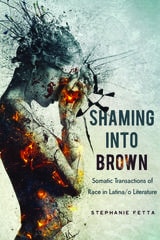
Shaming into Brown
Somatic Transactions of Race in Latina/o LiteratureStephanie Fetta
The Ohio State University Press, 2018
In Shaming into Brown: Somatic Transactions of Race in Latina/o Literature, Stephanie Fetta asserts that our bodies are fundamental to how we live and how we make meaning. Anchored by two psychoanalytic theories, bioenergetic analysis developed by Alexander Lowen and affect theory put forth by Silvan Tomkins, Fetta examines Latinx fiction to draw attention to the cultural role of the intelligent, emotional, and communicative body—the soma—in relation to shame. She argues that we bring the soma—the physical, emotive, and social register of our subjectivity—to the text as we do to our lives,proposing that the power of racialization operates at the level of somatic expression and reception through habituated, socially cued behaviors that are not readily subject to intentional control.
Fetta examines shame beyond individual experiences, looking at literary renderings of the cultural practice of racial shaming that are deeply embedded into our laws, hiring practices, marketing strategies, and more. Grounding her analysis in the works of Gloria Anzaldúa and Cherríe Moraga, Shaming into Brown focuses on exposing the underpinnings of racialized shame and does so through analyzing “scenes of racialization” in prominent works by authors such as Junot Díaz, Sandra Cisneros, and Oscar Zeta Acosta.
Shaping Words to Fit the Soul
The Southern Ritual Grounds of Afro-ModernismJürgen E. Grandt
The Ohio State University Press, 2009
Signifying Without Specifying
Racial Discourse in the Age of ObamaLi, Stephanie
Rutgers University Press, 2011
On the campaign trail, Barack Obama faced a difficult task—rallying African American voters while resisting his opponents’ attempts to frame him as “too black” to govern the nation as a whole. Obama’s solution was to employ what Toni Morrison calls “race-specific, race-free language,” avoiding open discussions of racial issues while using terms and references that carried a specific cultural resonance for African American voters.
Stephanie Li argues that American politicians and writers are using a new kind of language to speak about race. Challenging the notion that we have moved into a “post-racial” era, she suggests that we are in an uneasy moment where American public discourse demands that race be seen, but not heard. Analyzing contemporary political speech with nuanced readings of works by such authors as Toni Morrison, Jhumpa Lahiri, and Colson Whitehead, Li investigates how Americans of color have negotiated these tensions, inventing new ways to signal racial affiliations without violating taboos against open discussions of race.
Signs and Cities
Black Literary PostmodernismMadhu Dubey
University of Chicago Press, 2003
Dubey shows how black novelists from the last three decades have reconsidered the modern urban legacy and thus articulated a distinctly African-American strain of postmodernism. She argues that novelists such as Octavia Butler, Samuel Delany, Toni Morrison, Gloria Naylor, Ishmael Reed, Sapphire, and John Edgar Wideman probe the disillusionment of urban modernity through repeated recourse to tropes of the book and scenes of reading and writing. Ultimately, she demonstrates that these writers view the book with profound ambivalence, construing it as an urban medium that cannot recapture the face-to-face communities assumed by oral and folk forms of expression.
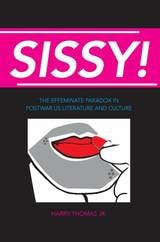
Sissy!
The Effeminate Paradox in Postwar US Literature and CultureHarry Thomas Jr.
University of Alabama Press, 2017
Sissy!: The Effeminate Paradox in Postwar US Literature and Culture is a fascinating work of cultural criticism that focuses on the ways men and boys deemed to be feminine have been—and continue to be—condemned for their personalities and behavior. Critic Harry Thomas Jr. does not dismiss this approach, but rather identifies it as merely one side of a coin. On the other side, he asserts, the opposite exists: an American artistic tradition that celebrates and affirms effeminate masculinity.
The author argues that effeminate men and boys are generally portrayed using the grotesque, an artistic mode concerned with the depictions of hybrid bodies. Thomas argues that the often grotesque imagery used to depict effeminate men evokes a complicated array of emotions, a mix of revulsion and fascination that cannot be completely separated from one another.
Thomas looks to the sissies in the 1940s novels of Truman Capote and Carson McCullers; the truth-telling flaming princesses of James Baldwin’s Giovanni’s Room; the superstardom of pop culture icon Liberace; the prophetic queens of Tony Kushner’s Angels in America; and many others to demonstrate how effeminate men have often been adored because they are seen as the promise of a different world, one free from the bounds of heteronormativity.
Sissy! offers an unprecedented and counterintuitive overview of cultural and artistic attitudes toward male effeminacy in post–World War II America and provides a unique and contemporary reinterpretation of the “sissy” figure in modern art and literature.
Situation Critical
Critique, Theory, and Early American StudiesMax Cavitch and Brian Connolly, editors
Duke University Press, 2024
Contributors. Max Cavitch, Brian Connolly, Matthew Crow, John J. Garcia, Christopher Looby, Michael Meranze, Mark J. Miller, Justine S. Murison, Britt Rusert, Ana Schwartz, Joan W. Scott, Jordan Alexander Stein

Sixteen Modern American Authors
A Survey of Research and CriticismJackson R. Bryer, ed.
Duke University Press, 1973
Sixteen Modern American Authors
A Survey of Research and Criticism since 1972Jackson R. Bryer, ed.
Duke University Press, 1989
“Students of modern American literature have for some years turned to Fifteen Modern American Authors (1969) as an indispensable guide to significant scholarship and criticism about twentieth-century American writers. In its new form—Sixteenth Modern American Authors—it will continue to be indispensable. If it is not a desk-book for all Americanists, it is a book to be kept in the forefront of the bibliographical compartment of their brains.”—American Studies
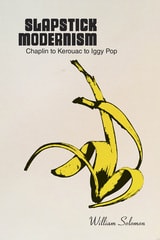
Slapstick Modernism
Chaplin to Kerouac to Iggy PopWilliam Solomon
University of Illinois Press, 2018
William Solomon charts the origins and evolution of what he calls slapstick modernism--a merging of artistic experimentation with the socially disruptive lunacy made by the likes of Charlie Chaplin. Romping through texts, films, and theory, Solomon embarks on an intellectual odyssey from the high modernism of Dos Passos and Williams to the late modernism of the Beats and Burroughs before a head-on crash into the raw power of punk rock. Throughout, he shows the links between the experimental writers and silent screen performers of the early century, and explores the potent cultural undertaking that drew inspiration from anarchical comedy after World War II.
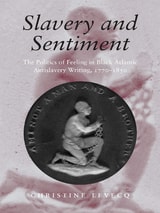
Slavery and Sentiment
The Politics of Feeling in Black Atlantic Antislavery Writing, 1770-1850Christine Levecq
University of New Hampshire Press, 2008
Levecq examines liberalism and republicanism, the main Anglo-American political ideologies of the period, in the antislavery texts of a range of African-American and Afro-British authors. Disclosing the political content hitherto unexamined in this kind of writing, she shows that while the overall story is one of increased liberalization of ideology on both sides of the Atlantic, the republican ideal persisted, particularly among black authors with transatlantic connections.
Demonstrating that such writers as Phillis Wheatley, Ignatius Sancho, Olaudah Equiano, Frederick Douglass, and Mary Prince were men and women of their times, Levecq provides valuable new insight into the ideological world of black Atlantic writers and puts them, for the first time, on modernity’s political map.
Slavery in American Children's Literature, 1790-2010
Paula T. Connolly
University of Iowa Press, 2013
Soft Canons
American Women WritersKaren L. Kilcup
University of Iowa Press, 1999
Soldiers Once and Still
Ernest Hemingway, James Salter, and Tim O'BrienAlex Vernon
University of Iowa Press, 2007
Hemingway, Salter, and O’Brien form the core of Soldiers Once and Still because each represents a different warring generation of twentieth-century America: World War I with Hemingway, World War II and Korea with Salter, and Vietnam with O’Brien. Each author also represents a different literary voice of the twentieth century, from modern to mid-century to postmodern, and each presents a different battlefield experience: Hemingway as noncombatant, Salter as air force fighter pilot, and O’Brien as army grunt.
War’s pervasive influence on the individual means that, for veterans-turned-writers like Hemingway, Salter, and O’Brien, the war experience infiltrates their entire body of writing—their works can be seen not only as war literature but also as veterans’ literature. As such, their entire postwar oeuvre, regardless of whether an individual work explicitly addresses the war or the military, is open to Vernon’s exploration of war, society, gender, and literary history.
Vernon’s own experiences as a soldier, a veteran, a writer, and a critic inform this enlightening critique of American literature, offering students and scholars of American literature and war studies an invaluable tool for understanding war’s effects on the veteran writer and his society.

Some Catholic Writers
Ralph McInerny
St. Augustine's Press, 2007
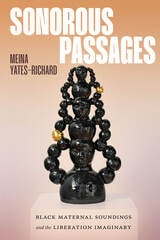
Sonorous Passages
Black Maternal Soundings and the Liberation ImaginaryMeina Yates-Richard
Duke University Press, 2026
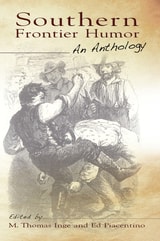
Southern Frontier Humor
An AnthologyEdited by M. Thomas Inge & Ed Piacentino
University of Missouri Press, 2010
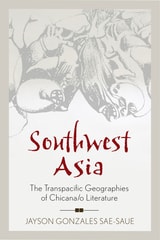
Southwest Asia
The Transpacific Geographies of Chicana/o LiteratureJayson Gonzales Sae-Saue
Rutgers University Press, 2016
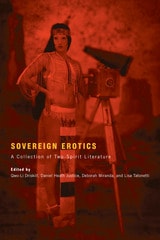
Sovereign Erotics
A Collection of Two-Spirit LiteratureEdited by Qwo-Li Driskill, Daniel Heath Justice, Deborah Miranda, and Lisa Tatonetti
University of Arizona Press, 2011
This landmark collection strives to reflect the complexity of identities within Native Gay, Lesbian, Bisexual, Transgender, Queer, and Two-Spirit (GLBTQ2) communities. Gathering together the work of established writers and talented new voices, this anthology spans genres (fiction, nonfiction, poetry, and essay) and themes (memory, history, sexuality, indigeneity, friendship, family, love, and loss) and represents a watershed moment in Native American and Indigenous literatures, Queer studies, and the intersections between the two.
Collaboratively, the pieces in Sovereign Erotics demonstrate not only the radical diversity among the voices of today’s Indigenous GLBTQ2 writers but also the beauty, strength, and resilience of Indigenous GLBTQ2 people in the twenty-first century.
Contributors: Indira Allegra, Louise Esme Cruz, Paula Gunn Allen, Qwo-Li Driskill, Laura Furlan, Janice Gould, Carrie House, Daniel Heath Justice, Maurice Kenny, Michael Koby, M. Carmen Lane, Jaynie Lara, Chip Livingston, Luna Maia, Janet McAdams, Deborah Miranda, Daniel David Moses, D. M. O’Brien, Malea Powell, Cheryl Savageau, Kim Shuck, Sarah Tsigeyu Sharp, James Thomas Stevens, Dan Taulapapa McMullin, William Raymond Taylor, Joel Waters, and Craig Womack
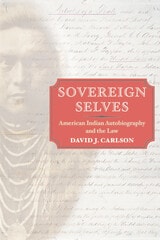
Sovereign Selves
American Indian Autobiography and the LawDavid J. Carlson
University of Illinois Press, 2005
Carlson argues that by drawing on the conventions of early colonial treaty-making, nineteenth- and early twentieth-century Indian autobiographers sought to adapt and redefine the terms of Indian law as a way to assert specific property-based and civil rights. Focusing primarily on the autobiographical careers of two major writers (William Apess and Charles Eastman), Sovereign Selves traces the way that their sustained engagement with colonial legal institutions gradually enabled them to produce a new rhetoric of "Indianness."
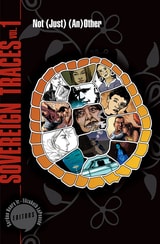
Sovereign Traces, Volume 1
Not (Just) (An)OtherGordon D. Henry Jr.
Michigan State University Press, 2018
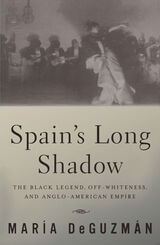
Spain's Long Shadow
The Black Legend, Off-Whiteness, and Anglo-American EmpireMaría DeGuzmán
University of Minnesota Press, 2005
England and the Netherlands, Spain’s imperial rivals of the sixteenth and seventeenth centuries, imagined Spain as a land of cruel and degenerate barbarians of la leyenda negra (the Black Legend), in league with the powers of “blackest darkness” and driven by “dark motives.” In Spain’s Long Shadow, María DeGuzmán explores how this convenient demonization made its way into American culture—and proved essential to the construction of whiteness. DeGuzmán’s work reaches from the late eighteenth century—in the wake of the American Revolution—to the present. Surveying a broad range of texts and images, from Poe’s “William Wilson” and John Singer Sargent’s El Jaleo to Richard Wright’s Pagan Spain and Kathy Acker’s Don Quixote, Spain’s Long Shadow shows how the creation of Anglo-American ethnicity as specifically American has depended on the casting of Spain as a colonial alter ego. The symbolic power of Spain in the American imagination, DeGuzmán argues, is not just a legacy of that nation’s colonial presence in the Americas; it lives on as well in the “blackness” of Spain and Spaniards—in the assigning of people of Spanish origin to an “off-white” racial category that reserves the designation of white for Anglo-Americans. By demonstrating how the Anglo-American imagination needs Spain and Spaniards as figures of attraction and repulsion, DeGuzmán makes a compelling and illuminating case for treating Spain as the imperial alter ego of the United States. Cross-cultural and interdisciplinary, ambitious in its chronological sweep, and elegant in its interpretation of literary and visual works, DeGuzmán’s book leads us to a powerful new understanding of the nature—and history—of American ethnicity.
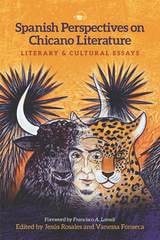
Spanish Perspectives on Chicano Literature
Literary and Cultural EssaysVanessa Fonseca and Jesús Rosales
The Ohio State University Press, 2017
For Chicanos this interest is intriguing, for they see Spain’s vision of the Chicano both with inviting enthusiasm and justifiable reservation—enthusiasm because this interest shows a humanistic concern in understanding their social issues (national identity, bilingualism, immigration, feminism, and so on) in relation to Spain’s own, and reservation because there still prevails an “open wound” from their historical connection with that country. In other words, a lingering Spanish colonial presence still exists in the Chicano psyche. These Spanish perspectives are important to consider as Chicano literature reflects on its place in twenty-first-century America and its transnational and global aspirations.
Spatial and Discursive Violence in the US Southwest
Rosaura Sánchez and Beatrice Pita
Duke University Press, 2020
Speaking for the Generations
Native Writers on WritingEdited by Simon J. Ortiz
University of Arizona Press, 1997
Of varied backgrounds, the writers represent Indian heritages and cultures from the Pacific Northwest to the northern plains, from Canada to Guatemala. They are poets, novelists, and playwrights. And although their backgrounds are different and their statements intensely personal, they share common themes of their relationship to the land, to their ancestors, and to future generations of their people. From Gloria Bird's powerful recounting of personal and family history to Esther Belin's vibrant tale of her urban Native homeland in Los Angeles, these writers reveal the importance of place and politics in their lives. Leslie Marmon Silko calls upon the ancient tradition of Native American storytelling and its role in connecting the people to the land. Roberta J. Hill and Elizabeth Woody ponder some of the absurdities of contemporary Native life, while Guatemalan Victor Montejo takes readers to the Mayan world, where a native culture had writing and books long before Europeans came.
Together these pieces offer an inspiring portrait of what it means to be a Native writer in the twentieth century. With passion and urgency, these writers are speaking for themselves, for their land, and for the generations.
Speaking for the People
Native Writing and the Question of Political FormMark Rifkin
Duke University Press, 2021
Spectral America
Phantoms and the National ImaginationEdited by Jeffrey Andrew Weinstock
University of Wisconsin Press, 2004
Spectral America asserts that ghosts, whether in oral tradition, literature, or such modern forms as cinema have always been constructions embedded in specific historical contexts and invoked for explicit purposes, often political in nature. The essays address the role of "spectral evidence" during the Salem witch trials, the Puritan belief in good spirits, the convergence of American Spiritualism and technological development in the nineteenth century, the use of the supernatural as a tool of political critique in twentieth-century magic realism, and the "ghosting" of persons living with AIDS. They also discuss ghostly themes in the work of Ambrose Bierce, Edith Wharton, Gloria Naylor, and Stephen King.
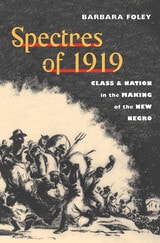
Spectres of 1919
Class and Nation in the Making of the New NegroBarbara Foley
University of Illinois Press, 2002
A look at the violent “Red Summer of 1919” and its intersection with the highly politicized New Negro movement and the Harlem Renaissance
With the New Negro movement and the Harlem Renaissance, the 1920s was a landmark decade in African American political and cultural history, characterized by an upsurge in racial awareness and artistic creativity. In Spectres of 1919 Barbara Foley traces the origins of this revolutionary era to the turbulent year 1919, identifying the events and trends in American society that spurred the black community to action and examining the forms that action took as it evolved.
Unlike prior studies of the Harlem Renaissance, which see 1919 as significant mostly because of the geographic migrations of blacks to the North, Spectres of 1919 looks at that year as the political crucible from which the radicalism of the 1920s emerged. Foley draws from a wealth of primary sources, taking a bold new approach to the origins of African American radicalism and adding nuance and complexity to the understanding of a fascinating and vibrant era.
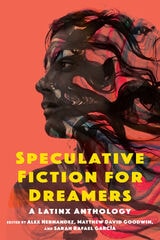
Speculative Fiction for Dreamers
A Latinx AnthologyEdited by Alex Hernandez, Matthew David Goodwin, and Sarah Rafael García with a Preface by Frederick Luis Aldama
The Ohio State University Press, 2021
Finalist, 2022 World Fantasy Awards
Finalist, 2022 Ignyte Awards
Finalist, 2022 Utopia Awards
In a tantalizing array of new works from some of the most exciting Latinx creators working in the speculative vein today, Speculative Fiction for Dreamers extends the project begun with a previous anthology, Latinx Rising (The Ohio State University Press, 2020), to showcase a new generation of writers. Spanning diverse forms, settings, perspectives, and styles, but unified by their drive to imagine new Latinx futures, these stories address the breadth of contemporary Latinx experiences and identities while exuberantly embracing the genre’s ability to entertain and surprise. With new work for new audiences in their teens and up, and especially for Latinx people navigating their identities in the ever-shifting, sometimes perilous, but always promising cultural landscape of the US, this book is for dreamers—and DREAMers—everywhere.
Contributors: Grisel Y. Acosta, Stephanie Adams-Santos, Frederick Luis Aldama, William Alexander, Nicholas Belardes, Louangie Bou-Montes, Lisa M. Bradley, Eliana Buenrostro, Diana Burbano, Pedro Cabiya, Steve Castro, Fernando de Peña, Scott Russell Duncan, Samy Figaredo, Tammy Melody Gomez, J. M. Guzman, Ernest Hogan, Pedro Iniguez, Ezzy G. Languzzi, Patrick Lugo, Roxanne Ocasio, Daniel Parada, Stephanie Nina Pitsirilos, Reyes Ramirez, Julia Rios, Sara Daniele Rivera, Roman Sanchez, Tabitha Sin, Alex Temblador, Rodrigo Vargas, Laura Villareal, Sabrina Vourvoulias, Karlo Yeager Rodriguez
Spilling the Beans in Chicanolandia
Conversations with Writers and ArtistsBy Frederick Luis Aldama
University of Texas Press, 2006
Since the 1980s, a prolific "second wave" of Chicano/a writers and artists has tremendously expanded the range of genres and subject matter in Chicano/a literature and art. Building on the pioneering work of their predecessors, whose artistic creations were often tied to political activism and the civil rights struggle, today's Chicano/a writers and artists feel free to focus as much on the aesthetic quality of their work as on its social content. They use novels, short stories, poetry, drama, documentary films, and comic books to shape the raw materials of life into art objects that cause us to participate empathetically in an increasingly complex Chicano/a identity and experience.
This book presents far-ranging interviews with twenty-one "second wave" Chicano/a poets, fiction writers, dramatists, documentary filmmakers, and playwrights. Some are mainstream, widely recognized creators, while others work from the margins because of their sexual orientations or their controversial positions. Frederick Luis Aldama draws out the artists and authors on both the aesthetic and the sociopolitical concerns that animate their work. Their conversations delve into such areas as how the artists' or writers' life experiences have molded their work, why they choose to work in certain genres and how they have transformed them, what it means to be Chicano/a in today's pluralistic society, and how Chicano/a identity influences and is influenced by contact with ethnic and racial identities from around the world.
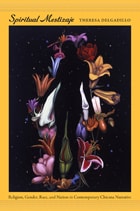
Spiritual Mestizaje
Religion, Gender, Race, and Nation in Contemporary Chicana NarrativeTheresa Delgadillo
Duke University Press, 2011
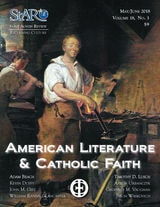
St. Austin Review, American Literature & Catholic Faith, May/June 2018, Vol. 18, No. 3
Joseph Pearce
St. Augustine's Press, 2018
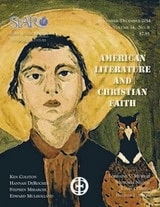
St. Austin Review, American Literature and Christian Faith, November/December 2014, Vol. 14, No. 6
Joseph Pearce
St. Augustine's Press, 2014
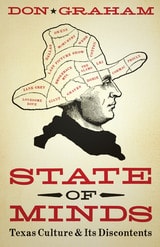
State of Minds
Texas Culture and Its DiscontentsBy Don Graham
University of Texas Press, 2011
John Steinbeck once famously wrote that "Texas is a state of mind." For those who know it well, however, the Lone Star State is more than one mind-set, more than a collection of clichés, more than a static stereotype. There are minds in Texas, Don Graham asserts, and some of the most important are the writers and filmmakers whose words and images have helped define the state to the nation, the world, and the people of Texas themselves. For many years, Graham has been critiquing Texas writers and films in the pages of Texas Monthly and other publications. In State of Minds, he brings together and updates essays he published between 1999 and 2009 to paint a unique, critical picture of Texas culture.
In a strong personal voice—wry, humorous, and ironic—Graham offers his take on Texas literary giants ranging from J. Frank Dobie to Larry McMurtry and Cormac McCarthy and on films such as The Alamo, The Last Picture Show, and Brokeback Mountain. He locates the works he discusses in relation to time and place, showing how they sprang (or not) from the soil of Texas and thereby helped to define Texas culture for generations of readers and viewers—including his own younger self growing up on a farm in Collin County. Never shying from controversy and never dull, Graham's essays in State of Minds demolish the notion that "Texas culture" is an oxymoron.