Results by title
112 books match the query 'Americans' and 5 start with s
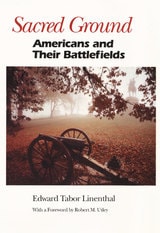
Sacred Ground
AMERICANS AND THEIR BATTLEFIELDSEdward Tabor Linenthal
University of Illinois Press, 1991
famous battlefields through patriotic rhetoric, monument building, physical
preservation, and battle reenactment. But each site is also a place where
different groups of Americans come to compete for ownership of cherished
national stories and to argue about the meaning of war, the importance
of martial sacrifice, and the significance of preserving the nation's
patriotic landscape.
From the anniversary speeches at Lexington and Concord that shaped the
image of the minuteman to Alamo Day speeches invoking the Texas "freedom
fighters" of 1836 in support of the contras in Nicaragua; from passionate
arguments over the placement of Confederate monuments at Gettysburg to
confrontations between militant American Indian Movement and "Custer
loyalists" during the Little Bighorn centennial in 1976; from the
treatment of the USS Arizona at Pearl Harbor to continuing attempts
to maintain the purity of these places in the face of commercialization---Sacred
Ground details the ongoing struggles to define, control, and subvert
patriotic faith as expressed at these ceremonial sites.

Secular Missionaries
Americans and African Development in the 1960sLarry Grubbs
University of Massachusetts Press, 2010

Seduction of the Minotaur
Anaïs Nin
Ohio University Press, 2014
Seduction of the Minotaur is the fifth and final volume of Anaïs Nin’s continuous novel known as Cities of the Interior. First published by Swallow Press in 1961, the story follows the travels of the protagonist Lillian through the tropics to a Mexican city loosely based on Acapulco, which Nin herself visited in 1947 and described in the fifth volume of her Diary. As Lillian seeks the warmth and sensuality of this lush and intriguing city, she travels inward as well, learning that to free herself she must free the “monster” that has been confined in a labyrinth of her subconscious.
This new Swallow Press edition includes an introduction by Anita Jarczok, author of Inventing Anaïs Nin: Celebrity Authorship and the Creation of an Icon.
Swallow Press publishes all five volumes that make up Cities of the Interior: Ladders to Fire, Children of the Albatross, The Four-Chambered Heart, A Spy in the House of Love, and Seduction of the Minotaur.
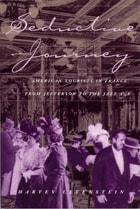
Seductive Journey
American Tourists in France from Jefferson to the Jazz AgeHarvey Levenstein
University of Chicago Press, 2000
Levenstein begins in 1786, when Thomas Jefferson instructed young upper-class American men to travel overseas for self-improvement rather than debauchery. Inspired by these sentiments, many men crossed the Atlantic to develop "taste" and refinement. However, the introduction of the transatlantic steamship in the mid-nineteenth century opened France to people further down the class ladder. As the upper class distanced themselves from the lower-class travelers, tourism in search of culture gave way to the tourism of "conspicuous leisure," sex, and sensuality. Cultural tourism became identified with social-climbing upper-middle-class women. In the 1920s, prohibition in America and a new middle class intent on "having fun" helped make drunken sprees in Paris more enticing than trudging through the Louvre. Bitter outbursts of French anti-Americanism failed to jolt the American ideal of a sensual, happy-go-lucky France, full of joie de vivre. It remained Americans' favorite overseas destination.
From Fragonard to foie gras, the delicious details of this story of how American visitors to France responded to changing notions of leisure and blazed the trail for modern mass tourism makes for delightful, thought-provoking reading.
"...a thoroughly readable and highly likable book."—Deirdre Blair, New York Times Book Review

Setting the Lawn on Fire
A NovelMack Friedman
University of Wisconsin Press, 2007
Setting the Lawn on Fire, the first novel by critically acclaimed writer Mack Friedman, trails its narrator through his obsessions with sex, drugs, art, and poison. Ivan, a young Jewish boy from Milwaukee, embarks on a journey of sexual discovery that leads him from Wisconsin to Alaska, Philadelphia, and Mexico through stints as a fishery worker, artist, and finally a hustler who learns to provide the blank canvas for other people’s dreams. The result is a new kind of coming-of-age story that sees passion from every angle because its protagonist is every kind of lover: the seducer and the seduced, the pornographer and the model, the hunter and the prey, the trick and the john. In the end, Setting the Lawn on Fire is also something rare—a fully realized, contemporary romance that illuminates the power of desire and the rituals of the body, the brain, and the heart that attempt to contain our passions.