117 books match the query 'Asian Americans' and 5 start with s
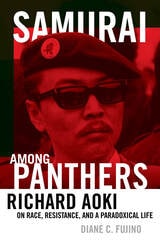
cover of Samurai among Panthers: Richard Aoki on Race, Resistance, and a Paradoxical Life

Samurai among Panthers

Richard Aoki on Race, Resistance, and a Paradoxical Life

Diane C. Fujino

University of Minnesota Press, 2012

An iconic figure of the Asian American movement, Richard Aoki (1938–2009) was also, as the most prominent non-Black member of the Black Panther Party, a key architect of Afro-Asian solidarity in the 1960s and ’70s. His life story exposes the personal side of political activism as it illuminates the history of ethnic nationalism and radical internationalism in America.

A reflection of this interconnection, Samurai among Panthers weaves together two narratives: Aoki’s dramatic first-person chronicle and an interpretive history by a leading scholar of the Asian American movement, Diane C. Fujino. Aoki’s candid account of himself takes us from his early years in Japanese American internment camps to his political education on the streets of Oakland, to his emergence in the Black Panther Party. As his story unfolds, we see how his parents’ separation inside the camps and his father’s illegal activities shaped the development of Aoki’s politics. Fujino situates his life within the context of twentieth-century history—World War II, the Cold War, and the protests of the 1960s. She demonstrates how activism is both an accidental and an intentional endeavor and how a militant activist practice can also promote participatory democracy and social service.

The result of these parallel voices and analysis in Samurai among Panthers is a complex—and sometimes contradictory—portrait of a singularly extraordinary activist and an expansion and deepening of our understanding of the history he lived.
[more]
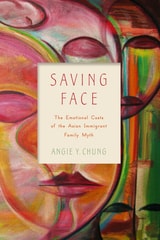
cover of Saving Face: The Emotional Costs of the Asian Immigrant Family Myth

Saving Face

The Emotional Costs of the Asian Immigrant Family Myth

Angie Y. Chung

Rutgers University Press, 2016
Tiger Mom. Asian patriarchy. Model minority children. Generation gap. The many images used to describe the prototypical Asian family have given rise to two versions of the Asian immigrant family myth. The first celebrates Asian families for upholding the traditional heteronormative ideal of the “normal (white) American family” based on a hard-working male breadwinner and a devoted wife and mother who raises obedient children. The other demonizes Asian families around these very same cultural values by highlighting the dangers of excessive parenting, oppressive hierarchies, and emotionless pragmatism in Asian cultures.
 
Saving Face cuts through these myths, offering a more nuanced portrait of Asian immigrant families in a changing world as recalled by the people who lived them first-hand: the grown children of Chinese and Korean immigrants. Drawing on extensive interviews, sociologist Angie Y. Chung examines how these second-generation children negotiate the complex and conflicted feelings they have toward their family responsibilities and upbringing. Although they know little about their parents’ lives, she reveals how Korean and Chinese Americans assemble fragments of their childhood memories, kinship narratives, and racial myths to make sense of their family experiences. However, Chung also finds that these adaptive strategies come at a considerable social and psychological cost and do less to reconcile the social stresses that minority immigrant families endure today.
 
Saving Face not only gives readers a new appreciation for the often painful generation gap between immigrants and their children, it also reveals the love, empathy, and communication strategies families use to help bridge those rifts. 
 
[more]
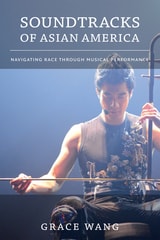
cover of Soundtracks of Asian America: Navigating Race through Musical Performance

Soundtracks of Asian America

Navigating Race through Musical Performance

Grace Wang

Duke University Press, 2015

In Soundtracks of Asian America, Grace Wang explores how Asian Americans use music to construct narratives of self, race, class, and belonging in national and transnational spaces. She highlights how they navigate racialization in different genres by considering the experiences of Asians and Asian Americans in Western classical music, U.S. popular music, and Mandopop (Mandarin-language popular music). Her study encompasses the perceptions and motivations of middle-class Chinese and Korean immigrant parents intensely involved in their children's classical music training, and of Asian and Asian American classical musicians whose prominence in their chosen profession is celebrated by some and undermined by others. Wang interviews young Asian American singer-songwriters who use YouTube to contest the limitations of a racialized U.S. media landscape, and she investigates the transnational modes of belonging forged by Asian American pop stars pursuing recording contracts and fame in East Asia. Foregrounding musical spaces where Asian Americans are particularly visible, Wang examines how race matters and operates in the practices and institutions of music making.
[more]
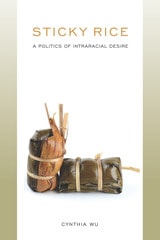
cover of Sticky Rice: A Politics of Intraracial Desire

Sticky Rice

A Politics of Intraracial Desire

Cynthia Wu

Temple University Press, 2018

Cynthia Wu’s provocative Sticky Rice examines representations of same-sex desires and intraracial intimacies in some of the most widely read pieces of Asian American literature. Analyzing canonical works such as John Okada’s No-No Boy, Monique Truong’s The Book of Salt, H. T. Tsiang’s And China Has Hands, and Lois-Ann Yamanaka’s Blu’s Hanging, as well as Philip Kan Gotanda’s play, Yankee Dawg You Die, Wu considers how male relationships in these texts blur the boundaries among the homosocial, the homoerotic, and the homosexual in ways that lie beyond our concepts of modern gay identity.

The “sticky rice” of Wu’s title is a term used in gay Asian American culture to describe Asian American men who desire other Asian American men. The bonds between men addressed in Sticky Rice show how the thoughts and actions founded by real-life intraracially desiring Asian-raced men can inform how we read the refusal of multiple normativities in Asian Americanist discourse. Wu lays bare the trope of male same-sex desires that grapple with how Asian America’s internal divides can be resolved in order to resist assimilation.
[more]
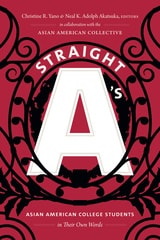
cover of Straight A's: Asian American College Students in Their Own Words

Straight A's

Asian American College Students in Their Own Words

Christine R. Yano and Neal K. Adolph Akatsuka, editors

Duke University Press, 2018

The American Dream of success for many Asian Americans includes the highest levels of education. But what does it mean to live that success? In Straight A’s Asian American students at Harvard reflect on their common experiences with discrimination, immigrant communities, their relationships to their Asian heritage, and their place in the university. They also explore the difficulties of living up to family expectations and the real-world effects of the "model minority" stereotype. While many of the issues they face are familiar to a wide swath of college students, their examinations of race, ethnicity, gender and sexuality, and culture directly speak to the Asian American experience in U.S. higher education. Unique and revealing, intimate and unreserved, Straight A’s furthers the conversation about immigrant histories, racial and ethnic stereotypes, and multiculturalism in contemporary American society.
[more]