70 books match the query 'Authority' and 8 start with s
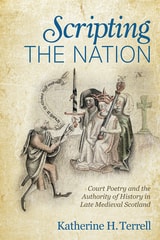
cover of Scripting the Nation: Court Poetry and the Authority of History in Late Medieval Scotland

Scripting the Nation

Court Poetry and the Authority of History in Late Medieval Scotland

Katherine H. Terrell

The Ohio State University Press, 2021
Scripting the Nation is the first book to set the poets of Scottish King James IV’s court—William Dunbar, Walter Kennedy, and Gavin Douglas—in an extended dialogue with Latin and vernacular traditions of historiography. In the fourteenth and fifteenth centuries, Latin chroniclers such as John of Fordun and Walter Bower argued for their nation’s status, using genealogically based myths of origin that linked Scotland to ancient centers of power. As vernacular histories grew more Anglophobic and quarrels rooted in the past continued to influence Anglo-Scottish diplomacy, Dunbar, Kennedy, and Douglas took up a national discourse that responded to English myths and an English poetic tradition exemplified by Geoffrey Chaucer. Terrell’s elegant study examines how these Scottish writers marked out a distinct realm of Scottish cultural and poetic achievement, appropriating and subverting English literary models in ways that reveal the interplay between literary and historical authority in the scripting of nationhood.
[more]
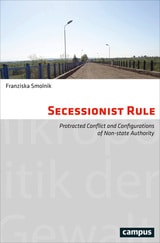
cover of Secessionist Rule: Protracted Conflict and Configurations of Non-State Authority

Secessionist Rule

Protracted Conflict and Configurations of Non-State Authority

Franziska Smolnik

Campus Verlag, 2016

In this timely investigation of secessionist entities in post-Soviet territories, Smolnik explores how political authority is organized, produced, and reproduced in conditions of violent conflict. Drawing on case studies of unrecognized or only partially recognized states in the South Caucasus, she shows that so-called low-level violent conflicts may significantly influence the form and functioning of political rule and thereby have a considerable impact on the empowerment and disempowerment of local actors. Offering fresh insight into the connections between violence and political power, Secessionist Rule not only contributes to the political sociology of violent conflict, but also adds to our knowledge of the largely understudied internal dynamics of de facto states.
[more]
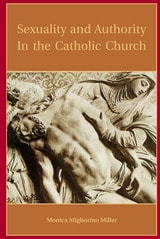
cover of Sexuality and Authority in the Catholic Church

Sexuality and Authority in the Catholic Church

Monica Migliorino Miller

University of Scranton Press, 1995

Monica Migliorino Miller articulates a theology that breaks open the essence of ecclesial authority.  Authority, if it is authority at all, derives from and exists for authentic Christian worship, namely, the Holy Eucharist.
 
If authority is derived from Eucharistic worship, then authority is fundamentally the authority of a covenant.  This book shows that this covenant is spoken according to a primordial sexual language rooted in creation itself.

[more]
cover of Shakespeare's Freedom

Shakespeare's Freedom

Stephen Greenblatt

University of Chicago Press, 2010

Shakespeare lived in a world of absolutes—of claims for the absolute authority of scripture, monarch, and God, and the authority of fathers over wives and children, the old over the young, and the gentle over the baseborn. With the elegance and verve for which he is well known, Stephen Greenblatt, author of the best-selling Will in the World, shows that Shakespeare was strikingly averse to such absolutes and constantly probed the possibility of freedom from them. Again and again, Shakespeare confounds the designs and pretensions of kings, generals, and churchmen. His aversion to absolutes even leads him to probe the exalted and seemingly limitless passions of his lovers.

Greenblatt explores this rich theme by addressing four of Shakespeare’s preoccupations across all the genres in which he worked. He first considers the idea of beauty in Shakespeare’s works, specifically his challenge to the cult of featureless perfection and his interest in distinguishing marks. He then turns to Shakespeare’s interest in murderous hatred, most famously embodied in Shylock but seen also in the character Bernardine in Measure for Measure. Next Greenblatt considers the idea of Shakespearean authority—that is, Shakespeare’s deep sense of the ethical ambiguity of power, including his own. Ultimately, Greenblatt takes up Shakespearean autonomy, in particular the freedom of artists, guided by distinctive forms of perception, to live by their own laws and to claim that their creations are singularly unconstrained.

A book that could only have been written by Stephen Greenblatt, Shakespeare’s Freedom is a wholly original and eloquent meditation by the most acclaimed and influential Shakespearean of our time.
[more]
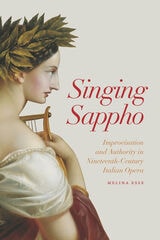
cover of Singing Sappho: Improvisation and Authority in Nineteenth-Century Italian Opera

Singing Sappho

Improvisation and Authority in Nineteenth-Century Italian Opera

Melina Esse

University of Chicago Press, 2021
From the theatrical stage to the literary salon, the figure of Sappho—the ancient poet and inspiring icon of feminine creativity—played a major role in the intertwining histories of improvisation, text, and performance throughout the nineteenth century. Exploring the connections between operatic and poetic improvisation in Italy and beyond, Singing Sappho combines earwitness accounts of famous female improviser-virtuosi with erudite analysis of musical and literary practices. Melina Esse demonstrates that performance played a much larger role in conceptions of musical authorship than previously recognized, arguing that discourses of spontaneity—specifically those surrounding the improvvisatrice, or female poetic improviser—were paradoxically used to carve out a new authority for opera composers just as improvisation itself was falling into decline. With this novel and nuanced book, Esse persuasively reclaims the agency of performers and their crucial role in constituting Italian opera as a genre in the nineteenth century.
[more]
cover of Sovereignty, Inc.: Three Inquiries in Politics and Enjoyment

Sovereignty, Inc.

Three Inquiries in Politics and Enjoyment

William Mazzarella, Eric L. Santner, and Aaron Schuster

University of Chicago Press, 2020

What does the name Trump stand for? If branding now rules over the production of value, as the coauthors of Sovereignty, Inc. argue, then Trump assumes the status of a master brand whose primary activity is the compulsive work of self-branding—such is the new sovereignty business in which, whether one belongs to his base or not, we are all “incorporated.”
 
Drawing on anthropology, political theory, philosophy, psychoanalysis, and theater, William Mazzarella, Eric L. Santner, and Aaron Schuster show how politics in the age of Trump functions by mobilizing a contradictory and convoluted enjoyment, an explosive mixture of drives and fantasies that eludes existing portraits of our era. The current political moment turns out to be not so much exceptional as exceptionally revealing of the constitutive tension between enjoyment and economy that has always been a key component of the social order. Santner analyzes the collective dream-work that sustains a new sort of authoritarian charisma or mana, a mana-facturing process that keeps us riveted to an excessively carnal incorporation of sovereignty. Mazzarella examines the contemporary merger of consumer brand and political brand and the cross-contamination of politics and economics, warning against all too easy laments about the corruption of politics by marketing. Schuster, focusing on the extreme theatricality and self-satirical comedy of the present, shows how authority reasserts itself at the very moment of distrust and disillusionment in the system, profiting off its supposed decline. A dazzling diagnostic of our present, Sovereignty, Inc., forces us to come to terms with our complicity in Trump’s political presence and will immediately take its place in discussions of contemporary politics.

 
 
[more]
cover of Speaking of Abortion: Television and Authority in the Lives of Women

Speaking of Abortion

Television and Authority in the Lives of Women

Andrea L. Press and Elizabeth R. Cole

University of Chicago Press, 1999
Over four years, Andrea Press and Elizabeth Cole watched television with women, visiting city houses, suburban subdivisions, modern condominiums, and public housing projects. They found that television depicts abortion as a problem for the poor and the working classes, and that viewers invariably referred to and abided by class when discussing abortion. Speaking of Abortion is an invaluable resource that allows us to hear how ordinary women discuss one of America's most volatile issues.
[more]
cover of Subversive Archaism: Troubling Traditionalists and the Politics of National Heritage

Subversive Archaism

Troubling Traditionalists and the Politics of National Heritage

Michael Herzfeld

Duke University Press, 2021

In Subversive Archaism, Michael Herzfeld explores how individuals and communities living at the margins of the modern nation-state use nationalist discourses of tradition to challenge state authority under both democratic and authoritarian governments. Through close attention to the claims and experiences of mountain shepherds in Greece and urban slum dwellers in Thailand, Herzfeld shows how these subversive archaists draw on national histories and past polities to claim legitimacy for their defiance of bureaucratic authority. Although vilified by government authorities as remote, primitive, or dangerous—often as preemptive justification for violent repression—these groups are not revolutionaries and do not reject national identity, but they do question the equation of state and nation. Herzfeld explores the political strengths and vulnerabilities of their deployment of heritage and the weaknesses they expose in the bureaucratic and ethnonational state in an era of accelerated globalization.
[more]