Results by title
428 books match the query 'Authorship' and 32 start with s
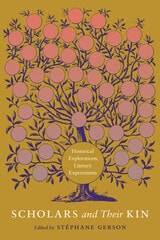
Scholars and Their Kin
Historical Explorations, Literary ExperimentsEdited by Stéphane Gerson
University of Chicago Press, 2025
Historians have often been discouraged from writing about their relatives, subjects who are deemed too close for objective analysis. But new work by scholars interested in their own families raises fascinating questions about subjectivity—and how historians might put it to use. It also invites historians to abandon traditional aspects of academic writing and draw, instead, on literary forms more equipped to highlight the relationships between scholar and material, feeling and reason.
Scholars and Their Kin embraces diverse approaches to such writing, bringing into the open the personal, professional, and historiographic complexities that ensue when scholars write intimate yet self-aware histories about their families. The first book devoted to this genre, which editor Stéphane Gerson terms “personal family history,” this anthology features ten essays and an afterword by scholars working in this vein. The contributors—varied in their disciplines, themes, and nationalities—reflect on their motivations and methodological choices, the politics of family history, and the institutional constraints they have sometimes faced. Making full use of the creative possibilities of voice and form, they expand the literary ambitions of personal family history, provide readers with narrative models, and address questions of shame, responsibility, love, gendered and racial violence, family archives, as well as the tall tales, myths, misrepresentations, memories, and omissions that suffuse family lives. Scholars and Their Kin will interest historians, scholars in other disciplines, and readers interested in family histories that open broader worlds.
Scribal Authorship and the Writing of History in Medieval England
Matthew Fisher
The Ohio State University Press, 2012
Self+Culture+Writing
Autoethnography for/as Writing StudiesRebecca Jackson
Utah State University Press, 2021
Interest in autoethnography is growing among writing studies scholars, who see clear connections to well-known disciplinary conversations about personal narrative, as well as to the narrative turn in general and social justice efforts in particular. Contributions by authors from diverse backgrounds and institutional settings are organized into three parts: a section of writing studies autoethnographies, a section on how to teach autoethnography, and a section on how ideas about autoethnography in writing studies are evolving.
Self+Culture+Writing discusses the use of autoethnography in the writing classroom as both a research method and a legitimate way of knowing, providing examples of the genre and theoretical discussions that highlight the usefulness and limitations of these methods.
Contributors: Leslie Akst, Melissa Atienza, Ross Atkinson, Alison Cardinal, Sue Doe, Will Duffy, John Gagnon, Elena Garcia, Guadalupe Garcia, Caleb Gonzalez, Lilly Halboth, Rebecca Hallman Martini, Kirsten Higgins, Shereen Inayatulla, Aliyah Jones, Autumn Laws, Soyeon Lee, Louis M. Maraj, Kira Marshall-McKelvey, Jennifer Owen, Tiffany Rainey, Marcie Sims, Amanda Sladek, Trixie Smith, Anthony Warnke
Shakespeare Only
Jeffrey Knapp
University of Chicago Press, 2009

Shakespeare and Baseball
Reflections of a Shakespeare Professor and Detroit Tigers FanSamuel Crowl
Ohio University Press, 2024
Shelf Life
Essays, Memoirs, and an InterviewThom Gunn
University of Michigan Press, 1993
Gunn’s criticism communicates his own enthusiasm for poetry. He tries to show his readers how to get a first foothold into the work of some of his favorite poets, whether Wyatt or Whitman, Mina Loy or Robert Creeley.
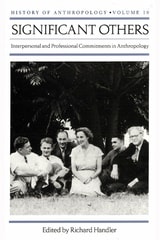
Significant Others
Interpersonal and Professional Commitments in AnthropologyEdited by Richard Handler
University of Wisconsin Press, 2004
Singular Texts/Plural Authors
Perspectives on Collaborative WritingLisa Ede and Andrea Lunsford
Southern Illinois University Press, 1992
Lisa Ede and Andrea Lunsford challenge the assumption that writing is a solitary act. That challenge is grounded in their own personal experience as long-term collaborators and in their extensive research, including a three-stage study of collaborative writing supported by the Fund for the Improvement of Post-Secondary Education.
The authors urge a fundamental change in our institutions to accommodate collaboration by radically resituating power in the classroom and by instituting rewards for collaborative work that equal rewards for single-authored work. They conclude with the injunction: "Today and in the twenty-first century, our data suggest, writers must be able to work together. They must, in short, be able to collaborate."
Situating Writing Processes
Physicality, Improvisation, and the Teaching of WritingHannah Rule
University Press of Colorado, 2020
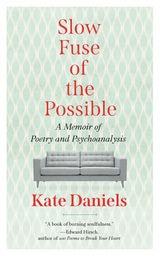
Slow Fuse of the Possible
A Memoir of Poetry and PsychoanalysisKate Daniels
West Virginia University Press, 2022
Slow Fuse of the Possible is a poet’s narrative of a troubled psychoanalysis. It is also a commanding meditation on the powers of language, for good and for ill.
From the beginning of their time together, it is clear that the enigmatic analyst and Daniels are not a good match, yet both are determined to continue their work—the former in nearly complete silence, and the latter as best she can with the tools at her disposal: careful attention to language, deep reading, and literary imagination. Throughout, the story is filtered through the mind of Emily Dickinson, whose poetry Daniels uses as a fulcrum for the interpretation of her own experience. The book is saturated with Dickinson’s verse, and Dickinson is an increasingly haunting presence as crises emerge and the author unravels.
This compelling lyric memoir, so richly steeped in all facets of language and the literary, allows readers a glimpse into the mind of a renowned poet, revealing the dazzling and anguished connections between poetry and psychoanalysis.
So Ask
Essays, Conversations, and InterviewsPhilip Levine
University of Michigan Press, 2002
Social Writing/Social Media
Publics, Presentations, and PedagogiesDouglas M. Walls
University Press of Colorado, 2018
Social media have been (for quite some time now) part of the fabric of our lives. But as with many new technologies, it often takes a while for us to be able to step back, assess the tool's impact, and consider what's next. This collection offers one of the first sets of scholarly work in our field that responds to social media's influence on both popular and extra-curricular writing as well as on scholarly communication. Too frequently, social media is dismissed as non-academic, unworthy of sustained attention by researchers. The authors featured here present compelling reasons why this oft-neglected form of writing deserves—and demands—continued academic response.
Social Writing/Social Media: Publics, Presentations, and Pedagogies makes this contribution by examining the impact of social media on three writing-related themes: publics and audiences, presentation of self and groups, and pedagogy at various levels of higher education. The contributors to this collection urge readers to pay attention to an undertheorized aspect of writing online—the acts of composing that occur specifically in social-media spaces. Organized in three sections—social media and public audiences; social media and presentation; and social media and pedagogy—it builds on previous explorations of the role of multimodality in composition studies by extending ongoing conversations that have asked readers to expand notions of literacy in the twenty-first century. By addressing the wide range of composing activities that take place in social media and the rich variety of genres, audiences, stylistic choices, and pedagogical possibilities, this collection offers an important contribution to our understanding of pedagogy and practice in social media spaces.
Soft Canons
American Women WritersKaren L. Kilcup
University of Iowa Press, 1999
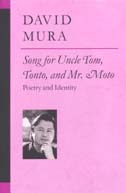
Song for Uncle Tom, Tonto, and Mr. Moto
Poetry and IdentityDavid Mura
University of Michigan Press, 2002
Mura's writings recently have been at the center of various debates concerning race and literary standards. In this book, he argues the need for a more complicated and diverse set of literary standards than the canon has previously allowed, an opening up to the many voices that are "great within us." He contends that, when placed against a gathering awareness of a world literature, particularly in the so-called Third World, the boundaries of the traditional Anglo-American canon and its present-day proponents like Harold Bloom come to be seen as too narrow and parochial, reenacting the "tribal" label that many throw now at the advocates of multiculturalism.
Beyond its theoretical underpinnings, Song for Uncle Tom, Tonto, and Mr. Moto charts the wayward course of Mura's own development as a poet. In three interviews, Mura provides readings of his own work and discusses various issues of technique and form.
David Mura is a poet, memoirist, essayist, playwright, writer of fiction, performance artist, and literary critic. He is author of The Colors of Desire, After We Lost Our Way, and Turning Japanese: Memoirs of a Sansei.
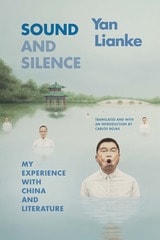
Sound and Silence
My Experience with China and LiteratureYan Lianke
Duke University Press, 2024
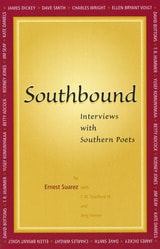
Southbound
Interviews with Southern PoetsEdited by Ernest Suarez, T. W. Stanford III, & Amy Verner
University of Missouri Press, 1999
"There's a real flowering, I think, of southern poetry right now, . . . assembling at the edges of everything." This observation by Pulitzer Prize-winning poet Charles Wright reflects upon the continuing vibrancy and importance of the southern poetic tradition. Although the death of James Dickey in 1997 left southern poetry without a recognizably dominant voice, an array of other vibrant voices continue to be heard and recognized. Southbound: Interviews with Southern Poets provides detailed discussion of the art and craft of poetry by many writers who promise to keep southern poetry vital into the twenty-first century.
Beginning with an interview with the late literary giant James Dickey, Southbound collects the ideas and insights of both well-known and rising southern poets, including Dave Smith, Charles Wright, Ellen Bryant Voigt, Yusef Komunyakaa, and Rodney Jones. Suarez's guiding principle for conducting and revising the interviews was to let the poets express themselves as clearly and fully as possible. Each interview is ultimately defined by the poet's own personality and voice, yet all explore similar themes—the relationship between technique and subject, the nature of the southern canon and each poet's place in it, and the state of contemporary poetry. As Dave Smith relates, "My sense of appreciation of what life means or could mean, whatever I know about life, stems from a sense of place, a sense of the ghostliness of meaning." It is this sense of place and meaning that Suarez allows each poet to convey truthfully in his interviews.
Including a brief introduction to each interview and a bibliography of primary and secondary sources for each poet, Southbound is a useful tool for scholars and a springboard for casual readers. More important, this collection of interviews makes a significant contribution to the tradition of southern poetry and its most prominent voices.
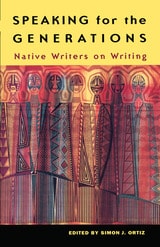
Speaking for the Generations
Native Writers on WritingEdited by Simon J. Ortiz
University of Arizona Press, 1997
Of varied backgrounds, the writers represent Indian heritages and cultures from the Pacific Northwest to the northern plains, from Canada to Guatemala. They are poets, novelists, and playwrights. And although their backgrounds are different and their statements intensely personal, they share common themes of their relationship to the land, to their ancestors, and to future generations of their people. From Gloria Bird's powerful recounting of personal and family history to Esther Belin's vibrant tale of her urban Native homeland in Los Angeles, these writers reveal the importance of place and politics in their lives. Leslie Marmon Silko calls upon the ancient tradition of Native American storytelling and its role in connecting the people to the land. Roberta J. Hill and Elizabeth Woody ponder some of the absurdities of contemporary Native life, while Guatemalan Victor Montejo takes readers to the Mayan world, where a native culture had writing and books long before Europeans came.
Together these pieces offer an inspiring portrait of what it means to be a Native writer in the twentieth century. With passion and urgency, these writers are speaking for themselves, for their land, and for the generations.
Speaking of Writing
Selected Hopwood LecturesNicholas Delbanco, Editor
University of Michigan Press, 1990
These essays were originally presented at the Hopwood Lecture series at the University of Michigan in conjunction with the annual awarding of the Hopwood Prizes in creative writing. The internationally recognized awards are granted by the bequest of playwright Avery Hopwood (1884-1928), who sought to encourage student work in the fields of dramatic writing, fiction, poetry, and the essay. The essays speak to the apprentice writer, finding their focus in a twinned discussion of the craft of prose and the art of poetry. The authors share an assumption that literature matters, and vitally, to the culture it reports on and sustains.
Spirituality and the Writer
A Personal InquiryThomas Larson
Ohio University Press, 2019
Today, the surprisingly elastic form of the memoir embraces subjects that include dying, illness, loss, relationships, and self-awareness. Writing to reveal the inner self—the pilgrimage into one’s spiritual and/or religious nature—is a primary calling. Contemporary memoirists are exploring this field with innovative storytelling, rigorous craft, and new styles of confessional authorship. Now, Thomas Larson brings his expertise as a critic, reader, and teacher to the boldly evolving and improvisatory world of spiritual literature.
In his book-length essay Spirituality and the Writer, Larson surveys the literary insights of authors old and new who have shaped religious autobiography and spiritual memoir—from Augustine to Thomas Merton, from Peter Matthiessen to Cheryl Strayed. He holds them to an exacting standard: they must render transcendent experience in the writing itself. Only when the writer’s craft prevails can the fleeting and profound personal truths of the spirit be captured. Like its predecessor, Larson’s The Memoir and the Memoirist,Spirituality and the Writer will find a home in writing classrooms and book groups, and be a resource for students, teachers, and writers who seek guidance with exploring their spiritual lives.
Spotted Ponies
The Collected ZinesMag Gabbert, Chen Chen, Tarfia Faizullah, Leila Chatti, and Carly Joy Miller with artwork by Taylor Dolan
Bridwell Press, 2025
Spreading the Word
Poetry and the Survival of Community in AmericaRoss Talarico
Duke University Press, 1995
Drawing on his workshops in Rochester, Talarico describes a unique approach for eliciting poetry from people of many ages and backgrounds—particularly underpriviledged urban kids and the elderly. The process—from dialogue to self-expression to publication to public event—illuminates the urgency and meaning of releasing the spirit captured in each man and woman and child’s experience. "Some people say that Ross Talarico has done the impossible," the Today Show remarked of his success in Rochester; and with this book Talarico offers the same opportunity to others. Teachers, community leaders, parents, and children will be able to follow his practical, hands-on approach to encouraging self-expression in diverse, even unlikely, settings. They will see here how poetry is indeed relevant, ever more crucial to our identity as the culture evolves—how it is, finally, the place where the inarticulate can come to speak for themselves.

Stanley Kubrick at Look Magazine
Authorship and Genre in Photojournalism and FilmPhilippe D. Mather
Intellect Books, 2013

State Blues
The Michigan Review of Prisoner Creative Writing, Volume 13Michigan Publishing Services, 2021
www.prisonarts.org
Stegner
Conversations On History And LiteratureWallace Stegner
University of Nevada Press, 1996
Still on Call
Richard Stern
University of Michigan Press, 2010
"Richard Stern is a literary treasure."
---Scott Turow
"Stern's new miscellany reveals a literary mind of the first order, thinking in elegant prose about dozens of interesting subjects."
---Philip Roth
"Stern is a great virtuoso. . . . [I]n an ailing literary culture, we should be grateful for a work like this and a career, too, spanning the American half-century."
---New York Times Book Review
"Stern's skill gives vitality to everything he treats."
---Edmund White, Los Angeles Times
"Like a gifted dancer in a small space, Stern has tremendous grace and ease on the page, executing dynamic turns and dips with a fine economy of motion and without sacrificing nuance."
---Booklist
Still on Call is the sixth and final collection of critically acclaimed novelist and educator Richard Stern. "Orderly miscellany" is the author's term for this aggregation of reflections, essays, reviews, reportage, commentary, and observations on writing and fellow writers, life, and contemporary culture.
The collection's three sections, Coasting, Posting, and Hosting, contain pieces that range from reflections on becoming a writer in the 1940s to assessments of such major writers and close colleagues as Saul Bellow, and Donald Justice to topical offerings from Stern's popular blog for the New Republic.
This wide-ranging collection is intended as the culmination of sixty years of the writing life but, first and foremost, as provocative entertainment. Stern is a prolific writer, and this selection of some of his highest-quality writing both educates and enthralls.
Richard Stern is the Helen A. Regenstein Emeritus Professor of English and of the Humanities at the University of Chicago and the author of nineteen works of fiction and nonfiction. His books include the novels A Father's Words and Golk, and, most recently, the collection What Is What Was. Stern has been the subject of two books: The Writings of Richard Stern: The Education of an Intellectual Everyman by David Garret Izzo and Richard Stern by James Schiffer.
Storycraft, Second Edition
The Complete Guide to Writing Narrative NonfictionJack Hart
University of Chicago Press, 2021
In this new edition, Hart has expanded the book’s range to delve into podcasting and has incorporated new insights from recent research into storytelling and the brain. He has also added dozens of new examples that illustrate effective narrative nonfiction.
This edition of Storycraft is also paired with Wordcraft, a new incarnation of Hart’s earlier book A Writer’s Coach, now also available from Chicago.
Storycraft
The Complete Guide to Writing Narrative NonfictionJack Hart
University of Chicago Press, 2011
From the work of the New Journalists in the 1960s, to the New Yorker essays of John McPhee, Susan Orlean, Atul Gawande, and a host of others, to blockbuster book-length narratives such as Mary Roach’s Stiff or Erik Larson’s Devil in the White City, narrative nonfiction has come into its own. Yet writers looking for guidance on reporting and writing true stories have had few places to turn for advice. Now in Storycraft, Jack Hart, a former managing editor of the Oregonian who guided several Pulitzer Prize–winning narratives to publication, delivers what will certainly become the definitive guide to the methods and mechanics of crafting narrative nonfiction.
Hart covers what writers in this genre need to know, from understanding story theory and structure, to mastering point of view and such basic elements as scene, action, and character, to drafting, revising, and editing work for publication. Revealing the stories behind the stories, Hart brings readers into the process of developing nonfiction narratives by sharing tips, anecdotes, and recommendations he forged during his decades-long career in journalism. From there, he expands the discussion to other well-known writers to show the broad range of texts, styles, genres, and media to which his advice applies. With examples that draw from magazine essays, book-length nonfiction narratives, documentaries, and radio programs, Storycraft will be an indispensable resource for years to come.
Storying the Self
Performance and CommunitiesJess Moriarty and Ross Adamson
Intellect Books, 2023
Through a wide array of texts and methodologies, Storying the Self spotlights autoethnographic research—and pushes the discipline in new directions. This edited volume aims to explore critical and creative approaches to understanding the self in relation to vital social, cultural, and political spheres. Chapters touch on memory and nostalgia, voluntourism in Malawi, the importance of intersectionality, documentary filmmaking, epilepsy, and other experiences to examine the role of the self, as both researcher and storyteller.
Storying the Self features contributions by Ross Adamson, Suzy Bamblett, Emily Bell, Jenni Cresswell, Hannah Davita Ludikhuijze, Sandra Lyndon, Vanessa Marr, Éva Mikuska, Jess Moriarty, Deirdre Russell, Louise Spiers, Holly Stewart, and Lucianna Whittle. It is the first book in Intellect’s innovative new series Performance and Communities, which celebrates, challenges, and researches performance in the real world.
Strategies for Academic Writing
A Guide for College StudentsIrvin Y. Hashimoto, Barry M. Kroll, and John C. Schafer
University of Michigan Press, 1982
Style and Story
Literary Methods for Writing NonfictionStephen J. Pyne
University of Arizona Press, 2018
Style and Story is for those who wish to craft nonfiction texts that do more than simply relay facts and arguments. Pyne explains how writers can employ literary tools and strategies to have art and craft add value to their theme. With advice gleaned from nearly a dozen years of teaching writing to graduate students, Pyne offers pragmatic guidance on how to create powerful nonfiction, whether for an academic or popular audience.
Each chapter offers samples that span genres, showcasing the best kinds of nonfiction writing. Pyne analyzes these examples that will help writers understand how they can improve their nonfiction through their choice of voice, words, structure, metaphors, and narrative. Pyne builds on his previous guide, Voice and Vision, expanding the range of topics to include openings and closings, humor and satire, historical writing, setting scenes, writing about technical matters and deep details, long and short narration, reading for craft, and thoughts on writing generally. He also includes in this volume a set of exercises to practice writing techniques.
Style and Story will be treasured by anyone, whether novice or expert, who seeks guidance to improve the power of their nonfiction writing.
Survival This Way
Interviews with American Indian PoetsJoseph Bruchac
University of Arizona Press, 1987

Swallowing the Sea
On Writing & Ambition, Boredom, Purity & SecrecyLee Upton
Tupelo Press, 2012