Results by title
5550 books match the query 'Biography & Autobiography' and 348 start with s

S. L. Frank
The Life And Work Of A Russian Philosopher, 1877-1950Philip Boobbyer
Ohio University Press, 1995
“There are many reasons for writing a biography of Semyon Frank. Quite apart from his philosophy, he lived a remarkable life. Born in Moscow in 1877, he was exiled from Soviet Russia in 1922 and died in London in 1950. The son of a Jewish doctor, he became a revolutionary Social Democrat in his teens and finished his life as a Neoplatonist Christian. One of the Russian revisionist Marxists, he was then involved in the Kadet Party during the 1905 revolution before breaking with active political activity and turning to philosophy. He lived in Petrograd through the First World War until September 1917, after which he went to Saratov, where he experienced the chaos of the Russian Civil War. Living in Germany after his exile, he witnessed the rise of Hitler in Berlin, left for France in a hurry in 1937, and spent part of the war hiding from the Gestapo in the Grenoble mountains. It was a life that encompassed a lot of history.
”Yet along with this, Frank was arguably Russia’s greatest twentieth-century philosopher. Indeed, V.V. Zen‘kovskii, the historian of Russian philosophy, considered Frank ’in strength of philosophic vision … the most outstanding among Russian philosophers generally — not merely among those who share his ideas.‘ For its lucidity, conciseness, systematic character, and unity, Zen’kovskii considered Frank’s system ‘ the highest achievement … of Russian philosophy.’ Doubtless, Zen‘kovskii’s assessment is disputable, but his remarks emphasize Frank’s stature in the Russian tradition. In the style of German idealism, Frank constructed a comprehensive philosophical system, which he believed offered a coherent alternative to materialism. He was deeply worried by the implications of epistemological relativism and constructed a system of metaphysics designed to link epistemology and ontology, to bridge the gulf between thought and being. In addition, he attempted to express the idea of a personal God in philosophical language. His system also embraced social philosophy, anthropology, and ethics.“
— from the Introduction by the author
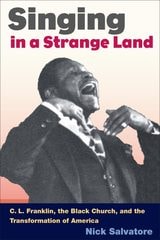
SINGING IN A STRANGE LAND
C. L. Franklin, the Black Church, and the Transformation of AmericaNick Salvatore
University of Illinois Press, 2000

Saber’s Edge
A Combat Medic in Ramadi, IraqThomas A. Middleton
University Press of New England, 2010
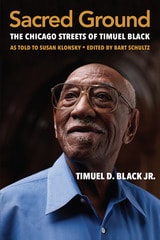
Sacred Ground
The Chicago Streets of Timuel BlackTimuel D. Black Jr., as told to Susan Klonsky, edited by Bart Schultz
Northwestern University Press, 2019
Sacred Ground opens in 1919, during the summer of the Chicago race riot, when infant Black and his family arrive in Chicago from Birmingham, Alabama, as part of the first Great Migration. He recounts in vivid detail his childhood and education in the Black Metropolis of Bronzeville and South Side neighborhoods that make up his "sacred ground."
Revealing a priceless trove of experiences, memories, ideas, and opinions, Black describes how it felt to belong to this place, even when stationed in Europe during World War II. He relates how African American soldiers experienced challenges and conflicts during the war, illuminating how these struggles foreshadowed the civil rights movement. A labor organizer, educator, and activist, Black captures fascinating anecdotes and vignettes of meeting with famous figures of the times, such as Duke Ellington and Martin Luther King Jr., but also with unheralded people whose lives convey lessons about striving, uplift, and personal integrity.
Rounding out this memoir, Black reflects on the legacy of his friend and mentee, Barack Obama, as well as on his public works and enduring relationships with students, community workers, and some very influential figures in Chicago and the world.
Sade
A Biographical EssayLaurence L. Bongie
University of Chicago Press, 1998
"A valuable correction to the perception of Sade as a profound thinker, a great writer, and a martyr to liberty. Drawing on original archival work, Bongie tries to illuminate Sade's childhood and his relationship with his parents. . . . Fluent and well-informed."—Library Journal
"Mr. Bongie . . . has written an investigation focusing on one aspect of Sade's character and development, his heretofore neglected relationship with his aristocratic mother. . . . A profitable selection."—Richard Bernstein, New York Times
"A welcome corrective. Bongie's book . . . aims to deflate the exalted claims made about the marquis by demonstrating that he was a monstrous character."—Scott Stossel, Boston Phoenix Literary Supplement
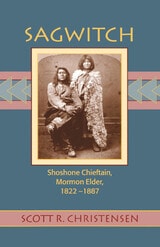
Sagwitch
Shoshone Chieftan, Mormon Elder 1822-1887Scott Christensen
Utah State University Press, 1999
The Northwestern Shoshone knew as home the northern Great Salt Lake, Bear River, Cache, and Bear Lake valleys of northern Utah. Sagwitch was born at a time when his people traded with the mountain men. In the late 1850s, wagons brought Mormon farmers to settle in Cache Valley, the Northwestern Shoshone heartland. Emigrants and settlers reduced Shoshone access to traditional village sites and food resources. Relationships with the Mormons were mostly good but often strained, and the Shoshone treatment of migrants, who now traveled north and south as well as west and east through the area, was increasingly opportunistic. It only took a few violent incidents for a zealous army colonel to seek severe punishment of the Northwestern Shoshone on a winter morning in 1863. The Bear River Massacre was among the bloodiest engagements of America's Indian wars. Hundreds of Shoshone, including Sagwitch's wife and two sons, died; Sagwitch was wounded but escaped. The band was shattered, other chiefs dead.
The following years were very hard for the survivors. The federal government negotiated a treaty with them but failed to get Sagwitch's signature when, en route to the sessions, he was arrested and then wounded by a white assassin. With the world around him changed, Sagwitch sought accommodation with the most immediate threat to his people's traditional way of survival—the Mormons occupying the Shoshone's valleys.
This, then, is also the story of the conversion of Sagwitch and his band to the Mormon Church. Though not without problems, that conversion was long lasting and thorough. Sagwitch and other Shoshone would demonstrate in important ways their new religious devotion. With the assistance of Mormon leaders, they established the Washakie community in northern Utah. Though efforts to secure a land base had an uneven history, they partly succeeded, and the story of these Shoshone's attempts at rural farming diverged significantly from what happened on government reservations. When Sagwitch died, his death went almost unnoticed outside of Washakie, but his children and grandchildren continued to be important voices among a people who, after experiencing near annihilation, survived in the new world into which Sagwitch led them.

Sailing by Starlight
In Search of Treasure IslandAlex Capus
Haus Publishing, 2011
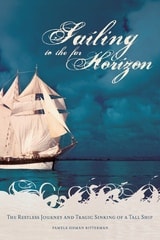
Sailing to the Far Horizon
The Restless Journey and Tragic Sinking of a Tall ShipPamela Sisman Bitterman
University of Wisconsin Press, 2004

Sailor Of The Air
The 1917-1919 Letters and Diary of USN CMM/A Irving Edward SheelyLawrence D. Sheely
University of Alabama Press, 1993
In the winter of 1917, with most of the world at war, twenty-three-year-old Irving Edward Sheely of Albany, New York, enlisted in Naval Aviation and began his training at Pensacola Naval Air Station. When Congress declared ware on Germany on April 6, 1917, the combined strength of aviation within the Navy and Marine Corps was 48 officers, 239 enlisted men, 54 airplanes, one airship, and one air station.
Saint Genet
Actor and MartyrJean-Paul Sartre
University of Minnesota Press, 2012
Saint Genet is Jean-Paul Sartre’s classic biography of Jean Genet—thief, convict, and great artist—a character of almost legendary proportions whose influence grows stronger with time. Bringing together two of the century’s greatest minds and artists, Saint Genet is at once a compelling psychological portrait, masterpiece of literary criticism, and one of Sartre’s most personal and inspired philosophical creations.
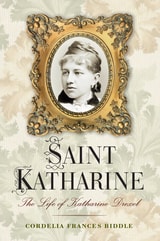
Saint Katharine
The Life of Katharine DrexelCordelia Frances Biddle
Westholme Publishing, 2015
When Katharine Drexel was born in 1858, her grandfather, financier Francis Martin Drexel, had a fortune so vast he was able to provide a loan of sixty million dollars to the Union’s cause during the Civil War. Her uncle and mentor, Anthony, established Drexel University to provide instruction to the working class regardless of race, religion, or gender. Her stepmother was Emma Bouvier whose brother, John, became the great-grandfather of Jacqueline Bouvier Kennedy Onassis. Katharine Drexel’s family were American royalty. As a Philadelphia socialite, “Kitty,” as she was often called, adored formal balls and teas, rowing regattas, and sailing races. She was beautiful, intelligent, and high-spirited. But when her stepmother died in 1883, and her father two years later, a sense of desolation nearly overwhelmed her. She was twenty-seven and in possession of a staggering inheritance. Approached for aid by the Catholic Indian Missions, she surprised her family by giving generously of money and time. It was during this period of acute self-examination that she journeyed to Rome for a private audience with Pope Leo XIII. With characteristic energy and fervor, she detailed the plight of the Native Americans, and begged for additional missionaries to serve them. His reply astonished her. “Why not, my child, yourself become a missionary?”
In Saint Katharine: The Life of Katharine Drexel, Cordelia Frances Biddle recounts the extraordinary story of a Gilded Age luminary who became a selfless worker for the welfare and rights of America’s poorest persons. After years of supporting efforts on behalf of African Americans and American Indians, Katharine finally decided to follow her inner voice and profess vows. The act made headlines. Like her father and grandfather, she was a shrewd businessperson; she retained her financial autonomy and established her own order, the Sisters of the Blessed Sacrament. Until her death in 1955, she devoted herself and her inheritance to building much-needed schools in the South and Southwest, despite threats from the Ku Klux Klan and others. Pragmatic, sometimes willful, ardent, and a charismatic leader, Katharine Drexel was an indefatigable champion of justice and parity. When illness incapacitated her in later years, divine radiance was said to emanate from her, a radiance that led to her canonization on October 1, 2000.
Saint Thomas Aquinas, Volume 2
Spiritual MasterJean-Pierre Torrell
Catholic University of America Press, 1996
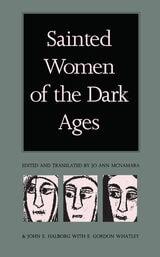
Sainted Women of the Dark Ages
Jo Ann McNamara, John E. Halborg, and Gordon Whatley, eds.
Duke University Press, 1992
Three of these holy women were queens who turned to religion only after a period of intense worldly activity. Others were members of the Carolingian family, deeply implicated in the political ambitions of their male relatives. Some were partners in the great Irish missions to the pagan countryside and others worked for the physical salvation of the poor. From the peril and suffering of their lives they shaped themselves as paragons of power and achievement. Beloved by their sisters and communities for their spiritual gifts, they ultimately brought forth a new model of sanctity.
These biographies are unusually authentic. At least two were written by women who knew their subjects, while others reflect the direct testimony of sisters within the cloister walls. Each biography is accompanied by an introduction and notes that clarify its historical context. This volume will be an excellent source for students and scholars of women's studies and early medieval social, religious, and political history.

Saints Without Halos
The Human Side of Mormon HistoryLeonard J Arrington
Signature Books, 1981
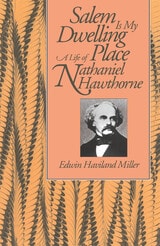
Salem Is My Dwelling Place
Life Of Nathaniel HawthorneEdwin Haviland Miller
University of Iowa Press, 1992
In one of his public disavowals of autobiography, Nathaniel Hawthorne informed his readers that external traits "hide the man, instead of displaying him," directing them instead to "look through the whole range of his fictitious characters, good and evil, in order to detect any of his essential traits." In this multidimensional biography of America's first great storyteller, Edwin Haviland Miller answers Hawthorne's challenge and reveals the inner landscapes of this modest, magnetic man who hid himself in his fiction. Thomas Woodson hails Miller's account as "the best biography of this most elusive of American authors."
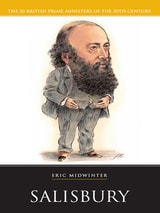
Salisbury
Eric Midwinter
Haus Publishing, 2006
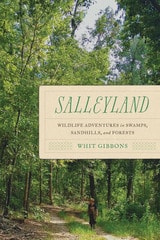
Salleyland
Wildlife Adventures in Swamps, Sandhills, and ForestsWhit Gibbons
University of Alabama Press, 2023
WINNER OF THE SOUTH CAROLINA OUTDOOR PRESS ASSOCIATION'S EXCELLENCE IN CRAFT FOR THE BEST OUTDOOR BOOK AWARD
Adventures and misadventures exploring nature on a patch of “worthless” abandoned farmland
Following his retirement from academic life, renowned naturalist and writer Whit Gibbons and his family purchased a tract of abandoned farmland where the South Carolina piedmont meets the coastal plain. Described as backcountry scrubland, it was originally envisioned as a family retreat, but soon the property became Gibbons’s outdoor learning laboratory where he was often aided by his four grandchildren, along with a host of enthusiastic visitors.
Inspired by nature’s power to excite, educate, and provide a sense of place in the world, Gibbons invites readers to learn about their surrounding environments by describing his latest adventures and sharing expert advice for exploring the world in which we live. Peppered throughout with colorful personal anecdotes and told with Gibbons’s affable style and wit, Salleyland: Wildlife Adventures in Swamps, Sandhills, and Forests is more than a personal memoir or a record of place. Rather, it is an exercise in learning about a patch of nature, thereby reminding us to open our eyes to the complexity and wonder of the natural world.
Starting with the simple advice of following your own curiosity, Gibbons discusses different opportunities and methods for exploring one’s surroundings, introduces key ecological concepts, offers advice for cultivating habitat, explains the value of and different approaches to keeping lists and field journals, and celebrates the advances that cell phone photography and wildlife cameras offer naturalists of all levels. With Gibbons’s guidance and encouragement, readers will learn to embrace their inner scientists, equipped with the knowledge and encouragement to venture beyond their own front doors, ready to discover the secrets of their habitat, regardless of where they live.
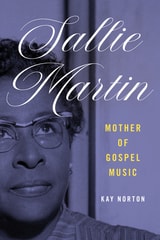
Sallie Martin, Mother of Gospel Music
Kay Norton
University of Illinois Press, 2026
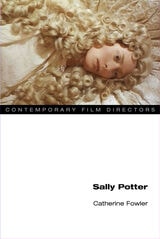
Sally Potter
Catherine Fowler
University of Illinois Press, 2008
This survey of Sally Potter’s work explores her cinematic development from the feminist reworking of La Bohème in Thriller to the provocative contemplation of romantic relationships after 9/11 in Yes. Catherine Fowler traces a clear trajectory of developing themes and preoccupations and shows how Potter uses song, dance, performance, and poetry to expand our experience of cinema beyond the audiovisual.
Potter has relentlessly struggled against predictability and safe options. Again and again, her works grapple with the complexities of being a woman in charge. Instead of the quest to find a romantic partner that drives mainstream cinema, Potter’s films feature characters seeking answers to questions about their sexual, gendered, social, cultural, and ethnic identities. They find answers by retelling stories, investigating mysteries, and traveling and interacting with people. At the heart of Potter’s work is a concern with the ways narrative circumscribes women's ability to act, speak, look, desire, and think for themselves. Her first two films, Thriller and The Gold Diggers, largely deconstruct found stories, clichés, and images. By contrast, later films like Orlando and The Tango Lesson create new and original narratives that place female acts, voices, looks, desires, and thoughts at their center.
Fowler’s analysis is supplemented by a detailed filmography, bibliography, and an extensive interview with the director.
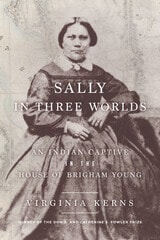
Sally in Three Worlds
An Indian Captive in the House of Brigham YoungVirginia Kerns
University of Utah Press, 2021
In this remarkable and deeply felt book, Virginia Kerns uncovers the singular and forgotten life of a young Indian woman who was captured in 1847 in what was then Mexican territory. Sold to a settler, a son-in-law of Brigham Young, the woman spent the next thirty years as a servant to Young’s family. Sally, as they called her, lived in the shadows, largely unseen. She was later remembered as a “wild” woman made “tame” who happily shed her past to enter a new and better life in civilization.
Drawing from a broad range of primary sources, Kerns retrieves Sally from obscurity and reconstructs her complex life before, during, and after captivity. This true story from the American past resonates deeply in the current moment, attentive as it is to killing epidemics and racial injustices. In telling Sally’s story, Kerns presents a new narrative of the American West.

Salt Lantern
Traces of an American FamilyWilliam Towner Morgan
University of Iowa Press, 1997

Salvador Allende
Revolutionary Democrat: Revolutionarvy DemocratVictor Figueroa Clark
Pluto Press, 2013
This is a political biography of one of the 20th century’s most emblematic left-wing figures - Salvador Allende, who was president of Chile until he was ousted by General Pinochet in a US-supported coup in 1973.
Victor Figueroa Clark guides us through Allende's life and political project, answering some of the most frequently asked questions. Was he a revolutionary or a reformist? A bureaucrat or inspirational democrat? Clark argues that Allende and the Popular Unity Party created a unique fusion which was both revolutionary and democratic.
The process led by Allende was a symbol of hope for the left during his short time in power. Forty years on, and with left governments back in power across Latin America, this book looks back at the man and the process in order to draw vital lessons for the left in Latin America and around the world today.
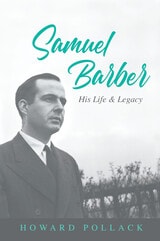
Samuel Barber
His Life and LegacyHoward Pollack
University of Illinois Press, 2023
Acclaimed biographer Howard Pollack (Aaron Copland, George Gershwin) offers a multifaceted account of Barber’s life and music while placing the artist in his social and cultural milieu. Born into a musical family, Barber pursued his artistic ambitions from childhood. Pollack follows Barber’s path from his precocious youth through a career where, from the start, the composer consistently received prizes, fellowships, and other recognition. Stylistic analyses of works like the Adagio for Strings, the Violin Concerto, Knoxville: Summer of 1915 for voice and orchestra, the Piano Concerto, and the operas Vanessa and Antony and Cleopatra, stand alongside revealing accounts of the music’s commissioning, performance, reception, and legacy. Throughout, Pollack weaves in accounts of Barber’s encounters with colleagues like Aaron Copland and Francis Poulenc, performers from Eleanor Steber and Leontyne Price to Vladimir Horowitz and Van Cliburn, patrons, admirers, and a wide circle of eminent friends and acquaintances. He also provides an eloquent portrait of the composer’s decades-long relationship with the renowned opera composer Gian Carlo Menotti.
Informed by new interviews and immense archival research, Samuel Barber is a long-awaited critical and personal biography of a monumental figure in twentieth-century American music.
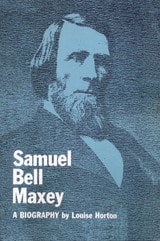
Samuel Bell Maxey
A BiographyBy Louise Horton
University of Texas Press, 1974
Samuel Bell Maxey was an important political figure in nineteenth-century Texas, but no previous book-length study of his life and career has been published. Louise Horton has utilized his private papers as well as numerous other sources in preparing this biography, which includes many of Maxey's own comments on his contemporaries. The letters also provide new information on the development of railroads across the Southwest.
An emigrant from Kentucky, Samuel Bell Maxey practiced law in North Texas, raised a regiment at the beginning of the Civil War, returned to Texas to defend the Indian Territory during 1863-1865, and was elected on his first candidacy to be the first Democratic senator from Texas after the Civil War. After two years in office he became Texas's senior senator and held that position until defeated by John H. Reagan in 1887. Maxey's term of office spanned the turbulent period immediately following Reconstruction, and a great deal of his influence derived from his moderation. He was concerned that the breach caused by the Civil War be healed. He was influential among Republican congressmen from the North and aided substanially in Texas's regaining its status in the Union. Louise Horton's biography of Maxey emphasizes the contribution he made to the state and the nation and fills a gap in the history of the post-Civil War period.
Samuel Bronfman
The Life and Times of Seagram’s Mr. SamMichael R. Marrus
Brandeis University Press, 1991
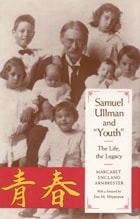
Samuel Ullman and "Youth"
The Life, the LegacyMargaret E. Armbrester
University of Alabama Press, 2009
Thousands of wonderful and sometimes strange fads have captured the public fancy in the almost five decades since the end of World War II. Most have been short-lived and soon faded away. There is, however, a poem that has not only withstood the vicissitudes of time, but has spread around the world like the waves lapping at a beach. This is the poem "Youth," by Samuel Ullman.
In December 1945, the Reader’s Digest published the poem and reported that General Douglas MacArthur, Commander of the Allied Forces, Far East, kept a copy of the poem near his desk.
Around that time, Yoshio Okada, a Japanese businessman, bought a copy of that December 1945 edition of the Reader's Digest, read the poem and was deeply affected by it. He translated it into Japanese and displayed it in his office as a guiding inspiration. Many of Okada's friends read the poem and were fascinated by its beauty. It began to receive national publicity through newspapers and magazines and became popular throughout Japan, especially among the intellectual community. Part of the reason for this widespread popularity is the excellence of the translation. Yoshio Okada, a man of noble character, gifted with a profound philosophy of life and literary talent, translated the poem into a beautiful, soulstirring Japanese version.
Samuel Ullman's “Youth” reflects the truth of life, and his outcry of spirituality touches the intrinsic nature of man.
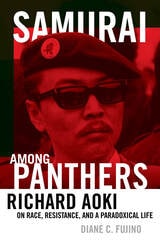
Samurai among Panthers
Richard Aoki on Race, Resistance, and a Paradoxical LifeDiane C. Fujino
University of Minnesota Press, 2012
An iconic figure of the Asian American movement, Richard Aoki (1938–2009) was also, as the most prominent non-Black member of the Black Panther Party, a key architect of Afro-Asian solidarity in the 1960s and ’70s. His life story exposes the personal side of political activism as it illuminates the history of ethnic nationalism and radical internationalism in America.
A reflection of this interconnection, Samurai among Panthers weaves together two narratives: Aoki’s dramatic first-person chronicle and an interpretive history by a leading scholar of the Asian American movement, Diane C. Fujino. Aoki’s candid account of himself takes us from his early years in Japanese American internment camps to his political education on the streets of Oakland, to his emergence in the Black Panther Party. As his story unfolds, we see how his parents’ separation inside the camps and his father’s illegal activities shaped the development of Aoki’s politics. Fujino situates his life within the context of twentieth-century history—World War II, the Cold War, and the protests of the 1960s. She demonstrates how activism is both an accidental and an intentional endeavor and how a militant activist practice can also promote participatory democracy and social service.
The result of these parallel voices and analysis in Samurai among Panthers is a complex—and sometimes contradictory—portrait of a singularly extraordinary activist and an expansion and deepening of our understanding of the history he lived.
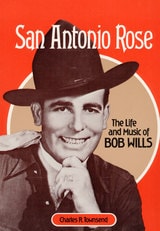
San Antonio Rose
The Life and Music of Bob WillsCharles R. Townsend; Discography and filmusicography by Bob Pinson
University of Illinois Press, 1976
"Until Hank Williams came along, it was just Bob Willis," says Willie Nelson. "He was it." And indeed he was, especially for the thousands in the Southwest who knew and loved the King of Western Swing. The colorful band leader-composer-fiddler from Turkey, Texas, lassoed the emotions of country-and-western fans nationwide. In the early 1940s, his records outsold those of any other recording artist. He was voted not only into the Country Music Hall of Fame but also into the National Cowboy Hall of Fame, the only performer other than Gene Autry to be so honored.
Affectionately written by a Texan who responded to the legendary fiddler's style, San Antonio Rose captures Wills's magnetism and the musical excitement he created. Charles R. Townsend traces Wills's dynamic life from his birth into a family of frontier fiddlers through his career and stardom and on to the poignant last recording session in 1973 and his death two years later. Townsend shows how Wills brought black and white music together and examines the tremendous impact he had on both popular and country music through the more than 550 selections he recorded and the forty years he and his Texas Playboys performed in dance halls and on radio.

San Juan
Memoir of a CityEdgardo Rodriguez Julia; Translated by Peter Grandbois
University of Wisconsin Press, 2007
In the allusive cityscape he recreates, Rodríguez Juliá invokes the ghosts of his childhood, of San Juan's elder literati, and of characters from his own novels. On the most tangible level, the city is a place of cabarets and cockfighting clubs, flâneurs and beach bums, smoke-filled bars and honking automobiles. Poised between a colonial past and a commercial future, the San Juan he portrays feels at times perilously close to the pitfalls of modernization. Tenement houses and fading mansions yield to strip malls and Tastee Freezes; asphalt hems in jacarandas and palm trees. "In Puerto Rico," he muses, "life is not simply cruel, it is also busy erasing our tracks." Through this book—available here in English for the first time—Rodríguez Juliá resists that erasure, thoughtfully etching a palimpsest that preserves images of the city where he grew up and rejoicing in the one where he still lives.
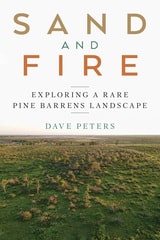
Sand and Fire
Exploring a Rare Pine Barrens LandscapeDave Peters
Wisconsin Historical Society Press, 2023
While many people are familiar with the federally protected St. Croix and Namekagon Rivers of northwestern Wisconsin, few know about the Namekagon Barrens, a rare pine barrens landscape within a few miles of their confluence. A tiny remnant of the millions of barrens acres that once covered the region, the Namekagon Barrens Wildlife Area lies in the heart of the state’s Northwest Sands, a band of pine and oak stretching from Bayfield on Lake Superior to St. Croix Falls on the Wisconsin–Minnesota border. Unfathomable amounts of glacial sand and repeated fires over thousands of years shaped a land of scrub oak and jack pine, blueberries and sweet fern, creating an ideal habitat for wolves and sharp-tailed grouse.
Just as compelling is the land’s rich human history, from Paleo-Indian hunters to Ojibwe berry pickers, loggers to early road builders, and immigrants whose farming efforts failed to the wildlife habitat specialists who manage it today. The book, told in memoir style and featuring color photographs by the author, sets the land’s unusual natural history as the backdrop for a multilayered story about the impact of people on this vulnerable landscape.
Silver winner of the 2023 Midwest Book Award for History
"Peters invites his readers on a journey across time and space, to the glacial formation of the Namekagon Barrens into the present. . . . The book is replete with beautiful photographs, useful maps, and a number of other images that seem to appear on nearly every other page. This book should appeal to a wide public readership while at the same time being a useful primer for academics and researchers."
—Hayden L. Nelson, Environmental History
Sand, Wind, and War
Memoirs of a Desert ExplorerRalph A. Bagnold
University of Arizona Press, 1990
Ralph Alger Bagnold was born in 1896 into a military family and educated as an engineer. Posted to Egypt in 1926, he was one of a group of officers who adapted Model T Fords to desert travel and in 1932 made the first east-west crossing—6,000 miles—of the Libyan desert. Bagnold established such a name for himself that in World War II he was again posted to Egypt where he founded and trained the Long Range Desert Group that was to confound the German and Italian armies.
Bagnold’s fascination with the desert included curiosity over the formation of dunes, and beginning in 1935 he conducted wind tunnel experiments with sand that led to the book The Physics of Blown Sand and Desert Dunes. Eventually, he was to see his findings called on by NASA to interpret data on the sands of Mars. He devoted subsequent research to particle flow in fluids, and also served as a consultant to Middle Eastern governments concerned with the interference of sand flow in oil drilling.
Sand, Wind, and War is the life story of a man who not only helped shape events in one part of the world but also contributed to our understanding of it. It is a significant benchmark not only in the history of science, but also in the annals of adventure.
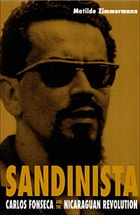
Sandinista
Carlos Fonseca and the Nicaraguan RevolutionMatilde Zimmermann
Duke University Press, 2000
Sandinista is the first English-language biography of Carlos Fonseca Amador, the legendary leader of the Sandinista National Liberation Front of Nicaragua (the FSLN) and the most important and influential figure of the post–1959 revolutionary generation in Latin America. Fonseca, killed in battle in 1976, was the undisputed intellectual and strategic leader of the FSLN. In a groundbreaking and fast-paced narrative that draws on a rich archive of previously unpublished Fonseca writings, Matilde Zimmermann sheds new light on central themes in his ideology as well as on internal disputes, ideological shifts, and personalities of the FSLN.
The first researcher ever to be allowed access to Fonseca’s unpublished writings (collected by the Institute for the Study of Sandinism in the early 1980s and now in the hands of the Nicaraguan Army), Zimmermann also obtained personal interviews with Fonseca’s friends, family members, fellow combatants, and political enemies. Unlike previous scholars, Zimmermann sees the Cuban revolution as the crucial turning point in Fonseca’s political evolution. Furthermore, while others have argued that he rejected Marxism in favor of a more pragmatic nationalism, Zimmermann shows how Fonseca’s political writings remained committed to both socialist revolution and national liberation from U.S. imperialism and followed the ideas of both Che Guevara and the earlier Nicaraguan leader Augusto César Sandino. She further argues that his philosophy embracing the experiences of the nation’s workers and peasants was central to the FSLN’s initial platform and charismatic appeal.
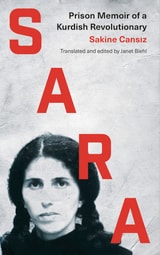
Sara
Prison Memoir of a Kurdish RevolutionarySakine Cansiz
Pluto Press, 2019

Sarah Angelina Acland
First Lady of Colour PhotographyGiles Hudson
Bodleian Library Publishing, 2012
Sarah Angelina Acland (1849–1930) is one of the most important photographers of the late Victorian and early Edwardian periods. Born to a preeminent English family, Acland first gained note as a portraitist whose illustrious subjects—among them two prime ministers, the physicist Lord Kelvin, and the noted art critic John Ruskin—were visitors to her family’s Oxford home. Yet it was through her work in the thenfledgling field of color photography that Acland achieved her greatest acclaim. When her color photographs were shown at the Royal Photographic Society in 1905, many considered them to be among the finest work produced in the new medium.
An introduction to Acland’s entire body of work, this volume contains more than two hundred previously unpublished examples of her photographs, spanning portraiture, studies of Oxford architecture, and landscape and garden photographs captured in Madeira, Portugal. Additional images include four unrecorded portraits by Lewis Carroll of Acland and her brothers—shed light on the work of her contemporaries, including acquaintances and artistic influences like Carroll and Julia Margaret Cameron. A fascinating look at the earliest days of color photography, this book also offers a glimpse into the lives of an influential English family and its circle of friends.

Sarah Orne Jewett - American Writers 61
University of Minnesota Pamphlets on American WritersMargaret Farrand Thorp
University of Minnesota Press, 1966
Sarah Orne Jewett - American Writers 61 was first published in 1966. Minnesota Archive Editions uses digital technology to make long-unavailable books once again accessible, and are published unaltered from the original University of Minnesota Press editions.
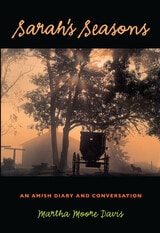
Sarah's Seasons
An Amish Diary and ConversationMartha Moore Davis
University of Iowa Press, 1997
Sarah's brief daily notations, recorded on a calendar throughout 1976 and 1977, reveal an ongoing account of her seasonal routine. In many ways the straightforward simplicity of her writing is a reflection of her life near rural Kalona, Iowa, a life filled with what Martha Davis calls look-easy tasks undertaken without the conveniences of electricity, phones, or automobiles. For Sarah, diaries are a record. “A diary can settle a question, a disagreement,” she tells Martha. “You look back and see what took place. That's history.”
Through their conversations, Martha soon discovered she had more in common with Sarah than diary writing. Though Davis lived in the mainstream culture, an “English” person as the Amish say, like Sarah she grew up on a farm in rural Iowa during the 1950s and 1960s. Like Martha, Sarah had spent several years as a teacher.
In Sarah's Seasons Martha Davis shares their common experiences and common interests—gardening, quilting, and cooking. Alongside Sarah's diary, Martha presents their shared recipes and conversations as well as reflections on her own more modern existence. Because of her friendship with Sarah, the author found a new sense of belonging to and purpose in the mainstream world. In the end, Sarah's diary becomes for Martha a meditation on time and community.

Satchel Paige's America
William Price Fox
University of Alabama Press, 2005
Captures the sometimes outrageous, often humorous, and always bigger-than-life spirit of the World's Greatest Pitcher, Leroy Satchel Paige
This book began when the author met "the Satch" for the first time at the Twilight Zone Lounge of the Rhythm Lanes Bowling Alley in Kansas City. What started as a simple interview for Holiday magazine quickly grew into an animated conversation that lasted nearly a week as Paige and Fox moved from bar to club to restaurant to auto repair shop and from one topic to the next. Fox describes, with amazement, the reception the legendary baseball player received at Gates' Place, a famous barbecue restaurant, and The Flamingo, a big dance club. Over the course of the week, Paige shared stories about his start in the Negro leagues, his time with the Kansas City Monarchs, and barnstorming around the country, sleeping on the ground because there were no hotels for blacks. He also tells of his breakthrough to the big leagues when he signed with the Cleveland Indians and later pitched two shutouts against the Chicago White Sox.
In addition to his baseball career, Paige tells Fox about his childhood in Mobile, Alabama, catching fish during the Jubilee, throwing rocks at white boys, hustling bags at the train station, and working in the Depression era medicine shows. In contrast to these humble beginnings, Satchel recounts his later connections with film and music celebrities like Orson Welles, Jelly Roll Morton, Billie Holliday, and Cab Calloway. He also expounds on his friendships with other sports greats, including Goose Tatum, Meadowlark Lemon, and Sugar Ray Robinson.
The ironic intersections between oppression and fame, and between poverty and wealth, that emerge from Paige's narrative memoir exemplify the affliction of talent and genius in an era of racial discrimination and segregation.
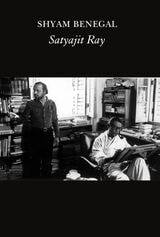
Satyajit Ray
A FilmShyam Benegal and Satyajit Ray
Seagull Books, 2025
Two of Indian cinema’s most acclaimed auteurs, Satyajit Ray and Shyam Benegal, come together in this intimate dialogue, offering a fascinating glimpse into the mind of a cinematic genius. Based on Benegal’s 1985 documentary on Ray, this volume brings together the film’s script, excerpts from extended interviews, and a remarkable collection of visual material showcasing Ray’s work as a filmmaker, illustrator, designer, and writer.
Through candid conversations, Ray reflects on his childhood and the philosophy behind his storytelling, providing an unparalleled look at his creative process. With one master filmmaker capturing another, the result is a deeply personal and layered portrait that moves beyond Ray’s films to reveal the man behind the camera. Satyajit Ray: A Film is both a historical document and a celebration of artistic legacy; a rare opportunity to witness a dialogue between two legends shaping the course of Indian and global cinema.
Saul Bellow - American Writers 65
University of Minnesota Pamphlets on American WritersEarl Rovit
University of Minnesota Press, 1967
Saul Bellow - American Writers 65 was first published in 1967. Minnesota Archive Editions uses digital technology to make long-unavailable books once again accessible, and are published unaltered from the original University of Minnesota Press editions.
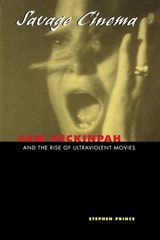
Savage Cinema
Sam Peckinpah and the Rise of Ultraviolent MoviesBy Stephen Prince
University of Texas Press, 1998
More than any other filmmaker, Sam Peckinpah opened the door for graphic violence in movies. In this book, Stephen Prince explains the rise of explicit violence in the American cinema, its social effects, and the relation of contemporary ultraviolence to the radical, humanistic filmmaking that Peckinpah practiced.
Prince demonstrates Peckinpah's complex approach to screen violence and shows him as a serious artist whose work was tied to the social and political upheavals of the 1960s. He explains how the director's commitment to showing the horror and pain of violence compelled him to use a complex style that aimed to control the viewer's response.
Prince offers an unprecedented portrait of Peckinpah the filmmaker. Drawing on primary research materials—Peckinpah's unpublished correspondence, scripts, production memos, and editing notes—he provides a wealth of new information about the making of the films and Peckinpah's critical shaping of their content and violent imagery. This material shows Peckinpah as a filmmaker of intelligence, a keen observer of American society, and a tragic artist disturbed by the images he created.
Prince's account establishes, for the first time, Peckinpah's place as a major filmmaker. This book is essential reading for those interested in Peckinpah, the problem of movie violence, and contemporary American cinema.
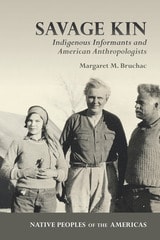
Savage Kin
Indigenous Informants and American AnthropologistsMargaret M. Bruchac
University of Arizona Press, 2018
This book reconceptualizes the intimate details of encounters with Native interlocutors who by turns inspired, facilitated, and resisted the anthropological enterprise. Like other texts focused on this era, Savage Kin features some of the elite white men credited with salvaging material that might otherwise have been lost. Unlike other texts, this book highlights the intellectual contributions and cultural strategies of unsung Indigenous informants without whom this research could never have taken place.
These bicultural partnerships transgressed social divides and blurred the roles of anthropologist/informant, relative/stranger, and collector/collected. Yet these stories were obscured by collecting practices that separated people from objects, objects from communities, and communities from stories. Bruchac’s decolonizing efforts include “reverse ethnography”—painstakingly tracking seemingly unidentifiable objects, misconstrued social relations, unpublished correspondence, and unattributed field notes—to recover this evidence. Those early encounters generated foundational knowledges that still affect Indigenous communities today.
Savage Kin also contains unexpected narratives of human and other-than-human encounters—brilliant discoveries, lessons from ancestral spirits, prophetic warnings, powerful gifts, and personal tragedies—that will move Native and non-Native readers alike.
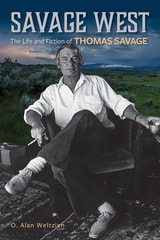
Savage West
The Life and Fiction of Thomas SavageO. Alan Weltzien
University of Nevada Press, 2022
O. Alan Weltzien's insightful and detailed literary biography chronicles the life and work of this neglected but deeply talented novelist. Savage, a closeted gay family man, was both an outsider and an insider, navigating an intense conflict between his sexual identity and the claustrophobic social restraints of the rural West. Unlike many other Western writers, Savage avoided the formula westerns— so popular in his time— and offered instead a realistic, often subversive version of the region. His novels tell a hard, harsh story about dysfunctional families, loneliness, and stifling provincialism in the small towns and ranches of the northern Rockies, and his minority interpretation of the West provides a unique vision and caustic counternarrative contrary to the triumphant settler-colonialism themes that have shaped most Western literature. Savage West seeks to claim Thomas Savage's well-deserved position in American literature and to reintroduce twenty-first-century readers to a major Montana writer.
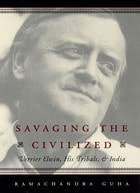
Savaging the Civilized
Verrier Elwin, His Tribals, and IndiaRamachandra Guha
University of Chicago Press, 1999
Described by his contemporaries as a cross between Albert Schweitzer and Paul Gauguin, Elwin was a man of contradictions, at times taking on the role of evangelist, social worker, political activist, poet, government worker, and more. He rubbed elbows with the elite of both Britain and India, yet found himself equally at home among the impoverished and destitute. Intensely political, the Oxford-trained scholar tirelessly defended the rights of the indigenous and, despite the deep religious influences of St. Francis and Mahatma Gandhi on his early career, staunchly opposed Hindu and Christian puritans in the debate over the future of India's tribals. Although he was ordained as an Anglican priest, Elwin was married twice to tribal women and enthusiastically (and publicly) extolled the tribals' practice of free sex. Later, as prime minister Nehru's friend and advisor in independent India, his compelling defense of tribal hedonism made him at once hugely influential, extremely controversial, and the polemical focal point of heated discussions on tribal policy and economic development.
Savaging the Civilized is both biography and history, an exploration through Elwin's life of some of the great debates of the twentieth century: the future of development, cultural assimilation versus cultural difference, the political practice of postcolonial as opposed to colonial governments, and the moral practice of writers and intellectuals.

Saved for a Purpose
A Journey from Private Virtues to Public ValuesJames A. Joseph
Duke University Press, 2015
In an engaging and personal style, Joseph shows how his commitment to applying moral and ethical principles to large groups and institutions played out in his work in the civil rights movement in Alabama and as a college chaplain in California in the turbulent 1960s. His time later as vice president of the Cummins Engine Company provided an opportunity to promote corporate ethics, and his tenure as Under Secretary of the Interior in the Carter Administration underscored the difficulty and weight of making the right decisions while balancing good policy analysis with transcendent moral principles.
In 1996 President Clinton selected Joseph to become the United States Ambassador to South Africa. His recollections of working with Nelson Mandela, whom he describes as a noble and practical politician, and his observations about what he learned from Desmond Tutu and others about reconciliation contain some of the book’s most poignant passages.
Saved for a Purpose is unique, as Joseph combines his insights from working to integrate values into America’s public and private sectors with his long engagement with ethics as an academic discipline and as a practical guide for social behavior. Ultimately, it reflects Joseph’s passionate search for values that go beyond the personal to include the ethical imperatives that should be applied to the communal.

Sawdusted
Notes from a Post-Boom MillRaymond Goodwin
University of Wisconsin Press, 2010
At the heart of the book is a coming-of-age story about Goodwin’s relationship with his older brother Randy—a heavy drinker, chain smoker, and expert sawyer. Gruff but kind, Randy tutors Raymond in the ways of the blue-collar world even as he struggles with the demons that mask his own melancholy.

Say No to the Devil
The Life and Musical Genius of Rev. Gary DavisIan Zack
University of Chicago Press, 2015
The first biography of Davis, Say No to the Devil restores “the Rev’s” remarkable story. Drawing on extensive research and interviews with many of Davis’s former students, Ian Zack takes readers through Davis’s difficult beginning as the blind son of sharecroppers in the Jim Crow South to his decision to become an ordained Baptist minister and his move to New York in the early 1940s, where he scraped out a living singing and preaching on street corners and in storefront churches in Harlem. There, he gained entry into a circle of musicians that included, among many others, Lead Belly, Woody Guthrie, and Dave Van Ronk. But in spite of his tremendous musical achievements, Davis never gained broad recognition from an American public that wasn’t sure what to make of his trademark blend of gospel, ragtime, street preaching, and the blues. His personal life was also fraught, troubled by struggles with alcohol, women, and deteriorating health.
Zack chronicles this remarkable figure in American music, helping us to understand how he taught and influenced a generation of musicians.

Scarface Al and the Crime Crusaders
Chicago's Private War Against CaponeDennis E. Hoffman
Southern Illinois University Press, 1993
According to the Eliot Ness myth, which has been widely disseminated through books, television shows, and movies, Ness and the Untouchables defeated Al Capone by marshaling superior firepower. In Scarface Al and the Crime Crusaders, Dennis Hoffman presents a fresh new perspective on the downfall of Al Capone. To debunk the Eliot Ness myth, he shows how a handful of private citizens brought Capone to justice by outsmarting him rather than by outgunning him.
Drawing on previously untapped sources, Hoffman dissects what he terms a “private war” against Capone. He traces the behind-the-scenes work of a few prominent Chicago businessmen from their successful lobbying of presidents Coolidge and Hoover on behalf of federal intervention to the trial, sentencing, and punishment of Al Capone. Hoffman also reconstructs in detail a number of privately sponsored citizen initiatives directed at stopping Capone. These private ventures included prosecuting the gangsters responsible for election crimes; establishing a crime lab to assist in gangbusting; underwriting the costs of the investigation of the Jake Lingle murder; stigmatizing Capone; and protecting the star witnesses for the prosecution in Al Capone’s income tax evasion case.
Hoffman suggests that as American society continues to be threatened by illegal drugs, gangs, and widespread violence, it is important to remember that the organized crime and political corruption of Prohibition-era Chicago were checked through the efforts of private citizens.
Dennis E. Hoffman is an associate professor of criminal justice at the University of Nebraska at Omaha.
Scenes from la Cuenca de Los Angeles y otros Natural Disasters
Susana Chávez-Silverman
University of Wisconsin Press, 2010
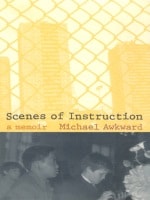
Scenes of Instruction
A MemoirMichael Awkward
Duke University Press, 1999
With a recurring focus on how his mother’s tragic weaknesses and her compelling strengths affected his development, Awkward intersperses the chronologically arranged autobiographical sections with ruminations on his own interests in literary and cultural criticism. As a male scholar who has come under fire for describing himself as a feminist critic, he reflects on such issues as identity politics and the politics of academia, affirmative action, and the Million Man March.
By connecting his personal experiences with larger political, cultural, and professional questions, Awkward uses his life as a palette on which to blend equations of race and reading, urbanity and mutilation, alcoholism, pain, gender, learning, sex, literature, and love.

Schneider on Schneider
The Conversion of the Jews and Other Anthropological StoriesDavid M. Schneider, as told to Richard Handler
Duke University Press, 1995
In this work, based on conversations with Richard Handler, Schneider tells the story of his days devoted to anthropology—as a student of Clyde Kluckhohn and Talcott Parsons and as a writer and teacher whose work on kinship and culture theory revolutionized the discipline. With a master’s sense of the telling anecdote, he describes his education at Cornell, Yale, and Harvard, his fieldwork on the Micronesian island of Yap and among the Mescalero Apache, and his years teaching at the London School of Economics, Berkeley, and the University of Chicago. Musing on the current state and the future of anthropology, Schneider’s cast of characters reads like a who’s who of postwar social science. His reflections on anthropological field research and academic politics address some of the most pressing ethical and epistemological issues facing scholars today, while yielding tales of unexpected amusement.
With its humor and irony, its wealth of information and searching questions about the state of anthropology, Schneider on Schneider not only provides an important resource for the history of twentieth-century social science, but also brings to life the entertaining voice of an engaging storyteller.